Week-4 Challenge WOT Condition Part-2
1) What is the difference between mapped and dynamic model of engine, motor and generator? How can you change model type?
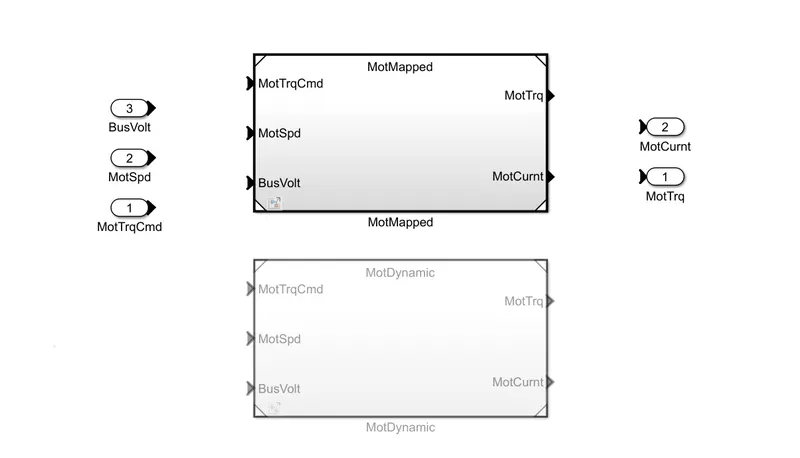
MAPPED ENGINE :
- Mapped engine is used to measure the performance parameters of the vehicle by using the standard lookup tables which are prefered to the system. This type of engines are suitable for analysis and design which do not require engine subsystem dynamic characteristic. The look up table values are based upon the values of brake torque, fuel flow, emission flow, exhaust temperature, efficiency and emmisions. This data is used to find the other parameters. This type of modelling is less accurate. The lookup table values are based on the values of brake torque, command torque and engine speed.
- Mapped motor works in torque control mode. this type of motor is used when the user requires a faster stimulation and does not have the knowledge of the motor parameters. Input torque or speed can be specified, electrical loss and maximum motor power and torque can be defined. The output torque and reference torque is compared and changes are made.
- Mapped generator Most of the data required is taken from the lookup tables and corresponding to the given input parameters. The stimulation time is less.
DYNAMIC ENGINE :
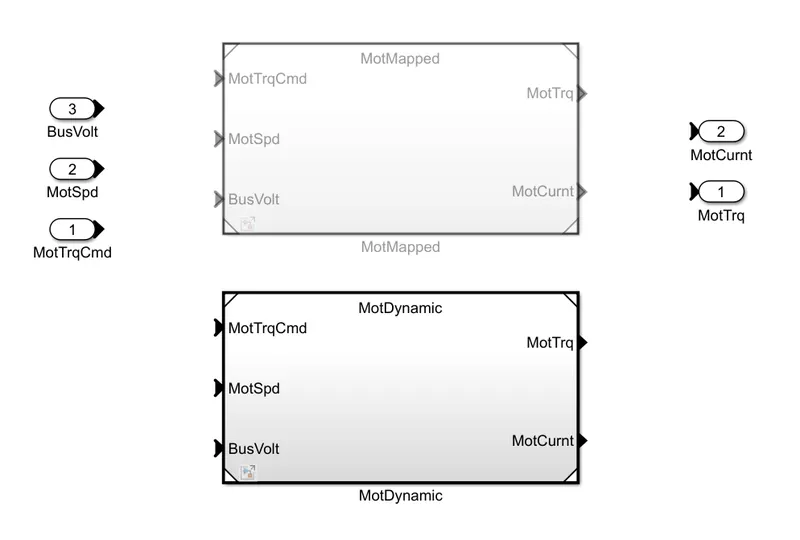
- Dynamic engine This type of model uses real time data fed by the user at run time for modelling. This model is more accurate than mapped engine model. This type of model is used when the data of subsystem of a vehicle is required. Brake torque, fuel flow, port gas mass flow, exhaust temperature, exhaust mass flow rate and exhaust emissions can be calculated.
- Dynamic motor This block uses three phase input voltages to regulate the individual phase currents, allowing control of the motor torque or the speed. This motor is more accurate. This block is used when the user knows what parameters are to be used in the particular simulation.
- Dynamic generator This involves user entering the parameters manually during the runtime for the particular applications. The results takes time and are more accurate.
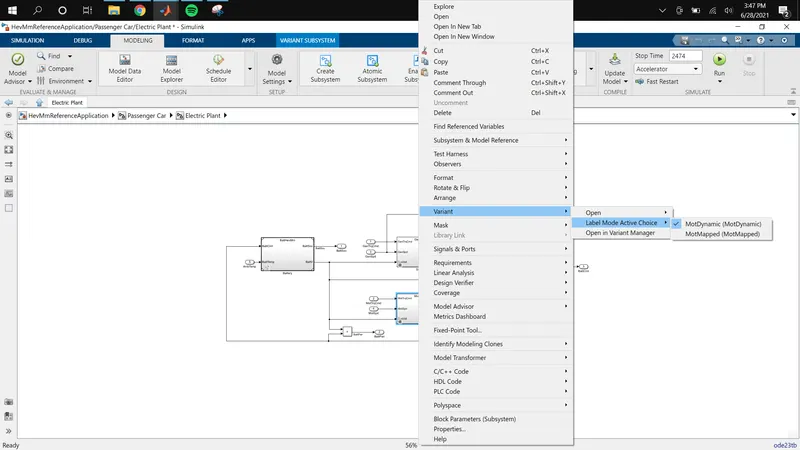
TO CHANGE THE MODEL FROM MAPPED TO DYNAMIC :
- Open the ev model in simulink.
- Double clicking on the passenger car block.
- Entering into the electric plant block.
- In the motor block, right click and select varient.
- In this we can change from mapped to dynamic and vice versa.
2) How does the model calculate miles per gallon? Which factors are considered to model fuel flow?
- The battery propells the vehicle for 3.125 miles per Kwh of battery.
- It has been found that one gallon of fuel is equivalent to 33.7kw hours of electricity.
- To open this in Hevreferece application and select visulizations and the performance calculations is selected.
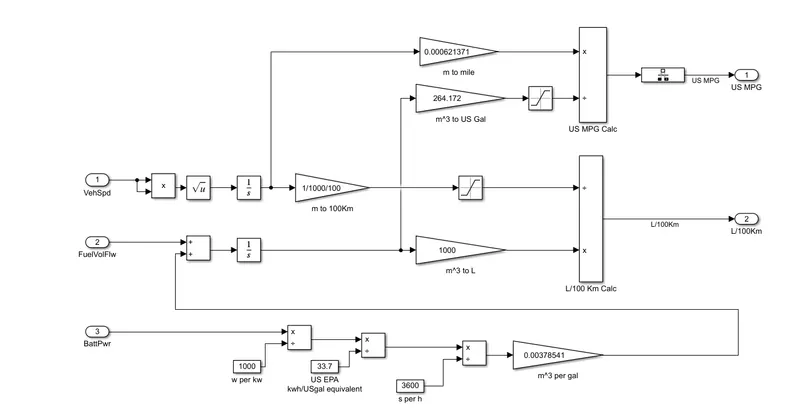
- The inputs are vehicle speed, fuel volume flow and battery power.
- This has two fuels electricty and fuel is used. The battery power is converted into Kw (W/1000) then it is divided by 33.7kwh. This shows the fuel equivalent of battery is added to the fuel flow.
- Using vehicle speed and time, the distance travelled is calculated. The distance is converted to miles by conversion.
- Thus we can calculate the fuel efficiency.
3) Run the HEV ReferenceApplication with WOT drive cycle. Change the grade and wind velocity in the environment block. Comment on the results.
- I have changed the drive cycle to Wide open throttle (WOT) and i have configured the parameters like time duration, WOT start time, Initial speed, final speed, max speed and time to start the deceleration.
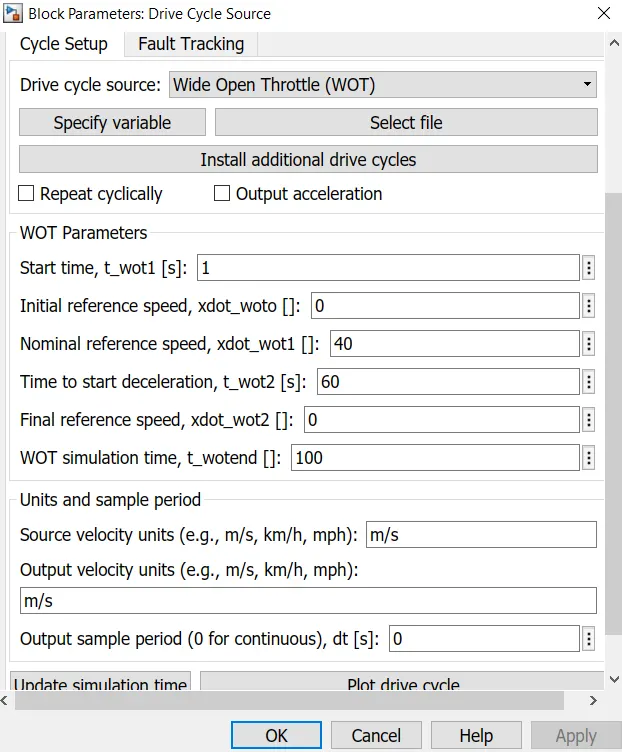
- Changing the wind speed speed and grade from the environment.
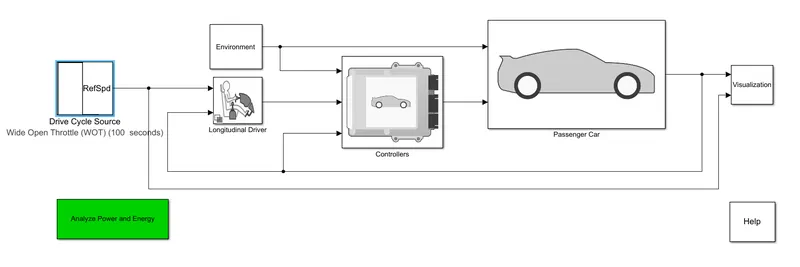
- The following are obtained for the WOT analysis.
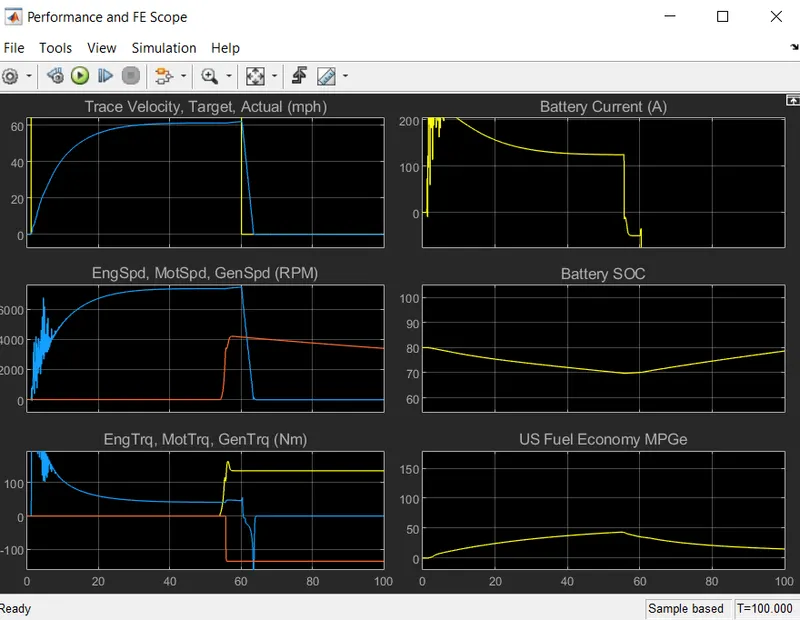
- In the trace velocity the yellow line indicates the desired path and the blue line indicates the actual path. This shows that battery is not enough to meet the requirements of the grade and wind velocity.
- Battery current graph is showing that when the vehicle is accelerating the battery current is also increasing. When the velocity is constant the current is also becoming constant. When the vehicle decelerates the battery current becomes negative becoming regenerative braking.
- Battery SOC keeps on depleting untill regenerative braking starts. This increases the SOC.
- Engine motor generative speed Initially one motor is used to start as the motor has initial high torque. Later generator kicks in starting to charge the battery. When the SOC drops below 70%.
- Engine motor torque is initially high (blue line) later the engine kicks in (yellow line). Generator torque is negative as its charging the battery.
4) Keeping all other parameters same, compare the simulated results of hybrid and pure electric powertrains.
- Now simulating the EV with WOT drivecycle, wind velocity as 5m/s, grade as 5 degree, and keeping the rest of the parameters same.
Simulated results of EV :
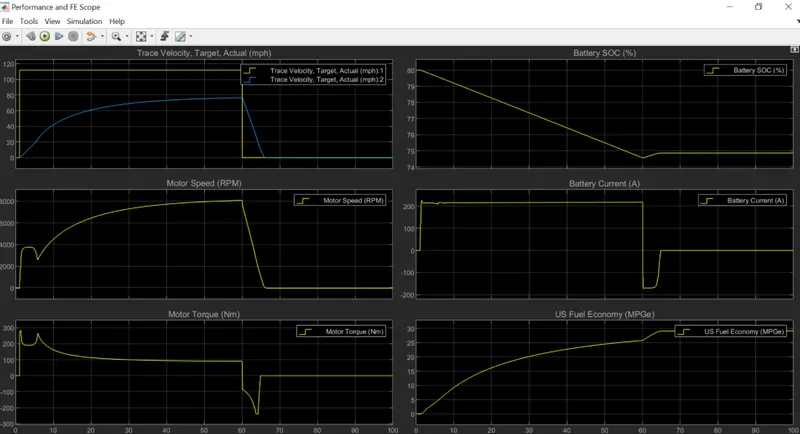
Simulated results of HEV :
- Fuel economy is significantly higher in EV when compared to HEV. This is because electric motor is efficient than engine.
- Motor torque and motor speed are stable in EV and they fluctuate a lot in HEV while starting. The peak rpm is also high in HEV when compared to the EV.