WOT Condition
AIM:
To study the EV and HEV with WOT drive cycle using Powertrain blockset.
OBJECTIVE:
- What is the difference between mapped and dynamic model of engine, motor and generator? How can you change model type?
- How does the model calculate miles per gallon? Which factors are considered to model fuel flow?
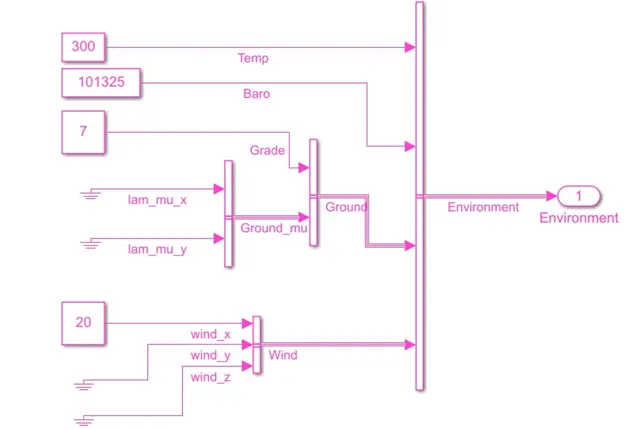
- Run the HEV ReferenceApplication with WOT drive cycle. Change the grade and wind velocity in the environment block. Comment on the results.
- Keeping all other parameters same, compare the simulated results of hybrid and pure electric powertrains.
STUDY 1: The difference between mapped and dynamic model of engine,motor and generator.How can you change model type.
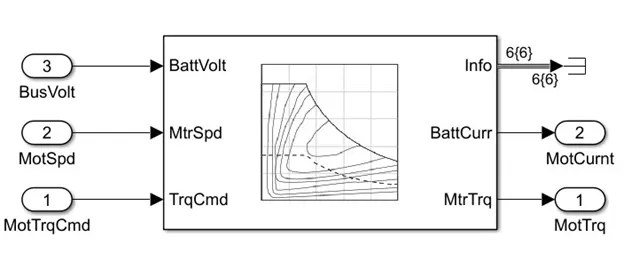
MAPPED MODEL
- The mapped model gives the pre requiste data with the help of lookup table.
- The mapped motor block implement the mapped motor and the driver electronics for torque control whereas for generator the speed and torque is added.
- The output torque tracks the torque reference and includes the motor response and drive time constant without real time consideration of motor ,engine parameters.
- It helps for faster simulation when we don’t know the exact motor,engine parameters.
- It does not require the dynamic characteristics of motor.
DYNAMIC MODEL
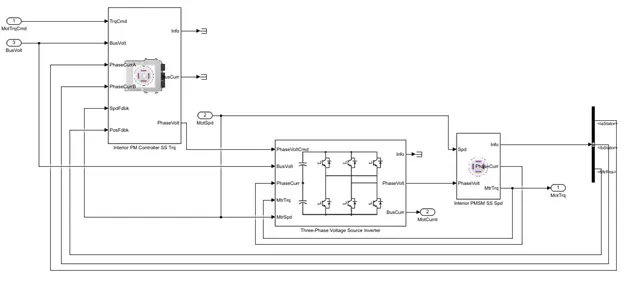
- The dynamic model uses the output of various subsystem result to generate the output.
- As per drive cycle requirement the bus voltage and current are given along with feedback so that it runs on the actual simulation with particular moment through the cycle.
- It provides the output with real time condition so that values can be accurate.
- The dynamic motor/generator such as low level component like three phase voltage source inverter,Interior PM controller and Interior PMSM SS speed affects the overall behaviour of the motor.
- It requires more time for simulation to take place as it has more individual components to run with the real time conditions.
STEPS TO CHANGE THE MODEL TYPE
- In the powertrain blockset model select the type of vehicle we want to use it and click the model.
- In the model click the Passenger car block.Click the Electric Plant.The Electric Plant subsytem appears.
- Right click the EV Motor/Generator block and click the variant and then click the Label active mode choice.In that Motor Generator EV mapped or dynamic.Choose the model you want.
STUDY 2: How does the model calculate miles per gallon? Which factors are considered to model fuel flow?
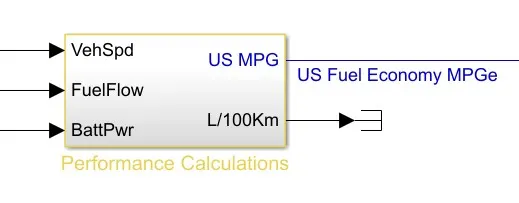
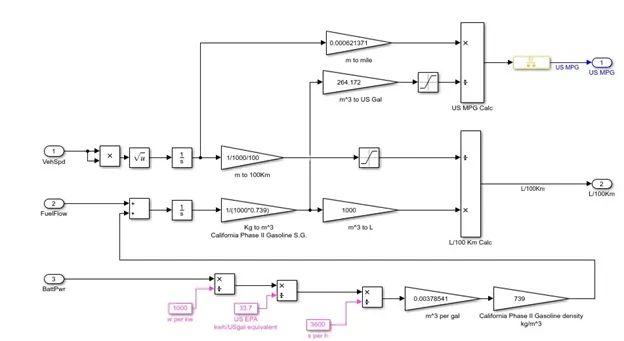
- The battery power is multiplied and then divided by 1000 so that battery power is changed from watt to kw.
- The result is divided by 33.7 so that it converts the kw to US EPA(kwh/USgal equivalent).
- The battery power value is converted to seconds by diving 3600.
- The resultant value is multiplied with gain of 0.00378541 and then with gasoline density of 739 so that the value is converted into kg/m^3.The resultant value is given as input to fuel flow.
- The fuel flow and battery power value in kg/m^3 are added and then integrated so that the values are converted into distance.
- The resultant value is multiplied with gain of 1/(1000*0.739) so that it converts the kg into m^3 value.The value is again multiplied with gain of 264.172 to convert m^3 into US Gal.
- The Vehicle speed is squared and square root so that value cannot be negative.The vehicle is also integrated so that the vehicle speed is converted into distance and then multiplied with gain of 0.000621371 to convert the meter into miles.
- The Vehicle speed in miles and the battery power and Fuel flow results in US gal are given as input to the product block.
- The US miles per galoon is calculated by Vehicle speed in miles divided by the result of battery power and Fuel flow result.
Factors affecting the fuel flow is battery power,environmental condition,fuel capacity,vehicle speed.
STUDY 3: Run the HEV ReferenceApplication with WOT drive cycle. Change the grade and wind velocity in the environment block. Comment on the results.
HYBRID ELECTRIC VEHICLE
The Hybrid electric vehicle is powered by the internal combustion engine in combination with one or more electric motor that uses the energy stored in battery.It improves the fuel economy,increased power or additional auxillary power of electronics and power tools.
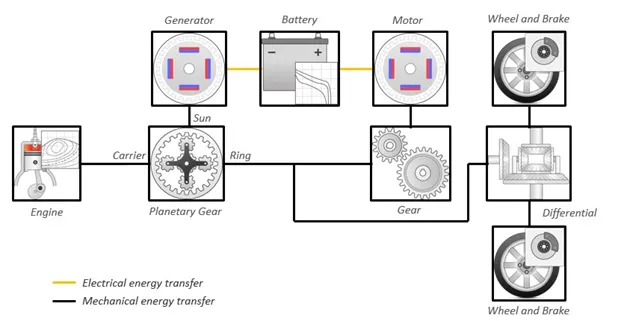
SIMULATION MODEL:
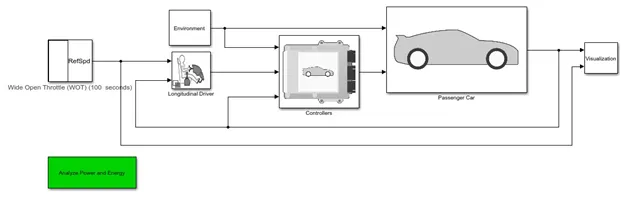
To change the grade and velocity output by clicking the Environment block in HEV model
OUTPUT:
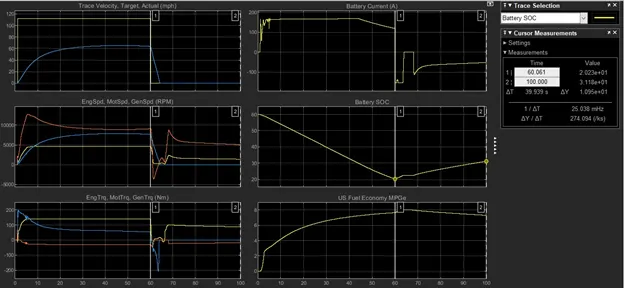
PLOT 1: MAXIMUM VELOCITY
Peak velocity = 63.7mph
Time taken to reach peak acceleration = 59 sec
Time taken to reach deceleration = 4.67 sec
PLOT 2: ENGINE,MOTOR AND TORQUE SPEED
Engine peak speed = 4625 rpm
Motor peak speed = 7679 rpm
Generator peak speed = 12672 rpm
PLOT 3: ENGINE ,MOTOR AND GENERATOR TORQUE
Engine torque = 139 Nm
Motor torque = 192.84Nm
Generator torque = 67.02 Nm
PLOT 4: BATTERY CURRENT
The discharge current from battery = 164.76A
The discharge current to the battery = -153.6A
PLOT 5: BATTERY SOC
Time taken by the battery to reduce the charge from 60% to 20% =59.43 sec
PLOT 6: FUEL ECONOMY
The distance covered by hybrid electric vehicle with wide open throotle drive cycle is 8miles
STUDY 4: Keeping all other parameters same, compare the simulated results of hybrid and pure electric powertrains.
ELECTRIC VEHICLE
Electric vehicle are propelled by electric motor powered by rechargeable battery packs.There is no internal combustion engine and no other fuel source is used.Electric vehicle requires battery charging to power the motor.
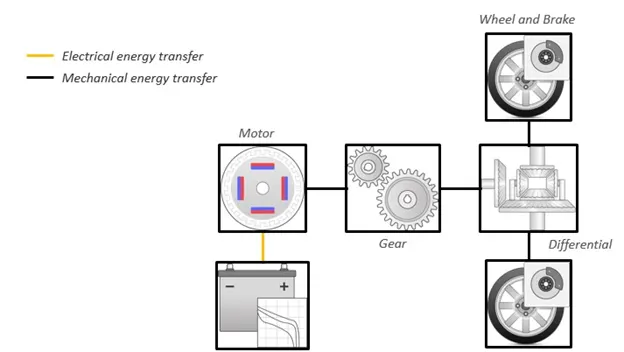
SIMULATION MODEL:
To change the grade and velocity output by clicking the Environment block in EV model
OUTPUT:
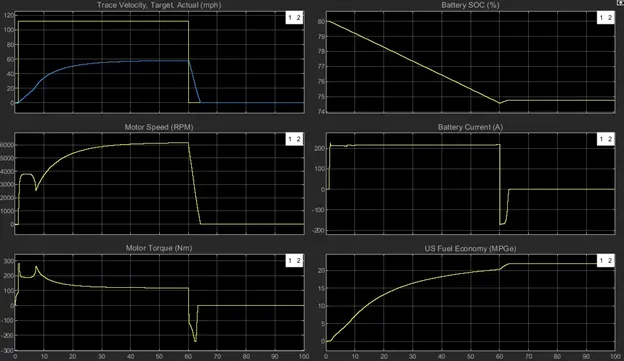
PLOT 1: MAXIMUM VELOCITY
Peak Velocity = 58mph
PLOT 2 : SPEED OF MOTOR
Motor speed = 6151rpm
PLOT 3: TORQUE OF MOTOR
Motor torque = 280 Nm
PLOT 4: BATTERY SOC
The time taken to reduce the battery charge from 80% to 75% = 58sec
PLOT 5: BATTERY CURRENT
The discharge current from the battery = 227A
The discharge current to the battery = -169.8A
PLOT 6: US FUEL ECONOMY
The distance covered by electric vehicle with wide open throttle drive cycle is 21miles.
OBSERVATION:
- The changes in grade and wind value affects the vehicle performance as the HEV produces more speed compared to EV.
- The motor torque in EV is higher than HEV
- The Lithium battery is used in EV so that charging capacity is higher as compared to Nickel ion battery used in HEV.
- The HEV covers the large distance with less span of time as the motor and engine speed are higher compared to EV
- The EV is ecofriendly and environment free whereas the HEV produce toxic gases which affect the environment.
- The distance covered by electric vehicle with wide open throttle driving condition is 21miles whereas in HEV is 8 miles.
RESULT:
Thus the comparison of Hybrid electric Vehicle and Electric Vehicle are obtained successfully.