Week 4 Challenge : CFD Meshing for BMW car
Objective:
The main objective of this task is to check the geometry for the error on a half portion, assign the PIDs, and generate the surface mesh for the entire BMW model with the given mesh parameters.
Geometry Details and Clean-up:
The given BMW model is split into half and deleted one half in a symmetric plane except the logo part which is shown below:
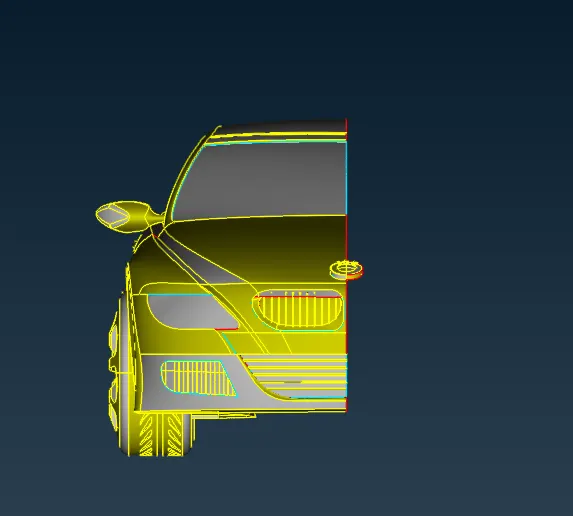
As the given model was not fine enough, the edges were refined by changing the perimeter length.
For the grill part:
The grill part is segregated using the iNOT option which consists of various single and triple cons as shown below:
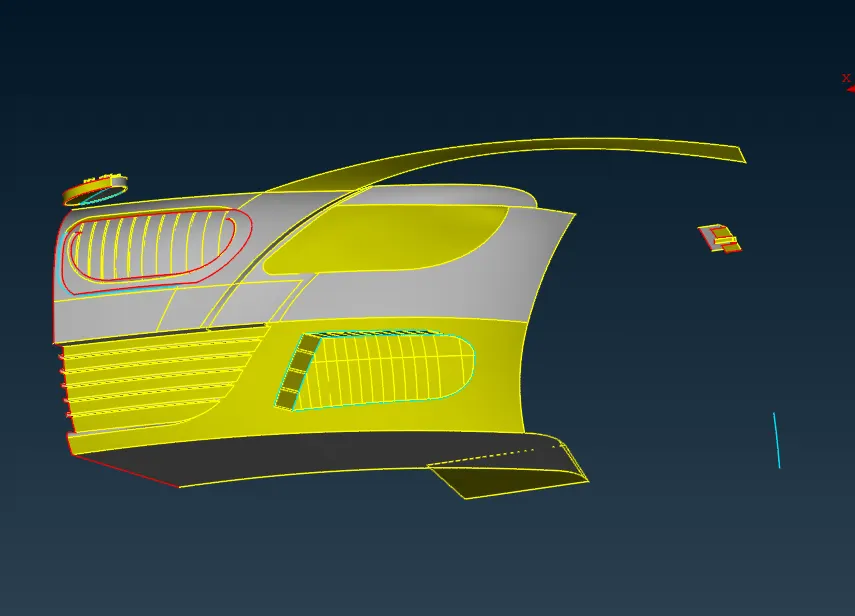
Single and triple cons were removed in different places using different approaches such as cut, paste, extend, intersect and so on.
The cleaned geometry for the grill part is shown below:
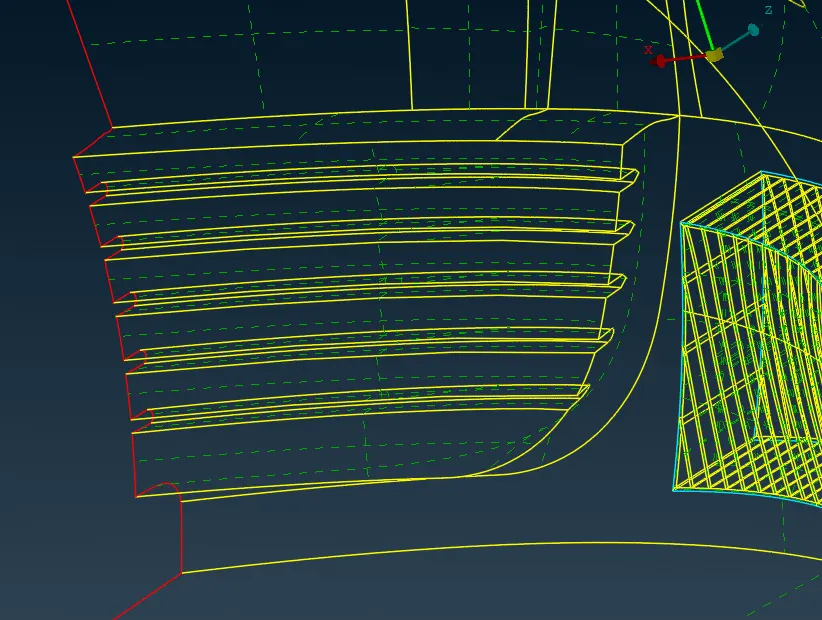
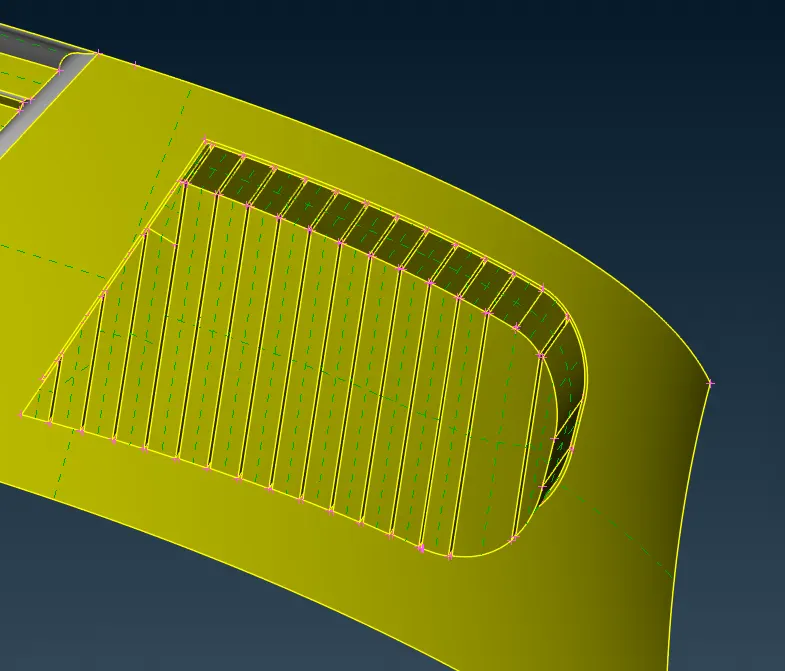
Further, the single cons were checked on other parts of the model and solved as taught in the course.
The front portion of the model is perfectly cleaned up without any single and triple cons as shown below:
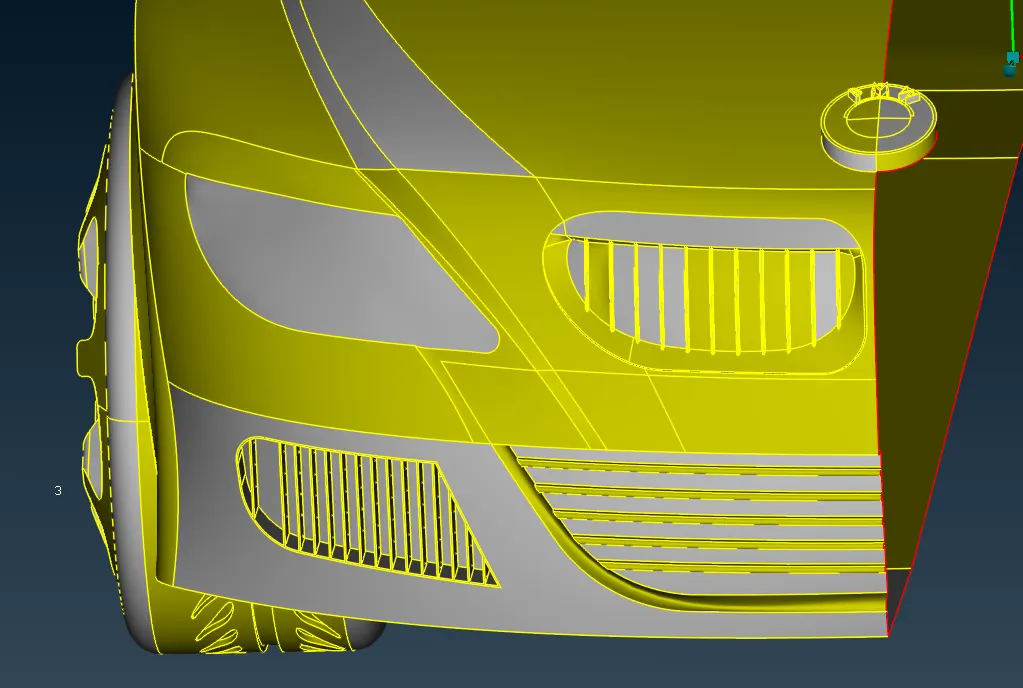
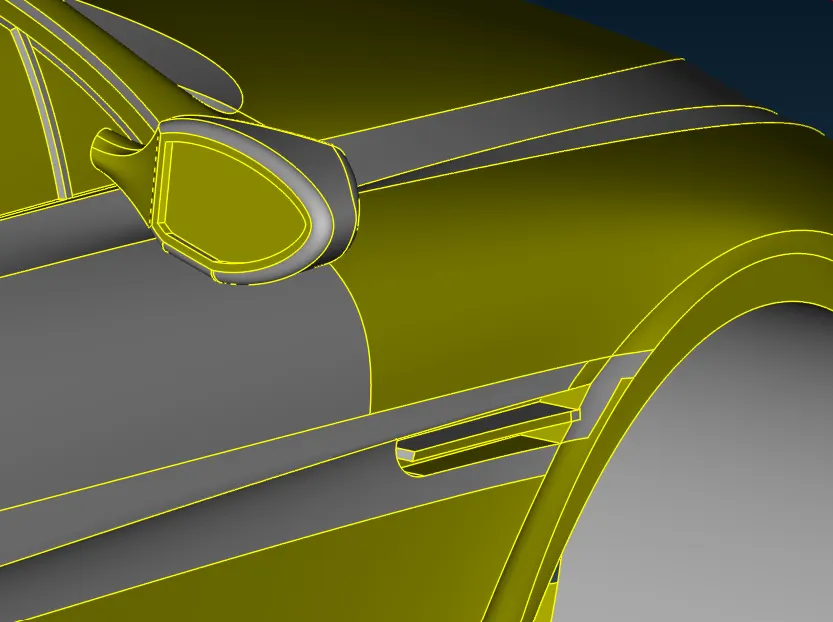
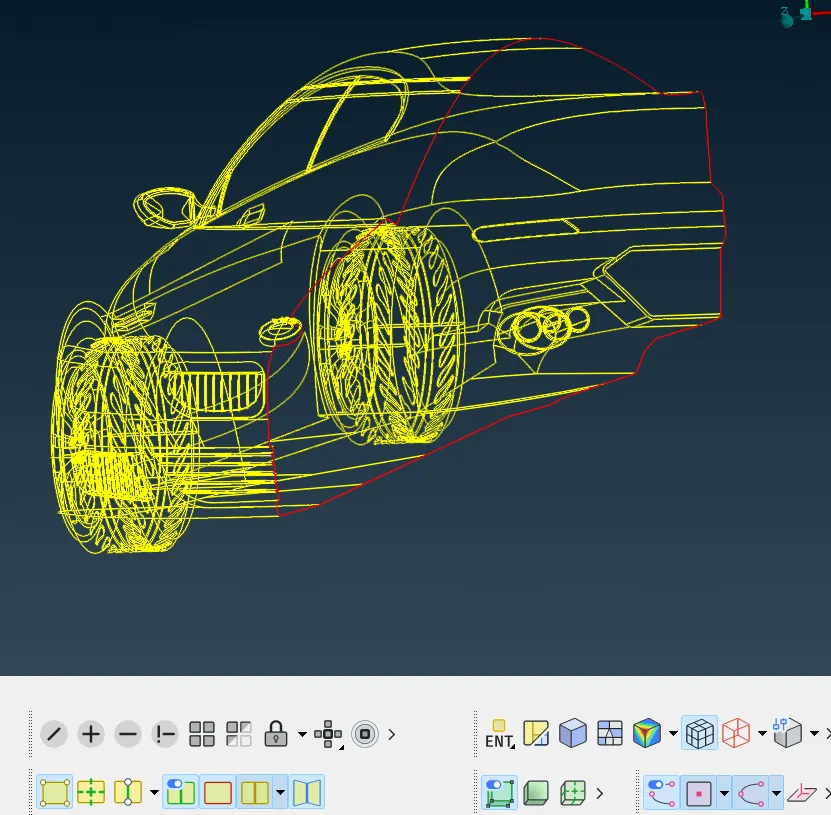
The single cons were found and solved on the rims, Tyres, base, and Mirror of the car and the cleaned geometry was ready for the surface with any errors on the faces of the entire body. The cleaned geometry is shown as a wireframe view below figure:
PID Assignment:
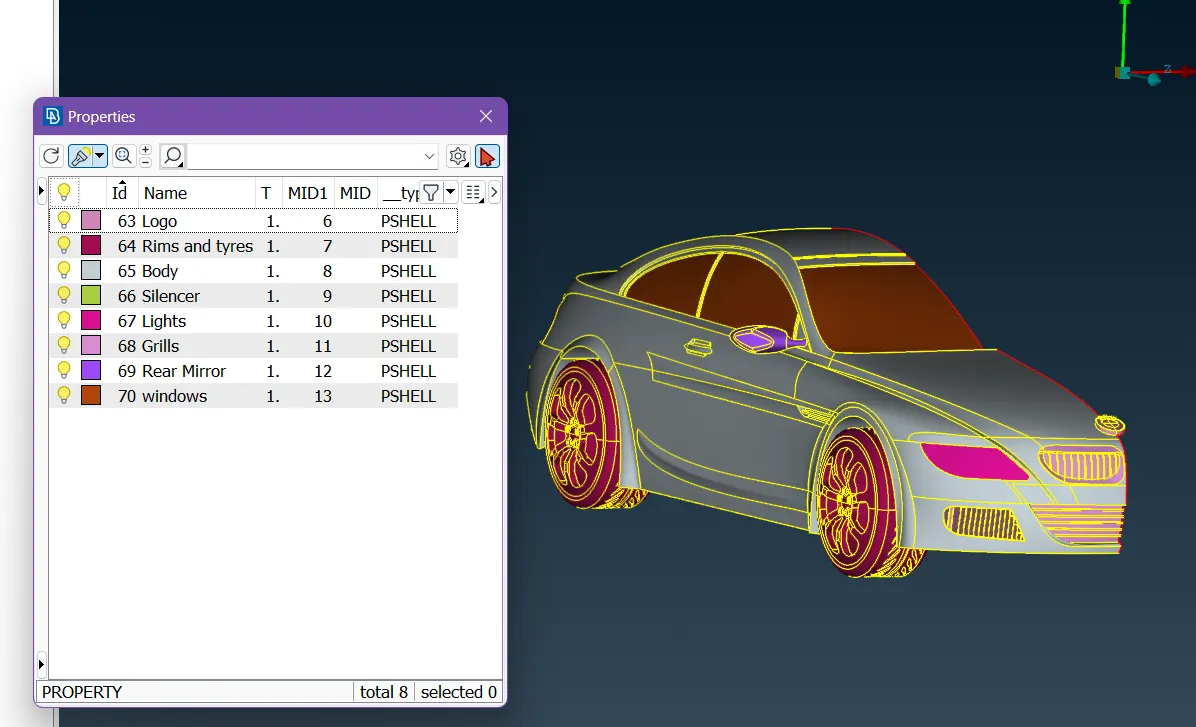
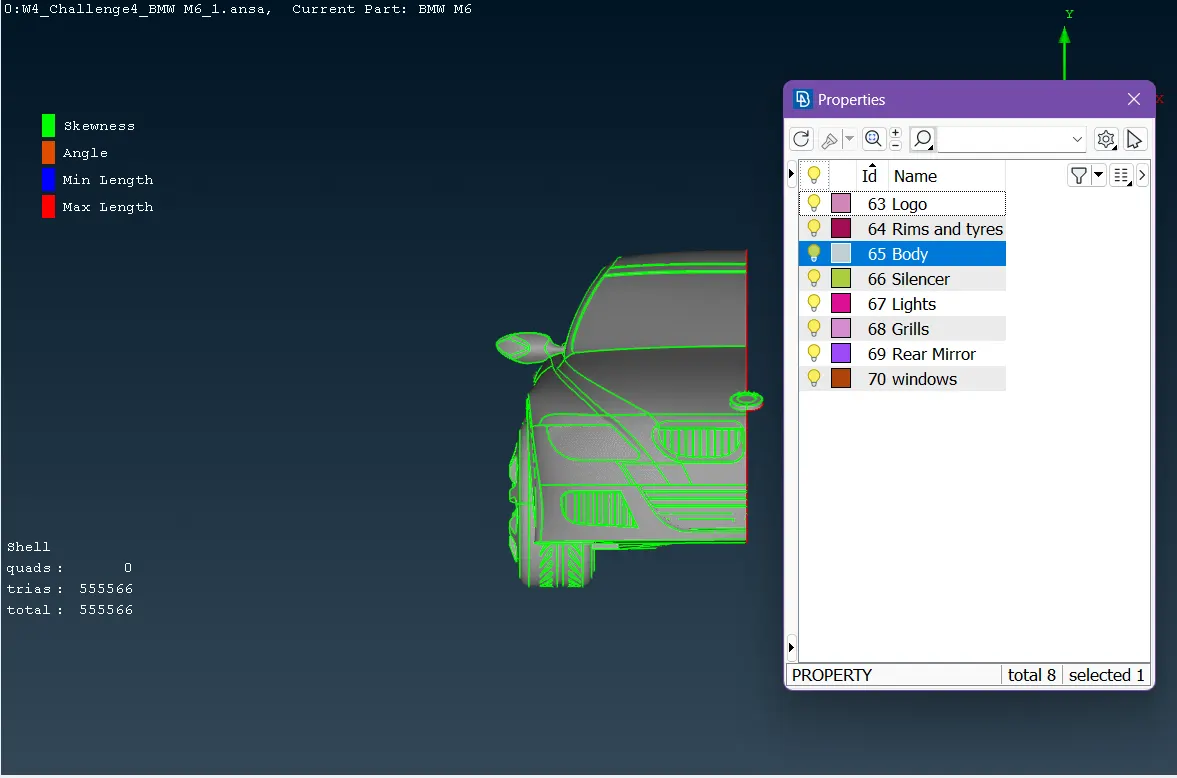
In the next step, the PIDs were assigned for the different parts of the model as per the requirement of a challenge to make the surface mesh. Then, the extra existing PIDs were deleted using the compress option. PIDs are shown below:
Generation of Surface Mesh:
The surface mesh was generated for individual PIDs as per the size of the PIDs and as per the given parameters:
Target lengths for the different parts of a model are as follows:
- Body - 3 mm
- Lights - 4 mm
- Grills - 1 mm
- Rims and Tyres - 2 mm
- Optical Rear view mirror - 2 mm
- Window - 2 mm
- Silencer - 3 mm
- Logo - 1 mm
The surface was generated using the spot mesh and offsets were removed using the reconstruct options. The final surface mesh without offset is shown below:
The total number of surface mesh for one half is ~5 million.
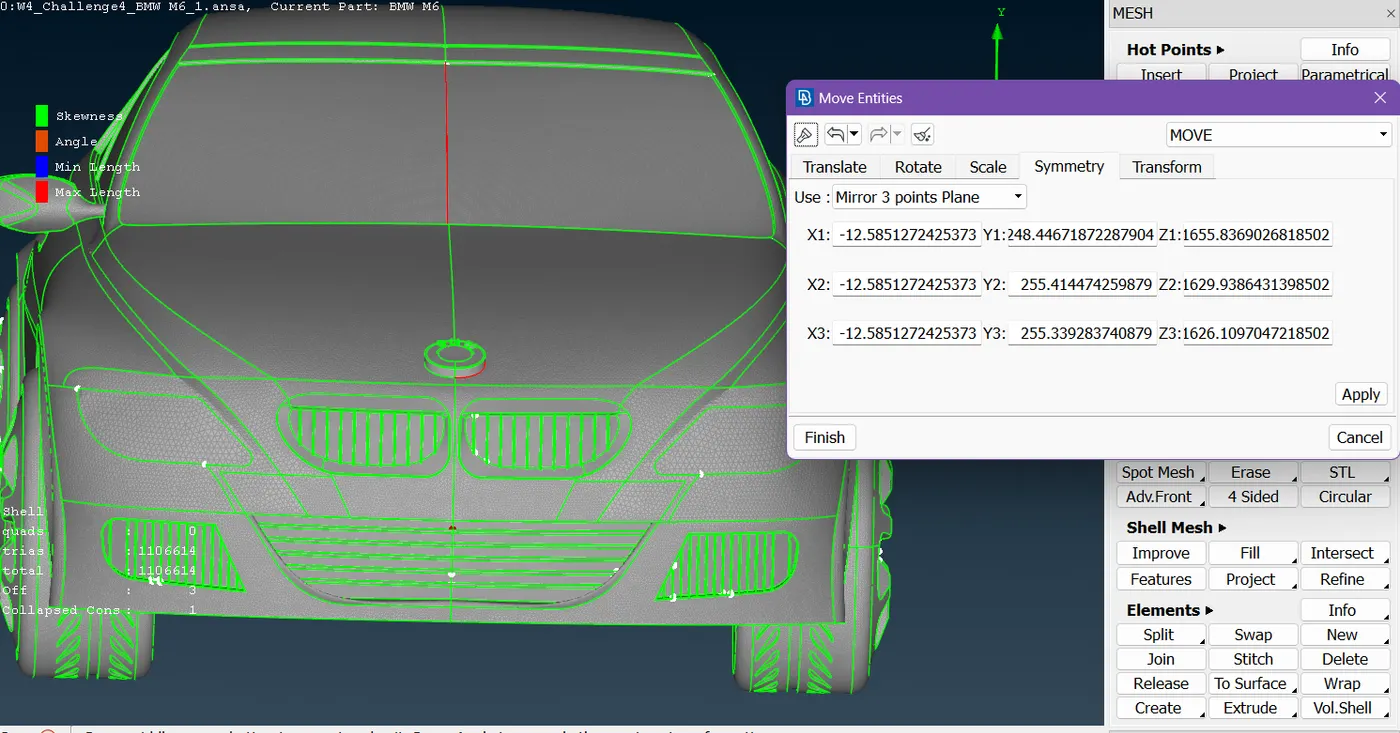
Then, the model is copied onto the other side to make the entire model using copy --> symmetric using the 3-point plane option.
The total number of surface cells was found as ~ 11 million.
The final model projected on the other side is shown below:
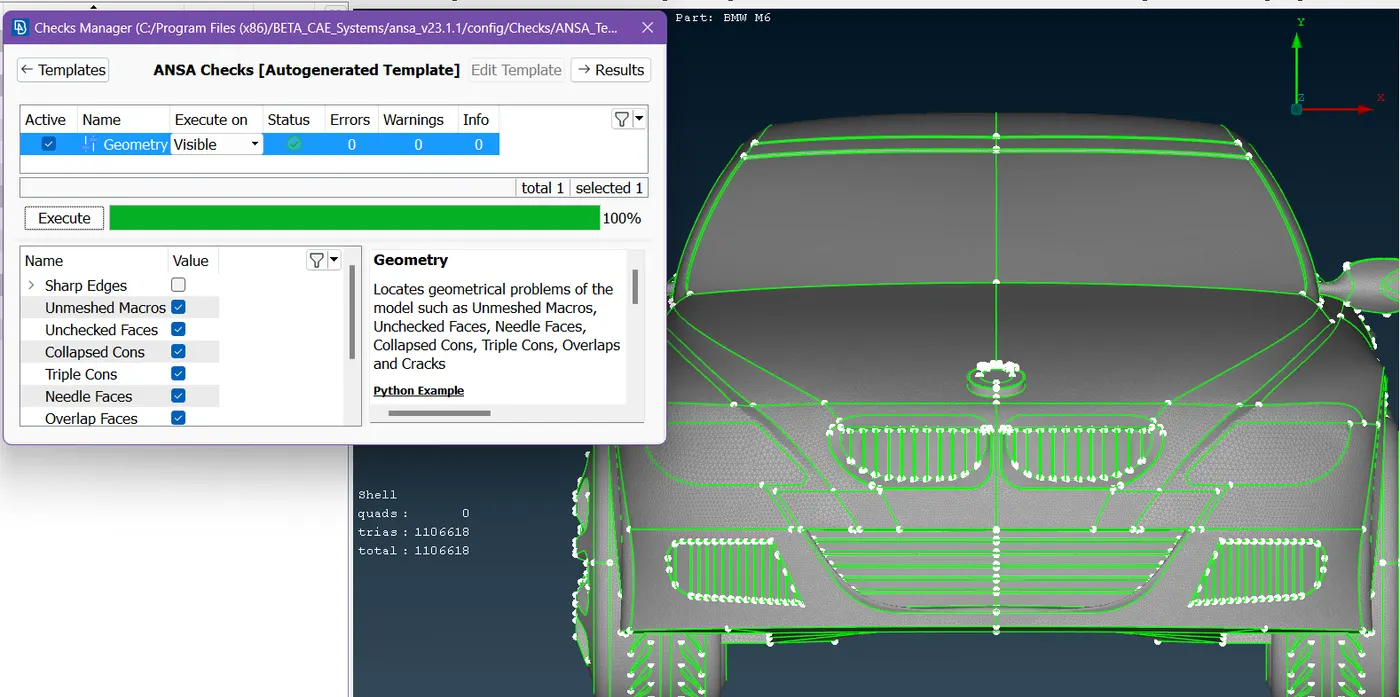
The surface mesh was checked for the unmeshed face and single cons, the status was found as correct without any errors as shown:
Windtunnel Section:
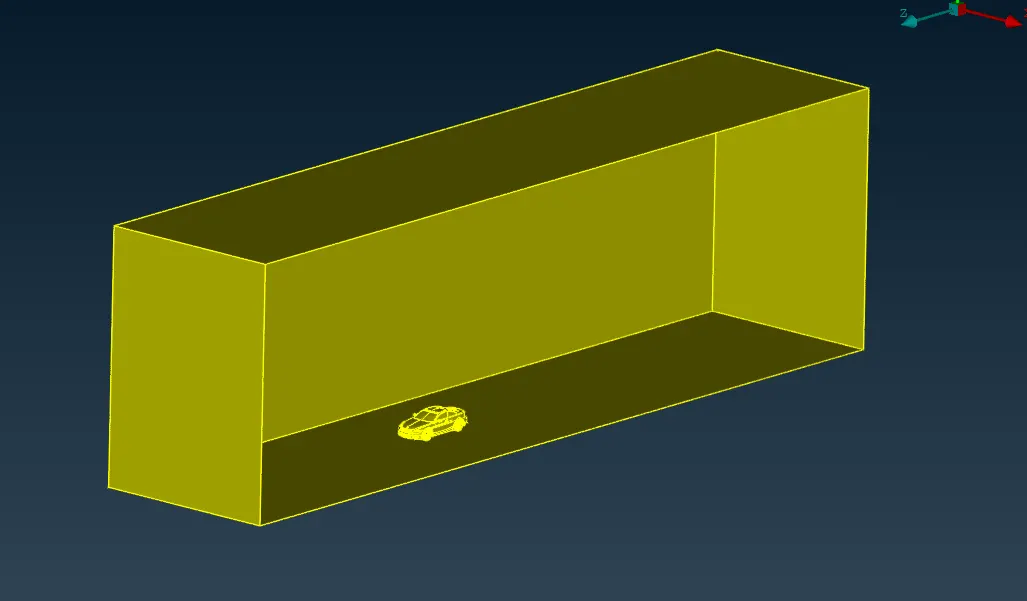
The wind tunnel test section is created using the point creation option, then the curve is created on the points with which the face was created.The face is made on the opposite side with an offset option. The test section is to be made as 10L X 3L X 2L.
The test section is shown below:
The varying cells were created as per the area of interest over the car using spacing option which is shown below.
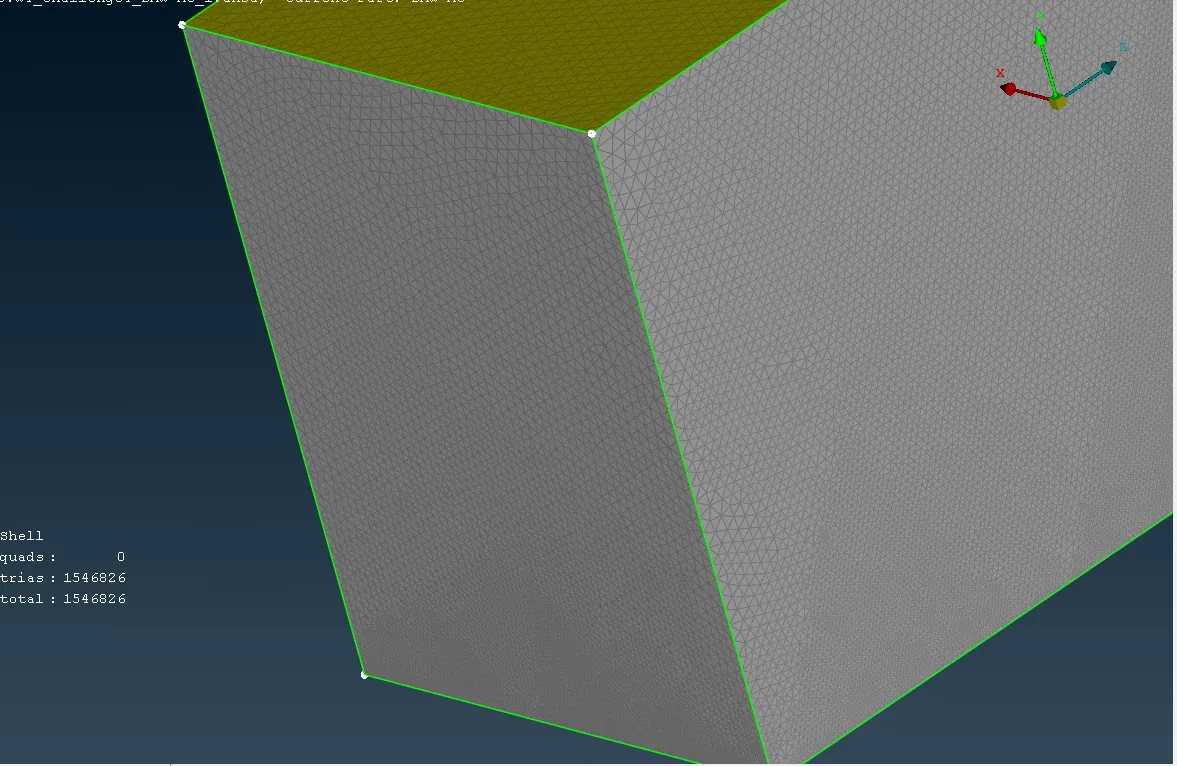
Volume Mesh:
The volume mesh has to be created for the volume over the car (inside the test section). The available volume for the entire database model is checked using the define option. Other 8 volumes except the over the car were deleted such as 4 tyres, inside car and silencer.
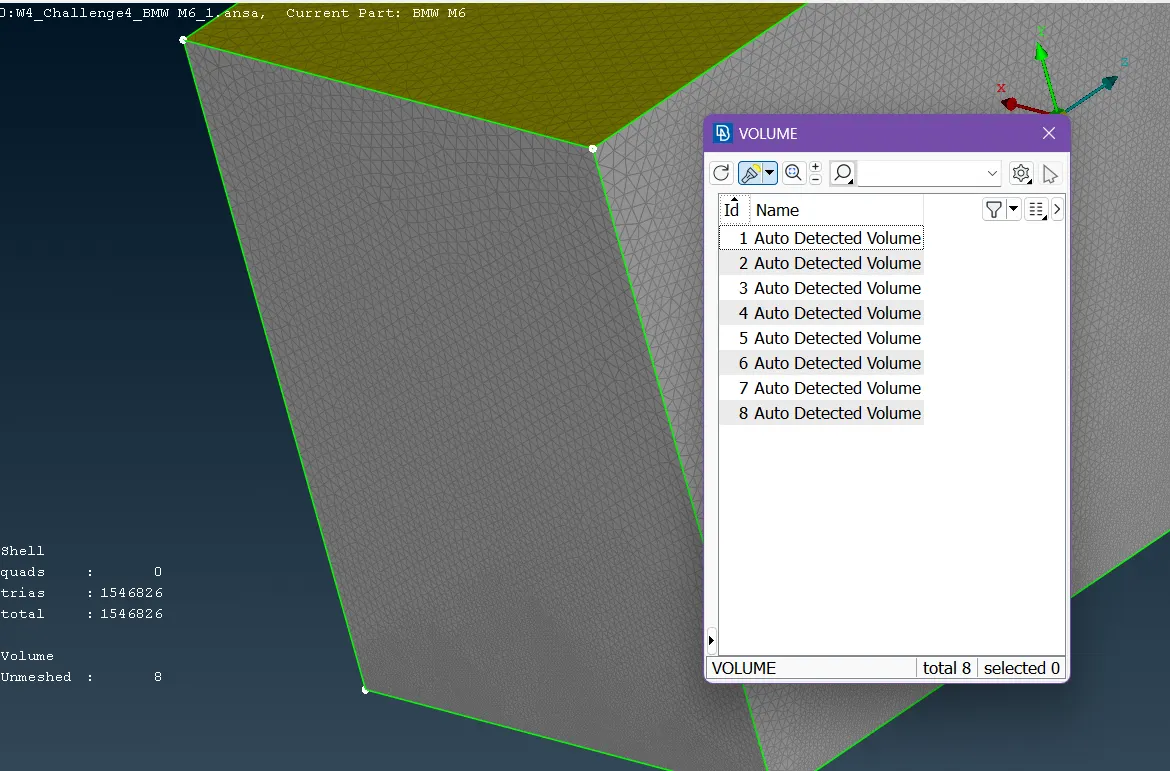
As the volume mesh takes nearly more than a day, it is not enclosed with this task.
Conclusion:
- The geometry check for the complicated model was resolved and the different ways were learned to remove the single and triple cons.
- The creating curve with points and cons was also learnt in this challenge.
- The total number of surface cells was found as ~ 11 million.