Week 4 Challenge
AIM:
- To design the abutment foundation as per IRC 6 loads and to optimize design as per IRC 112.
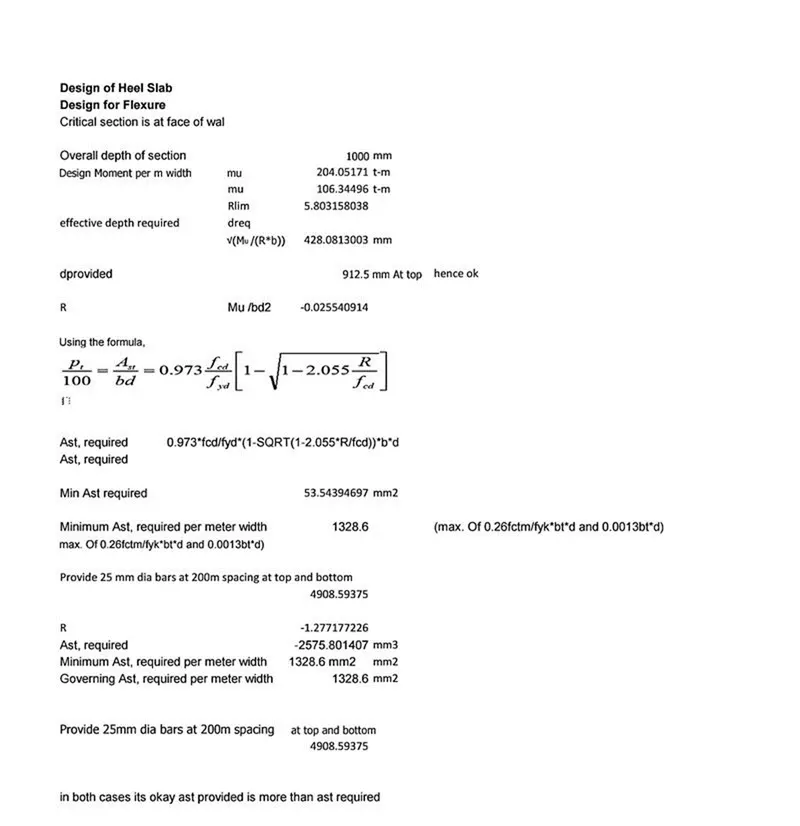
- To Detail the steel in the shallow foundation for the abutment.
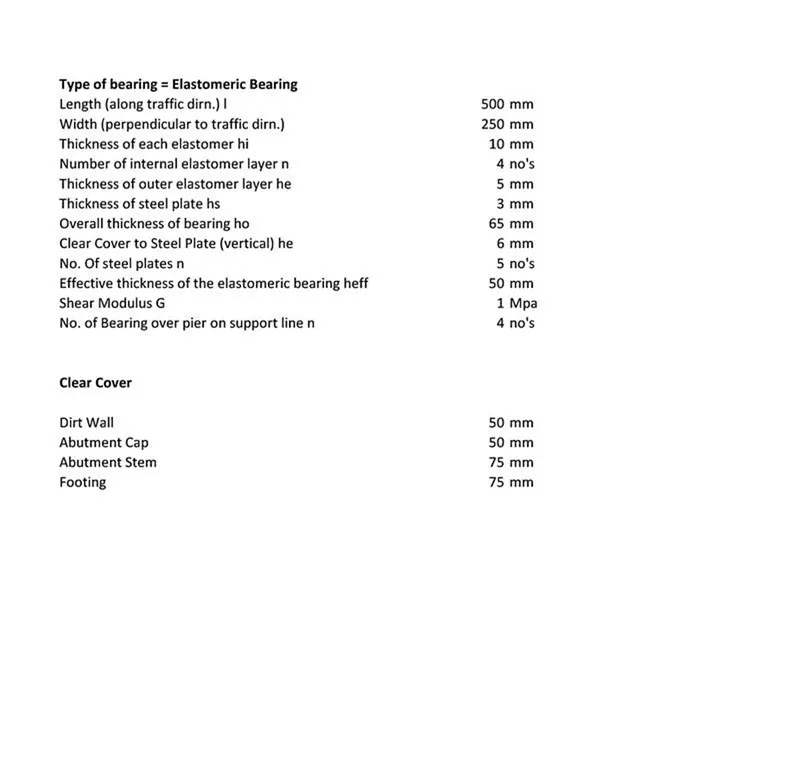
- To calculate the reaction on the bearings from the superstructure considering the given sections.
- To explain how a shallow foundation differs from flyovers and in river bridges in terms of stability, design, construction.
PROCEDURE:
- This project is about the design of the abutment. The Superstructure consists of an RCC beam of 14.4 m span supported on the elastomeric bearing.
- The substructure consists of an abutment on the open foundation.
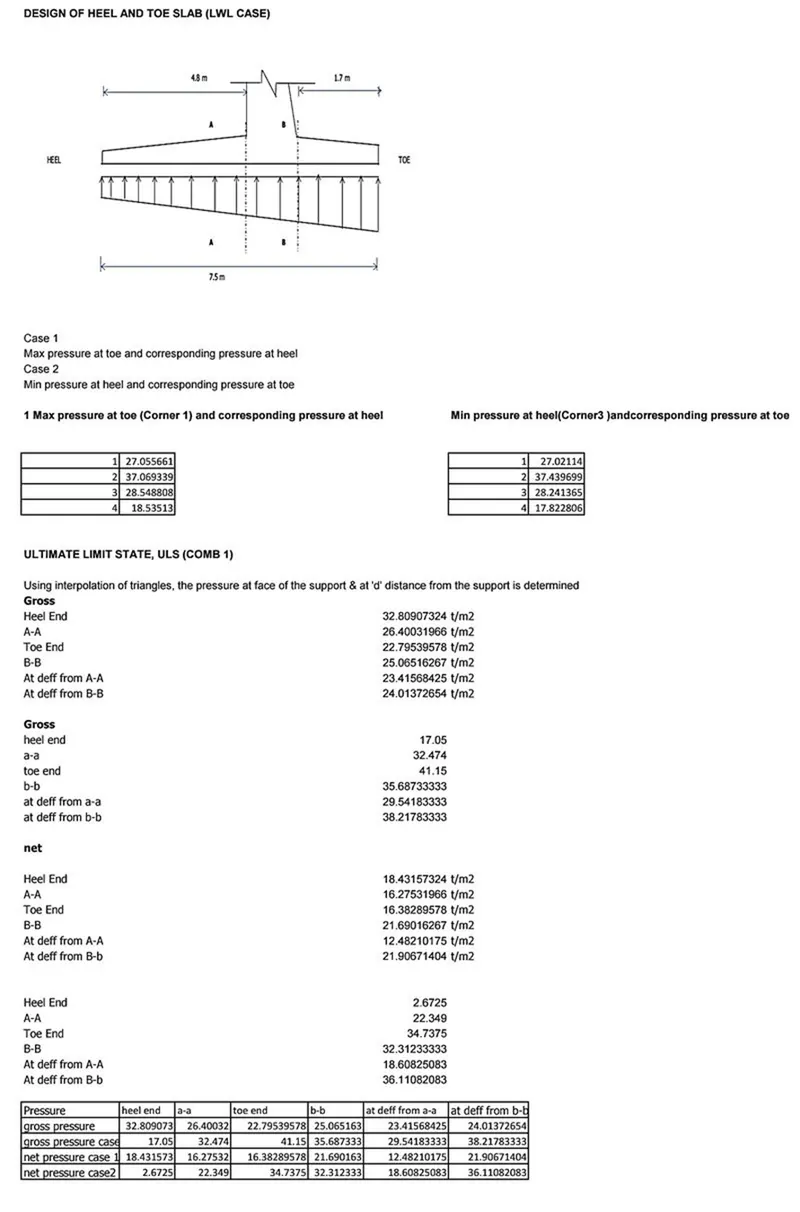
- open foundation design involves the steps Design data, load calculations, load combination, design of foundation, dimensions of the slab and reinforcement detailing.
Design data:
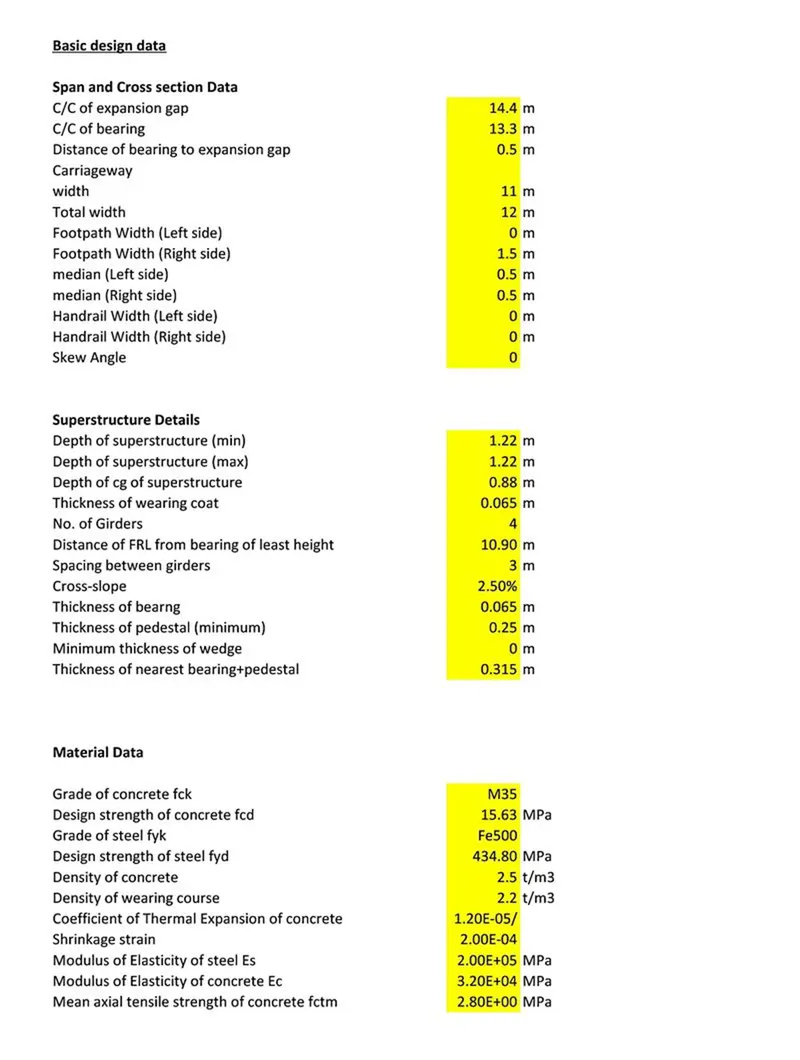
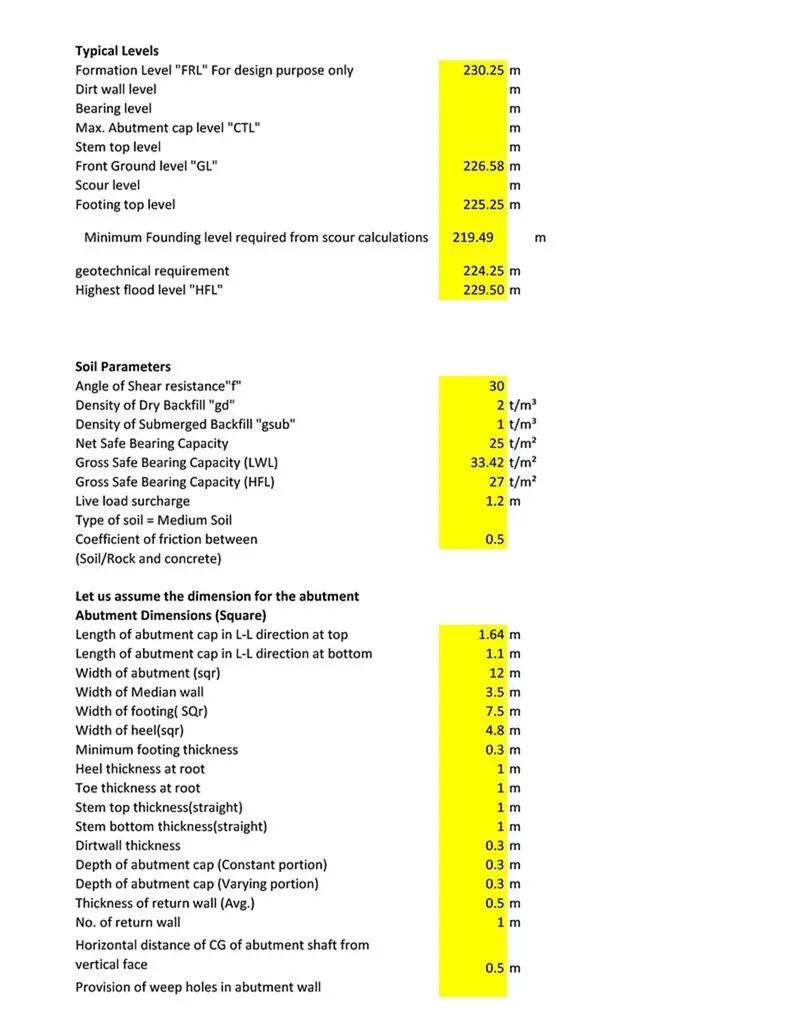
- The design data will have the following details carriageway details, span, superstructure details, material grade, geotechnical data.
- This design data gives details about dimensions like width, c/c distance, thickness, spacing, wall level, the density of soil and others.
- And also we assume heel slab thickness, toe slab thickness and footing dimensions.
Load calculation:
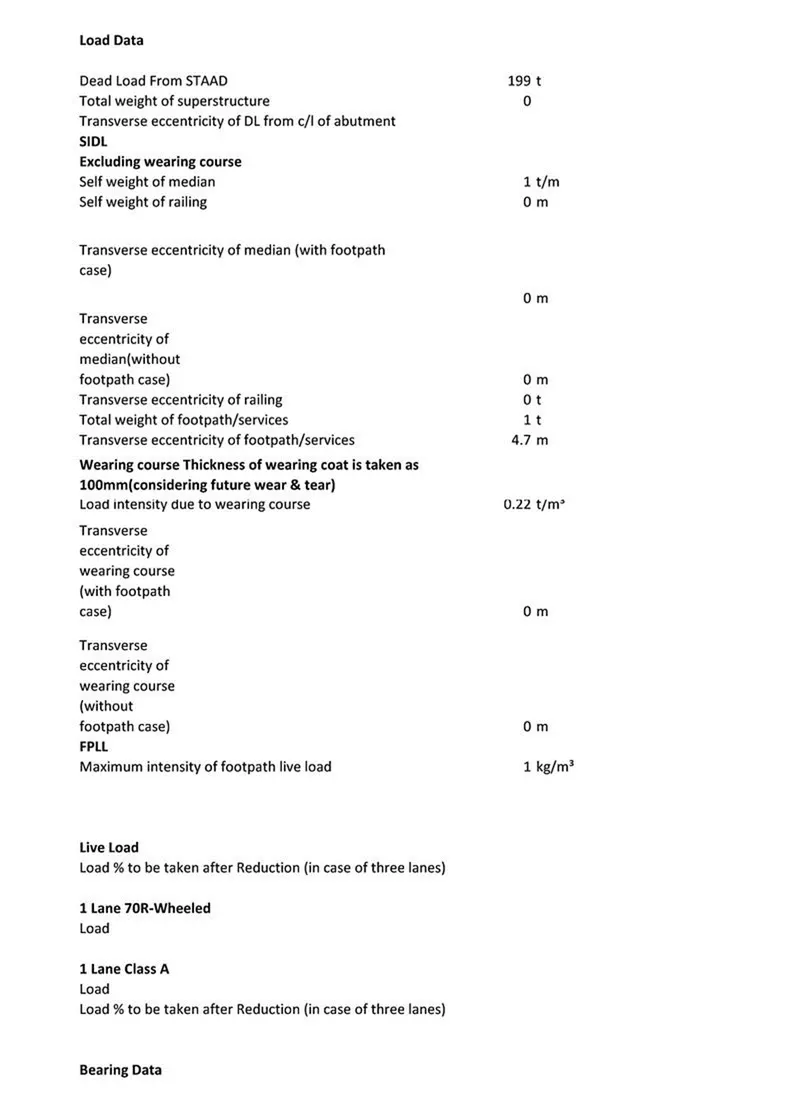
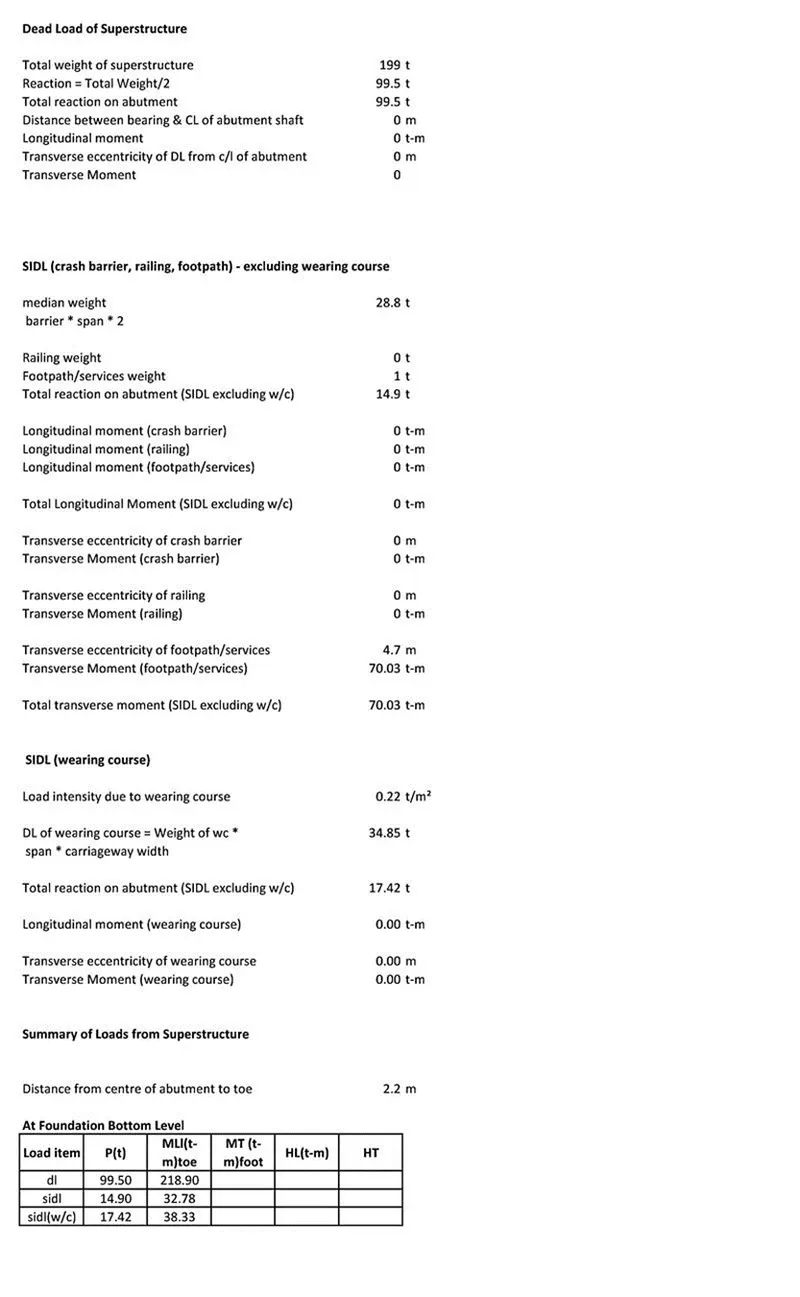
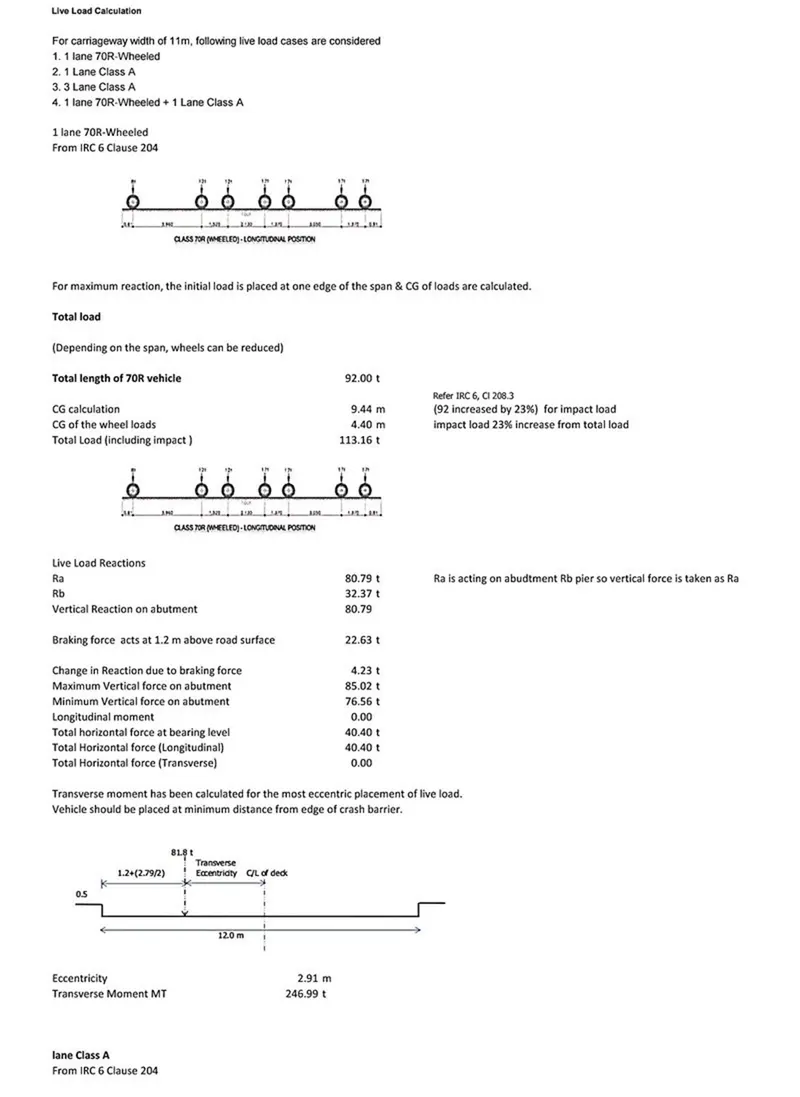
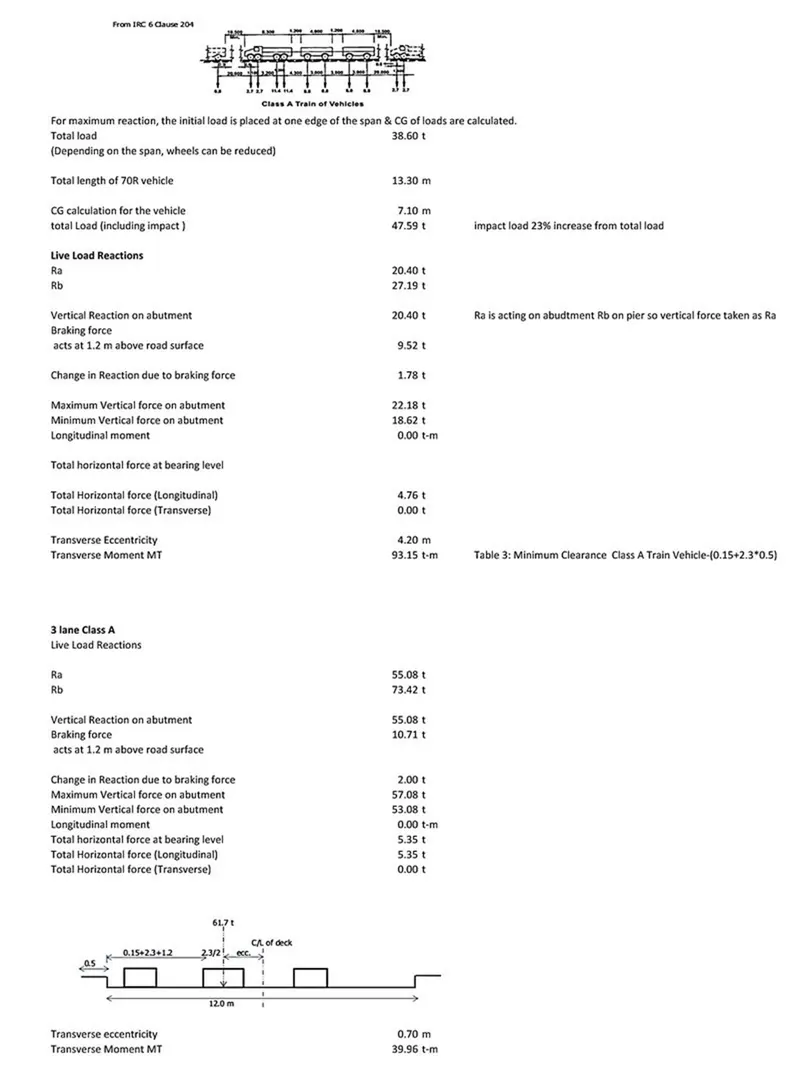
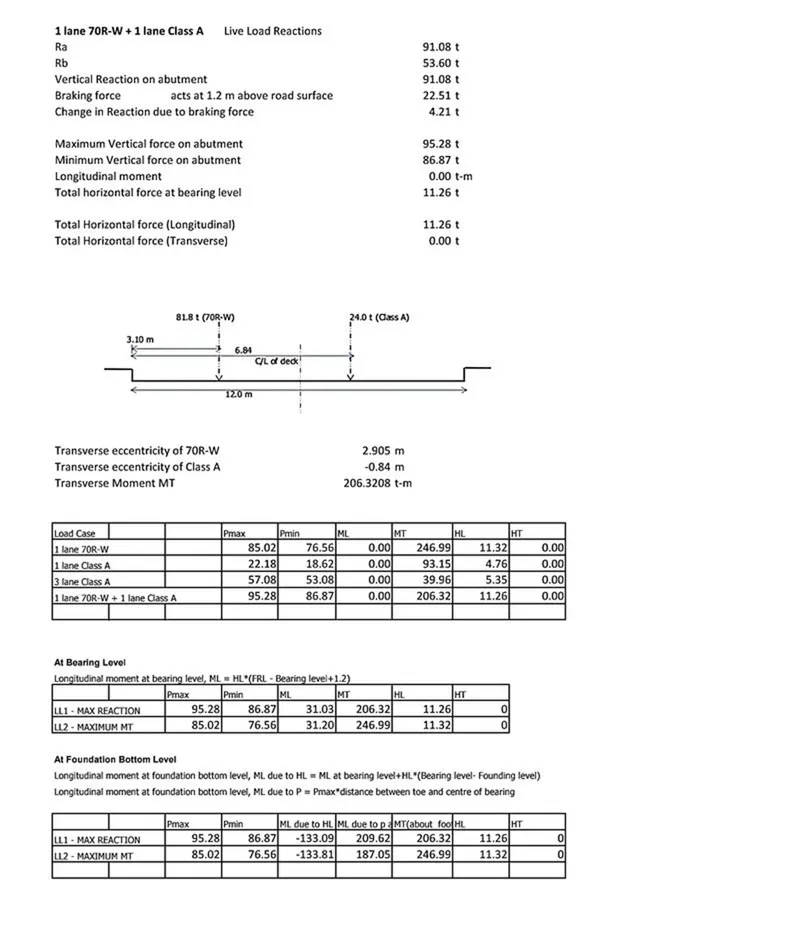
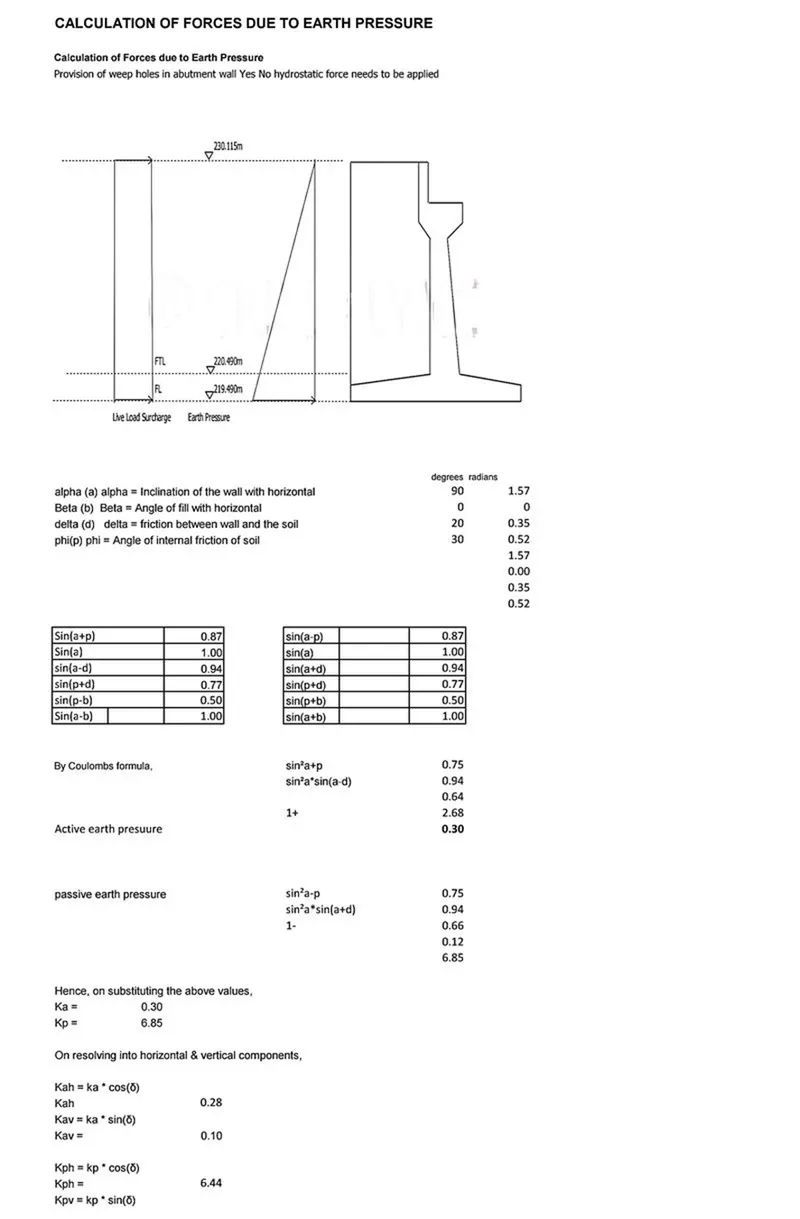
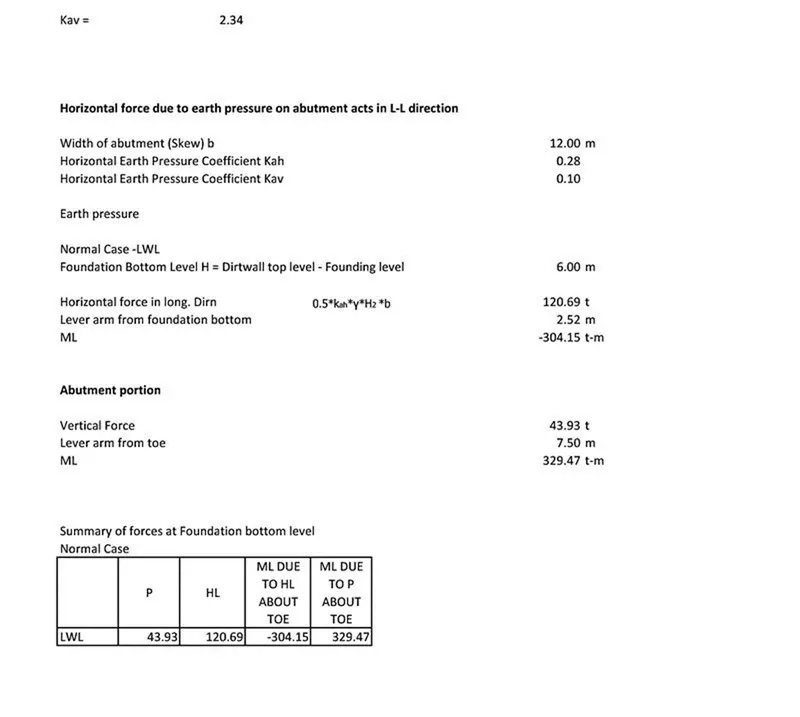
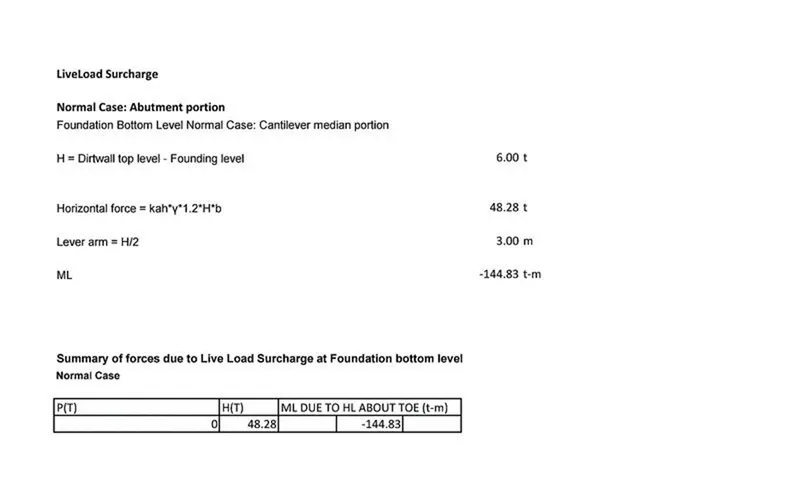
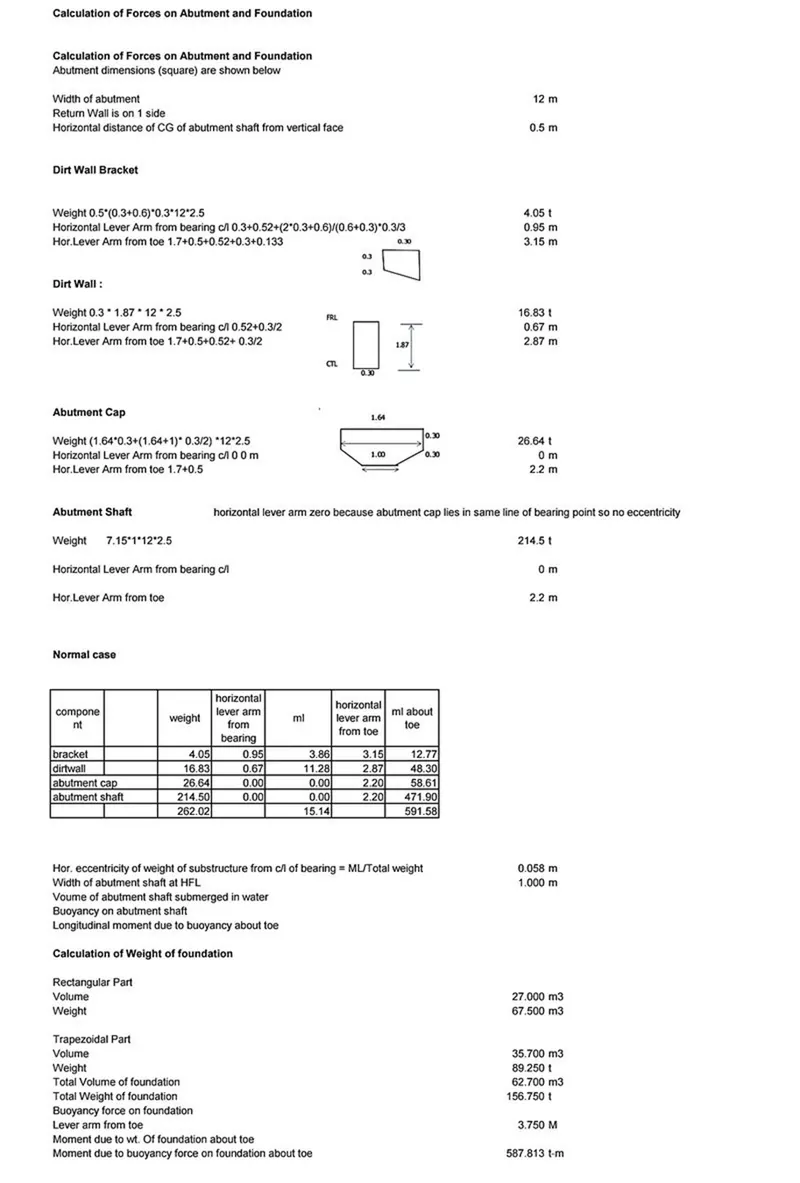
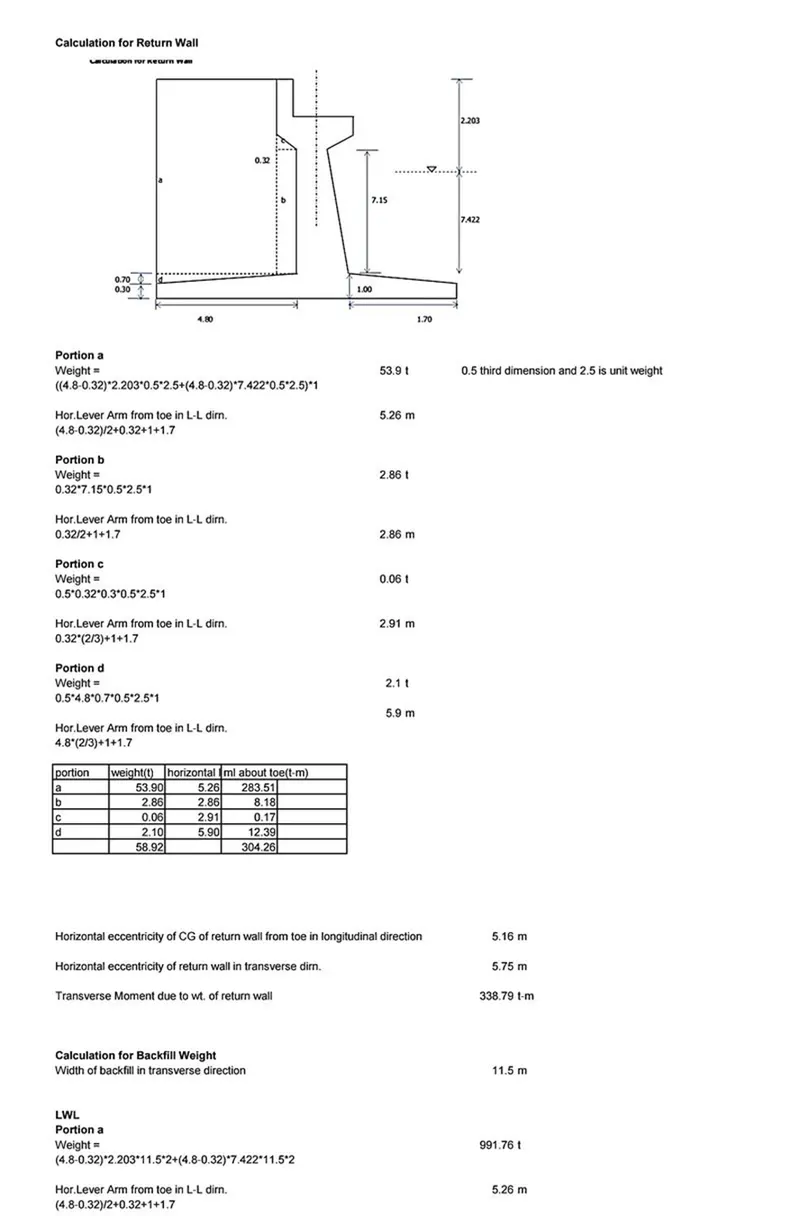
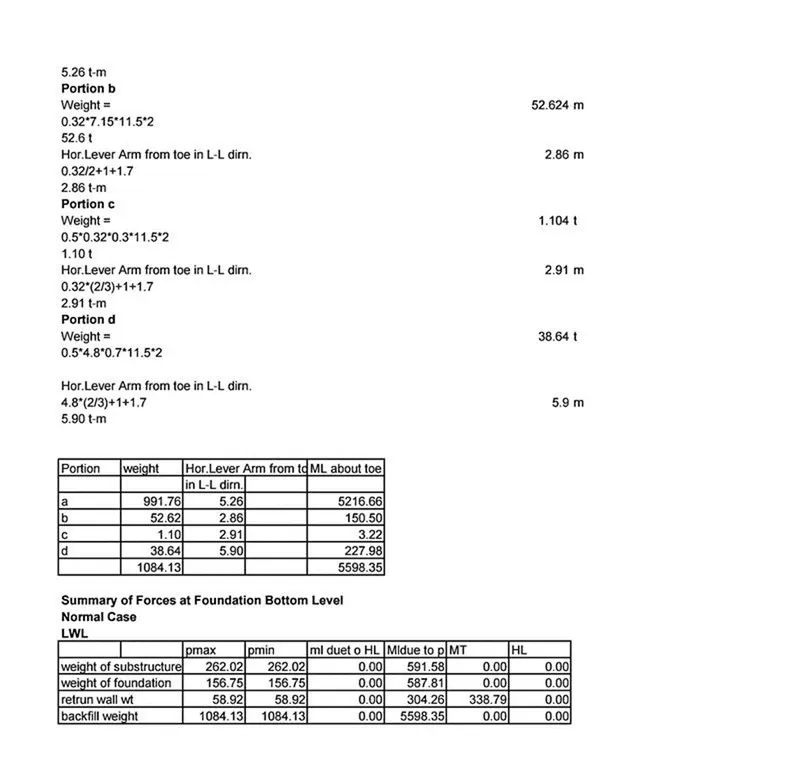
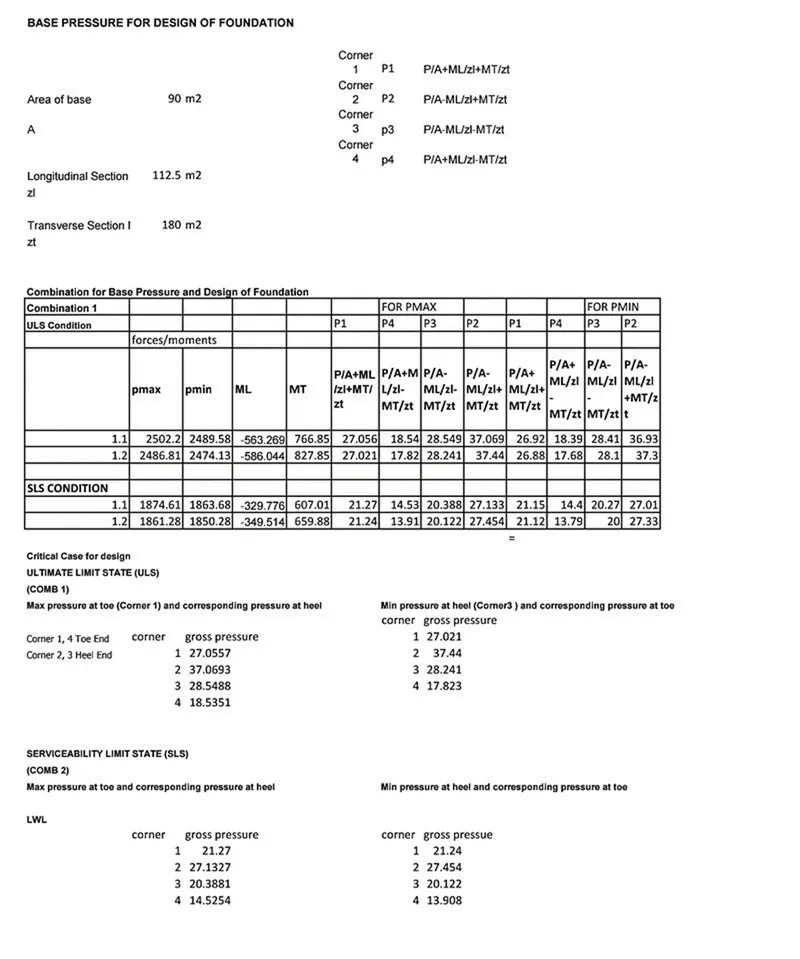
- The load data involves the calculation of dead load, live load, superimposed loads, earth pressure loads, and weight of abutment, footing and soil.
- In these calculations, we calculate total weight, longitudinal moment, transverse moment, reactions, braking forces and others.
Load combination:
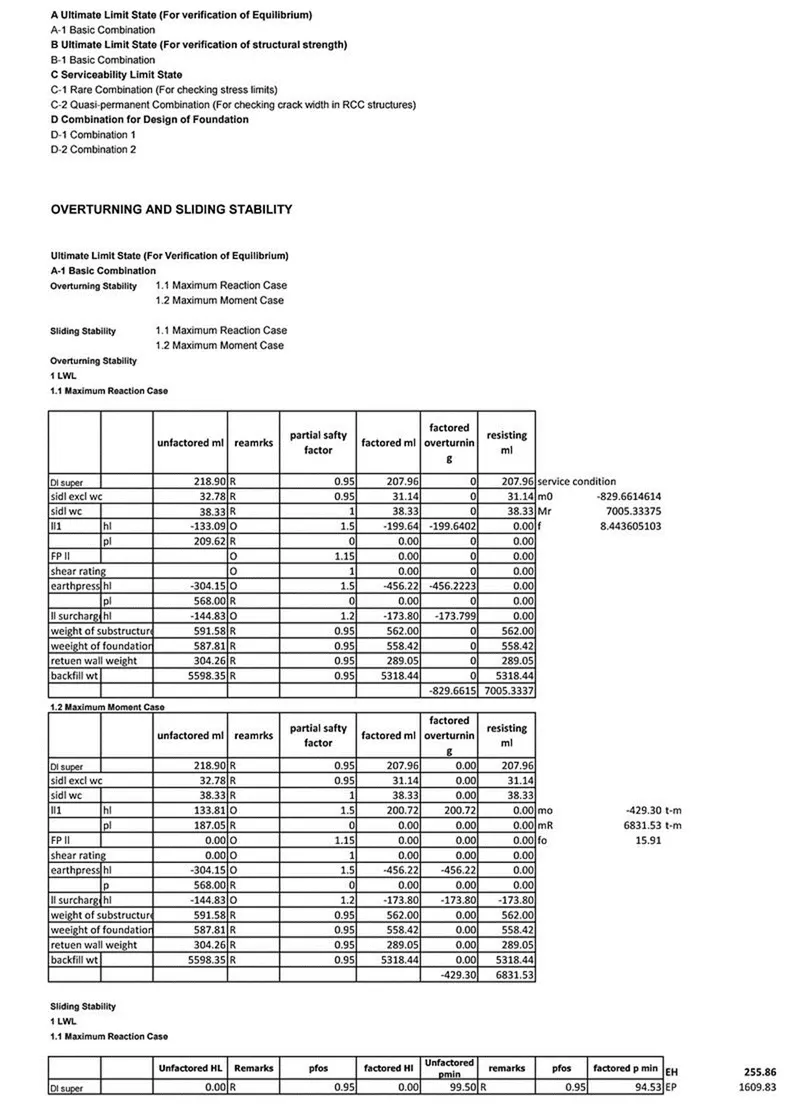
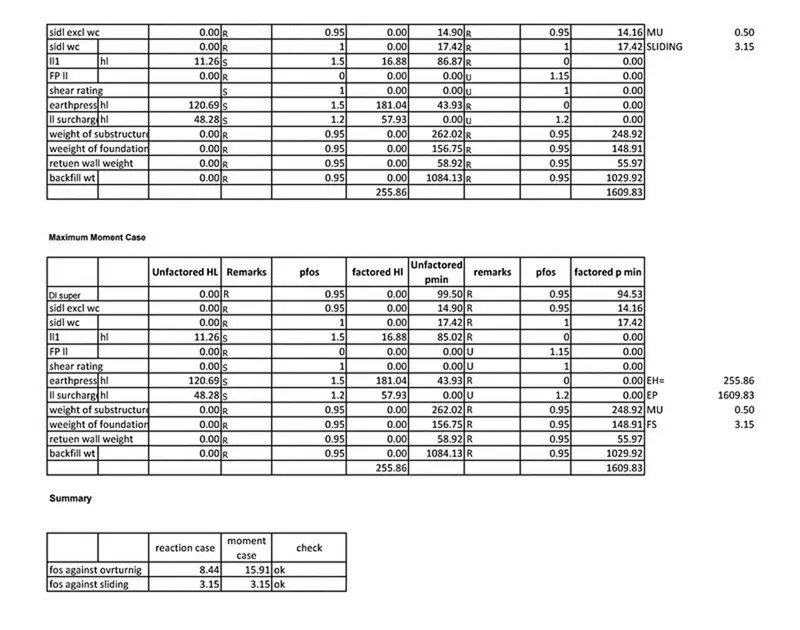
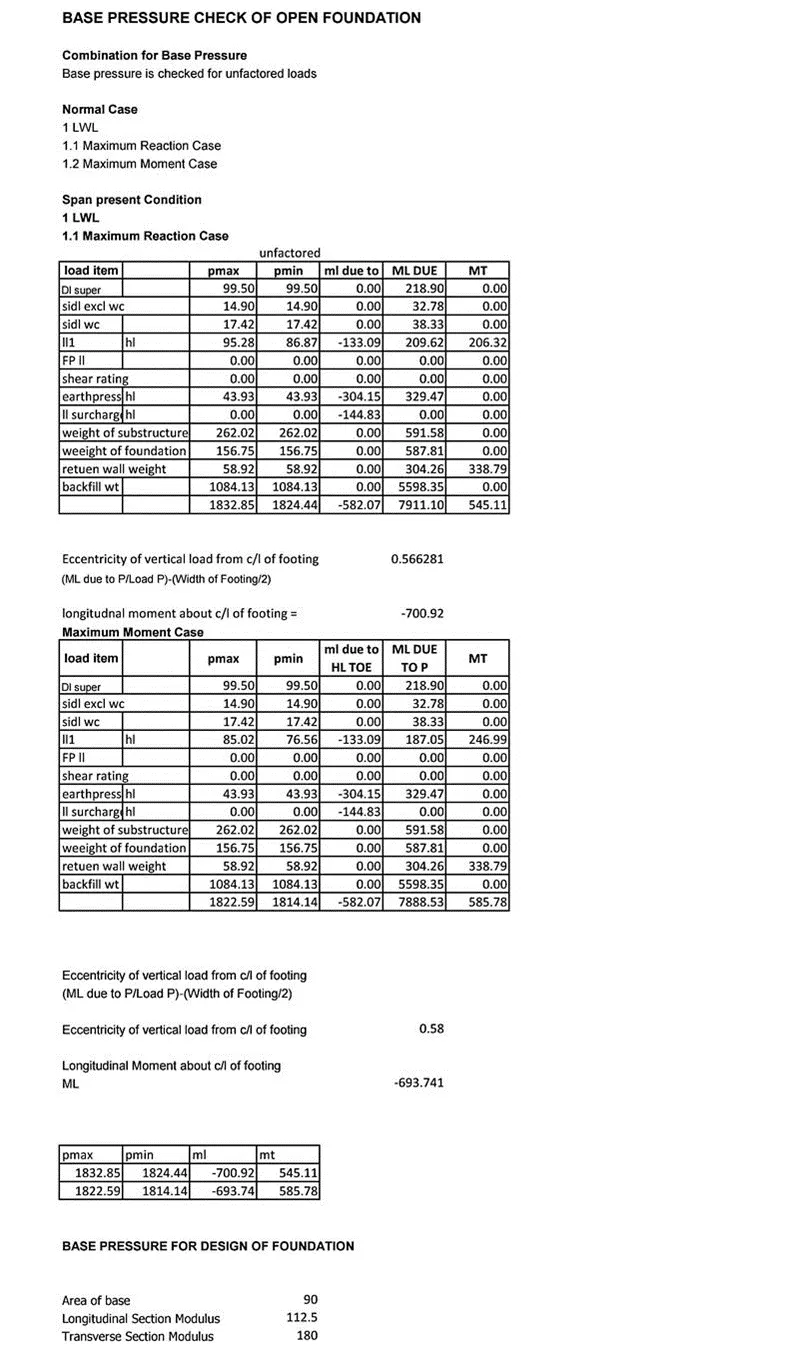
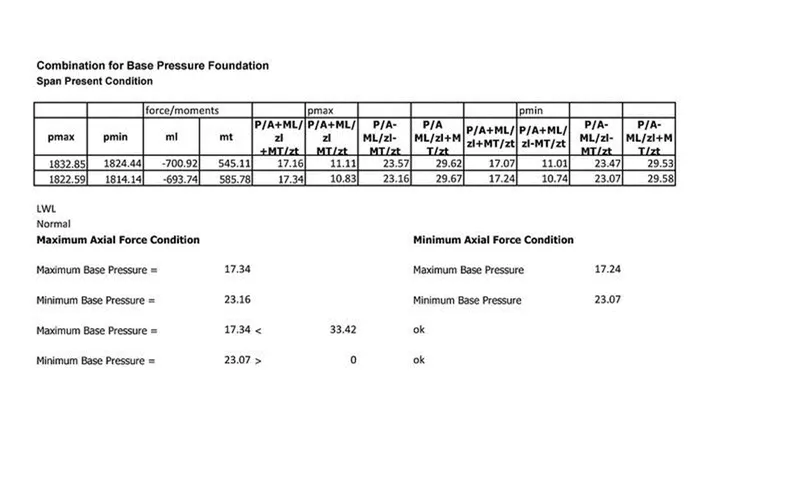
- In this, we have two checks base pressure check and stability check, in the stability check we check for overturning stability and sliding stability.
Design of foundation:
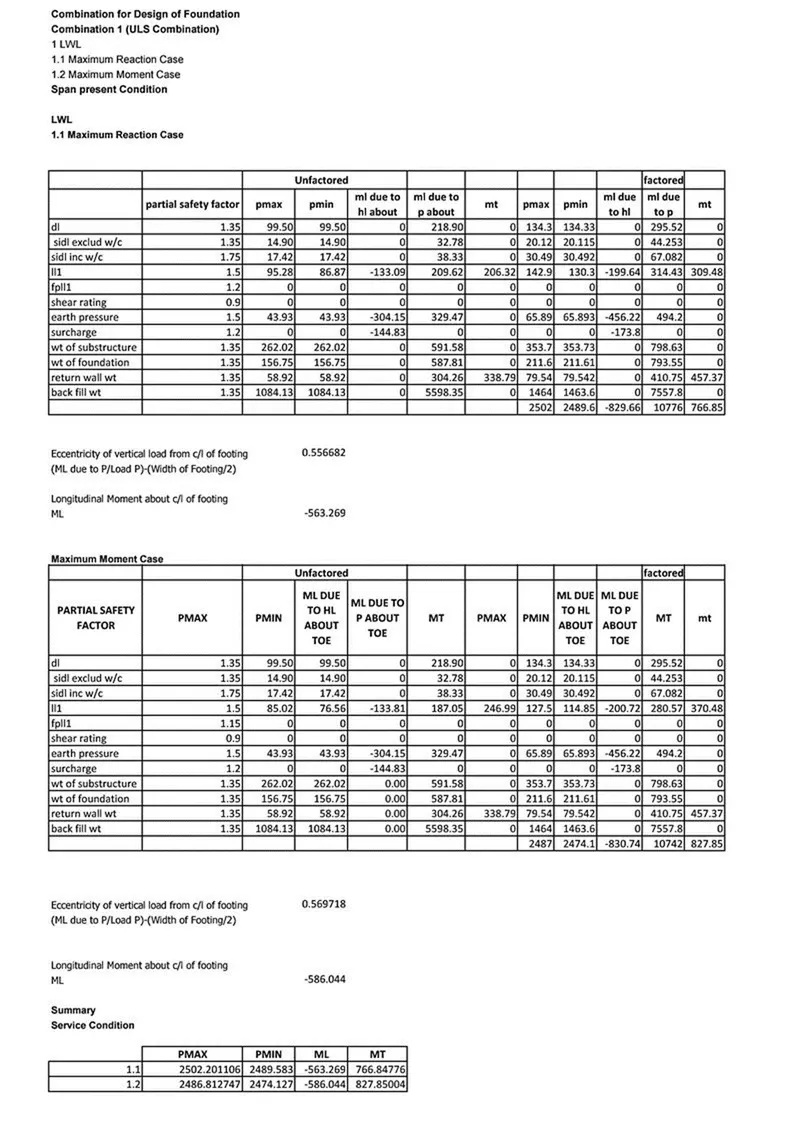
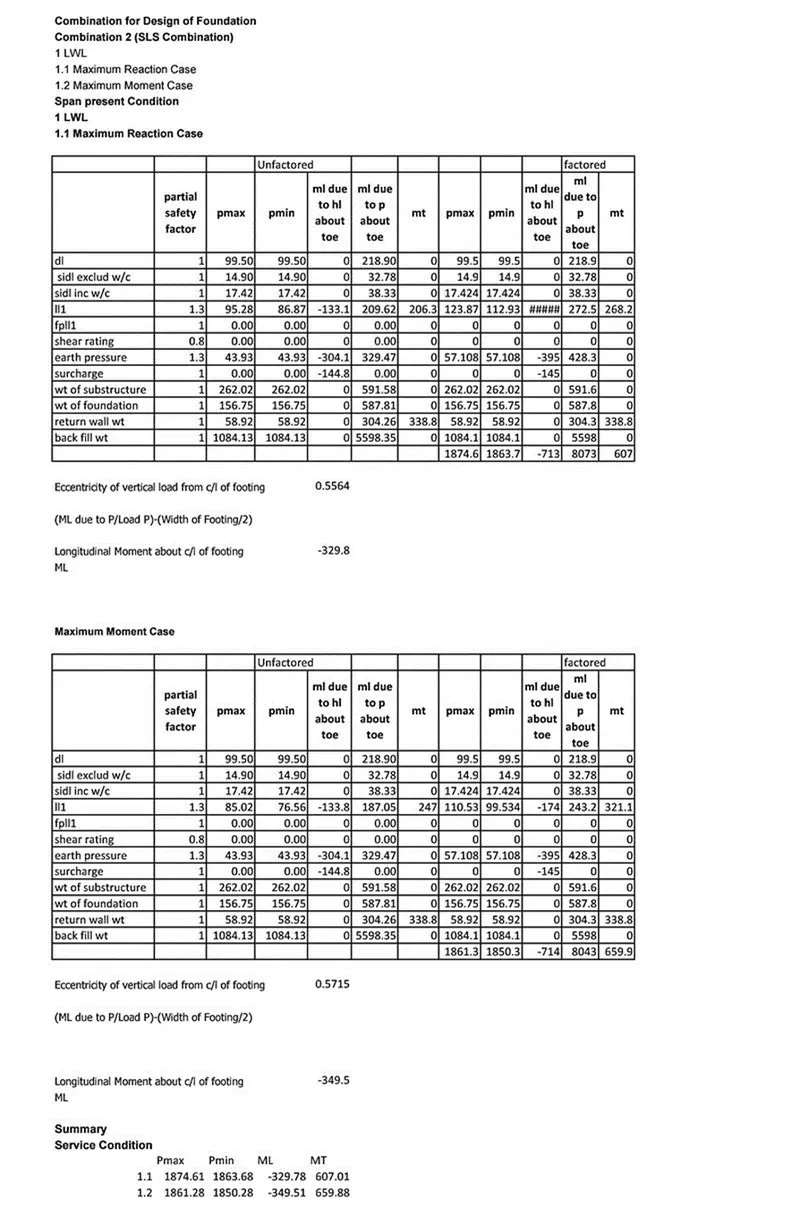
- The design of the foundation is can be done using the SLS method and ULS method.
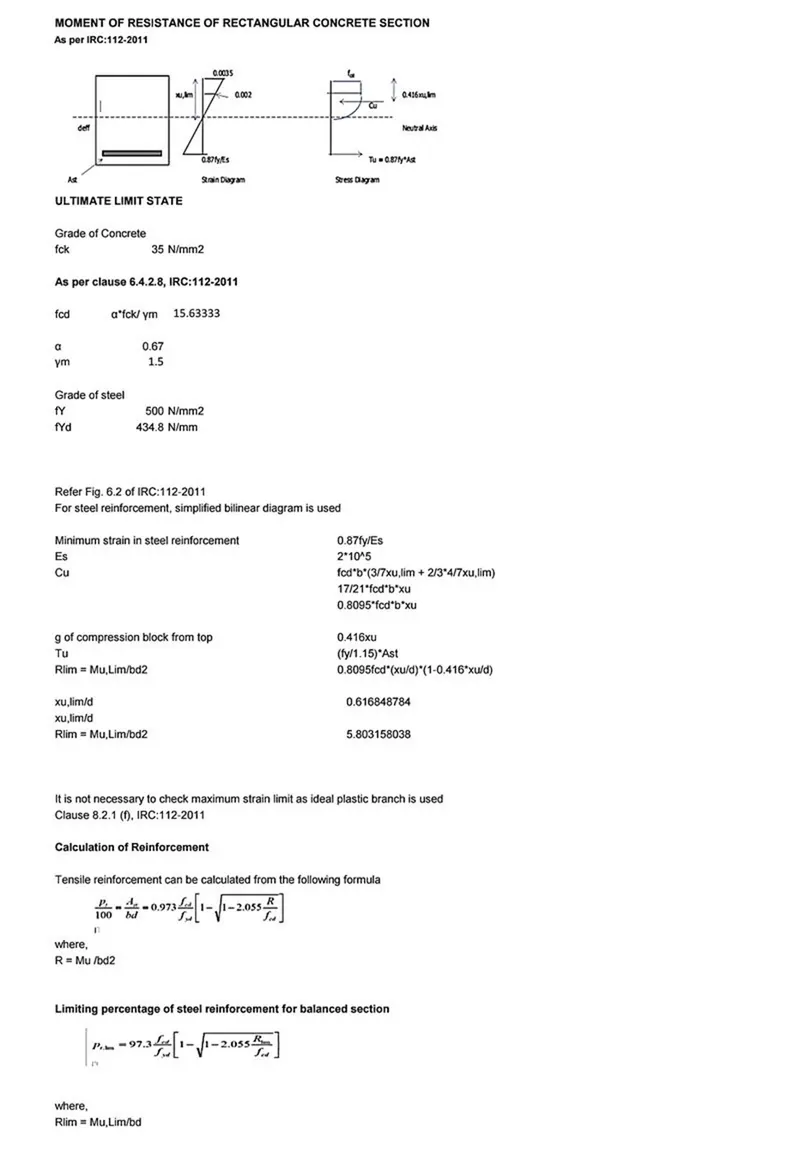
- The ultimate limit state method checks for a moment of resistance flexural capacity and shear check, uls for verification of Equilibrium and verification of structural strength.
- The serviceability limits state checks for stress check and crack width check, allowable stress and allowable crack width.
- Rare Combination for checking stress limits, Quasi-permanent Combination For checking crack width in RCC structures.
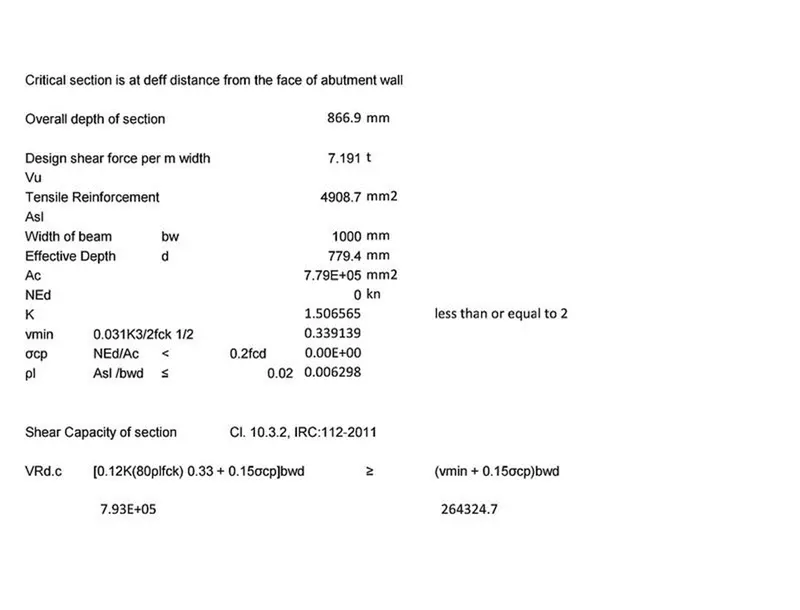
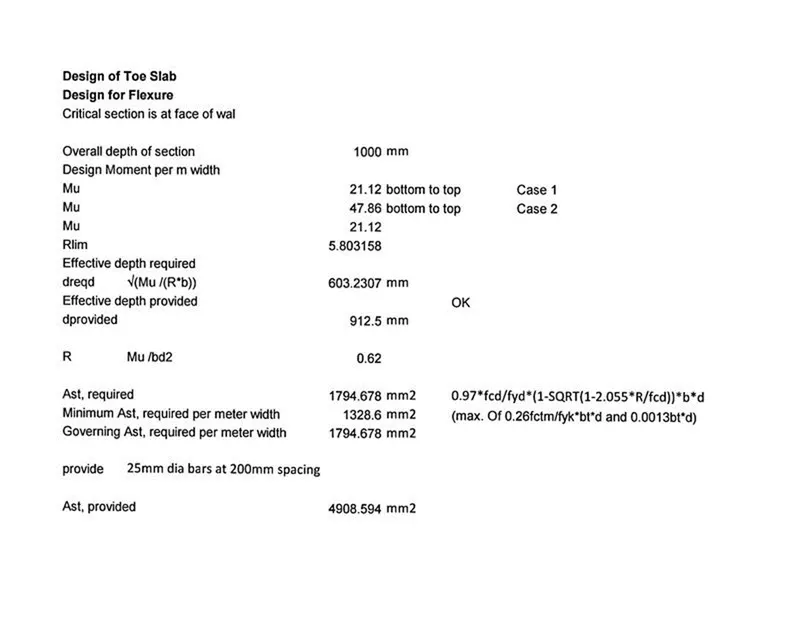
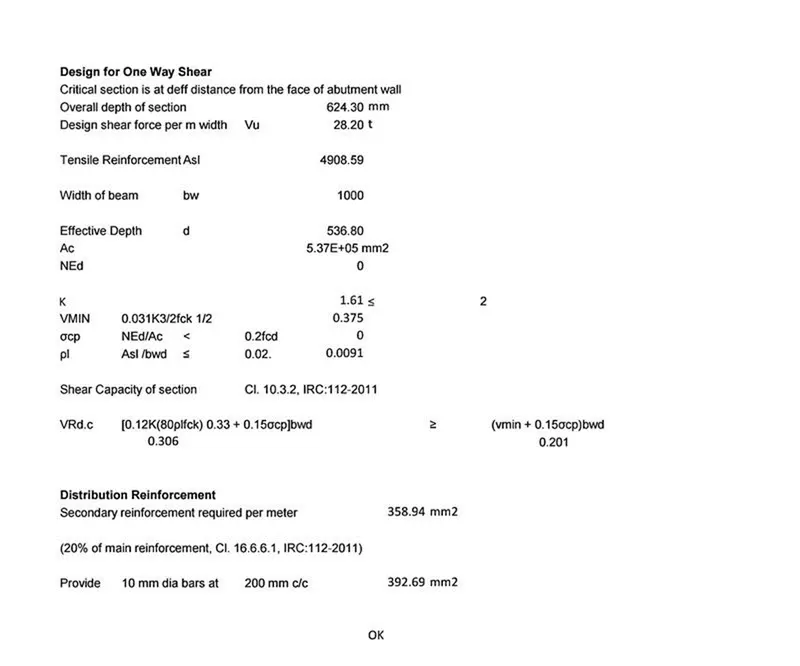
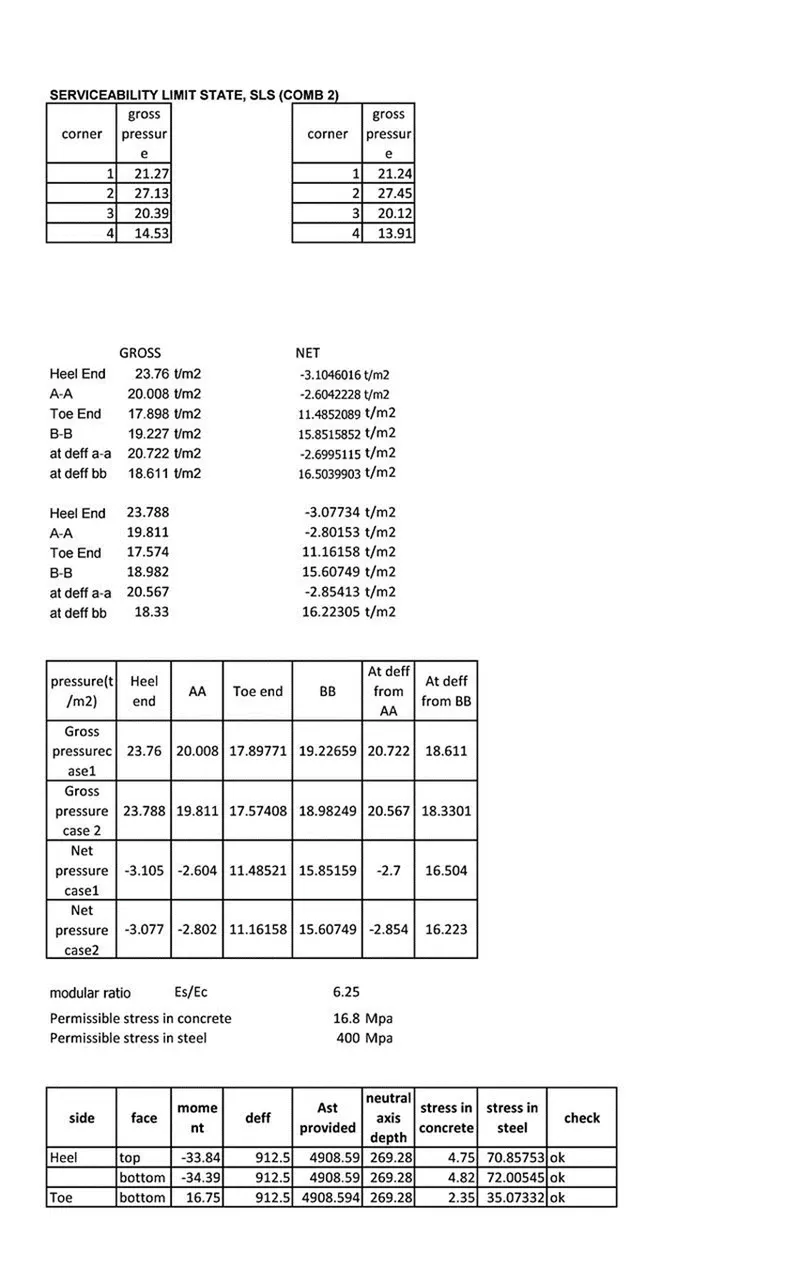
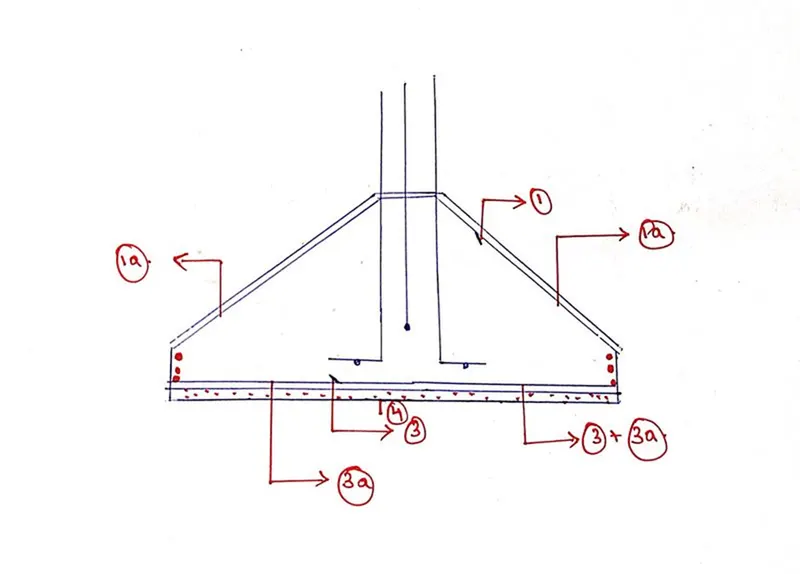
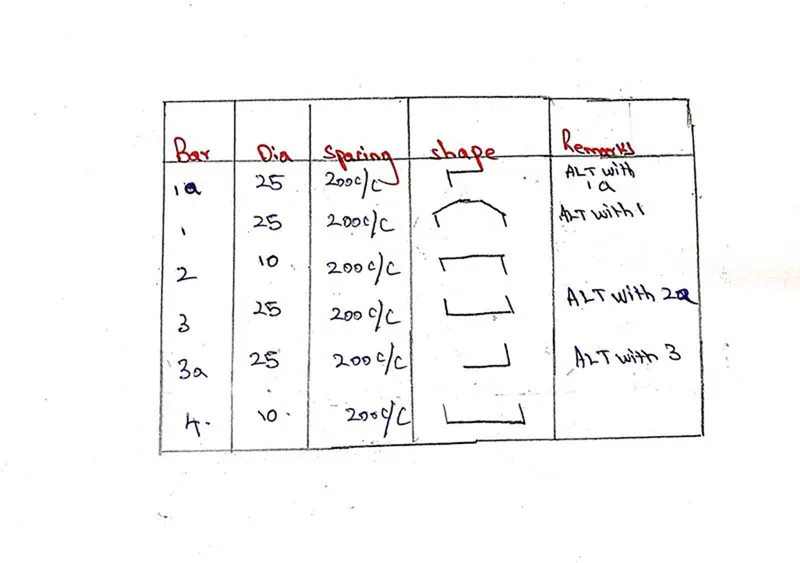
Shallow foundation:
- The foundation which is placed near the surface of the earth or transfers the loads at a shallow depth is called the shallow foundation.
- Shallow foundations are commonly used as they are the most economical foundation type and they are easy to construct.
- A shallow foundation is constructed in a place where the good load-bearing soil is at a relatively low depth.
- Shallow foundations normally are constructed in a shorter time. Settling both the foundation and ground underneath is quicker as there is less land that is required to cover.
- They are placed at shallow depths where a depth less than their width, D < B.
- stability of the structure should be ensured. Failure will occur due to inadequate bearing capacity or overturning or sliding.
Shallow foundation design requirements:
- There must be an adequate factor of safety. The applied bearing pressure must not exceed the safe bearing capacity, qs'
- which is the ultimate bearing capacity divided by an appropriate factor of safety F, assumed that the foundation and the structure supported will not fail due to the above conditions.
- settlements should not exceed the tolerable limits of the structure supported by the foundation,The applied bearing pressure must not exceed the allowable bearing pressure, q
quit = ultimate bearing capacity.
q, = safe bearing capacity.
F = factor of safety .
quit/f
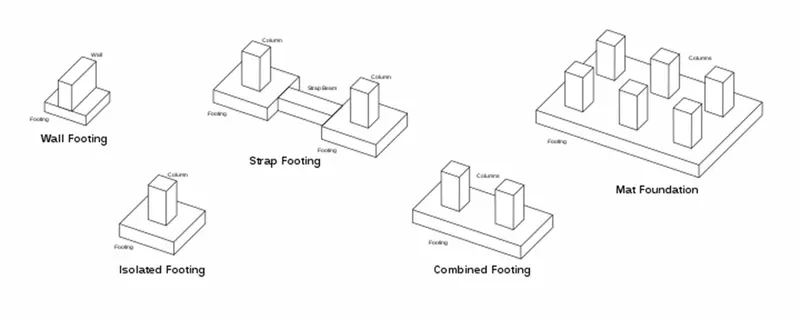
Types of shallow foundation
- Wall footing.
- Isolated footing.
- Combined footing.
- Strap footing.
- Mat foundation
Shallow foundation construction:
- Foundation placement, which involves the location and depth of the foundation, requires a careful investigation of the site and detailed information about the sub-surface stratum.
- The foundation placement should be such that any future influence should not affect it.
- Safety against bearing capacity involves with suitable proportioning of the footing to avoid a catastrophic collapse of the soil beneath the foundation.
- This occurs if the shear strength of soil is inadequate to support the applied load.
- A footing may have to carry a load-bearing wall or a single column or more than one column to support the structure.
- Columns generally carry different loads depending on the location and based on the type of structure,Each column has to carry a different type of load, and the major areas are dead and live loads.
- Calculate the loads acting on the footing.
- 2.Obtain a soil profile or soil profiles showing the soil stratification at the site.
- Establish the maximum water level.
- Obtain the field and laboratory measurements and test results.
- Determine the depth and location of the footing.
- Determine the bearing capacity of the supporting stratum.
- Proportion of the footing sizes.
- Check the footing contact pressure.
- Check the stability of the footing against sliding, overturning, and uplift pressures.
- Estimate the total and differential settlements.
- Design the footing structure
RESULT:
- Abutment foundation design as per IRC 6 loads and optimized design as per IRC 112 have been done.
- Detailing of the steel in the shallow foundation for the abutment has been shown.
- The reaction on the bearings from the superstructure was calculated
- The shallow foundation which differs from flyovers and river bridges in terms of stability, design, construction has been explained.