Week-4 : Basic Calibration of Single cylinder CI-Engine
IC ENGINE CALIBRATION USING GT-POWER AND GT-SUITE
NITESH RANJAN NAWAL
ASSIGNMENT 4
Aim: To calibrate a single cylinder CI engine
Introduction/Theory:
Calibration of an CI engine is a critical process aimed at optimizing the engine’s performance, emissions, fuel efficiency, power output, torque output and its overall drivability. Direct Injection engines which deliver fuel directly into the combustion chamber require precise calibration to achieve the desired balance of air-fuel mixture and ignition timing.
Preprocessing and Solver Settings:
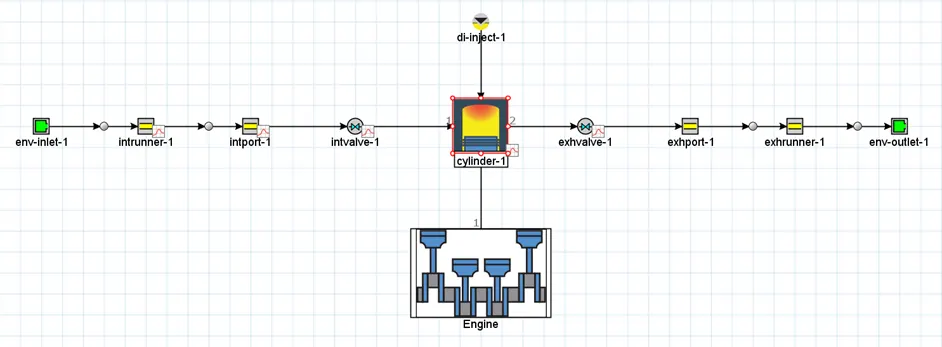
The model illustrates a single cylinder Direct Ignition Engine. The intake runner, intake port, intake valve, and cylinder all receive air from the surroundings. In the cylinder, the combustion process takes place, which includes four different strokes: intake, compression, power, and exhaust. When the procedure is finished, the exhaust valve opens, also known as the blow down process, and the exhaust gases eventually pass through the exhaust port, exhaust runner, and into the environment.
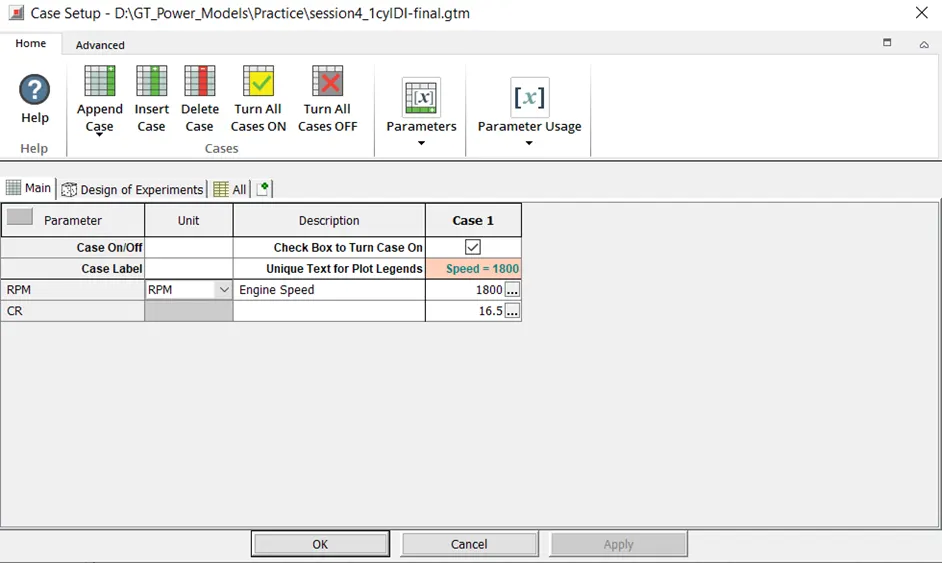
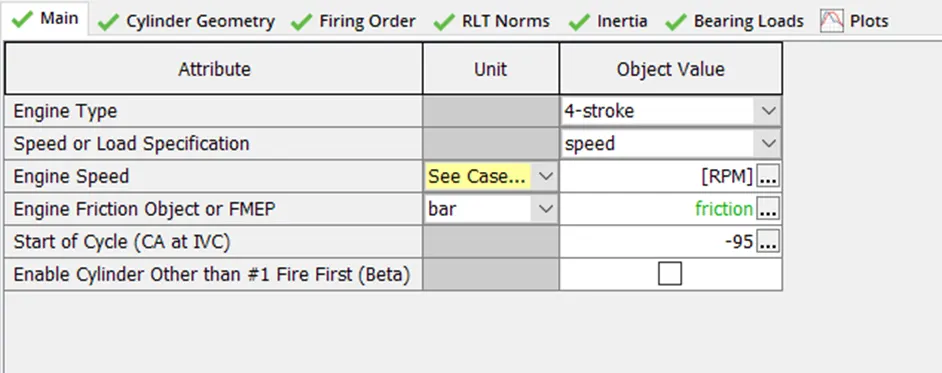
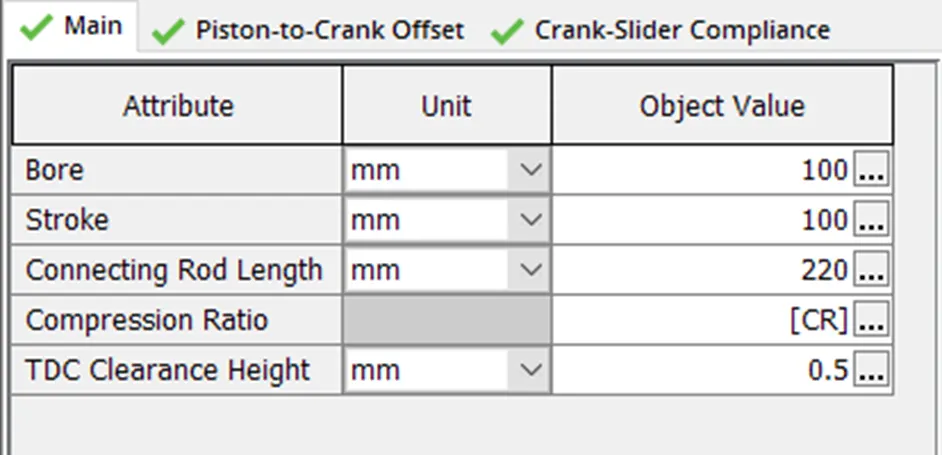
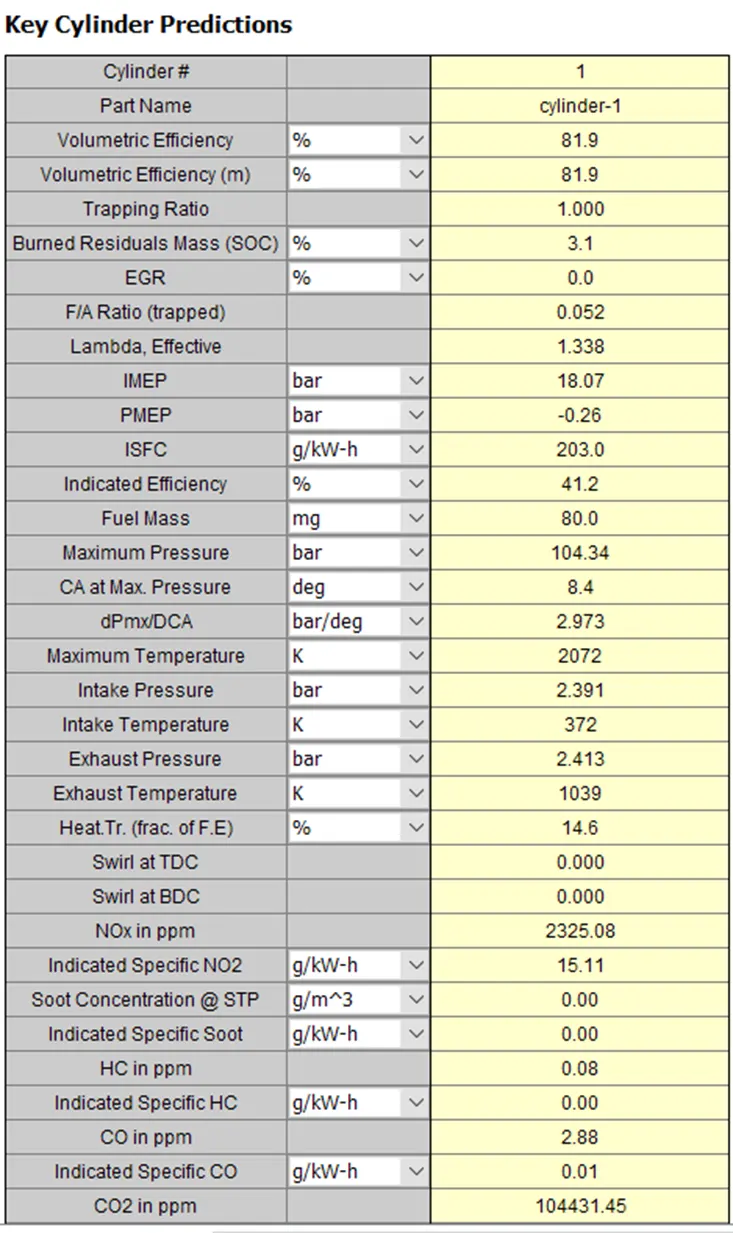
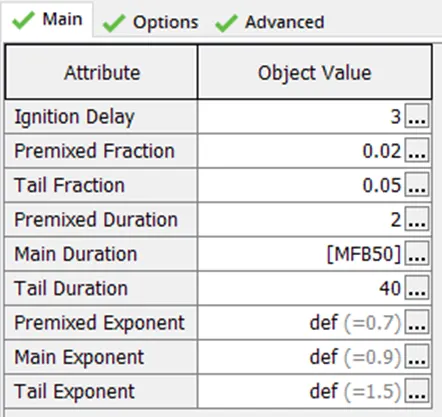
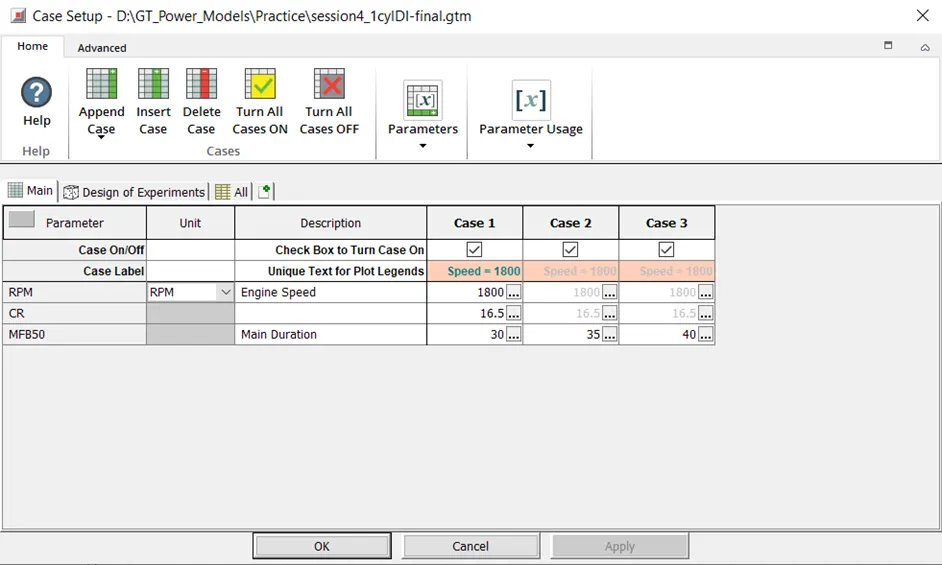
As a first step, I established RPM and Compression Ratio variables/object values as AFR and RPM, respectively, and then used case setup to alter the numbers. The excerpts are included below. To compare SI and CI, I calculated the results using the identical case of RPM = 1800 RPM. I created the appropriate case arrangement and ran the model.
Post Process and Results:
Comparison – SI vs CI
|
Characteristics |
SI Engine |
CI Engine |
|
Thermodynamic Cycle |
Otto Cycle |
Diesel Cycle
|
|
Combustion |
Spark Ignition |
Compression Ignition |
|
Compression Ratio |
6-11 |
13-22 |
|
Exhaust Gas Temperature |
High |
Low |
|
BSFC |
Worst at part load and idle |
Much better than SI as there is no throttling |
|
Noise and Vibration |
Less |
More |
|
AFR |
10-17 |
18-100 |
|
Operating Speed |
2000-6000 RPM |
1000-4000 RPM |
|
Applications |
Passenger cars, motorcycles etc. |
Buses, trucks, tractors etc. |
Case: 1800 RPM (Comparison, SI vs CI)
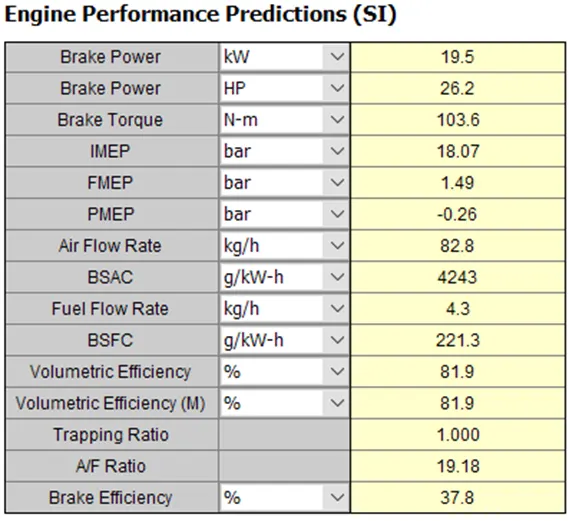
<!-- [if !supportLists]-->· <!--[endif]-->Air Flow Rate: 82.8 kg/h
<!-- [if !supportLists]-->· <!--[endif]-->BMEP: 16.6 bar
<!-- [if !supportLists]-->· <!--[endif]-->BSFC: 221.3 g/kW-h
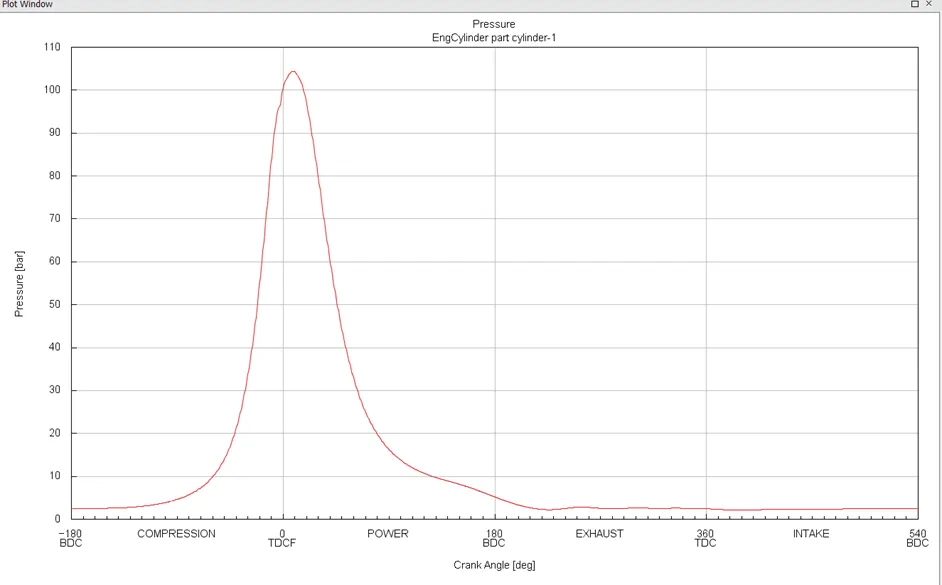
<!-- [if !supportLists]-->· <!--[endif]-->In cylinder Pressure: 104.34 bar
<!-- [if !supportLists]-->· <!--[endif]-->AFR: 19.18
PV Diagram:
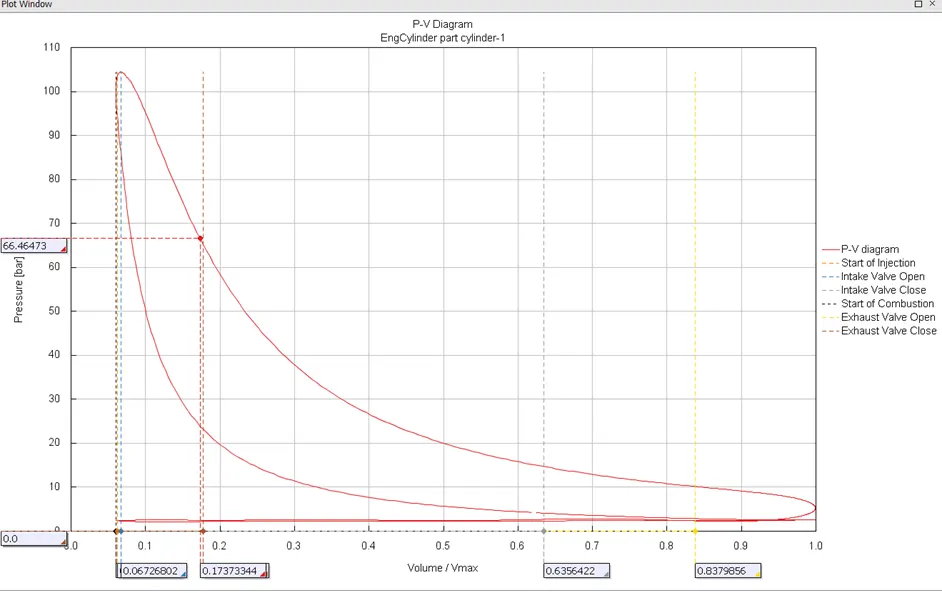
In Cylinder Pressure:
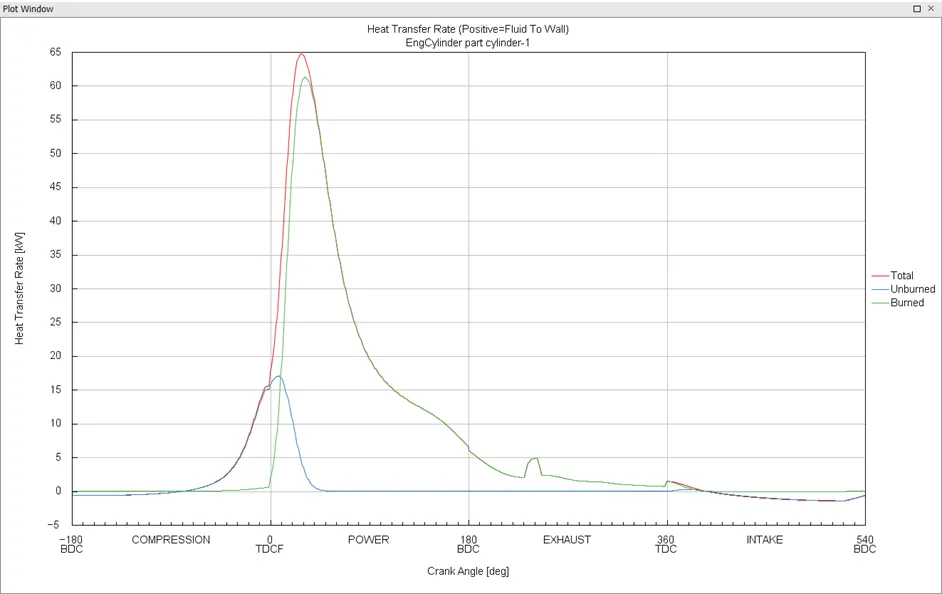
Heat Transfer Rate:
Comments:
<!-- [if !supportLists]-->· <!--[endif]-->BSFC: When we run the model, we discover that a compression ignition engine has a substantially lower BSFC than a spark ignition engine. This is due to a variety of factors. CI engines often have a substantially higher compression ratio, which boosts the engine's thermal efficiency. We can obtain significantly higher cylinder pressure and temperature. Furthermore, CI engines run lean, which I feel is one of the key factors in a CI engine having a lower BSFC.
<!-- [if !supportLists]-->· <!--[endif]-->Exhaust Temperature: A CI engine's exhaust temperature is typically lower than that of a SI engine. Soot is often created by compression ignition engines, and we know that soot is formed in cooler settings. When fuel is sprayed directly into the combustion chamber, it atomizes, vaporizes, and helps to lower the combustion chamber's temperature, making it more efficient.
<!-- [if !supportLists]-->· <!--[endif]-->Air Fuel Ratio: CI engines generally run lean whereas a SI engine runs at stoich conditions and because of the same reason the BSFC of a CI engine is comparatively much lower than a SI engine.
Case: 1800 RPM & different MFB50
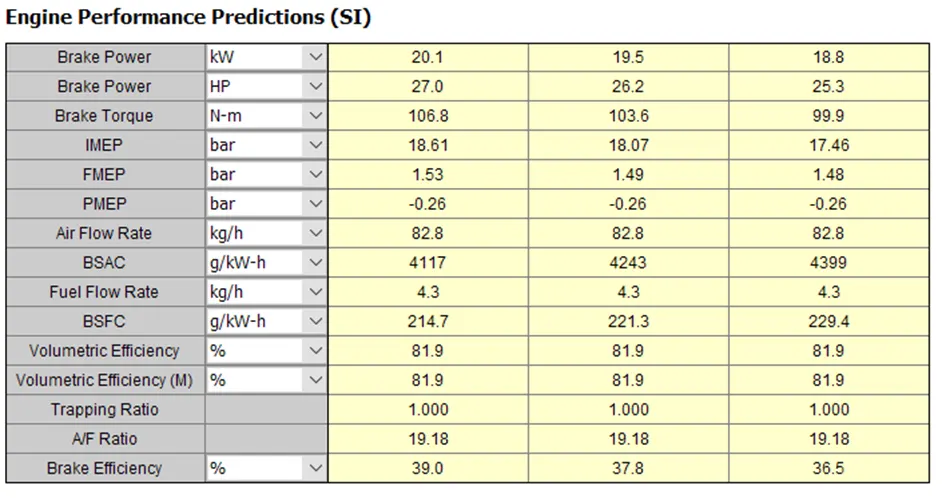
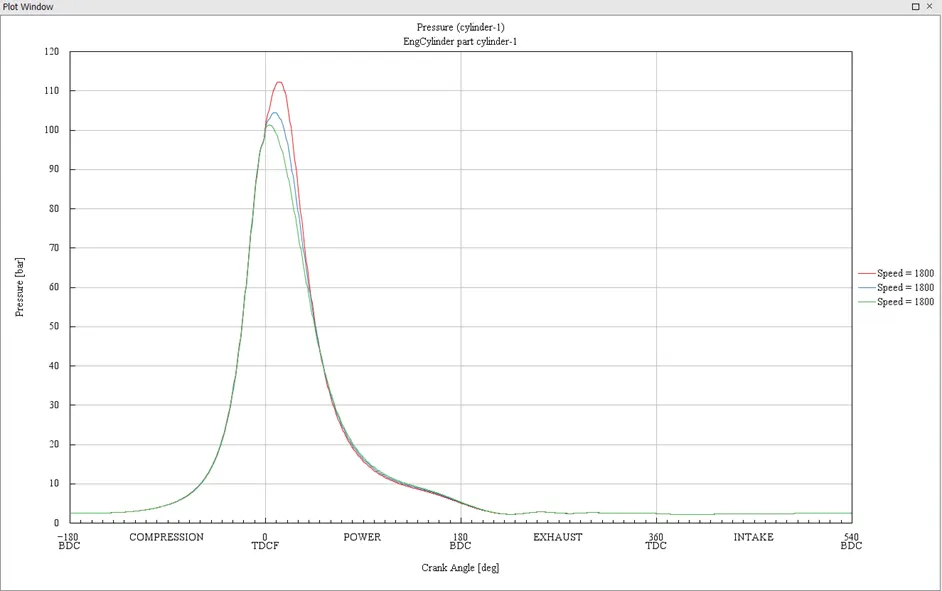
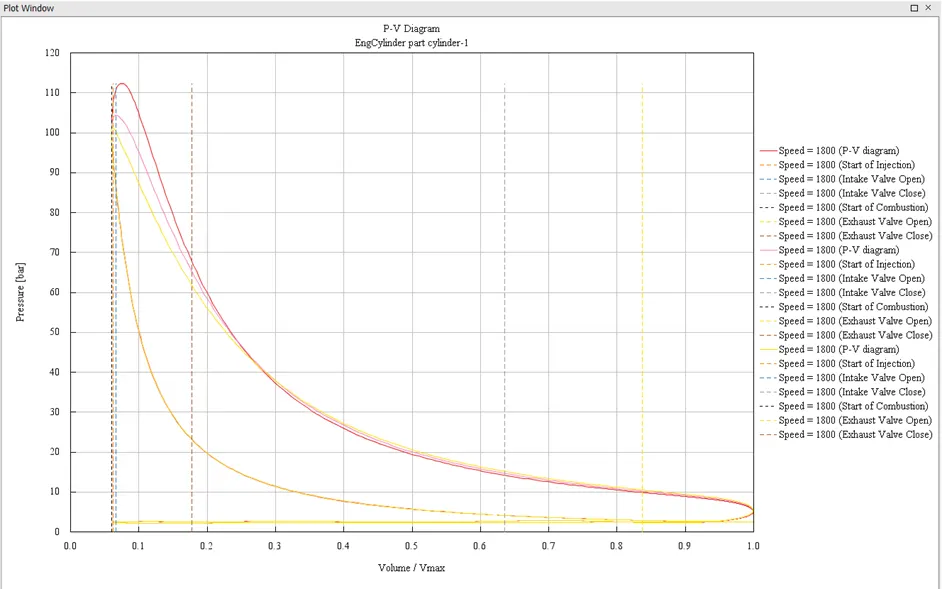
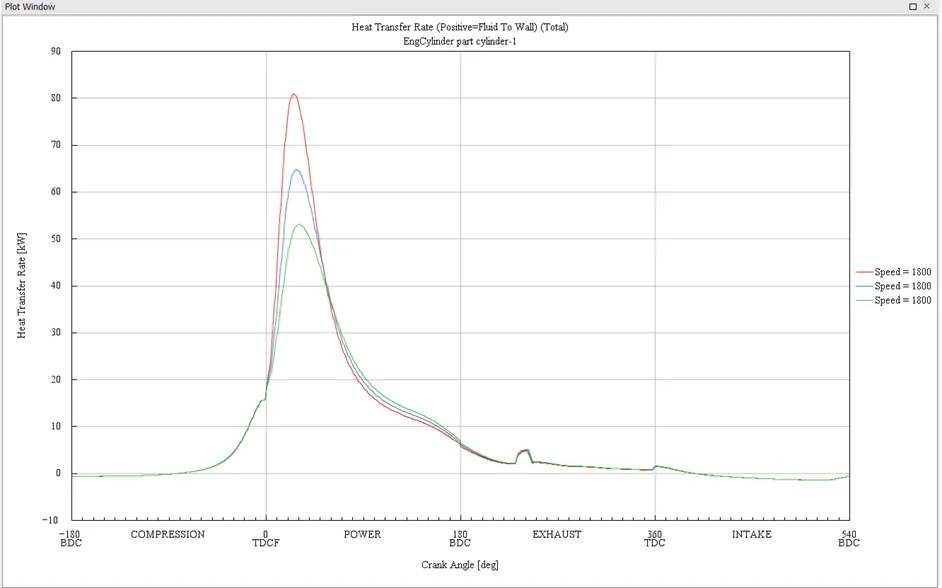
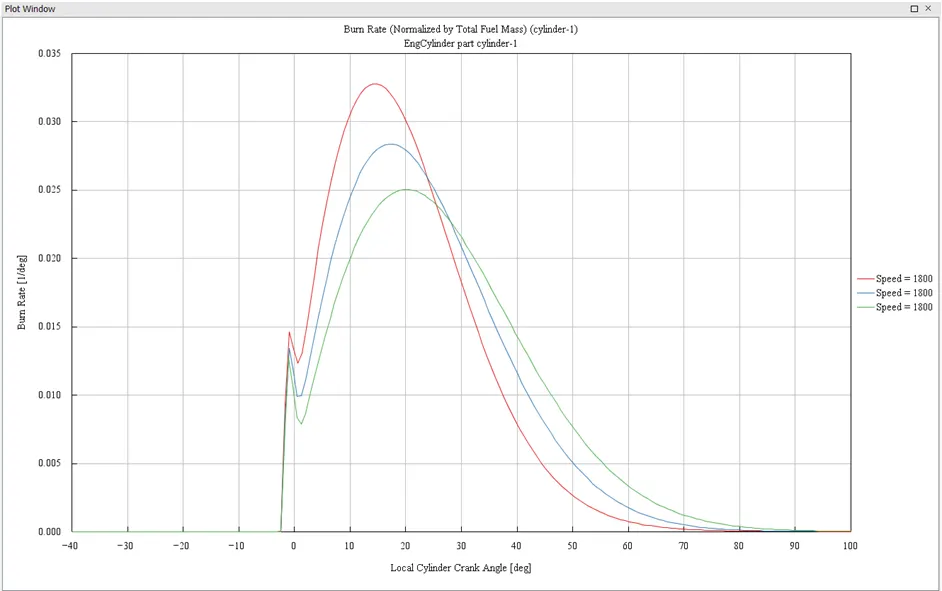
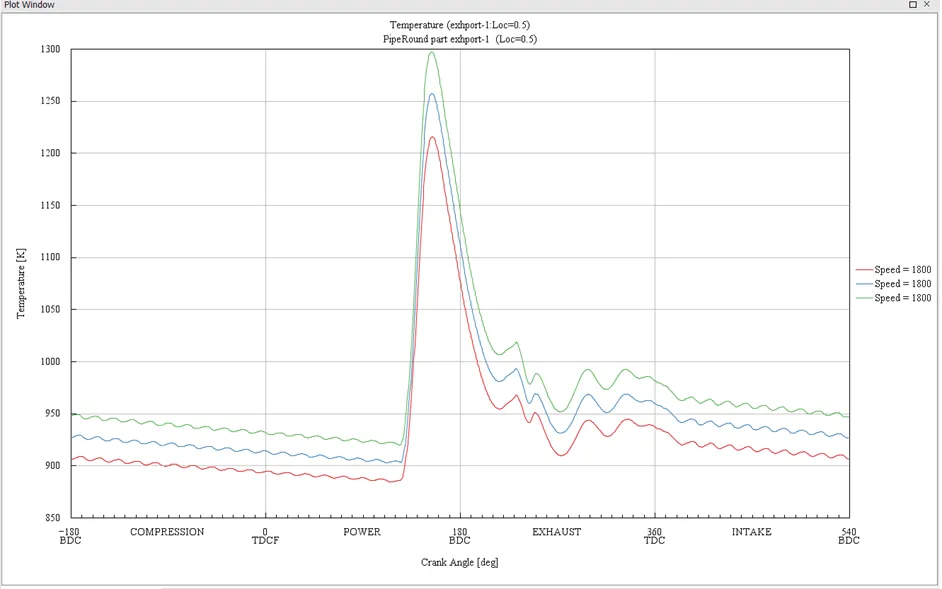
I set the main duration attribute to MFB50 and provided multiple values for it in the case setup in order to run the model and form a comparison.
In Cylinder Pressure:
PV Diagram:
Heat Transfer Rate:
Burn Rate:
Exhaust Port Temperature:
Conclusion:
There are certain conclusions that can be made from the above model and configurations of the MFB50.
<!-- [if !supportLists]-->· <!--[endif]-->The in-cylinder pressure is the highest in case of a lower MFB50.
<!-- [if !supportLists]-->· <!--[endif]-->BSFC is lower at low MFB50.
<!-- [if !supportLists]-->· <!--[endif]-->Higher brake power is achieved at lower MFB50.