Week 2 : Basic Calibration of Single cylinder SI-Engine
Aim: Basic Calibration of Single Cylinder SI Engine
Introduction/Theory:
Calibration of an SI engine is a critical process aimed at optimizing the engine’s performance, emissions, fuel efficiency, power output, torque output and its overall drivability. It involves changing and adjusting various engine parameters to achieved the desired outputs and balance between power, efficiency, and emissions.
Preprocessing and Solver Settings:
The model illustrates a single cylinder Spark Ignition Engine with port injection. The intake runner, intake port, intake valve, and cylinder all receive air from the surroundings. In the cylinder, the combustion process takes place, which includes four different strokes: intake, compression, power, and exhaust. When the procedure is finished, the exhaust valve opens, also known as the blow down process, and the exhaust gases eventually pass through the exhaust port, exhaust runner, and into the environment.
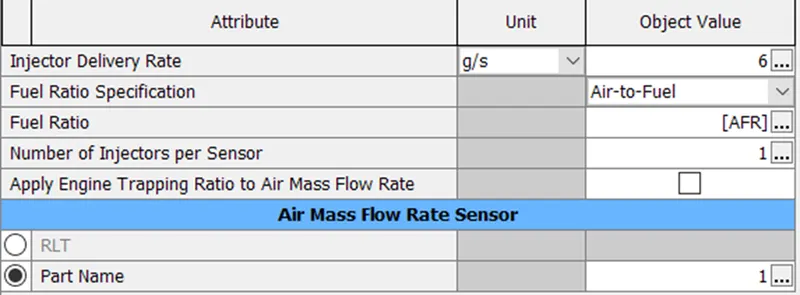
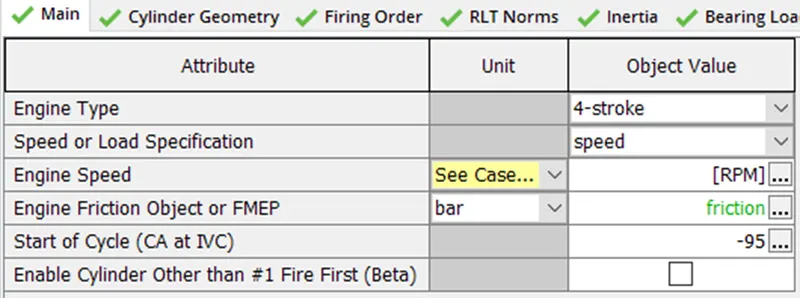
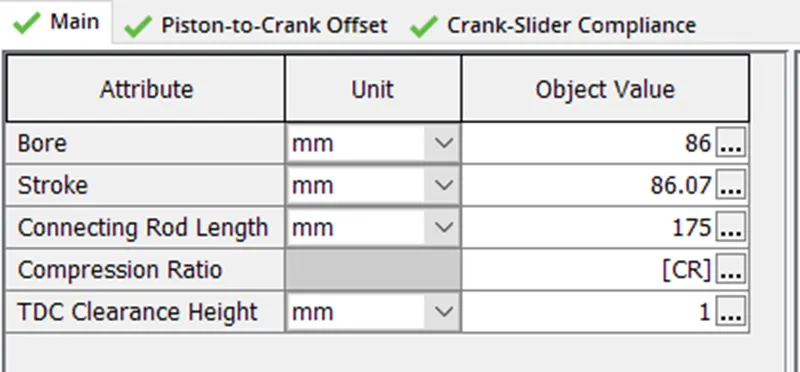
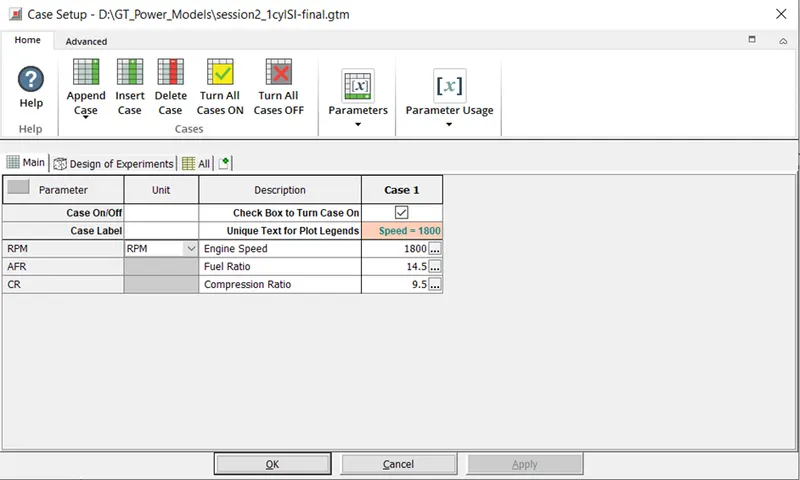
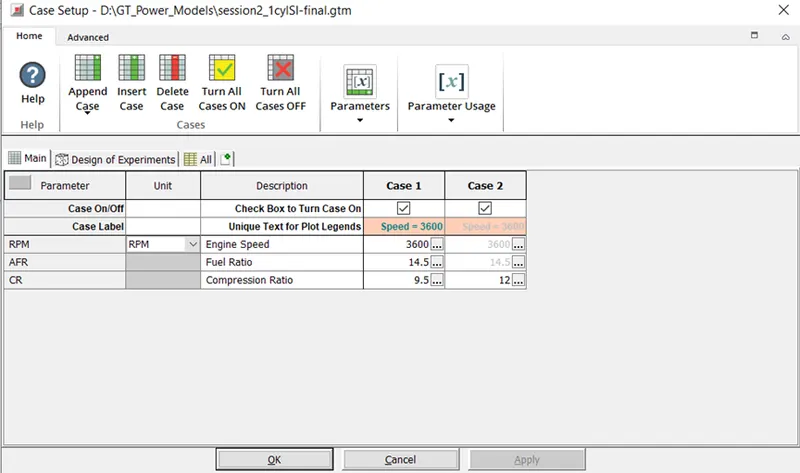
As a first step, I defined variables/object values for Air-Fuel Ratio, RPM, and Compression Ratio as AFR, RPM, and CR, respectively, and then utilized case setup to adjust the values. The snippets are attached below. In the case setting for the second example, where I had to utilize 3600 RPM, I appended one case and compared both by modifying the compression ratio as the parameter to gain a 10% increase in power output.

Post Process and Results:
Case 1: 1800 RPM
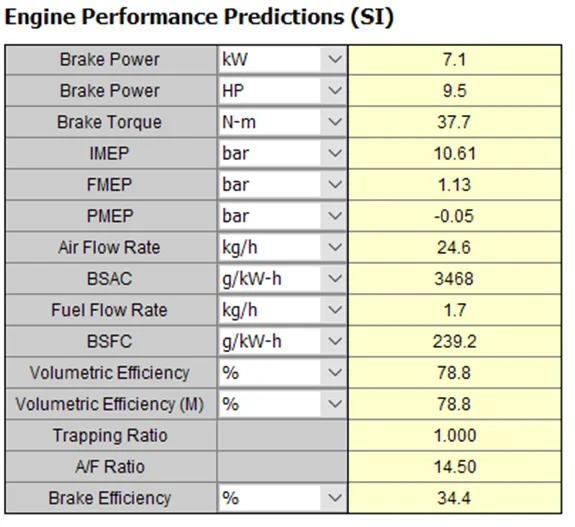
- Air Flow Rate: 24.6 kg/h
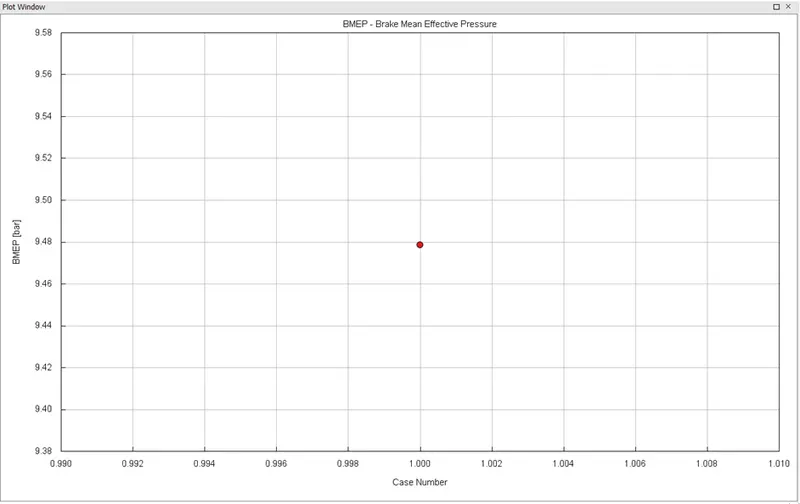
- BMEP: 9.5 bar
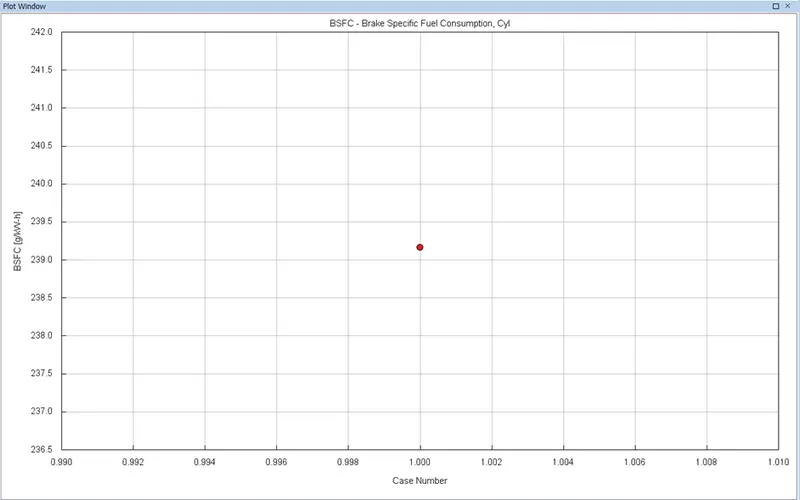
- BSFC: 239.2 g/kw-h
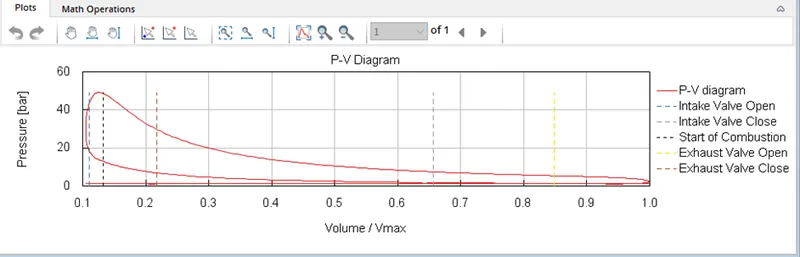
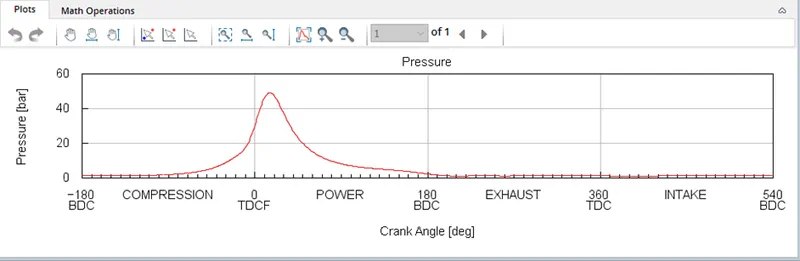
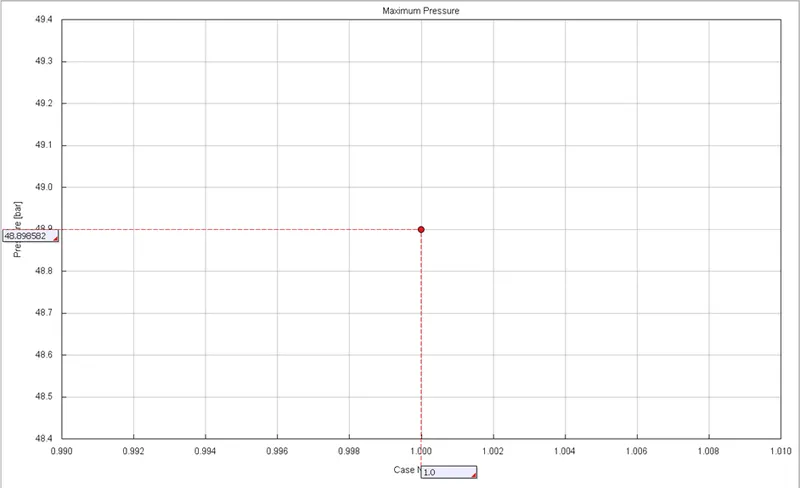
- In Cylinder Pressure: 48.9 bar
PV Diagram:
In Cylinder Pressure:
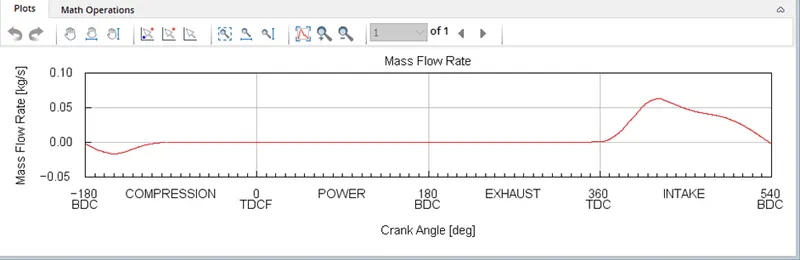
Mass Flow Rate through the intake valve:
Brake Specific Fuel Consumption (BSFC):
Brake Mean Effective Pressure (BMEP):

Case 2: Increase Power Output by 10%
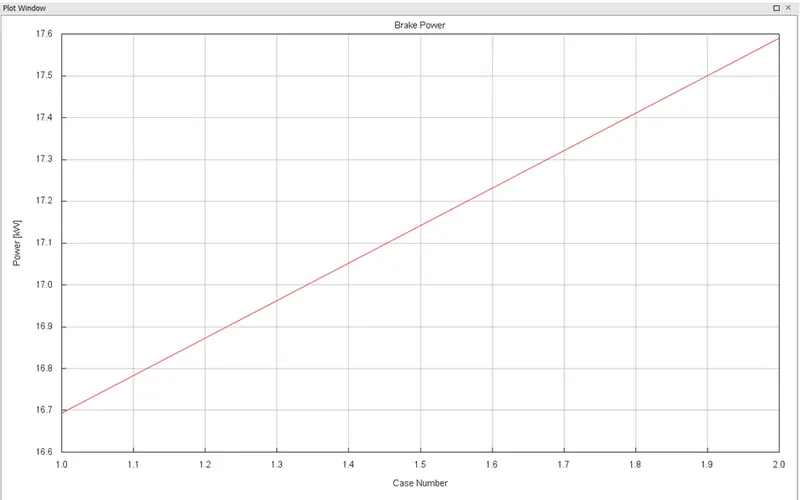
Increased the compression ratio to 12 from 9.5 to see an increase in the power output by 10%.
Brake Power Output at (CR=9.5) = 16.7 kW
Brake Power Output at (CR=12) = 17.6 kW
Conclusion:
The first instance delivers the data when the engine is run at 1800 RPM and produces the desired results. However, in the second scenario, we see that raising the compression ratio increases power output since higher compression ratio aids in better combustion as cylinder pressure and temperature rise. Because of the knocking constraints, the compression ratio for a spark ignition engine is similarly limited to a value of 12.