Week-4 : Basic Calibration of Single cylinder CI-Engine
Basic Calibration of Single Cylinder CI Engine
Aim:
To compare the differences in developing a single-cylinder SI and CI engine model in GT-Suite and determine the influence of the MFB parameter on the CI engine performance.
Objective:
1.Compare SI vs CI and list down differences (assignment no 2-SI)
2.Comments on following parameters
- BSFC
- Exhaust Temperature
- A/F ratios
3.Change MFB 50 and observe impact on performance
Comparison between SI and CI engine
Homogeneous mixture:
In SI engine, a homogeneous mixture of air and fuel is formed in the carburetor. The mixture is formed outside the engine cylinder and the combustion takes place inside the cylinder particularly at the end of compression stroke. In homogeneous mixture with equivalence ratio equivalent to 1, the flame front is normally of the order 40 cm/s. however in SI engine, the maximum flame speed is obtained when the equivalent ratio is between 1.1 to 1.2, slightly richer than stoichiometric ratio.
Heterogenous mixture:
For direct ignition engine, heterogenous mixture is formed. The combustion ratio is defined by the velocity of diffusion of fuel vapor and air. The combustion in heterogenous mixture take place in lean mixture composition, where the equivalence ratio lies in between 1 to 1.2
Combustion in SI engine:
In the first stage, the growth and development of self-propagating flame takes place, which is referred as ignition lag. This is a chemical process depending upon temperature, pressure and nature of fuel. The second stage is concerned with the spread of flame inside combustion chamber. The starting point resembles the rise in pressure on indicator diagram. The rate of heat release depends upon the turbulent intensity and mixture composition. The third point is the point of maximum pressure and rate of combustion becomes lower due to flame velocity.
Combustion in CI engine:
The first stage is called preparatory stage or ignition delay, which is counted from the start of ignition to the point where the pressure separates from combustion. The delay period is divided in two parts: physical delay and chemical delay. The physical delay is the time between the beginning of ignition and attaining of chemical reaction. During chemical delay, , the reaction starts slowly and accelerates until ignition takes place. In the second stage temperature and pressure is high, hence the fuel droplets burn faster when injected in this phase. This is the period of control combustion and ends at maximum cycle temperature. In the third stage unburnt hydrocarbons are left in the combustion chamber. These products starts burning when comes in contact with oxygen and continuous for certain period called after burning period.
Simulation model:
Open GT power console>> select engine performance>> select 1cyclDI engine
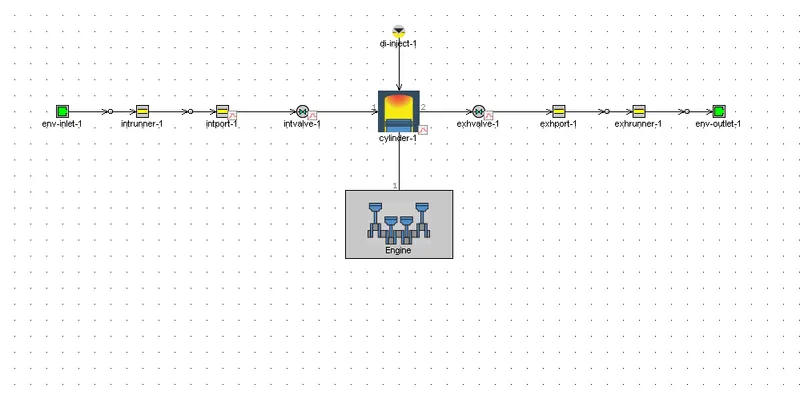
Boundary conditions:
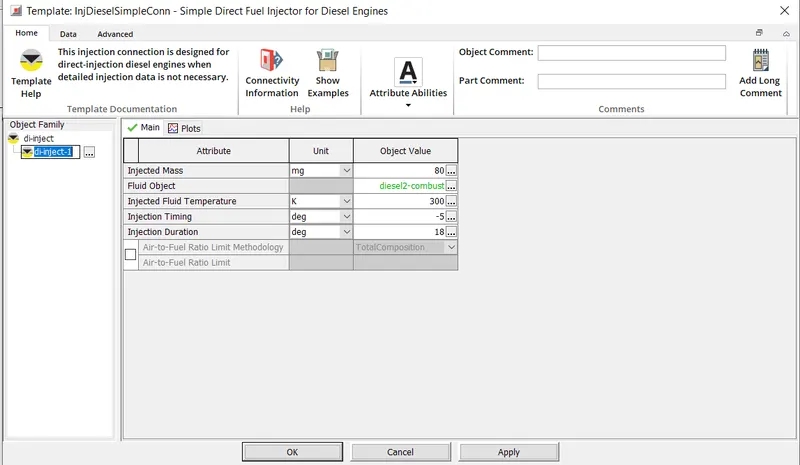
Injection duration:-
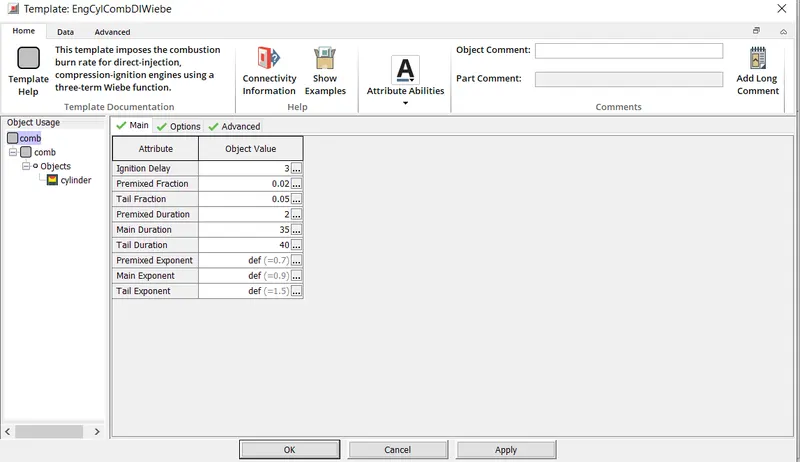
Combustion duration
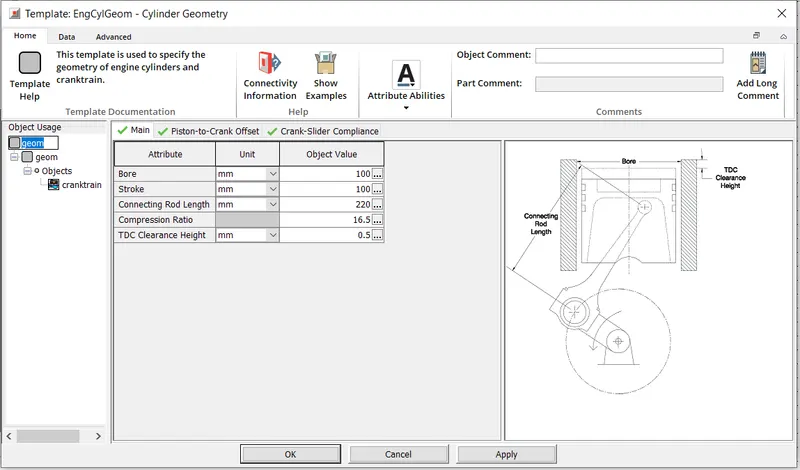
engine cylinder specification
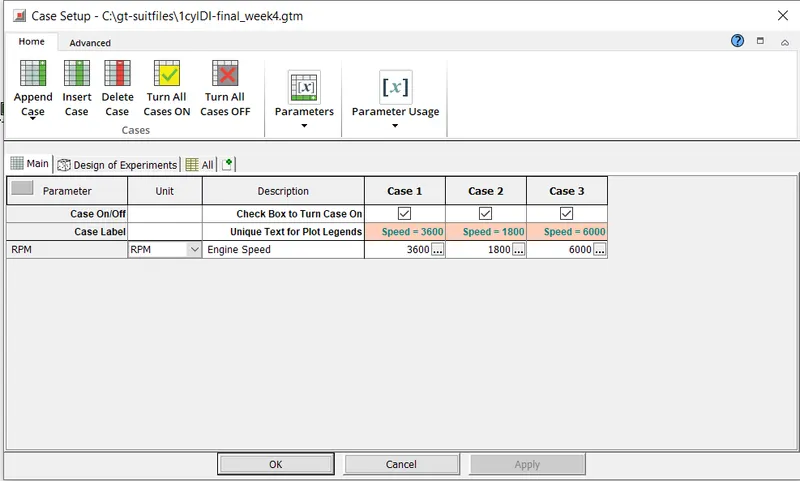
case setup
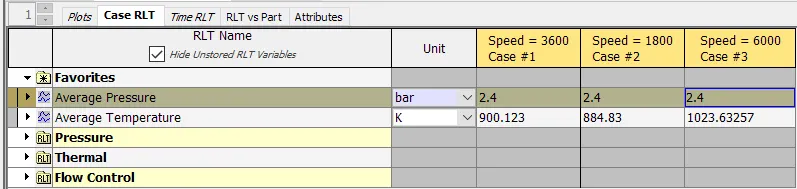
in case set up we have assigned 3 speeds for 80mg of injection fuel.
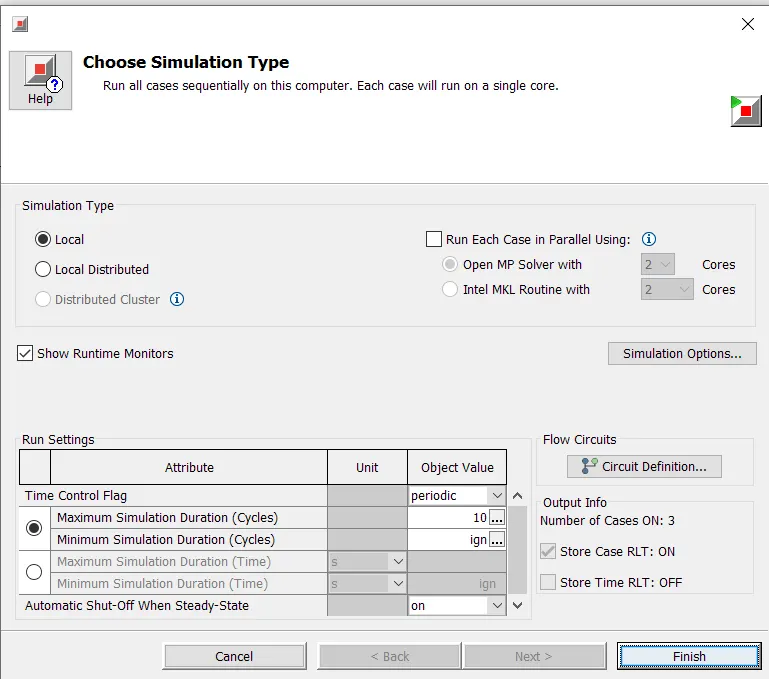
run set up setting
FROM THE 3 CASE FOR DIFFERENT SPEED
BSFC:- for BSFC we can see that as the speed increces BSFC also goes high
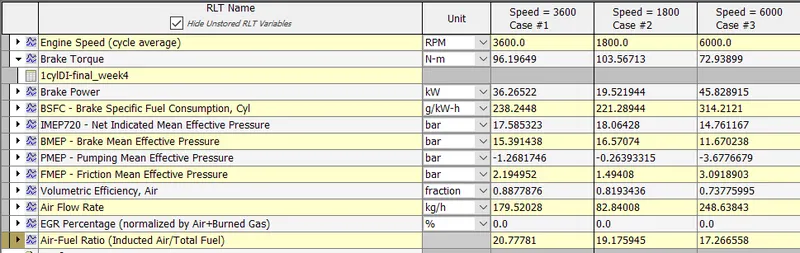
- Exhaust Temperature :- for high speed exhaust temperature goes high.
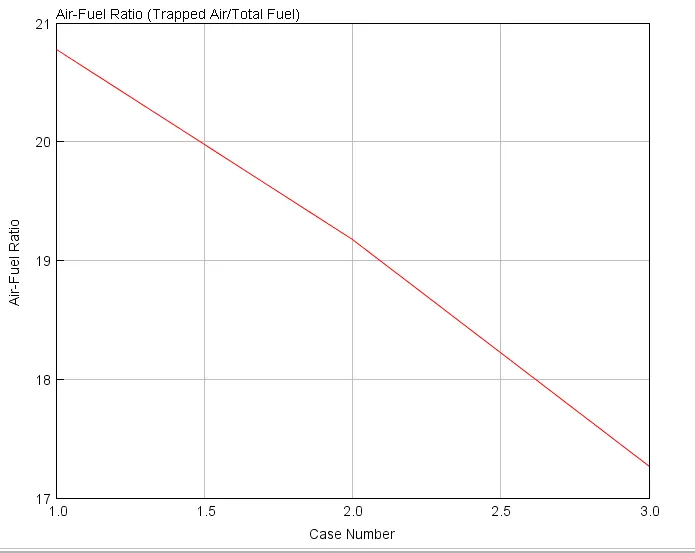
A/F ratio :-
air-fuel ratio goes on decresing for high rpm