Week-4 : Basic Calibration of Single cylinder CI-Engine
Aim: To perform basic Calibration of Single cylinder CI-Engine
Comparison of SI and CI Engines.
SI Engine
It is an engine where the spark is used to burn the fuel.
SI engine is based on Otto cycle
It requires a mixture of fuel and air.
The carburettor is used to mix air and petrol.
SI engine can have compression ratio 6 to 10.
They are high speed engines.
SI engine are lighter, cheaper and due to low compression ratio, the maintenance cost is low.
The pressure at the end of compression can be 10bar.
The thermal efficiency can be up to 26%.
The SI engine are used in light duty vehicles such as scooters, cars and motorcycles etc.
Cl engine
In this engine, the heat of compressed air is used to burn the fuel.
The Cl engine is based on Diesel Cycle.
It requires only air during suction stroke.
The injector is used to inject fuel.
Cl engine can have compression ratio of 15 to 25.
They are relatively low speed engine.
The Cl engines are heavier and costlier, as there is high compression ratio and maintenance cost can be high.
The pressure at end of compression can be 35bar.
The thermal efficiency can be around 40%.
The Cl engines are generally used in heavy duty vehicles like trucks, buses and earth movers etc.
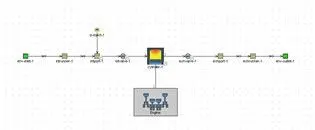
SI Engine
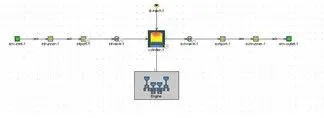
DI Engine
Comments on various parametes.
BSFC –
The Brake specific fuel consumption abbreviated as BSFC and also known through the term power-specific fuel consumption or specific fuel consumption, is a type of comparison ratio which describes an engine's fuel efficiency in terms of how much fuel the car utilizes versus how much power it produces. The formula to calculate brake specific fuel consumption is fuel consumption divided by power, and the results are expressed in kilowatts per hour.
Exhaust temperature
The knowledge of the exhaust temperature is necessary in internal combustion engines for the management and diagnosis of the exhaust gas aftertreatment system, as well as to the protect components that can be sensitive to thermal overloads.
In diesel engines, the aftertreatment components are often actively managed based on exhaust gas
Temperature and includes diesel particulate filters or DPF, NOx reduction catalysts such as SCR catalysts and NOx adsorber catalysts. Whereas in stoichiometric gasoline engines, the engine management strategy depends on the temperature of three-way catalyst (TWC).
A/F ratios
The thermal engines use fuel and oxygen (from air) to produce energy by combustion. To guarantee the combustion process, there are certain quantities of fuel and air that is needed in the combustion chamber. The complete combustion takes place when all of the fuel is burned and there will be no quantities of unburned fuel in the exhaust gas. Air-fuel ratio (A/F) is the ratio between mass of air and mass of fuel used by the engine when operating.
The ideal (theoretical) air-fuel ratio, for a complete combustion, can be called stoichiometric air-fuel ratio. When air- fuel ratio is higher than the stoichiometric ratio, the air-fuel mixture is called lean. Whereas the air-fuel ratio is lower than the stoichiometric ratio, the air-fuel mixture can be called rich. In a petrol engine, the stoichiometric air-fuel ratio is around 14.7:1 and for diesel engine it is 14.5:1.
The case setup with RPM and Diffusion combustion duration.

Mass fraction burned (MFB) in each individual engine cycle is a normalized quantity with a scale of O to 1 or in percentage, describing the process of chemical energy release as a function of crank angle.
We made changes to the parameter called main duration, which is the duration of CA in degrees, where fuel is going to burn by main diffusion or in which controlled combustion is happening. The Default value of main duration is 35 and we will change it to 50 and 60 means we are increasing the duration of main diffusion combustion. Mainly, drop in burn rate is expected, because burn duration has increased.
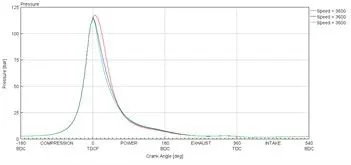
The peak pressure values decrease as the burn duration is increased for diffusion combustion.
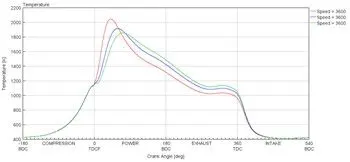
The peak temperature values decrease as the diffusion combustion duration is increased.
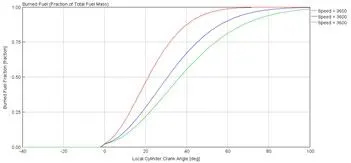
The Burn Rate is decreased as the diffusion combustion duration is increased.
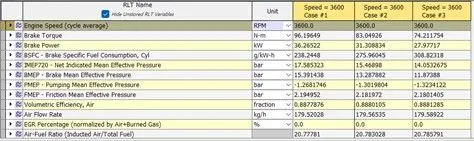
It can be seen that the burn rate has decreased due to increase in the diffusion combustion duration. The Peak pressure values and temperature values have reduced because fuel is not burning as swiftly. The longer diffusion combustion duration of burn rate has reduced the torque and power as well, while it has increased the Brake specific fuel consumption or BSFC. The Other parameters remain similar in the three cases.