Week 4.2: Project Transient simulation of flow over a throttle body
OBJECTIVE:
To run a transient simulation over the throttle body.
THEORY:
The throttle body, regulates the flow of fluid through constricition. This mechanism has diverse applications in engineering systems, where control over power output is crucial. In this simulation we run a transient simulation, where we shall be considering the effects of accumulation, and we shall be computing the time, it takes for the system to return in a steady state.
SETUP:
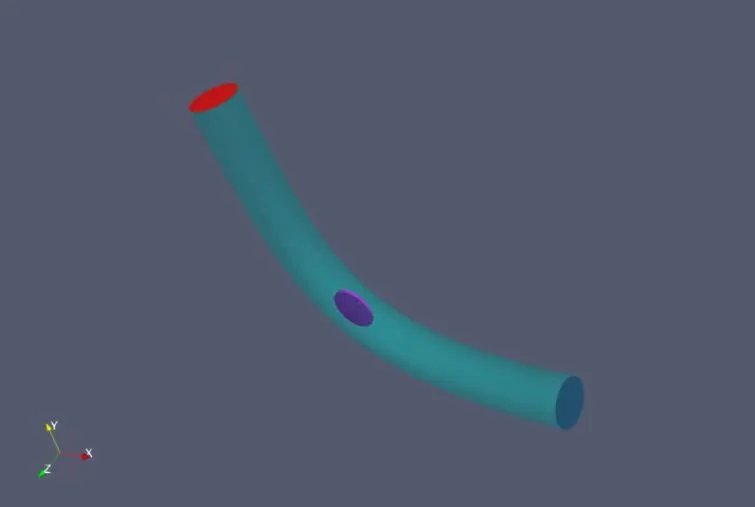
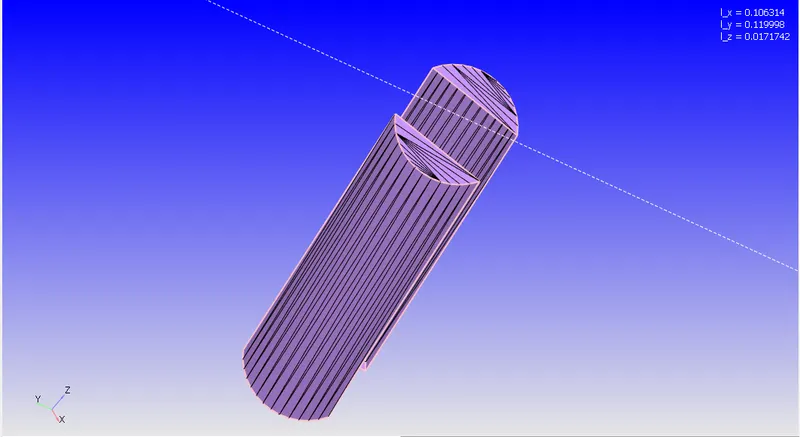
3D geometry used for simulation.
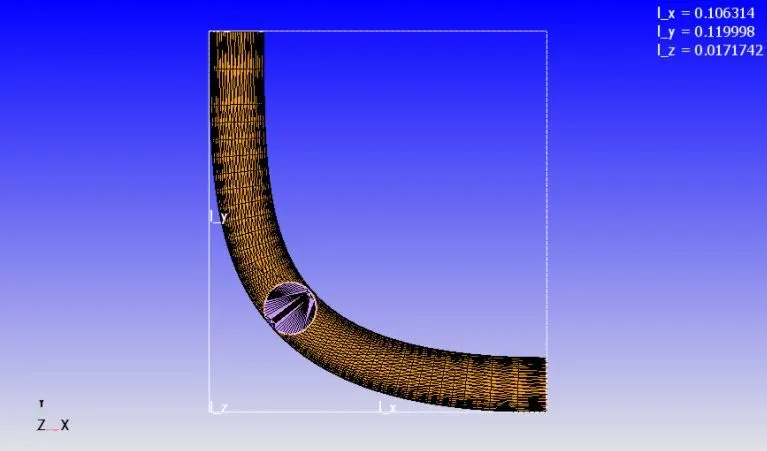
STL file of the model in converge studio.
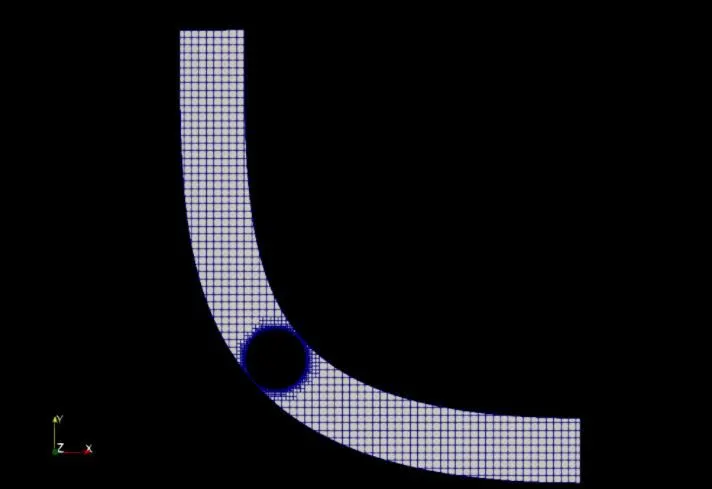
Mesh used for simulation, showing fixed embedding around the throttle body.
|
Application Type |
Time-based |
|
MATERIALS: |
|
|
1. Gas simulation |
Standard |
|
2. Global Transport Parameters |
Standard |
|
3. Reaction Mechanism |
Standard |
|
SOLUTION PARAMETERS |
|
|
1. Run Parameters Steady-state monitor: |
Transient no hydrodynamic solver>Full hydrodynamic>Compressible |
|
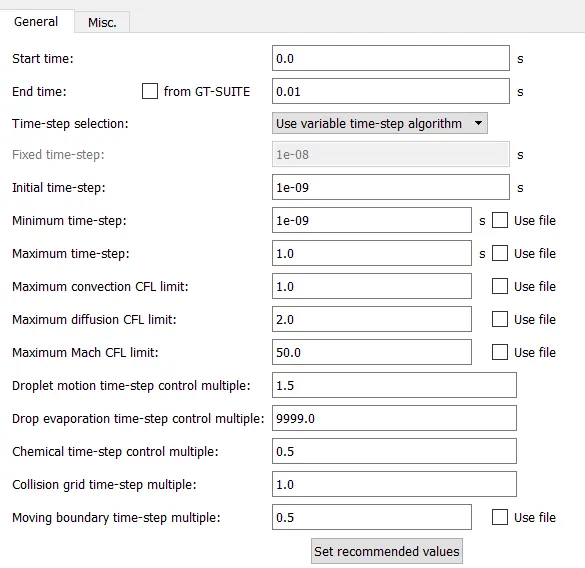
2. Simulation time parameters |
|
|
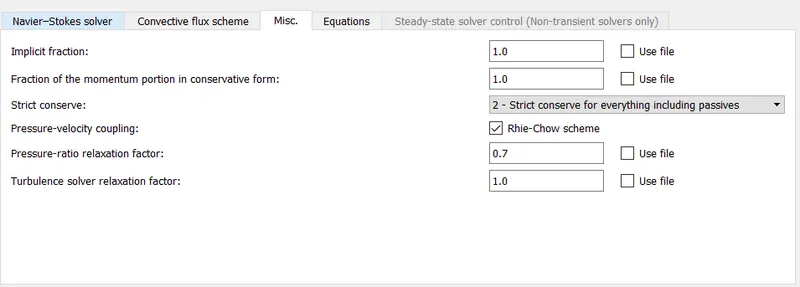
3. Solver parameters |
Navis-stokes solver scheme: PISO Navis-stokes solver type: pressure-based
|
|
BOUNDARY CONDITIONS |
|
|
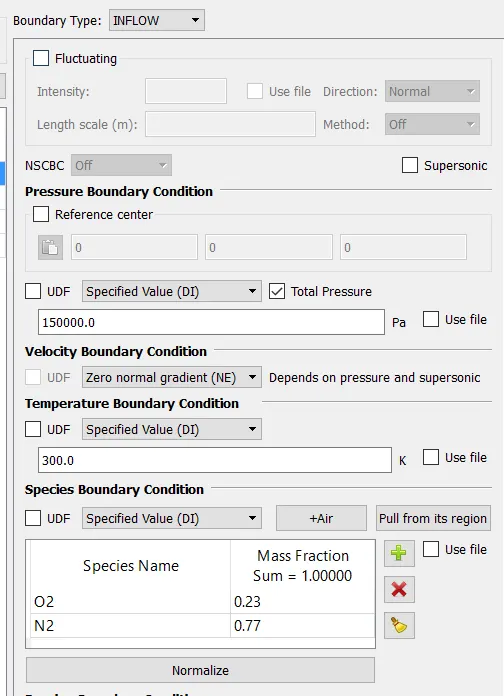
1. Inlet |
 |
|
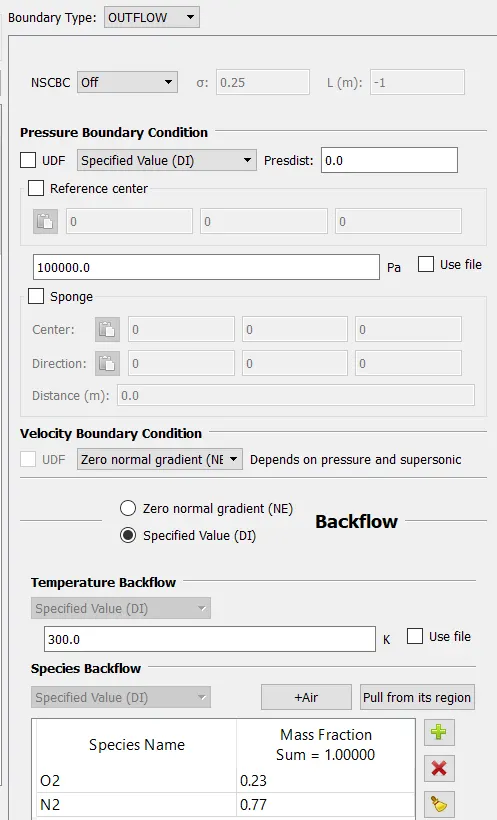
2. Outlet |
 |
|
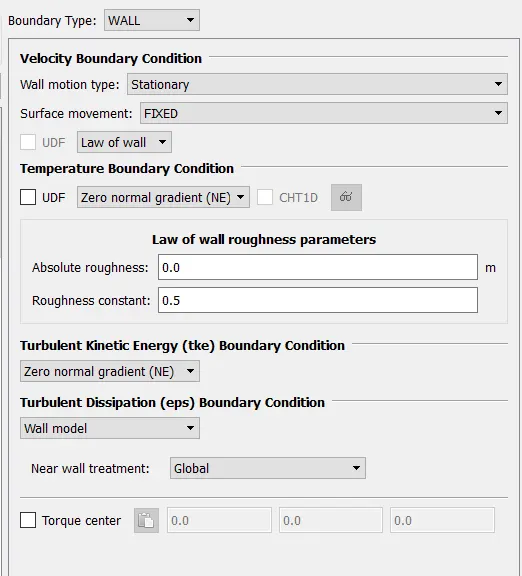
3. Elbow-wall |
 |
|
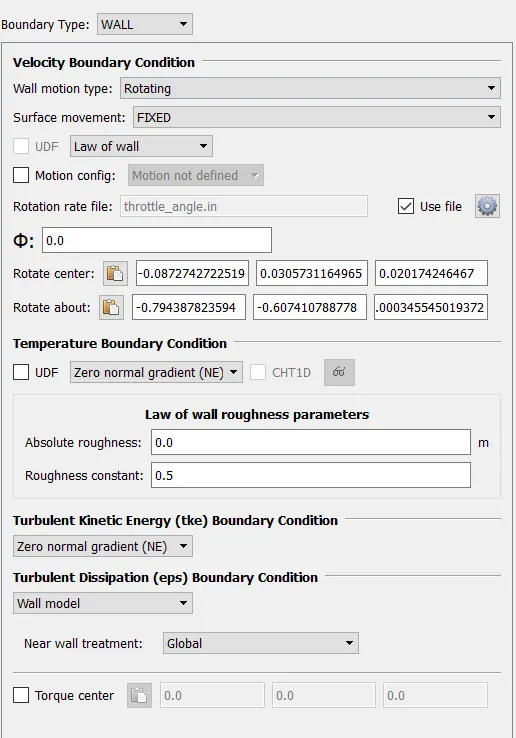
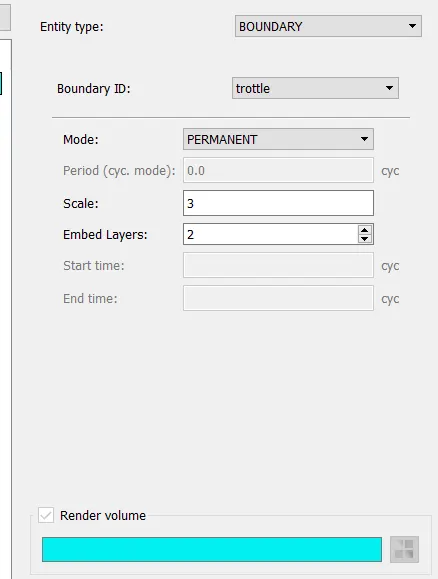
4. Throttle |
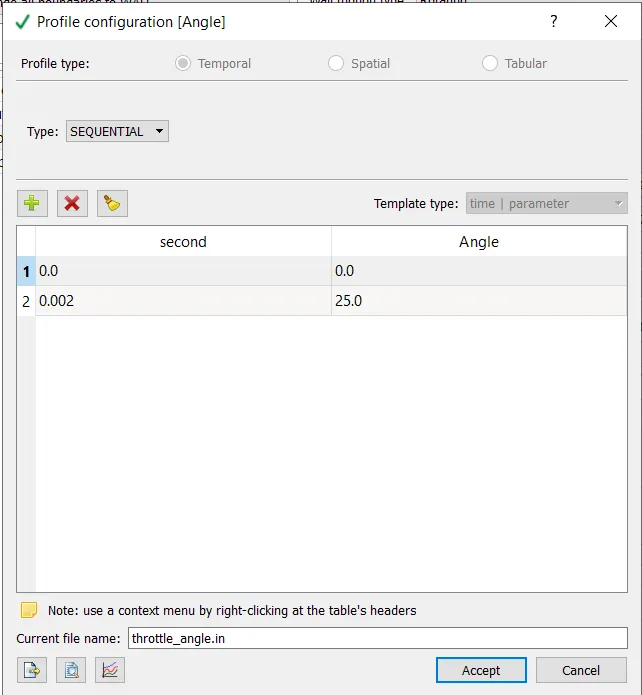
From this part of the throttle, we measure the arc radius or by triangle normal to know the angle of rotation
File created for the rotation of the throttle in the required direction.
|
|
INITIAL CONDITIONS AND EVENTS |
|
|
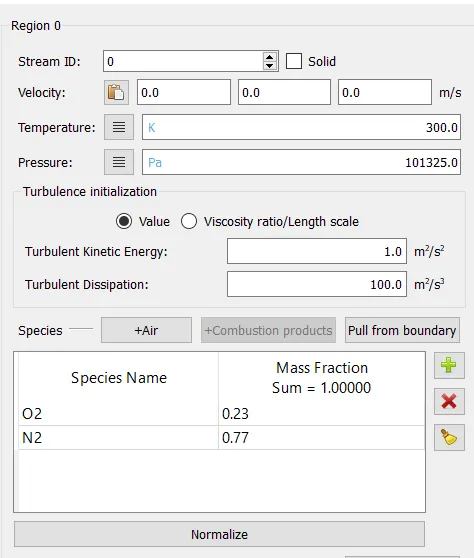
1. Regions and initialization |
|
|
PHYSICAL MODELS |
RNG- k-epsilon |
|
GRID CONTROL |
|
|
1. Base mesh |
dx = 2e-3m, dy = 2e-3m and dz = 2e-3m |
|
2. Fixed embedding |
|
|
OUTPUT/POST-PROCESSING |
|
|
1. Post variable selection |
Standard |
|
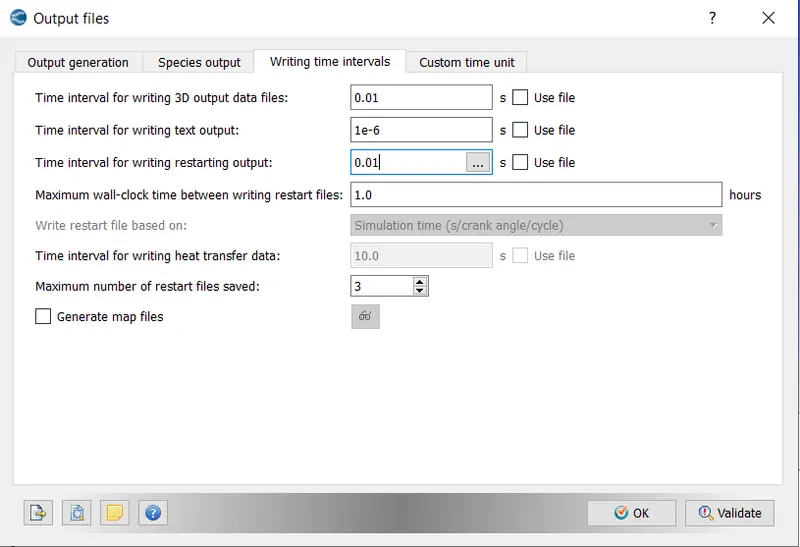
2. Output files: |
|
RESULTS:
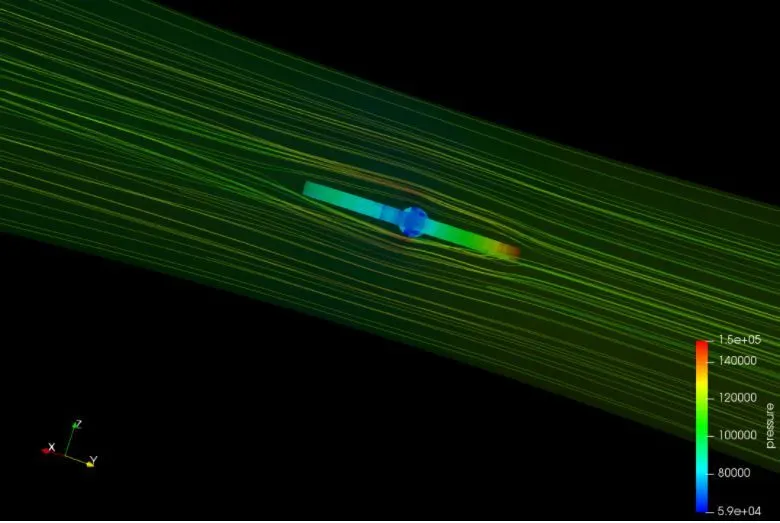
Pressure contour
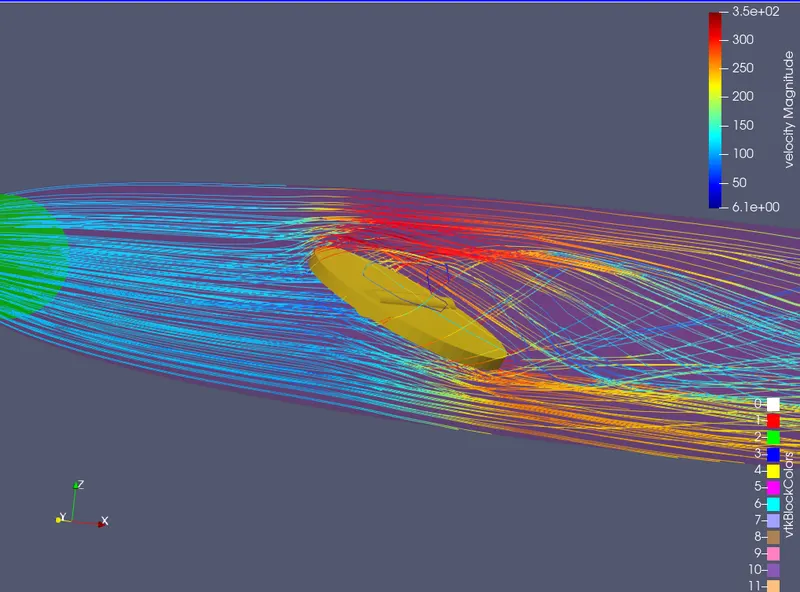
Velocity
Link for animations
https://www.youtube.com/watch?v=ZuygYmUUF2s
Plots of flow variables
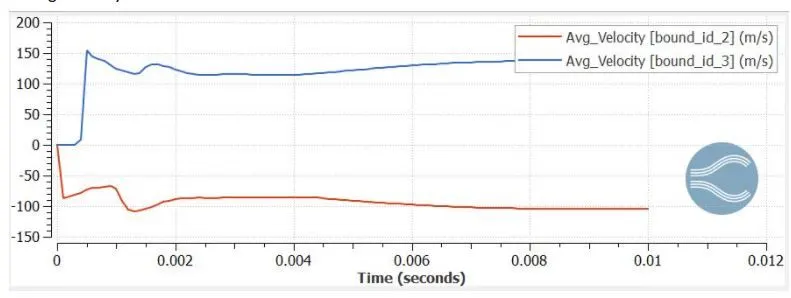
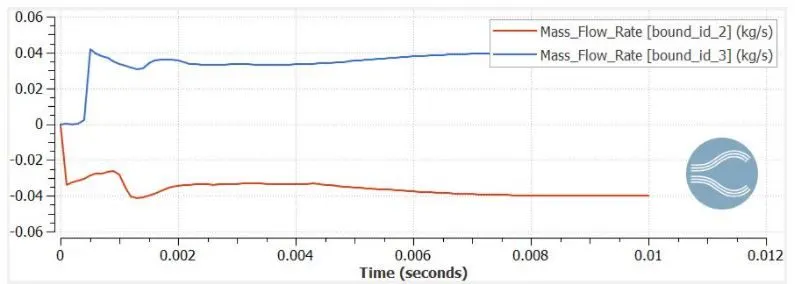
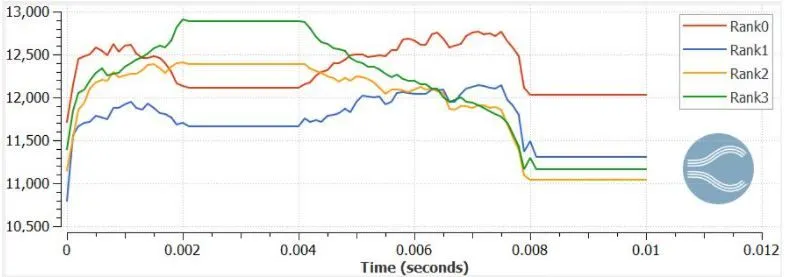
CONCLUSIONS:
1. We can the prominent formation of the wake region, in the aft part of the plate, we also see prominent flow seperation.
2. We see an increased conversion of kinetic energy to pressure energy.
3. Due to the movement in the throttle pertubation can be seen in the cell count.
4. Due to increased pressure gradients, because of obstruction of the plate, mass flow increases at the outlet.