Week 3 Verification of Weld Joints
OBJECTIVE
Setup a case of static structural simulation to simulate 3 different types of the weld and identify the weld joint which experiences maximum stresses upon application of a similar loading condition
Three cases are
Case 1. Stainless Steel: In this case, the material of the plates must also be the same. Use Stainless steel for both weldments and plates. No need to add flux to the weldments.
Case 2. Aluminium Alloy: The material to be chosen for this case is Aluminium alloy(high strength, wrought). [Plate material to be used is stainless steel]
Case 3. Bronze: In order to simulate "Brazing", you should be using bronze as the weld material. Assign Stainless Steel to both plates and Copper to the "Ribs".
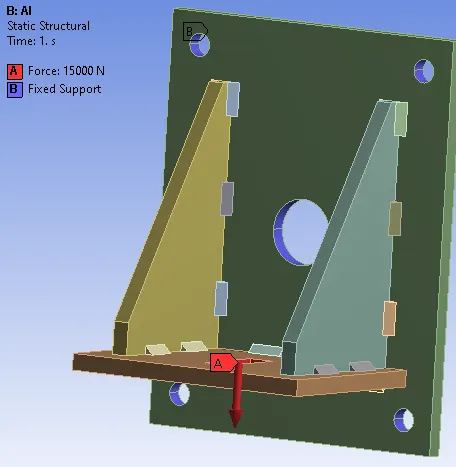
Loading condition = 15000 n applied on the hole in the small plate.
PROCEDURE
Step 1: Setting up the geometry
- Import the geometry
- Check the model for any missing feature
Step 2: Assign proper material to the model
- Add engineering material to the workbench. If the material is not available, create the material
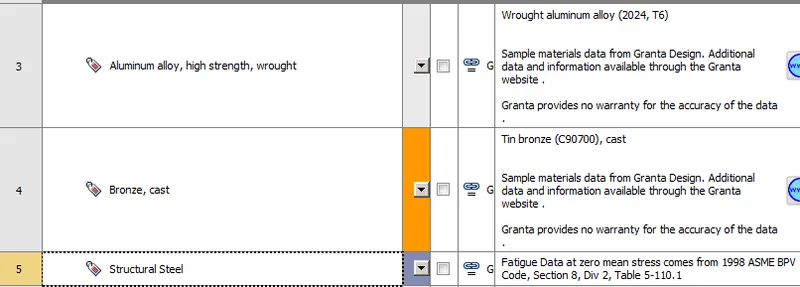
- Open Model -> Geometry -> select the component -> assign desired material
Step 3: Meshing
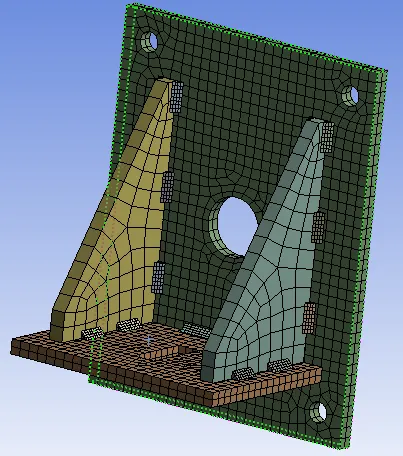
- Identify the most critical portion of the simulation.
- Use the sizing and method option to define the mesh element size and mesh type in a specified region.
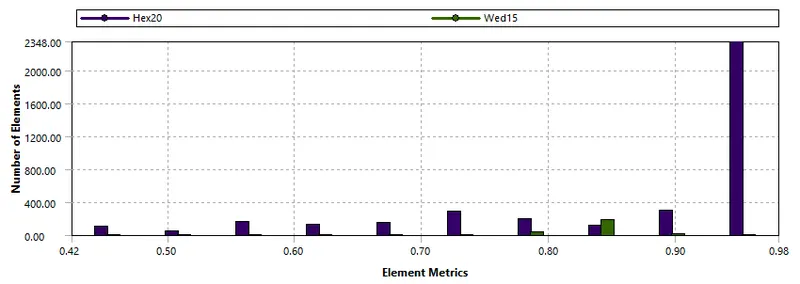
- Check the quality of the mesh.
Step 4: Assign Contact definition
- Check automatic connections created.
- If needed create manual contacts and select contact type.
Step 5: Assign Boundary Condition
Step 6: Analysis Settings
- Turn on large deflection
Step 7: Output Requests
- Create output requests for Equivalent stress, Equivalent strain, Total deformation, and other required outputs.
Step 8: Run the simulation & Evaluate the Results
RESULTS
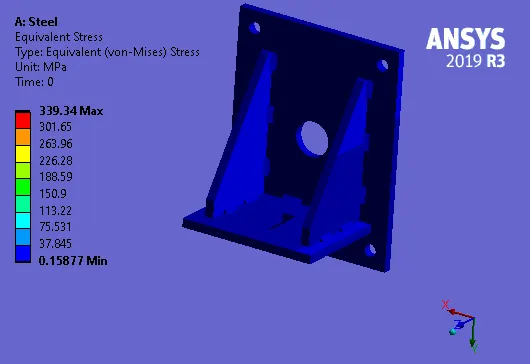
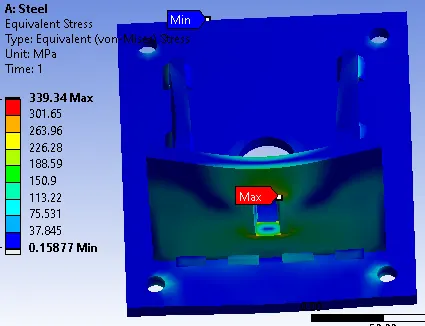
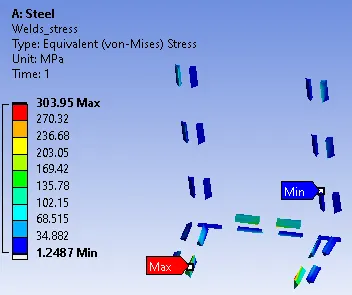
Case 1 - Stainless Steel
- Stress
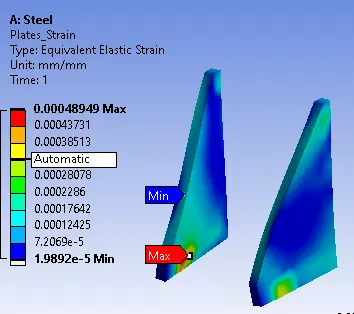
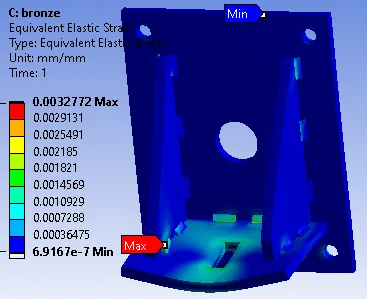
Strain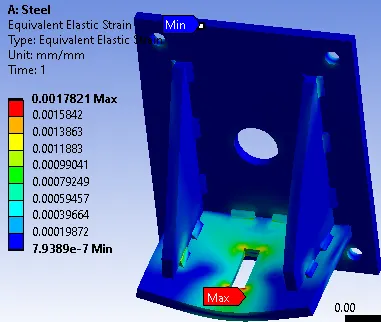
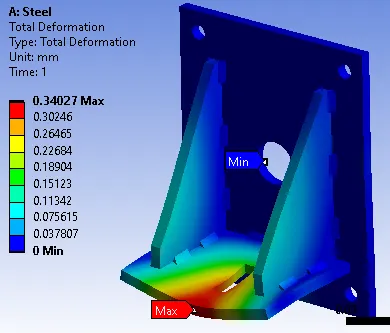
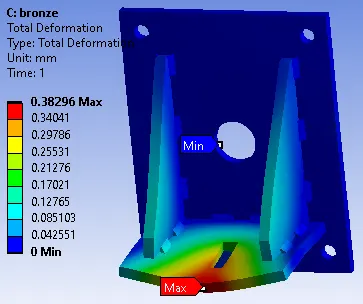
- Deformation
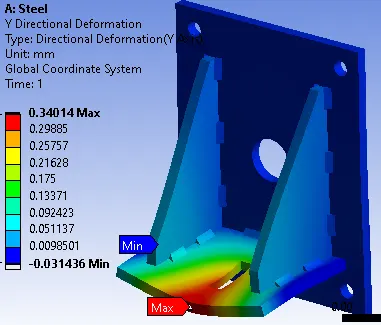
- Y-direcction deformation
- Safety Factor
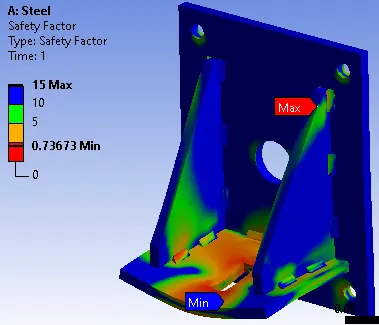
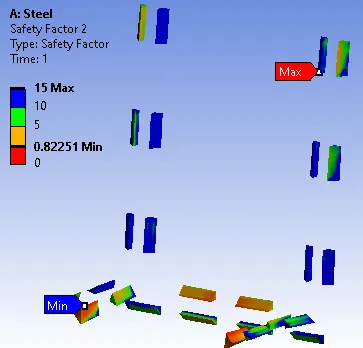
- Result Summary
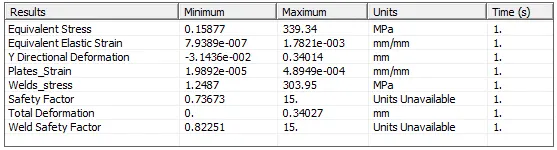
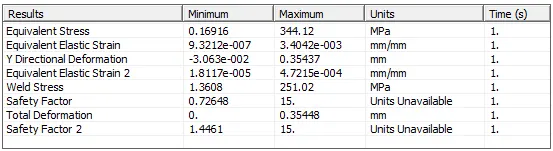
Case 2 - Aluminum
- Stress
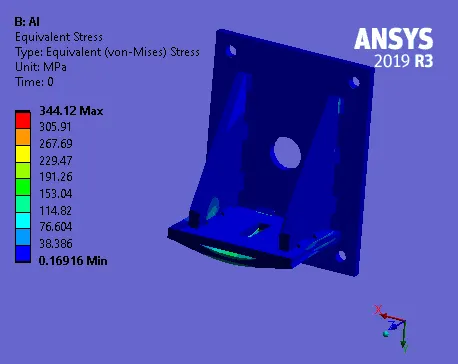
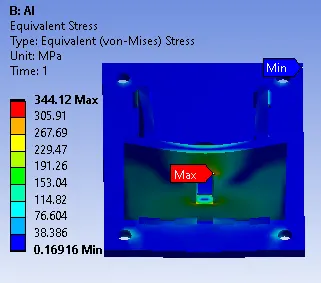
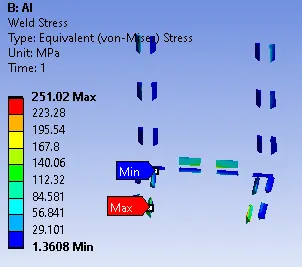
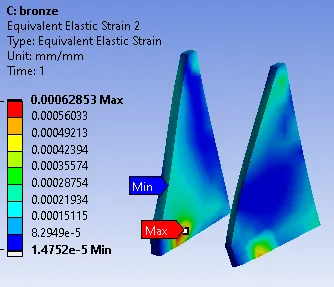
- Strain
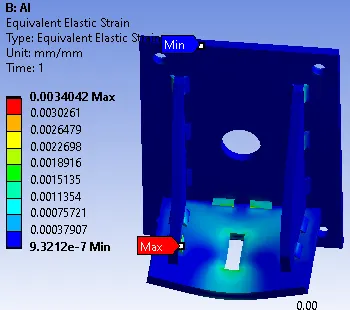
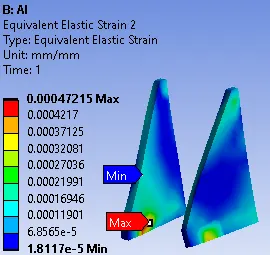
- Deformation
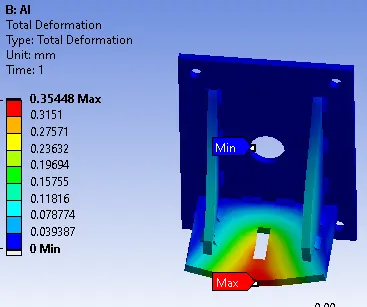
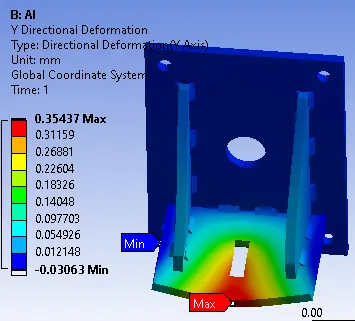
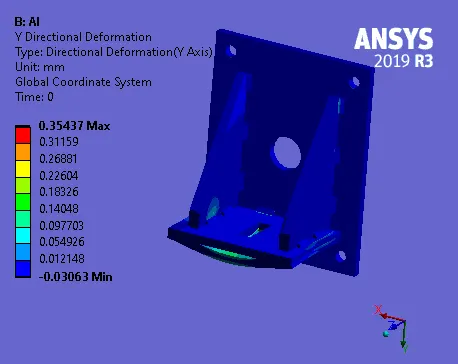
- Y-direction deformation
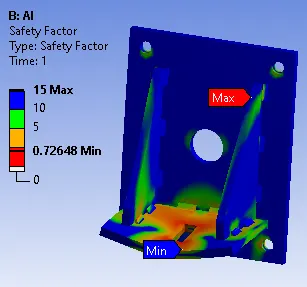
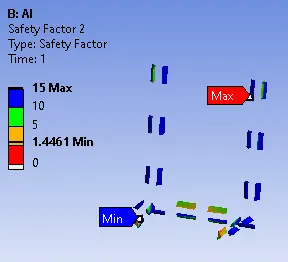
- Safety Factor
- Result Summary
Case 3 - Bronze
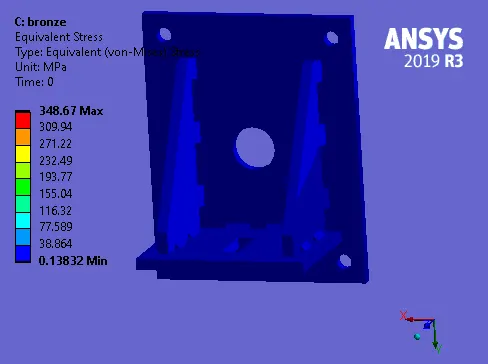
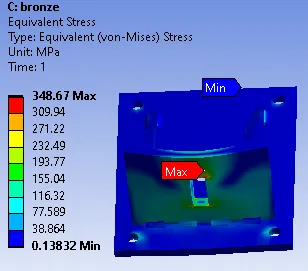
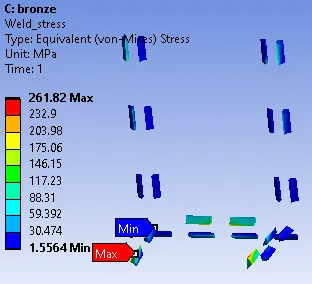
- Stress
- Strain
- Deformation
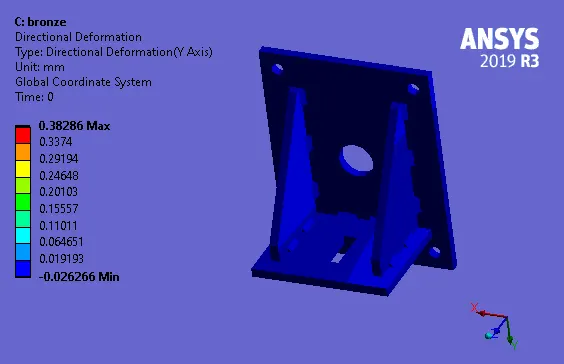
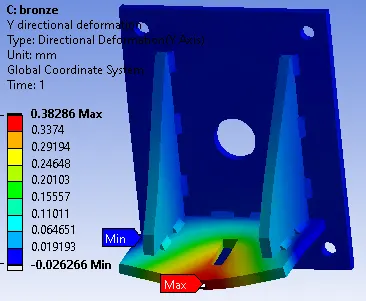
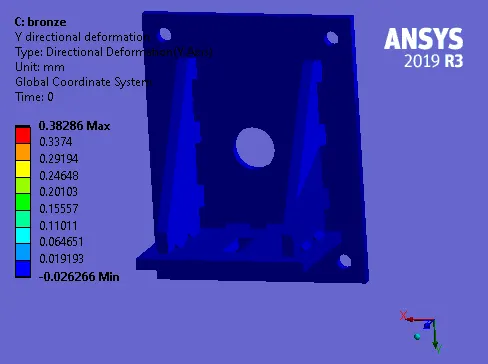
- Y-direction deformation
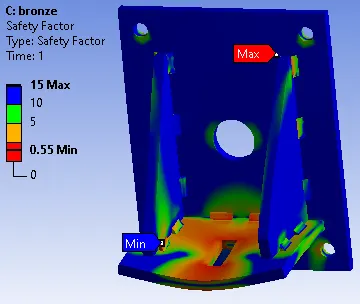
- Safety factor
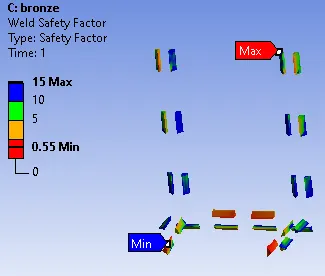
- Result Summary
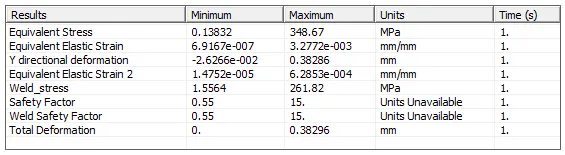
| Case 1 Stainless Steel | Case 2 Aluminum | Case 3 Bronze | |
| Stress (MPa) |
339.34 | 344.12 | 348.67 |
| Strain | 1.782e-3 | 3.404e-3 | 3.277e-3 |
| Deformation (mm) |
0.34027 | 0.35448 | 0.38296 |
| Y - Deformation (mm) |
0.34014 | 0.35437 | 0.38286 |
| Safety Factor (min) |
0.73673 | 0.72648 | 0.55 |
| Safety factor - Weld (min) |
0.82551 | 1.4461 | 0.55 |
From the above table we can make following inferences for given boundary condition
- maximum stress = 348.67 in Bronze weld
- largest direction deformation = 0.38296 mm in Bronze weld
- least safety factor for whole assembly = 0.55 in Bronze weld case
- least safety factor for weld = 0.55 in Bronze weld
We can say that Bronze weld is the weakest of all the selected weld materials