Week 3 Verification of Weld Joints
OBJECTIVE :
Compare the results of welding joint with different materials and check how stress and deformation taking place in the different cases.
CASE 1:
1. Download the model from the challenge.
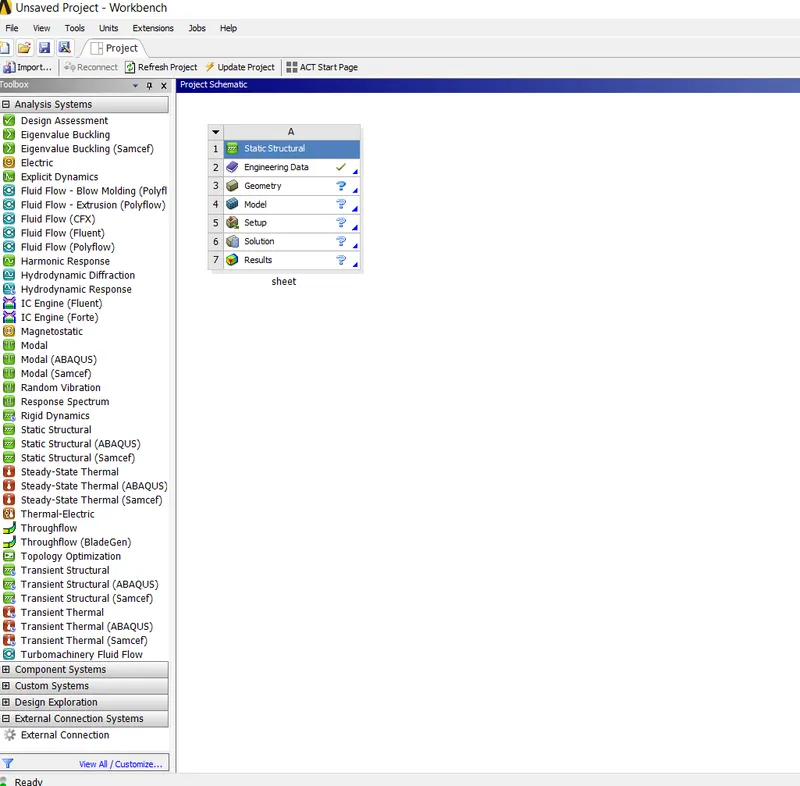
2. Open the ANSYS workbench and drag the static structure analysis.
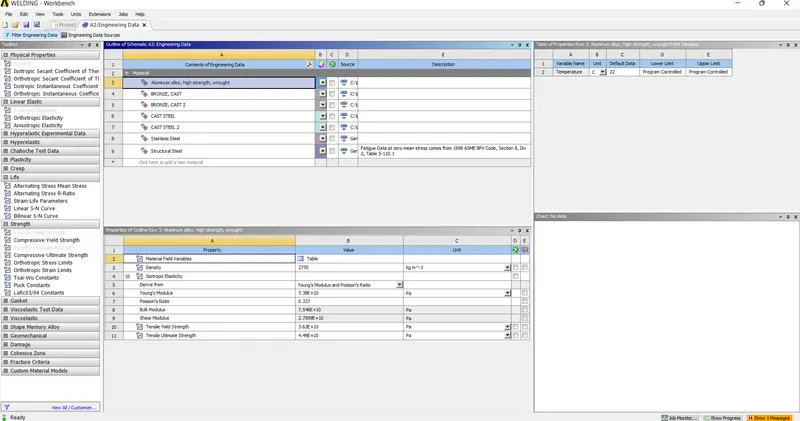
3. Double click on the engineering materials and add the aluminium nonlinear alloy and change the property as give below. And add the stainless steel, bronze and copper material.
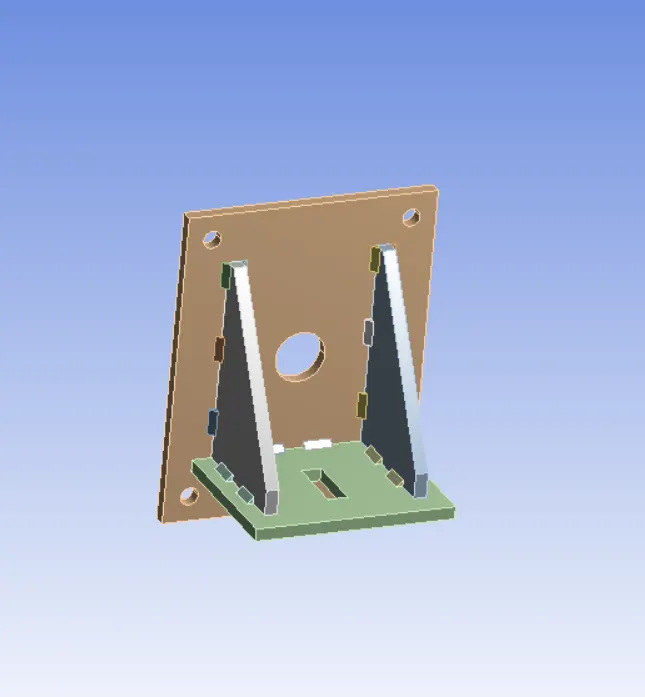
4. now right click on the geometry, import the model downloaded.
5. Now double click on the model. And check the model loaded properly or not.
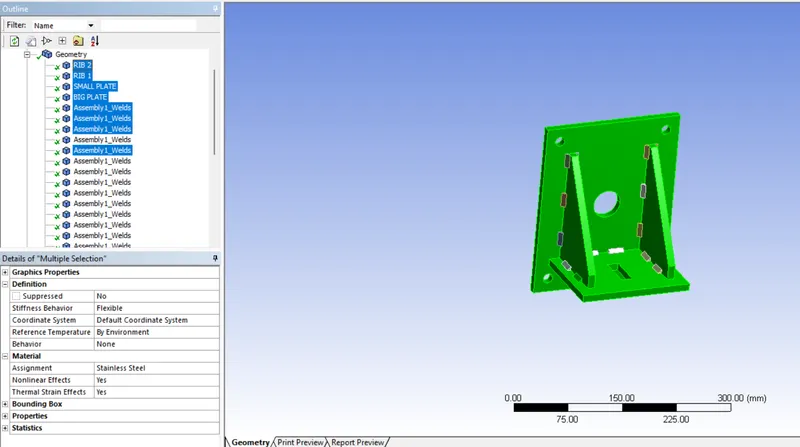
6. Now click on the geometry in the outline tree. And assign the stainless steel to the all the parts.
7. Now click on the contacts. It shows some default contacts. And make that re arrange the contact on basis of definition. And change the contact as friction with coeffient of friction is 0.2.
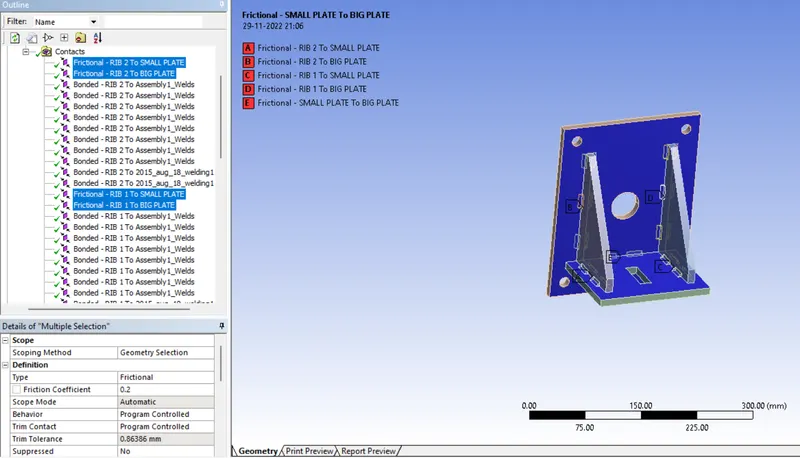
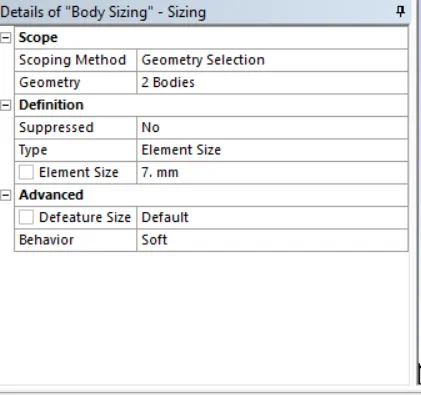
8. Click on the mesh and insert the one mesh tab. Select the tibs and give the size of 7 mm mesh.
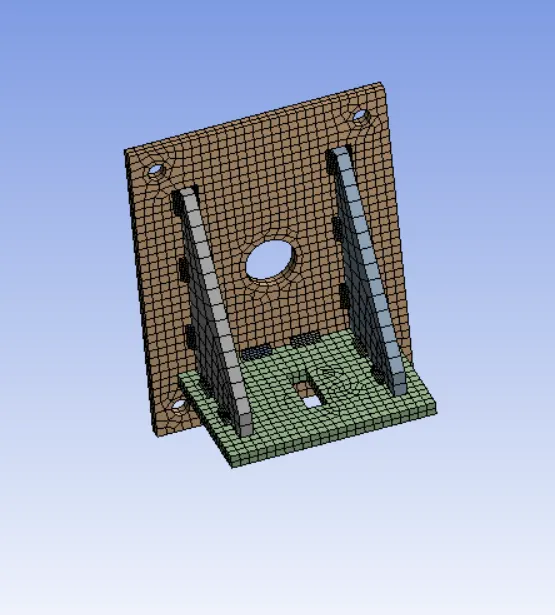
9. Now generate the mesh.
10. Now go to analysis setting and make it ON Large deformation.
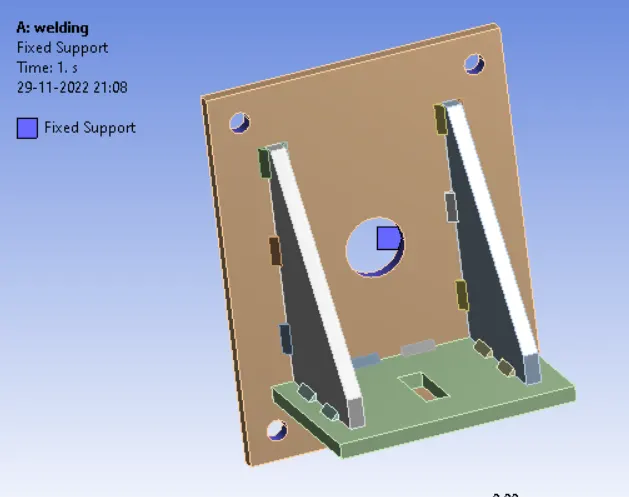
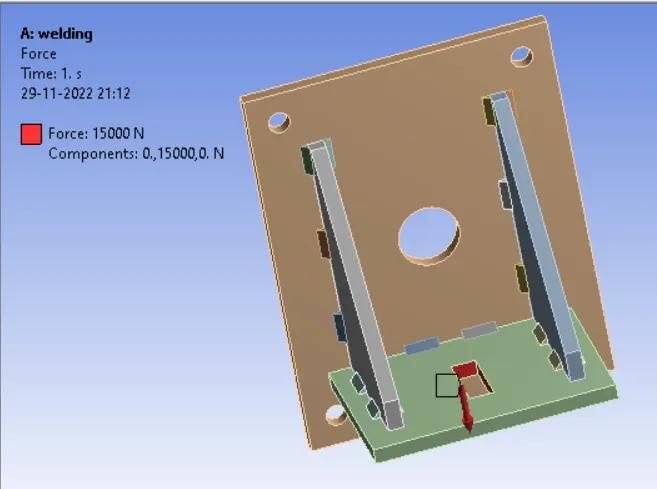
11. Now insert the fixed support and fix the big plate at the holes.
12. Now give the load of 15000 N at the box section in the Y direction
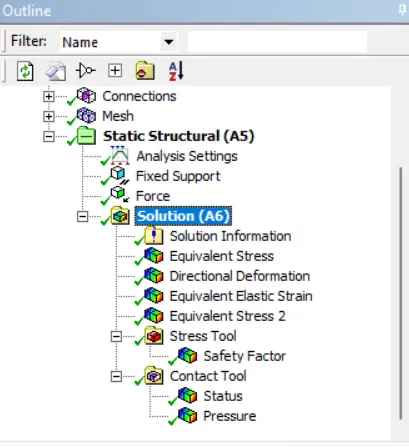
13. Now insert the solution parameters as shown below.
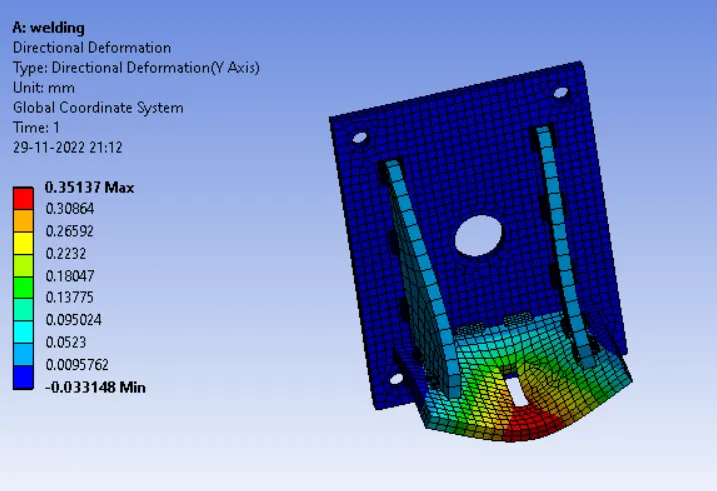
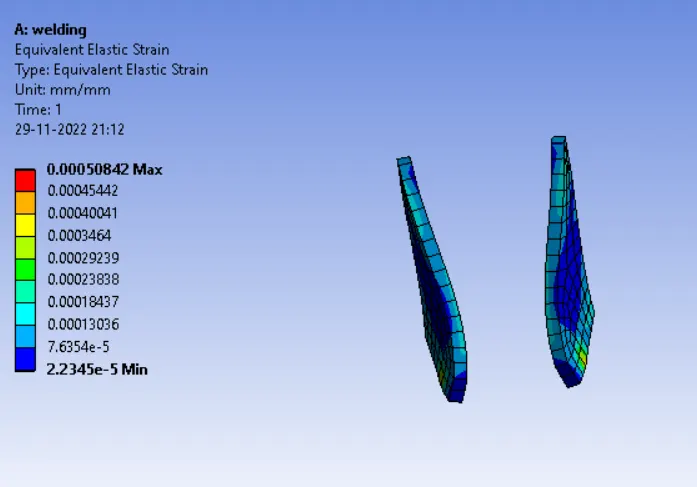
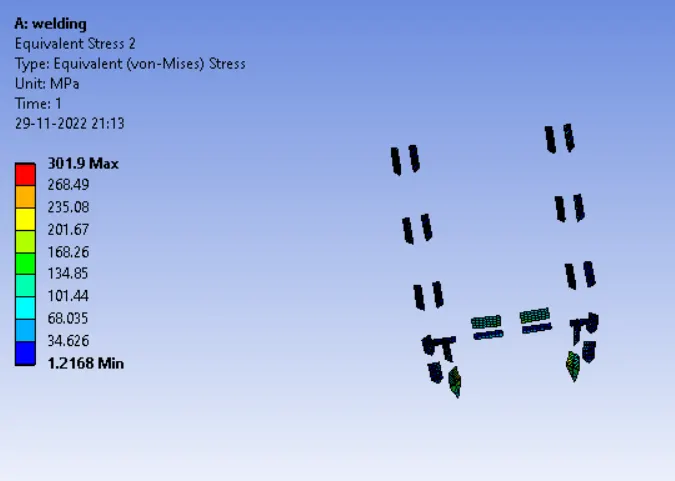
14. Now solve the model. After providing the solution it shows the following results.
CASE 2 :
1. Now duplicate the model static analysis.
2. Now double click on the model. The model will open in the model tab.
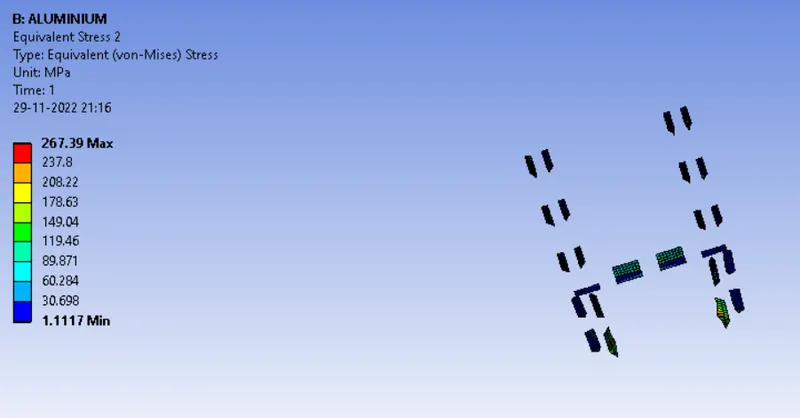
3. Now change the materials and change material to aluminium of all parts except the plates.
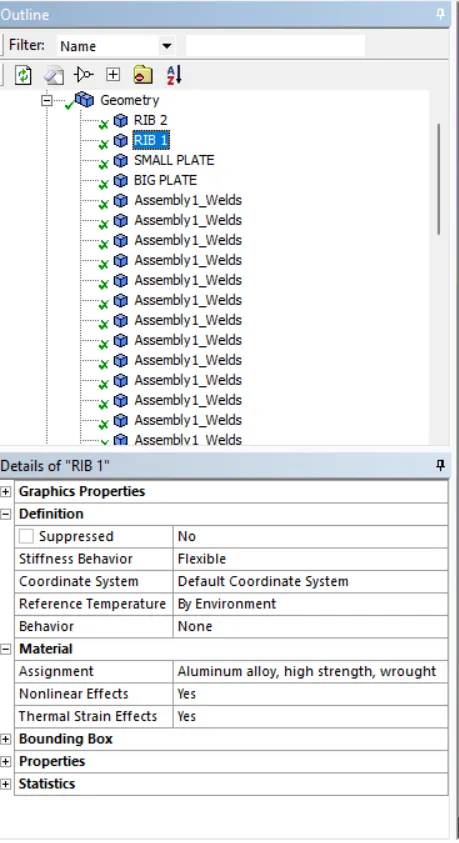
4. Now solve the model. And wait until the solution we get.
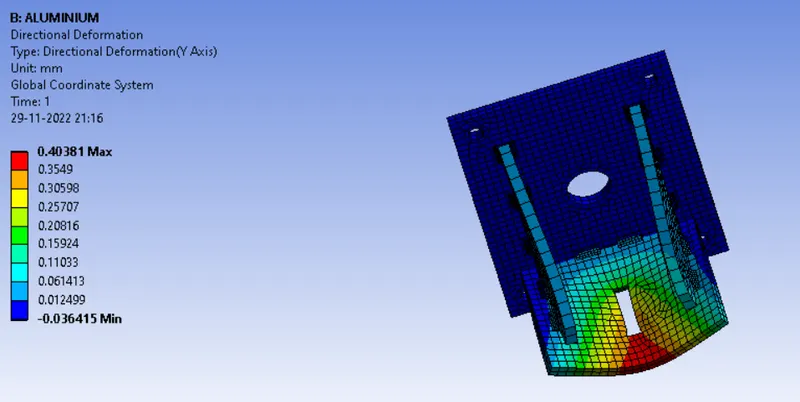
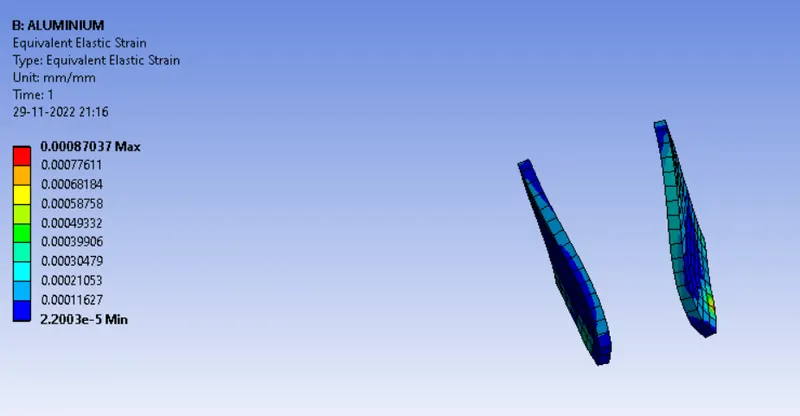
5. The results are shown below.
CASE 3 :
1. Now duplicate the model static analysis.
2. Now double click on the model. The model will open in the model tab.
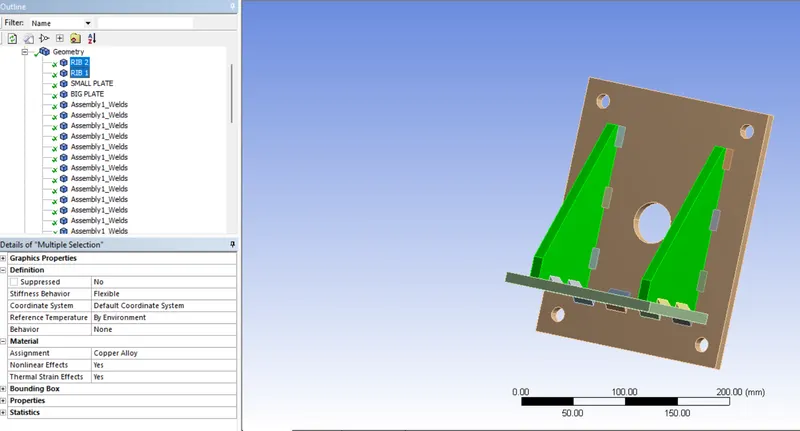
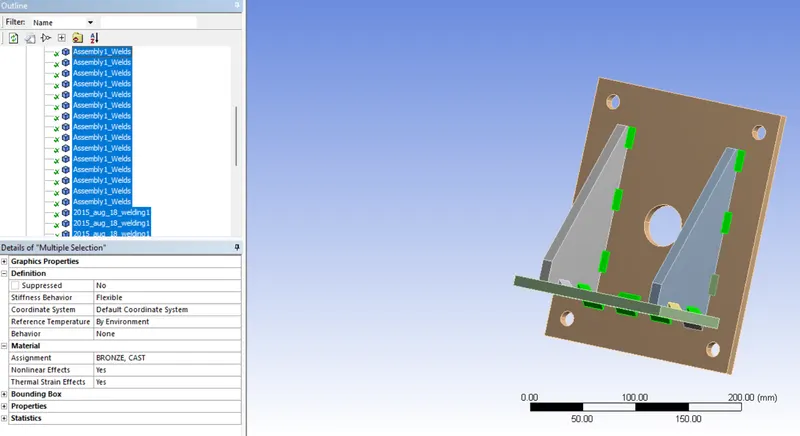
3. Now change the materials as mentioned below.
Weld materials - BRONZE
Ribs -COPPER
Plates -STAINLESS STEEL
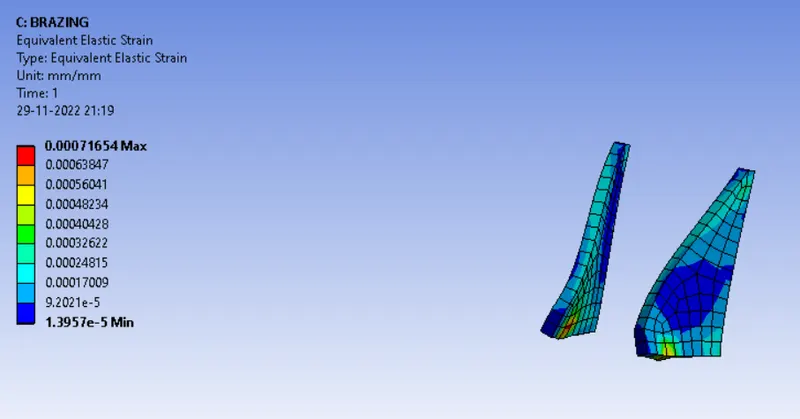
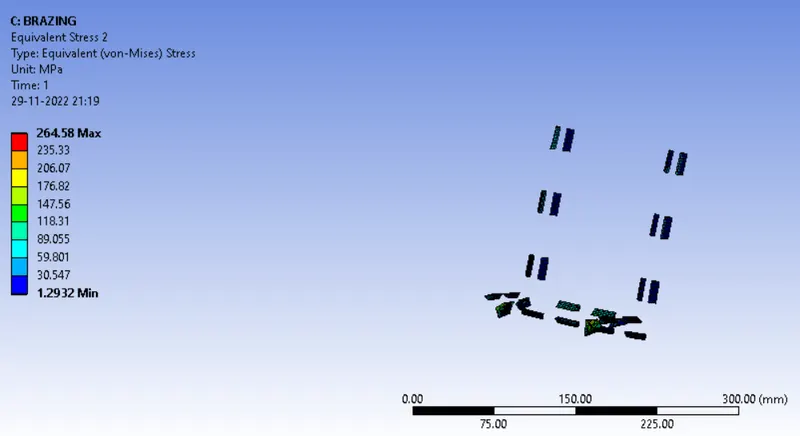
4. Now solve the model. And wait until the solution we get.
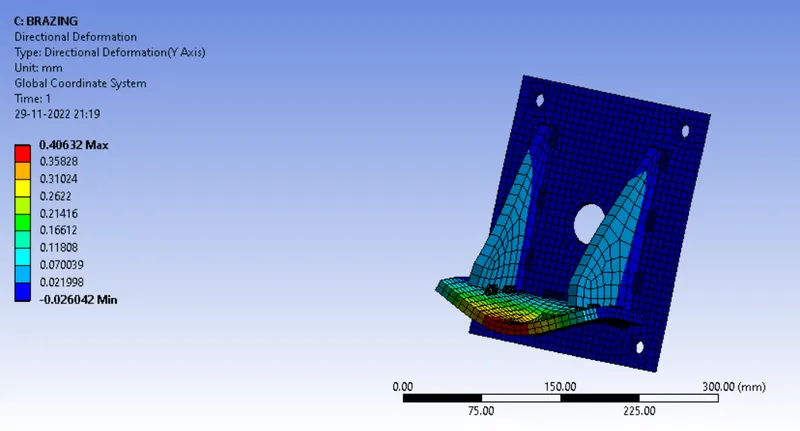
5. The results are shown below.
CONCLUSION :
from the observation of all three cases. the stress developed in the weld parts
case 1: stainless steel 301.9 Mpa
case 2: aluminium alloy 267.39 MPa
case 3: bronze 264.58 MPa
i.e, the stress developed in the stainless steel is high compared to the ramaining materials. the low stress in the bronze.
the deformation developed in the body is
case 1: stainless steel 0.351 mm
case 2: aluminium alloy 0.403 mm
case 3: bronze 0.406 mm
but if we observe the deflection is more in the case of bronze.
All stress within the limits. so, choose materials on the basis deformation. use stainless steel for welding.