Week 3 Verification of Weld Joints
Aim:
The aim of this project is to verify the weld joints using different materials by comparing the simulation results.
Model Setup:
A weld joint CAD model was imported into Ansys workbench with 2 plates, 2 ribs and 26 weld joints.
The material properties differ in three cases as follows:
Case 1: Plates and weldments were assigned with stainless steel as the material.
Case 2: Plate material was assigned stainless steel and the weldments were assigned aluminium alloy.
Case 3: Plate material was assigned stainless steel, ribs were assigned copper and weldments were assigned bronze.
A body size meshing of 7 mm was given to both the plates which resulted in 25420 nodes and 4178 elements.
The analysis was set for 1 step.
The inner holes of the big plate were fixed in all direction and the hole of the small plate was given a force of 15000N in the y-direction.
Results:
The results for all three cases are tabulated below:
| Case 1 | Case 2 | Case 3 | |
|
Directional Deformation in Y-axis (mm) |
0.35461 | 0.37191 | 0.46482 |
| Equivalent Stress (MPa) | 335.86 | 344.18 | 359.22 |
| Equivalent Strain for set-up | 0.001785 | 0.0031167 | 0.0029843 |
| Max Equivalent Stress on joints (MPa) | 285.1 | 230.01 | 238.74 |
The simulation results for case 1 are given below:
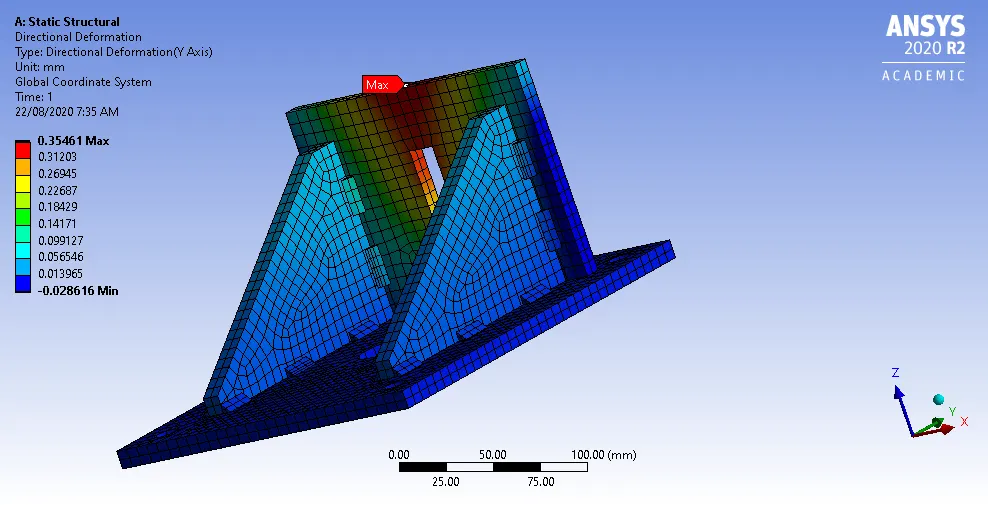
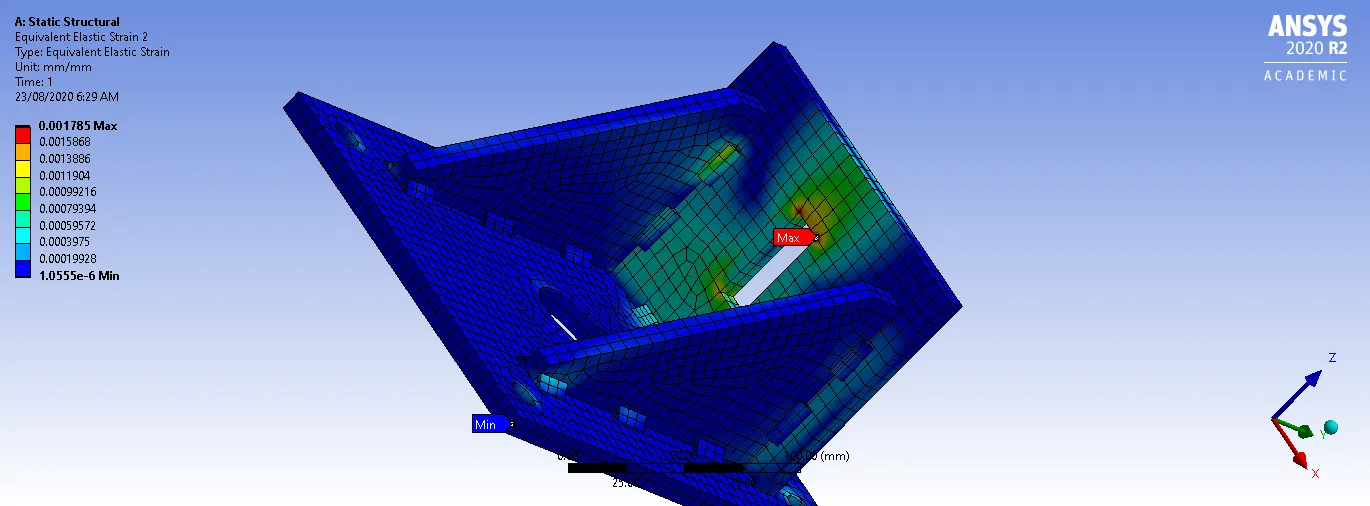
Directional Deformation and equivalent Strain on the setup for case 1.
The simulation results for case 2 are given below:
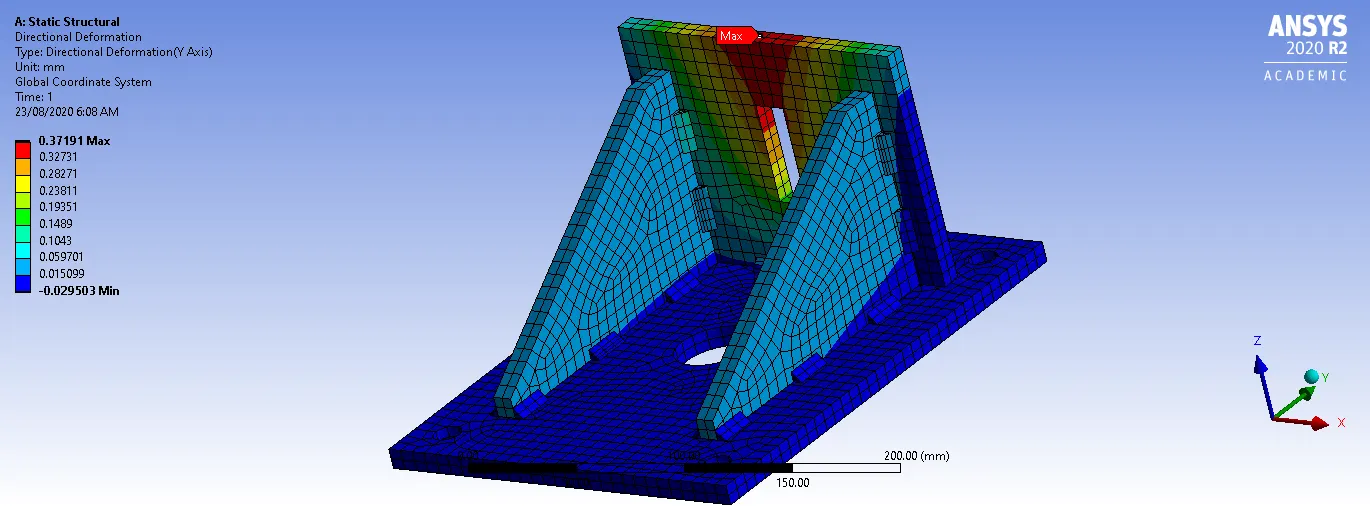
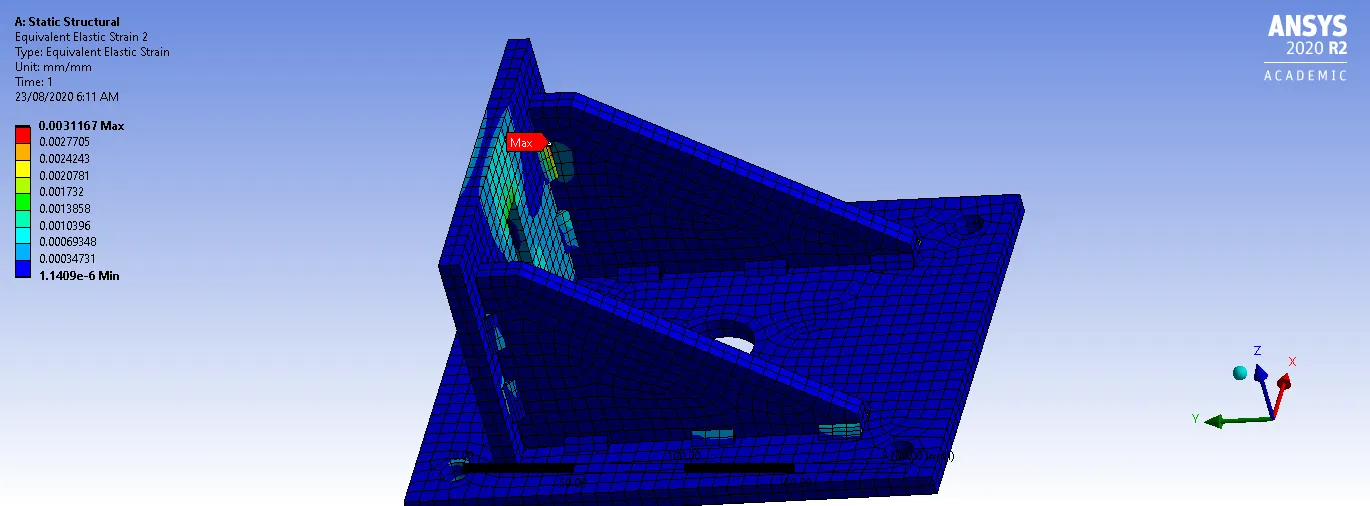
Directional Deformation and equivalent Strain on the setup for case 2.
The simulation results for case 3 are given below:
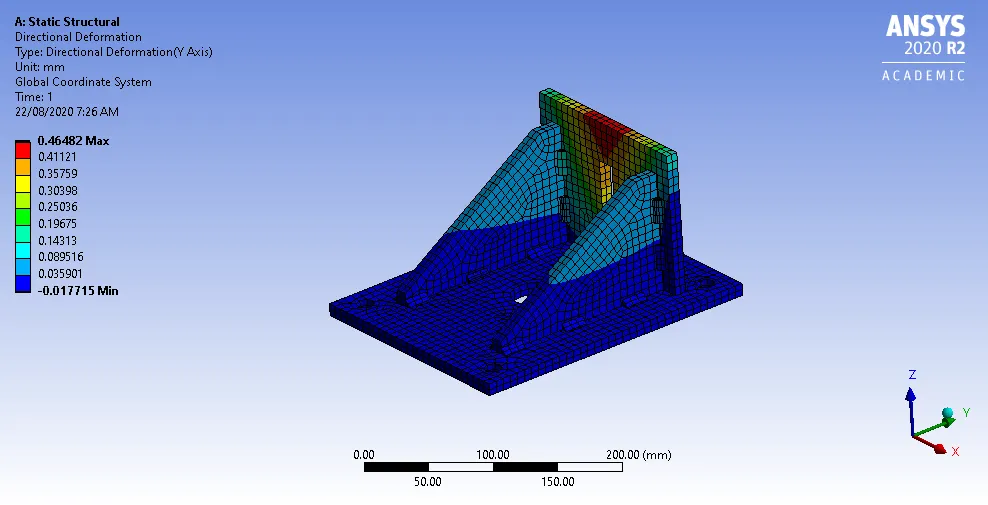
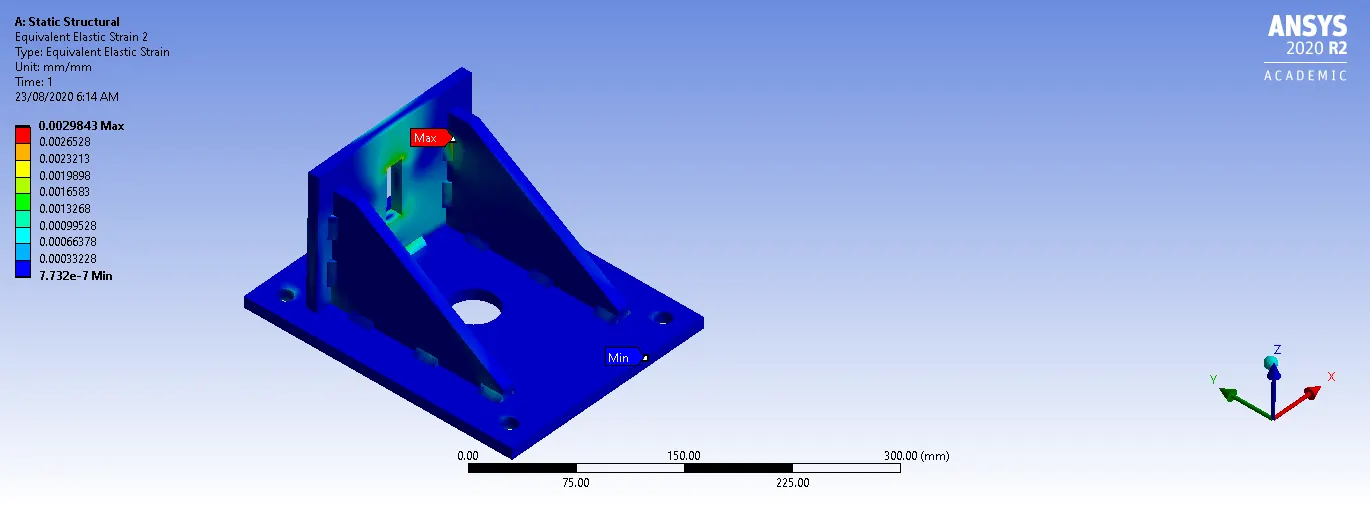
Directional Deformation and equivalent Strain on the setup for case 3.
The joint that experienced maximum stress was the topmost joint between the right side rib and small plate. Three results are shown in the below images and compared in the above table:
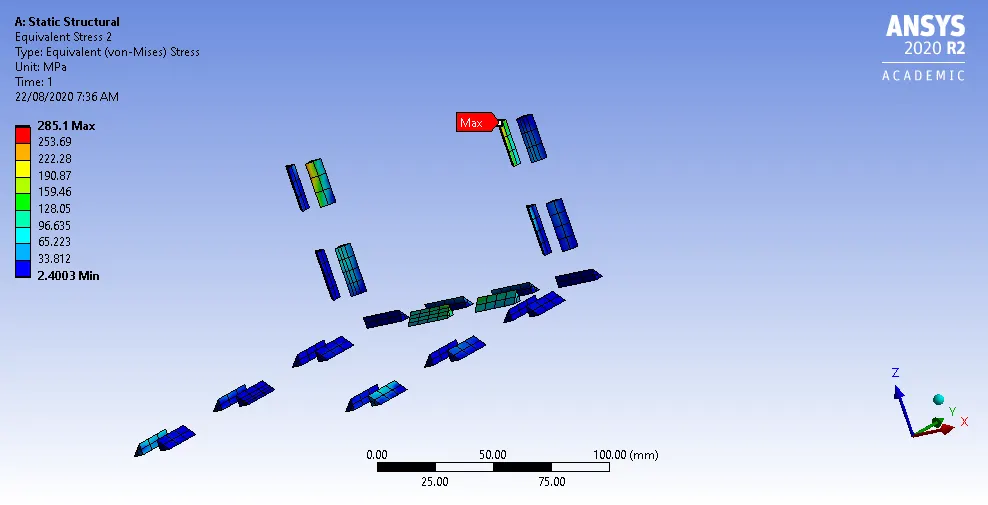
Case 1: Weld joint maximum stress was 285.1 MPa and the minimum was 2.48003.
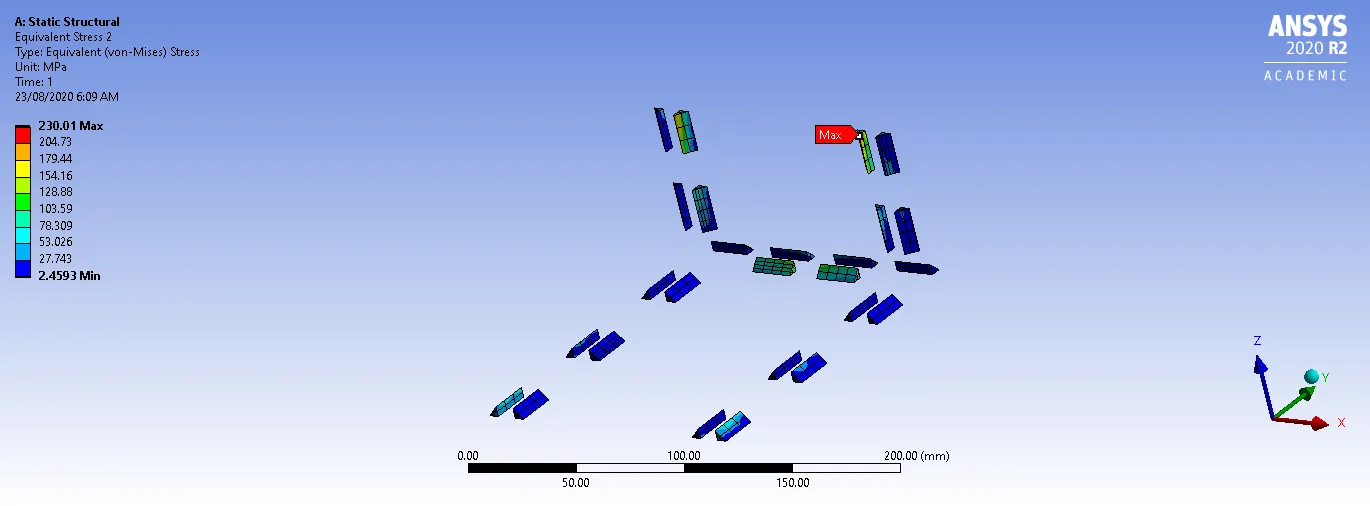
Case 2: Weld joint maximum stress was 230.01 MPa and the minimum was 2.4593.
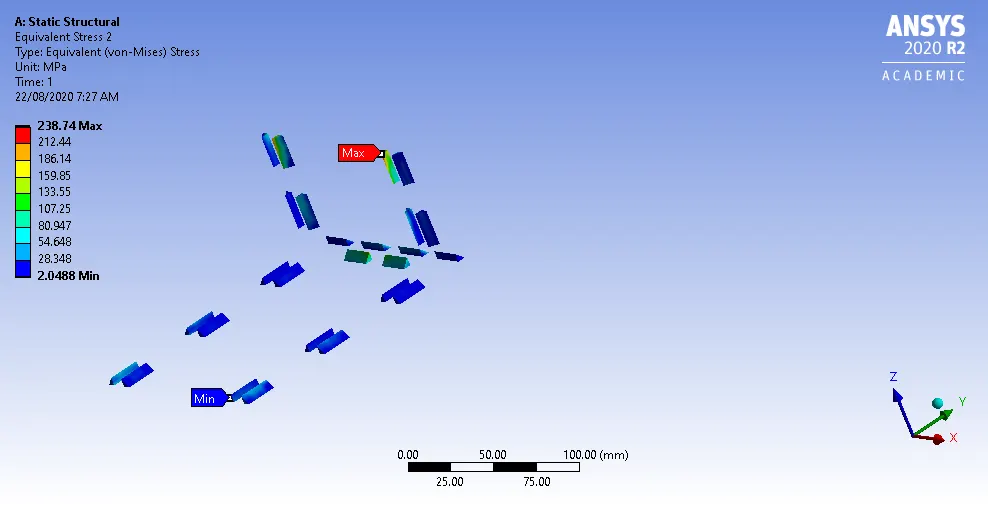
Case 3: Weld joint maximum stress was 238.74 MPa and the minimum was 2.0488.
Conclusion:
From the above results, we can conclude that the aluminium welds take less stress compared to stainless steel and bronze welds. But the deformation, stress, strain developed in the setup are very low in case of stainless steel welds.