Week 3 Verification of Weld Joints
Verification of Weld Joints using ANSYS WORKBENCH
Objective:
To simulate a load of 15000N that is to be applied at the rectangular hole in the small plate using three different types of welding using three different weld materials as given below:
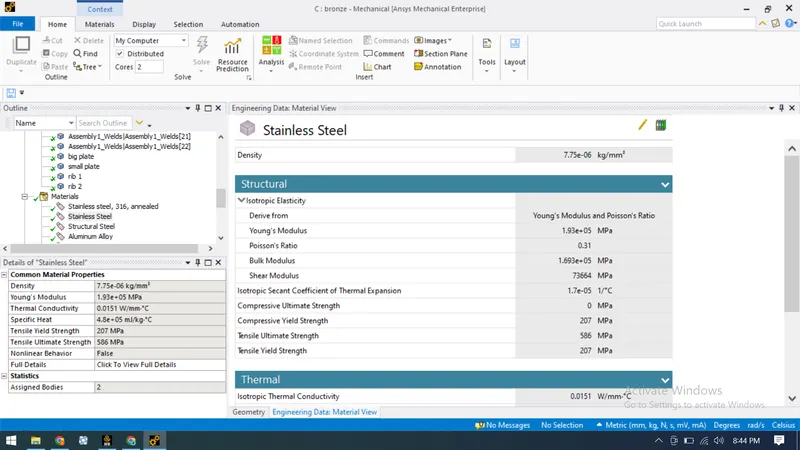
Case 1: Use stainless steel for both weldments, plates and ribs.
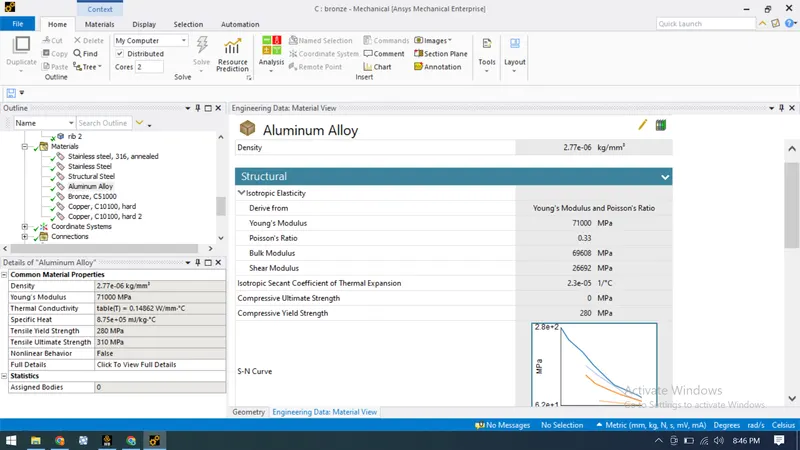
Case 2: The material to be chosen for this case is Aluminium Alloy (high strength, wrought) and plate material to be used is stainless steel.
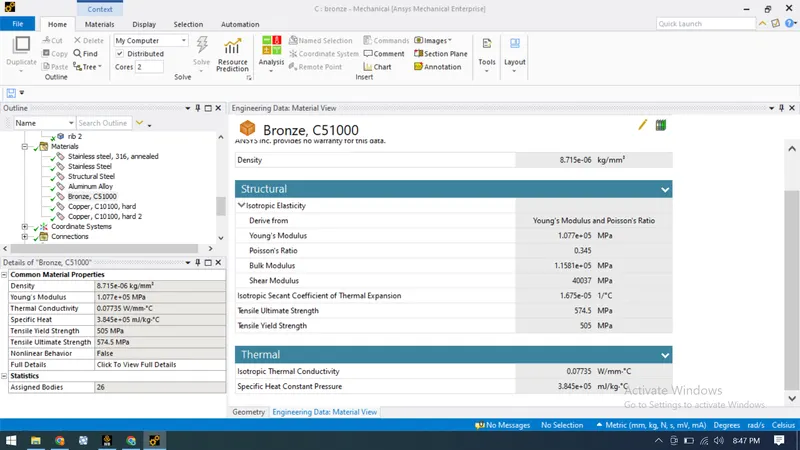
Case 3: In order to simulate "Brazing", use bronze as the weld material and assign Stainless Steel to both plates and Copper to the ribs.
For each case, find out the directional deformation and equivalent strain experienced by the setup. Identify the weld joint that experiences the highest equivalent stress in each case and compare the results for all three cases.
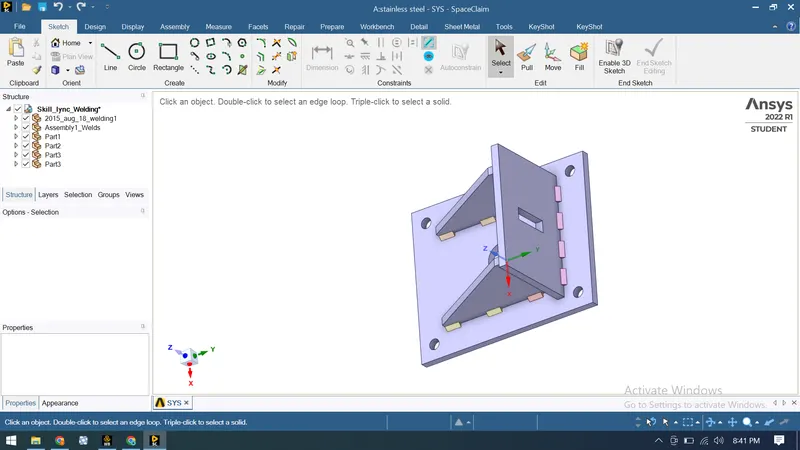
Geometry:
Material:
Case 1:
Case 2:
Case 3:
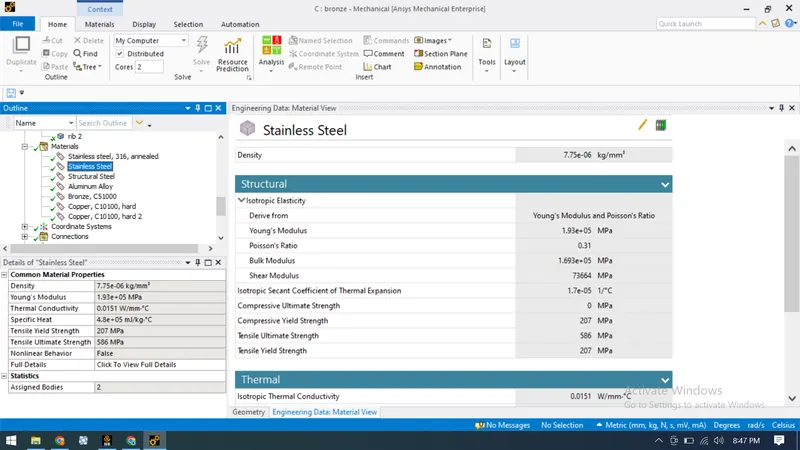
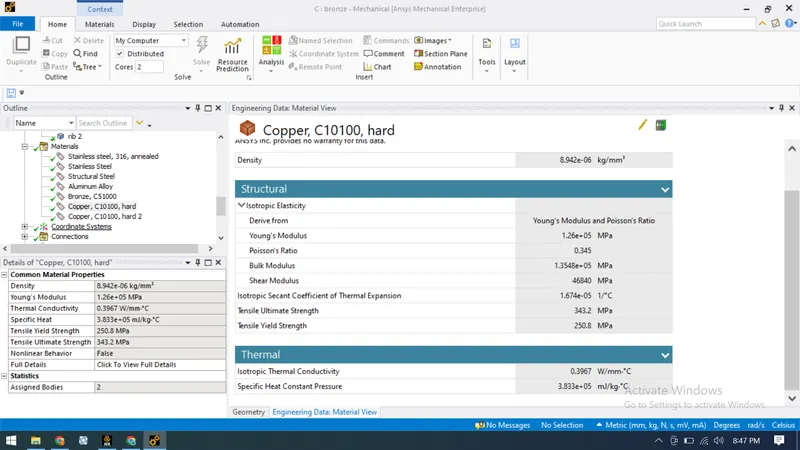
Meshing:
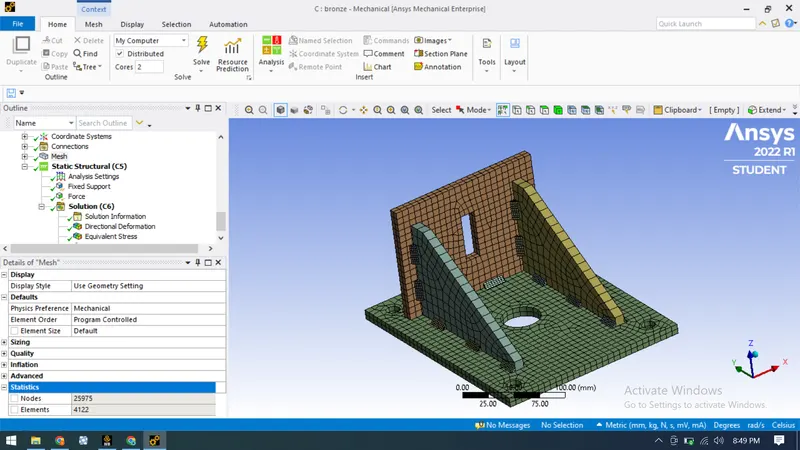
No of elements: 4122
No of nodes: 25975
Connection Details:
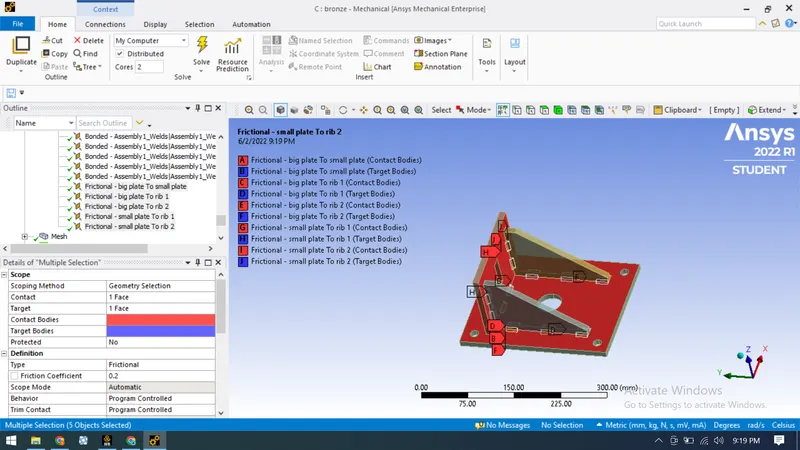
Connection between ribs and both the plates is kept as frictional with friction coefficient as 0.2
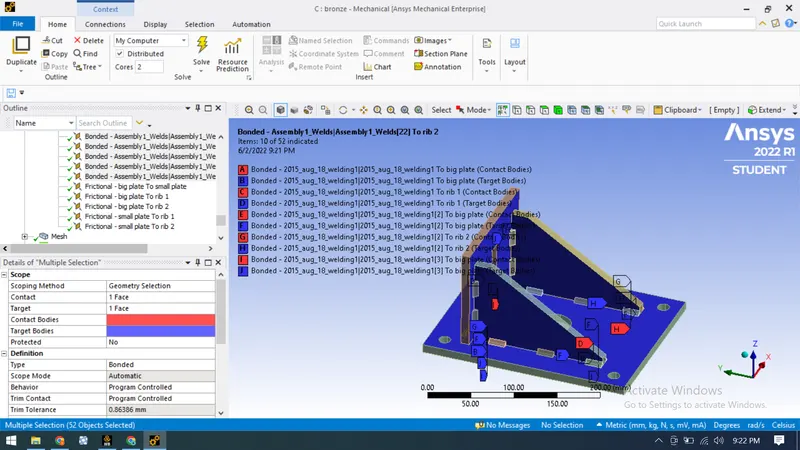
Where as for welds the prefered connection is bonded type.
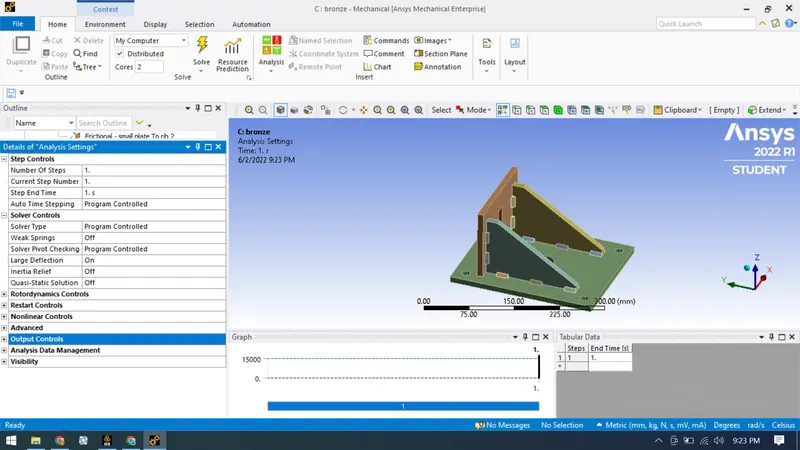
Analysis Settings:
Boundary Conditions:
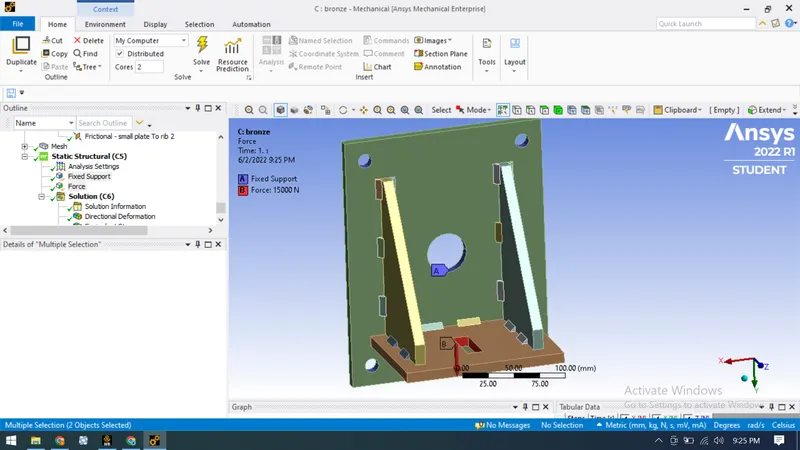
The component is fixed at five mounting holes and a force of 15000 N is applied at the rectangular cut section in vertical downward direction along Y- axis.
Results:
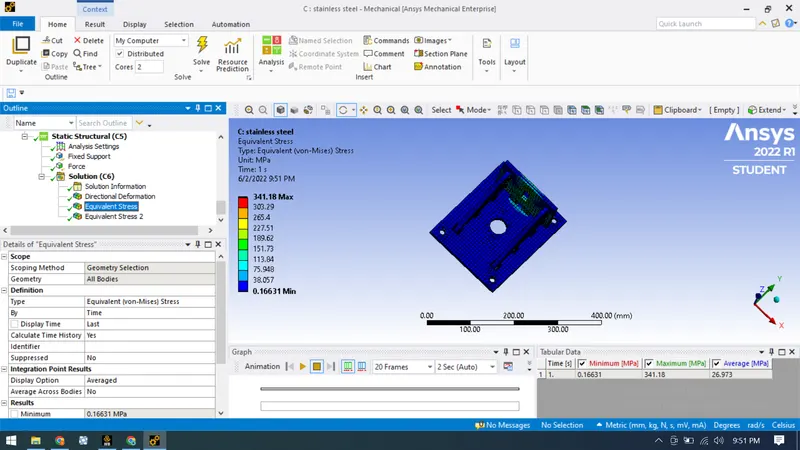
Case1: stainless steel for both weldments, plates and ribs.
Directional Deformation:
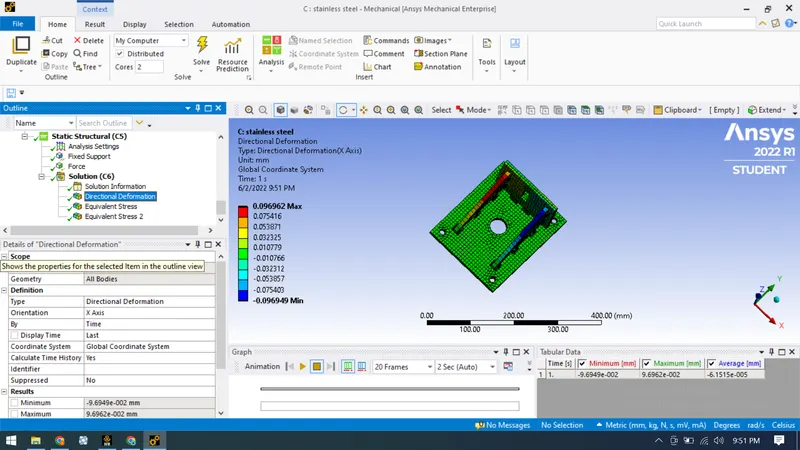
Equivalent Stress :
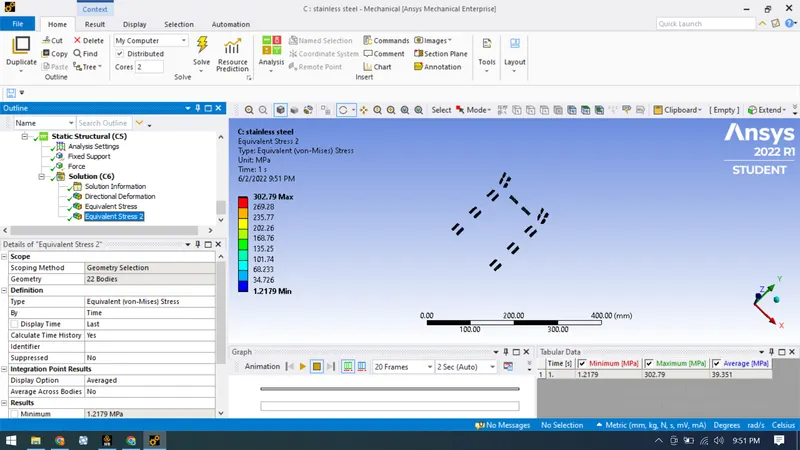
Equivalent Stress For Weld Joints:
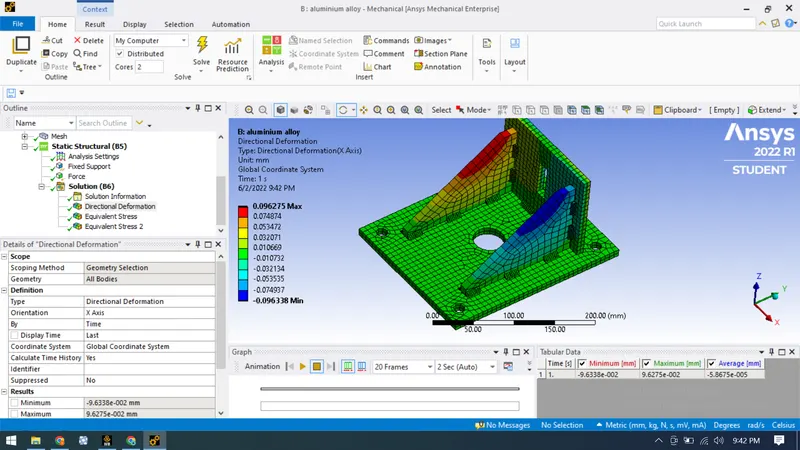
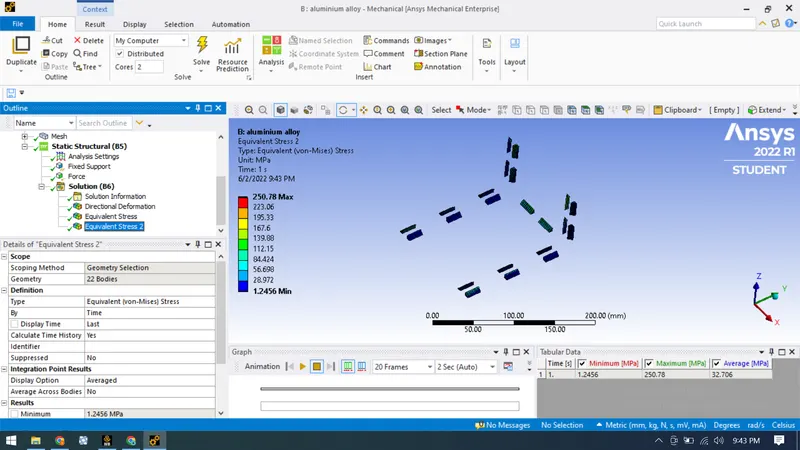
Case2:Aluminium Alloy (high strength, wrought) and plate material to be used is stainless steel.
Directional Deformation:
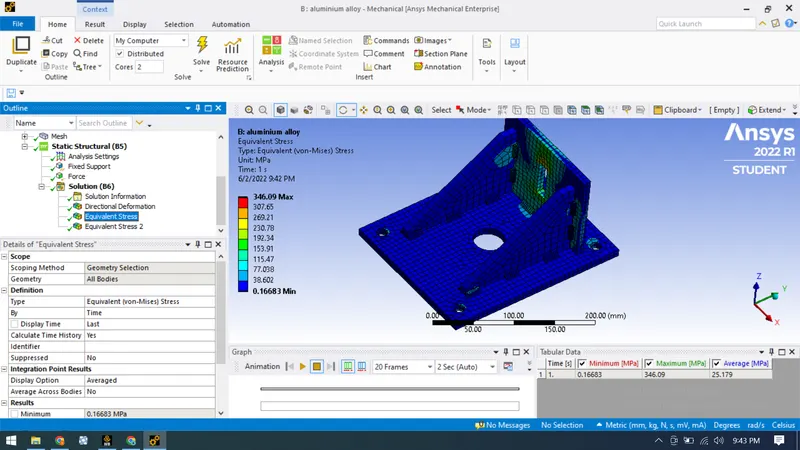
Equivalent Stress :
Equivalent Stress For Weld Joints:
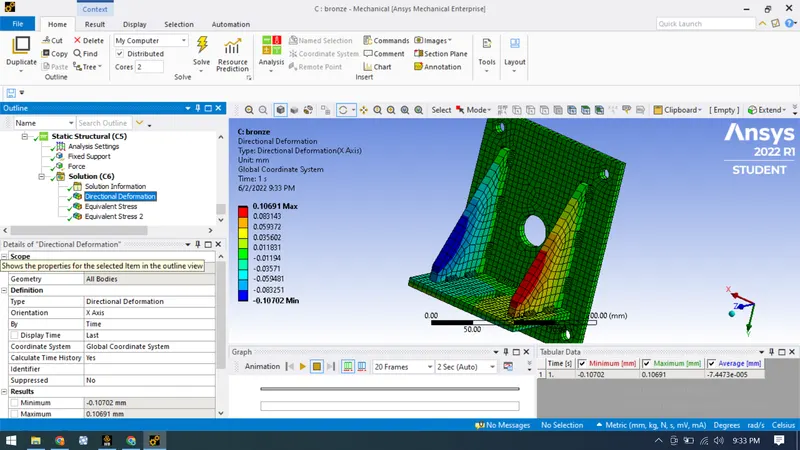
Case3:bronze as the weld material and assign Stainless Steel to both plates and Copper to the ribs.
Directional Deformation:
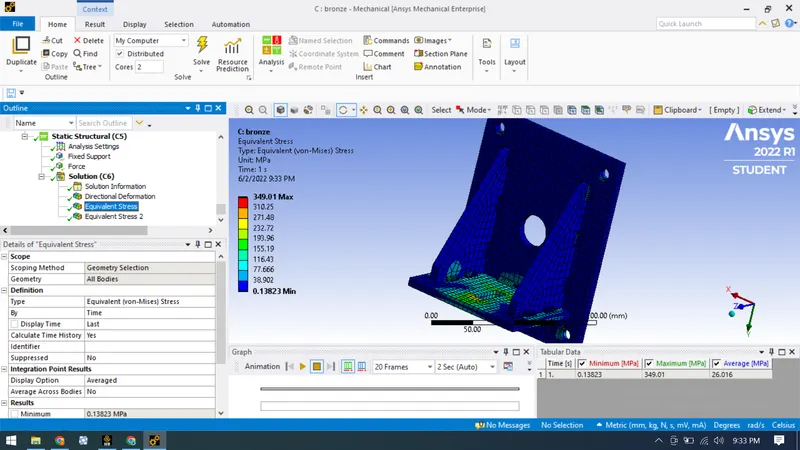
Equivalent Stress :
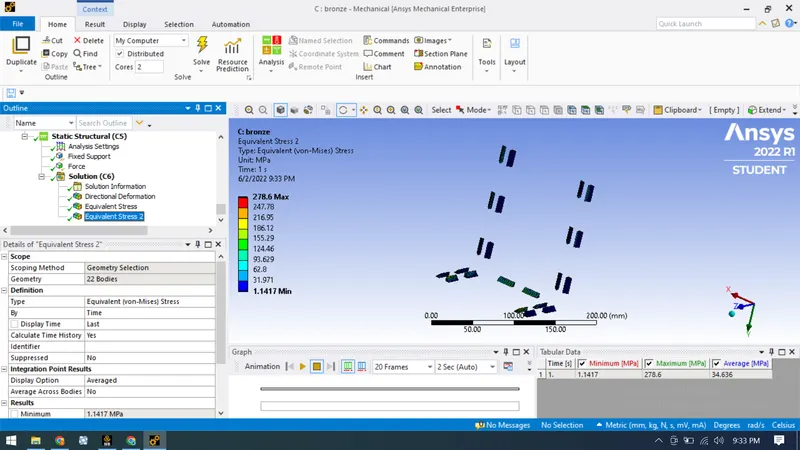
Equivalent Stress For Weld Joints:
Tabular reprasentation of all the three cases for comparison is displayed below;
Conclusion:
| Analysis | Case 1 | Case 2 | Case 3 |
| Max Directional Deformation(Y-axis) | 0.096962 mm | 0.096275 mm | 0.10691 mm |
| Max Equivalent Stress | 341.18 MPa | 345.09 MPa | 349.01 MPa |
| Max Equivalent Stress For Weld Joints | 302.79 MPa | 250.78 MPa | 278.8 MPa |
The difference between case 2 & 3 for directional deformation, equivalent stress and weld stress are very less. Max Weld Stress for case 2 is lower than case 1. Since safety is a major concern, Case 3 materials are suitable.