Week 3 Verification of Weld Joints
Objective: To simulate three different types of welding using the following materials:
- Case 1:
- Weldments: Stainless steel, 316, annealed
- Plates: Stainless steel, 316, annealed
- Ribs: Stainless steel, 316, annealed
- Case 2:
- Weldments: Aluminum alloy, high strength, wrought
- Plates: Stainless steel, 316, annealed
- Ribs: Stainless steel, 316, annealed
- Case 3:
- Weldments: Bronze, cast
- Plates: Stainless steel, 316, annealed
- Ribs: Copper, C10100, hard
Procedure:
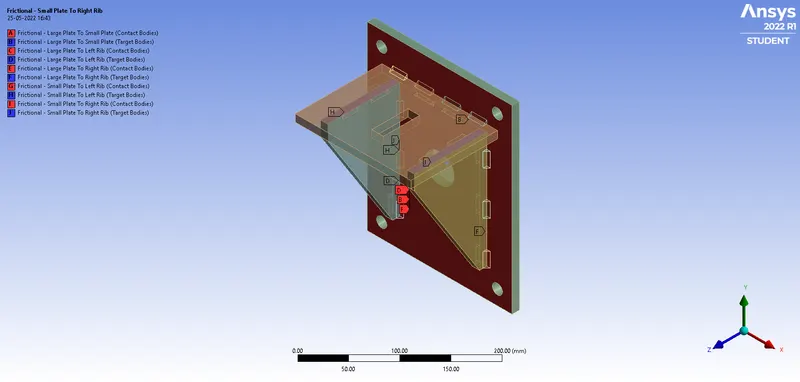
- Non Weld Contacts:
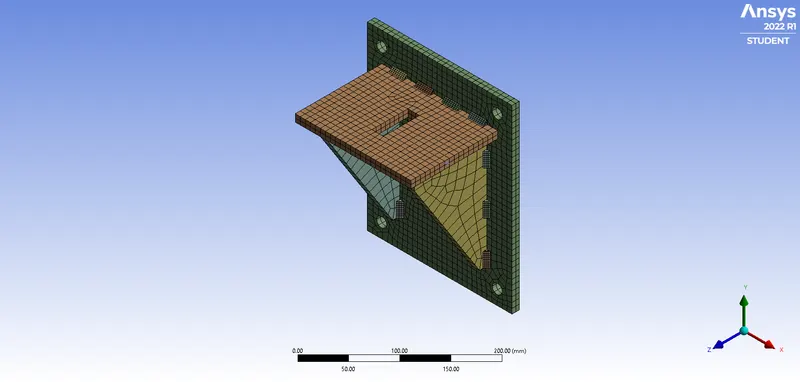
- Meshing (Plates Mesh Size 7 mm):
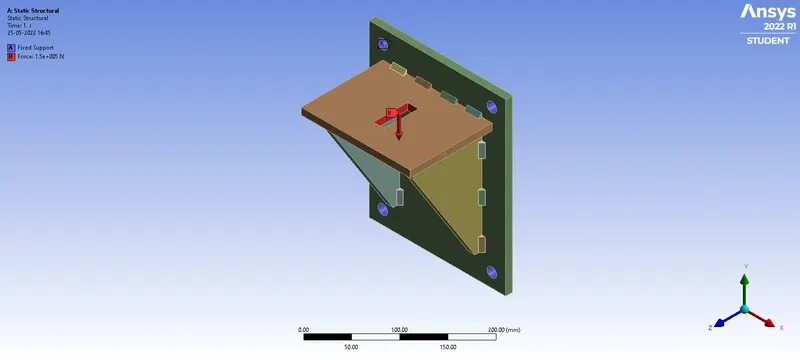
- Boundary Conditions:
Analysis:
- Case 1:
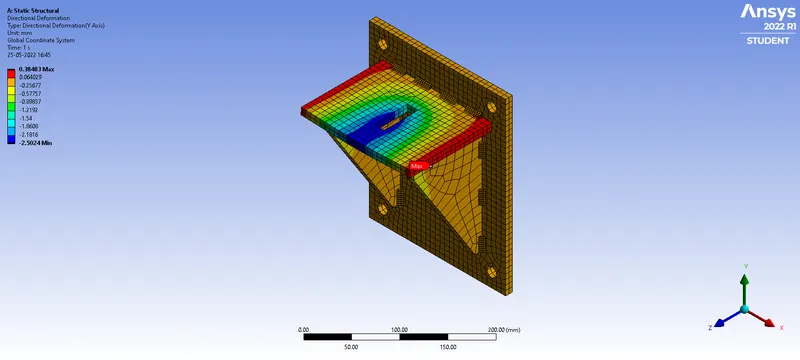
- Directional Deformation:
- Equivalent Elastic Strain:
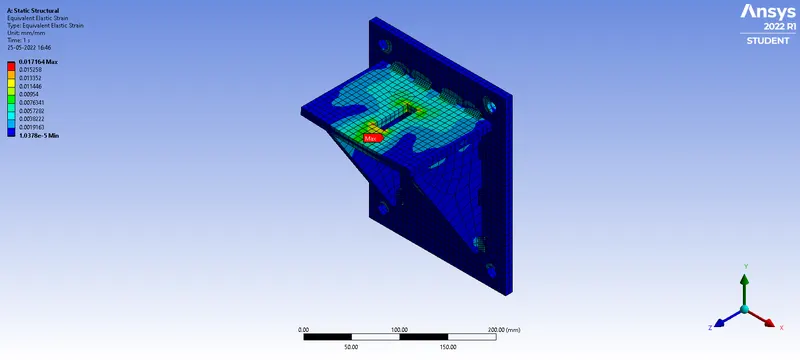
- Equivalent Stress:
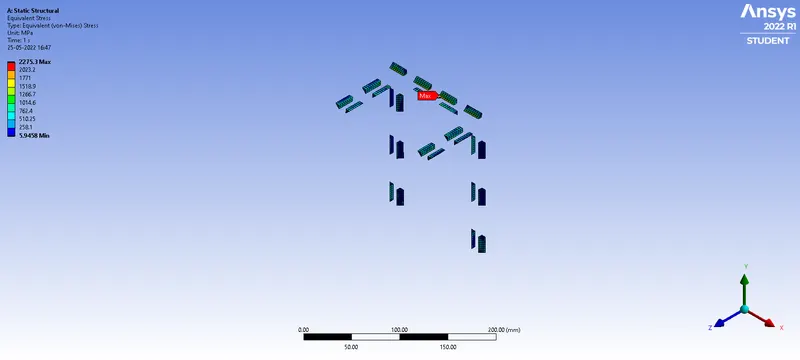
- Directional Deformation:
- Case 2:
- Directional Deformation:
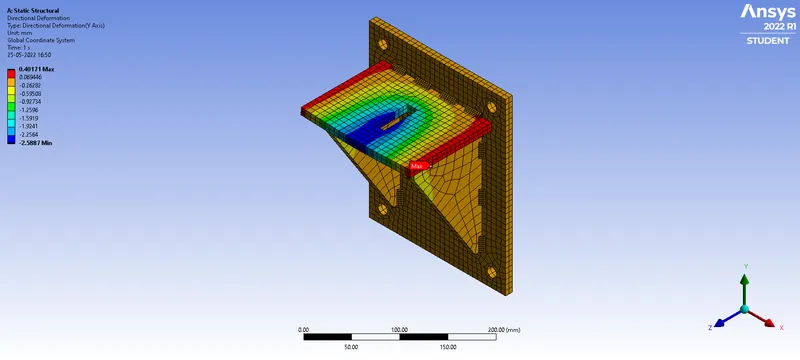
- Equivalent Elastic Strain:
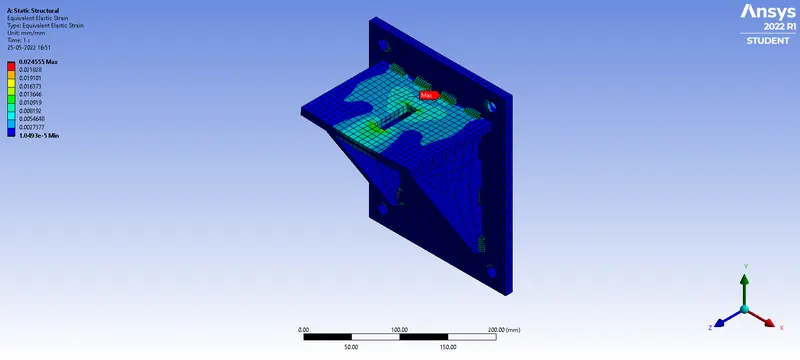
- Equivalent Stress:
- Directional Deformation:
- Case 3:
- Directional Deformation:
- Equivalent Elastic Strain:
- Equivalent Stress:
- Directional Deformation:
Result:
| Cases | Directional Deformation (mm) | Equivalent Elastic Strain (mm/mm) | Equivalent Stress (MPa) | |||
| Maximum | Minimum | Maximum | Minimum | Maximum | Minimum | |
| Case 1 | 0.38483 | -2.5024 | 0.017164 | 1.0378×10^-5 | 2275.3 | 5.9458 |
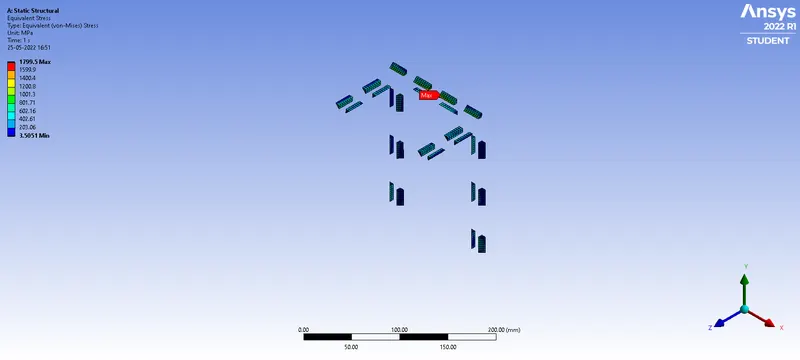
| Case 2 | 0.40171 | -2.5887 | 0.024555 | 1.0493×10^-5 | 1799.5 | 3.5051 |
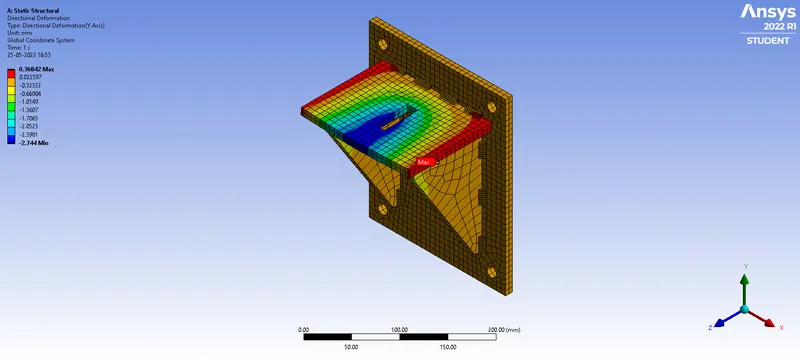
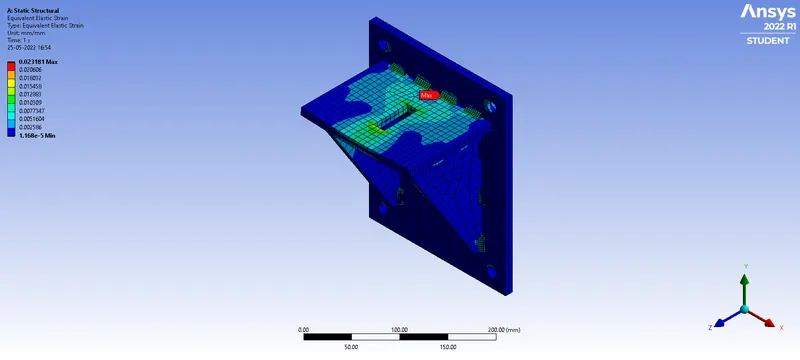
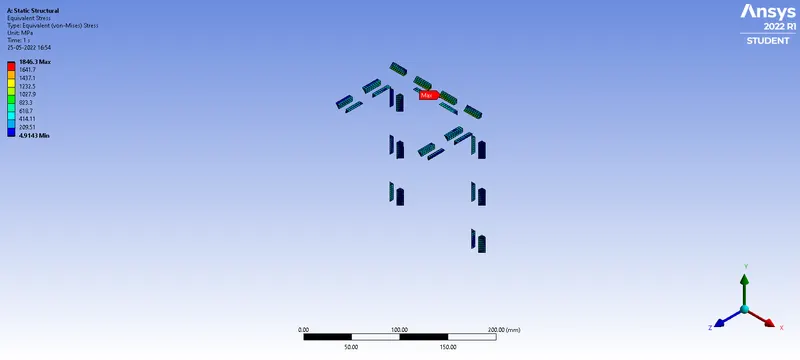
| Case 3 | 0.36842 | -2.744 | 0.023181 | 1.168×10^-5 | 1846.3 | 4.9143 |
Conclusion: The same weld joint experiences the maximum stress in all three cases (indicated by maximum probe). The stress is maximum for case 1, lesser for case 3 and least for case 2. The deformation is maximum for case 2, lesser for case 1 and least for case 3. The strain is maximum for case 2, lesser for case 3 and least for case 1.