Week 3 Verification of Weld Joints
Aim : To perform static structural analysis on Weld Joints.
Objectives :
- Simulate three different types of welding using three different weld materials.
- For each case, find out the Directional Deformation and equivalent strain experienced by the setup.
- Identify the weld joint that experiences the highest equivalent stress in each case and compare the results for all three cases
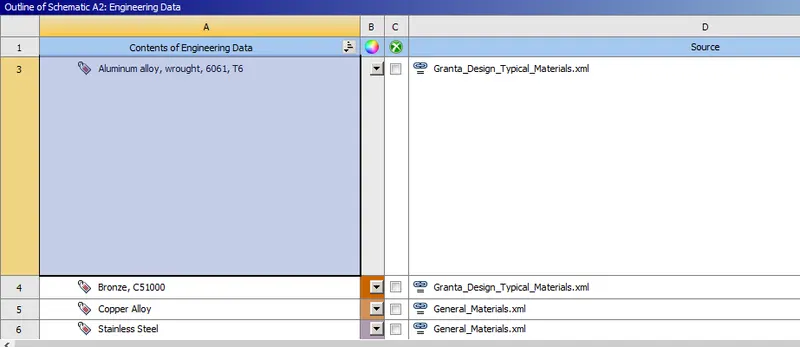
Engineering data and materials :
- Open engineering data
- Create materials from "Granta Design materials" library and General materials.
Geometry :
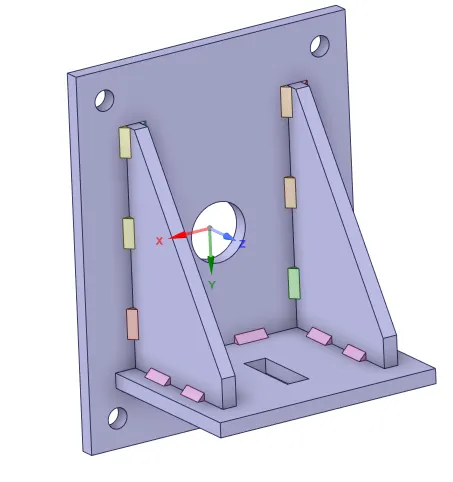
- Open spaceclaim and import the geometry.
- Check for abnormalities in geometry.
Model Setup :
- Open geometry and rename components as Big plate, Small plate, Rib 1 and Rib 2.
- Assign material to Components and welds as per requirement.
Contacts :
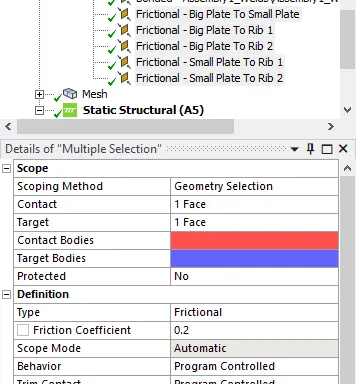
- Right click and select rename based on selection.
- Create frictional contact for joints without weld with frictional coeff as 0.2.
Meshing :
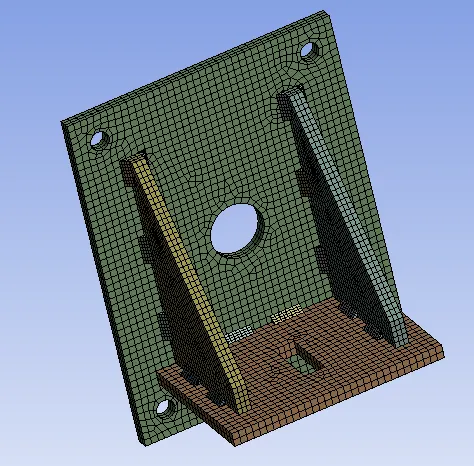
- Insert sizing for Big plate and small plate of size 5 mm.
- Insert sizing for Rib 1 and Rib 2 of size 4 mm.
- Generate mesh.
Analysis settings :
- In analysis settings switch on large deflection in case if it move in non-linear region.
- Run the simulation for 1 step since a static force is going to applied on smaller plate.
Loads :
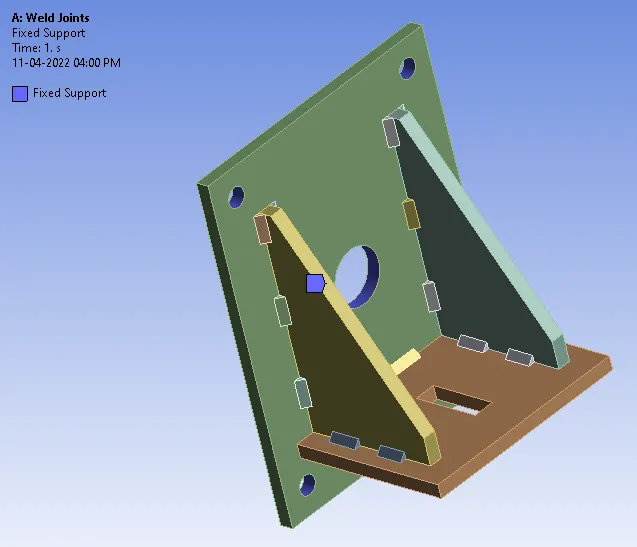
- Give fix support on holes of bigger plate, since that plate is going to attached to wall with those holes.
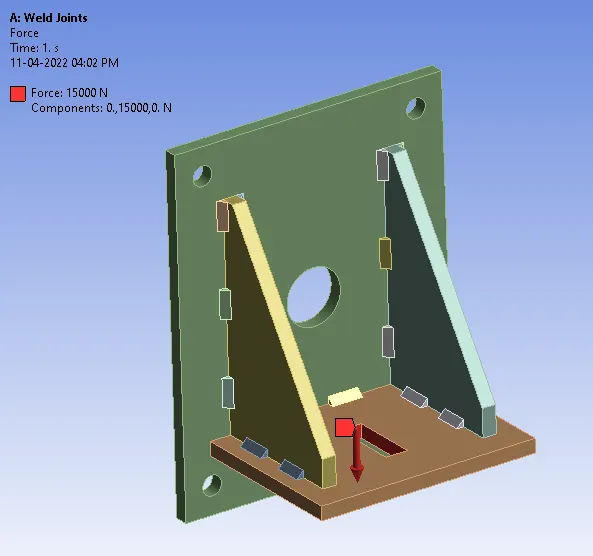
- Create a force on smaller plate hole of magnitude 15000 N.
Solution :
Create output for :
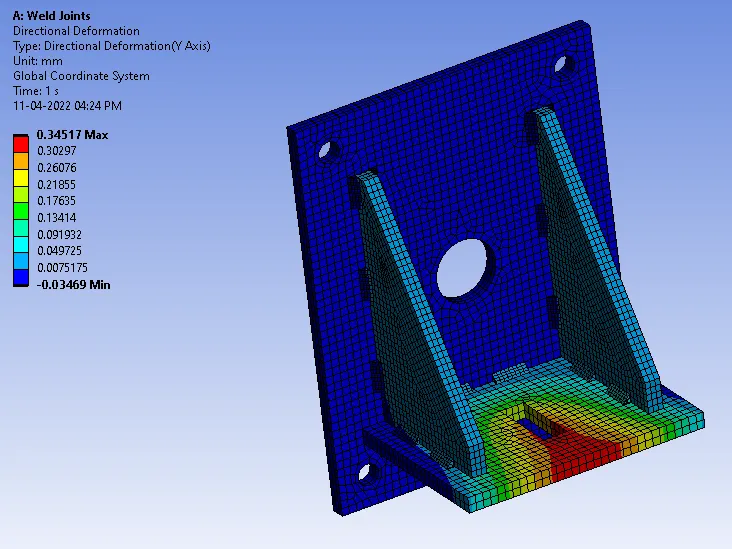
- Directional deformation.
- Equivalent stress in complete model.
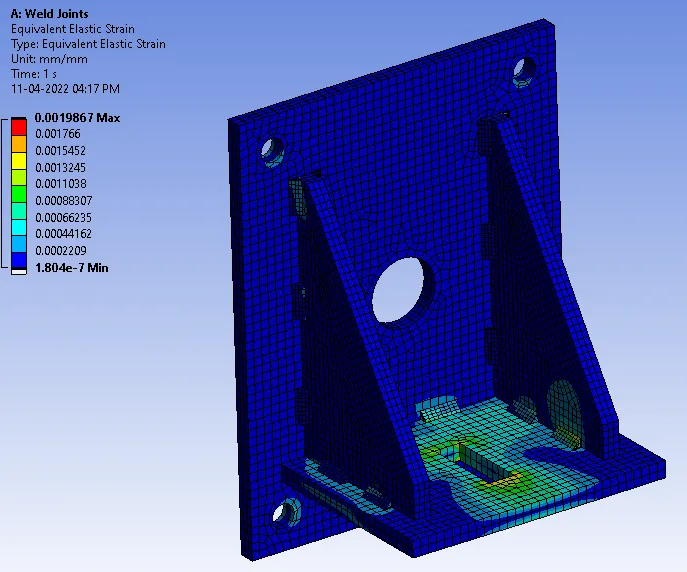
- Equivalent strain in complete model.
- Equivalent stress in Ribs.
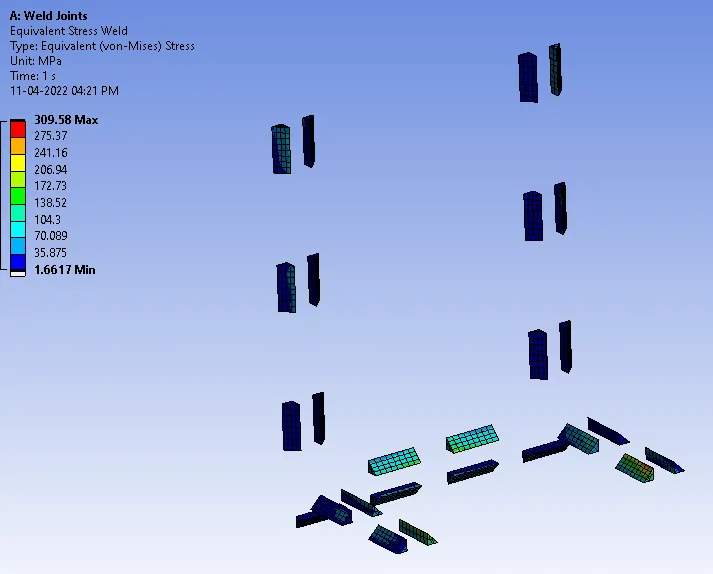
- Equivalent stress in welds.
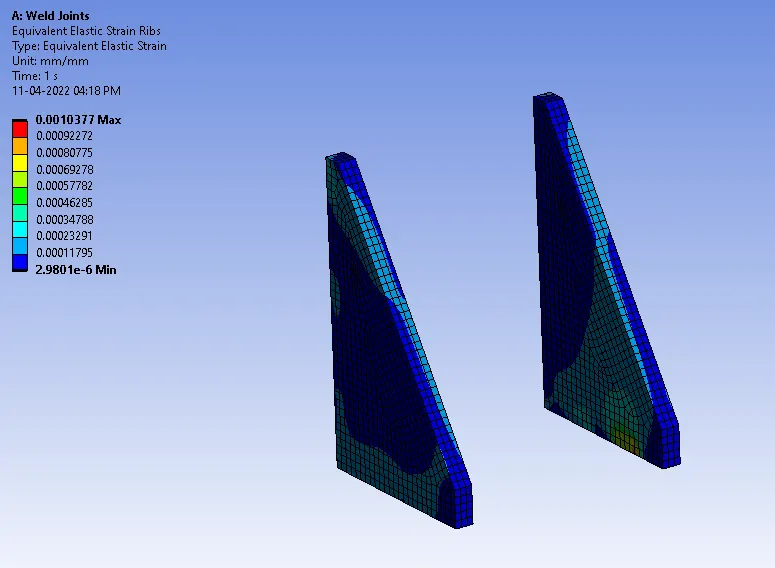
- Equivalent strain in Ribs.
Results :
Case 1 :
- Material for Plates = Stainless steel.
- Material for Ribs = Stainless steel.
- Weld material = Stainless steel.
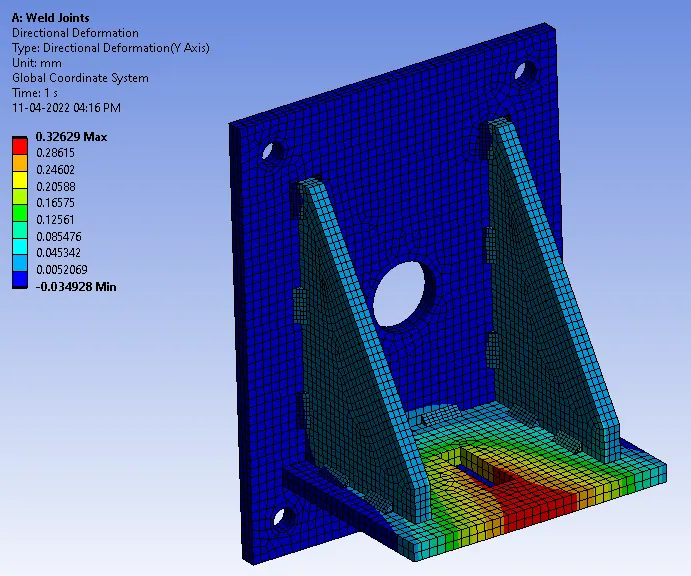
Directional deformation :
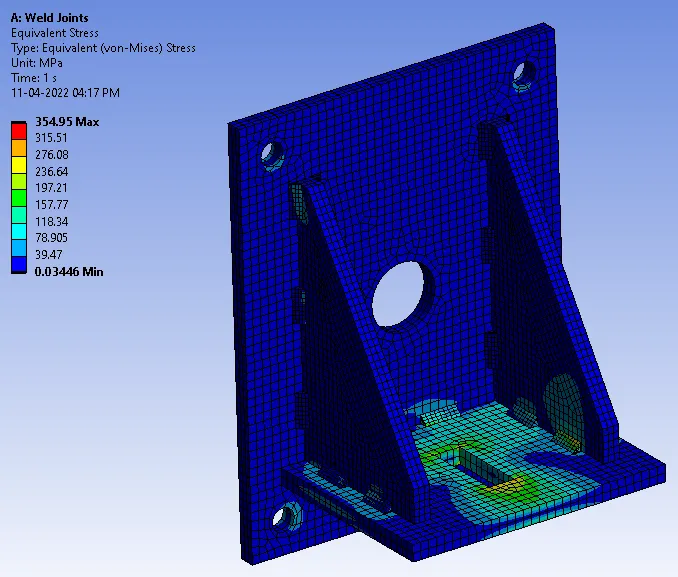
Equivalent stress :
Equivalent strain :
Equivalent strain in Ribs :
Equivalent stress in welds :
Case 2 :
- Material for Plates = Stainless steel.
- Material for Ribs = Stainless steel.
- Weld material = Aluminium alloy wrought.
Directional deformation :
Equivalent stress :
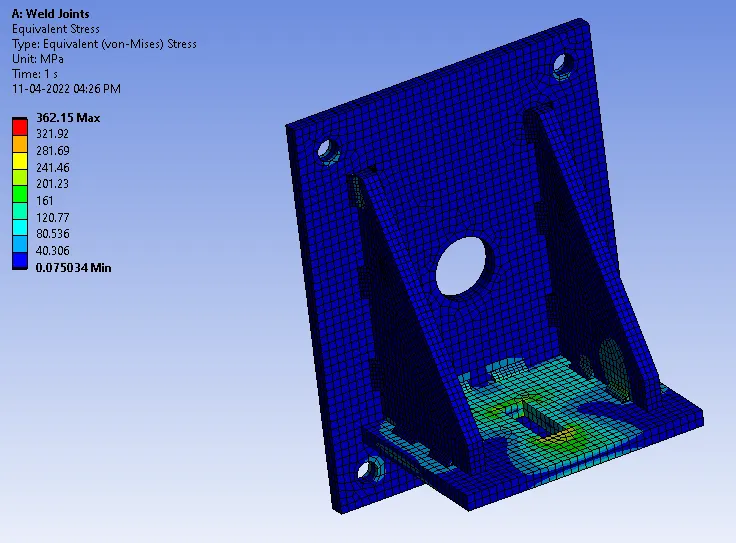
Equivalent strain :
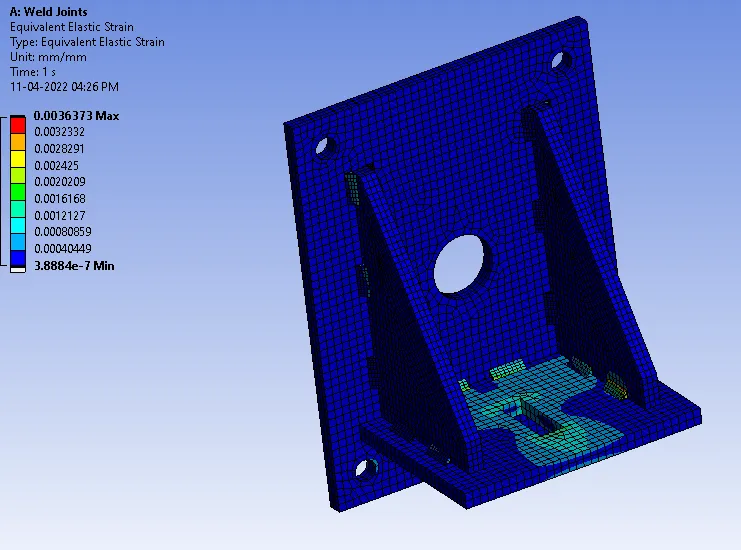
Equivalent strain in Ribs :
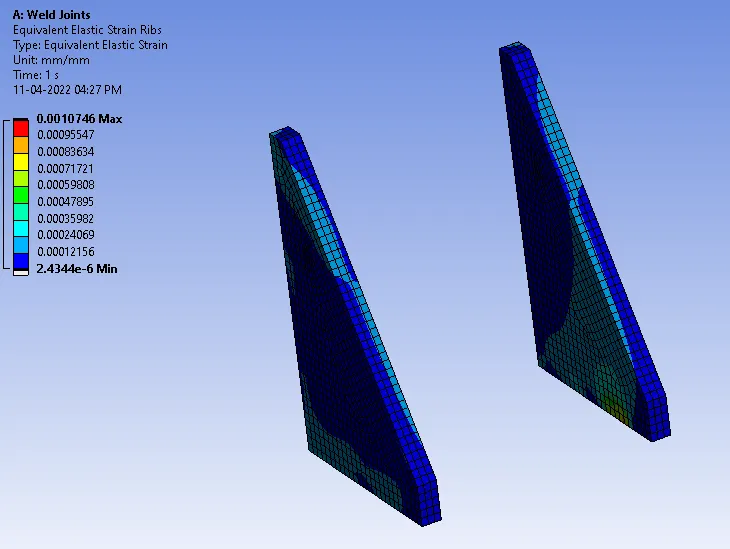
Equivalent stress in welds :
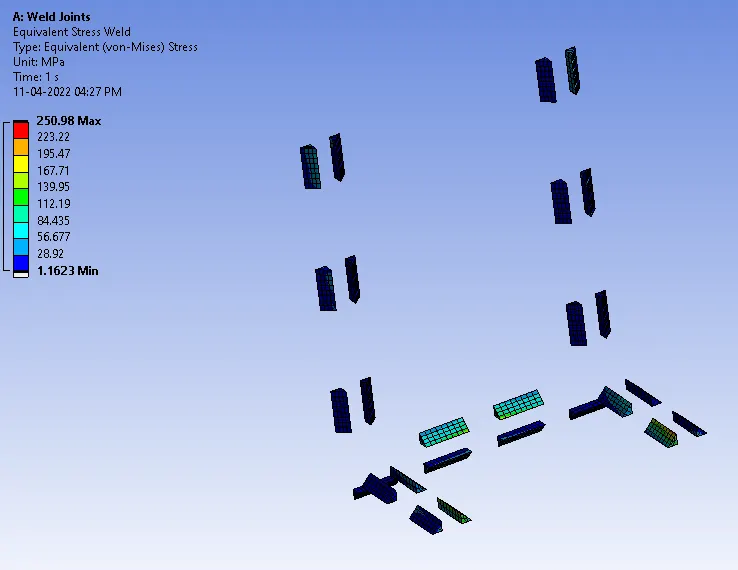
Case 3 :
- Material for Plates = Stainless steel.
- Material for Ribs = Copper Alloy.
- Weld material = Bronze.
Directional deformation :
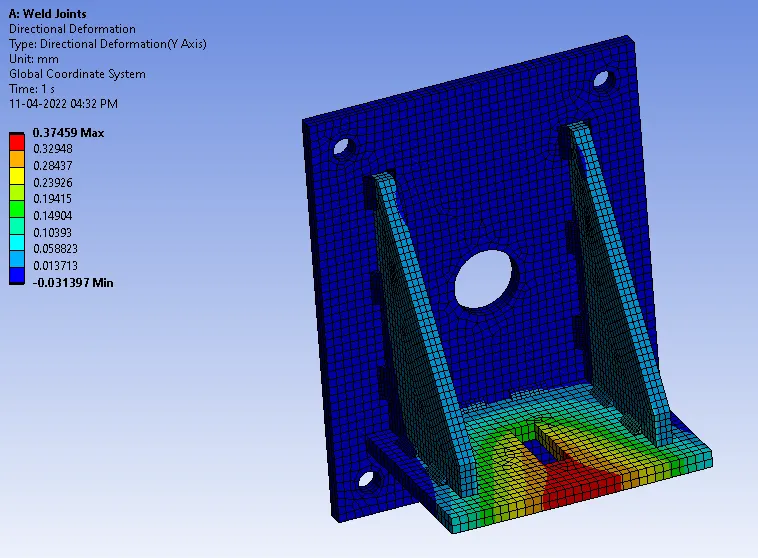
Equivalent stress :
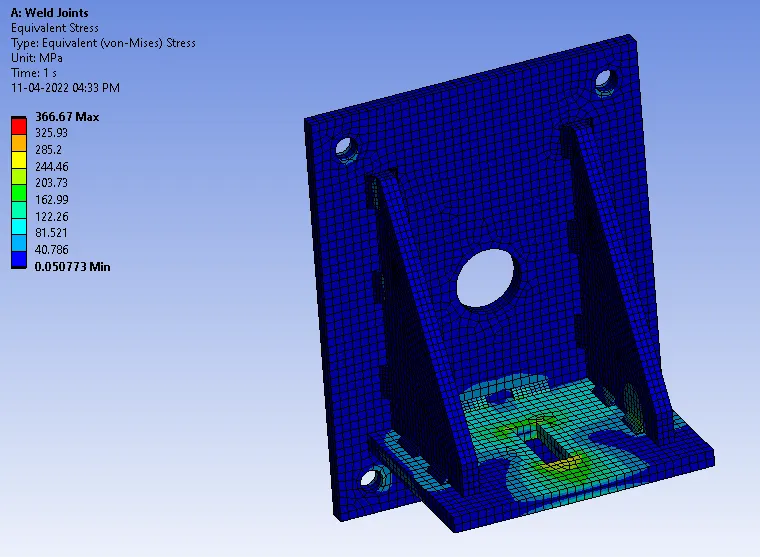
Equivalent strain :
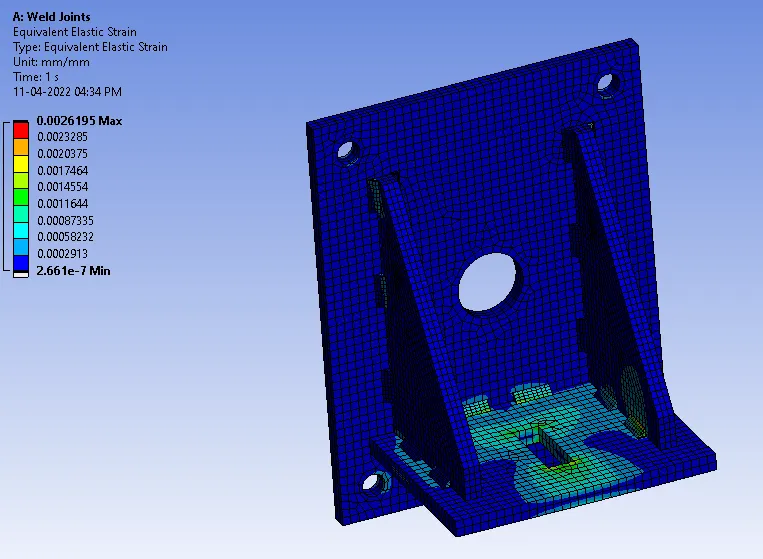
Equivalent strain in Ribs :
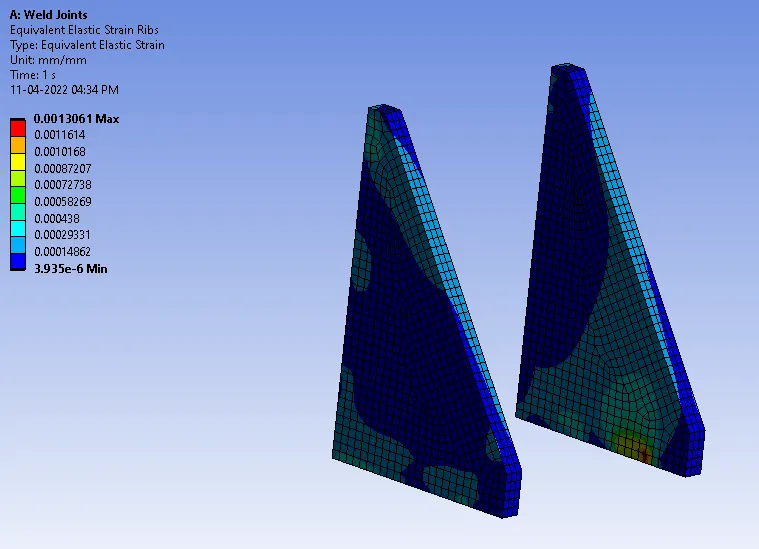
Equivalent stress in welds :
Comparison of results :
| Sr.No. | Results | Case 1 | Case 2 | Case 3 |
| 1 | Directional Deformation Maximum (mm) | 0.3262 | 0.3451 | 0.3745 |
| 2 | Directional Deformation Minimum (mm) | -0.0349 | -0.0346 | -0.0313 |
| 3 | Equivalent Stress Maximum (Mpa) | 354.9498 | 362.1492 | 366.6674 |
| 4 | Equivalent Stress Minimum (Mpa) | 0.03446 | 0.0750 | 0.05077 |
| 5 | Equivalent Strain Maximum | 0.00198 | 0.00363 | 0.00261 |
| 6 | Equivalent Strain Minimum | 1.804 E-07 | 3.884 E-07 | 2.661 E-07 |
| 7 | Equivalent Strain in Ribs Maximum | 0.00103 | 0.00107 | 0.00130 |
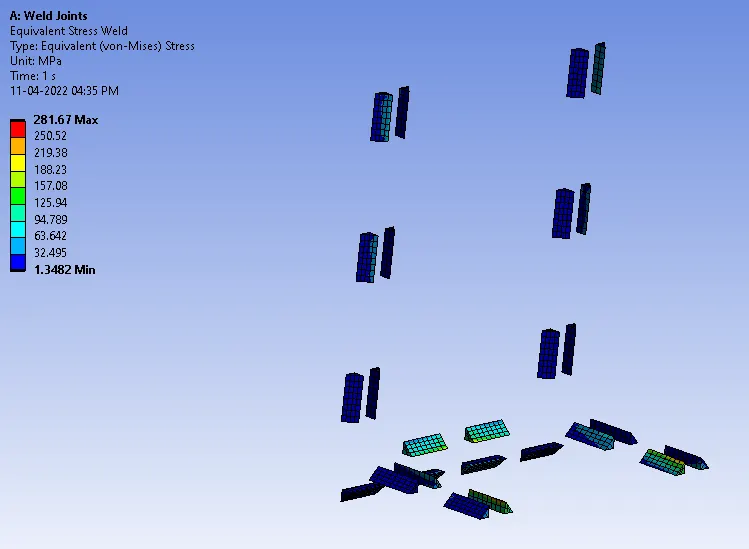
| 8 | Equivalent Stress in Welds Maximum (Mpa) | 309.58 | 250.98 | 281.67 |
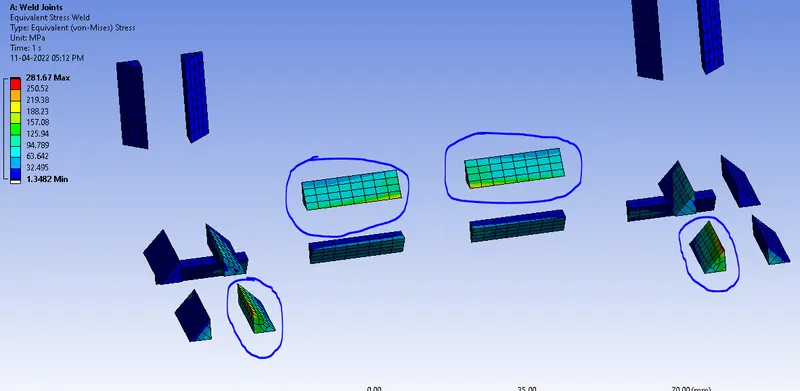
Following figure shows weld joints that experiences the highest equivalent stress in all three cases.
Conclusion :
- Directional deformation is more for Case 3 compared to Case 1 and Case 2.
- Equivalent Stress in Welds is maximum for Case 1 compared to Case 2 and Case 3.
- Case 3 has maximum equivalent stress compared to Case 1 and Case 2.