Week 3 Verification of Weld Joints
Strength analysis on Weld joints of different materials:
Aim: To perform Strength analysis on weld joints of Stainless Steel,Aluminium Alloy & Bronze cast materials.
Steps to followed for all the cases:
1)Material Selection:
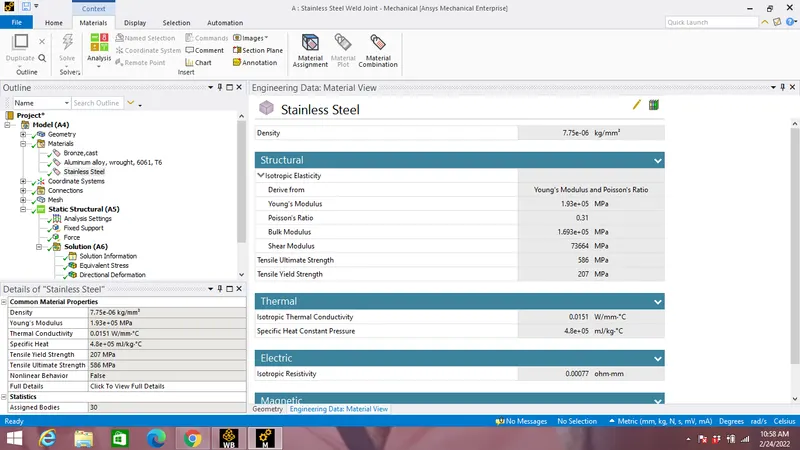
Case 1: Stainless Steel is selected for the plates & weld beads with the propeties listed in the image below:
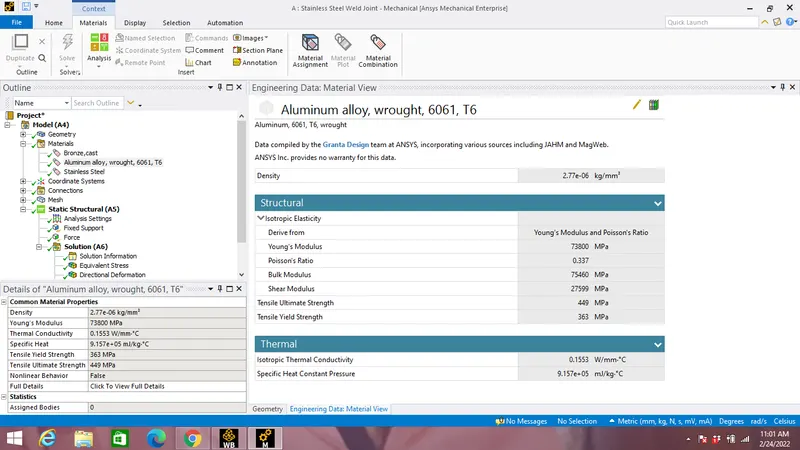
Case 2: Aluminium Alloy:The material to be chosen for this weld beads is Aluminium alloy(high strength, wrought) however plate material is Stainless steel like in case 1.
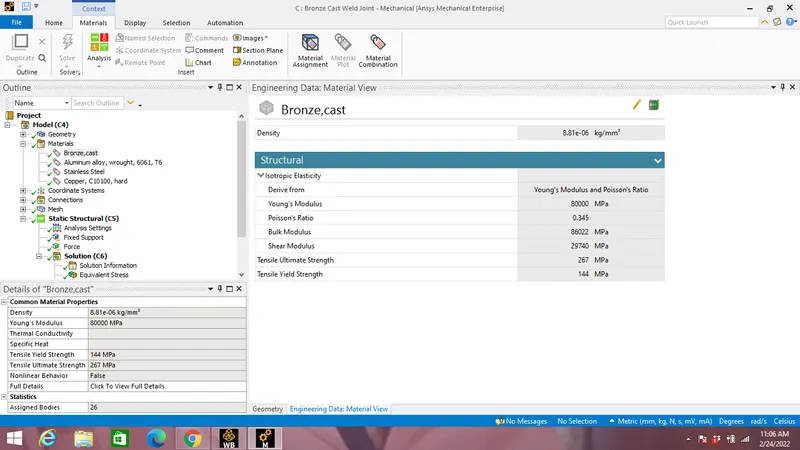
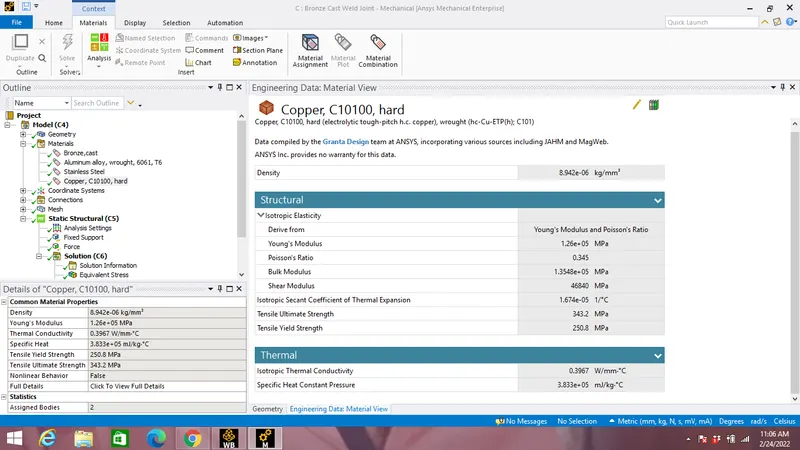
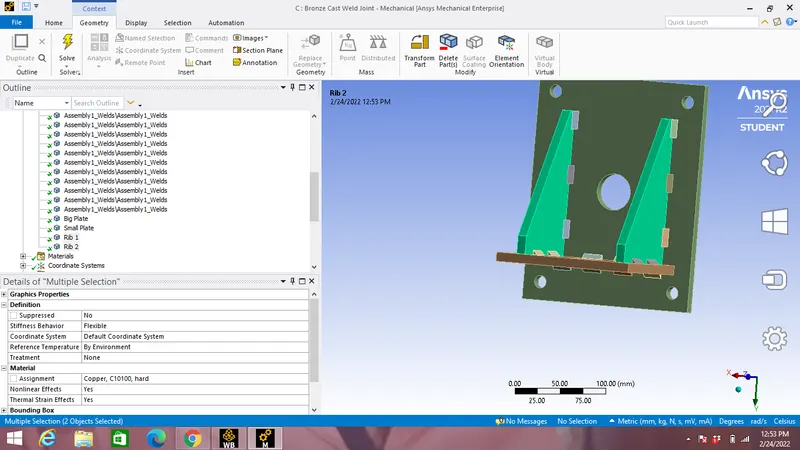
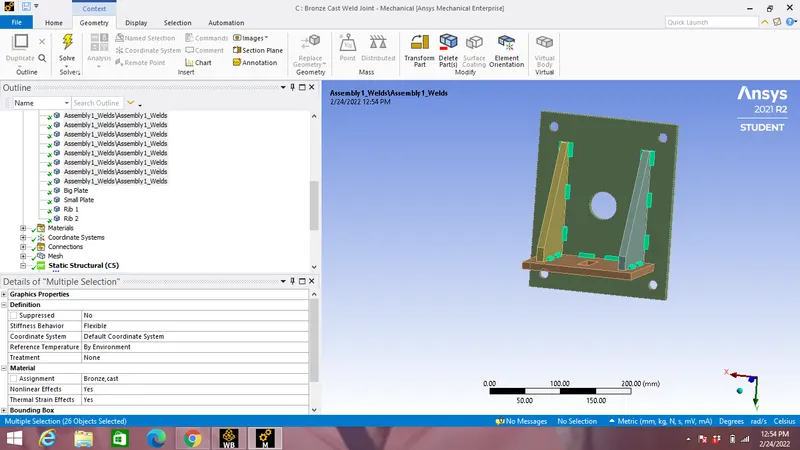
Case 3:Bronze: In order to simulate "Brazing",Bronze cast is used as the weld beads. Assigned Stainless Steel to both plates and Copper to the "Ribs".
Bronze cast for weld beads:
Copper used for Ribs material:
2) Geometry:
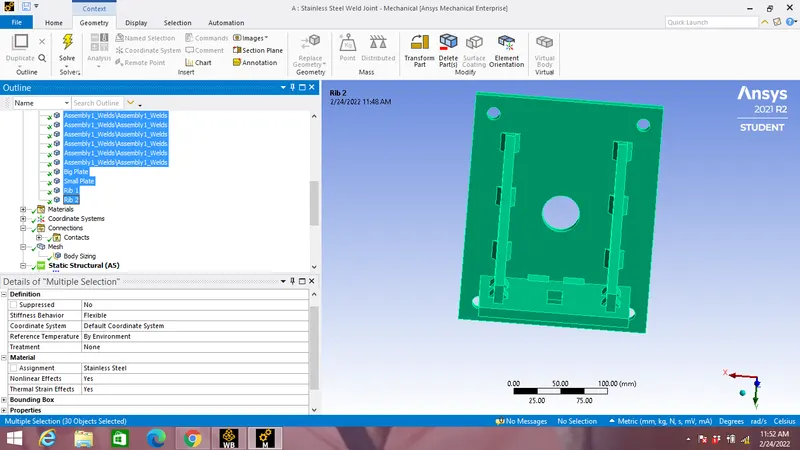
Import the CAD model of Plates & Rib weld joint provided & view it in Ansys Spaceclaim.
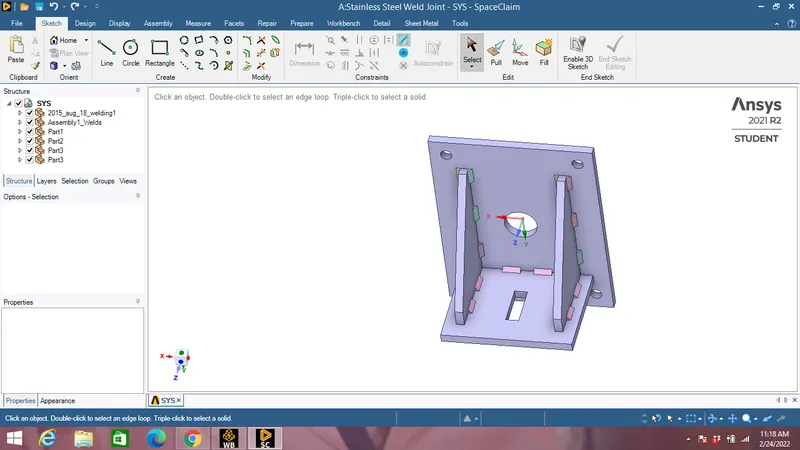
There are 4 small circular holes in Big plate and 1 rectangular hole in small plate with 2 Ribs connected with both in right & left side with weld beads making the joints permanent.
3)Contacts: Renaming of contact parts based on defination is doen.
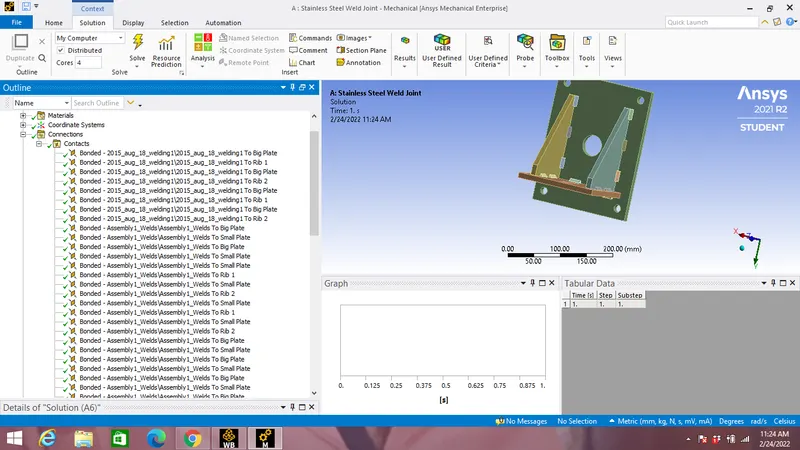
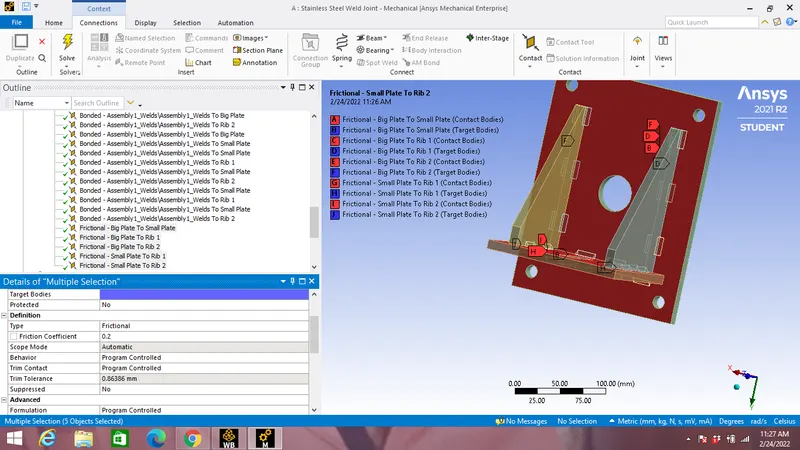
Last 5 Parts of Contacts are changed to Frictional type with Frictiona coefficient of 0.2.
4) Meshing:
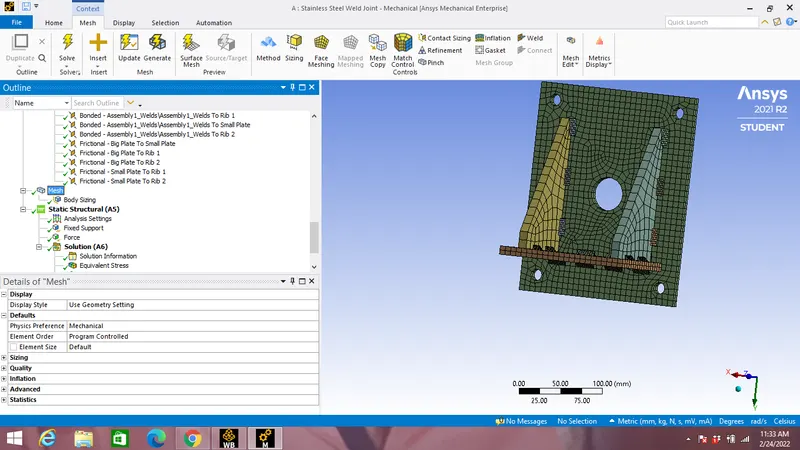
Meshing Body size of Big & Small Plate is chosen to be of 7mm while that of other part is kept as Default.
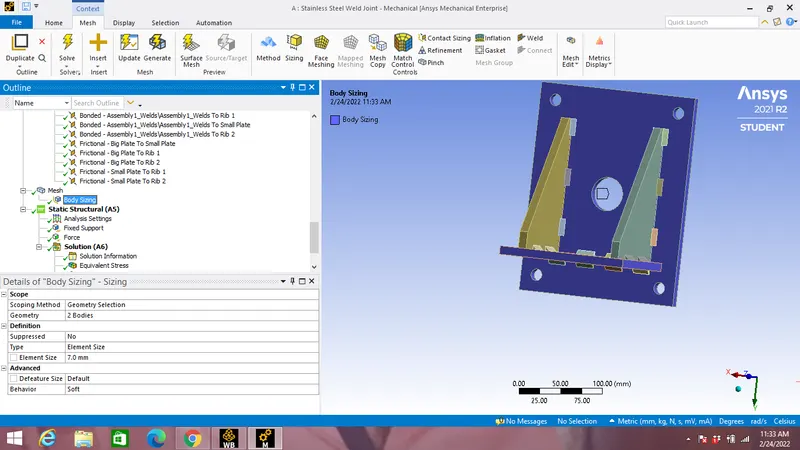
Meshing shown below:
5)Boundary Canditions:
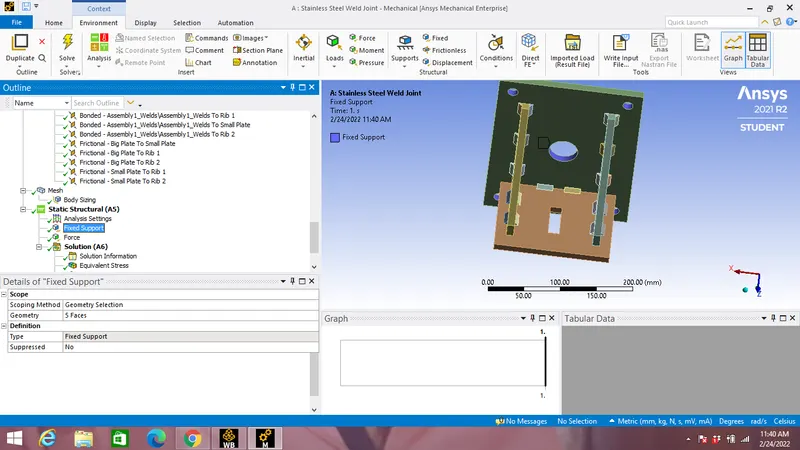
Fixed Support: Fixed Support is applied on the 5 circular holes of Big plates at their faces.
Loadings:
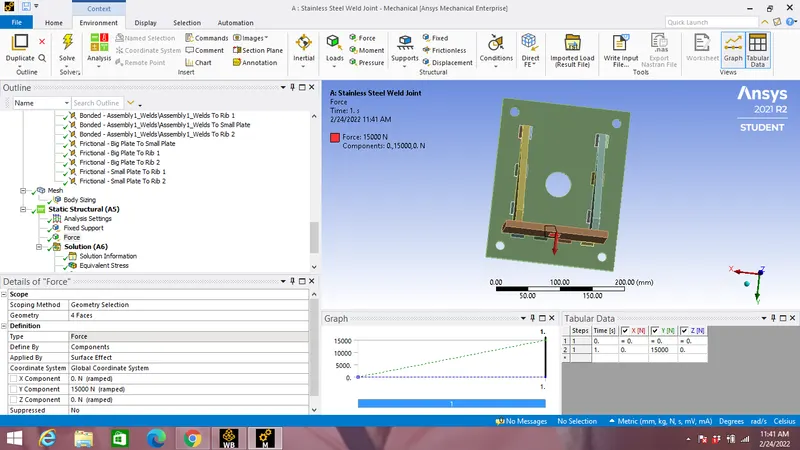
A downward force of 15000N is applied after selecting 4 faces of rectangular hole on the Small Plate.
Analysis settings:
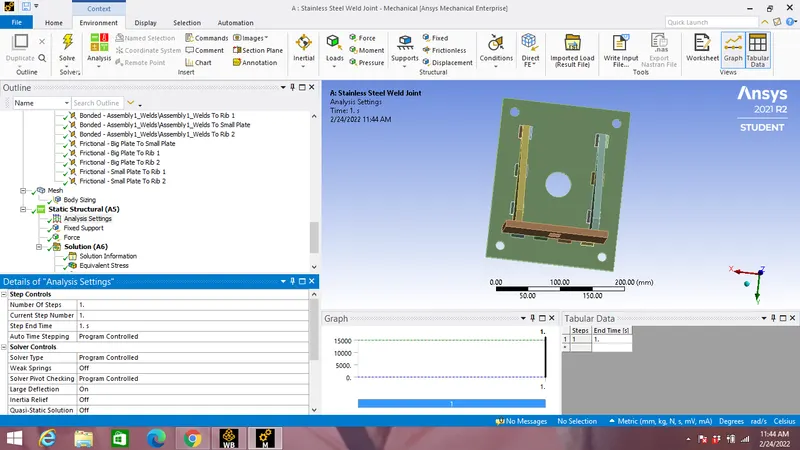
Large deflection is kept On, keeping other parameters unchanged.
Results:
Case 1:Taking Stainless Steel as material for Big & Small Plates,Ribs & Weld beads.
Directional Deformation:
It is the deformation caused on the plates along negative Y axis due to load of 15000 N.
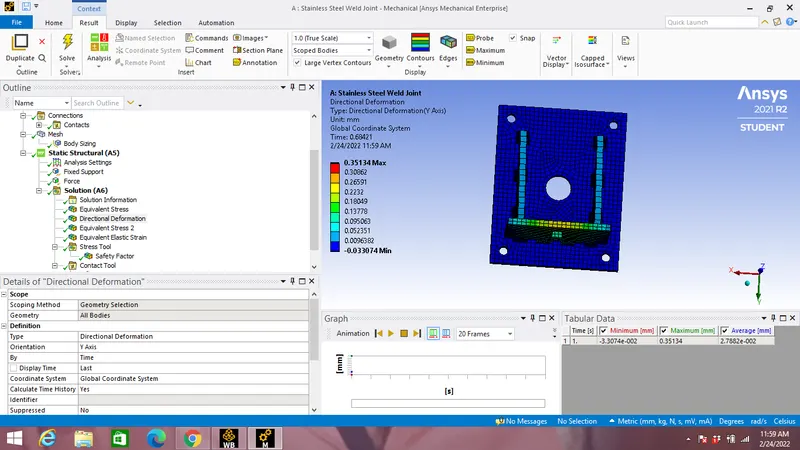
Maximum Directional Deformation:0.35134mm
Equivalent Elastic Strain:
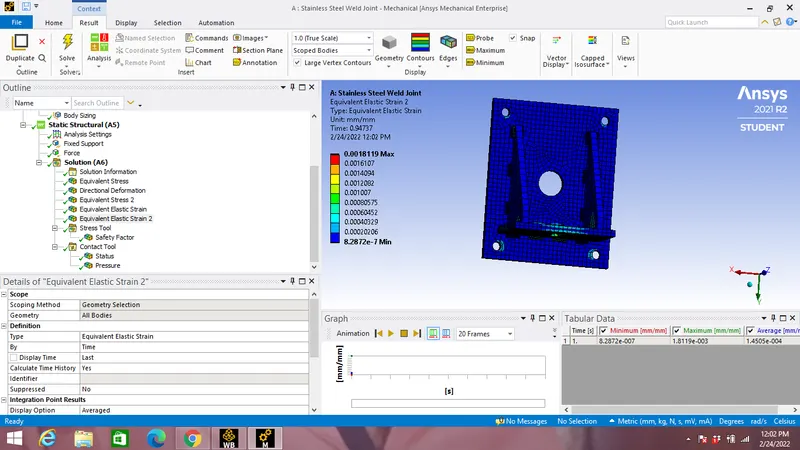
Maximum Equivalent Elastic Strain:1.8119e-003
Equivalent Stress for Welds:
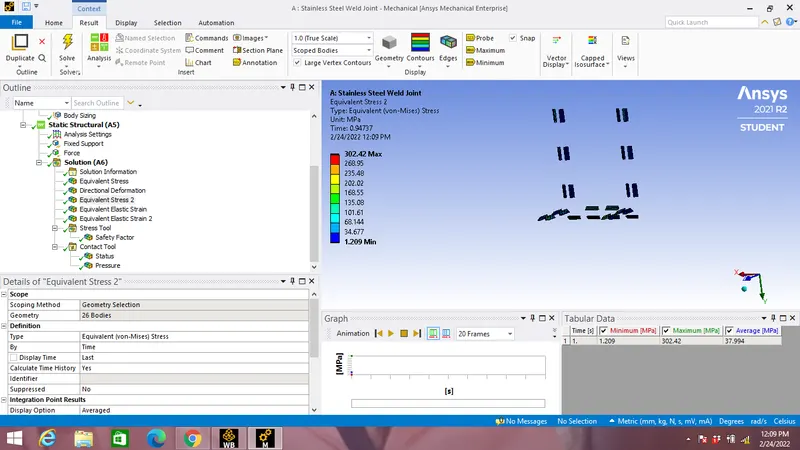
Maximum Equivalent Stress for Welds:302.42 MPa.
Equivalent Stress for setup:
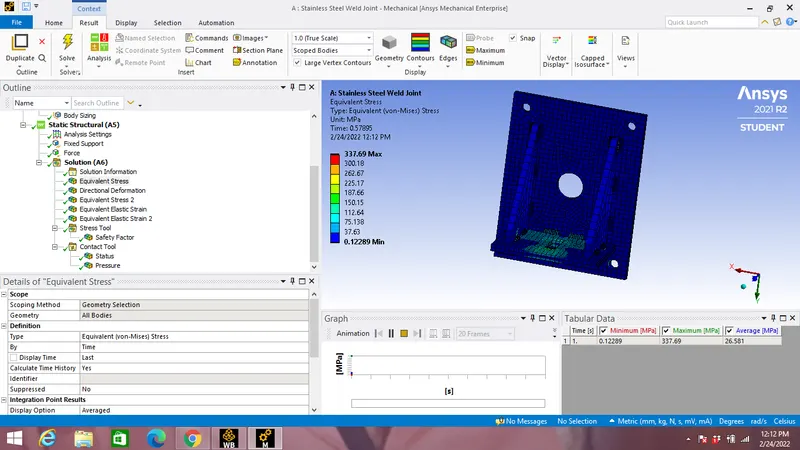
Maximum Equivalent Stress for setup:337.69 MPa
Safety Factor:
It indicates how much a weld is safe under the given loading canditions:
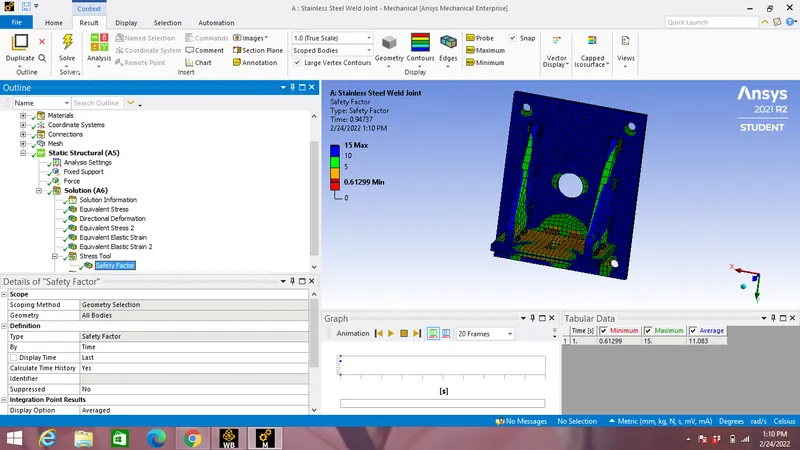
Minimum Factor of Safety:0.61299
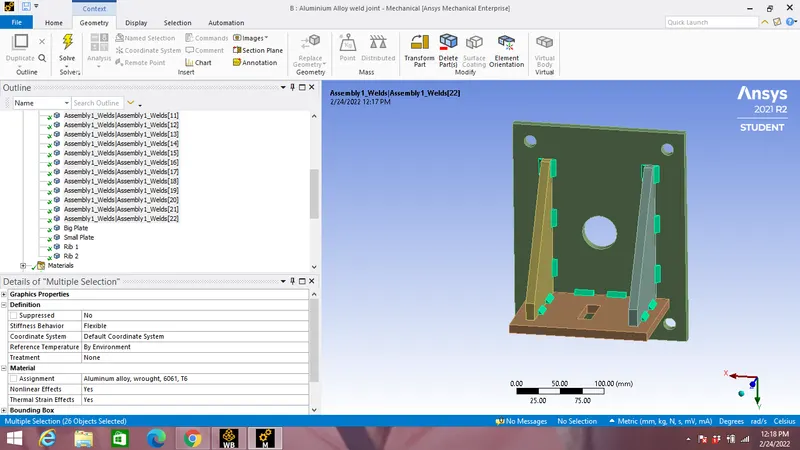
Case 2:Aluminium Alloy:The material to be chosen for this case is Aluminium alloy(high strength, wrought). [Plate material to be used is stainless steel].
Stainless Steel Plates:
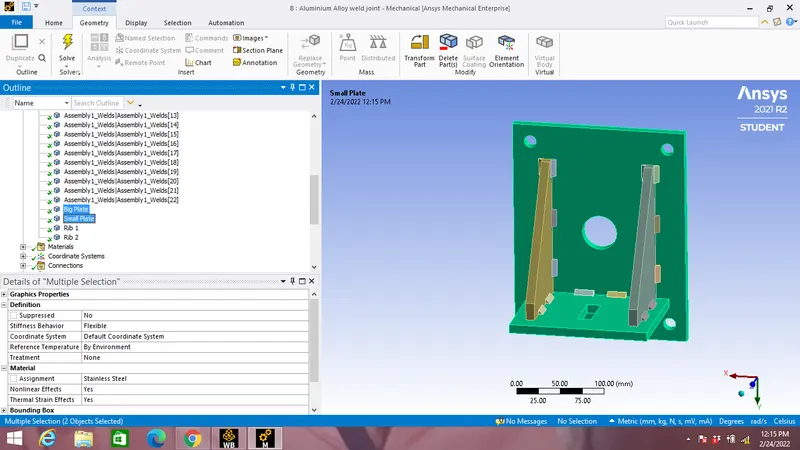
Aluminium Alloy Weld beads:
Directional Deformation:
It is the deformation caused on the plates along negative Y axis due to load of 15000 N.
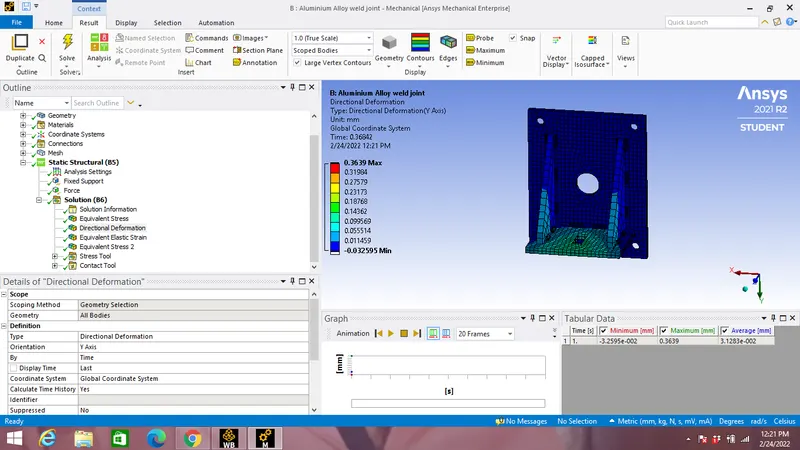
Maximum Directional Deformation:0.3639mm
Equivalent Elastic Strain:
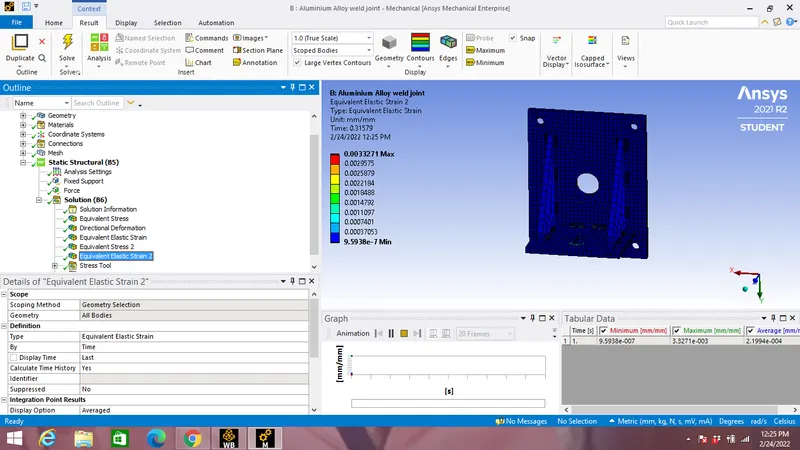
Maximum Equivalent Elastic Strain:3.3271e-003
Equivalent Stress for Welds:
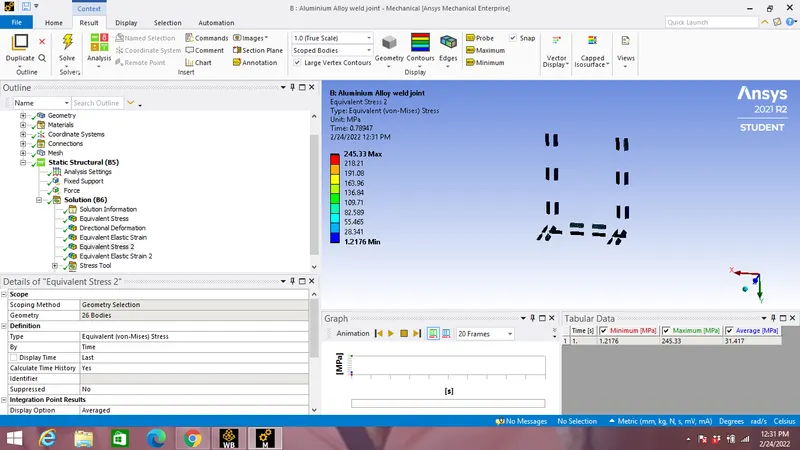
Maximum Equivalent Stress for Welds:245.33 MPa.
Equivalent Stress for setup:
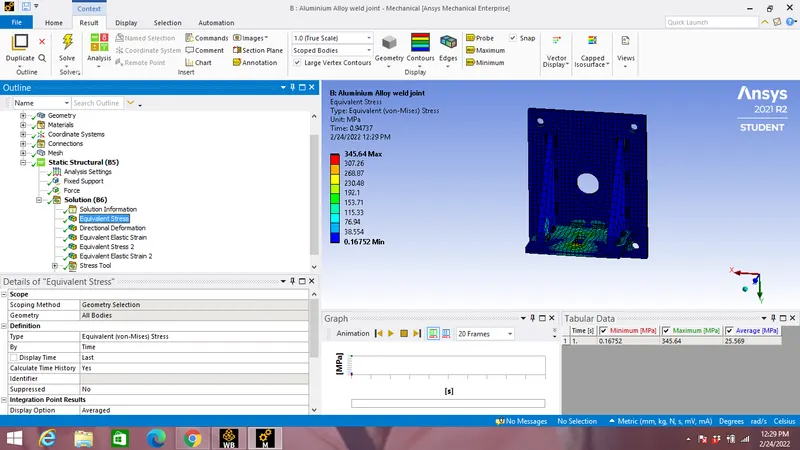
Maximum Equivalent Stress for setup:345.64MPa.
Safety Factor:
It indicates how much a weld is safe under the given loading canditions:
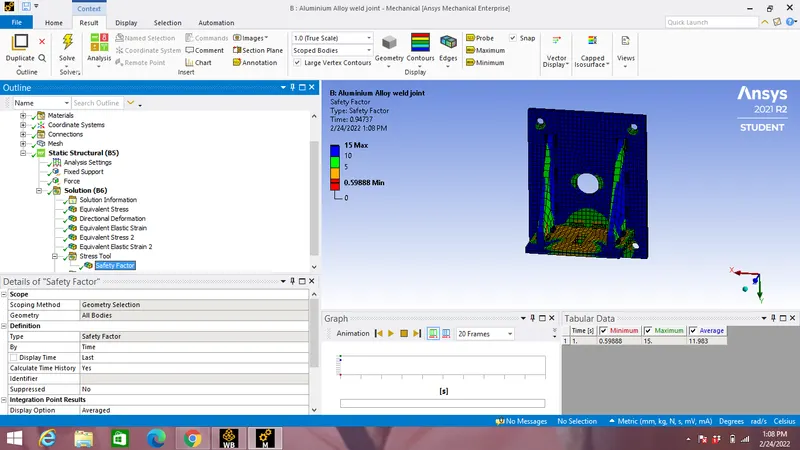
Minimum Factor of Safety:0.59888
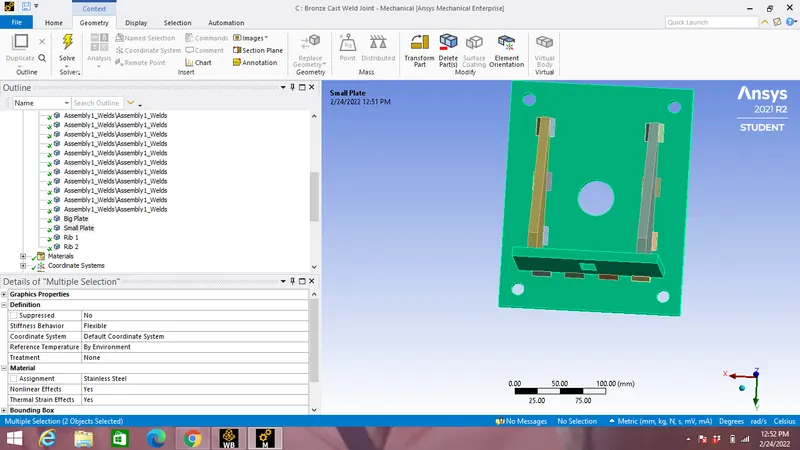
Case 3:Using Bronze Cast as the weld material. Assign Stainless Steel to both plates and Copper to the ribs.
Stainless Steel for plates:
Copper for the Ribs:
Bronze Cast to the welds:
Directional Deformation:
It is the deformation caused on the plates along negative Y axis due to load of 15000 N.
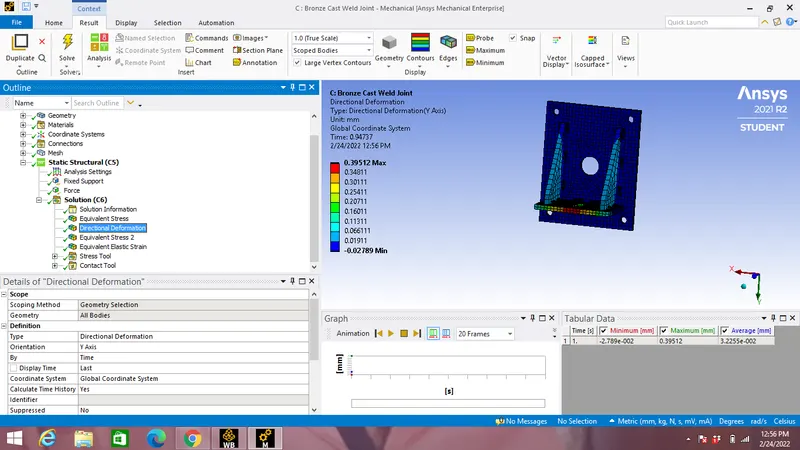
Maximum Directional Deformation:0.39512mm
Equivalent Elastic Strain:
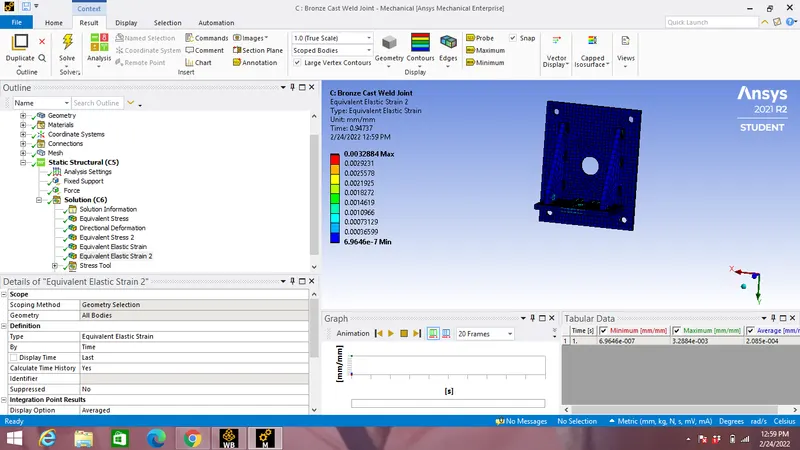
Maximum Equivalent Elastic Strain:3.2884e-003
Equivalent Stress for Welds:
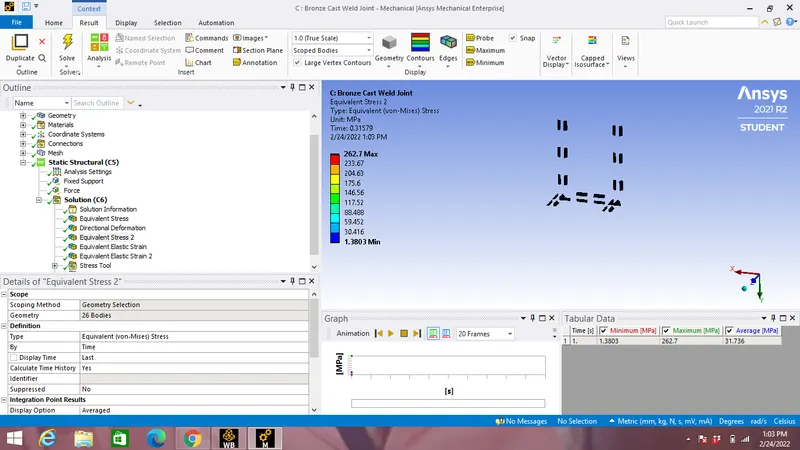
Maximum Equivalent Stress for Welds:262.7 MPa.
Equivalent Stress for setup:
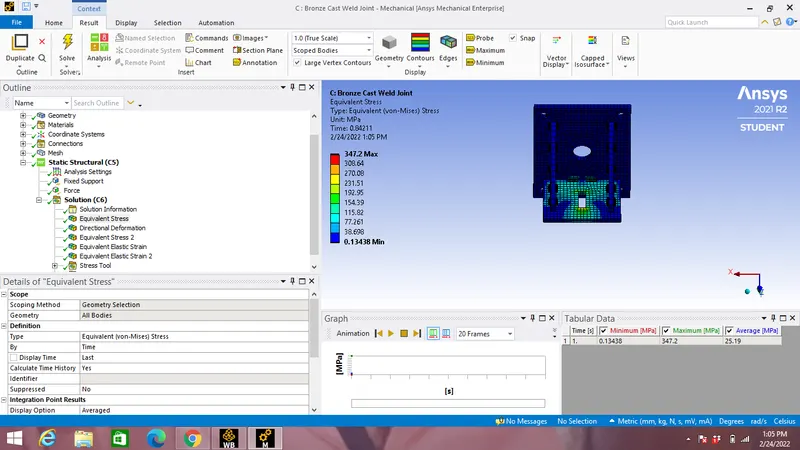
Maximum Equivalent Stress for setup:347.2MPa.
Safety Factor:
It indicates how much a weld is safe under the given loading canditions:
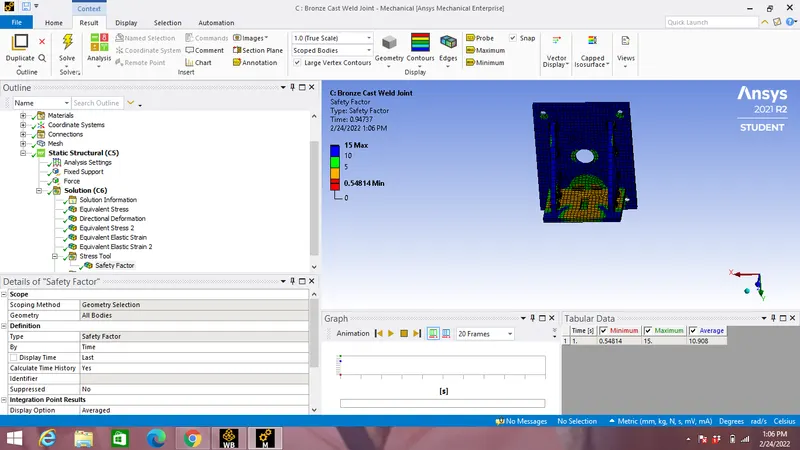
Minimum Factor of Safety:0.54814
Comparision of Case 1,2& 3 with Directional Deformation,Equivalent Stress on Welds,Equivalent Stress on Setup and Equivalent Strain, shown in the table below:
| Cases | Max Directional Deformation(mm) | Max Equivalent Stress for Welds(MPa) | Max Equivalent Stress for Setup(MPa) | Max Equivalent Strain | Safety Factor |
| 1 | 0.31534 | 302.42 | 337.69 | 1.8119e-003 | 0.61299 |
| 2 | 0.3639 | 245.33 | 345.64 | 3.3271e-003 | 0.59888 |
| 3 | 0.39512 | 262.7 | 347.2 | 3.2884e-003 | 0.54814 |
Conclusion:
- It can be seen from the table above that maximum Directional Deformation is least for Stainless material because it has highest Young's modulus of 1.93e+005 Mpa compared to Aluminium Alloy and Bronze Cast,so Stainless Steel has high tendency to resist any deformation compared to other two materials.
- For weld joint with highest Maximum Equivalent Stress occurs in case of Stainless Steel which is again due to it's high Young's Modulus of 1.93e+005.
- Least Minimum Factor of Safety calculated in all 3 cases occurs in Bronze cast with 0.54814.
- Since minimum factor of safety for all 3 cases is less than 1 therefore all 3 materials will be failing we must avoid such high load of 15000N on the small plate in all 3 cases.