Week 3 Sheet metal Bending challenge
Objective: To perform structural analysis for sheet metal bending on different materials.
Case 1:Aluminium Alloy 1199( mentioned in the course video),Copper Alloy NL and Magnesium Alloy NL. Find out the Equivalent stress, Equivalent elastic strain and Total Deformation in Y direction and compare the results for the three materials.
Case 2:With the material as Aluminium Alloy, change the friction coefficient to 0.19 and run the analysis as mentioned in Case 1. Compare the results with that in case 1.
Case 3: Refine the mesh on the plate such that it doesn't cross the academic limit. With Aluminium alloy as material, run the analysis as in Case 1 and compare the results.
Solution:
-Import the geometry to ANSYS workbench software.
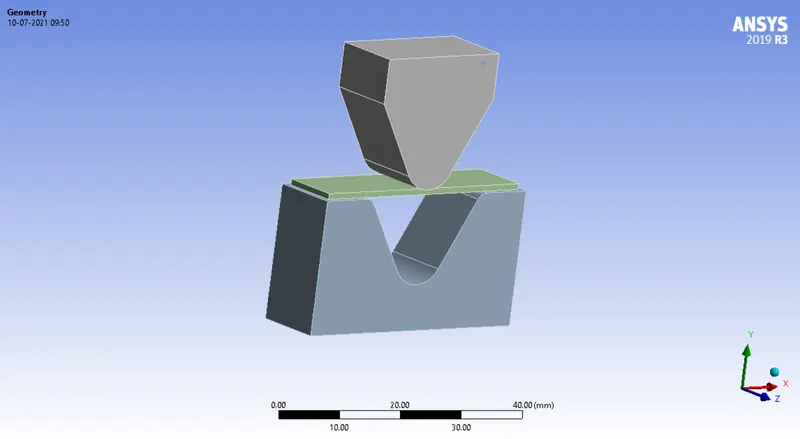
-Now, assign the material to the plate geometry.
-Now, make connections to the geometry.
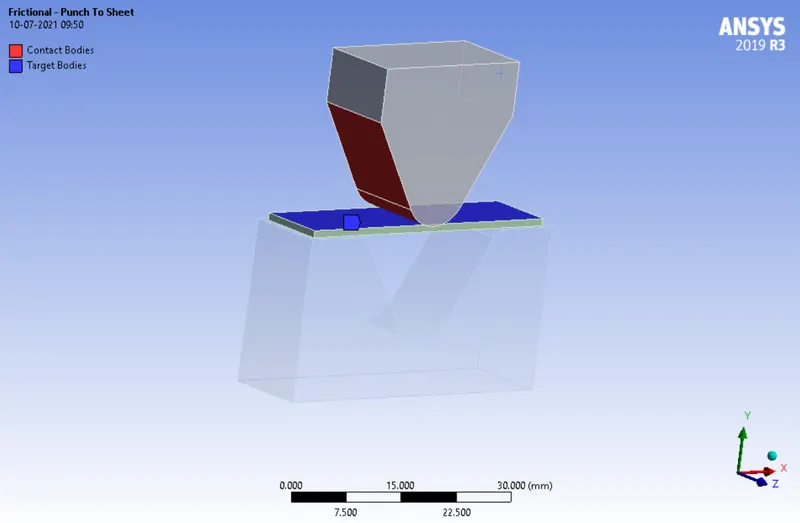
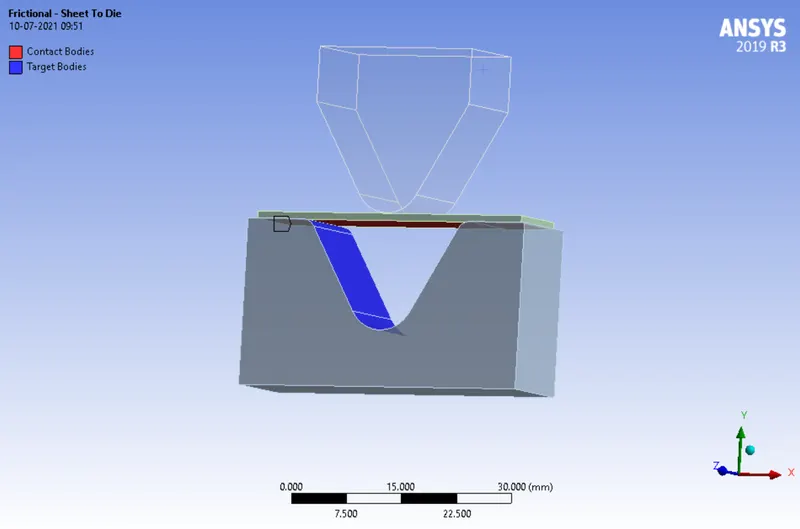
-Change the formulation to Augmented Lagrange and Frictional coefficient to 0.1.
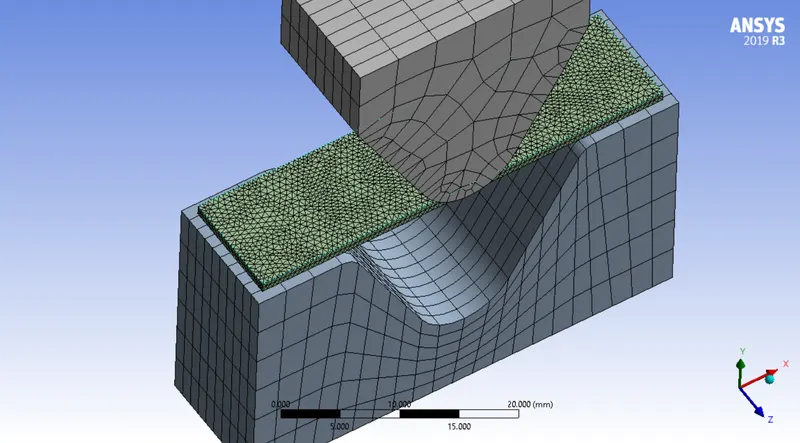
-Now, we need to assign the mesh sizing to the geometry. The contact faces will be having 1.00mm element size and non-contact faces will have 4.00mm mesh.
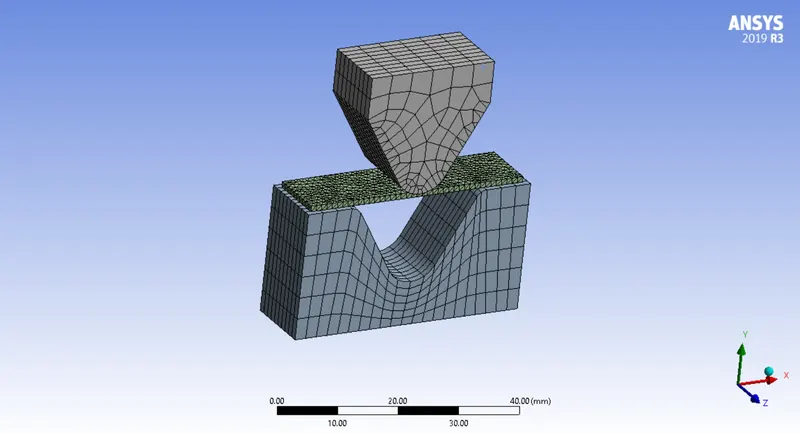
-Now, to assign boundary conditions to the analysis we need to set up in Analysis settings. We can give as much steps as we want and I choose 10 steps.
-We need to give displacements to the components.
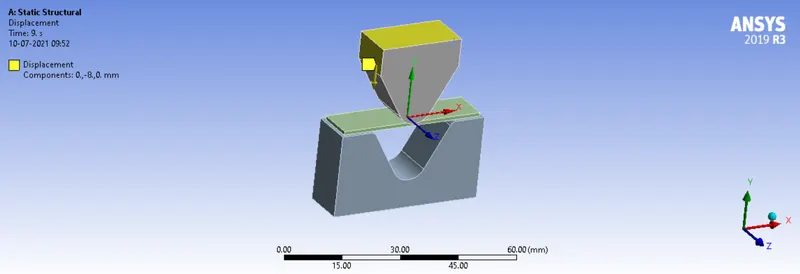
-Now, we will give the solution parameters to solve the simulation i.e Equivalent stress, Equivalent elastic strain and Directional Deformation.
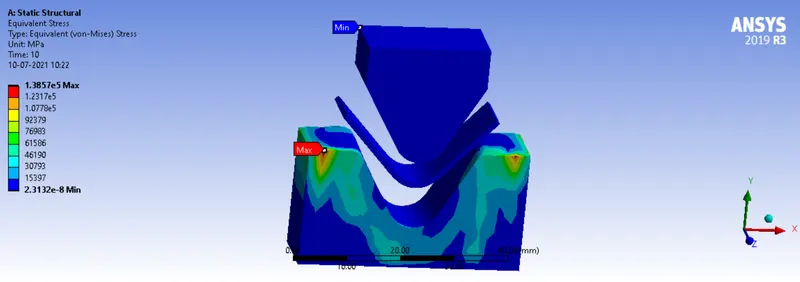
Equivalent Stress for Aluminium alloy 1199
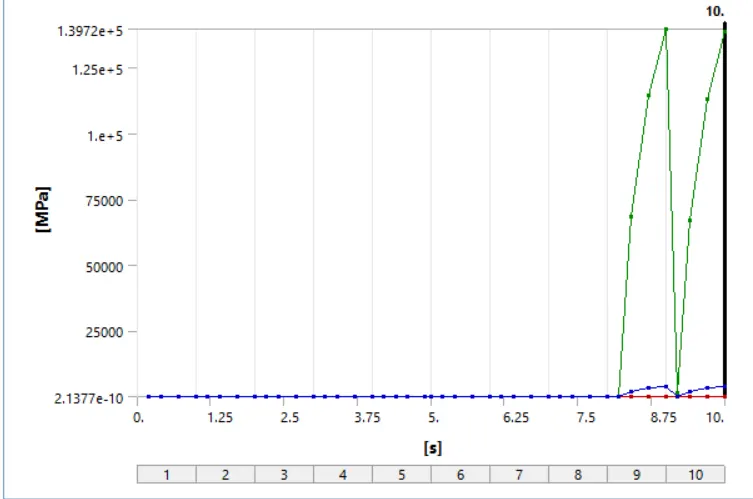
Equivalent stress graph for Aluminium alloy 1199
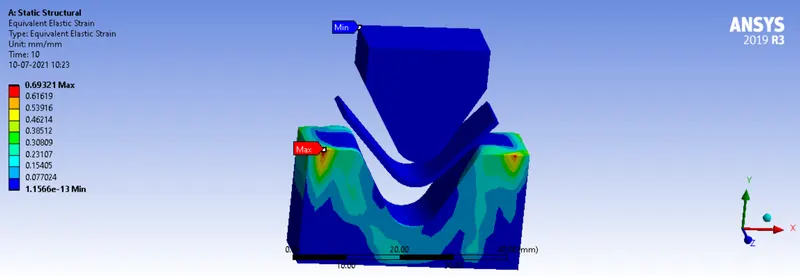
Equivalent elastic strain for Aluminium alloy 1199
Equivalent elastic strain graph for Aluminium alloy 1199
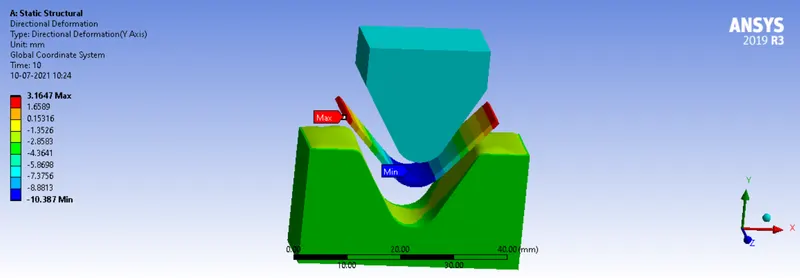
Directional Deformation for Aluminium alloy 1199
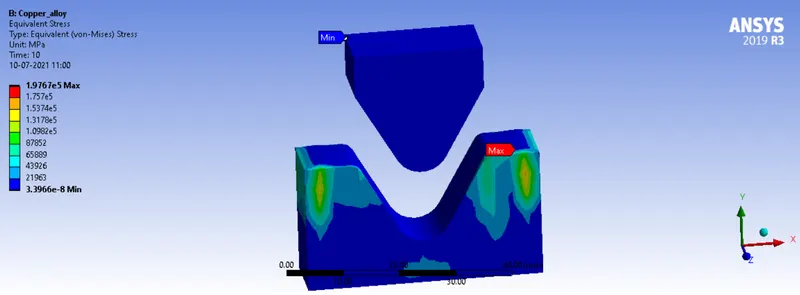
Equivalent stress for Copper alloy
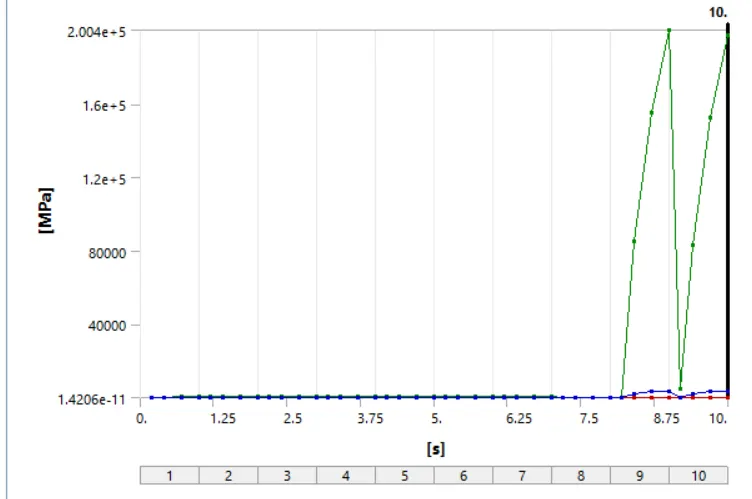
Equivalent stress graph for copper alloy
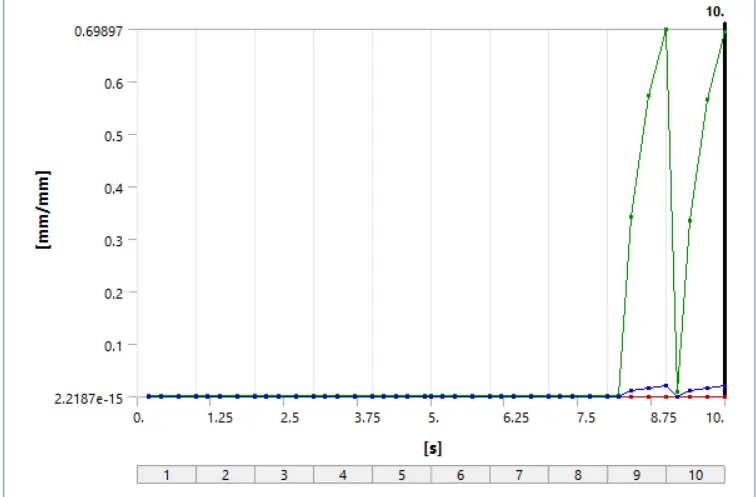
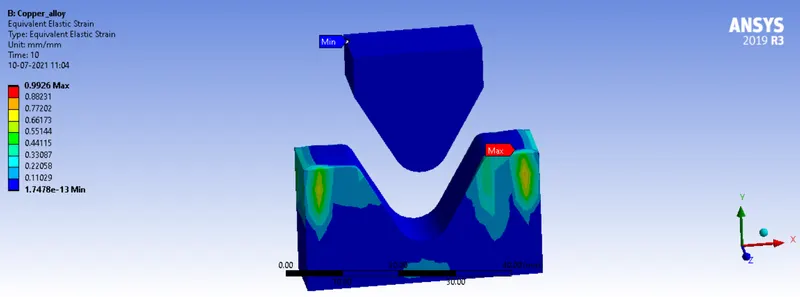
Equivalent elastic strain for copper alloy
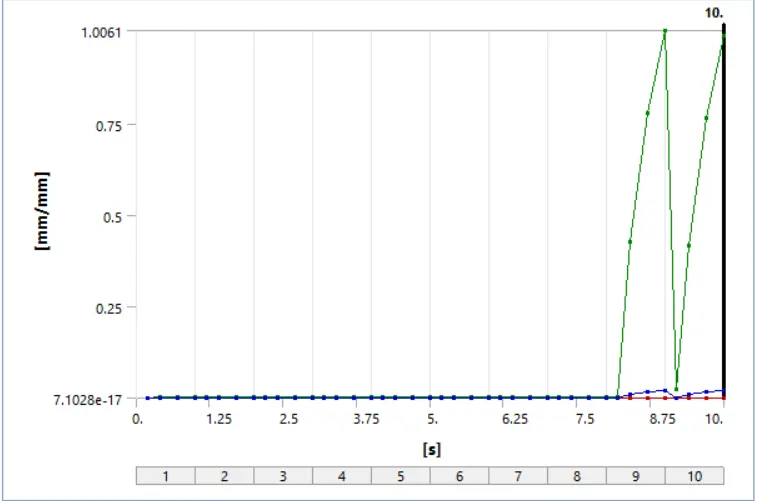
Equivalent elastic strain graph for copper alloy
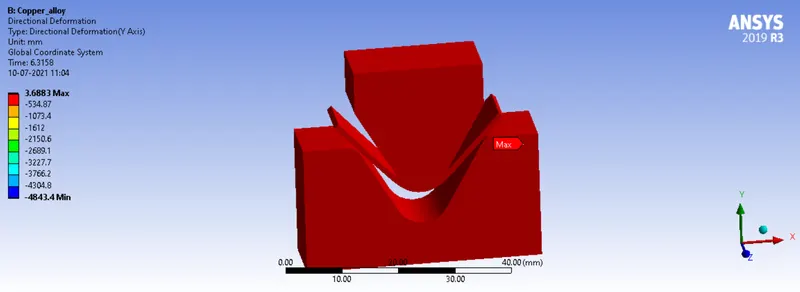
Directional deformation for copper alloy
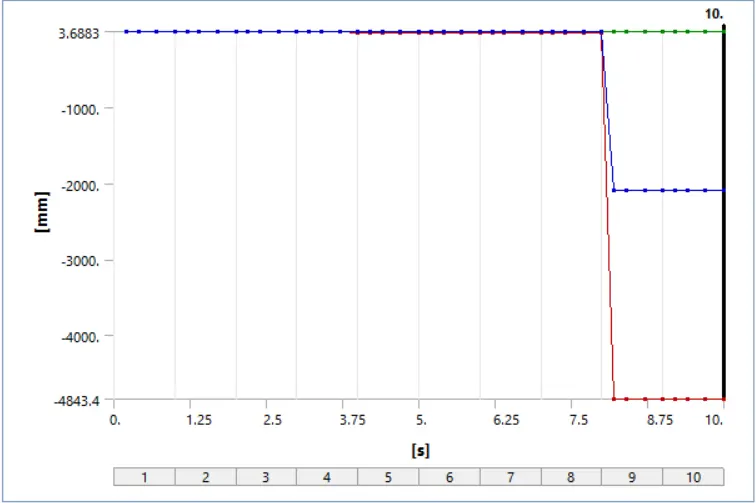
Directional deformation graph for copper alloy
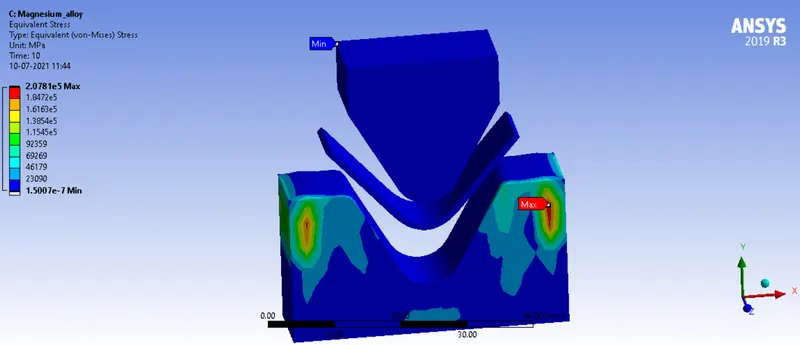
Equivalent stress for magnisium alloy
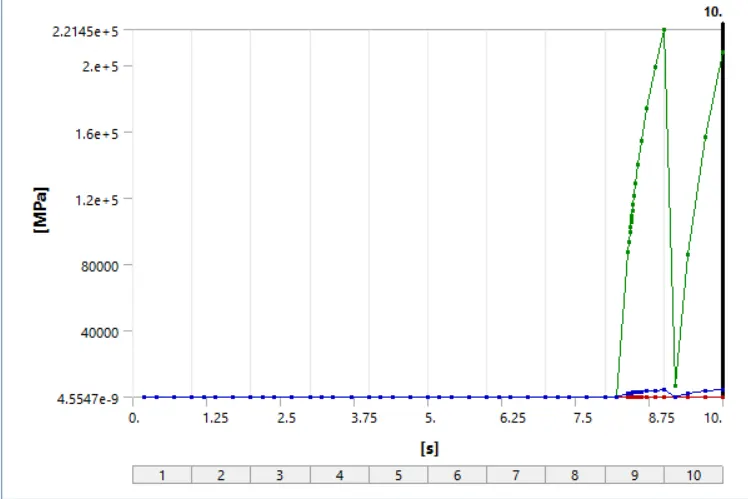
Equivalent stress graph for magnisium alloy
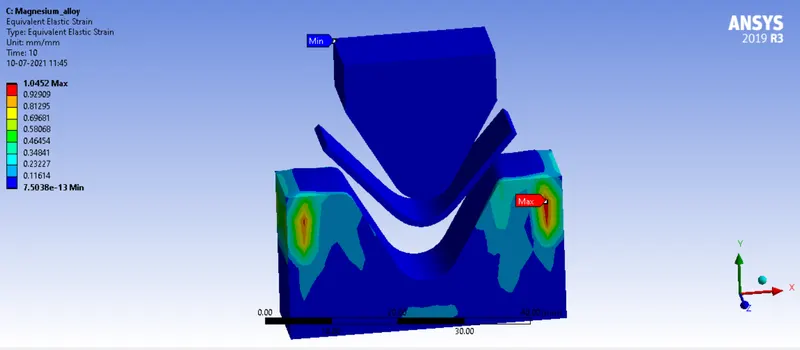
Equivalent elastic strain for magnisium alloy
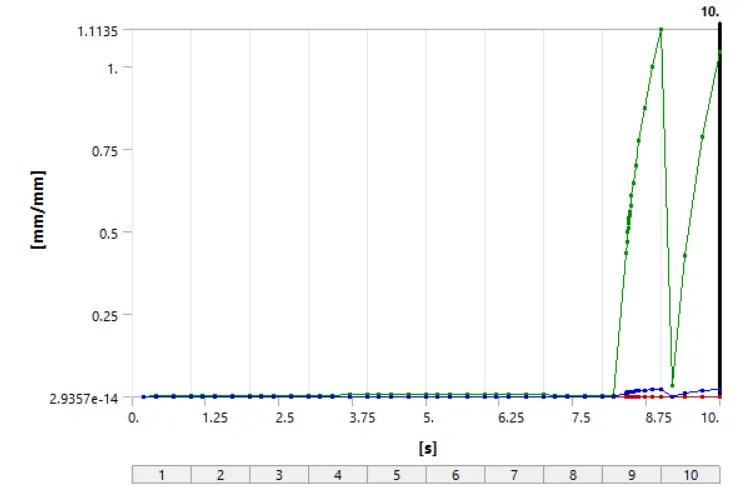
Equivalent elastic strain graph for magnisium alloy
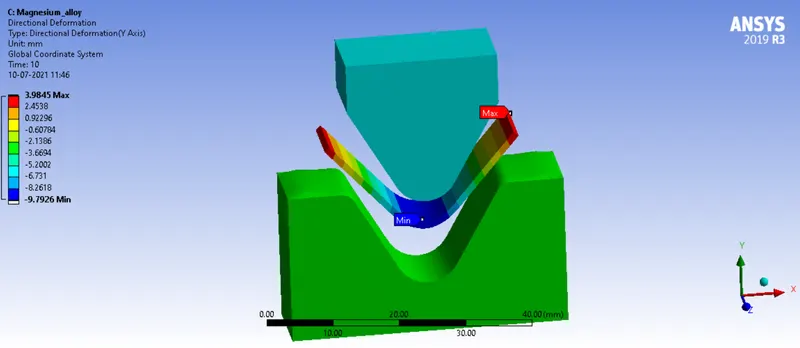
Directional deformation for magnisium alloy
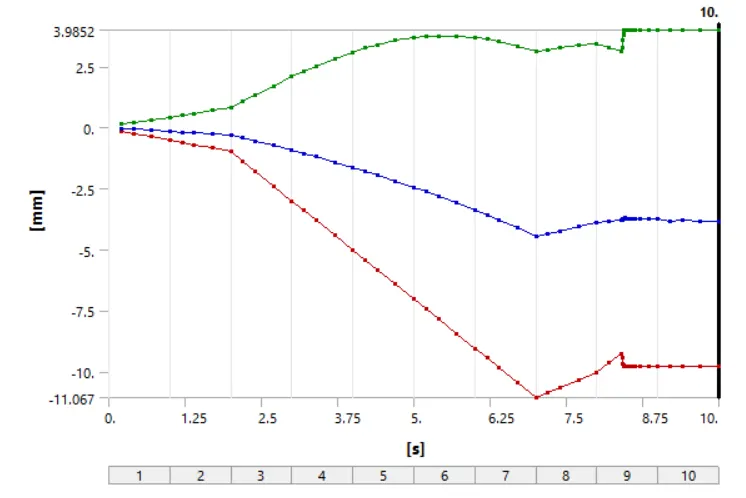
Directional deformation graph for magnisium alloy
Comparision Table-1:
Equivalent stress(MPa) Equivalent elastic strain(mm/mm) Directional deformation(mm)
Aluminium alloy 1199 1.3857e5 0.69321 3.1647
Copper alloy 1.9767e5 0.9926 3.6883
Magnisium alloy 2.0781e5 1.0452 3.9845
Case-2: By changing the friction coefficient to 0.19 and run the analysis as mentioned in Case 1.
-Follow the steps as above and run the analysis.
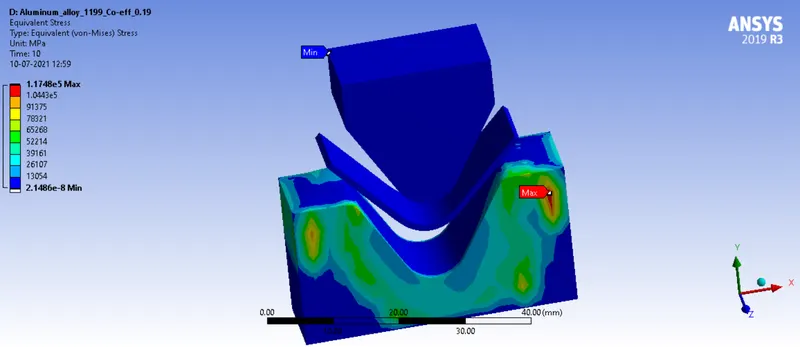
Equivalent stress
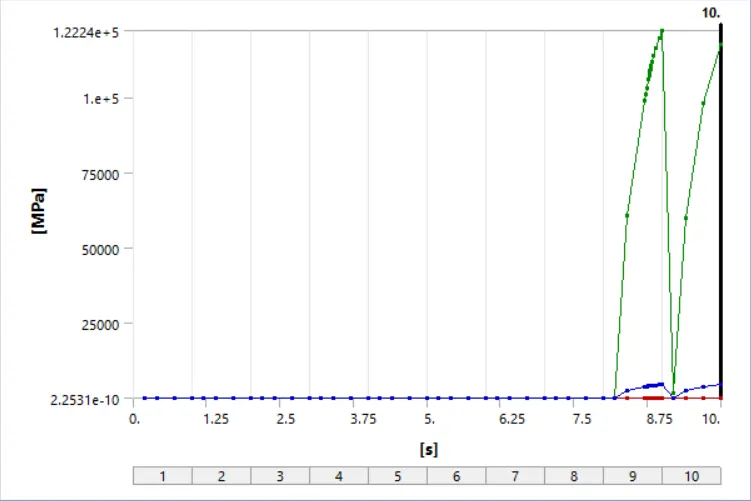
Equivalent stress graph
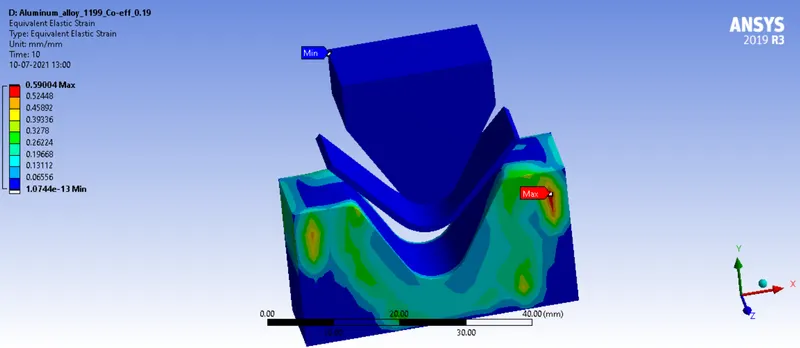
Equivalent elastic strain
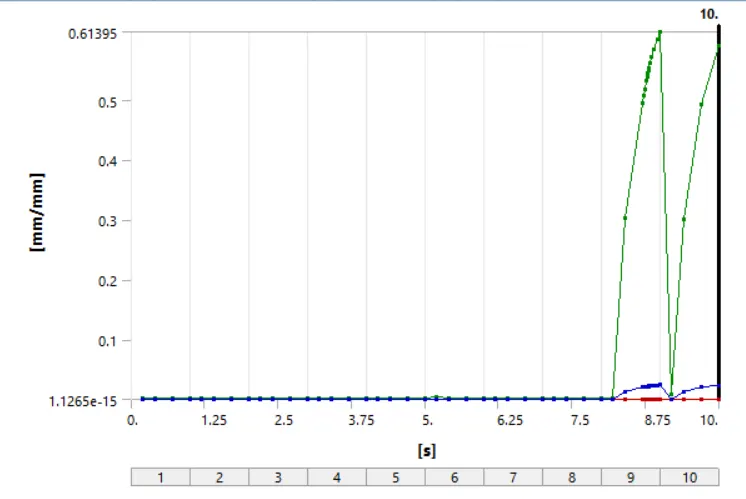
Equivalent elastic strain graph
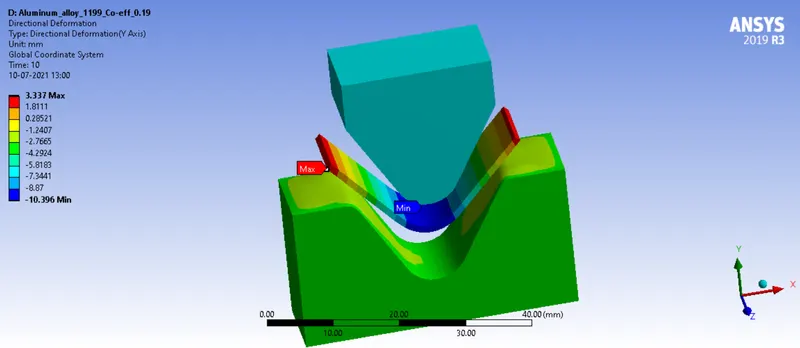
Direction Deformation
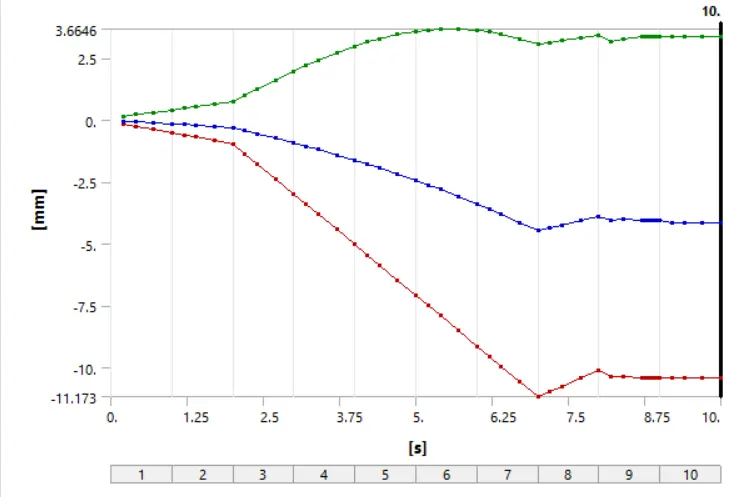
Direction Deformation graph
Comparision Table-2:
Aluminium alloy 1199 Aluminium alloy 1199
(Frictrional coefficient 0.1) (Frictrional coefficient 0.19)
Equivalent Stress(MPa) 1.3857e5 1.748e5
Equivalent Elastic strain(mm/mm) 0.69321 0.59004
Directional Deformation(mm) 3.1647 3.337
Case-3: Refine the mesh for the Aluminium alloy 1199 and run analysis.
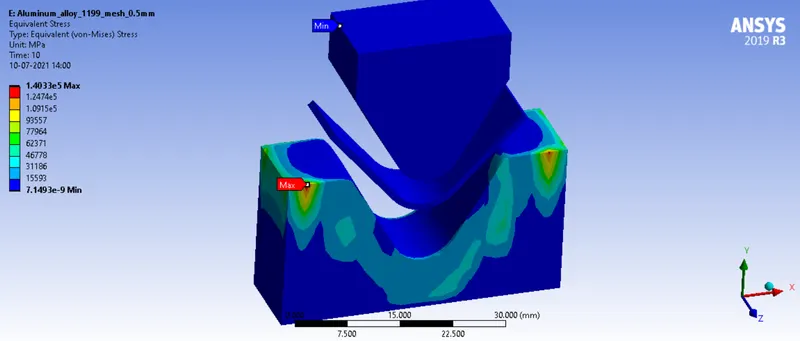
Equivalent stress
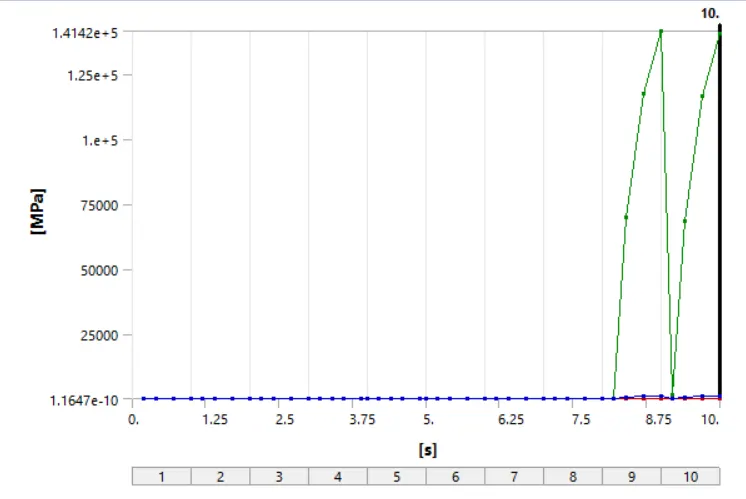
Equivalent stress graph
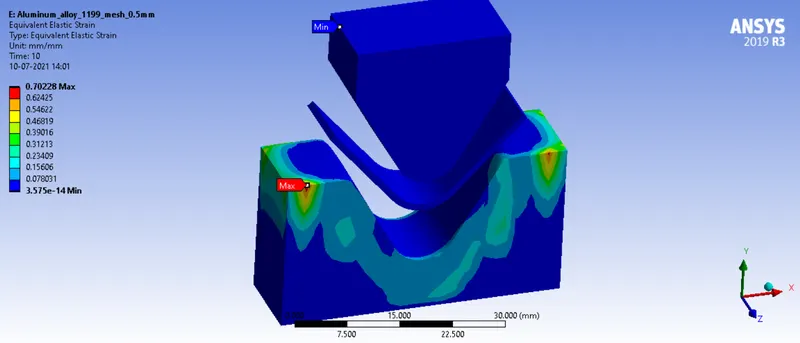
Equivalent elastic strain
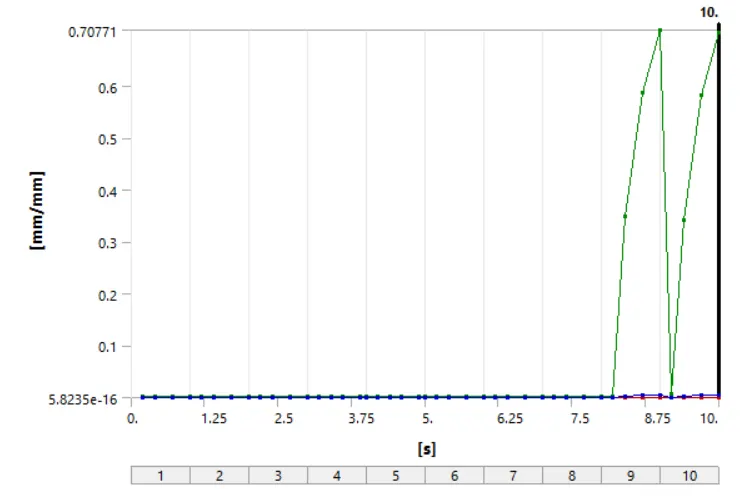
Equivalent elastic strain graph
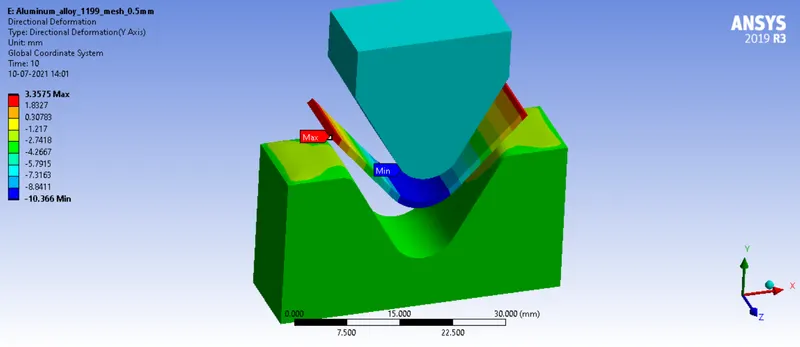
Directional deformation
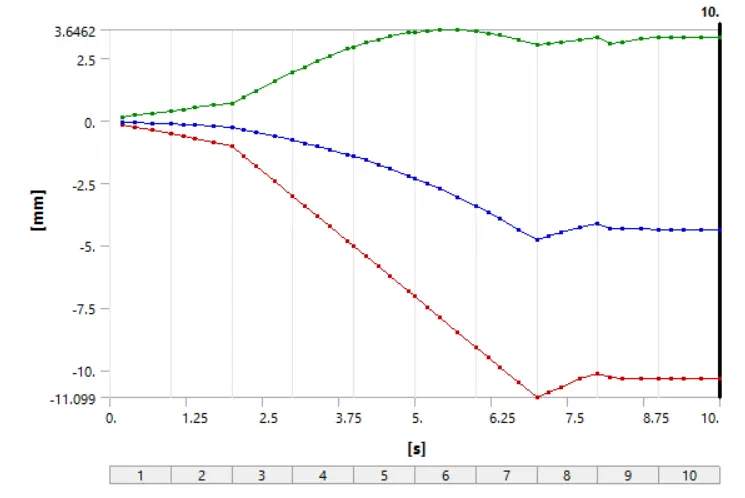
Directional deformation graph
Comparision Table-3:
Aluminium alloy Aluminium alloy
mesh size 1mm mesh size 0.5mm
Equivalent stress(MPa) 1.3857e5 1.4033e5
Equivalent elastic strain(mm/mm) 0.69321 0.70228
Directional Deformation(mm) 3.1647 3.3575
Simulation links:
Conclusion:
-From comparision table-1, we can see that the equivalent stress values are differing in such way
Aluminium alloy 1199< Copper alloy < Magnesium alloy.
Same goes for Equivalent Elastic strain and Deformation.
-From comparision table-2, we can see that there is an increase in Deformation.
-From comparision table-3, we can see that there is an increase in all the three output parameters when the mesh size is decreased.