Week 3 Sheet metal Bending challenge
Aim: To simulate the sheet metal bending in ansys workbench.
Objective:
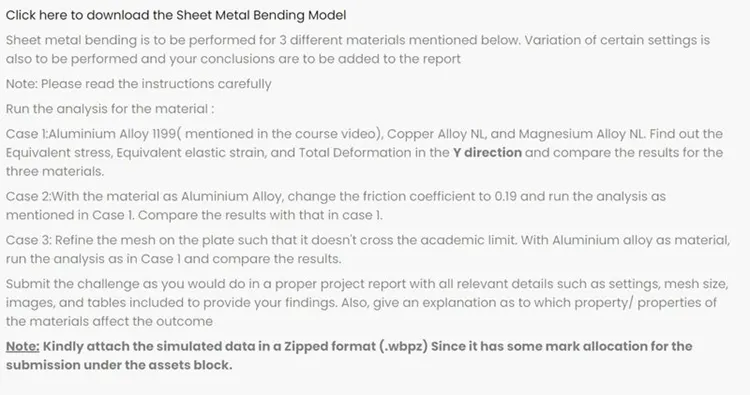
Procedure:
- After opening Ansys Workbench, use static structural as the mode of analysis for simulation.
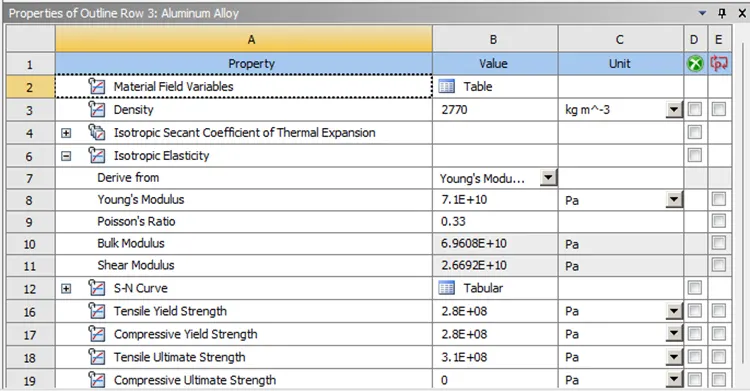
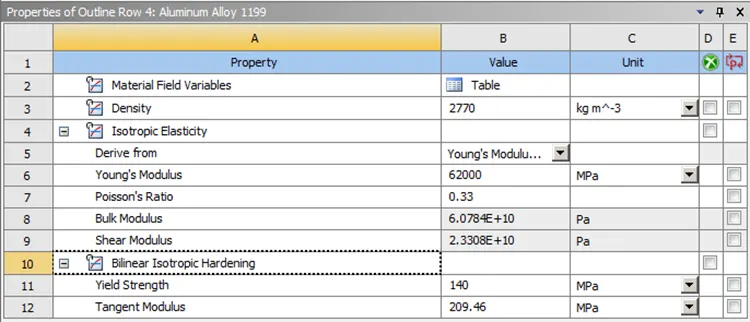
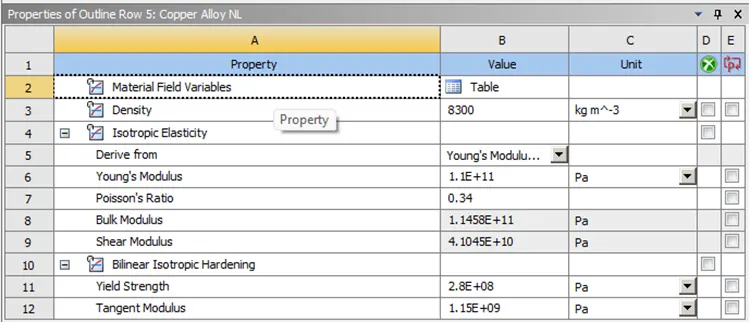
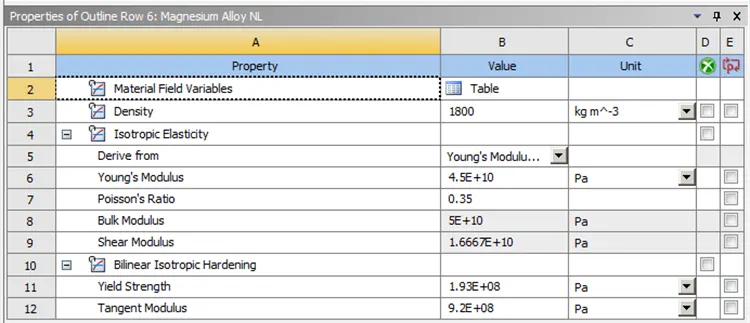
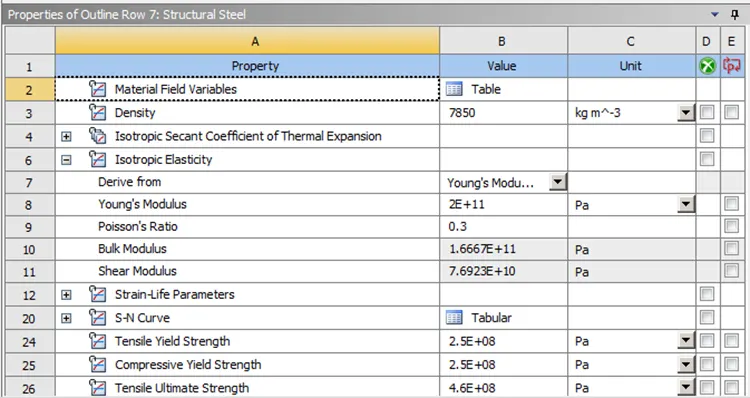
- Now, add materials as structural steel, aluminium alloy, alluminium alloy 1199, copper alloy NL, magnesium alloy NL from the engineering data project menu.
- Import the model provided and check the geometry in the Ansys Spaceclaim for any abnormalities.
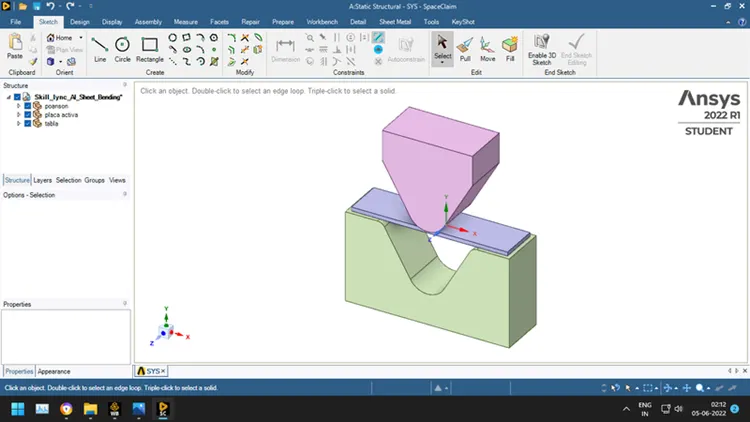
- Assign material as structural steel to the punch and die; and assign aluminium alloy 1199 to the sheet metal.
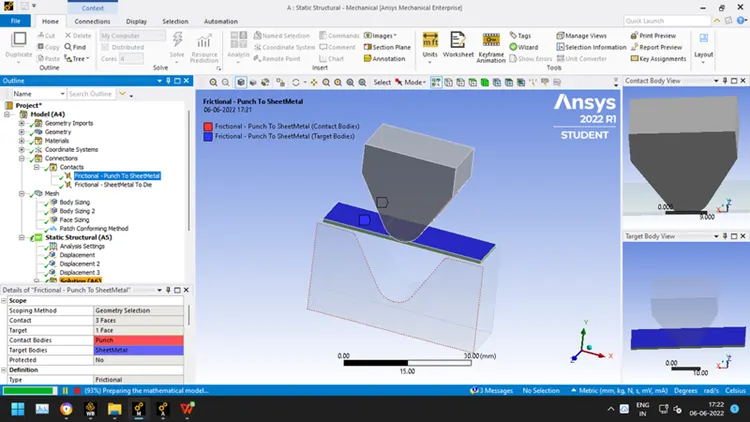
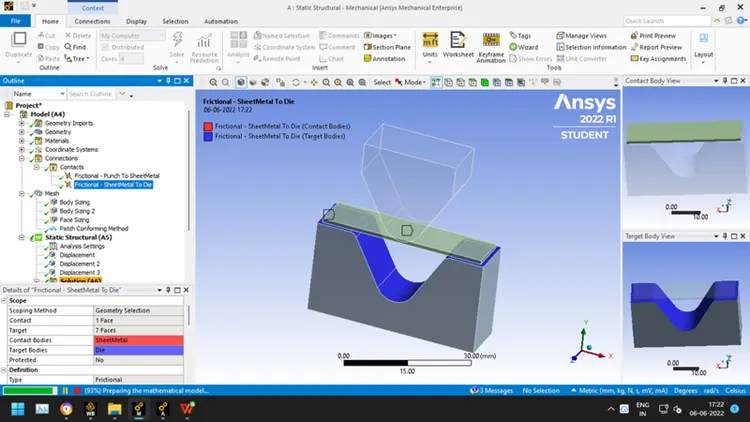
- Create contact frictional joints as shown below:
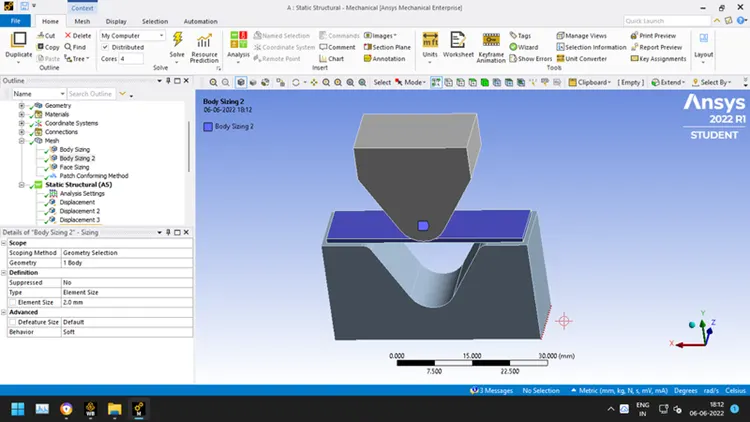
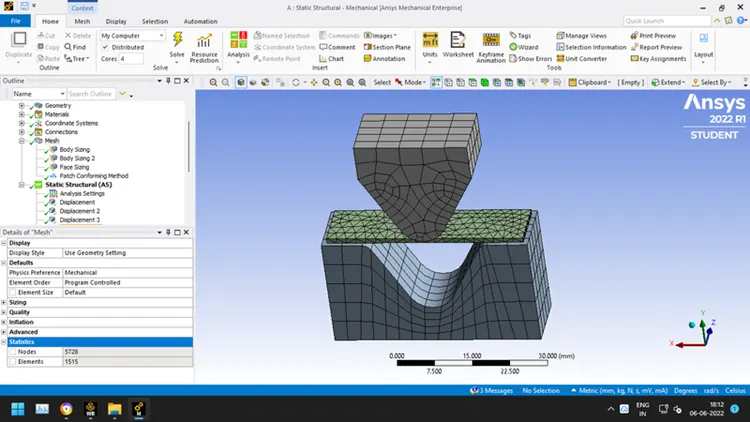
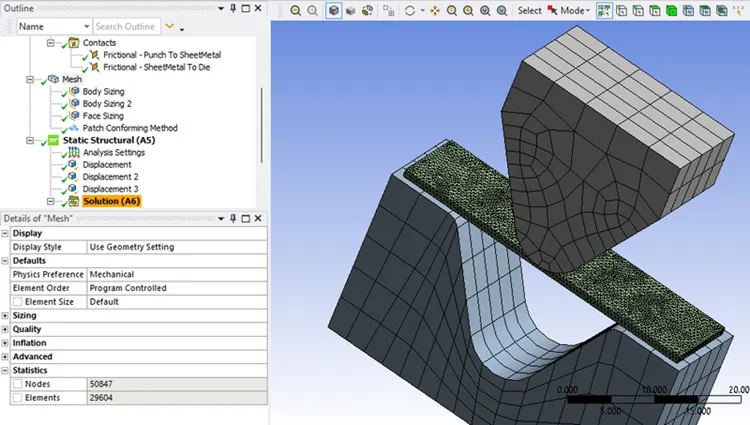
- Mesh all the components with default element size. And refine mesh on the faces which are coming in contact for our study using sizing of 2mm. Use tetrahedron method for sheet metal.
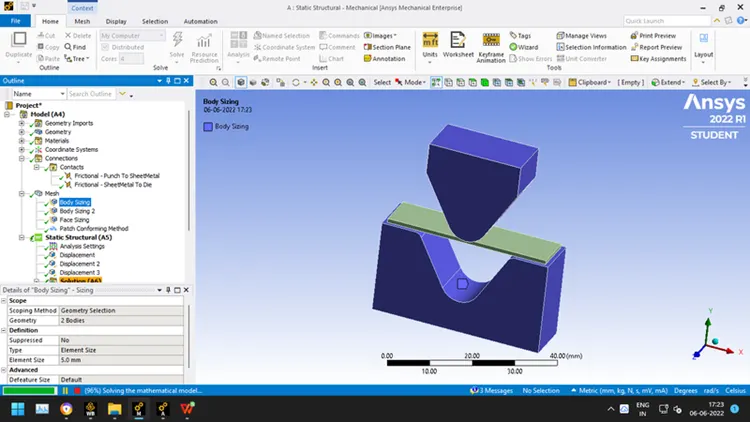
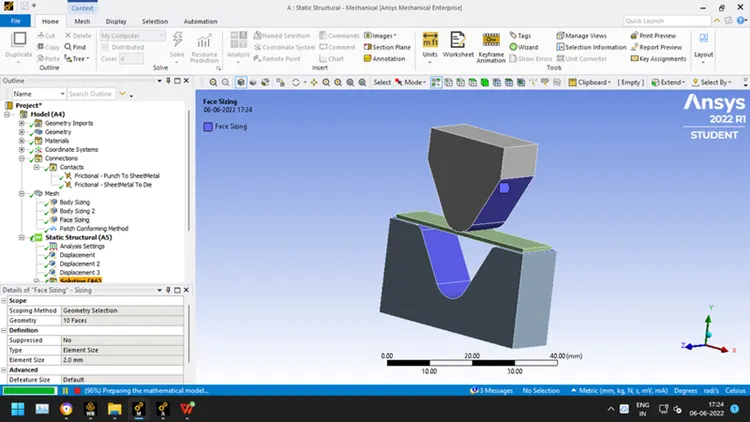
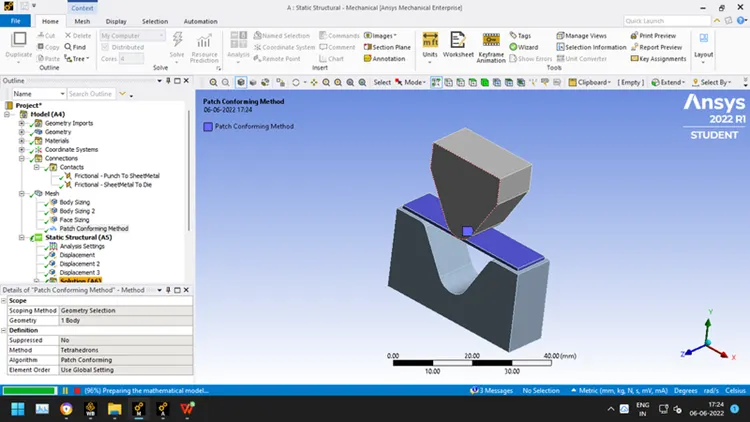
The final mesh obtrained is
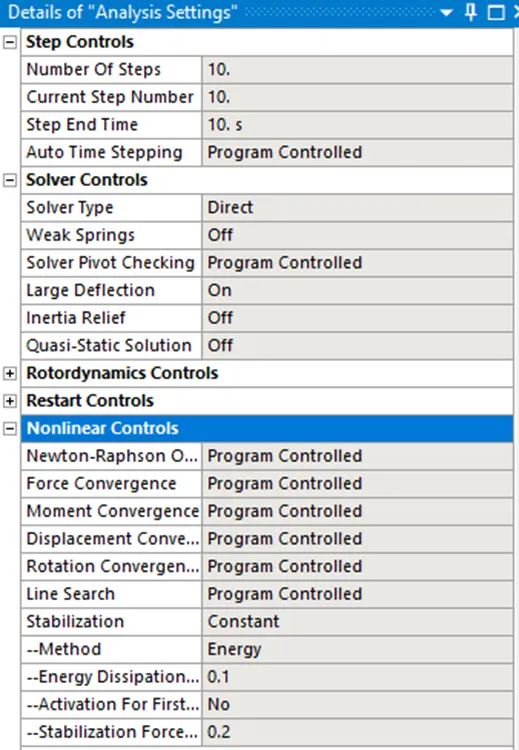
- Following analysis settings have been set for the simulation for 10 steps:
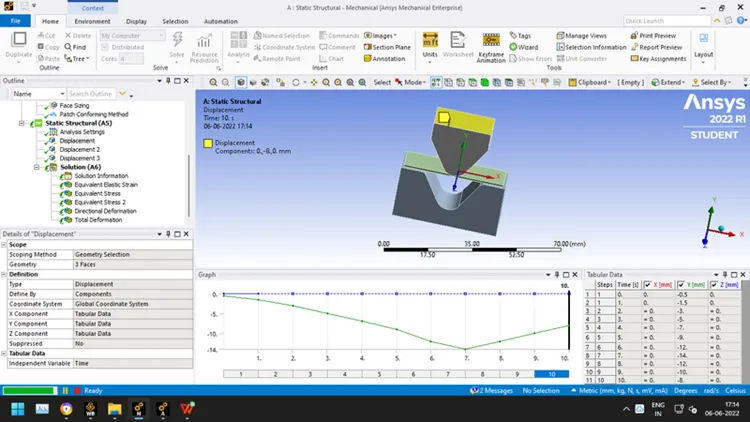
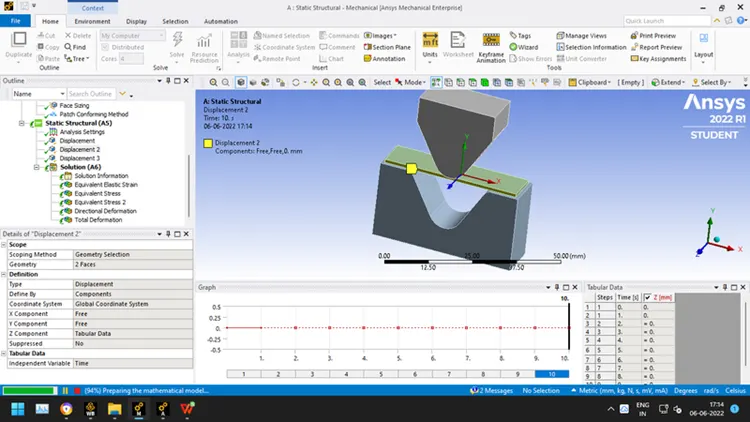
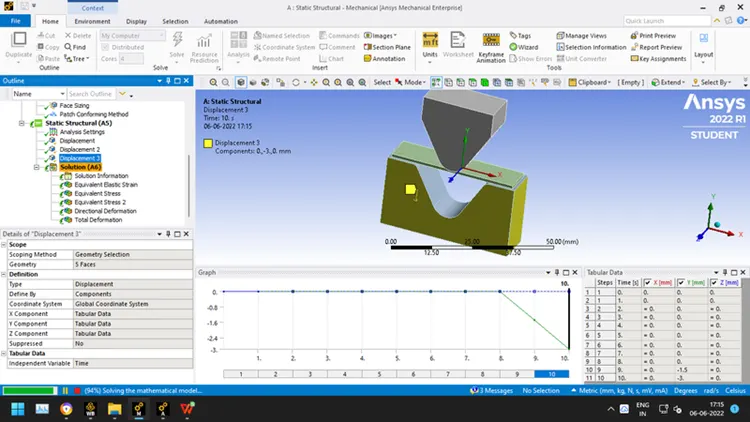
- Now adding displacements to the components as shown below:
Punch in Negative Y direction for 14 mm where it is pushed down and pulled up back again; relief of 3mm is provided for the die.
- Now, Insert total deformation, equivalent stress, directional deformation, equivalent elastic strain.
- Finally following solutions have been obtained after running the simulation for Sheet Metal Bending:
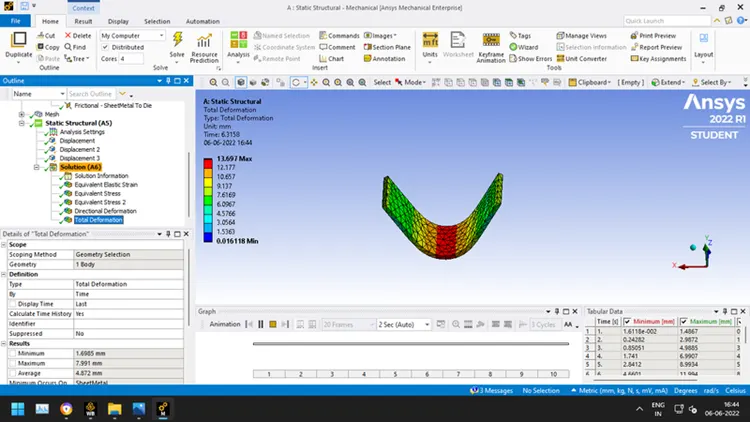
CASE 1: Results for aluminium alloy 1199, copper alloy NL, magnesium alloy NL as the material:
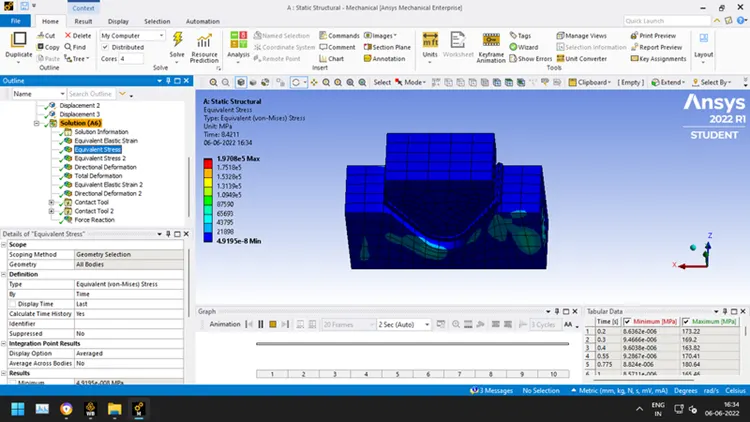
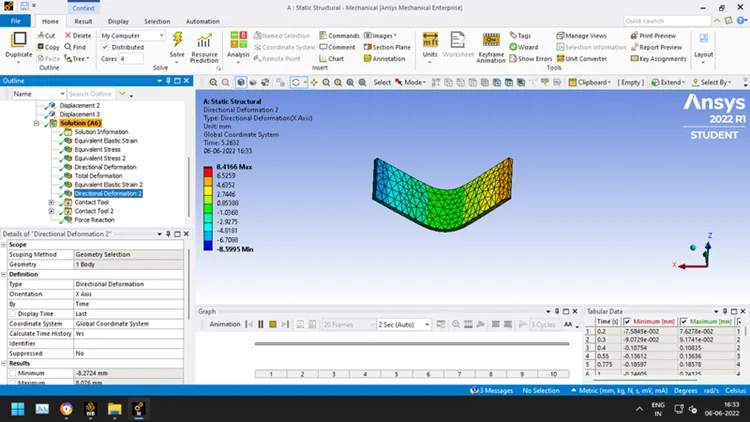
- Results for Aluminium Alloy 1199
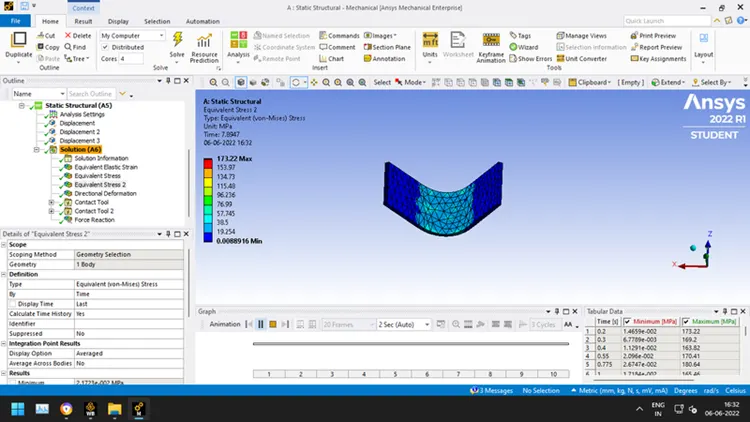
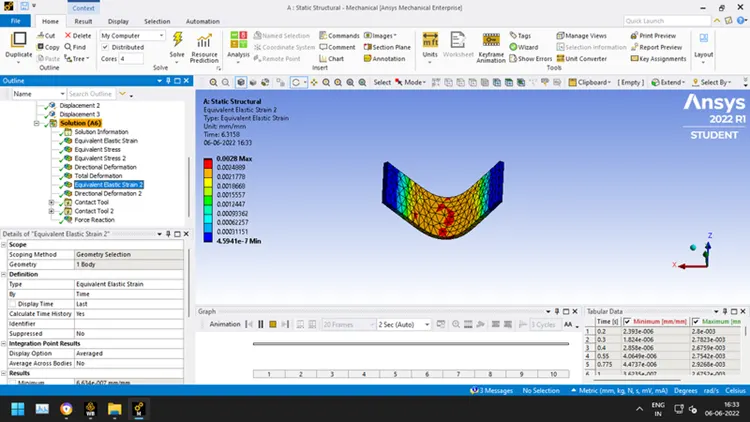
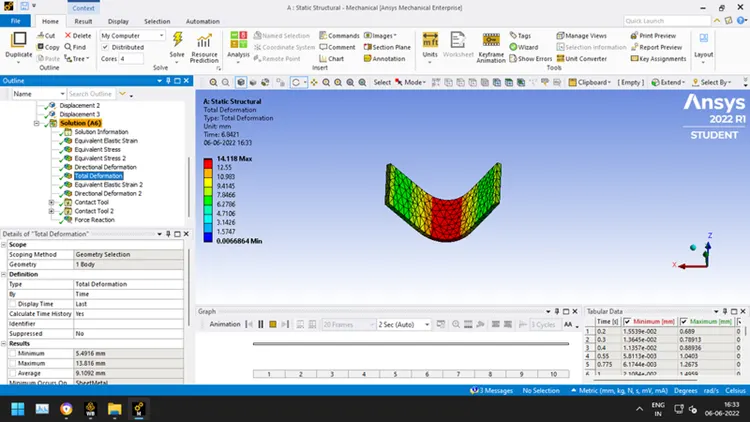
- Results for Copper Alloy NL
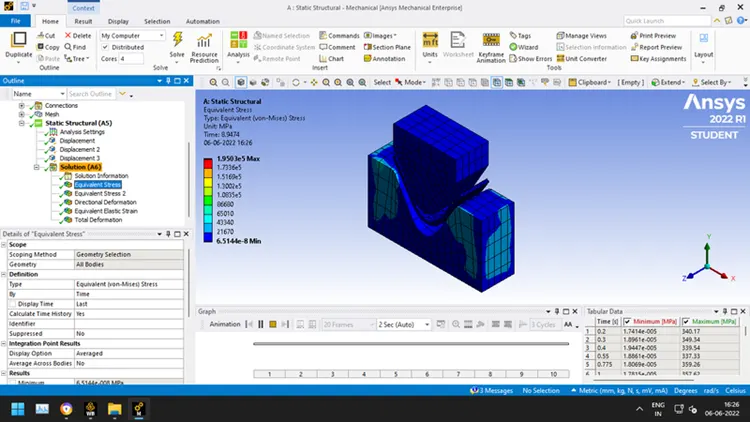
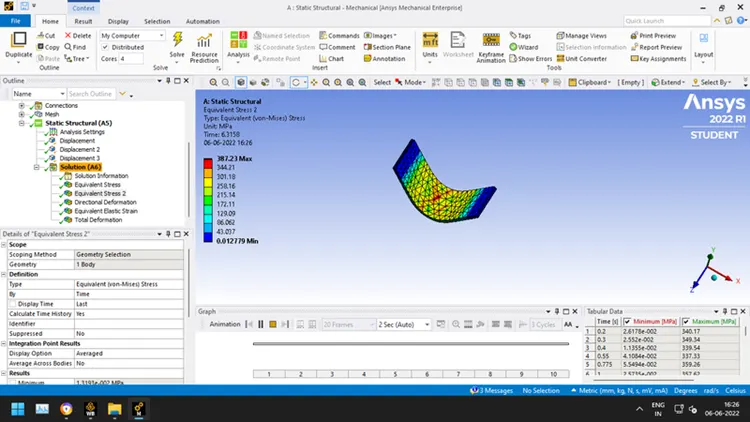
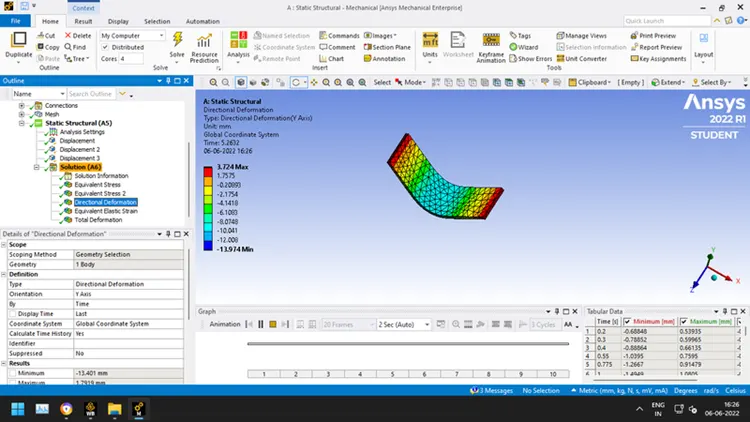
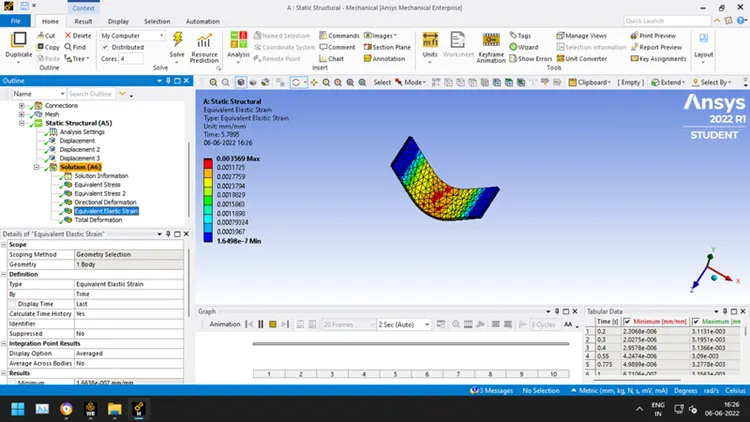
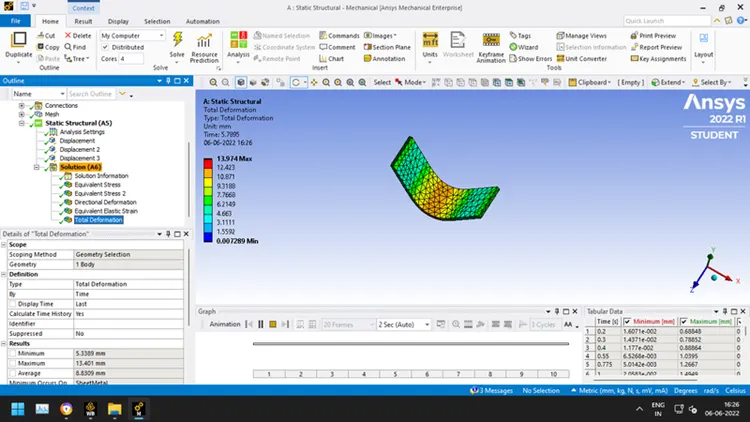
- Results for Magnesium Alloy NL
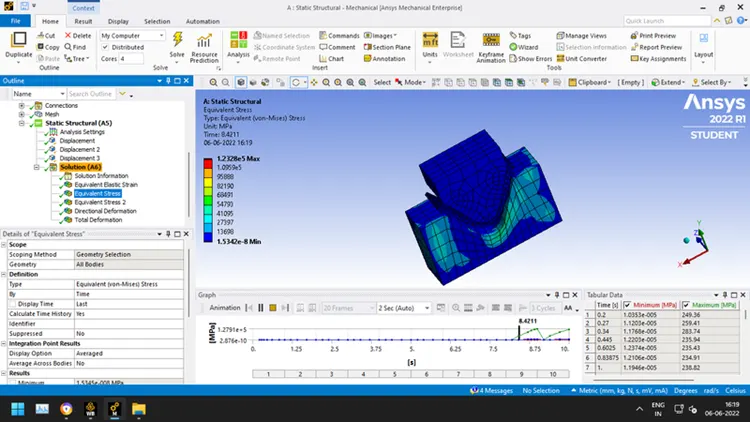
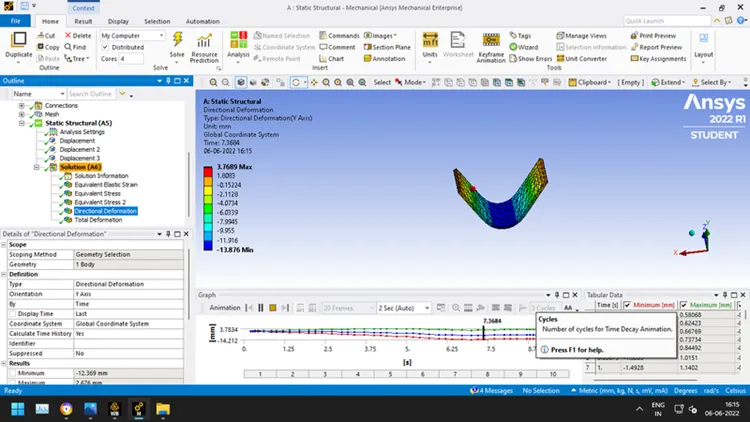
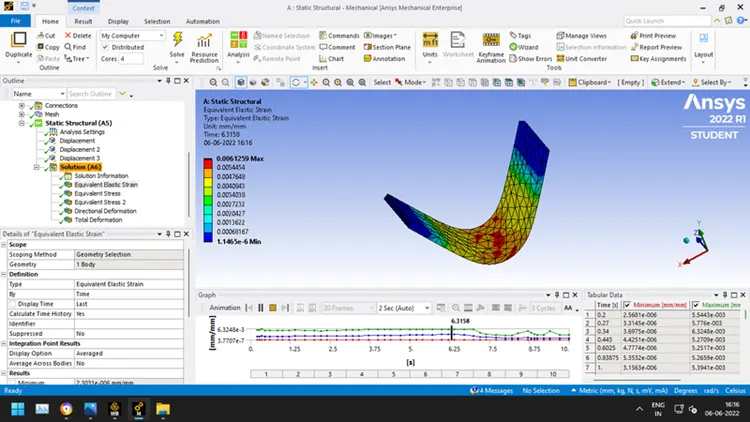
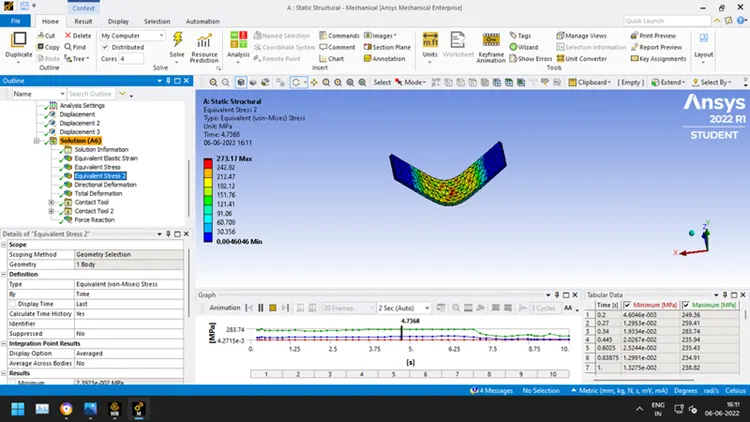
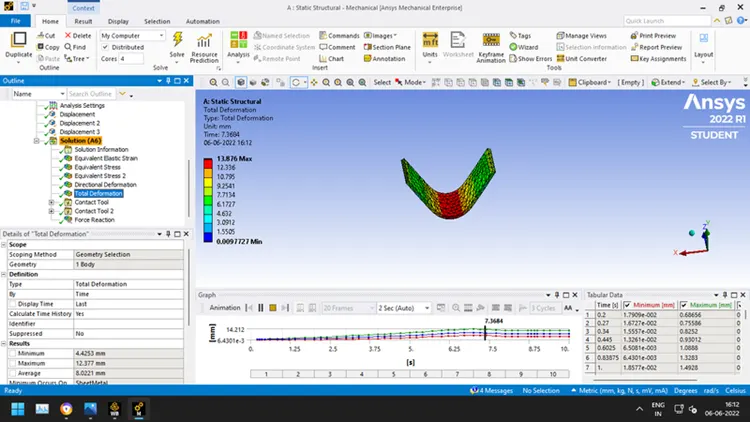
CASE 2: Results for Frictional Contacts with frictiion of 0.19 and aluminium as the material:
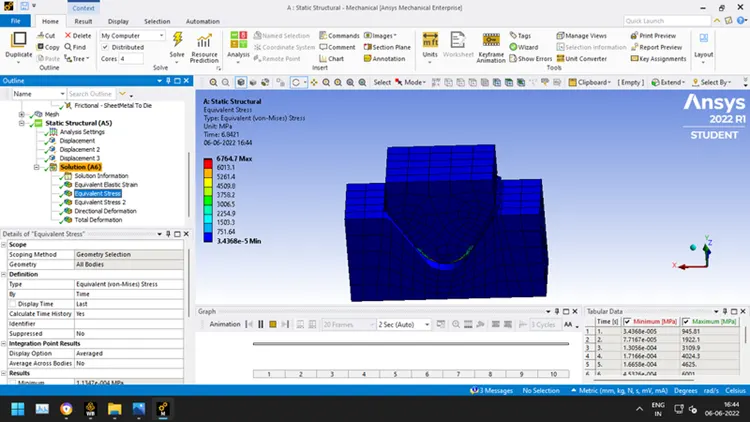
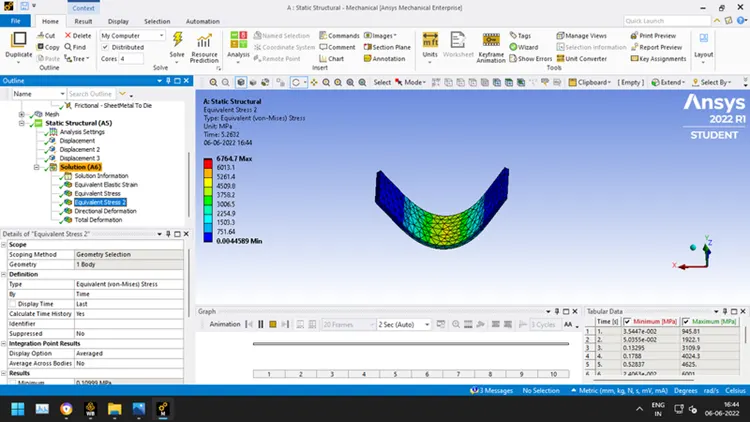
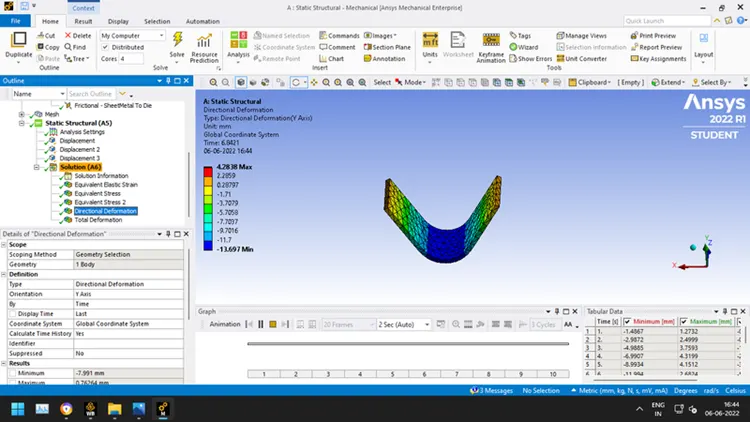
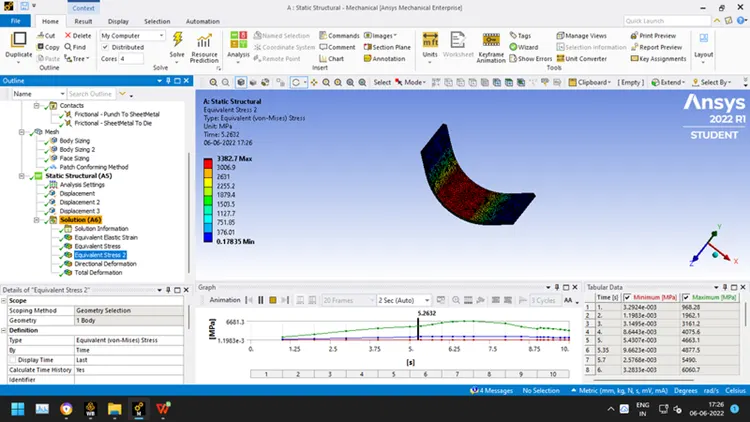
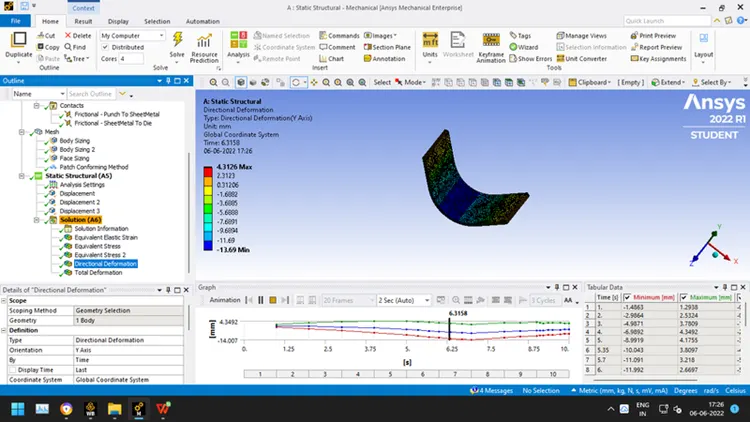
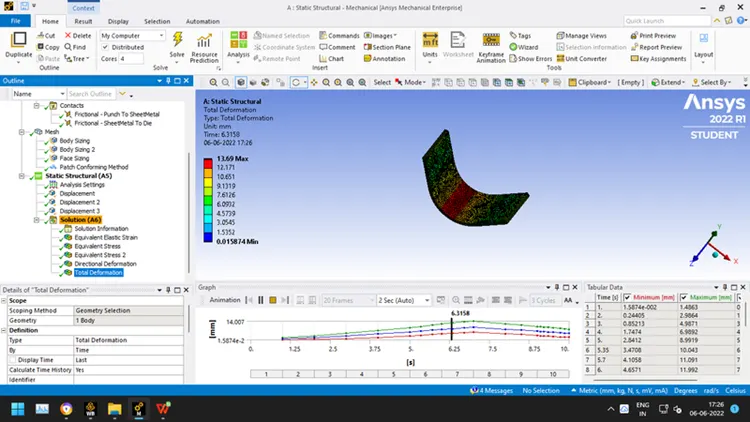
CASE 3: Results for Refined Mesh with 0.5mm Element Quality on Plate & Frictional Contacts with friction of 0.19 and aluminium as the material:
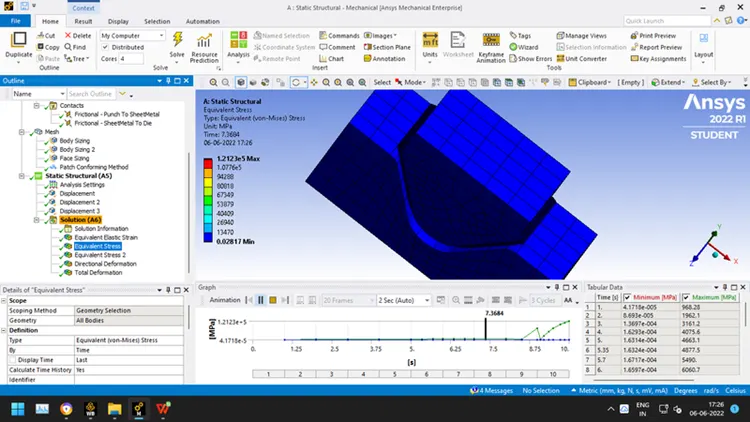
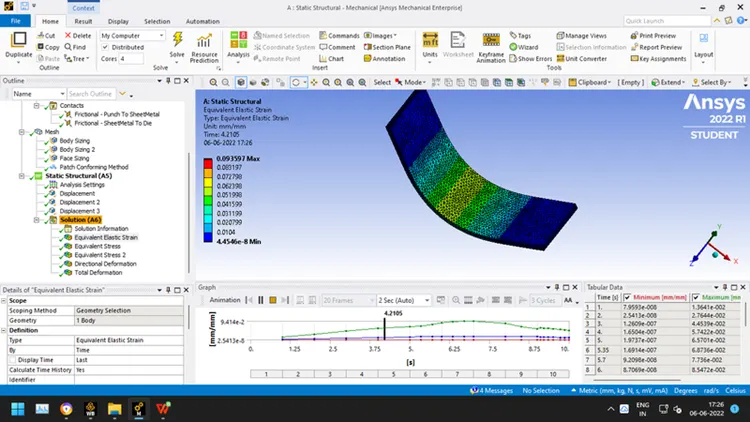
Results are as follows:
- Conclusion:

From the above results,
For Case 1 we can say that the max stress of 387.23 MPa is obtained for Copper Alloy NL with less directional deformation of 3.724. And the least stress of 173.22 MPa is obtained for Aluminium Alloy 1199 with 8.416 mm of directional deformation. So, we can say that the best material among the three is aluminium alloy because less stresses are induced and the deformation is also maximum.
For Case 2, when adding frictional contacts from 0 to 0.19 there is a very high value of stress induced in the sheet metal and the directional deformation is 4.2mm. The strain also increases to very great great extent when compared with case 1.
For Case 3, when the element is reduced to 0.5 mm from 2mm, more accurate results are obtained. The max stress obtained is 3382.7 MPa and the deformation observed is 4.312mm.
NOTE: PLEASE FIND THE GOOGLE DRIVE LINK BELOW MENSIONED IN THE ATTACHED TEXT FILE BELOW FOR SIMULATION FILES.