Week 3 - Pitot tube
Objective:
Part 1: Do literature review of pitot static tube & establish the relation between total & static pressure.
Part 2:
For the values of velocity given below calculate the total and static pressures and find the error in percentage for velocity.
|
Velocity(m/s) |
Gauge Pressure (Pa) |
|
240 |
-2817 |
|
100 |
33287 |
|
62 |
65780 |
Answer:
Part 1:
Below image shows the cross section of the pitot static tube. The image explains very clearly how pitot tube measures both pressures, static & total. And also it explains how to calculate total pressure & velocity using analytical method.
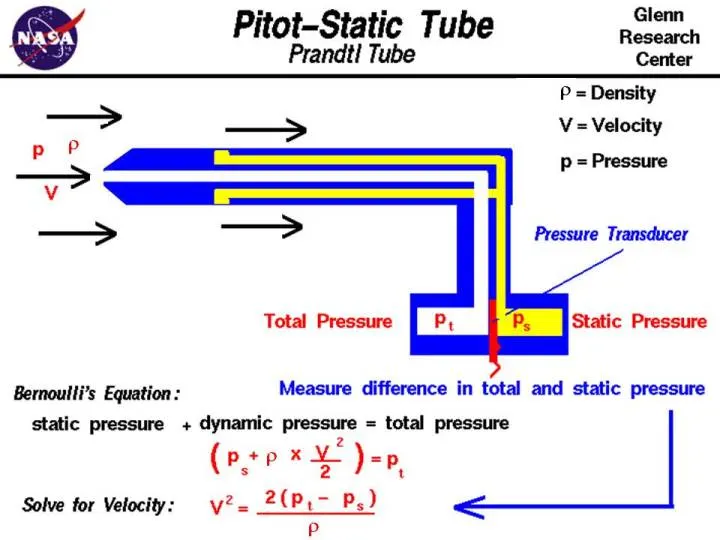
The dynamic pressure can also be calculated through pitot static tube using the formula of total pressure shown in the image.
In the image, the front hole at the tip shown in the white is used to measure total pressure while the holes at sides shown in yellow are used for measuring static pressure. Pressure tranducer installed in the pitot static tube is used for measuring the pressure.
The measurement of pressure only accurate at low mach number in this tube especially for incompressible flow. The planes like Boeing 707 & other smaller aircrafts measure pressure using this method.
The measured pressure can be used for reading of other instruments like Altimeter & Air speed measurement.
To establishrelation between total pressure & static pressure, the momentum eqaution for 1 dimension has been used which is shown below:
`rhou(du)/(dx) = -(dp)/(dx)`
Rearranging above terms,
`rhou(du)/(dx) + (dp)/(dx) = 0`
Simplifying above equation,
`(dp)/(dx) + d/(dx)((rhou^2)/2) = 0`
`d/(dx)(p + (rhou^2)/2) = 0`
Integrating above equation,
`p + (rhou^2)/2 = "constant"`
In above equation, the realtion between static & total pressure in which p stands for static pressure while the other term is of dynamic pressure. And the "constant" is the value of total pressure. The above equation can be compare with following equation:
Total pressure = Static Pressure + Dynamic pressure
Part 2:
In this parrt, the static & total pressure is required to calculate in the Ansys Fluent using the given meshed model.
Three different velocity 7 pressure conditions have been given & for all three cases both pressures need to calculate & also needs to verify the accuracy of the velocity using analytical method.
Given model displays below after making front domain faces transperant.
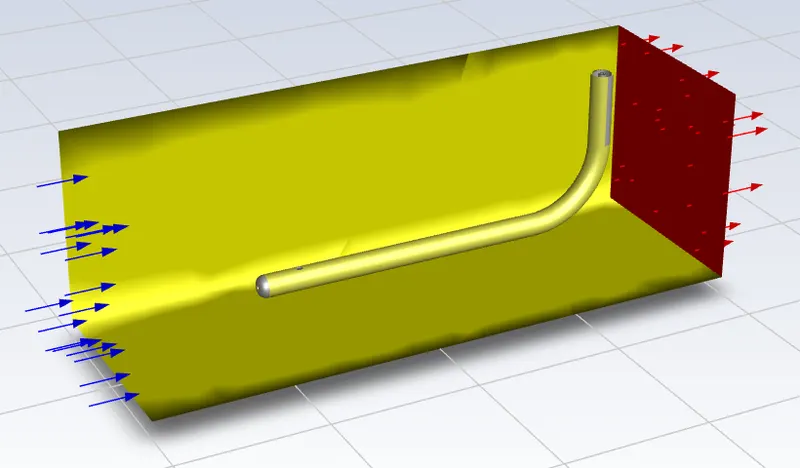
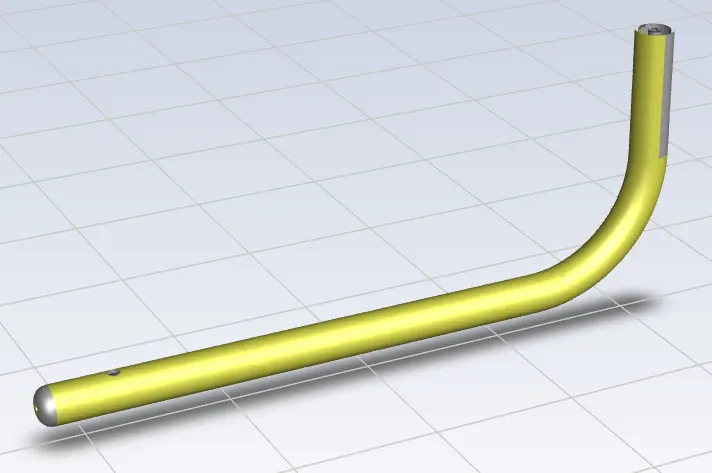
Model of Pitot Static tube:
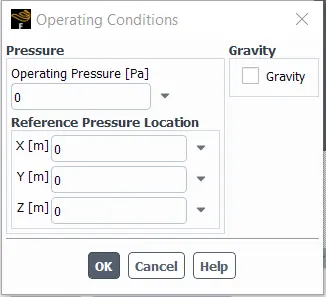
For all three cases, operating pressure has been set as 0 Pa.
Case 1:
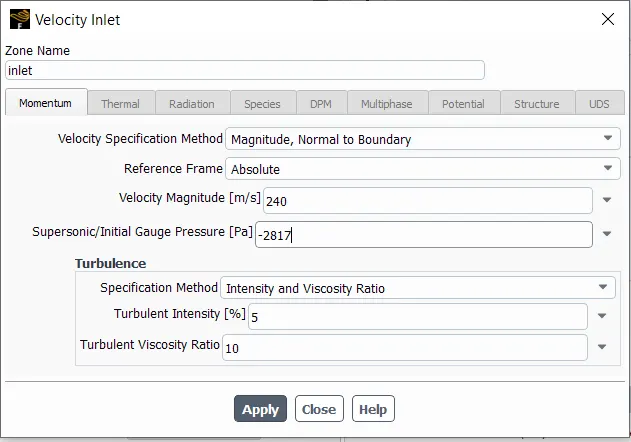
Velocity = 240 m/s
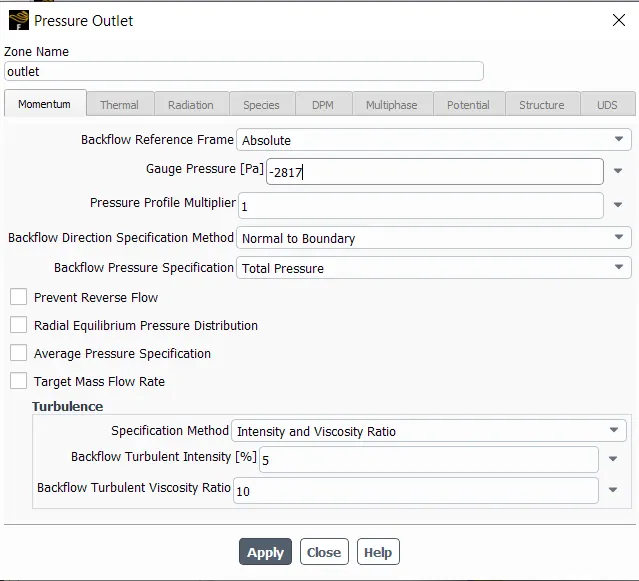
Pressure = -2817 Pa
- Boundary condition:
Inlet - Velocity inlet
Outlet - Pressure outlet
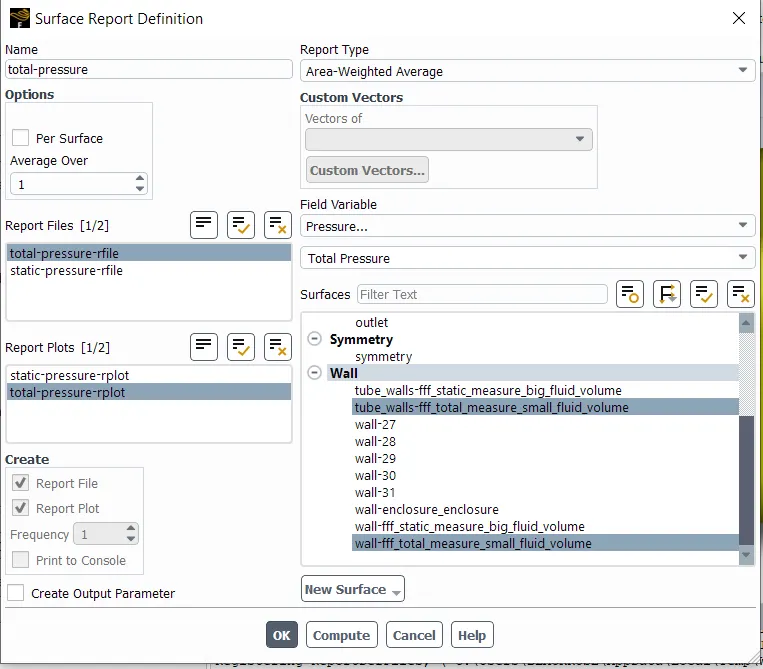
To calculate static & total pressure, the surface reports has been created using following way:

Simulation Initialization - Standard
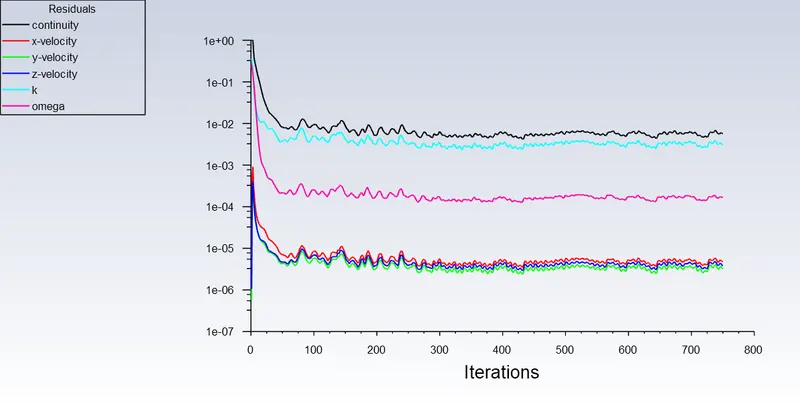
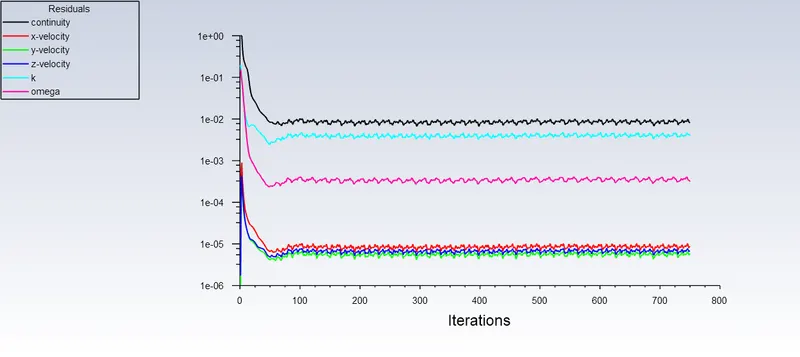
No. of Iterations = 750
Residual Plot:
Static Pressure:
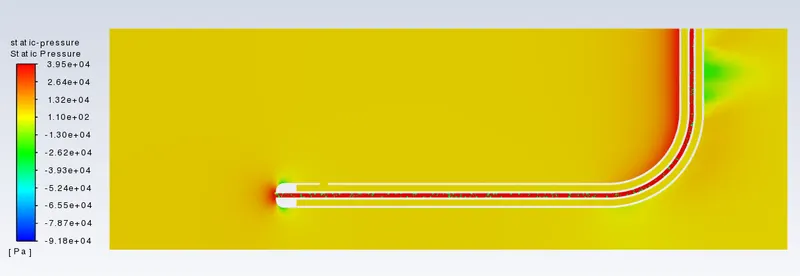
Total Pressure:
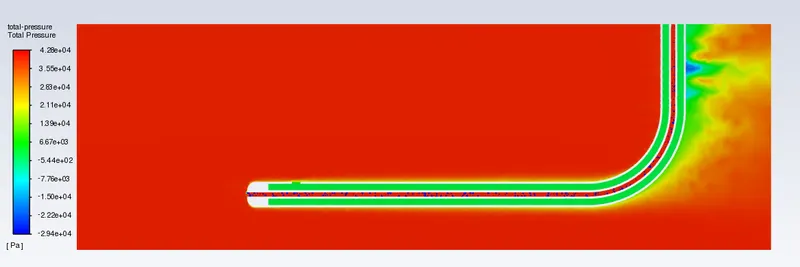
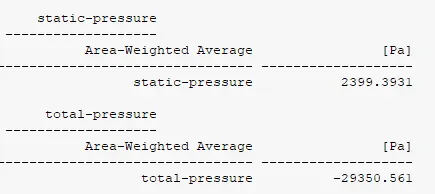
Computed Pressure values:
Calculating Velocity using analytical method:
`V = sqrt(2((P_t - P_s)/rho)`
In above equation,
V = Velocity
Pt = Total Pressure
Ps = Static Pressure
`rho` = density
`V = sqrt(2((29350 - 2399)/1.225)`
V = 218.9 m/s
Case 2:
Velocity = 100 m/s
Pressure = 33287 Pa
Initialization - Standard
No. of Iterations = 750
Residual Plot:
Static Pressure:
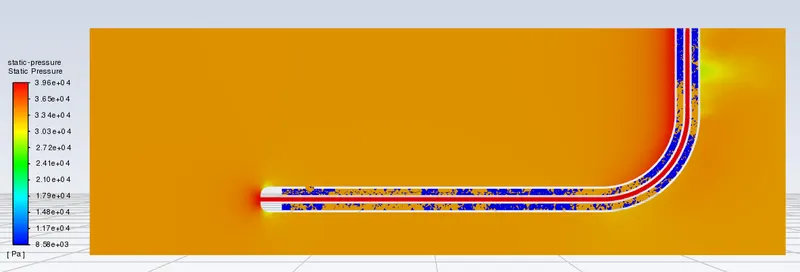
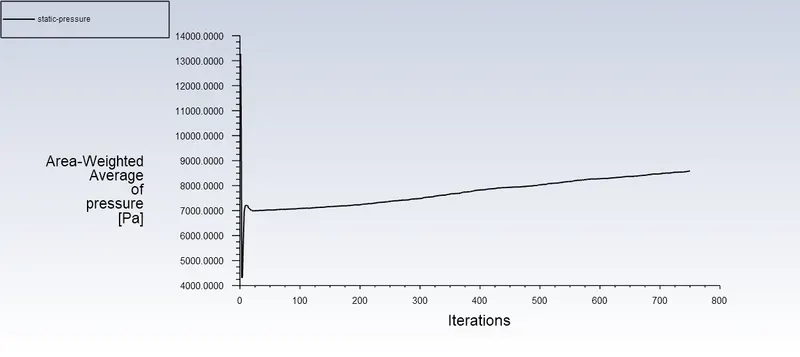
Total Pressure:
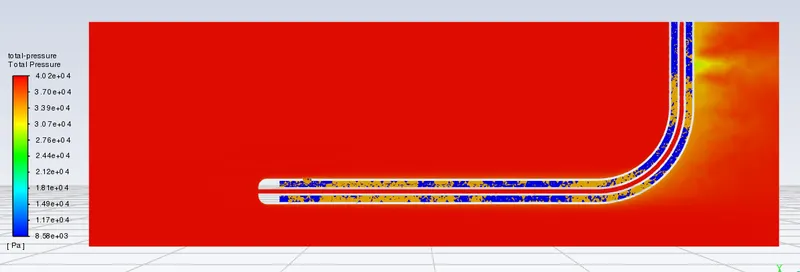
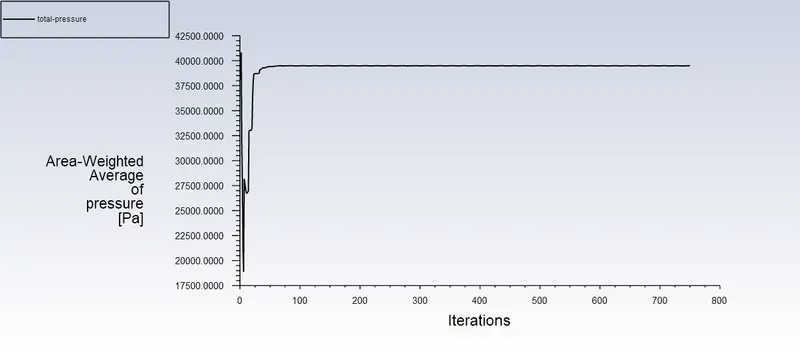
Computed Pressure values:
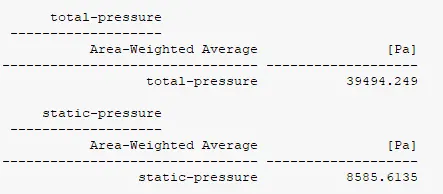
Calculating Velocity using analytical method:
`V = sqrt(2((P_t - P_s)/rho)`
120.6`V = sqrt(2((39494.25 - 8585.61)/1.225)`
V = 224.6 m/s
Case 3:
Velocity = 62 m/s
Pressure = 65780 Pa
Initialization - Standard
No. of Iterations = 750
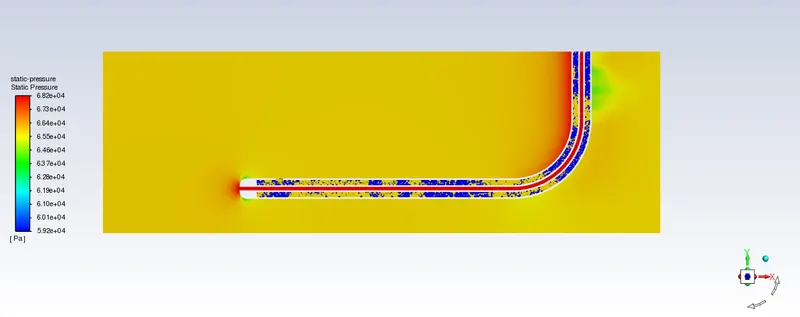
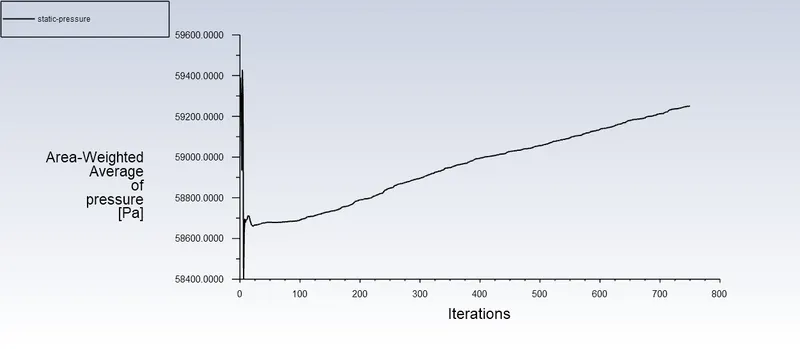
Residual Plot

Static Pressure:
Total Pressure:
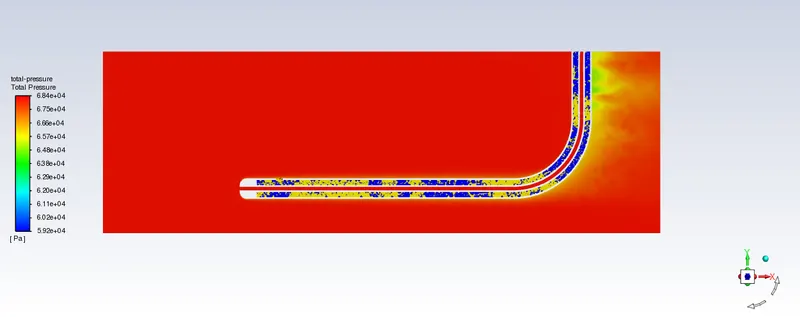
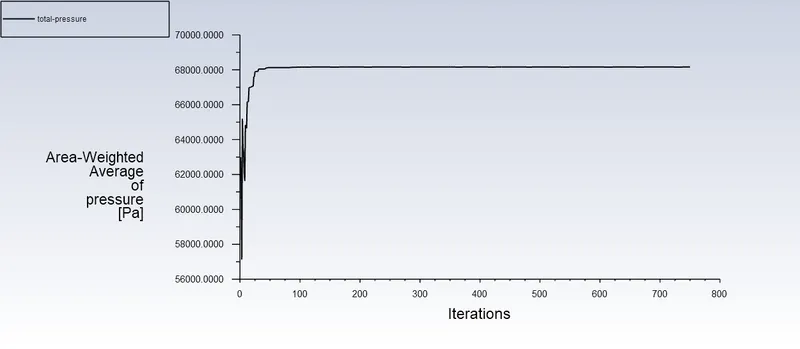
Computed Pressure Values:
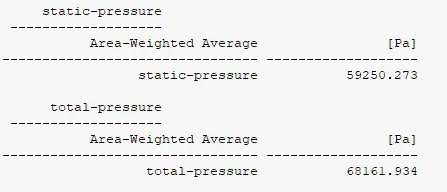
Calculating Velocity using analytical method:
`V = sqrt(2((P_t - P_s)/rho)`
`V = sqrt(2((68161.9 - 59250.27)/1.225)`
V = 120.6 m/s
Final Results:
| Velocity (Received) (m/s) | Velocity (Calculated) (m/s) | Error (%) | |
| Case 1 | 240 | 218.9 | 8.791667 |
| Case 2 | 100 | 224.6 | -124.6 |
| Case 3 | 62 | 120.6 | -94.5161 |