Week 3- Geometry cleanup and Mid-surfacing
PROJECT REPORT
AIM
Case 1
Extract the mid-surface from a 3D tube model and ensure proper connection sharing at joint locations.
Case 2
Create a model in Spaceclaim one on top of each other and create a shared topology between the top block and the bottom block.
Dimension of Top Block A: 20 x 20 x 5 mm
Dimension of Bottom Block B: 40 x 40 x 10 mm
Boundary Conditions: Provide Fixed support for the bottom face of Block B
Perform a modal (free-free run) analysis to verify connections and analyze the results.
OBJECTIVES:
Case 1
To extract the mid-surface from the 3D tube model, ensuring that connections at joint locations are properly shared.
Case 2
To construct a top block with dimensions of 20 x 20 x 5 mm and a bottom block with dimensions of 40 x 40 x 10 mm in SpaceClaim.
To align the top block precisely on top of the bottom block, ensuring that the overlap results in a shared topology.
Perform a free-free modal analysis to identify natural frequencies and mode shapes.
Investigate the results to verify the connections and analyze vibrational behavior.
BODY OF THE CONTENT:
Case 1
This is the geometry,
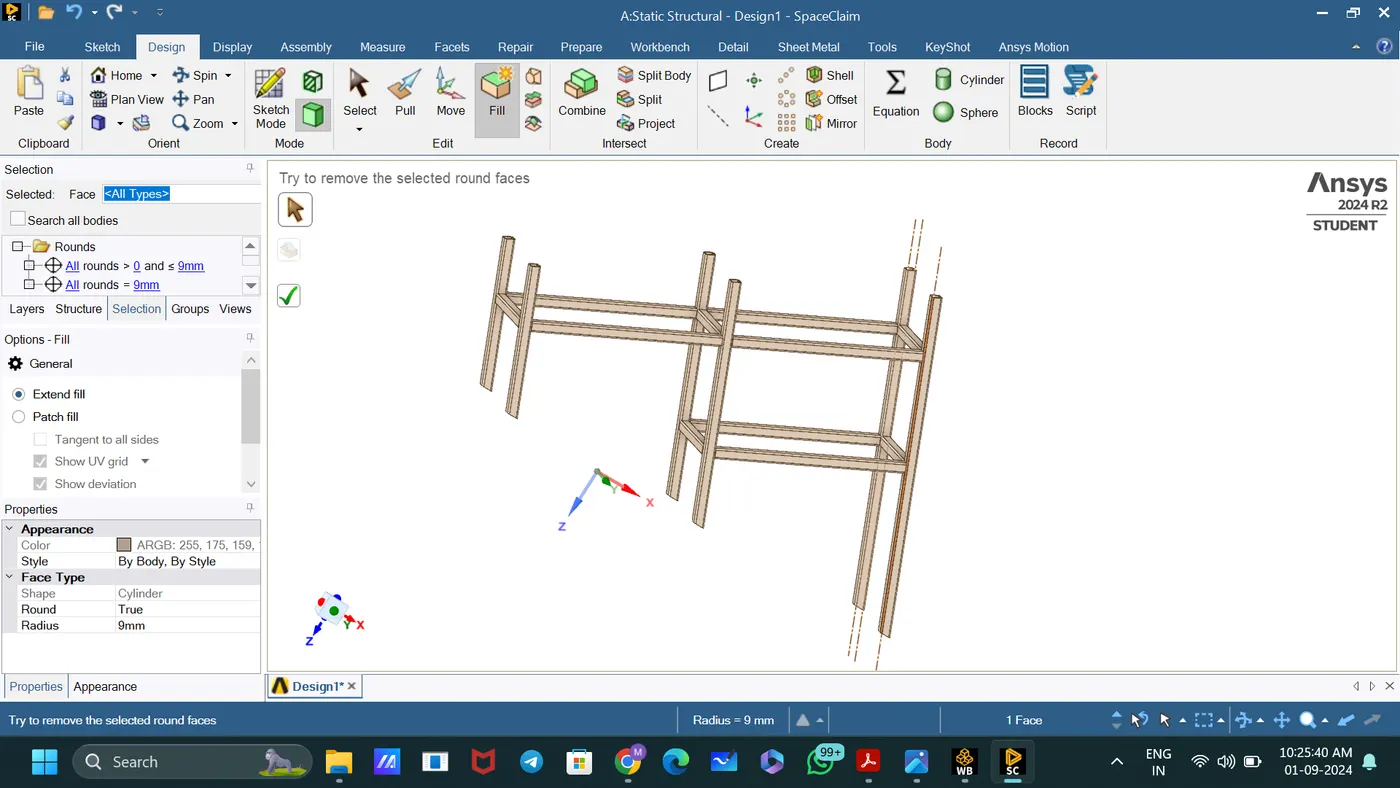
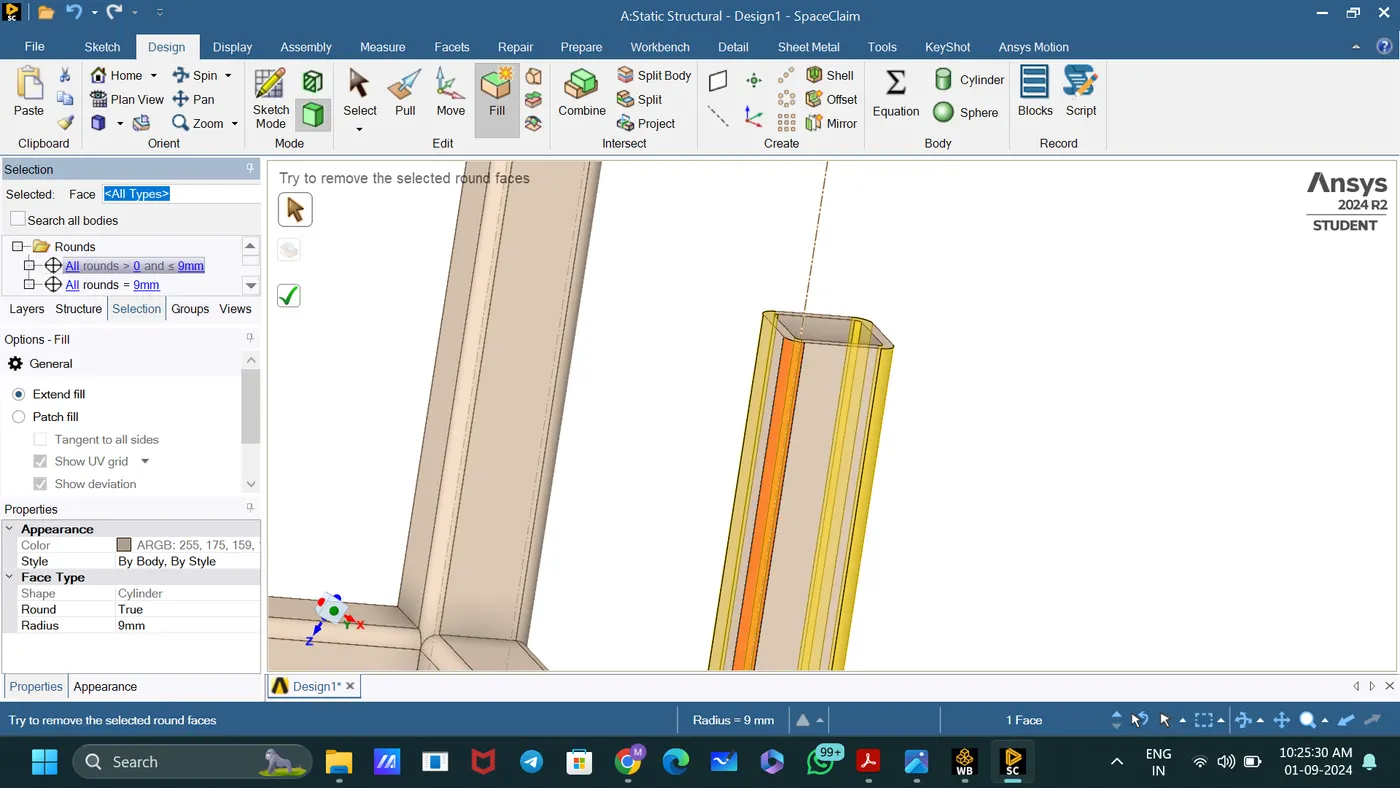
Removed the selected round faces by using the Fill subpanel
[Design—Fill]
Selected the round by the range of 0 mm to 9 mm.
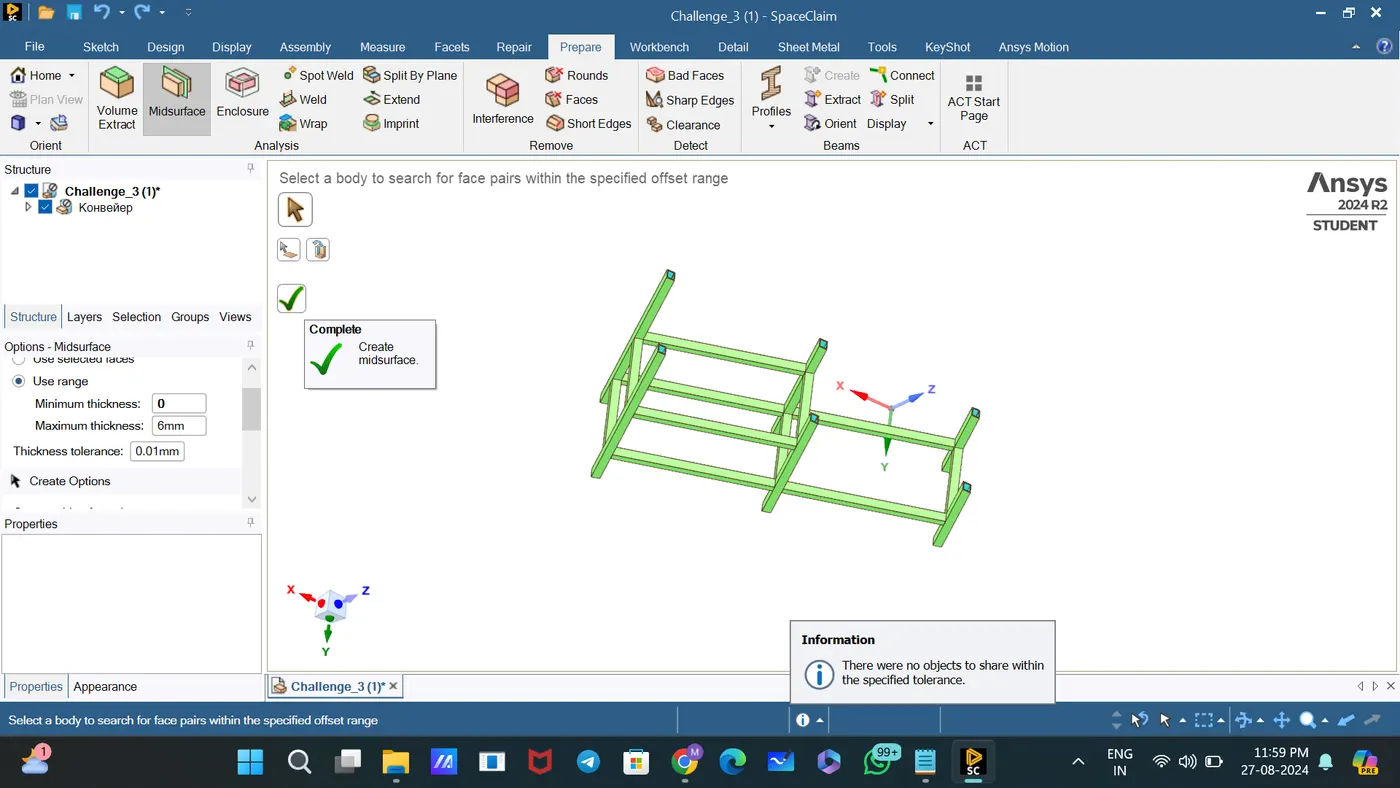
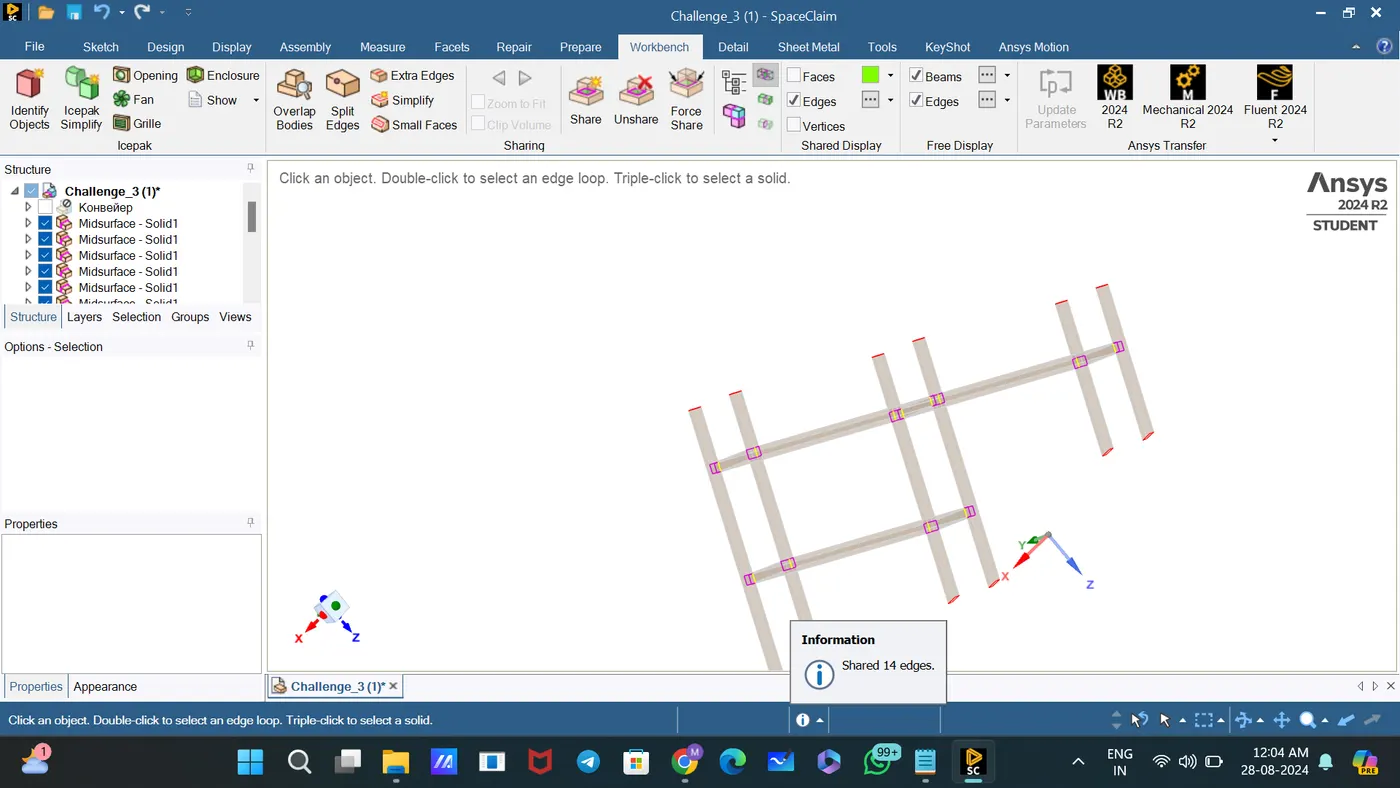
Took the mid surface of the geometry by selecting 2 faces.
[Prepare—Mid surface]
Shared the coincident topology using the subpanel Share.
[Workbench—share]
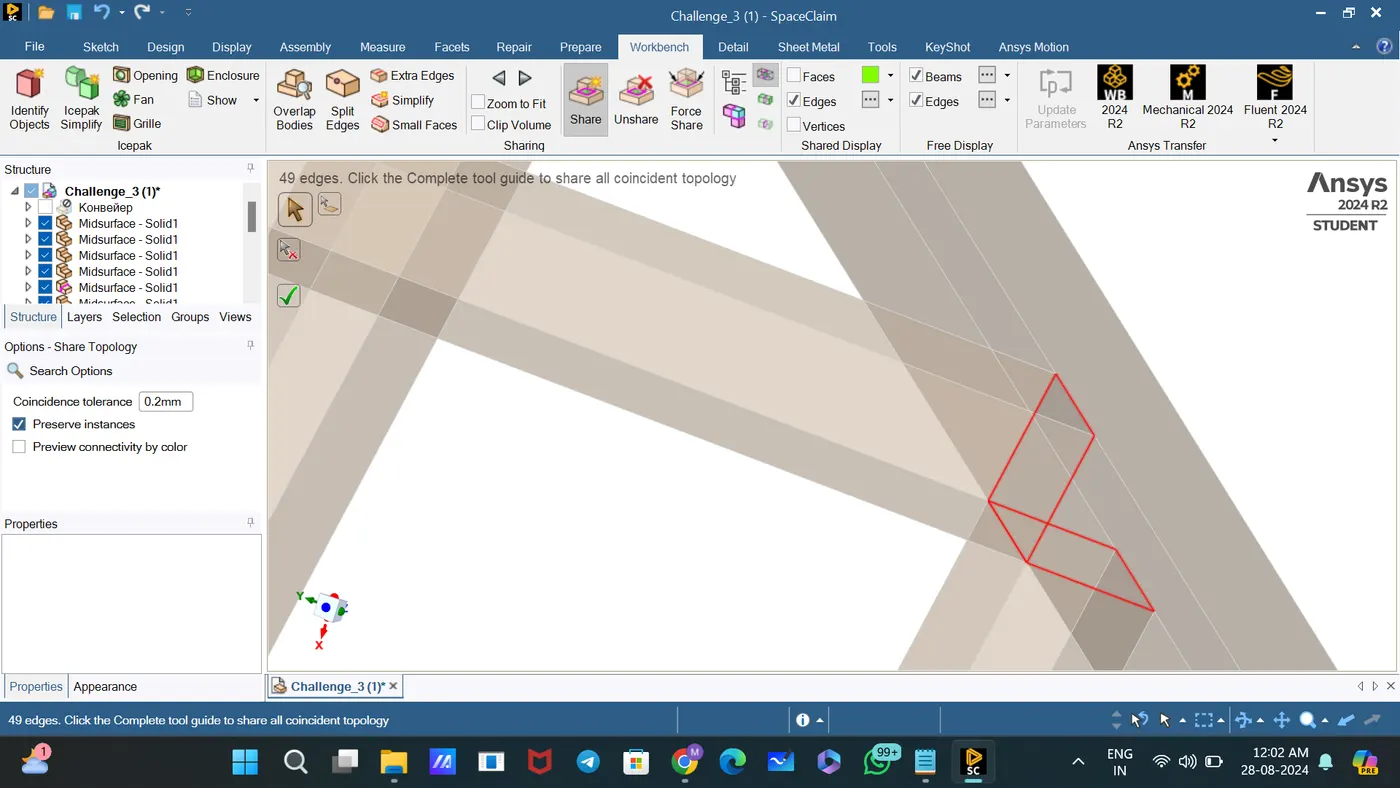 Finally joined all joints perfectly.
Case 2
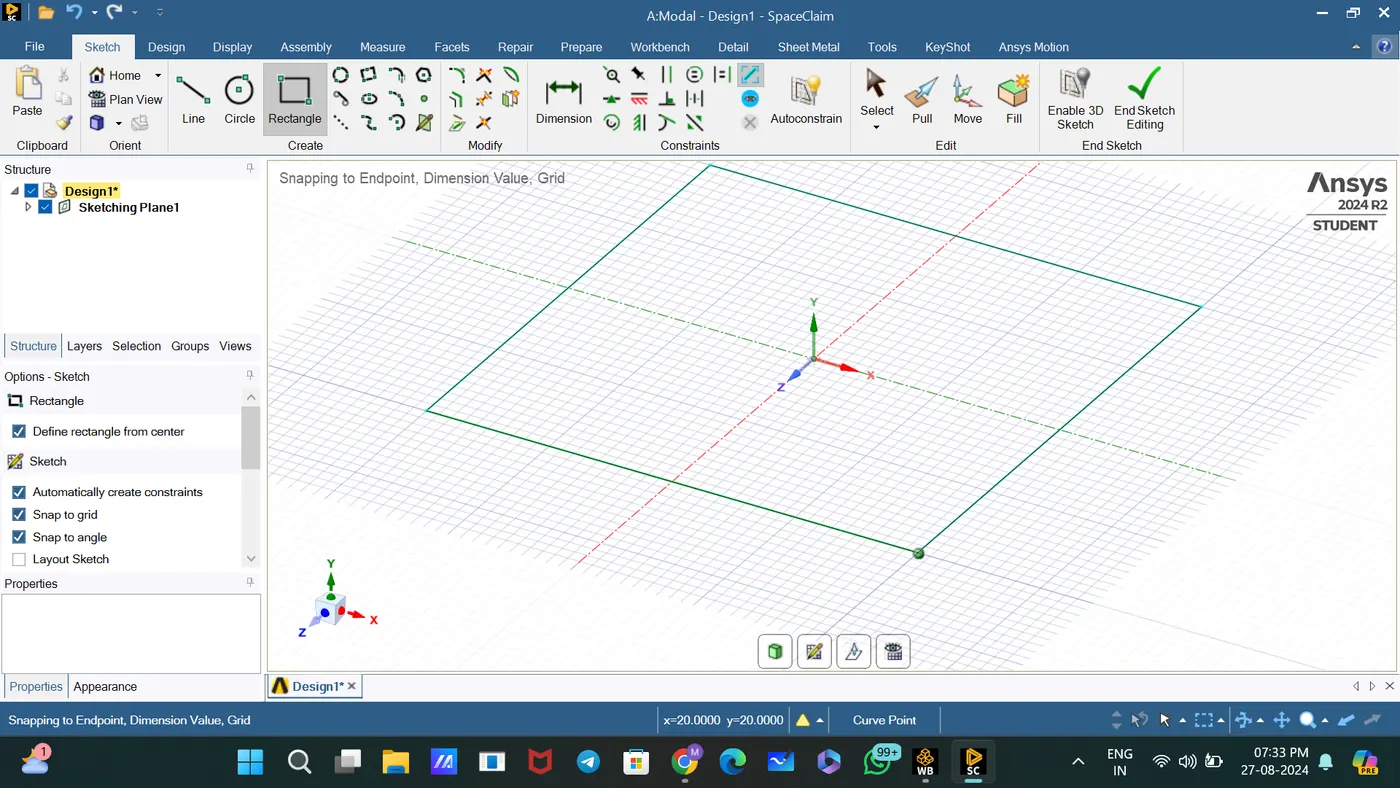
Drawn a rectangle of 40 x 40 mm (breadth x width) using the Rectangle command
(Define rectangle from the center)
[sketch—Rectangle]
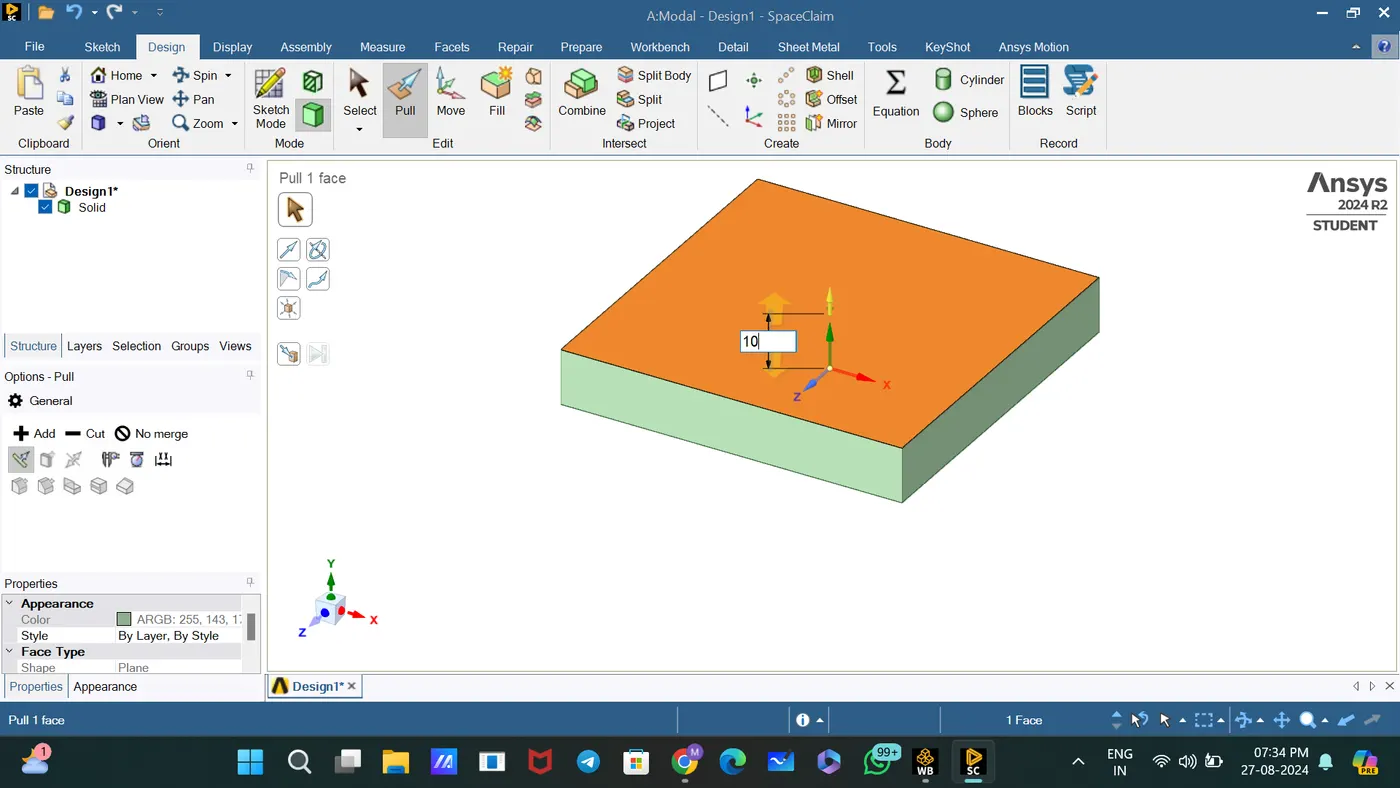
Used pull command to make the thickness of 10 mm.
[sketch—pull]
Repeated the same procedure to create the second block on the top of the first block.
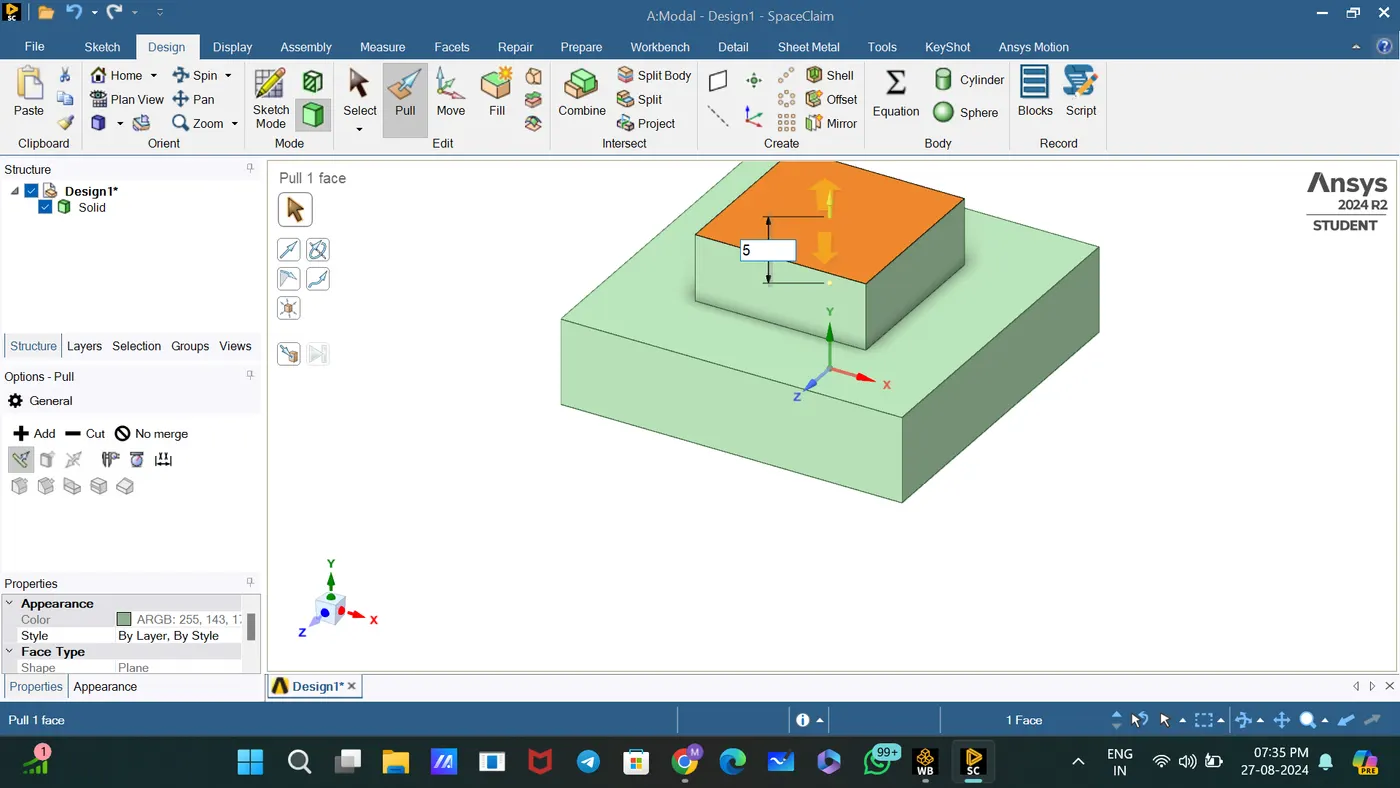
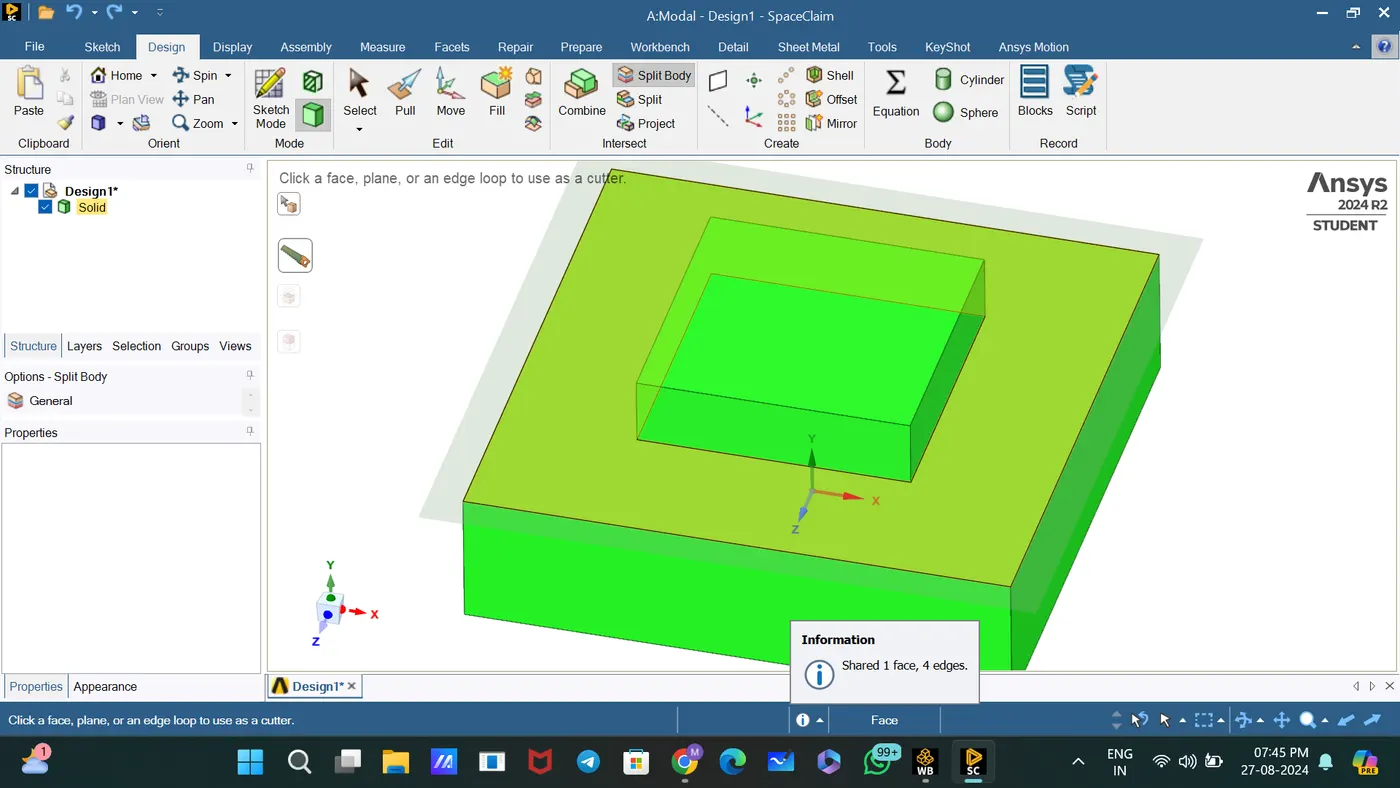
Used the split body command to split the top block by the reference of the top face of the bottom block.
[Design—split body]
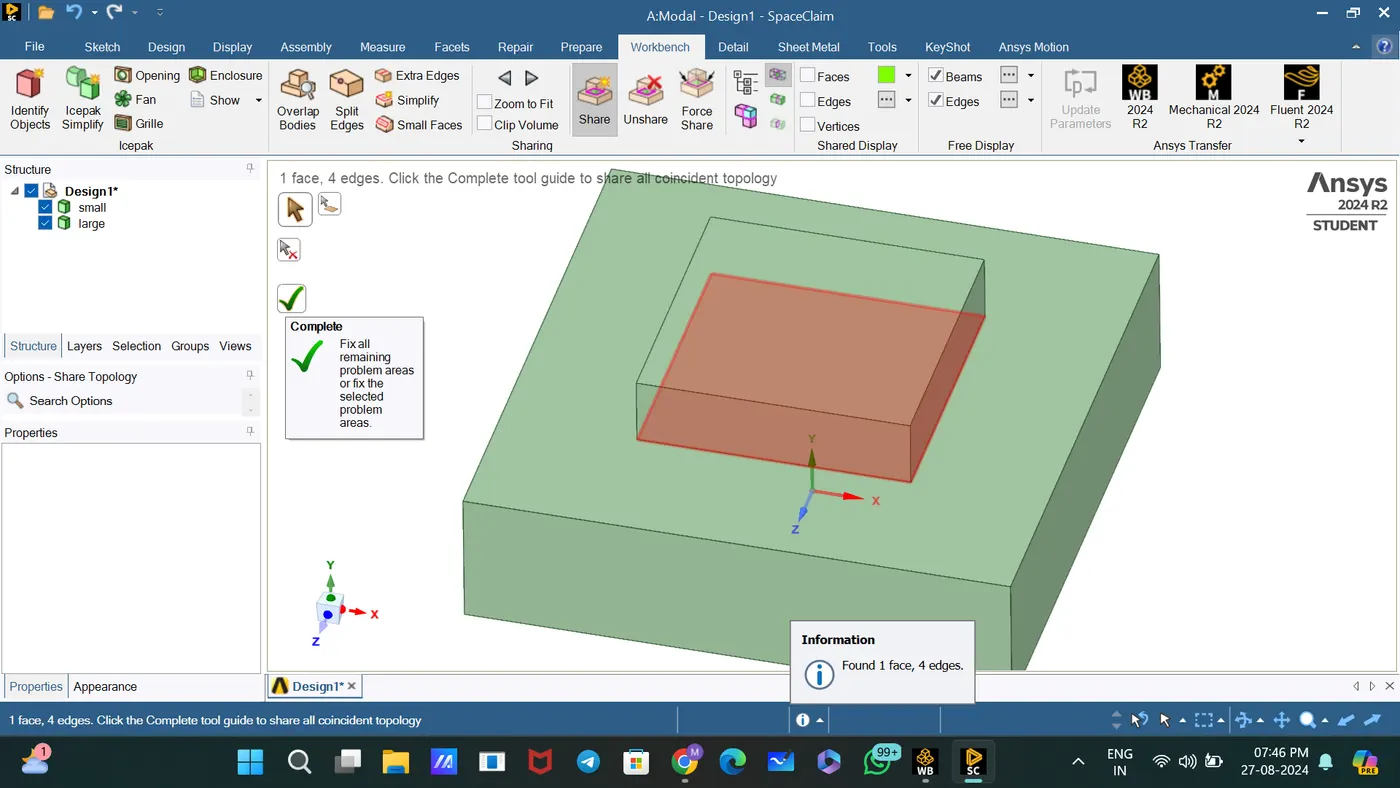
 Shared the coincident topology using the subpanel Share.
[Workbench—share]
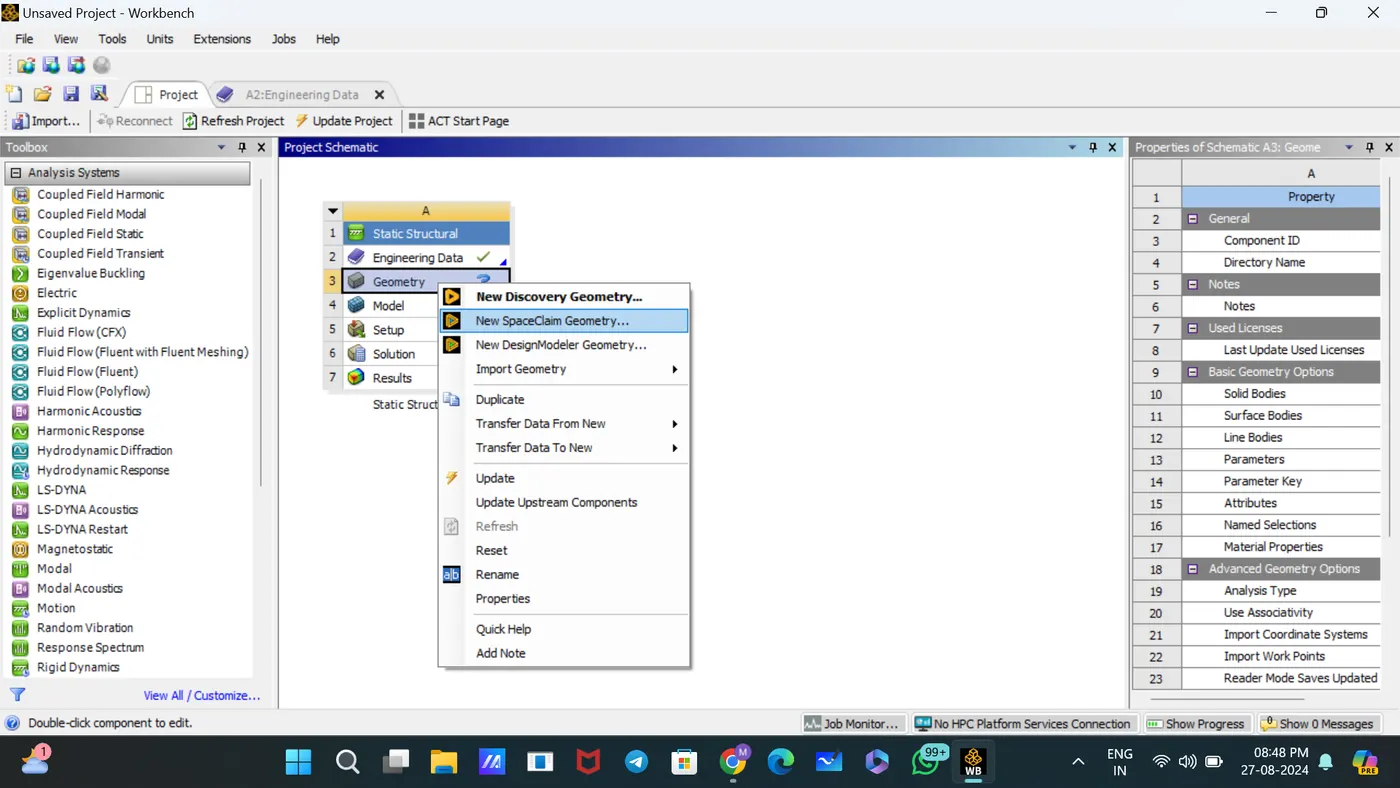
Opened Ansys Mechanical
Set the mesh element size and method.
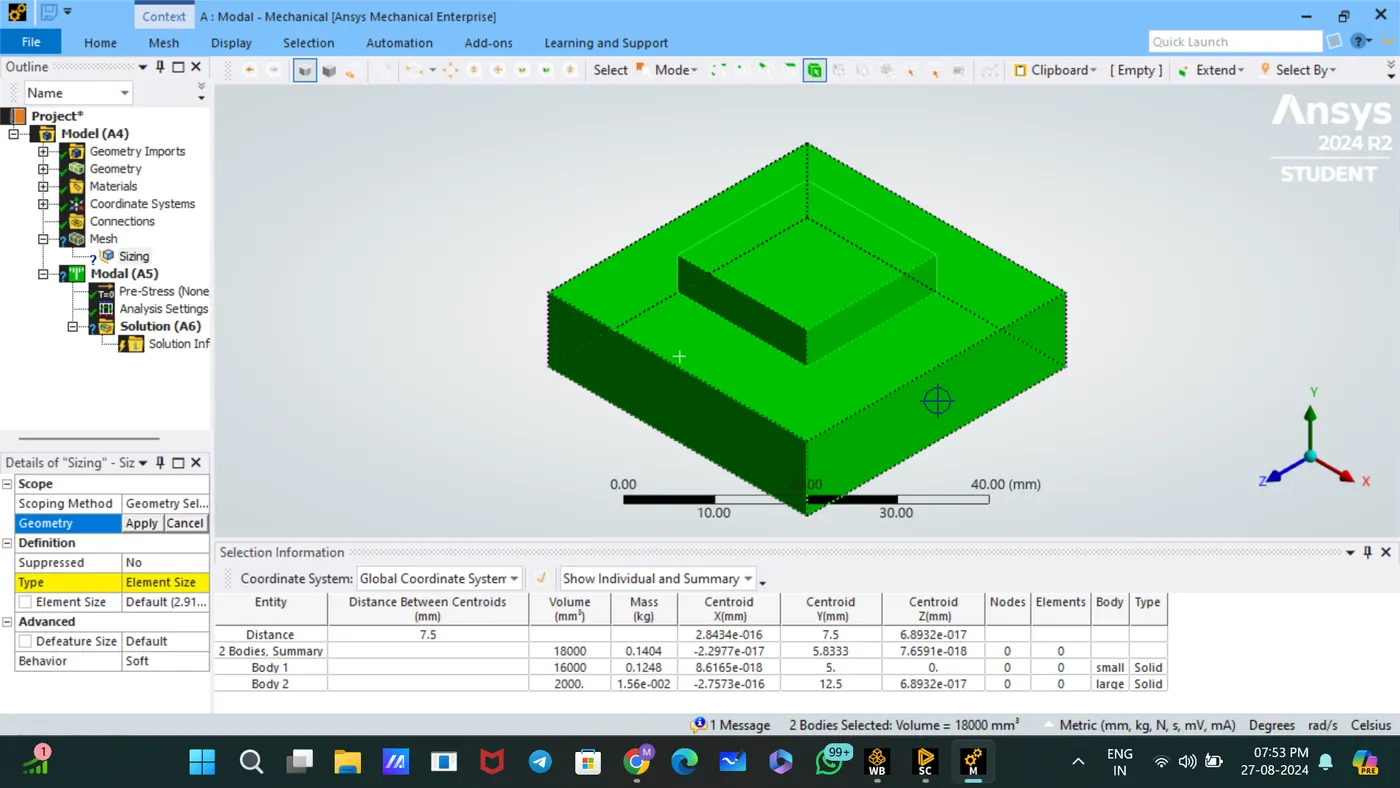
Meshed the model by the given specification.
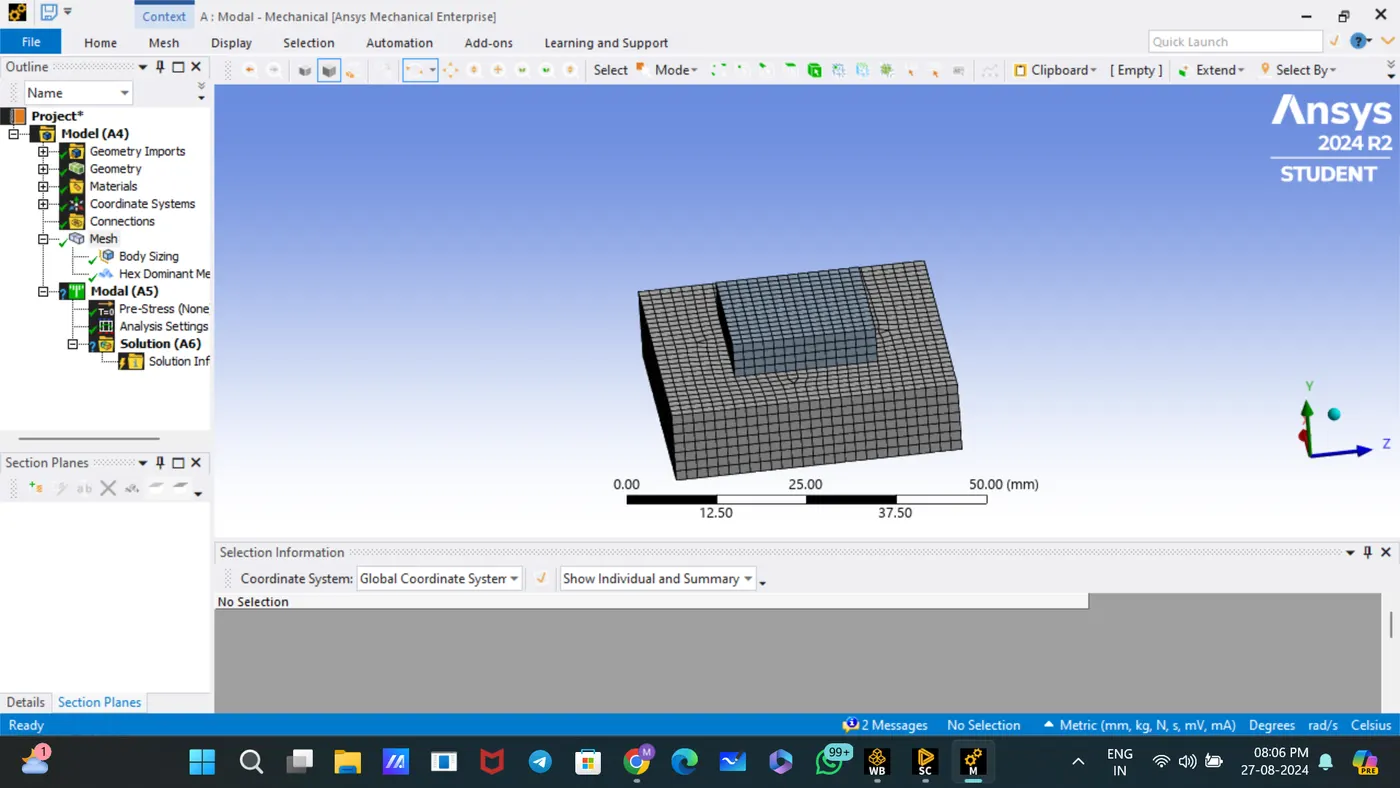
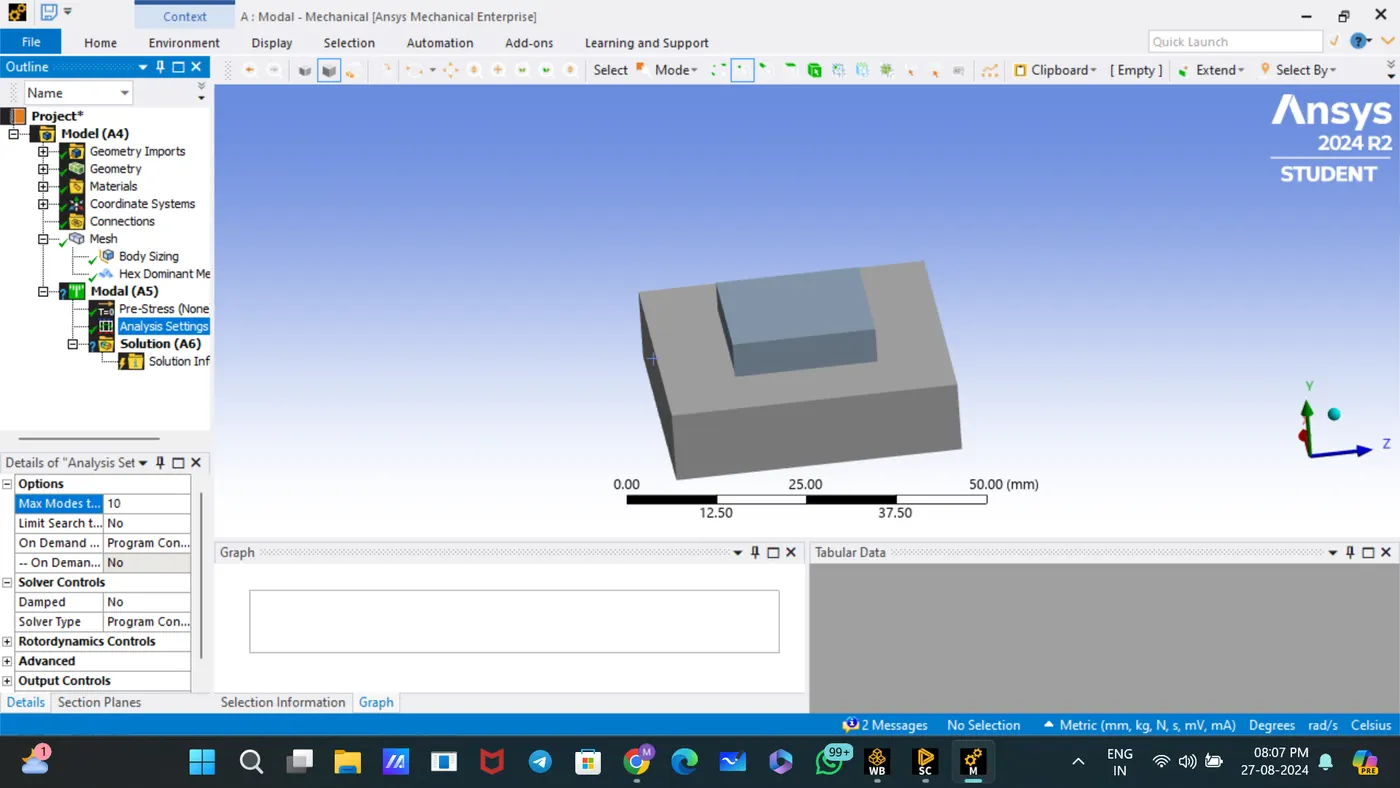
Added modal analysis [Model—Analysis—Modal Analysis]
Set the number modes as 10.
The total deformation analysis was added to the solution tab.
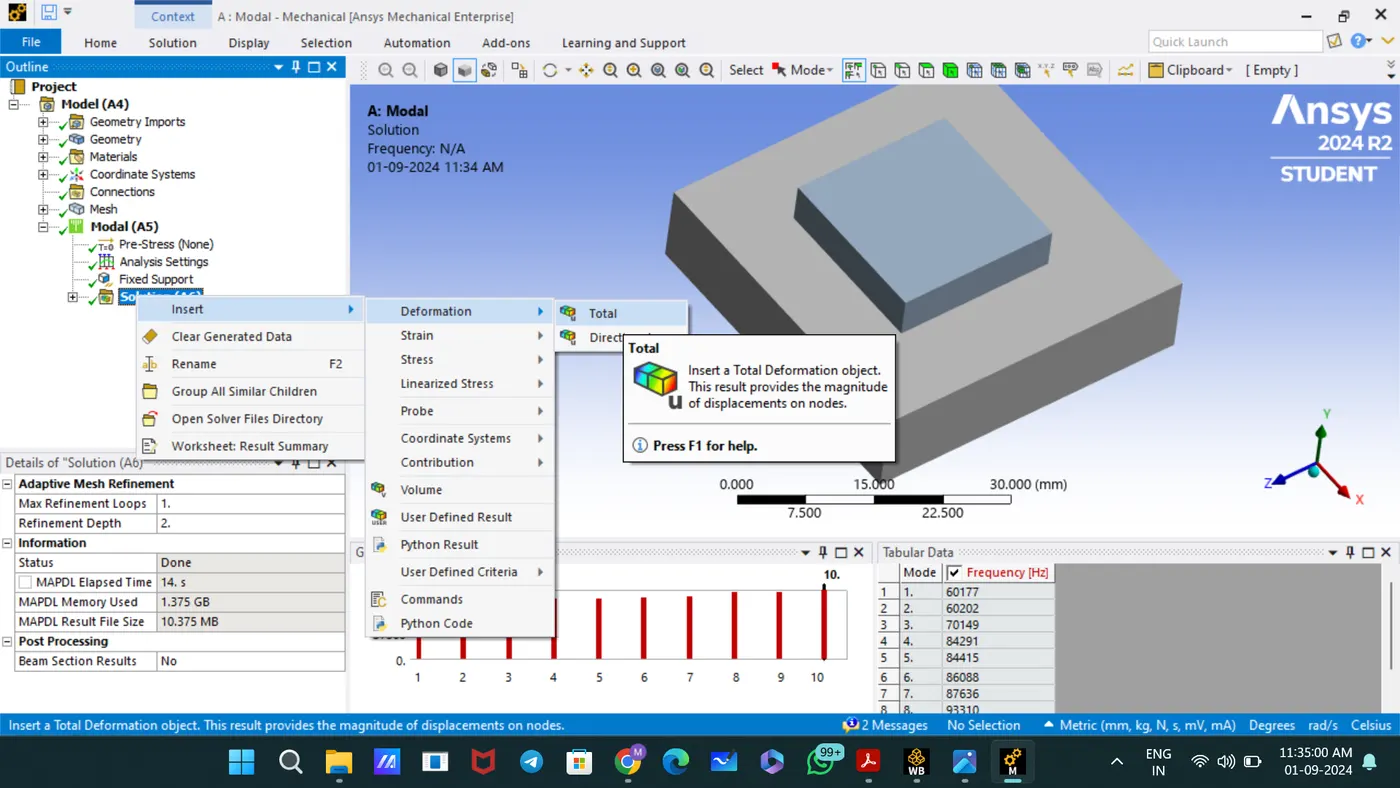
Solved the problem.
Evaluated the results.
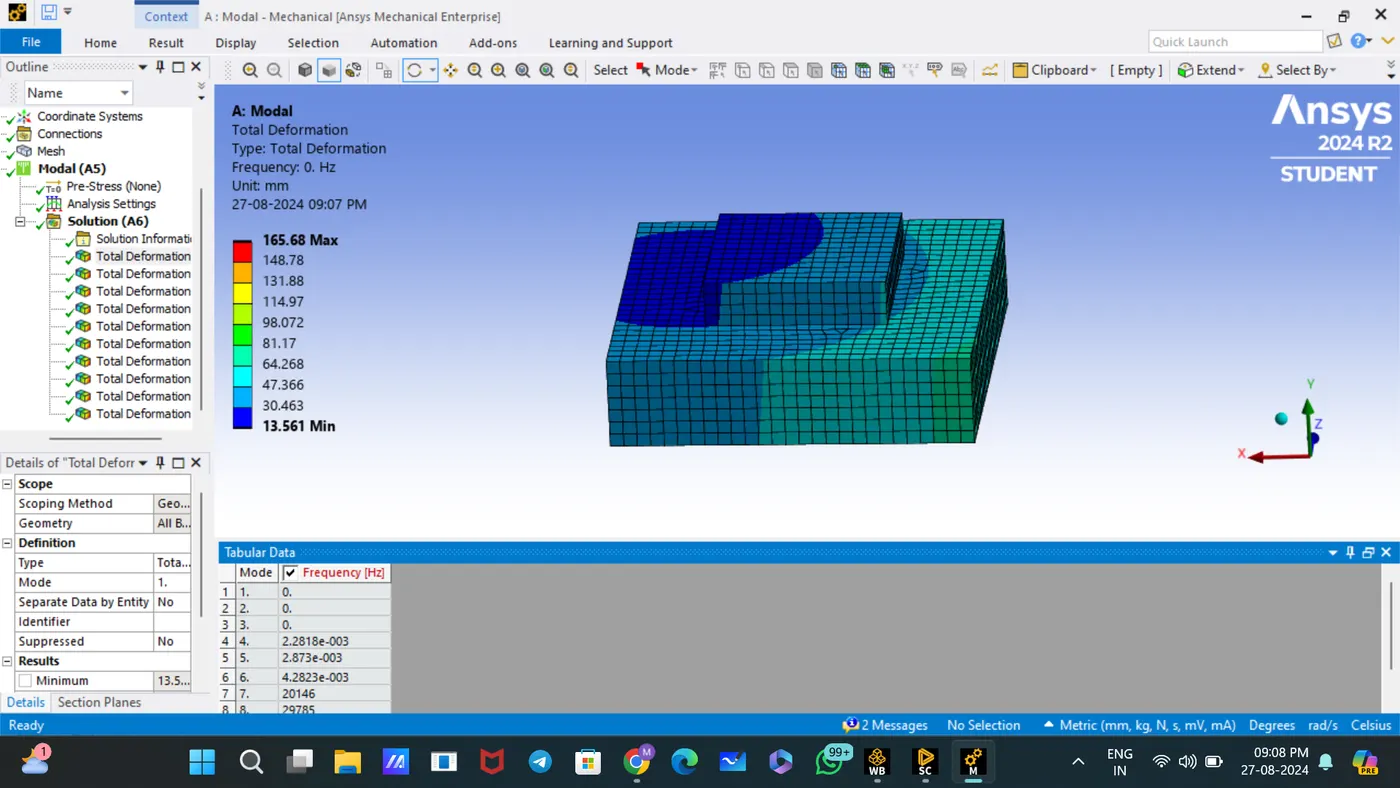
We got the natural frequencies for each mode.
Created mode shape Results by selecting all modes.
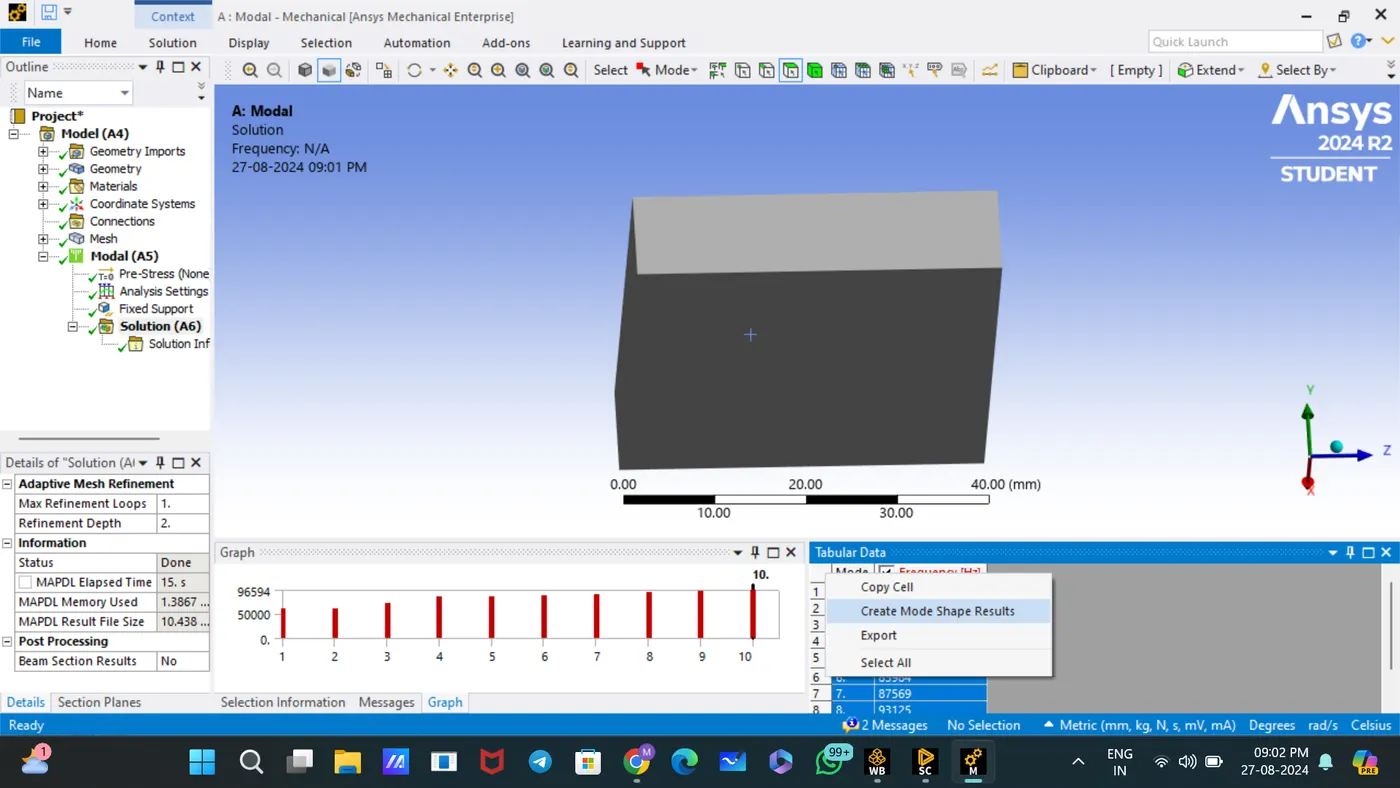
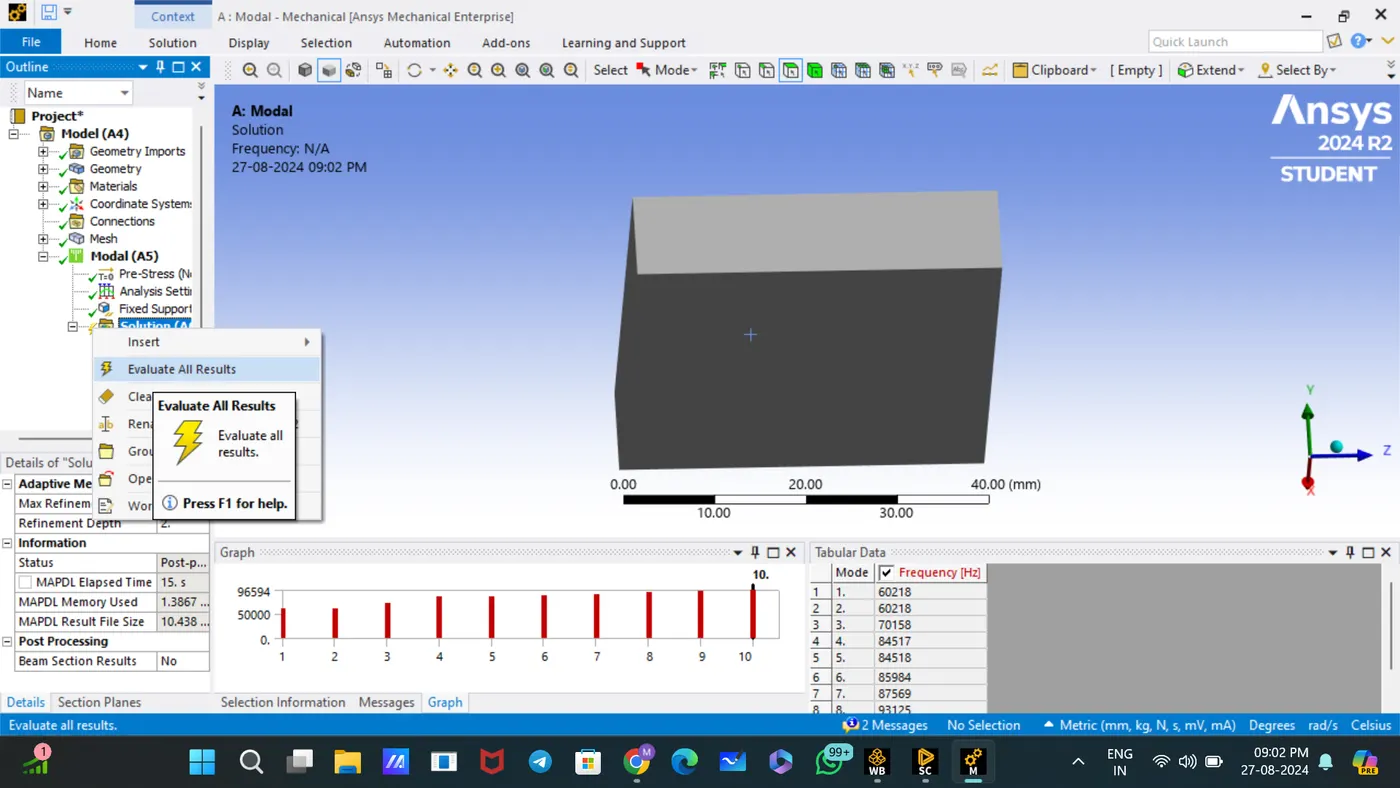
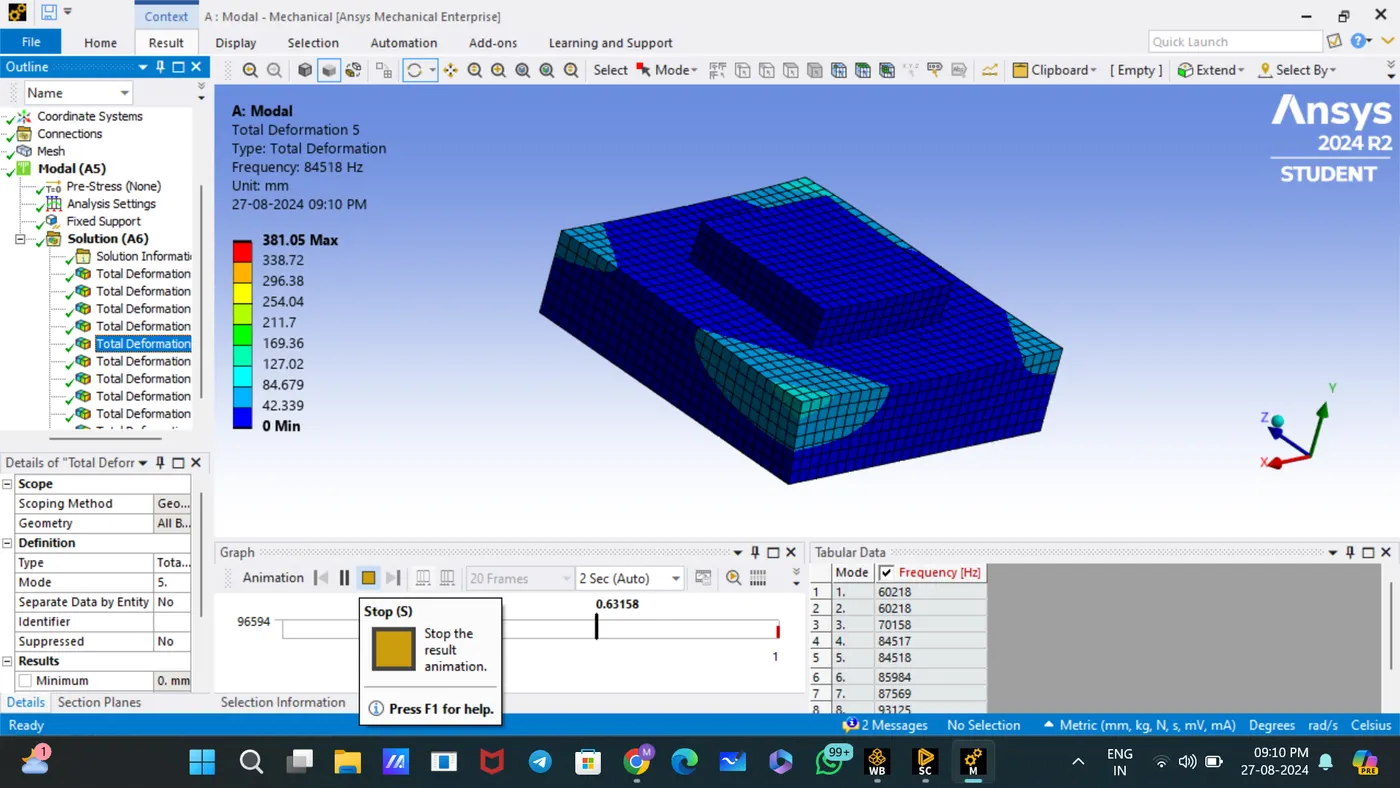
Fixed support was added to the modal analysis and the results were evaluated.
We got the natural frequencies for each mode.
RESULTS
The modal analysis was performed on a model consisting of a top block (20 x 20 x 5 mm) and a bottom block (40 x 40 x 10 mm) with shared topology. The bottom face of the bottom block was fixed to simulate boundary conditions. The purpose of this analysis was to verify the integrity of connections and to understand the vibrational characteristics of the combined blocks.
Shared Topology Integrity: The modal analysis results confirm that the shared topology between the top and bottom blocks is functioning as intended. The mode shapes demonstrate that the deformation is consistent with the expected behavior of connected blocks, suggesting proper interaction at the interface.
Boundary Conditions Impact: The fixed support on the bottom face of the bottom block was appropriately simulated, as evidenced by the reduced deformation at the fixed boundary and the expected increase in vibrational frequencies.
Mode Shapes and Natural Frequencies:
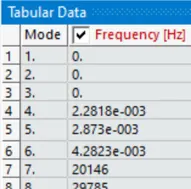
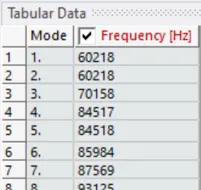
For free free modal analysis,
Mode 1-6, Natural Frequencies are zero since that exhibits rigid body motion.
From mode 7 onward Modes exhibit bending deformation, twisting, and a combination of bending and twisting
For the fixed support modal analysis,
From mode 1 onward Modes exhibit bending deformation, twisting, and a combination of bending and twisting.
CONCLUSION
Case 1
The mid-surface extraction was successful, and the resulting surface closely aligns with the inner contours of the original 3D tube model.
At the joint locations where different sections of the tube meet, connection sharing was implemented.
Case 2
The modal analysis of the block model confirms that the shared topology between the top and bottom blocks is functioning correctly. The results indicate that the model's vibrational characteristics are consistent with the expected physical behavior, and the connection integrity at the interface is verified.