Week 3: Flow over a backward facing step
OBJECTIVE:
- To simulate flow in a backward-facing step in converge.
- To run the simulation for three different grid sizes.
- To plot the flow parameters and the variance in paraview and line plot command.
THEORY:
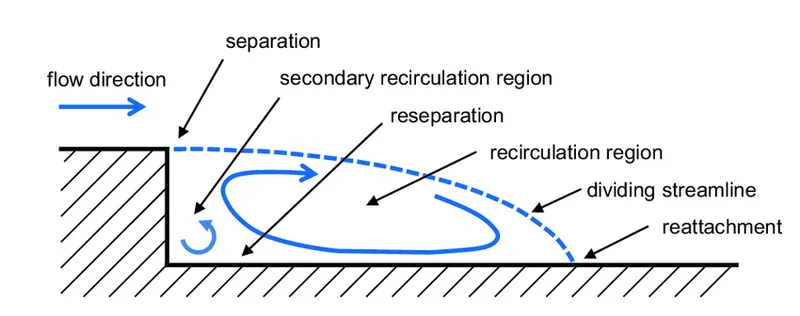
Backward-Facing Step (BFS) flow is one representative separation flow model, which is of significance in both theoretical and engineering development. Various applications for BFS flow can be found in our daily life, such as the airfoils at large attack angle, the spoiler flows, separation flow behind a vehicle, inlet tunnel flow of engine or inside a condenser/combustor, and also the flow around a boat or a building.
It is a basic model that involves the most important features of a separated flow: free shear flow separation, vortex evolution, and re-attachment. Separated flows become particularly important since it contributes to flow resistance and noise, under some critical conditions even stalling of the aircraft.
The flow field of BFS is also generally divided into four regions i.e separated shear layer, the recirculation region under the shear layer, the reattachment region, and the attached/recovery region. It is the free shear layer that dictates the whole separation process.
Various problems like separation bubbles, mixing and re-attachment distance can be studied through this model.
SETUP:
1. The geometry model used for the simulation was the STL file provided.
2. Since the geometry is relatively simple, no complex clean-up was required, no major issues were detected.
3. We had restricted the scope of the simulation to 2D hence appropriate boundary flagging was done.
4. Time-based application type, with air as fluid with appropriate constituent mass fractions.
5. Steady-state solver, with steady-state monitor, enabled where tolerance and convergence parameters are checked.
6. Simulation end time-15000 cycles, time steps-1e-6, convection CFL-1.0 (final stage-0.5)
7. It's important to define a fluid region with the correct composition 02-23% & N2-77%, and pressure as 101325 Pa.
8. Inflow the pressure is 110325 Pa, Temp-300K.
9. Outflow pressure is 101325 Pa.
10. The walls were kept stationary and the Law of the wall was enabled, with other faces kept as 2D.
11. Turbulence model was enabled RNG K-epsilon, with default parameters.
12. Changing mesh to the case, keeping 100 as the time intervals for writing 3D and text output files.
RESULTS:
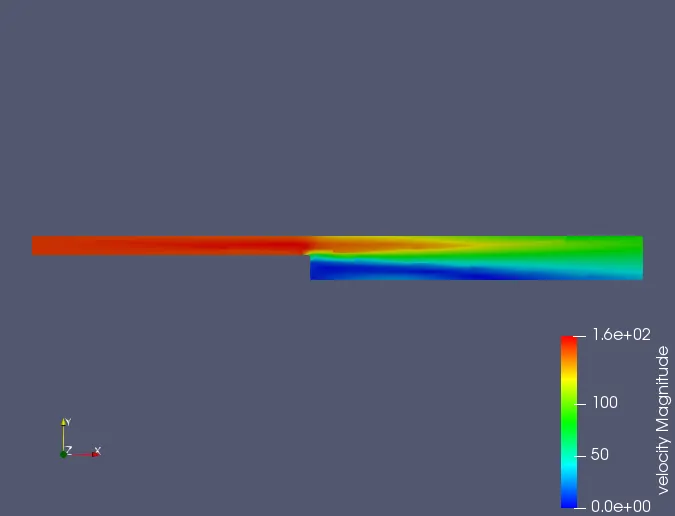
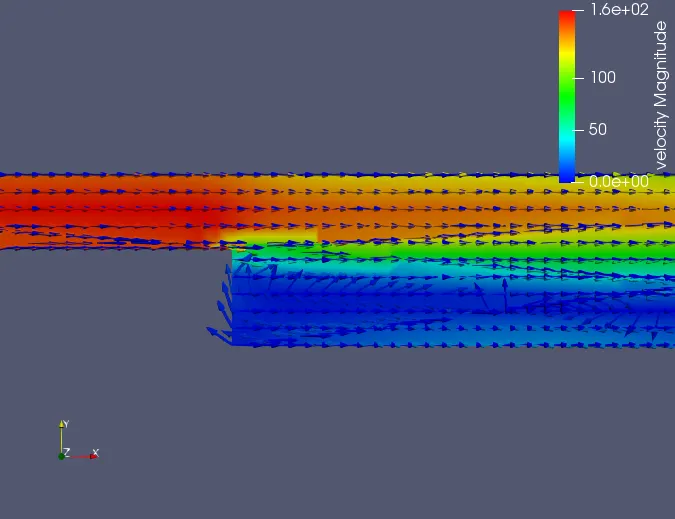
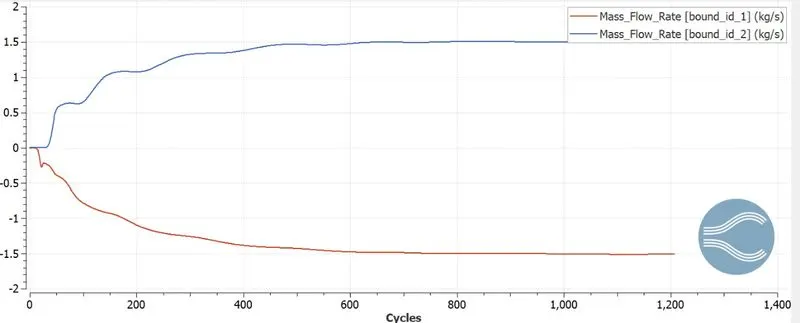
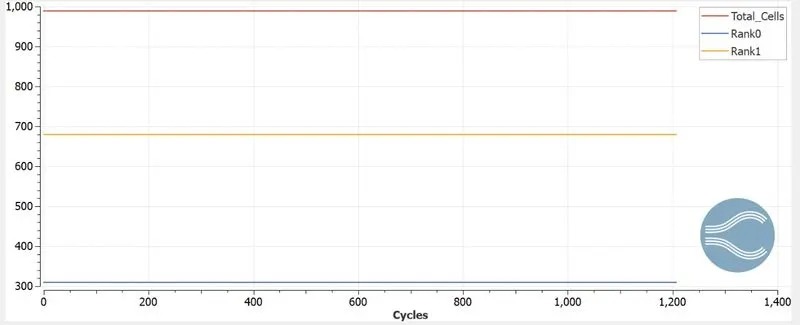
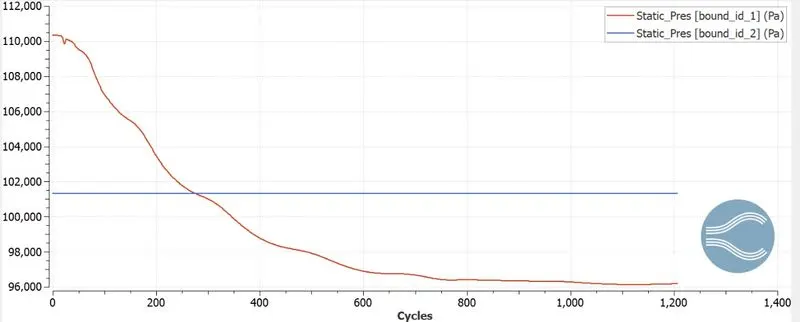
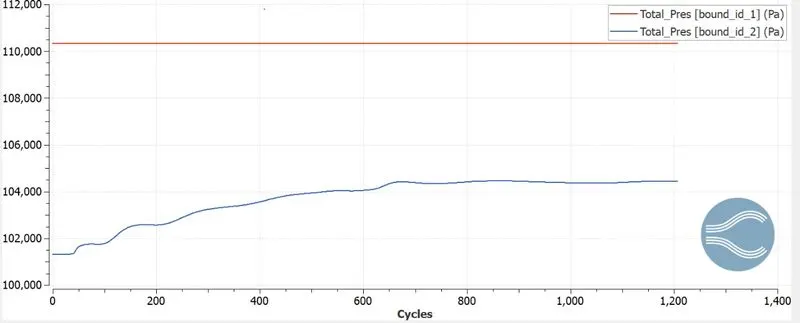
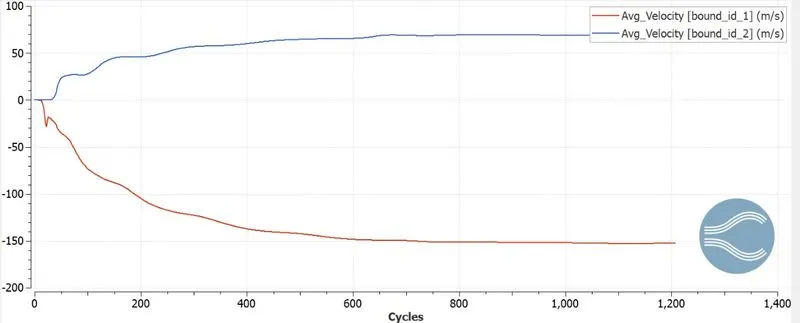
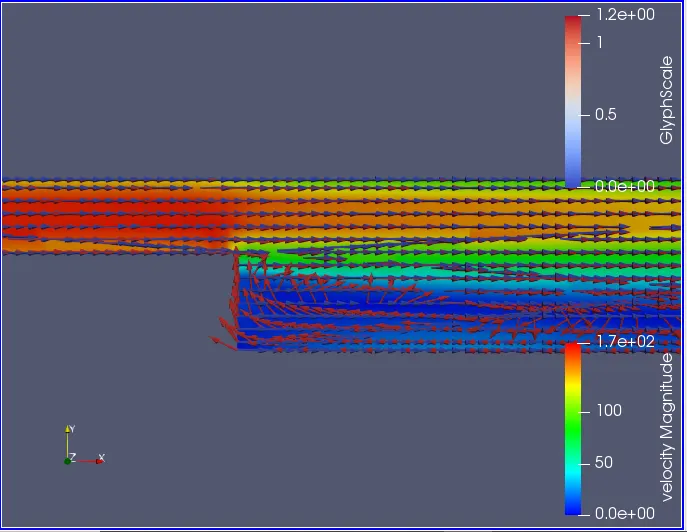
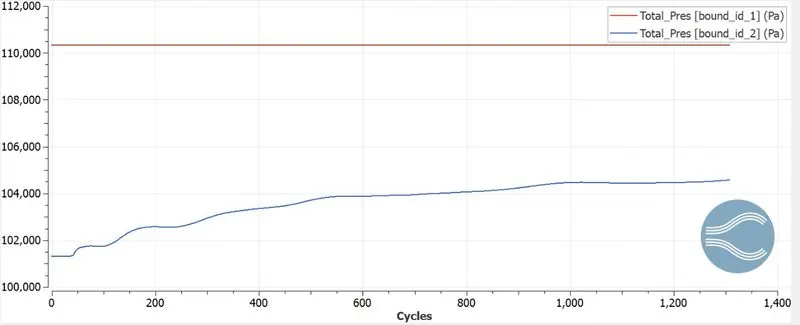
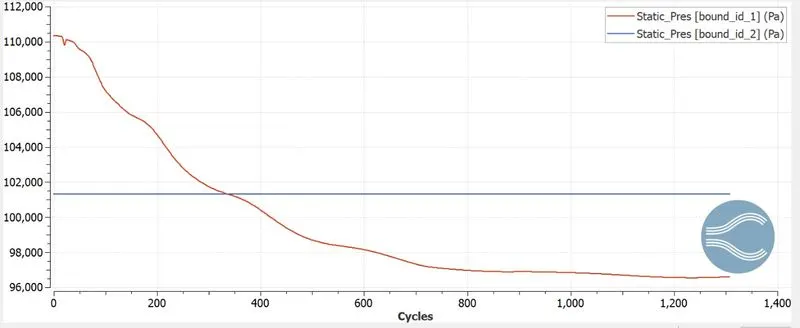
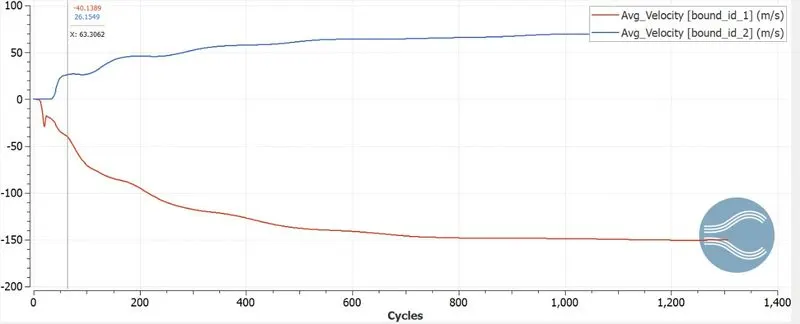
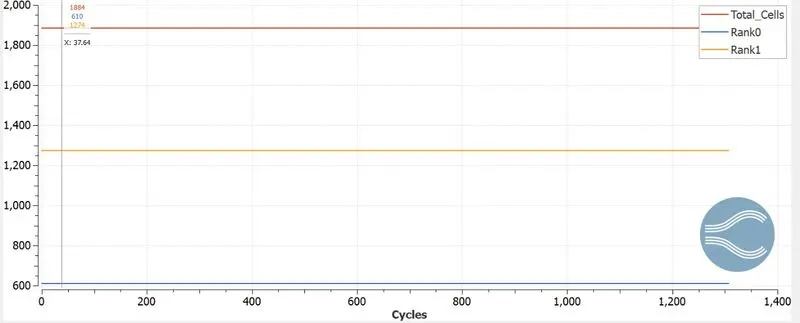
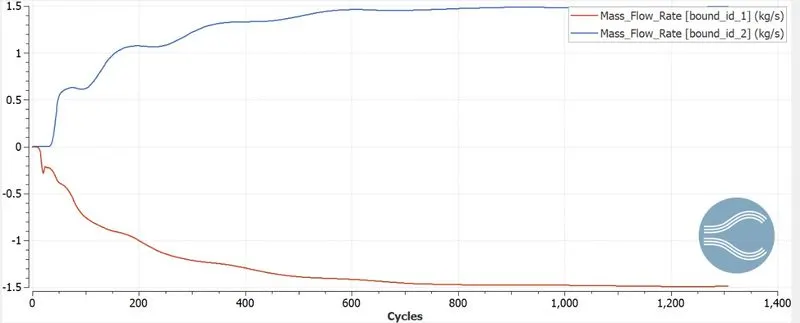
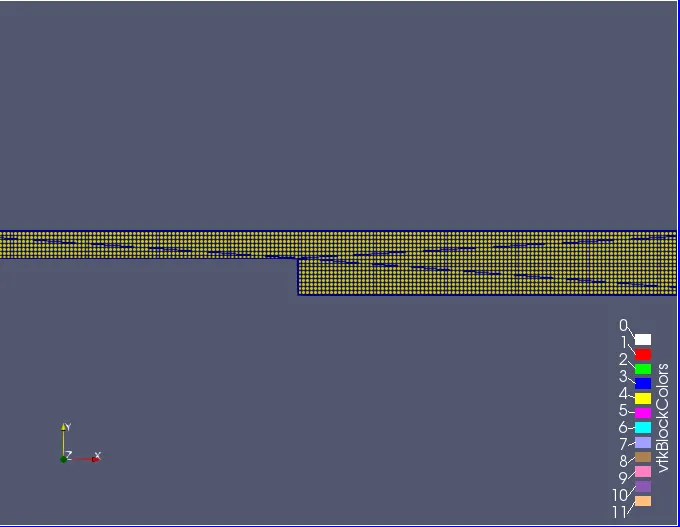
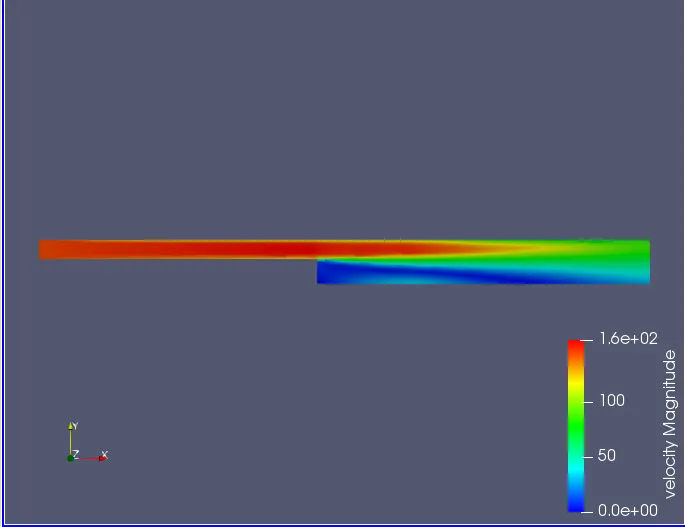
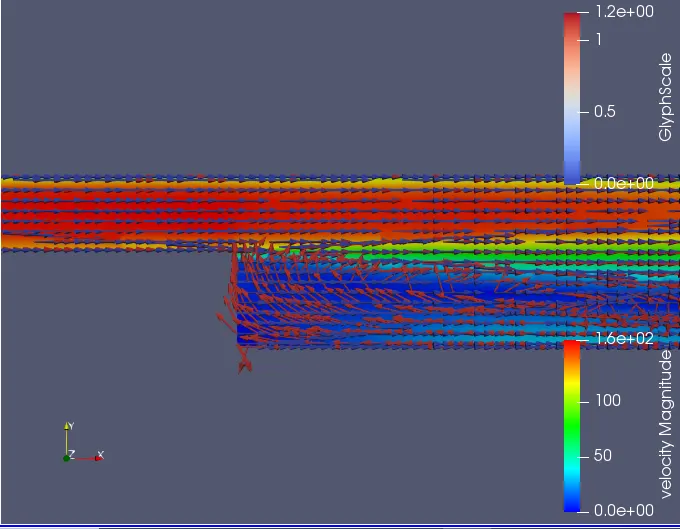
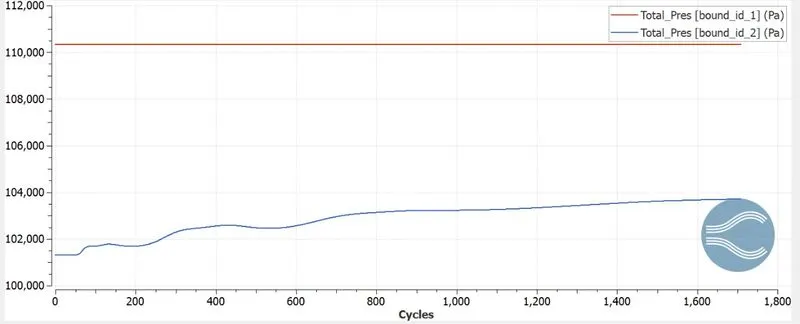
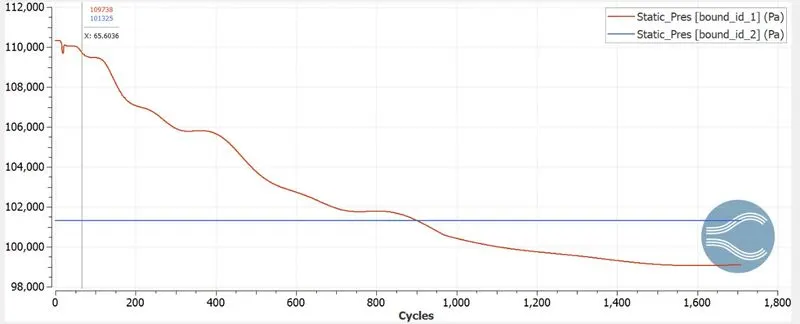
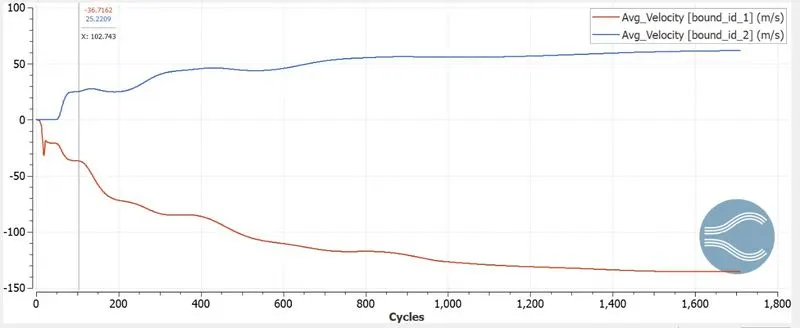
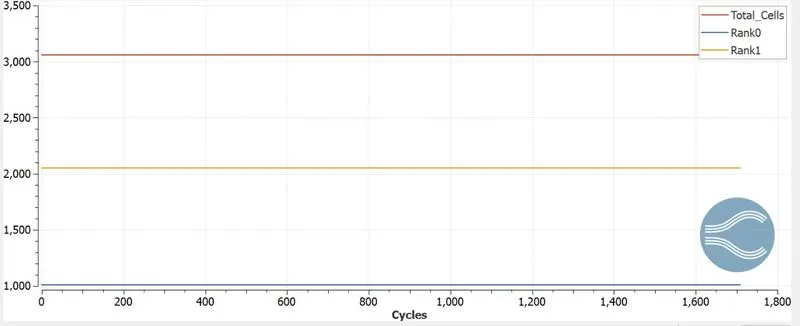
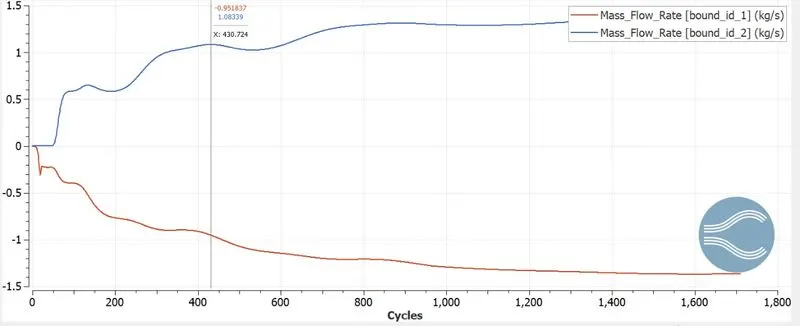
There are three cases that have been simulated CASE 1,2,3 i.e 2e-3, 1.5e-3, 1.2e-3 respectively. The mesh, velocity contours, and glyphs, pressure plot with the plots of mass flow, velocity, and pressure have been given in order.
CASE-1 (2e-4)

CASE-2 (1.5e-3)

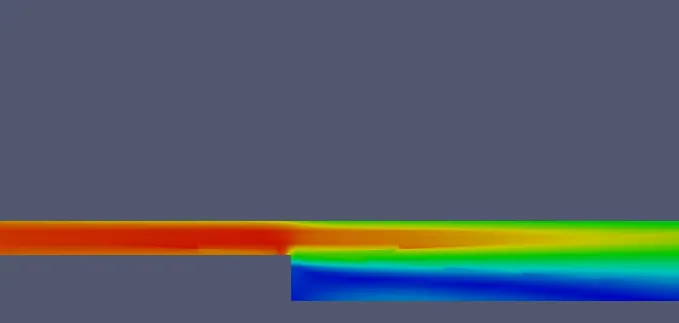
CASE-3 (1.2e-3)
The pressure plot
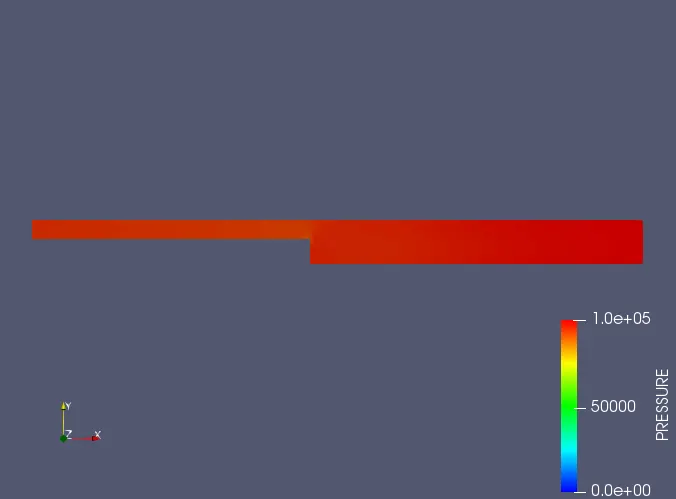
Pressure forces working on the step
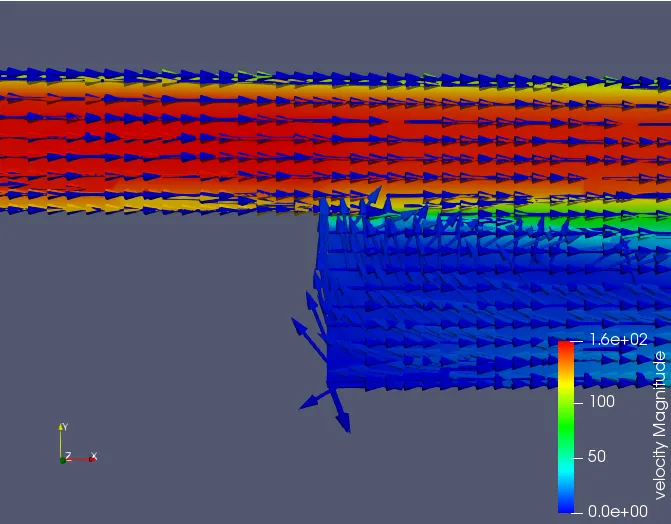
Wall shear, region of circulation
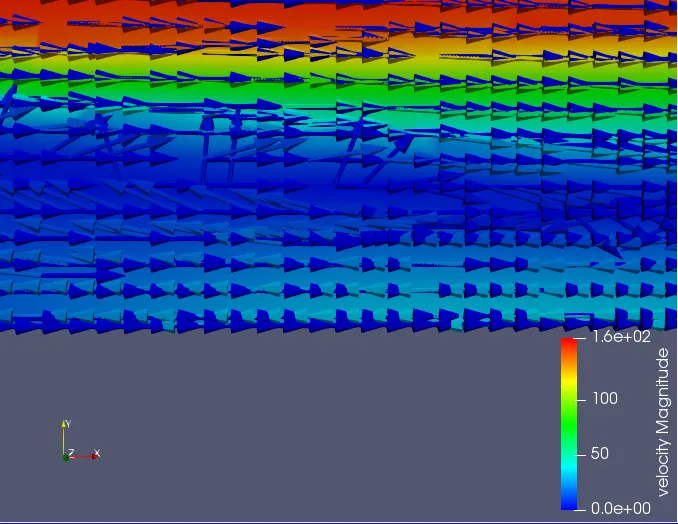
Point of reattachment & recovered boundary layer
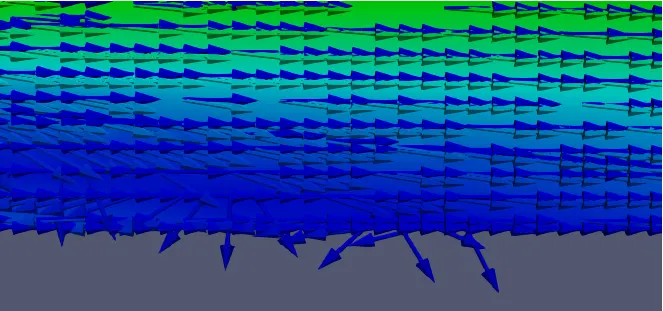
CONCLUSIONS & OBESRVATIONS:
1. Lets look at the recirculation in a bit more detail, at the point of reattachement the negative velocity vectors reverse, hece the direction of flow along the wall is opposite to the flow, this causes wall shear, hence there is a drag force. As the flow reaches the backward step, the kinetic energy of the flow is converted in pressure force i.e the velocity becomes zero, this again causes the flow to move to the main flow field, this happens layer by layer, this is a simple way of looking at the recirculation region. The abrupt expansion in area is what caused the region of circulation.
2. The recirulation and main flow field is separated by a shear layer, which experiences drag stress too. (Momentum diffusion)
3. Finer the grid size more the computaional time, but more detailed glyphs and vectors, we can located distinct features in the recirculation region which is not that well articulated in other plots. The physical phenomenon is confirmed by all cases.
4. Mass flow rate is conserved, dampening of instabilites happens quicker in small grid sizes.
5. All simulations converged to reasonable results.