Week 3 - External flow simulation over an Ahmed body.
Objective :
Q1. Describe Ahmed's body and its importance.
Q2. Explain the reason for the negative pressure in the wake region.
Q3. Explain the significance of the point of separation.
Expected Results:
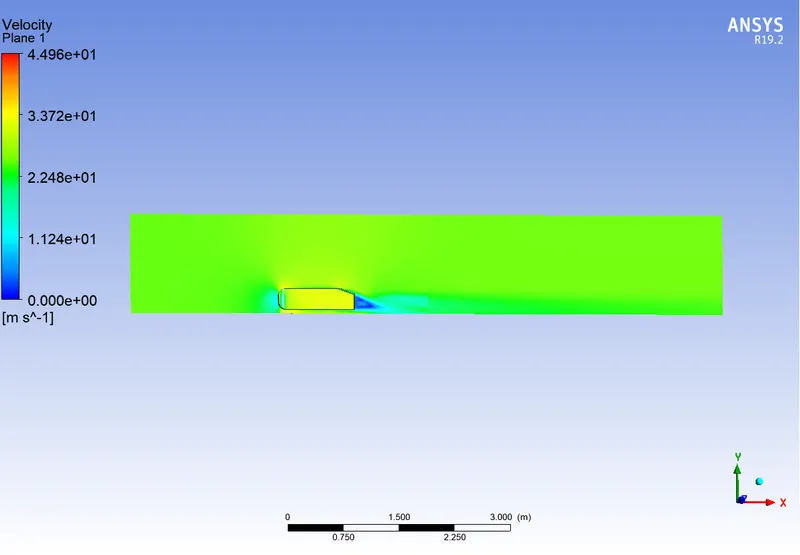
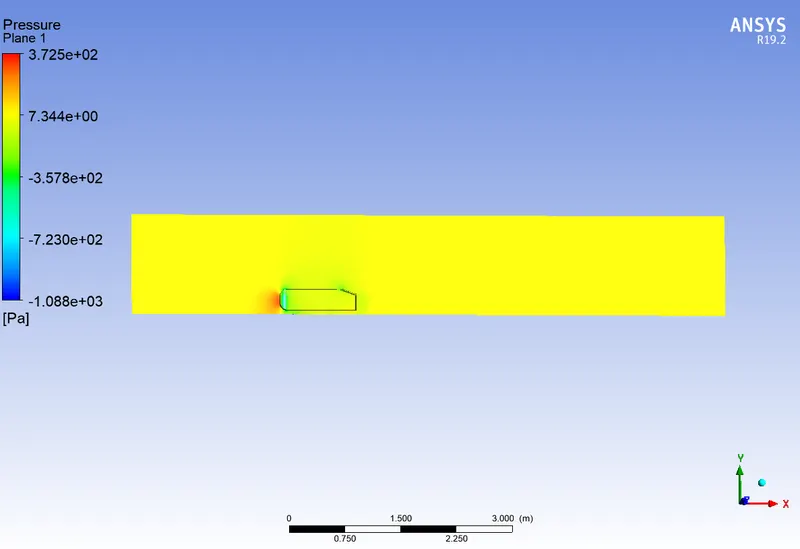
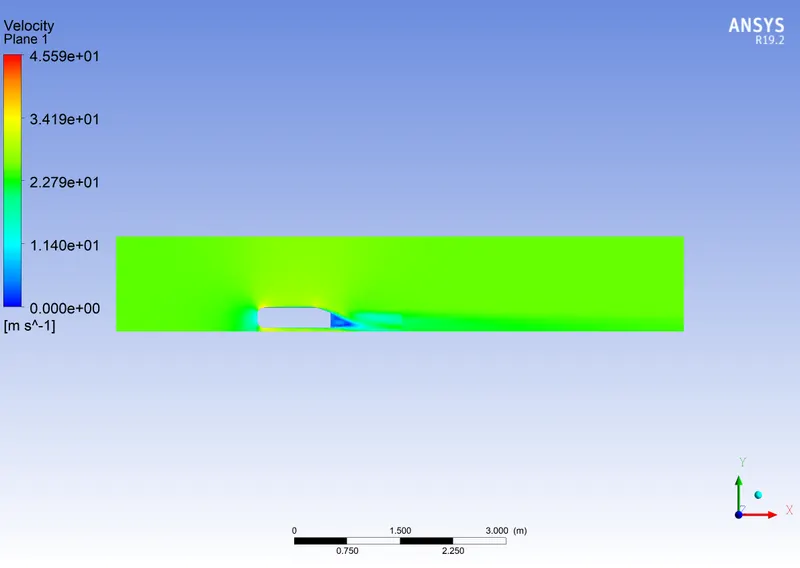
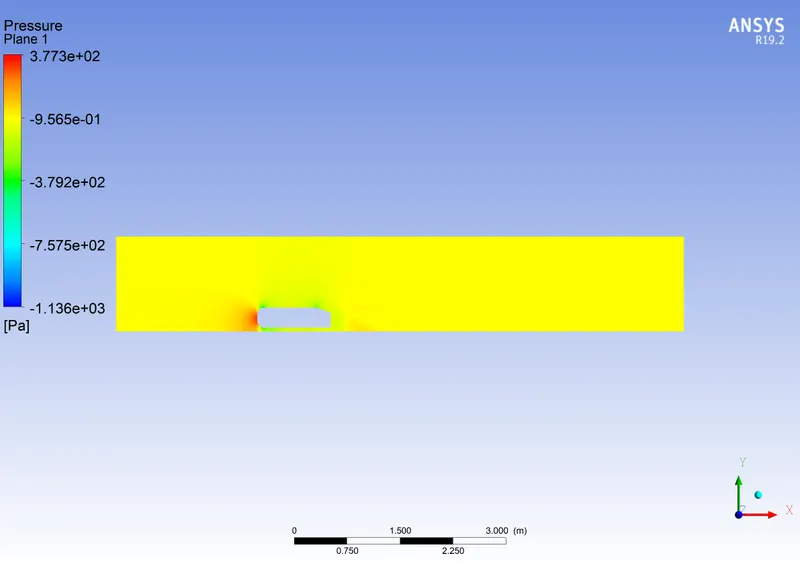
1. Velocity and pressure contours.
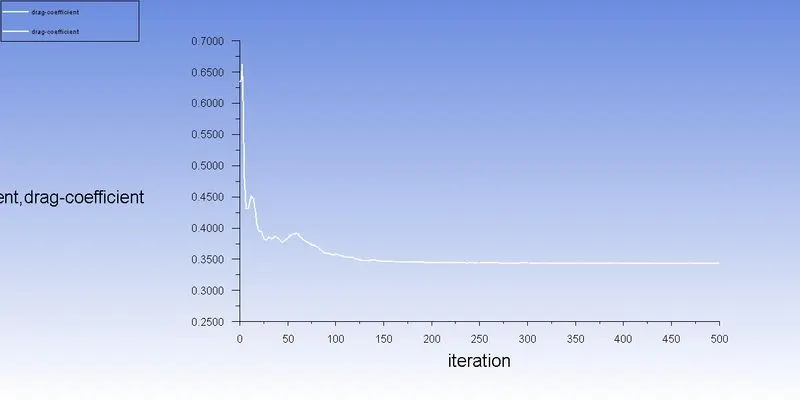
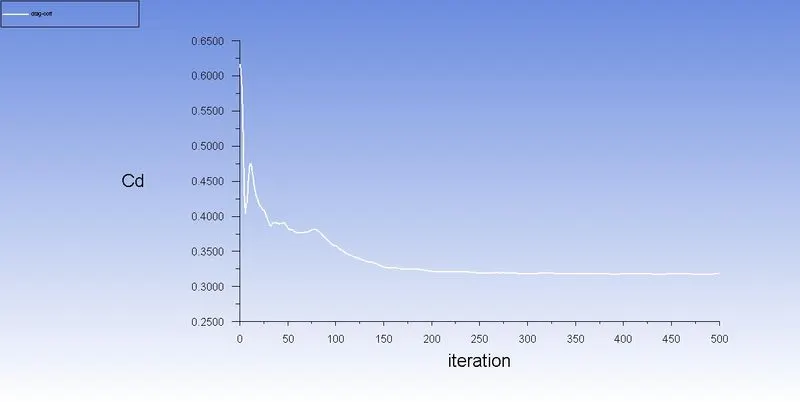
2. The drag coefficient plot for a refined case. ( For velocity of 25m/sec, the drag coefficient should be around 0.33).
3. The vector plot clearly showing the wake region.
4. Perform the grid independency test and provide the values of drag and lift with each case.
A1. Describe Ahmed's body and its importance.
The Ahmed model is simple and free from all kinds of accessories as well as wheels; nevertheless it can be used to study the
aerodynamic behaviour of a road vehicle based on the main features such as the slanting surfaces. This model is primarily
designed to study the effect the slant angle (α) at the end part of the model on the drag coefficient and vortices behind the
vehicle.
Q2. Explain the reason for the negative pressure in the wake region.
pathlines tell us the exact circular motion or vorticity generated just at the rear end of the car. the separation takes two
regions of distribution. one at the upper part of rear-end and the other is the lower part of the rear end. the fluid particle away
from the rear region having higher pressure besides the wake region try to approach from high-pressure region to low-
pressure region thus creating a circulatory wake region.
Q3. Explain the significance of the point of separation.
The fluid separation point can be defined as a point where the dv/dy i.e gradient of velocity goes zero along with the dp/dx =0
for the specific point. In more simplified term we can say that the point where the velocity gradient goes zero and the
pressure gradient along the x- direction goes zero the point of separations starts occurring or the negative pressure gradient
starts forming after that point. The point of separation cannot be understood just by single contour in hard and fast way.
It can be supportively studied with the help of the dp/dx plots or velocity plots w.r.t the Y direction and other such plots in
which we can see the nature of such physical properties like dp/dx=0, and dv/dy=0 experiencing in a particular region of fluid
and body interaction.
- Geometry setup:
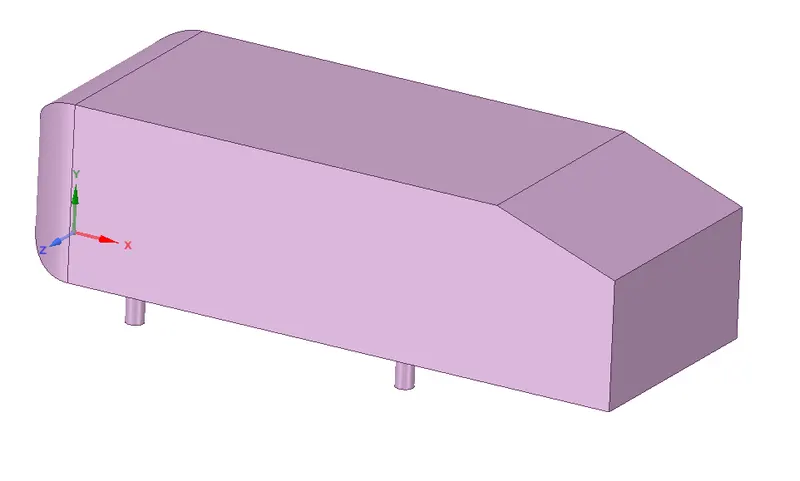
The geometry of the Ahmed body is shown below
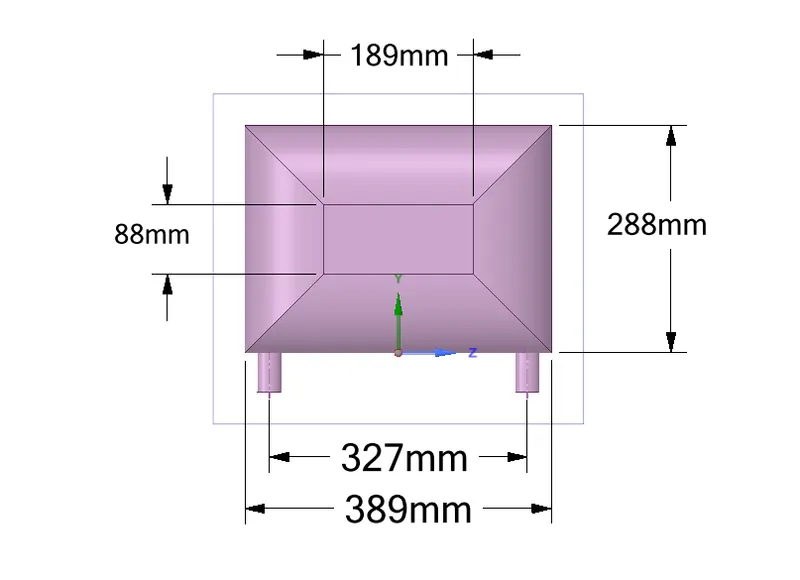
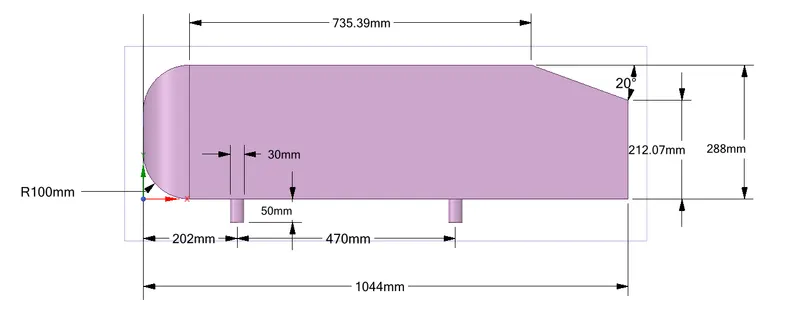
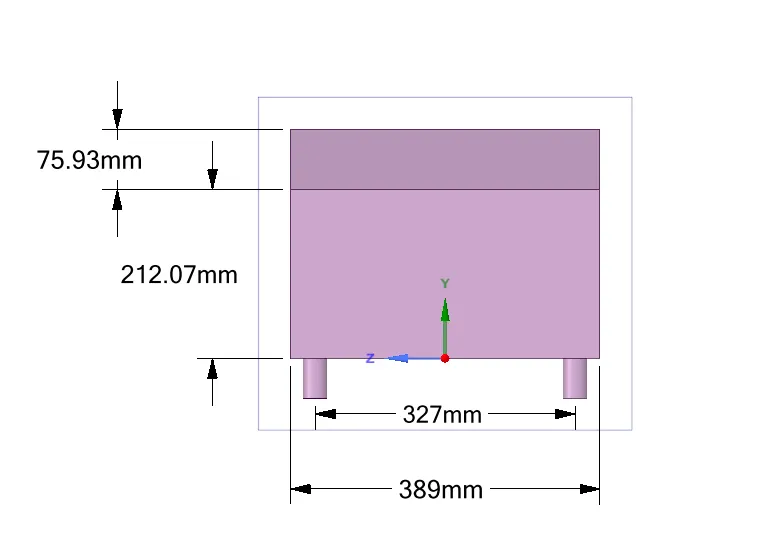
Dimension of a ahmed body :
3D-View of Ahmad Body :
Front View :
Side View :
Rear View :
Geometry setup in SpaceClaim:
In Geometry Section First we need to import the AHMED BODY
Body After Enclouser :
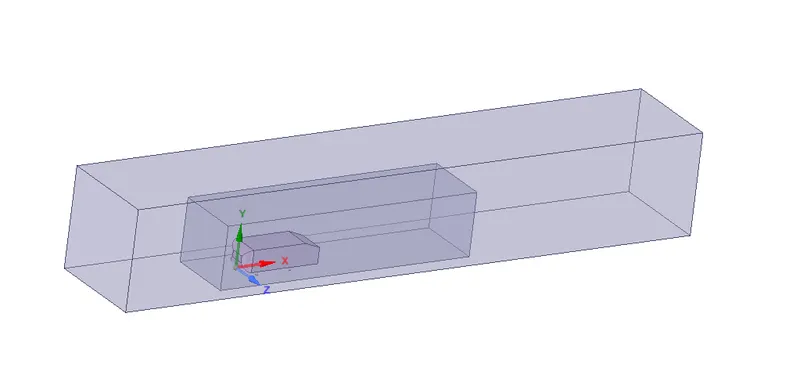
- Enclosure has been made to cover the Ahmed Body. The dimension of the enclosure is 2 meter towards left from the front side of the ahmed body and 5 meter towards right from the rear end of the body and again 1m from the top towards up and at bottom 0 meter, 0.5 meter is given in either sides.
- Another enclosure is made inside the previous one to reuce the computational time and to capture physics effectively near thewalls and in the wake region.
- The dimension of this enclosure is calculated from the base line simulation with respect to the wake region which is 0.5 meter towards left from the front side of the ahmed body and 1 meter towards right from the rear end of the body and again 0.5m from te top towards up and at bottom 0 meter.
Spliting of Ahmad Body :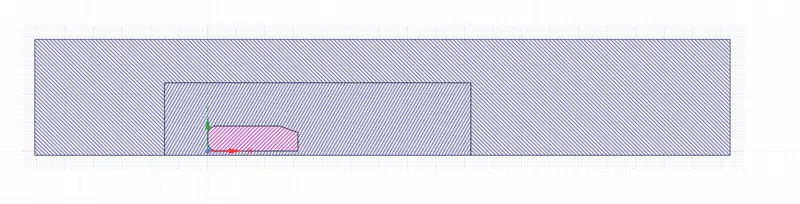
- Though the body is symmetry we cut the body into half in order to reduce the number of elements.
- Then uncheck the ahmed body and suppress for physics since we are concentrating physics at the outer side of the ahmed body.
- Then we check for the interferance inorder to avoid the mesh overlap and share the topology.
Mesh:
Case 1:
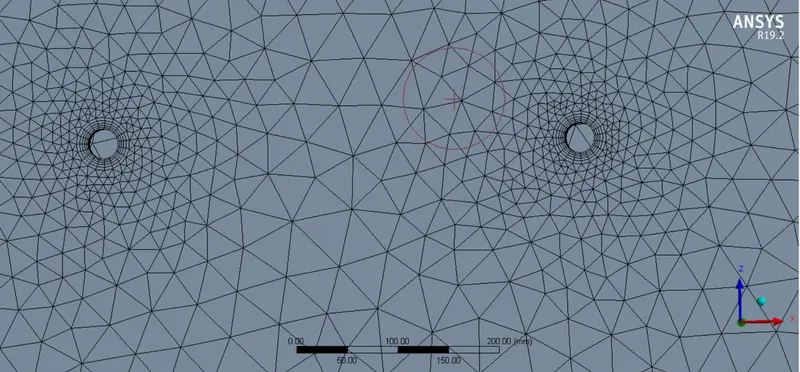
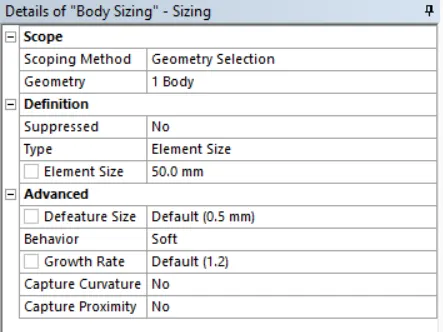
Outer enclosure: 100mm(elemental size)
Inner enclosure:50mm(elemental size)
Face sizing for Ahmed body :5mm(elemental size)
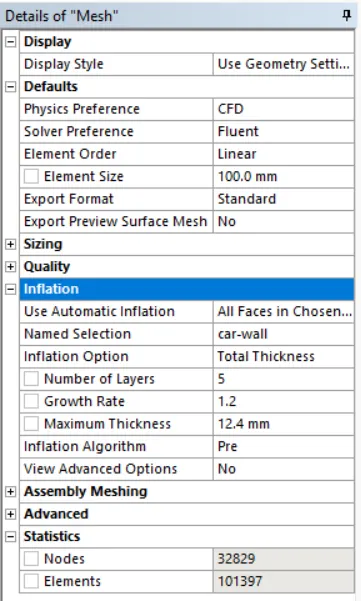
Inflation for ahmed body :5layer with total thickness 12.4mm
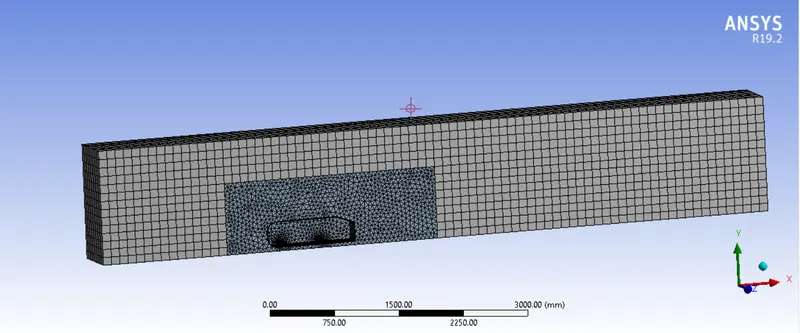
Enclosure(1) = Hexahedral meshes and Enclosure(2) = Tetrahedral meshes.
Inflation layer around ahmed body :
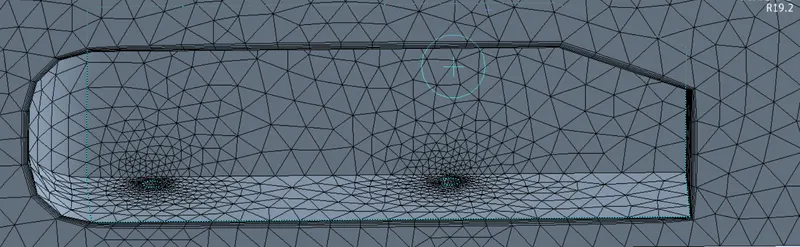
Ahmed body leg refinement :
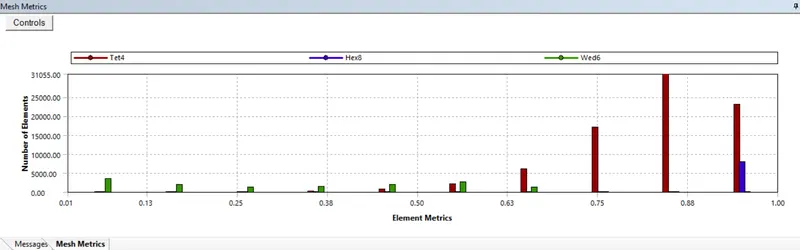
Meash quality :
Fluent Setup :
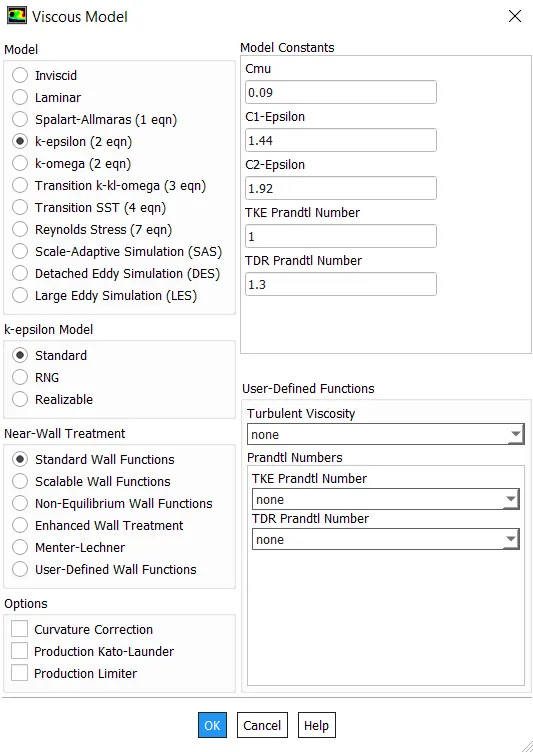
Taking the k-epsilon turbulent model
- Taking the k-epsilon turbulent model because we are taking the inlet velocity 25m/s which is smaller
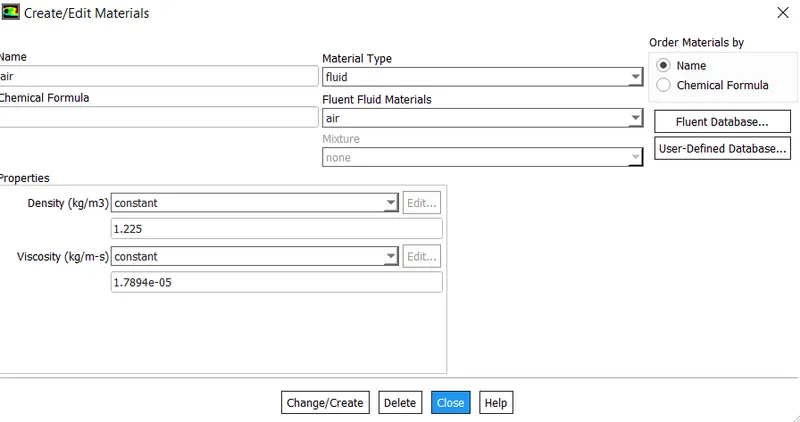
- Consider the pressure density solver
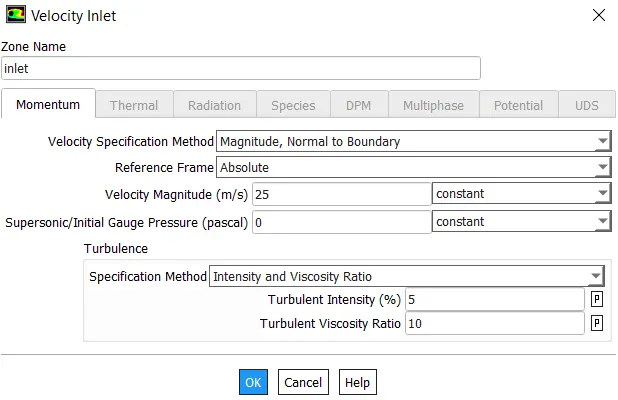
- Take 25m/s as a velocity for the inlet boundary
- Then initialize the solution
- After initialize we should go to the post process to create a cut plane to see the velocity profile on it
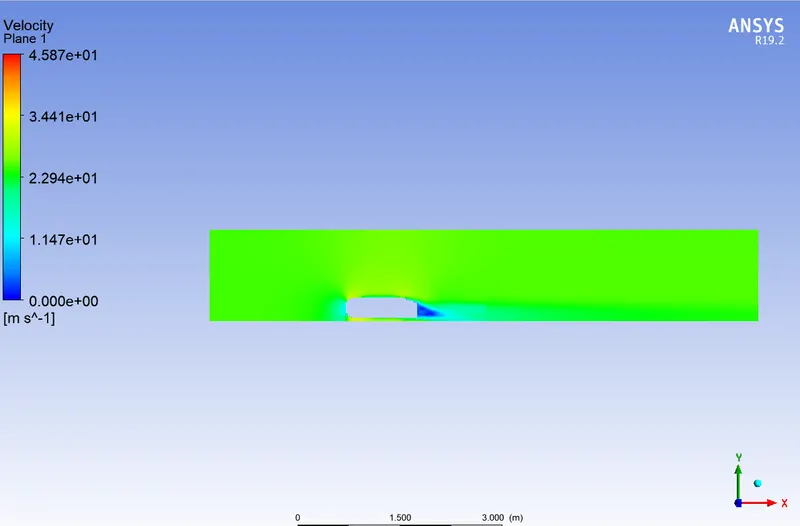
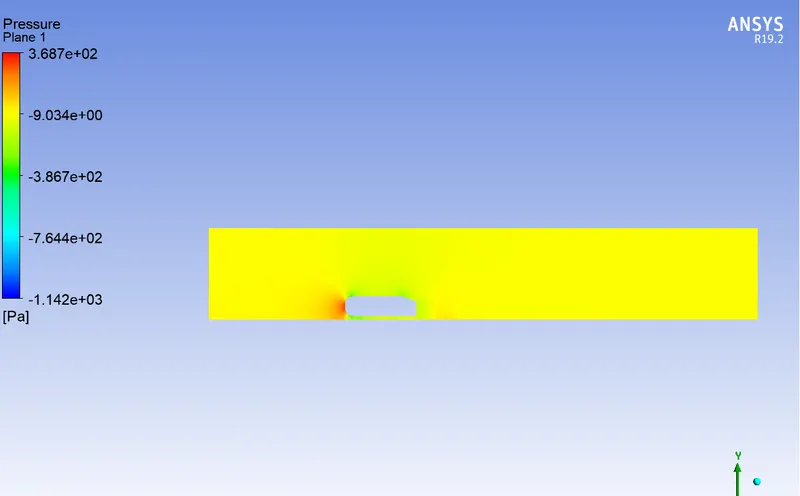
- And create a contour plot for both pressure and velocity
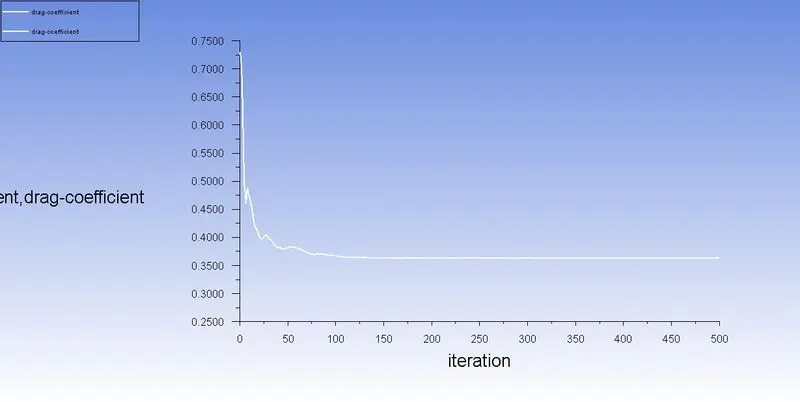
- Also, create a plot for drag and lift using the definition tool
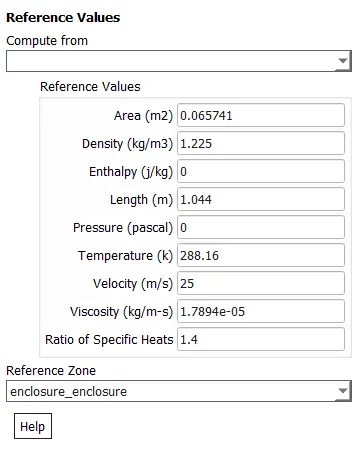
- And give the reference values for the Ahmed body
- Run the simulation for 500 iterations.
Solution :
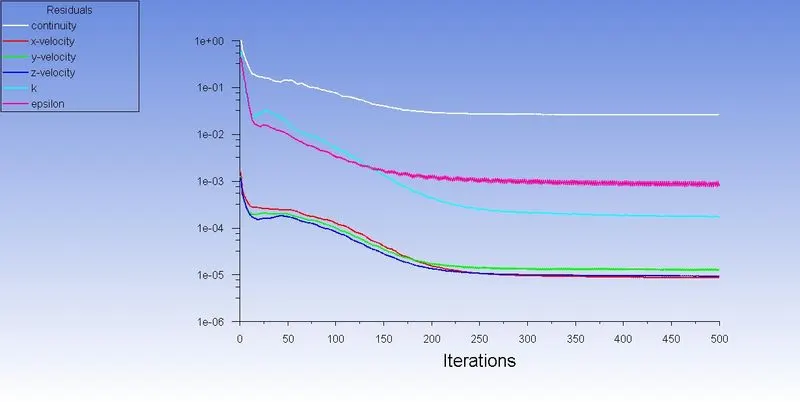
- Residuals plot
Velocity & Pressure Plots :
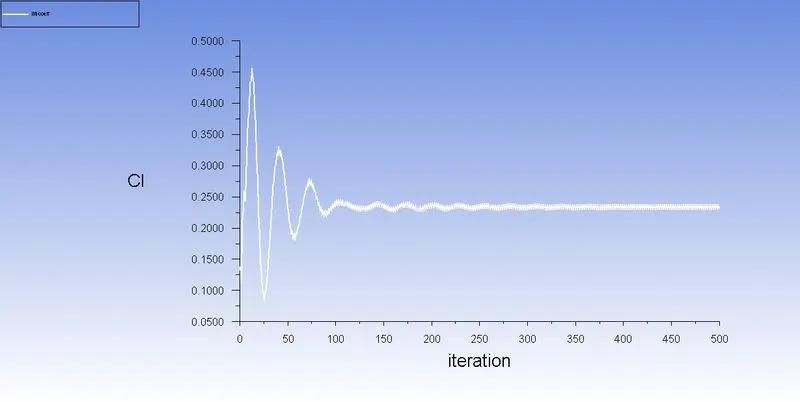
Drag & Lift Coeffcient plots :
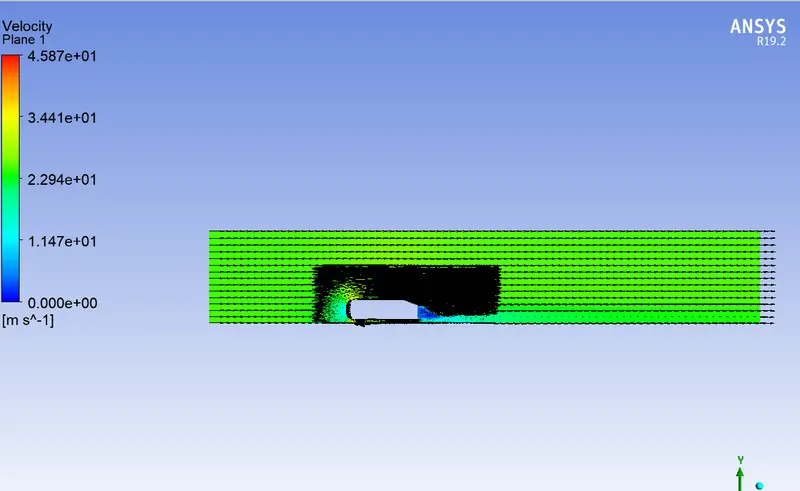
Vector plot :
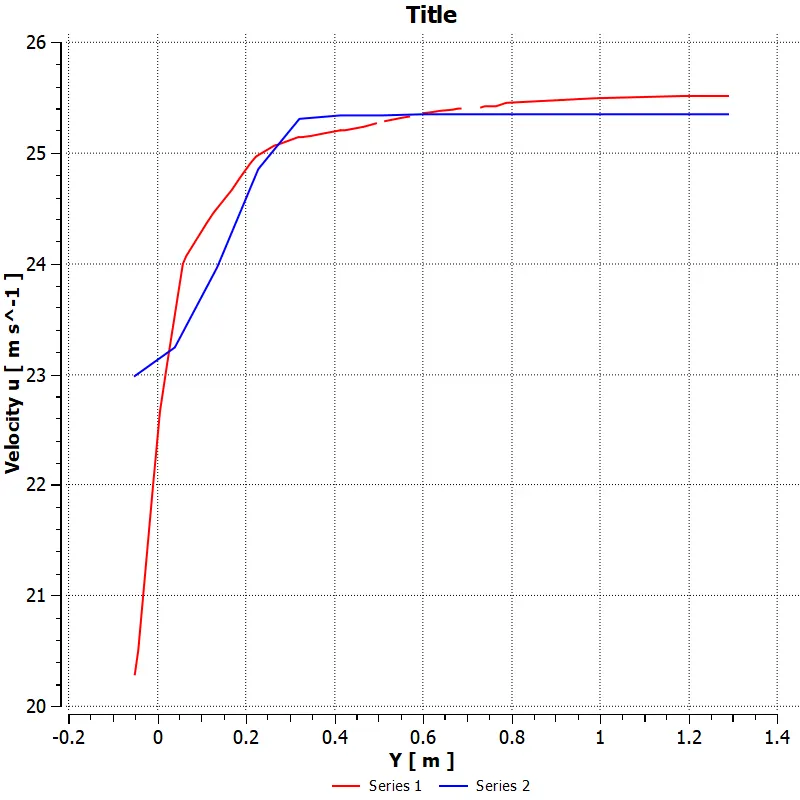
Velocity Variant :
Case 2 :
Outer enclosure: 90mm(elemental size)
inner enclosure:40mm(elemental size)
Face sizing for Ahmed body:5mm(elemental size)
inflation for Ahmed body:5layer with a total thickness of 12.4mm
Mesh :
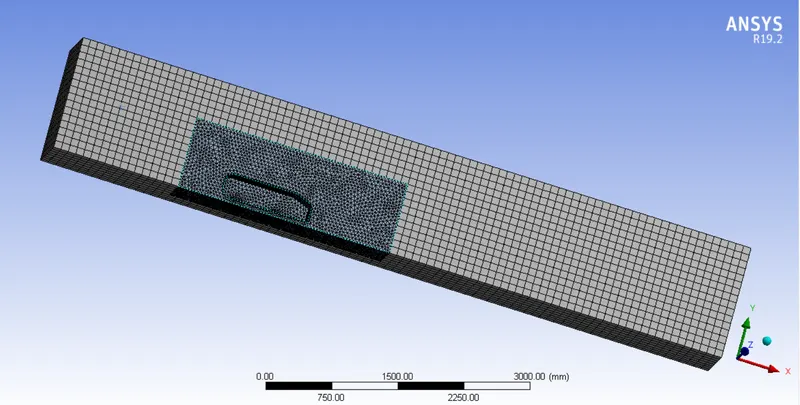
Cell Count:164934
Results:
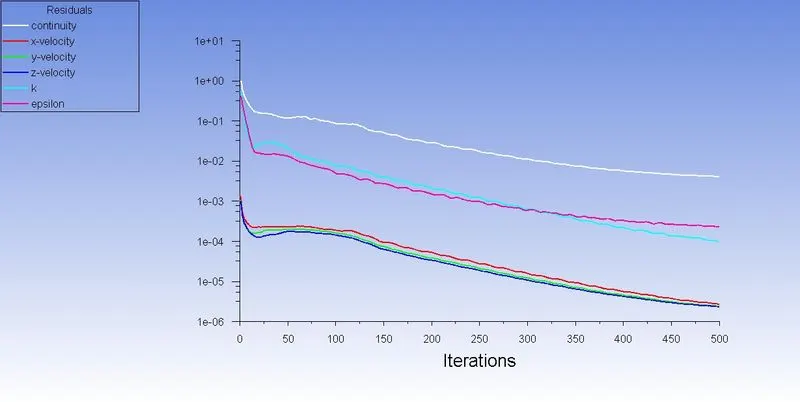
Residual plot :
Velocity & Pressure Counter plots :
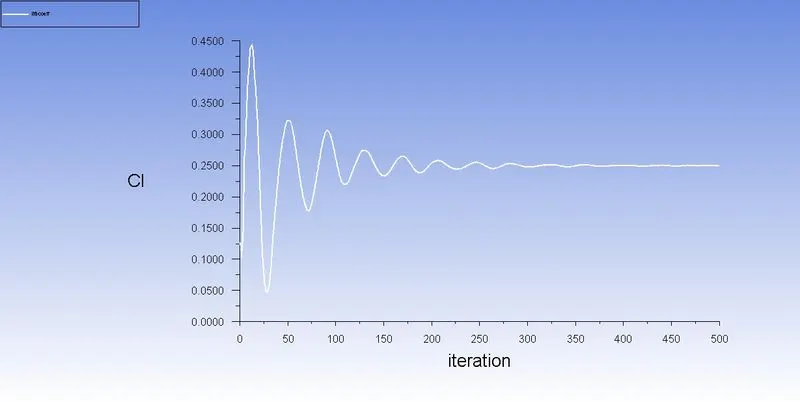
Drag & Lift coefficient plots :
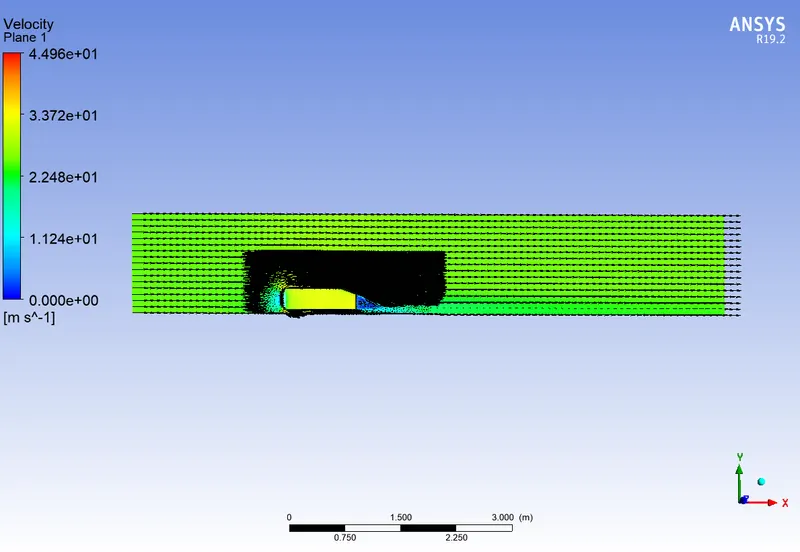
Vector Plot :
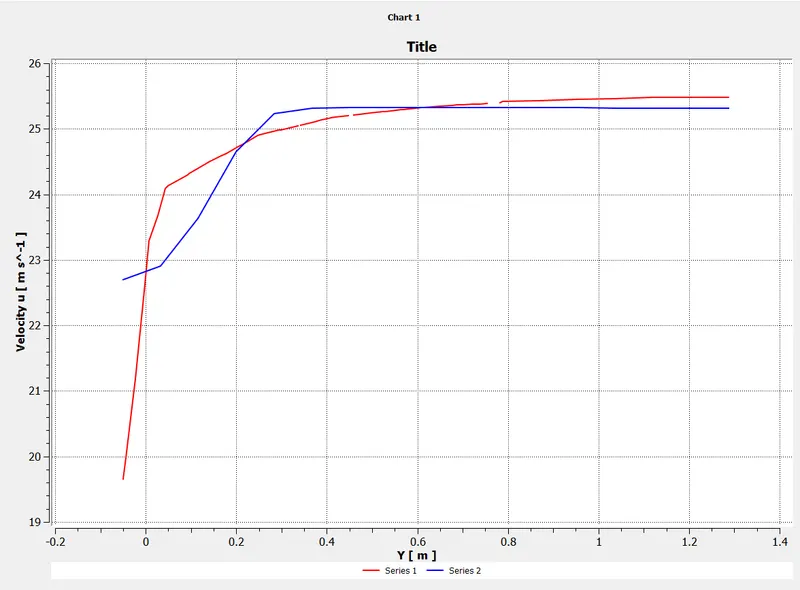
Velocity Variation :
Case 3:
Outer enclosure: 80mm(elemental size)
inner enclosure:30mm(elemental size)
Face sizing for Ahmed body:5mm(elemental size)
inflation for Ahmed body:5layer with a total thickness of 12.4mm
Mesh :
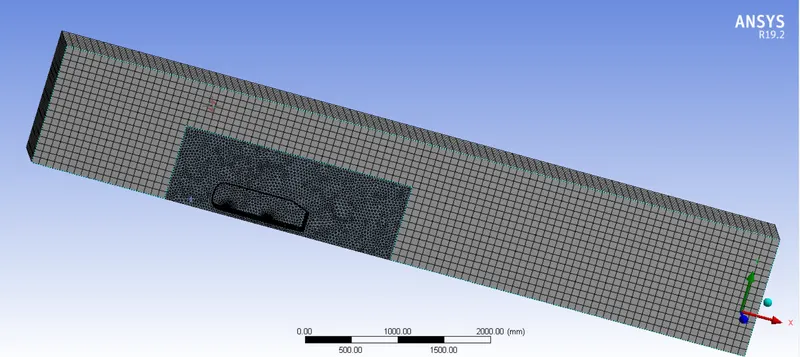
Elements: 337061
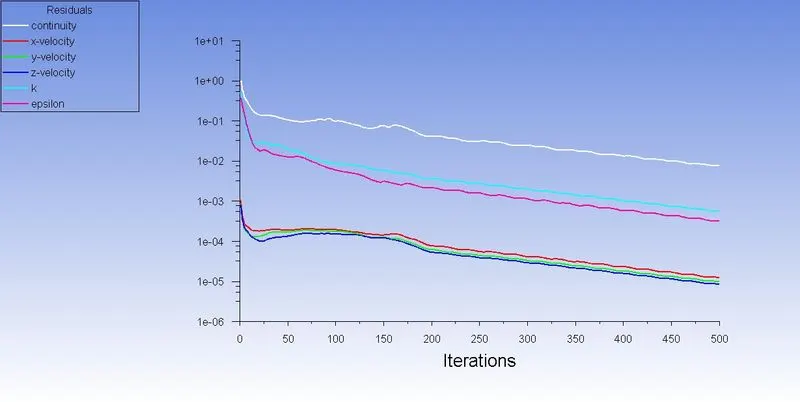
Residual plot :
Velocity & Pressure Counter plots :
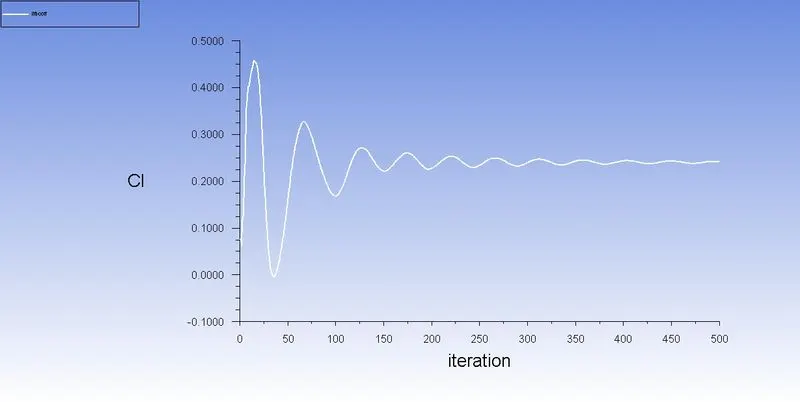
Drag & Lift coefficient plots :
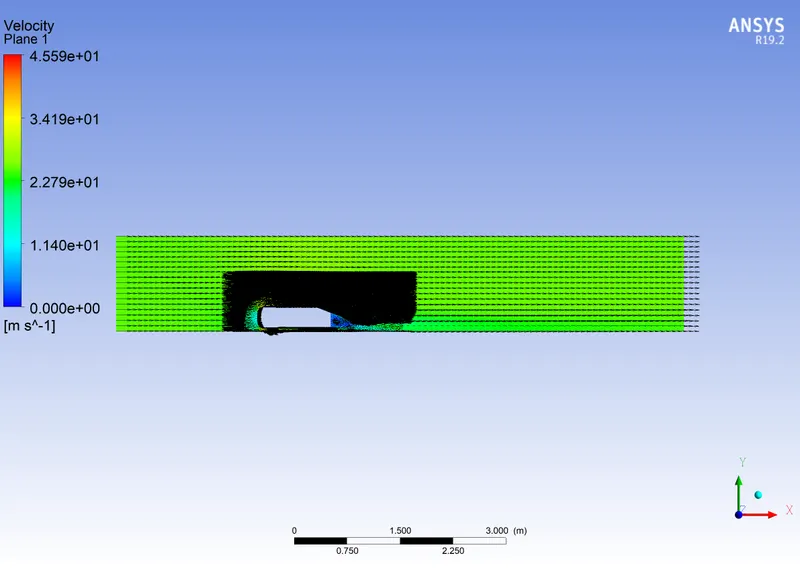
Vector plot :
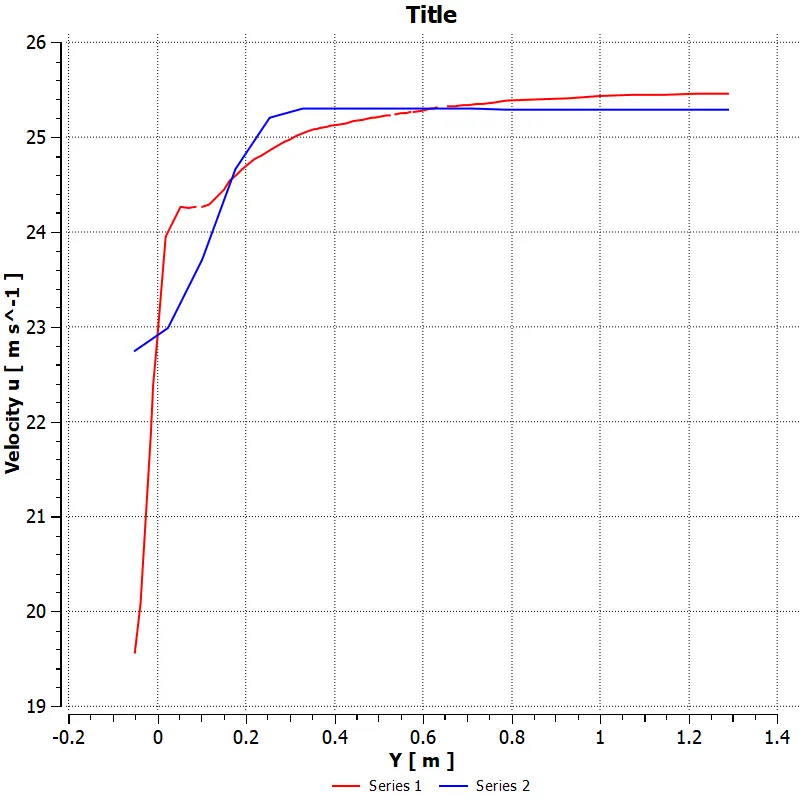
Velocity Variation :
Grid independence test
| Number of cells | `C_d` | `C_l` | |
| case 1 | 101397 | 0.3639 | 0.2313 |
| case 2 | 164934 | 0.3444 | 0.2498 |
| case 3 | 337061 | 0.3185 | 0.2428 |
Conclusion:
- High pressure is formed at the frontal area of the Ahmed body due to the loss of kinetic energy of the air.
- Let us conclude that the Grid independence is performed and the values of the drag and lift co-efficient is done.
- We can conclude that the Vector plot is clearly shown in the CFD-POST in the rear end of the ahmed body.
- Hence the velocity and Pressure magnitude is evaluvated and there is a negative pressure in the wake region because there no flow in that particular area as pressure decreases.