Week 3 - External flow simulation over an Ahmed body.
Aim –
To study the flow over the Ahmed body. And its study for different mesh size.
Introduction -
- Describe Ahmed's body and its importance.
Ahmed body is simplified car body which is basically used in automotive industry for study the impact of fluid flow on body. It helps to find the wake flow around the body. The study of flow over Ahmed body help to design a vehicle to reduce the drag and which result in reduce of fuel consumption and maximize the vehicle performance.
- Explain the reason for the negative pressure in the wake region.
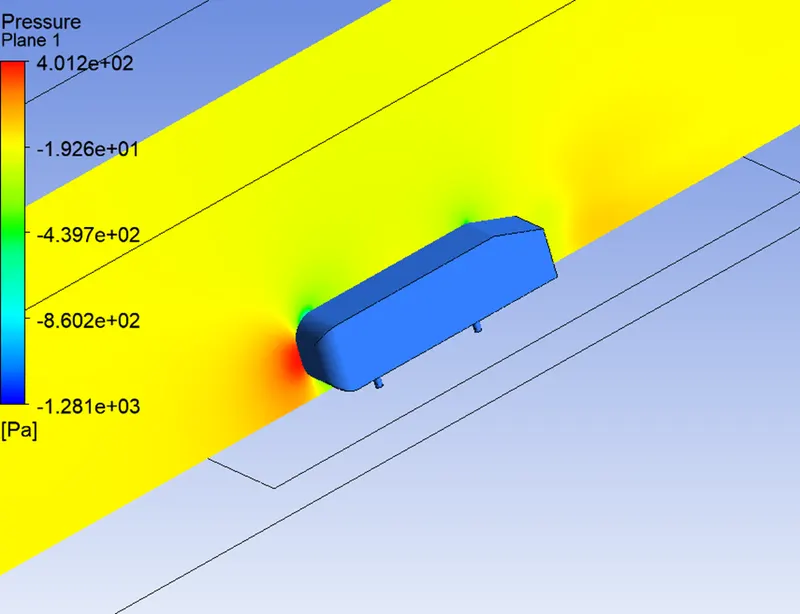
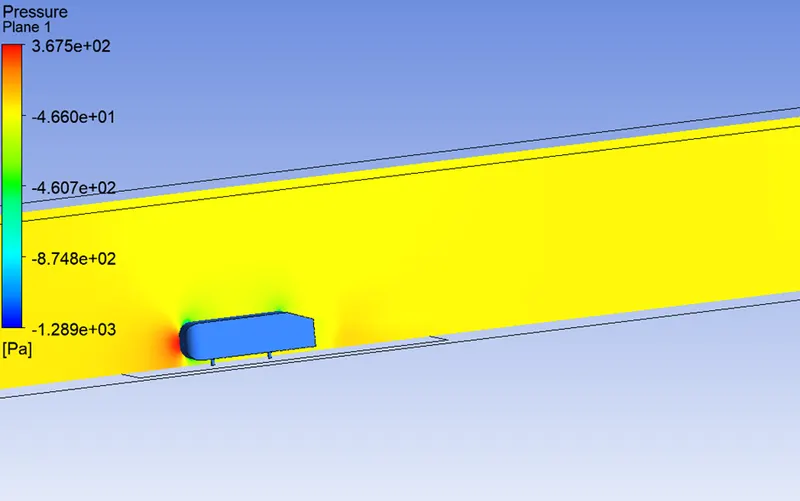
When fluid flow over the vehicle as it across the rear end it led to low pressure region at vehicle end is known as wake. This wake generates the pressure drag and effect the vehicle performance. The Reynold no is dependent on characteristic length pf vehicle, kinematic viscosity and speed of vehicle. The fluid moving around the vehicle depend on vehicle shape and Reynold number.
- Explain the significance of the point of separation.
Whenever there is relative movement between a fluid and a solid surface, a boundary layer exists with viscous forces present in the layer of fluid close to the surface. Boundary layers can be either laminar or turbulent.
Flow separation or boundary layer separation is the detachment of a boundary layer from a surface into a wake. Separation occurs in flow that is slowing down, with pressure increasing, after passing the thickest part of a streamline body or passing through a widening passage.
Geometry –
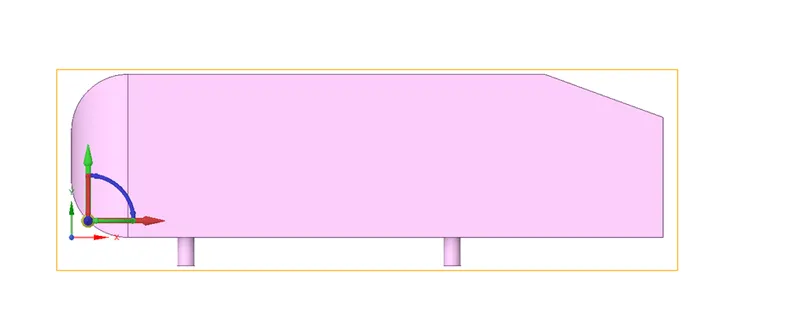
Load the geometry in space claim.
Meshing –
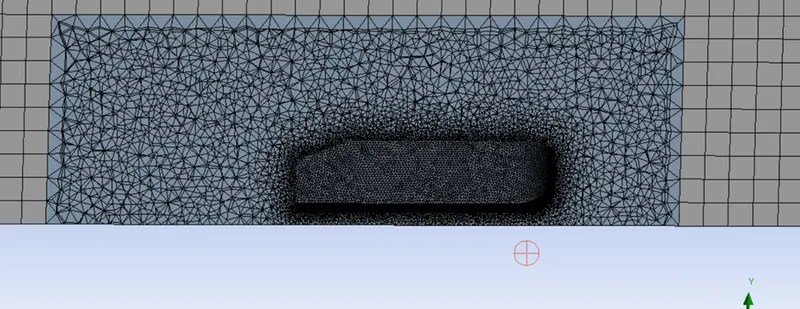
Meshing is done in ansys mesh in fluent module.
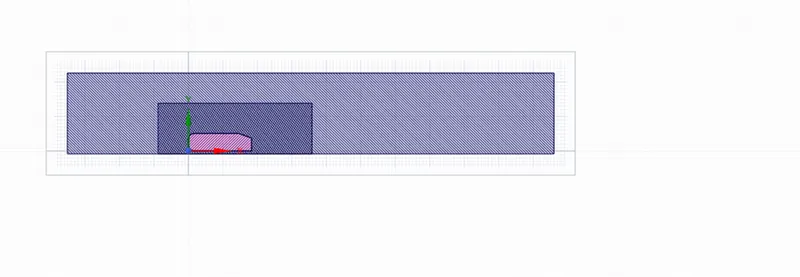
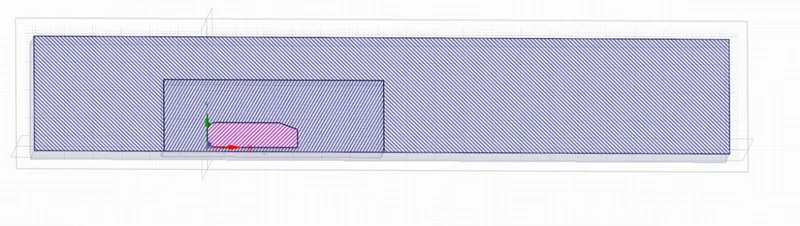
multizone Mesh refinement -
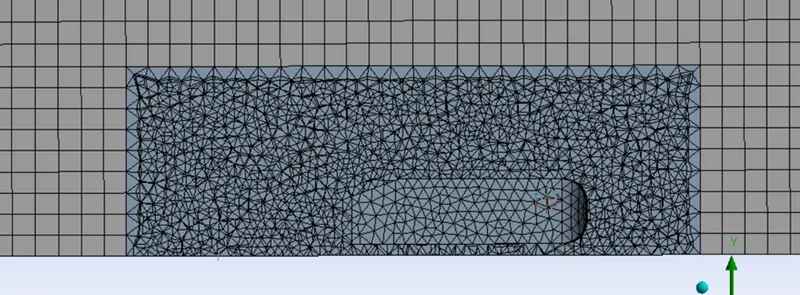
Face resizing -
Layers inflation -
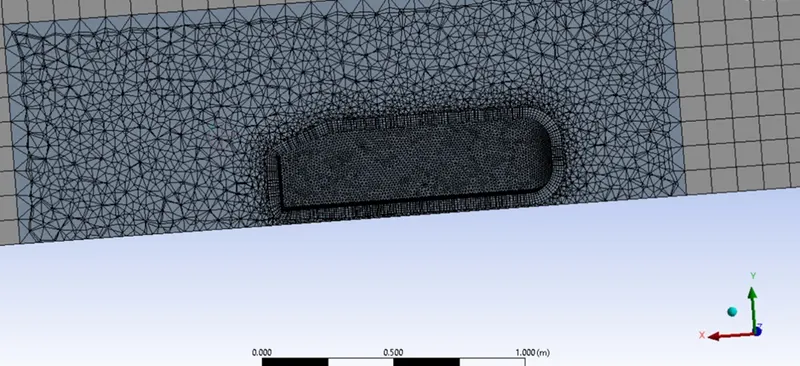
Also inlet , outlet and Symmetrical wall is defined.
Setup
Solver Type – Density based
velocity formation – Absolute
Model – K-Epsilon
Boundary Condition -
Inlet velocity – 25 m/s
Outlet – Type – Pressure outlet
Ahmed body – wall
Initialization – Hybrid
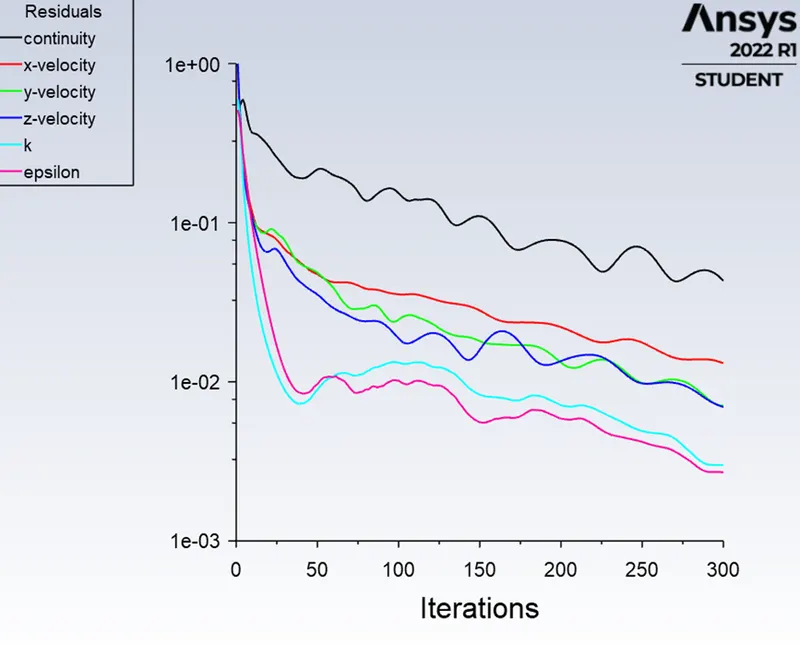
No of iteration – 300
We will simulate the flow across ahmed body for 3 different grid . The multizone grid will be vary . rest will be same in all 3 cases.
Case -1
Multizone mesh – 100mm
Sizing – 50 mm
Layer total thickness – 49.6496 mm
no of cell - 425987
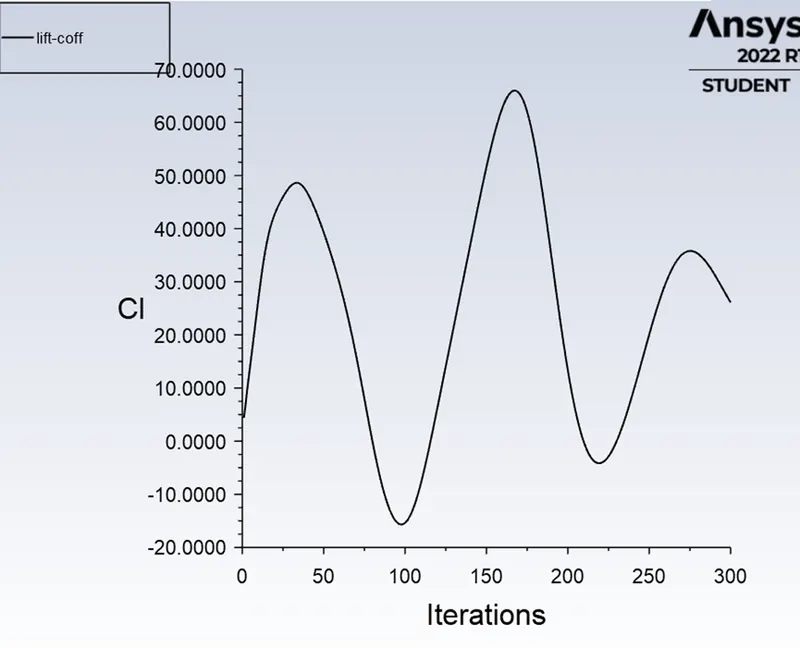
Lift coefficient plot
Residual plot
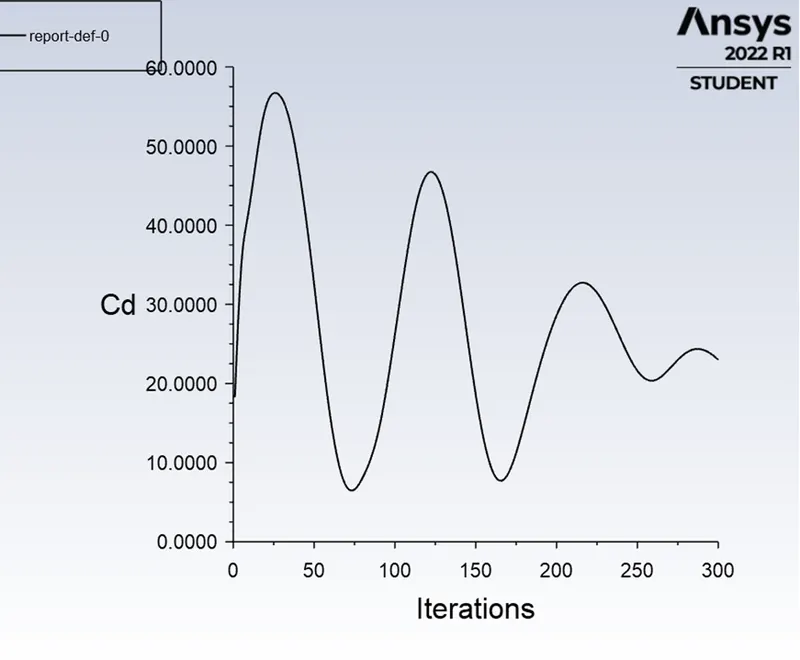
Drag coefficient plot
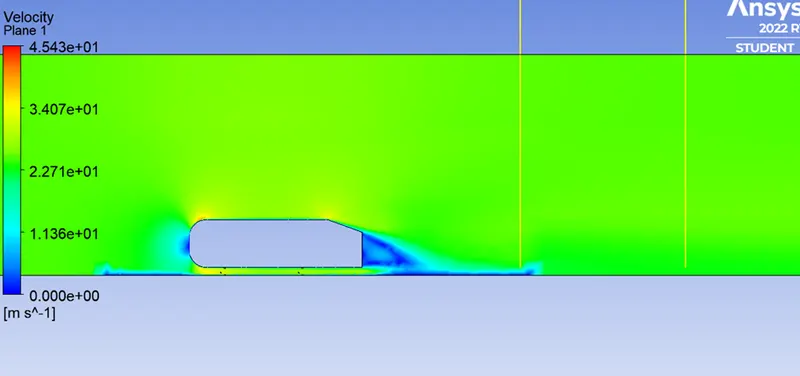
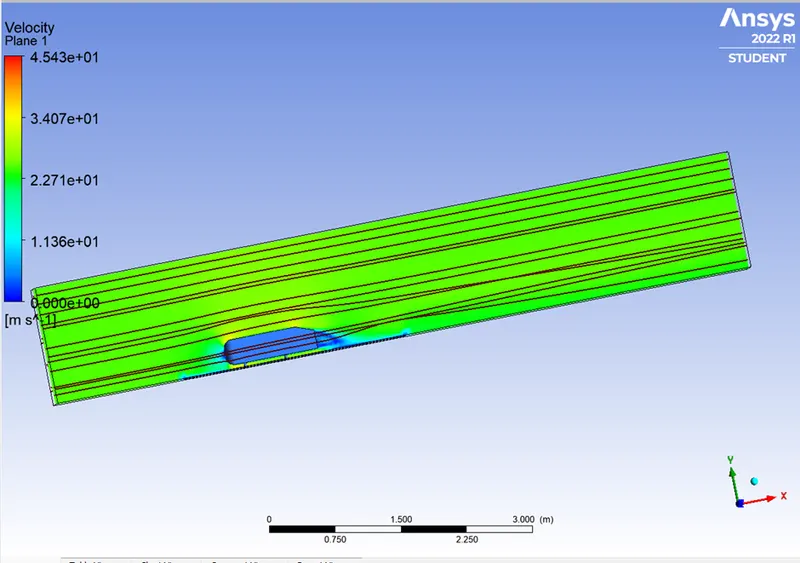
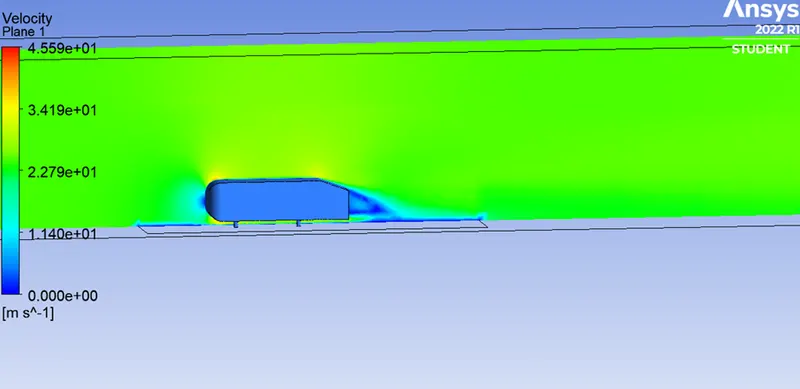
Velocity contour
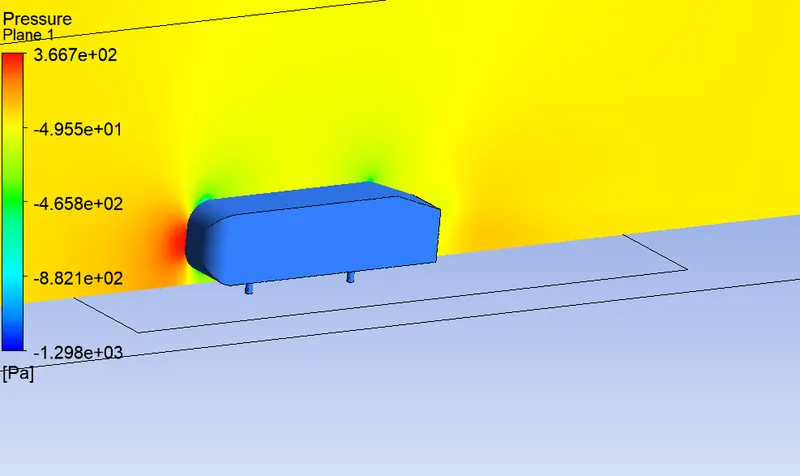
Pressure contour
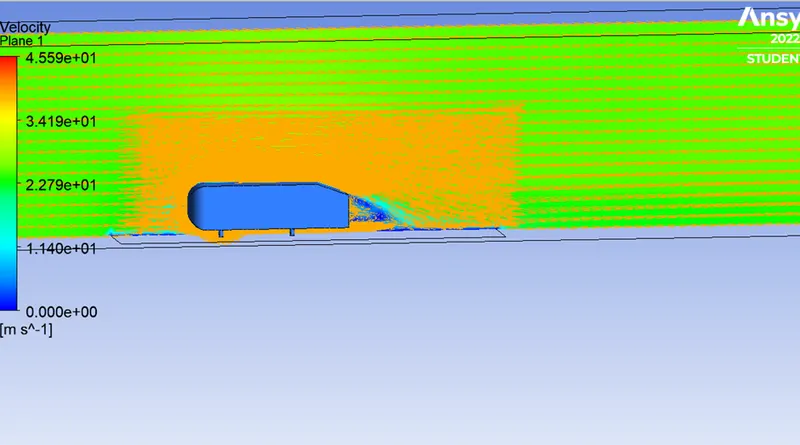
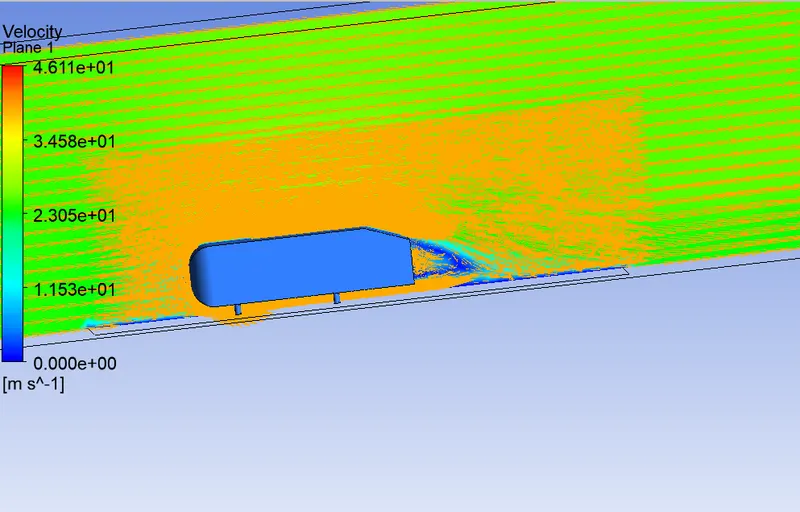
Velocity vector –
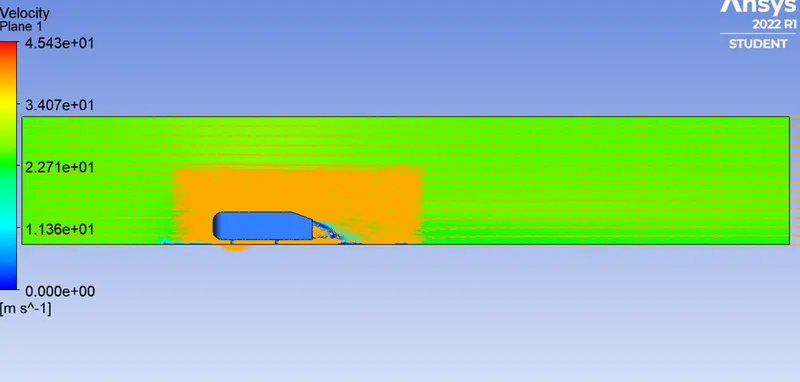
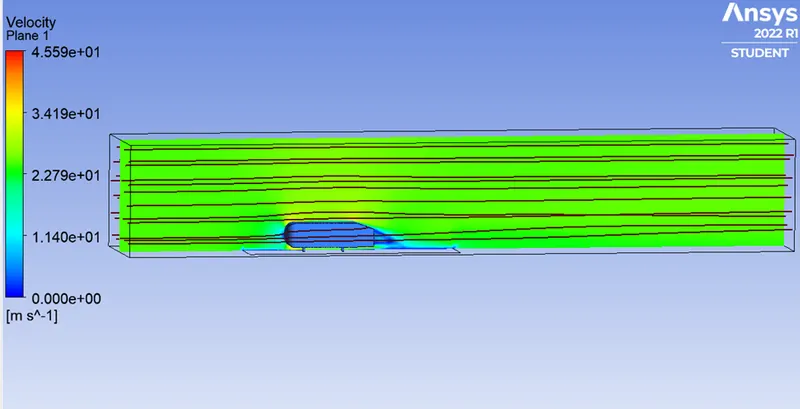
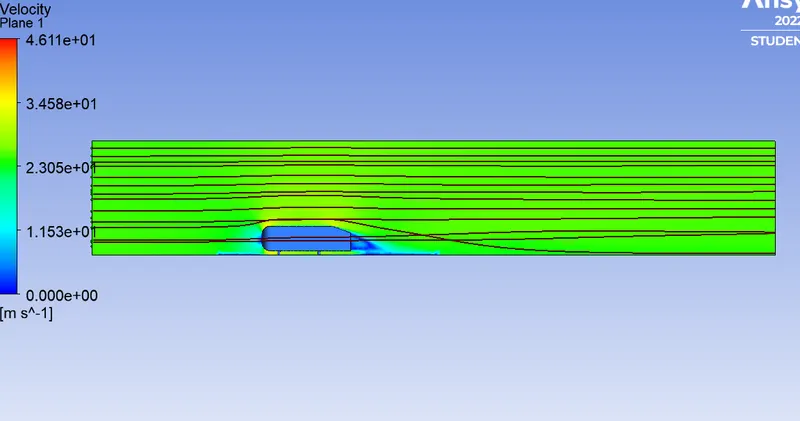
Velocity streamline –
lift-coff - 26.101754
Drag coefficient - 23.000847
Case -2
Multizone mesh – 70mm
Sizing – 50 mm
Layer total thickness – 49.6496 mm
No of cell - 472283
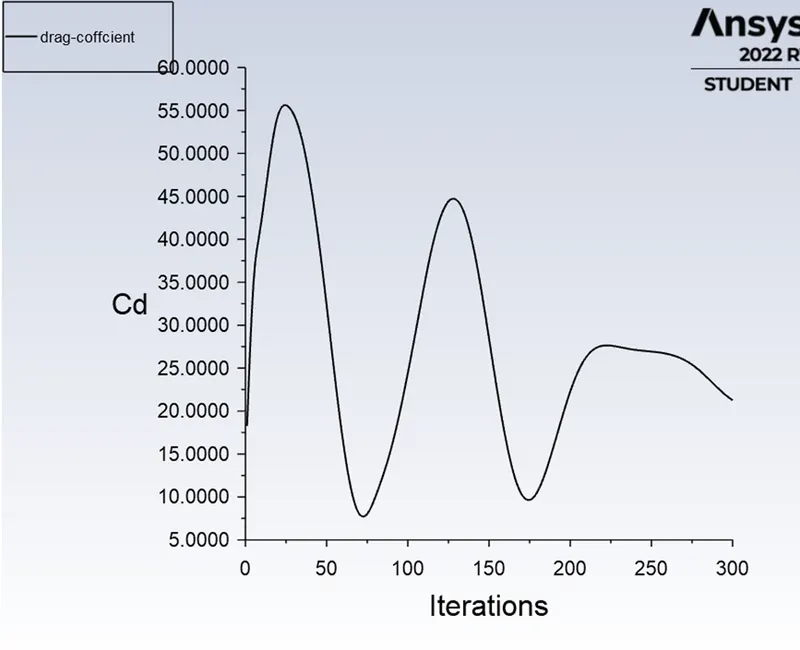
Drag coefficient plot-
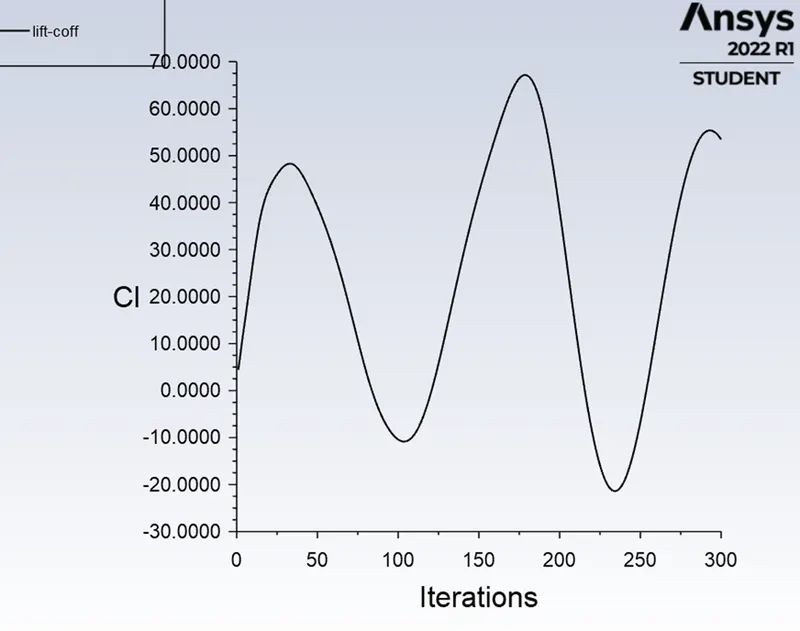
Lift coefficient plot-
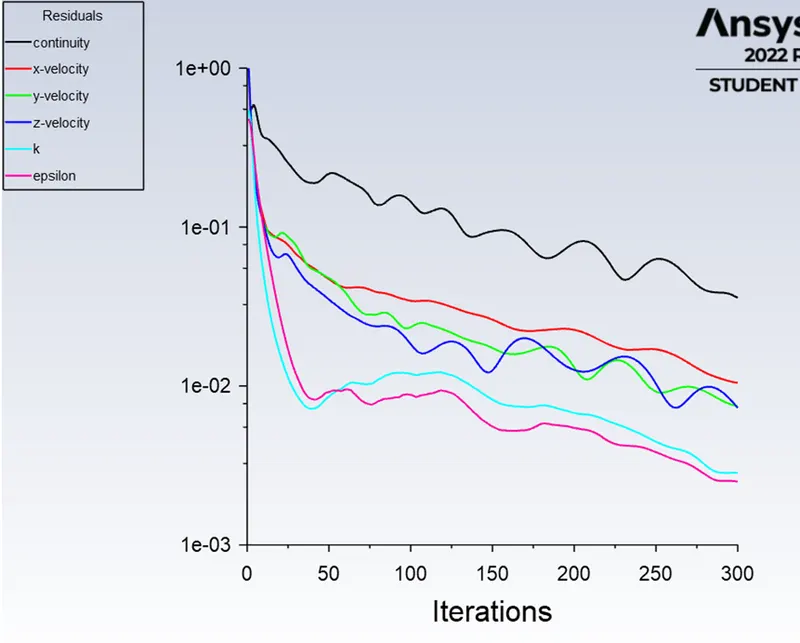
Residual plot -
Velocity contour -
Pressure contour -
Velocity vector –
Velocity streamline –
drag-coffcient - 21.269236
lift-coff - 53.409759
Case -3
Multizone mesh – 60mm
Sizing – 50 mm
Layer total thickness – 49.6496 mm
No of cells 497614
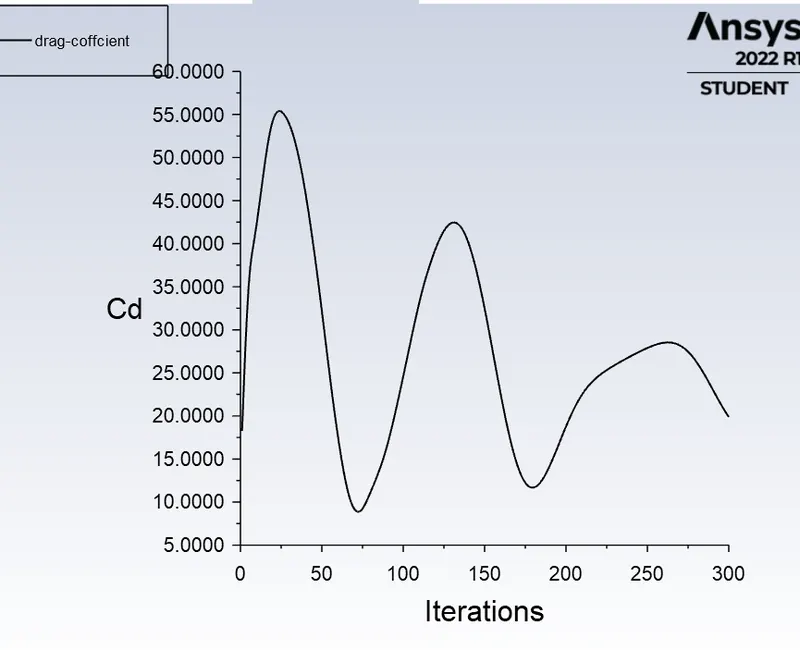
Drag coefficient plot
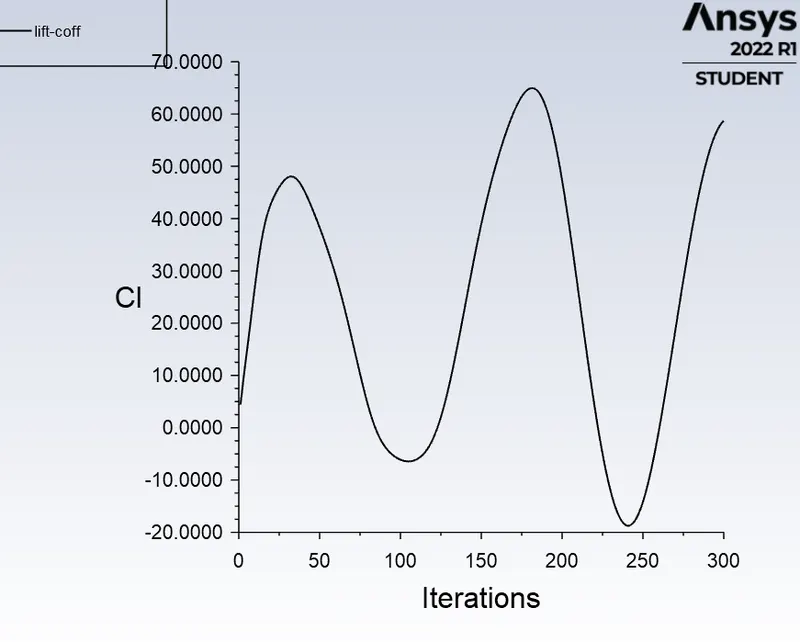
Lift coefficient plot
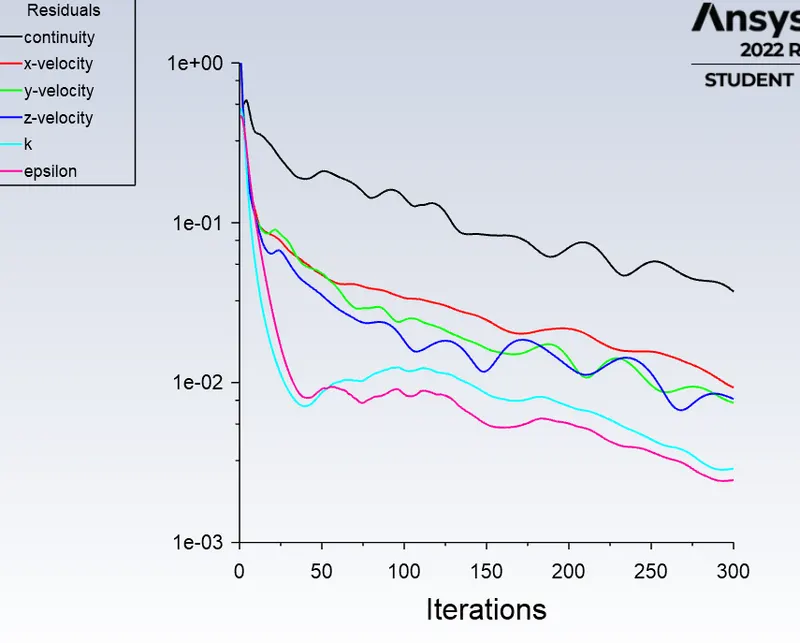
Residual plot
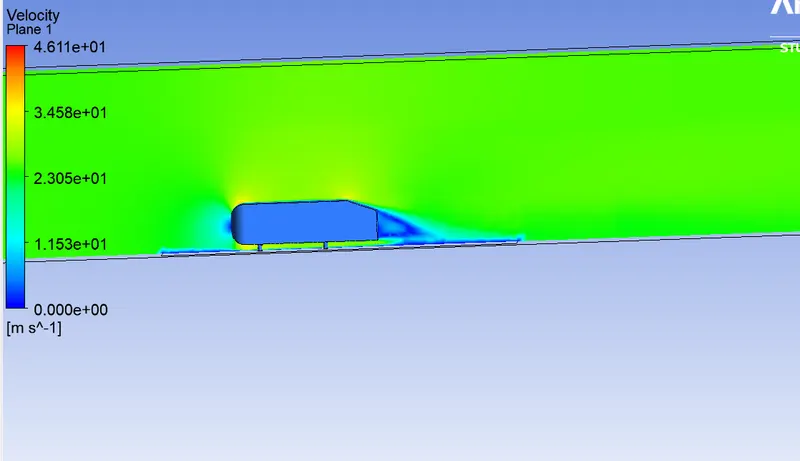
Velocity contour
Pressure contour
Velocity vector
Velocity streamline
drag-coefficient - 19.885265
lift-coff - 58.701185
Conclusion-
1.It is noticed that grid dependency test plays main role in the mesh refinement . as we reduced the mesh size from case1 to case 3 the drag coffcient is redcued for finer mesh size .
2.Wake region is also formed as boundary sepration occurs at the rear end of the body. Due to which the vaccum is created and performance of vehicle is effected.
3. The sparation of Boundary effect the drag coffcient and lift coffcient significantly.