Week - 3 Drop test Challenge
DROP TEST OF PHONE(POLYCARBONATE MATERIAL)
AIM
Perform Mobile Drop Test Simulation using LS-DYNA and write a detailed report explaining the results obtained.
The objective of this assignment is not to get a correct simulation but to get a feel of creating an input deck from scratch.
INTRODUCTION
LS-DYNA is an advanced general-purpose multiphysics simulation software package developed by the former Livermore Software Technology Corporation (LSTC), which was acquired by Ansys in 2019. The core-competency of LS-DYNA lies in highly nonlinear transient dynamic finite element analysis (FEA) using explicit time integration. LS-DYNA is used by the automobile, aerospace, construction and civil engineering, military, manufacturing, and bioengineering industries.
Many consumer products like cell phones, cameras, and other products are all subject to being dropped during their lifecycle. Impact analysis or drop testing is one of the most important stages of product design and development. Drop testing serves as an important indicator of quality and durability. Drop test simulations help an engineer understand the forces, stress, and displacements caused by dropping an object. Drop test simulation software helps manufacturers by speeding up the time to test a product, enabling higher levels of design quality and reducing the need for physical testing.
PROCEDURE
for simulation in finite element
- understand the physics
- apply the proper boundry condition
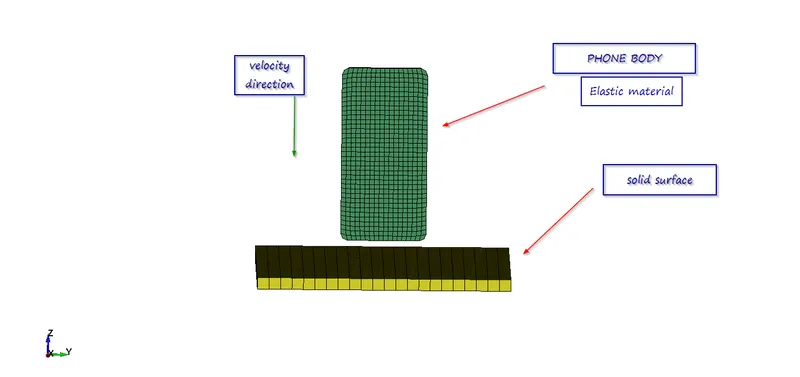
In drop test define
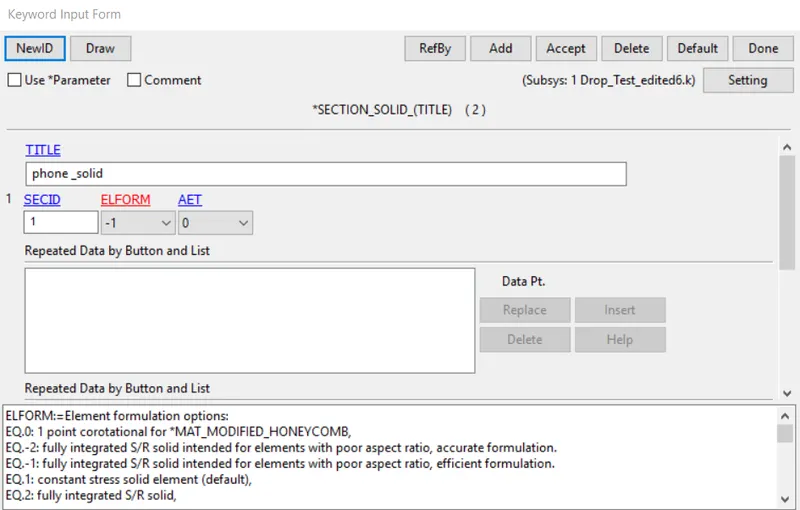
1. the section for mesh of phone and surafce in this case we using solid
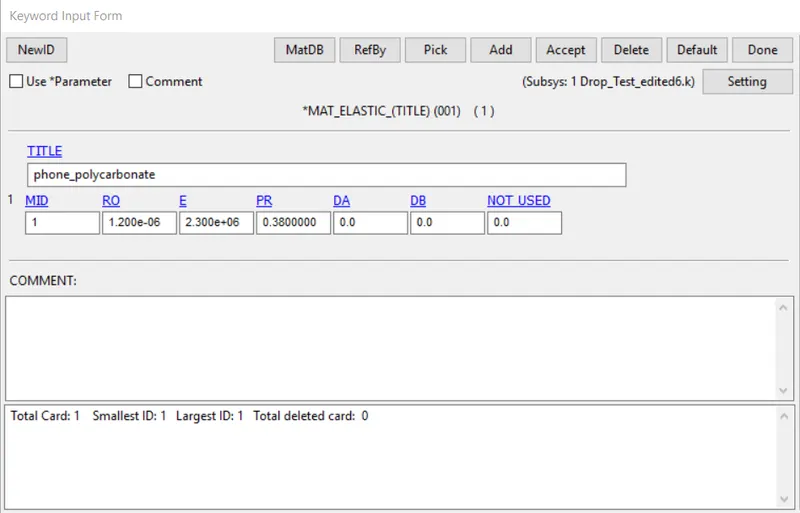
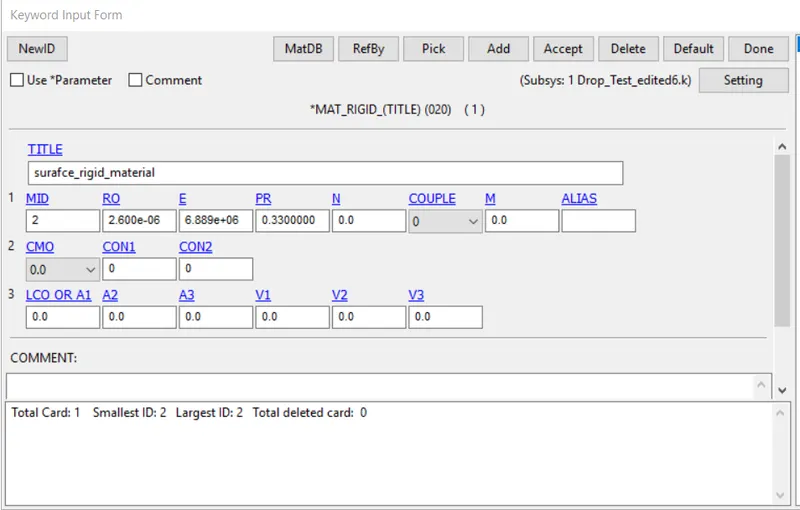
2. material for phone and solid. i choose polycarbonate elastic material and rigid material card for surface
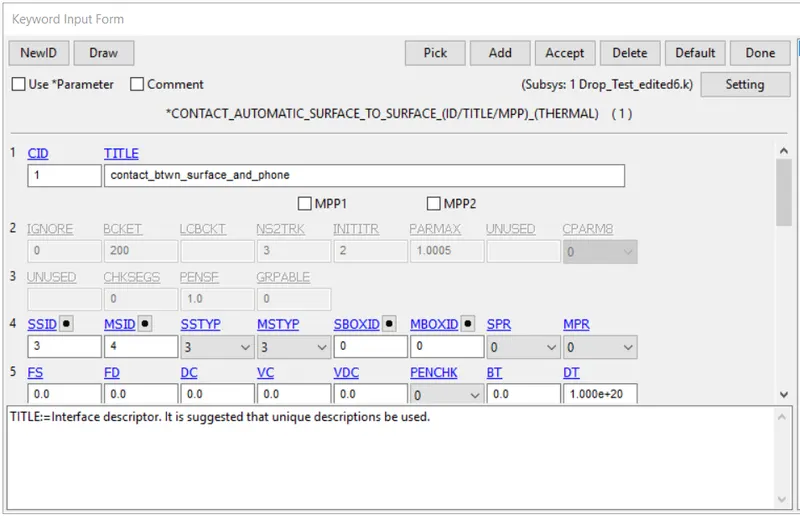
3. define the contact between surface and phone
4. define intial velocity boundary using intial card
5. define the SPC node set to constrain the deegree of freedom of uuper node of the surface
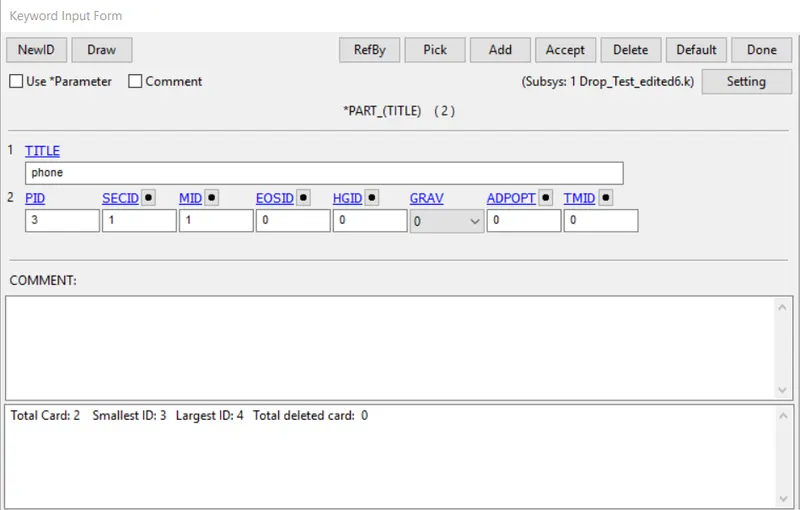
6. apply section and material card to the respective part
7. define the energy card in control keyword and enable hourglass and sliding energy
8. define hourglass control card using IHQ = 1 and hourglass coefficient =0.1
9. define control termination card for running the simulation for specific time
10. define the ASCII(glstat,matsum,elout,rcforce) and D3plot in DATABASE keyword for requied output
after defining the all keyword run the keyword file using LSRUN
and plot the simulation using D3PLOT
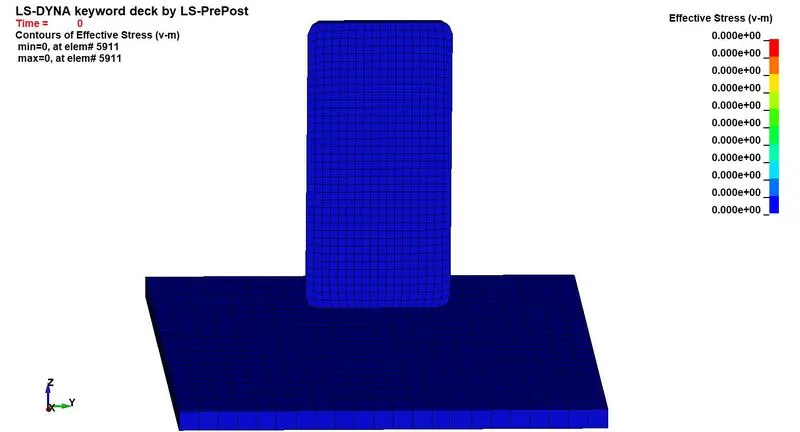
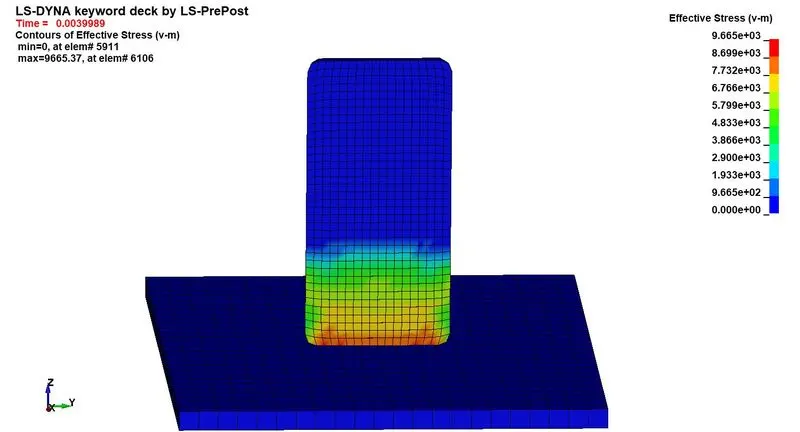
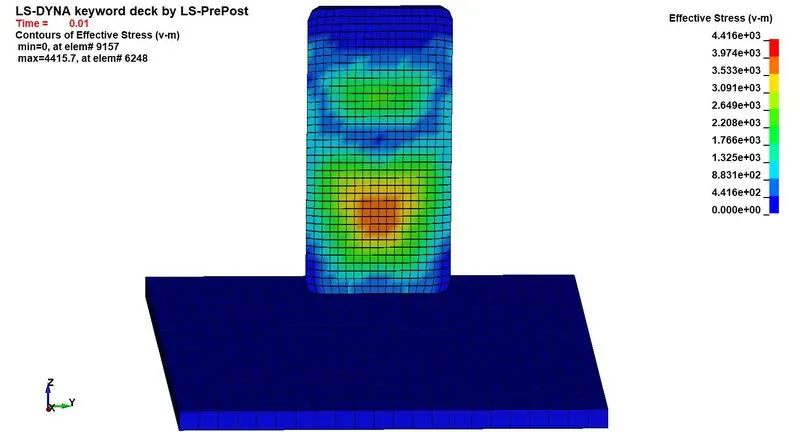
graphs
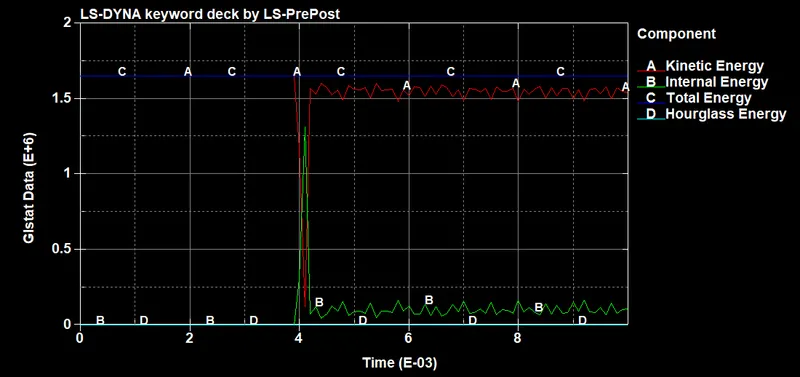
we can verify simulation that
is it maching model physics using energy plot
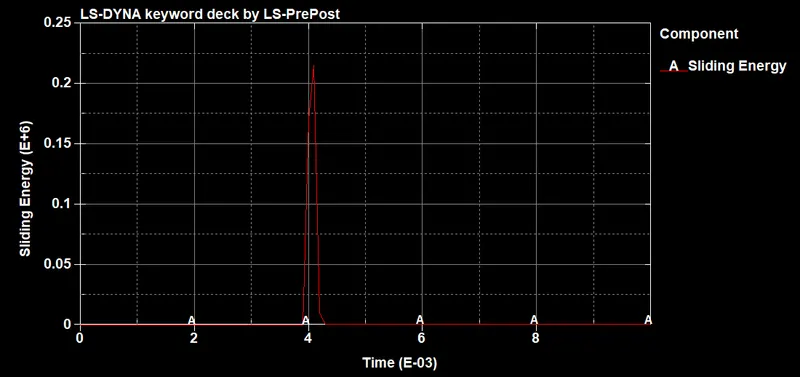
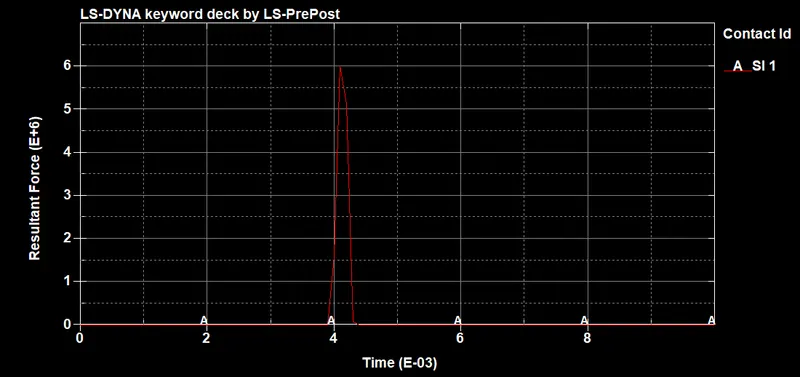
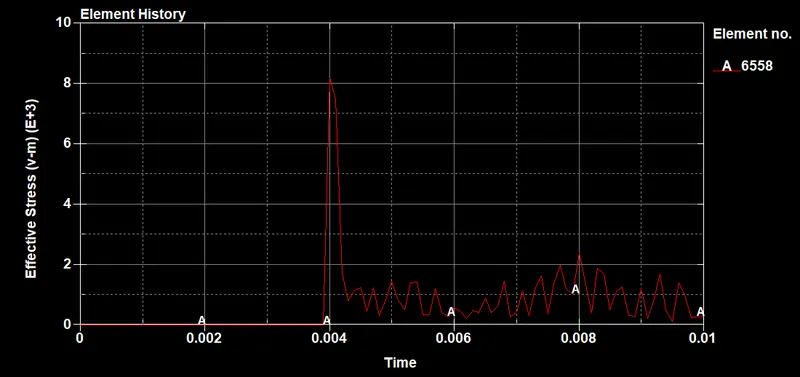
Conclusion:
- The drop test simulation of mobile is successfully completed in LS-DYNA and results like energy plots, stress contours etc are extracted.