Week 3 Challenge : CFD meshing on Turbocharger
OBJECTIVE: To perfrom surface meshing and volumetric meshing of a turbocharger.
PROCEDURE: We start by importing the geometry in ANSA and the very first task we perform is to change the coloring method from entity to PID and a geometry check using the ANSA template.
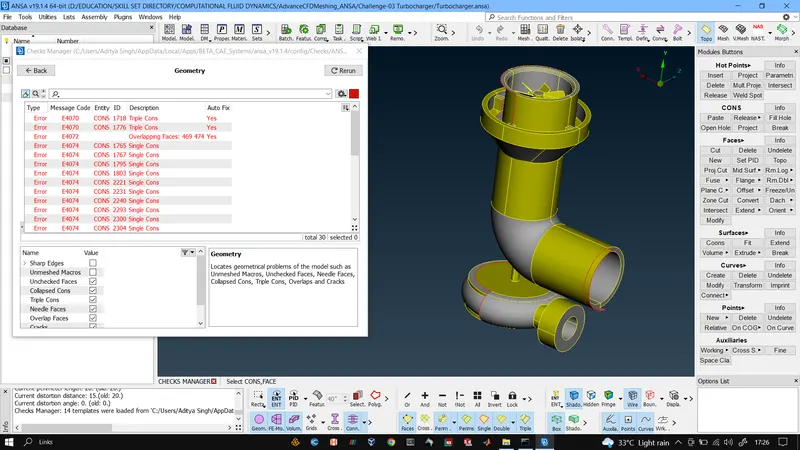
Upon performing the geometry check we got to know that the model had multiple overlaping surfaces especially in the compressor casing andd shaft rotor, along with tha it had issues of triple CONS and single CONS.
Hence the first task was to eliminate the overlapping surafces in the outer geometry of the model, so for that we observed the glitching in the surface of the outer casing and used PID region to select the overlapping surface and delete it.
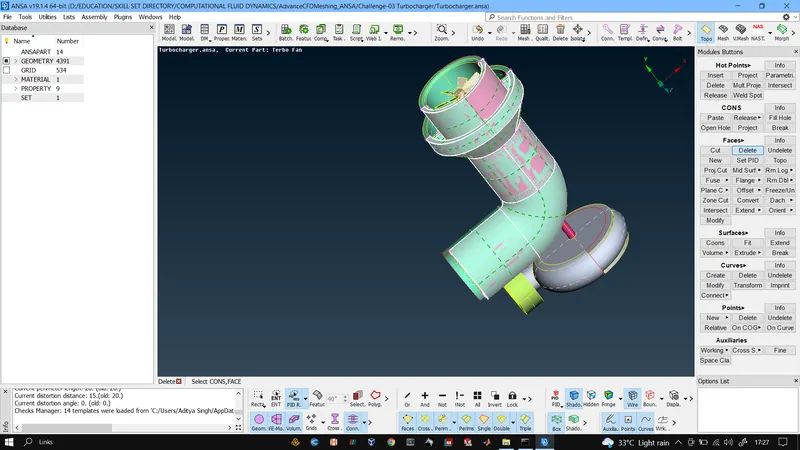
After that there was a gap in the surface of turbo casing which was not being able to fill up by all 4 algo of new surface tool hence we created some new hotpoints on the single CON and projected them on the other side of the casing and then used the CONS to form the new surfaces.
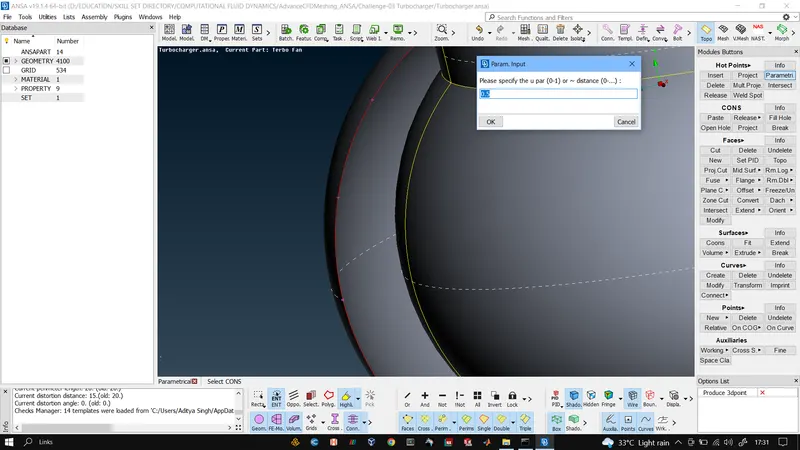
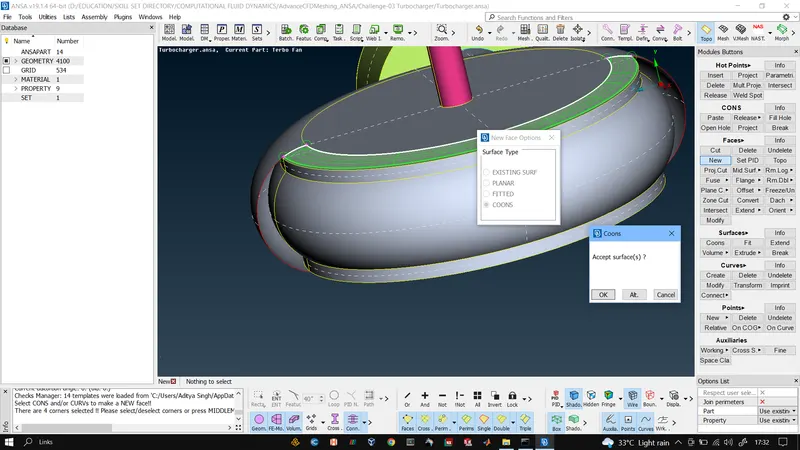
The complete surface was created by using many smaller surfaces.
Similarlly there was an gap in compressor casing where we generated hot-points and then created surface using them after which a complete surafce was created using the smaller surface created by them.
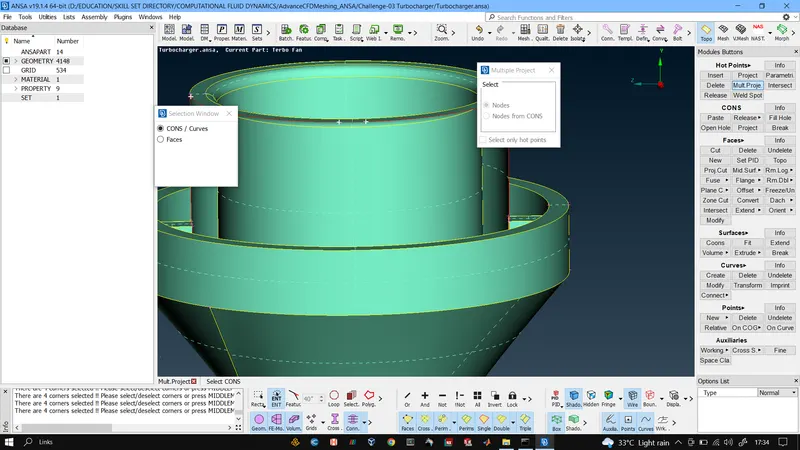
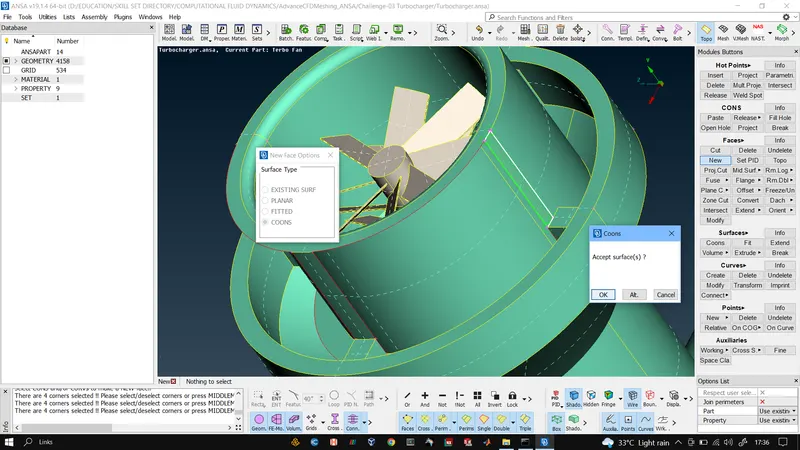
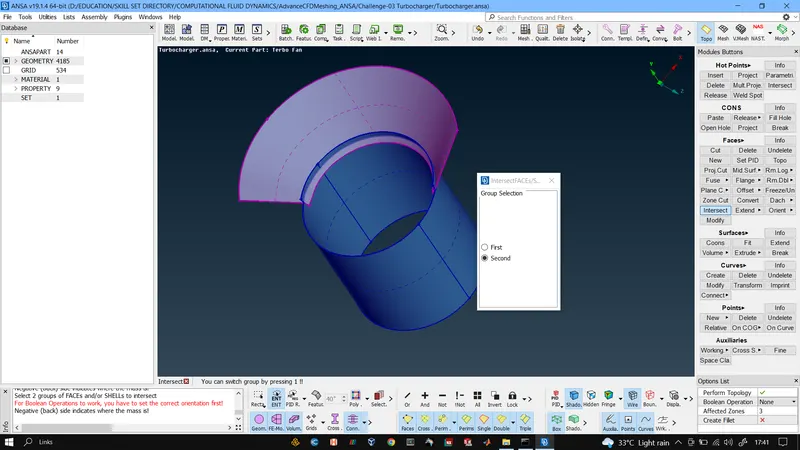
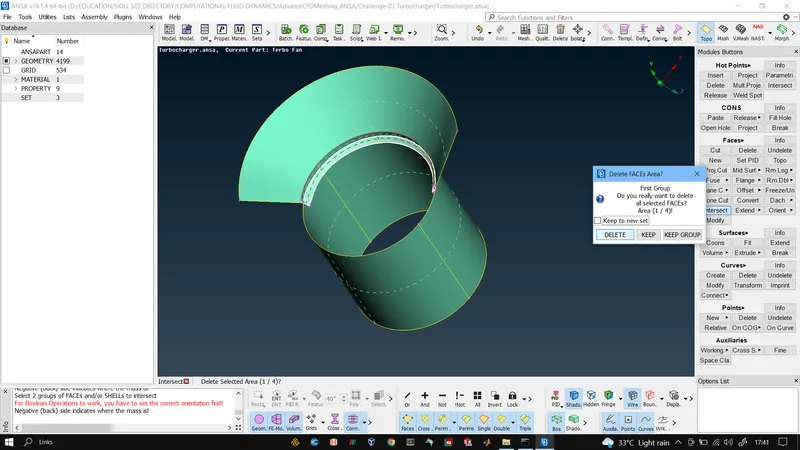
After this there still some single CONS left in the interior os the shell which when inspected was due to penetration of two surfaces and hence we used intersect tool in the face section which helped us create an intersection between the surfaces and the extra parts were deleted.
After this all the errors were removed from the exterior parts hence we hide them and lock the view to get better workng for the shaft rotor, impeller and blades.
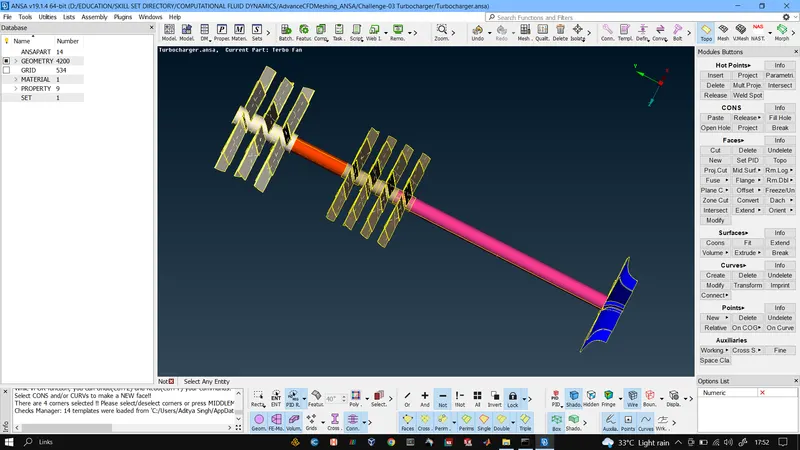
Here shaft rotor was divided into multiple parts as solids and hence there were many overlapping surfaces which were deleted and at some points the CONS were projected on the other surface which then divided surface into multiple parts and that were then deleted.
This was done to achieve a single volume of the whole shaft rotor, impeller and blade assembly.
The changes were verified by removing the extreme surfaces and to see through and through of the complete shaft.
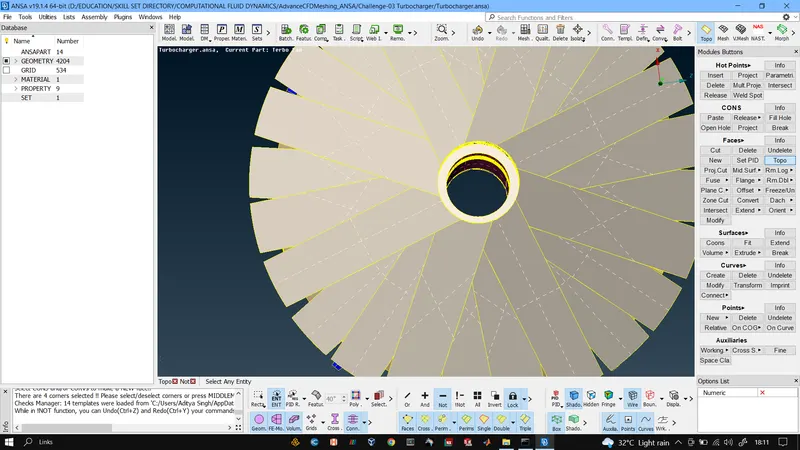
After this our topology cleanup was completed and we then went to set our PIDs accordingly,
After which surface meshing of the parts were done as per the described target length.
For that mesh quality criteria were set and then Meshing settings were set and perimeter and macros were assigned in length section for the parts as per the need.
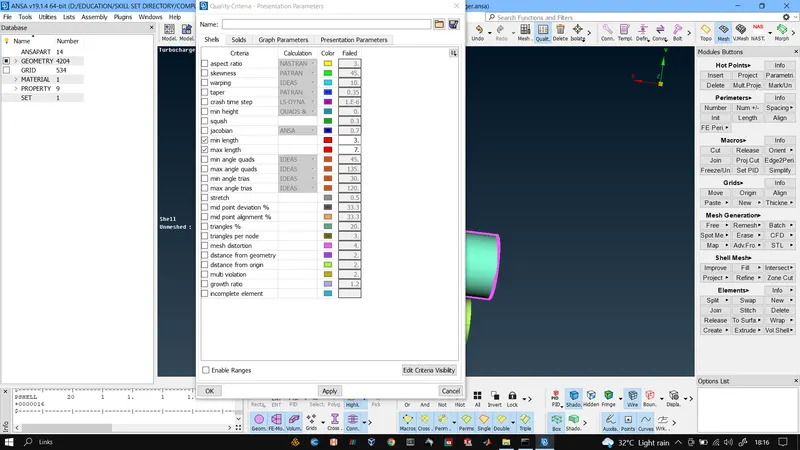
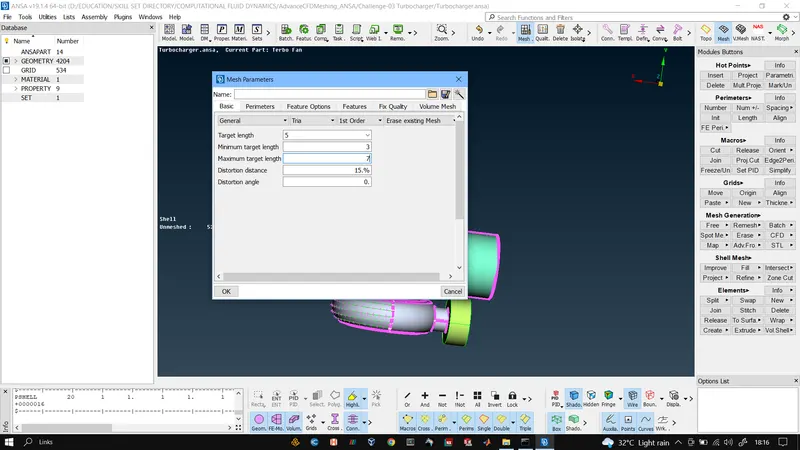
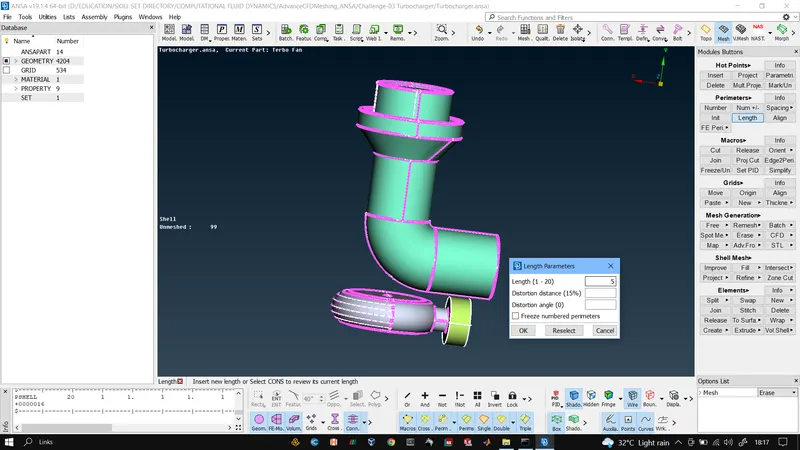
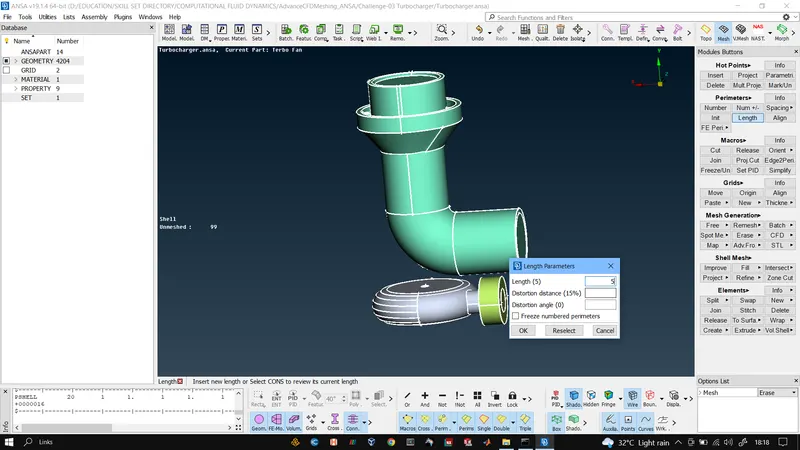
Similarly target length was set for other parts as well.
And their meshing was also done using Spot Mesh option.
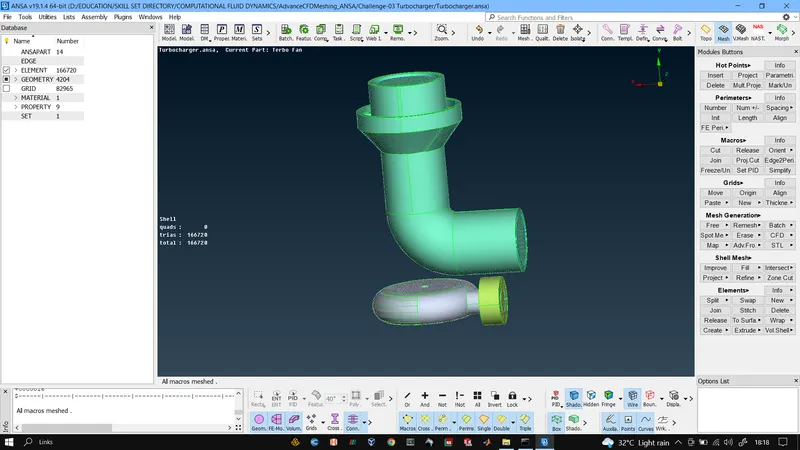
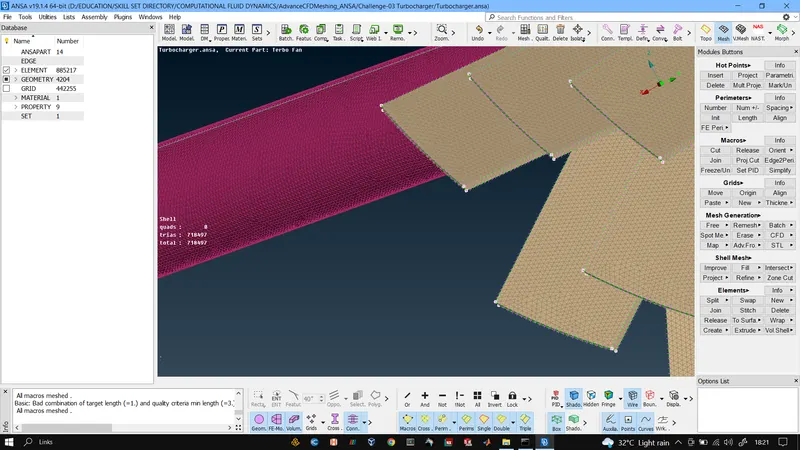
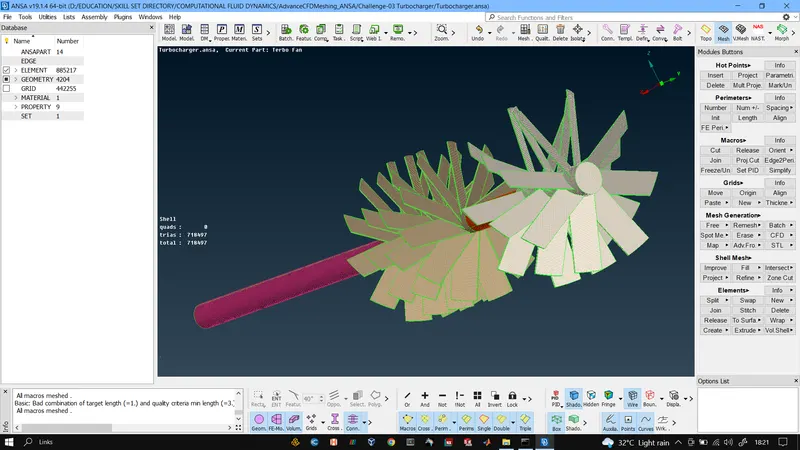
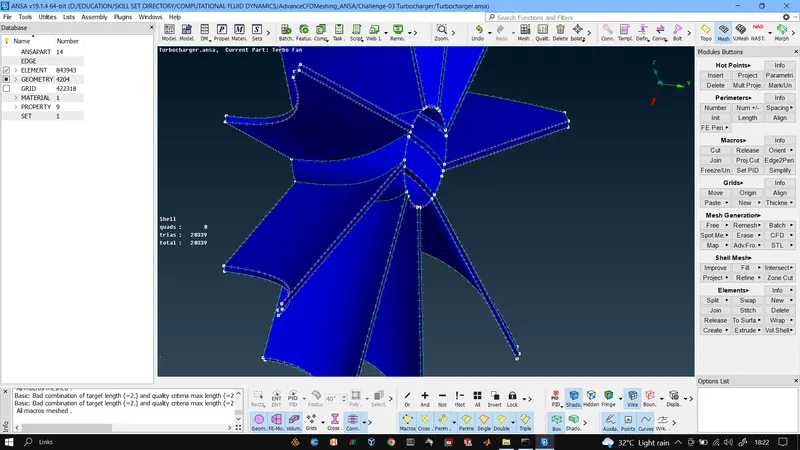
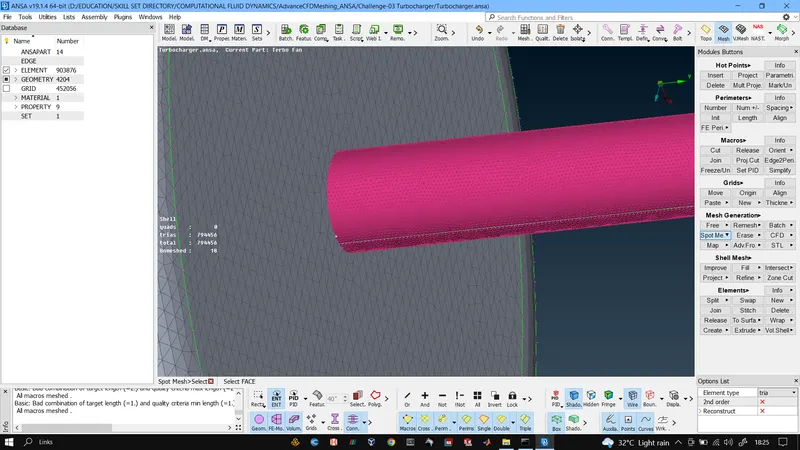
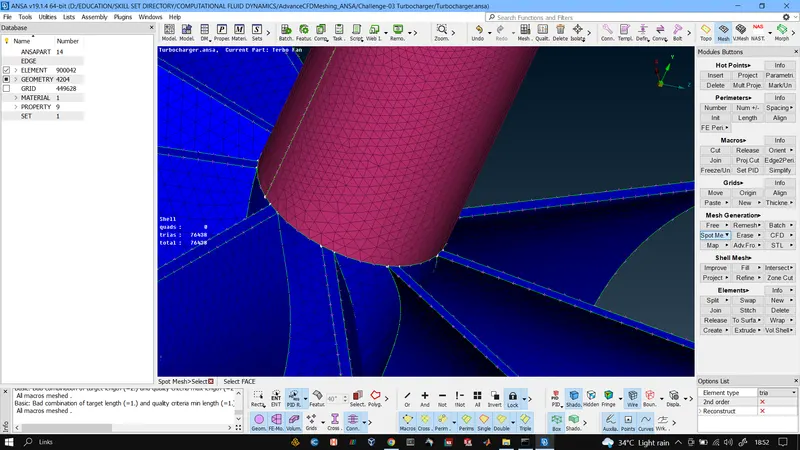
After completing the surface meshing of the turbocharger we head to volumetric mesh deck where the first thing we do is define the volumes using the auto detection method
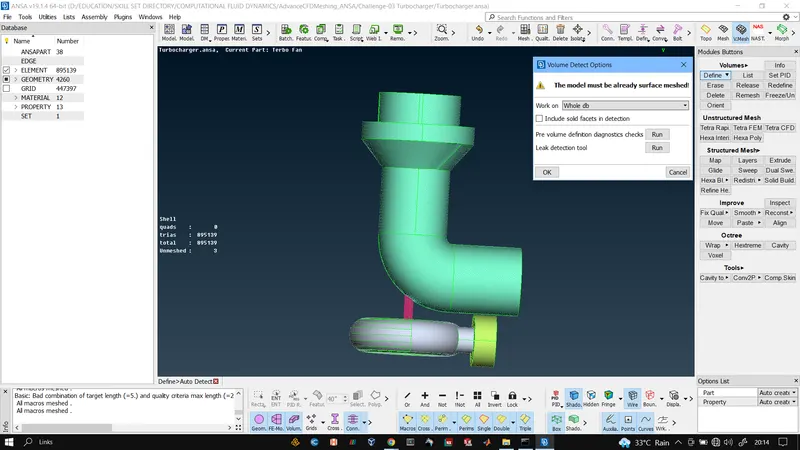
then the software detects all the available volume and shows them in a list like the PIDs
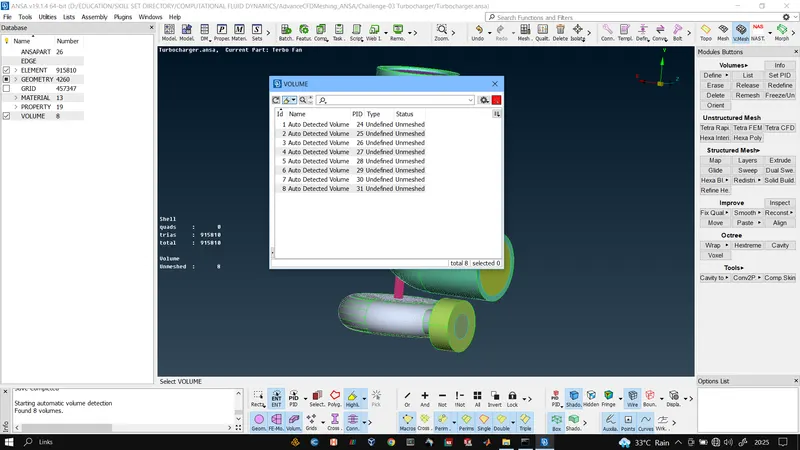
By clicking on each volume we check either it fluid flow volume or geometry volume only the volume where fluid flows are kept and all other volumes are deleted. And when meshing for CFD we need to make sure that the geometry should we completely closed and at times it leads to tripple CONS which can be ignored.
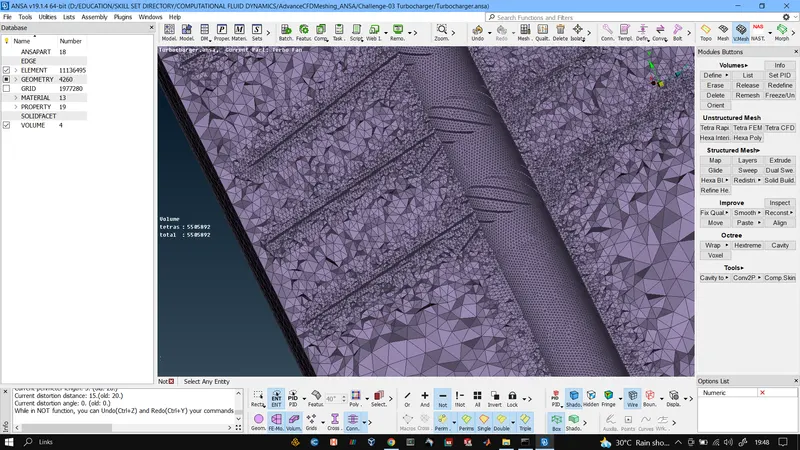
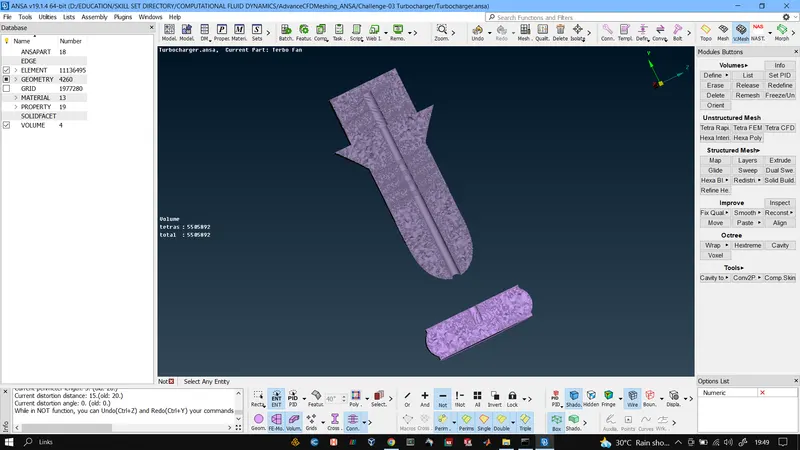
After removing the unnecessary volumes we right click onto them select the remesh option and select Tetra CFD and volume mehing is done.
RESULTS:
SURFACE MESHING
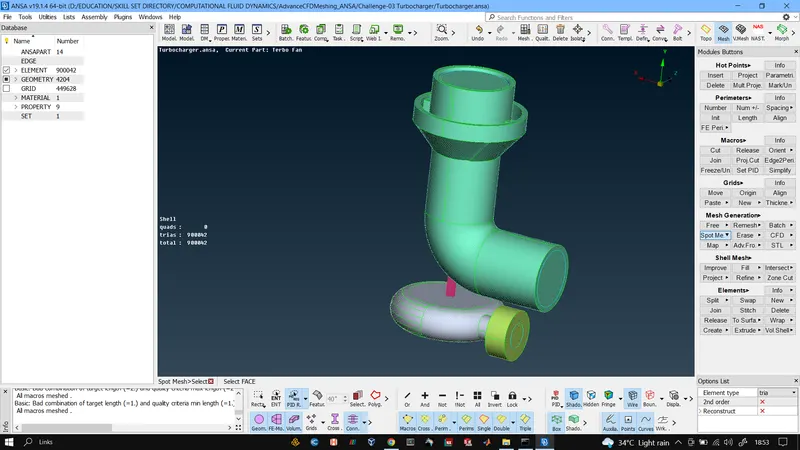
VOLUMETRIC MESH
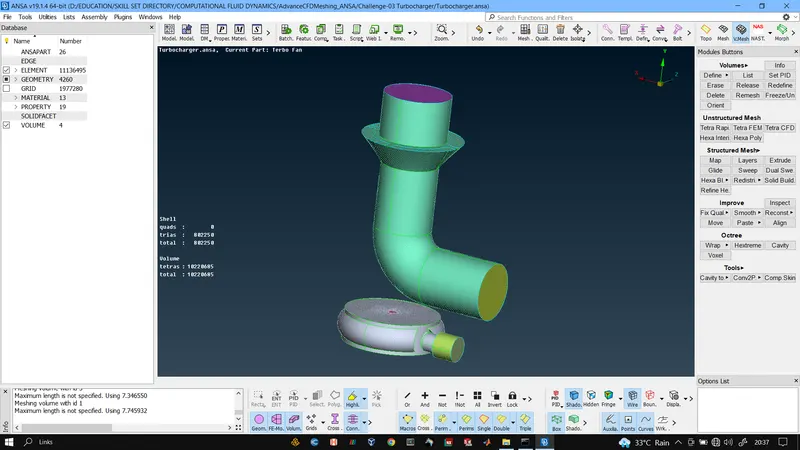
CONCLUSION: We learnt about volumetric meshing and got experience in surface meshing through this project also learnt how to patch complex sufraces. We also learnt that volumetric meshing is highly demanding and takes time to be generated, and also learnt how to surafce mesh two objects sharing a common boundary but having different mesh target lengths.
P.S. As the model is of approximately 600MB it has not been uploaded.