Week 3 Challenge : CFD meshing on Turbocharger
AIM- To check for the geometrical errors to make appropriate volumes. Create and assign PIDs as shown in the video. Perform surface mesh with the given target lengths as per PIDs. and perform v meshing.
Procedure-
1)Download and open the model in ansa
2)look for visible surface imperfrction or run a geometry check to check for bad top
3) some of the bad topo found-
- surface overlap
- not connected geometry
- non manifold geometry(missing faces)
- released hot points
- single cons
- intersecting faces
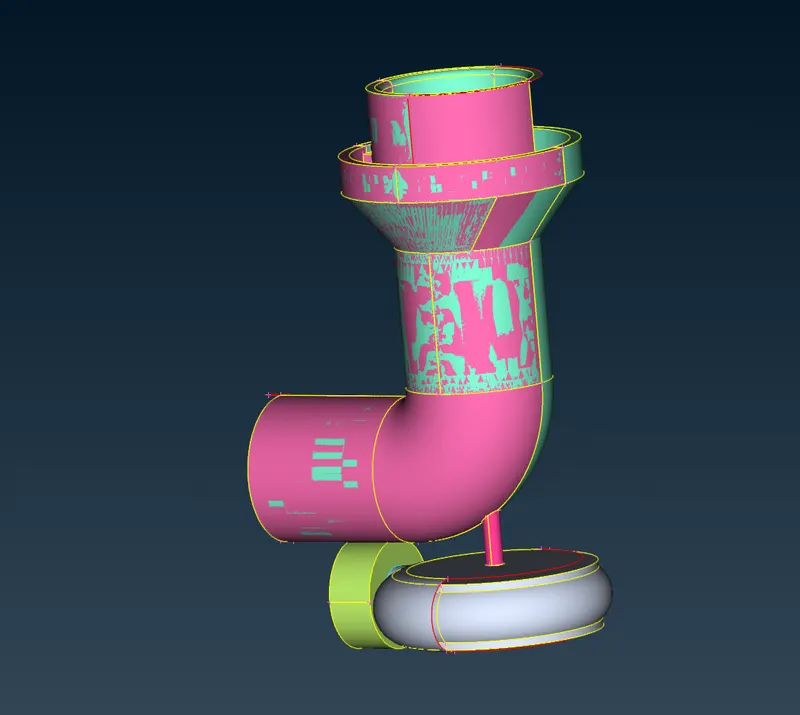
4)clean up the geometry in topo deck using tools like-
- create face using loops,coons,fitted etc
- delete face
- intersect create coons at point of intersection of geo
- project coons
- topo to join release geometry
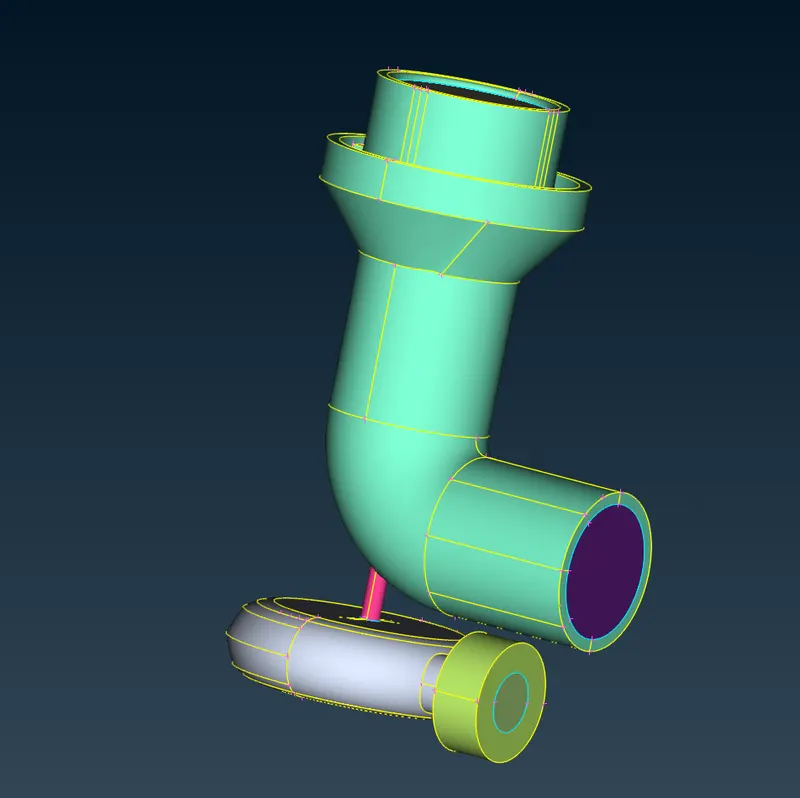
5)now that topo is cleaned set up the pid as required
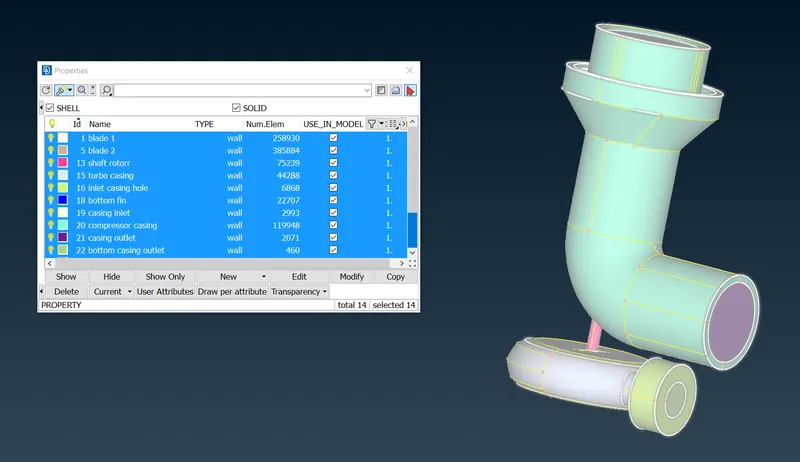
6)As PID are set up select the mesh deck set the target length in mesh properties and quality criteria Under PERIMETER ----- LENGTH option, the size of the macro and perimeter can be given by selecting the appropriate entities after giving the target size select the spot mesh option and select the surface and m click meshing will be done
7)AS diff pid region have different target length as given
- Blade stage-1 = 1 mm
- Blade stage-2 = 1 mm
- Impeller = 2 mm
- Shaft rotor = 1 mm
- Turbo casing = 5 mm
- Compressor casing = 5 mm
- Inlet casing cover = 5 mm
follow the 6 th step for each target length pid of same target length can be meshed together.
8)some of the transition surface might get unmeshed remesh them by selection by entity
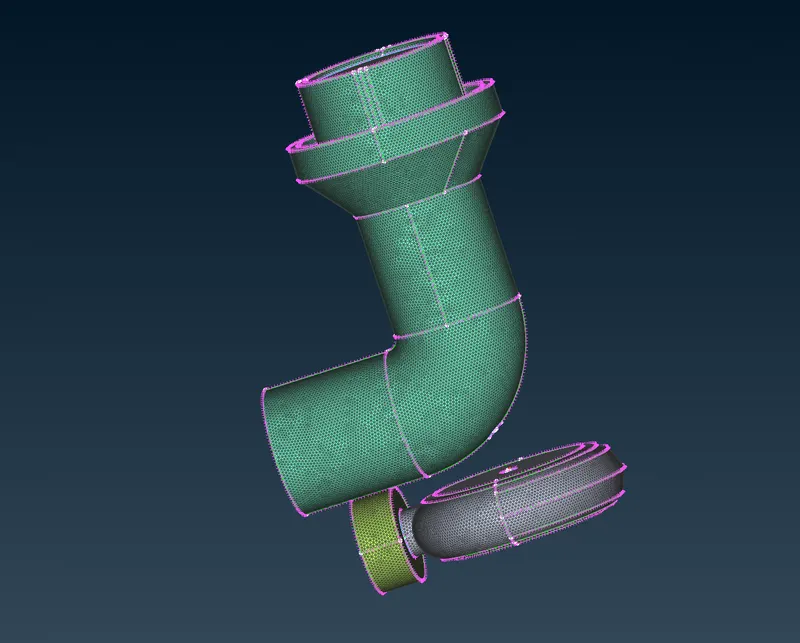
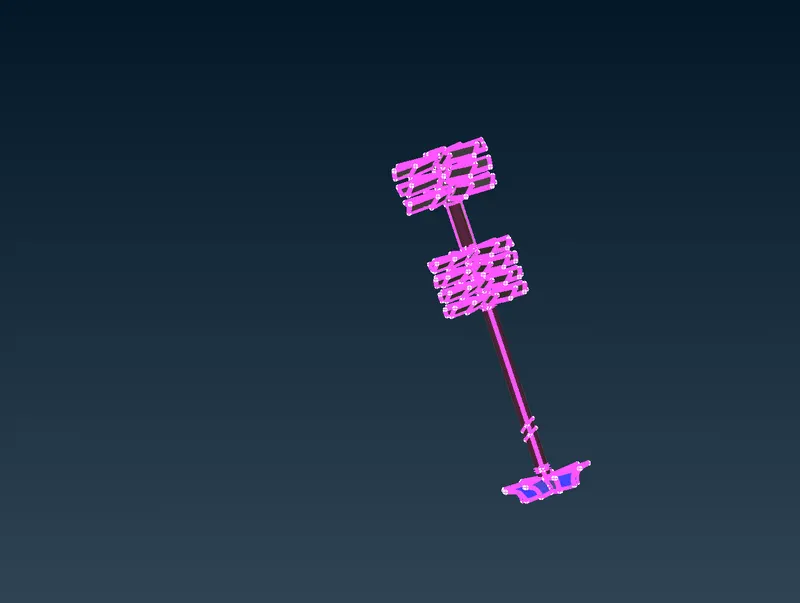
9) as surface meshing is done move to vol deck to start volume meshing
10)Goto VOLUMES DEFINE. There, whole db is selected.ANSA will give the list of all possible volumes From that list, select the necessary volumes and delete the rest.
11)go to list option select volume and click on remesh make sure Tetea cfd is selected and vmeshing is completed
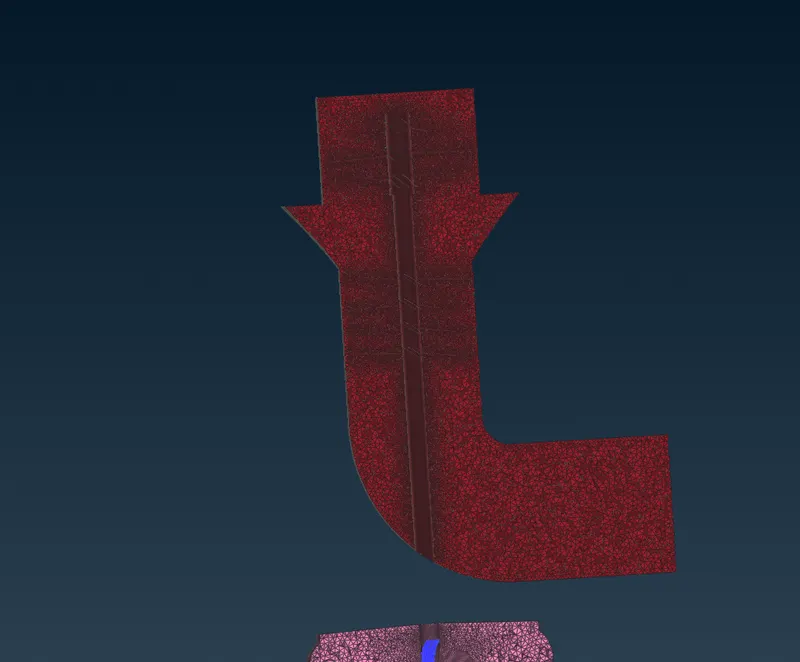
Learning- learnt diff options to clean the geometry and to check our geometry so we can mesh properly. And also learnt how to do the volumetric meshing.
Result - Turbo charger model is cleaned, surface meshed and then the control volume is meshed suitable for the CFD analysis.
ANS CFD FILE LINK- https://drive.google.com/file/d/1a-ju3KYsfPjidzteDUVIW7SpjDZidOpM/view?usp=sharing