Week-3 Challenge: ADVISOR Tool
Advisor Tool is used for simulation and analyzes conventional, advanced, light, and heavy vehicles, including hybrid electric and fuel cell vehicles. the tool allows to user to access the effect of changes in vehicle components( such as motors, batteries, catalytic converters, climate control systems, and alternative fuels the economy and performance, and emissions.
It is a set of model data script text files for use with Matlab and Simulink.
The benefit of using the Advisor tool.
Estimate the fuel economy of vehicles that have not yet been built.
Learn about how conventional, hybrid or electric vehicles use energy throughout their drive trains.
compare relative tailpipe emissions produced on a no of cycles.
Evaluate an energy management strategy for your hybrid vehicle fuel converter.
Optimize the gear ratios in your transmission to minimize fuel used or maximize performance
Q1: For EV_defaults_in file, if cargo mass is 500 kg with all other default conditions, can the vehicle travel for 45 km with FTP drive cycle? Conclude your observations.
step1; download advisor 2003 and put on current folder of matlab:
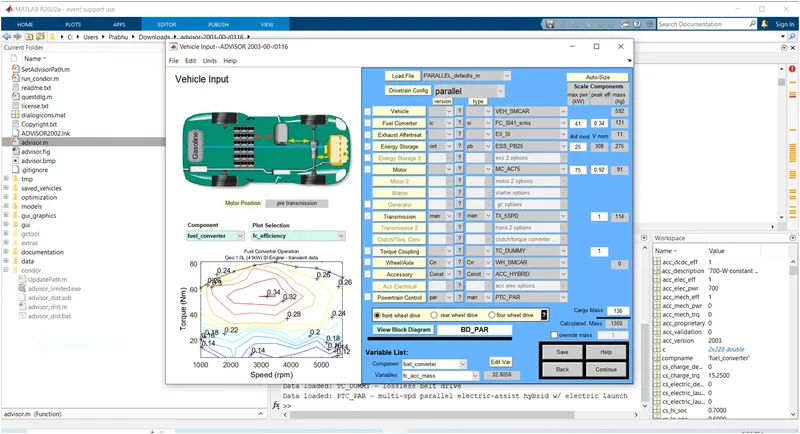
select the parameters from 'parallel default' to 'Ev default' and set the mass as 500kg.
Now the input screen of the tool is ready .
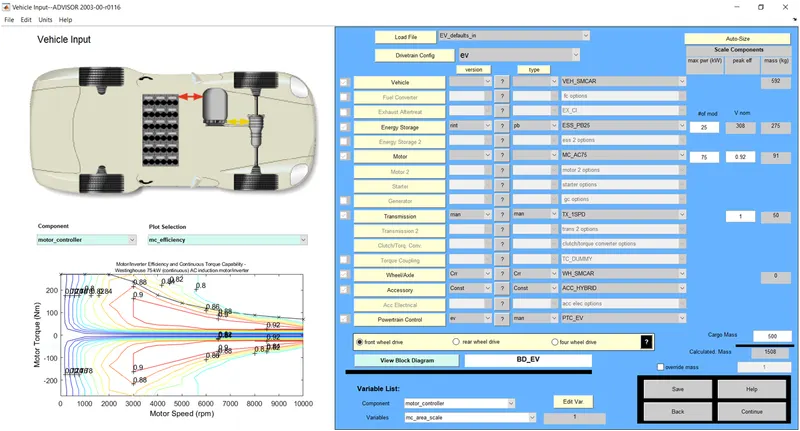
by continuing the process we get the outputs as follows ;
Output1_ distance covered_speed vs_time
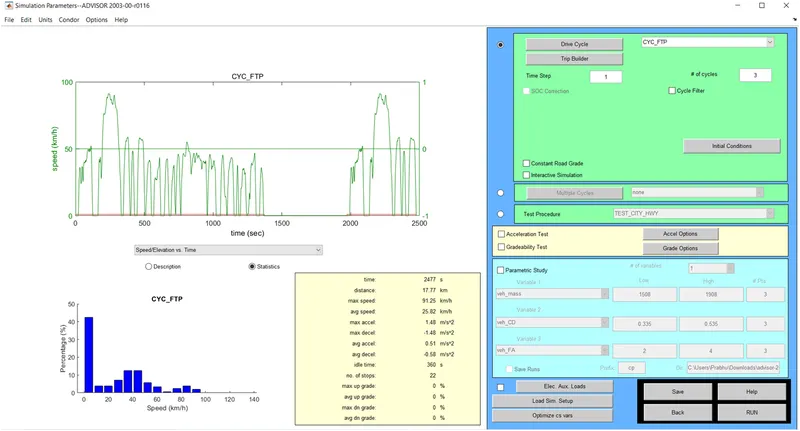
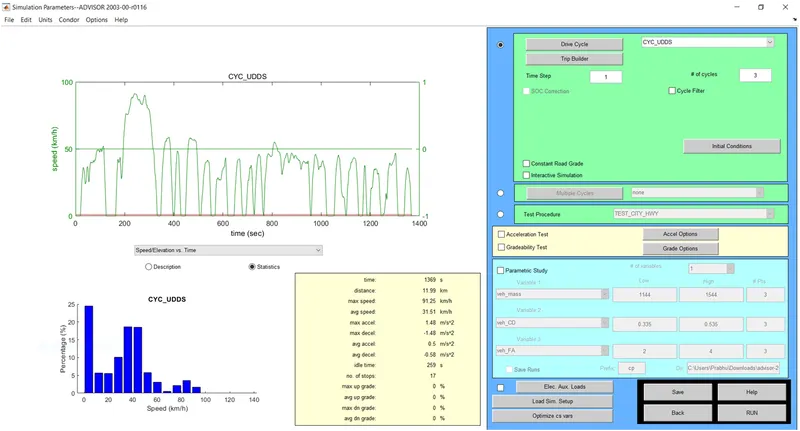
by Run for 3 number of cycles --- will get the results :
Output1_results
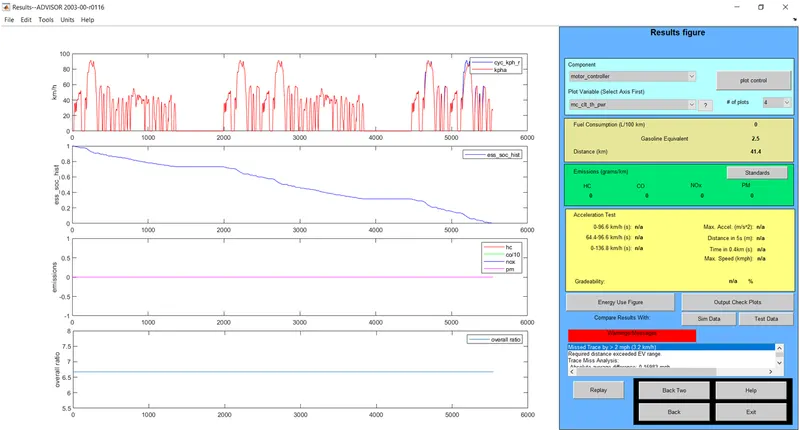
Findings:
With 28 module battery pack, 46.3km range can be achieved with 3 no. of cycles.
Within the available battery capacity the possible distance travel is 41.4 kms only and in order to cover the needed distance 45 , we may need to change the battery capacity after confirming with an exercise by increasing the number of cycles .
Rework – default – 1 cycle : out put
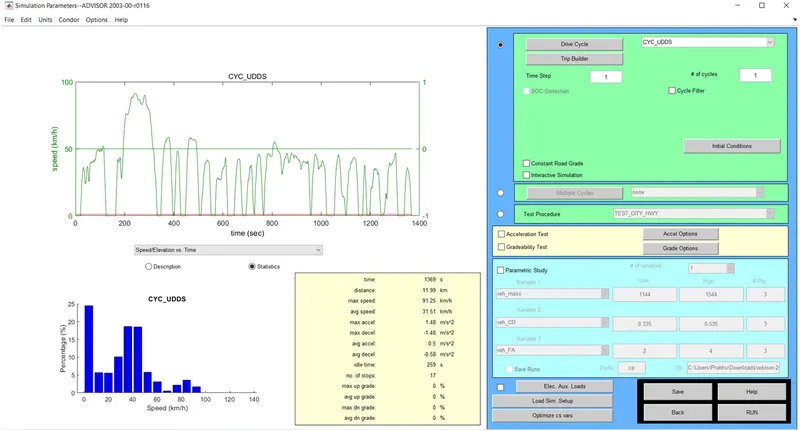
1 cycle : output results :
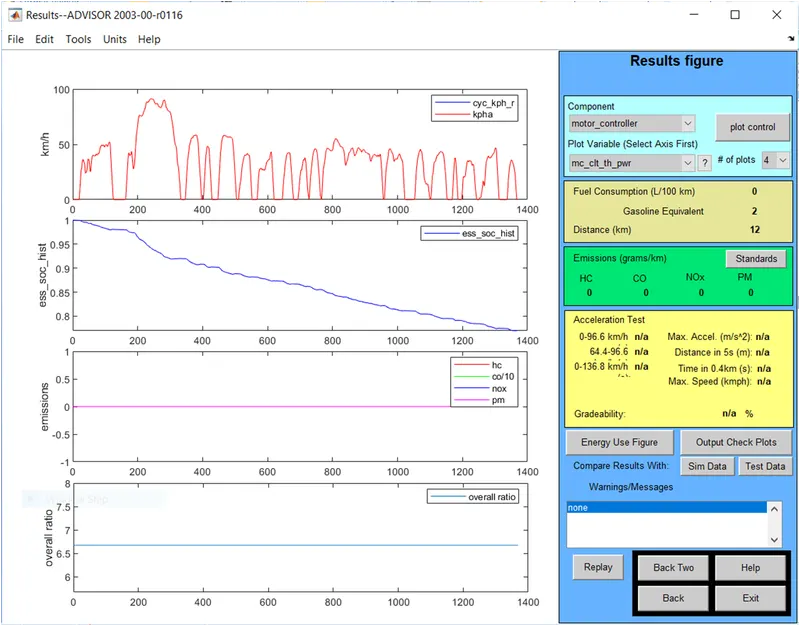
2 cycles result: coverage =24 kms
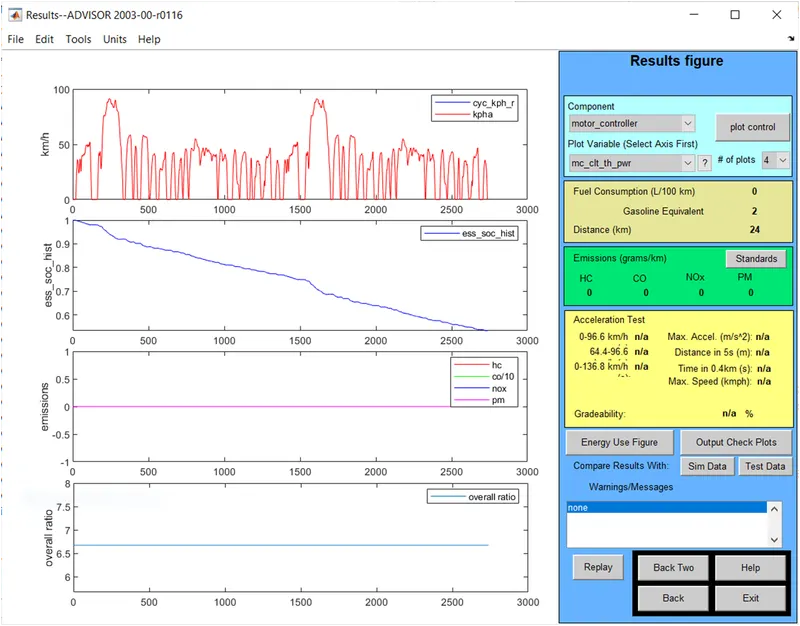 – 3 cycles : 3 cycles out put:
3cycles results: coverage =36 kms
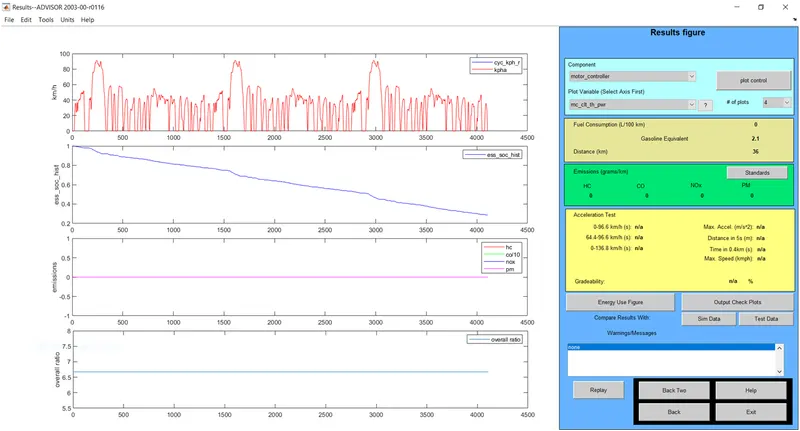
Conclusion: by an increasing, the number of cycles = per cycle value remains the same as the multiples of 12 – like 12,24,36. resulting we have to change the battery specifications.
With 28 module battery pack, 46.3km range can be achieved with 3 no. of cycles.
With increase in speed, the gradeability of the vehicle has been reduced. Thus, it is concluded that the gradeability is inversely proportional to the speed.
Quest 2:
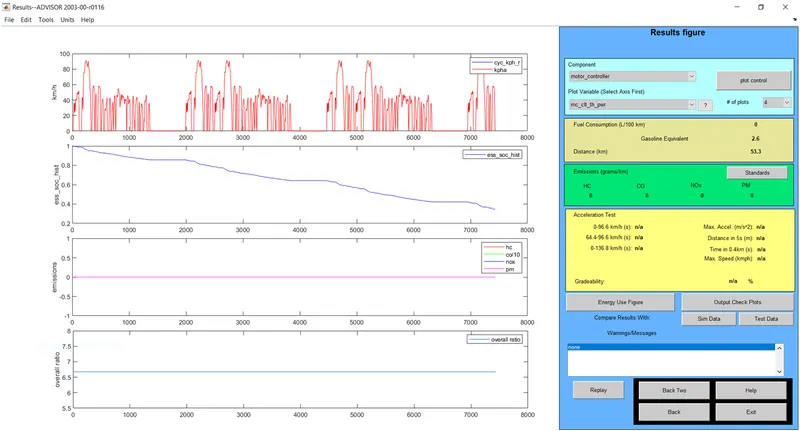
Let us make battery capacity as 50 from 25 for same 3 number of cycles:
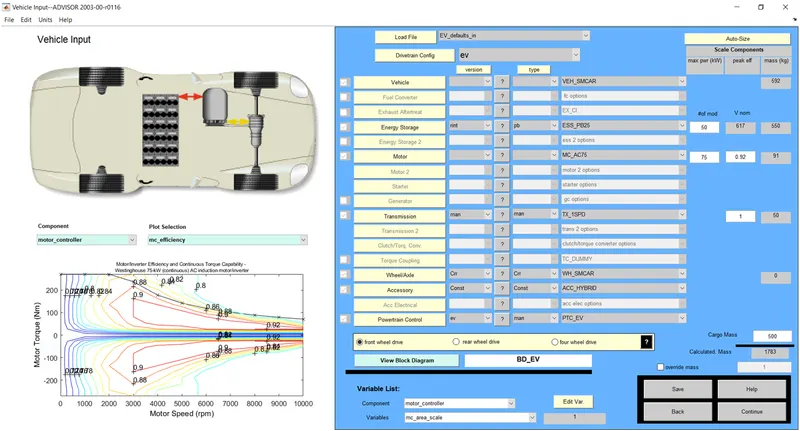
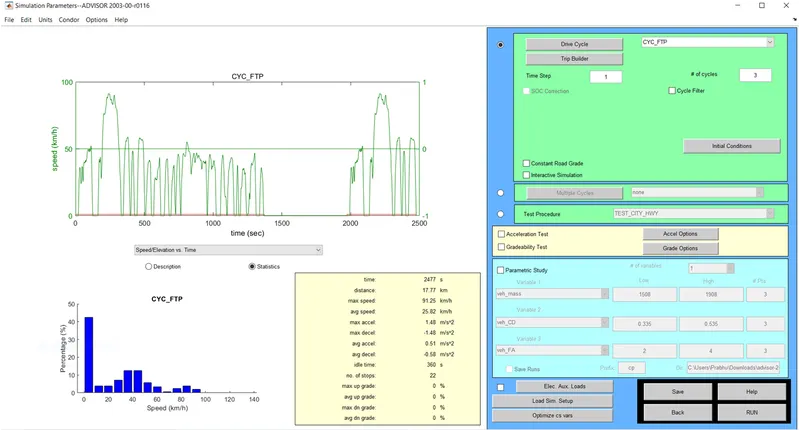
Output2 results : distance 53 .3 km
Question3: prius_jpn:
by selecting the vehicle as Prius-jpn will get the input tool as below:
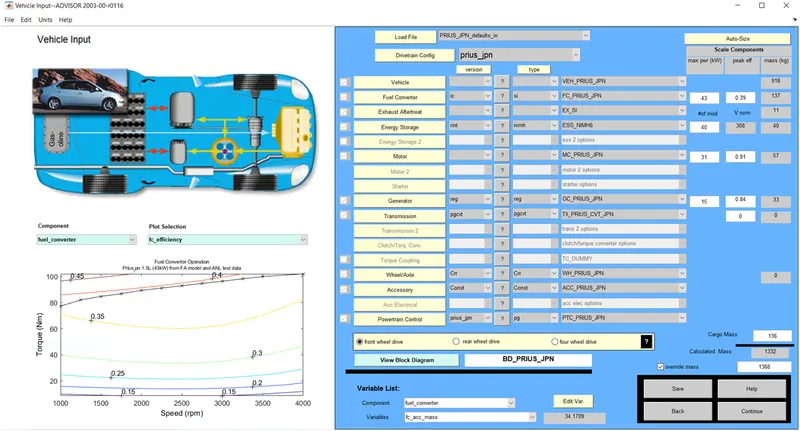
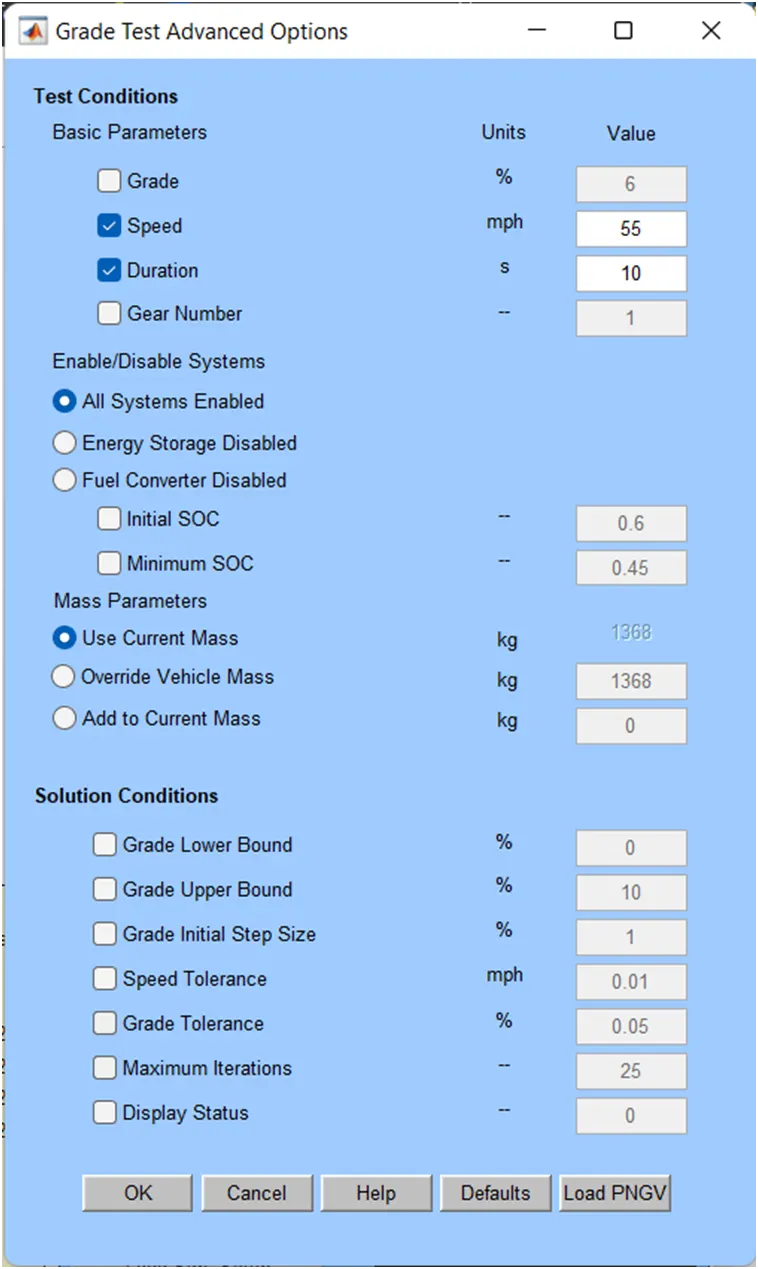
To perform a gradability test, a speed range of 20-55 mph is applied.:
by ''continue'' will get the below selection screen :
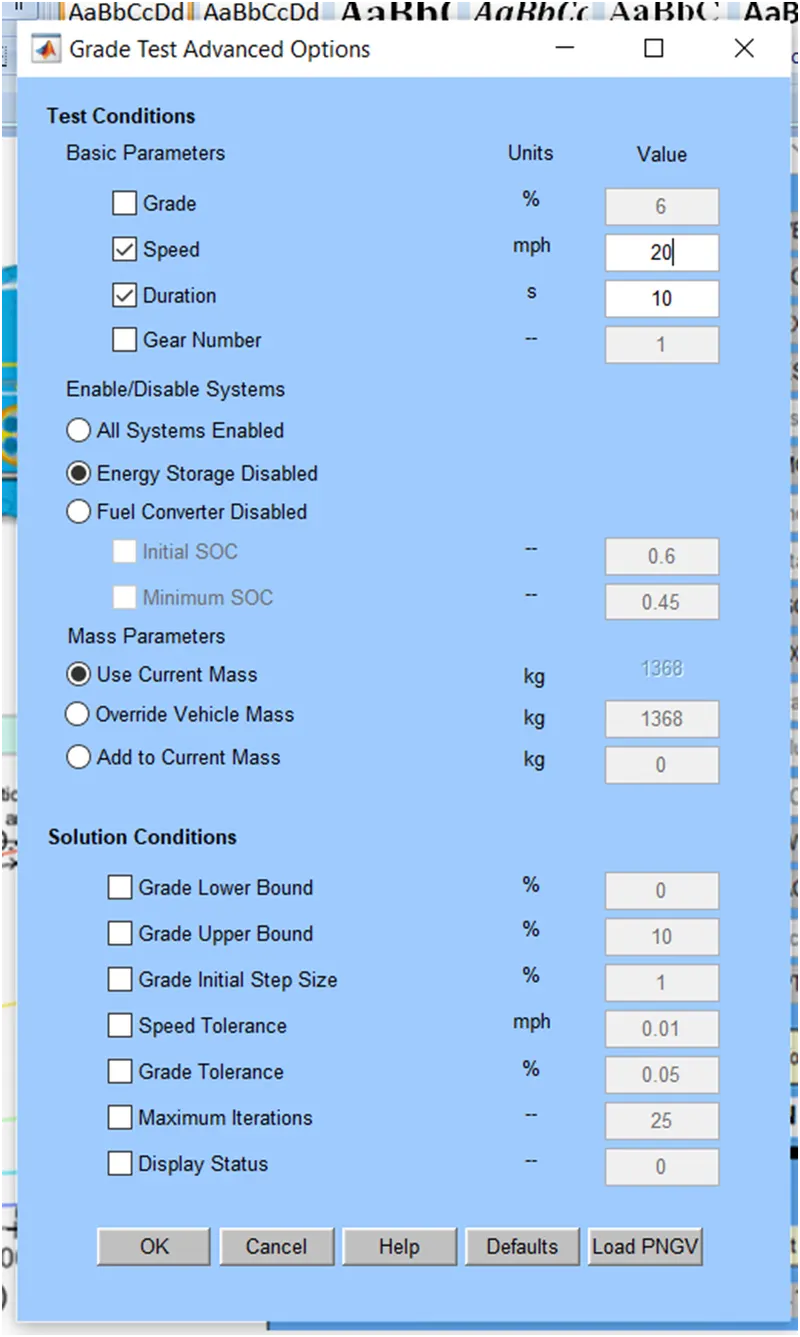
For 20mph speed Grade-ability
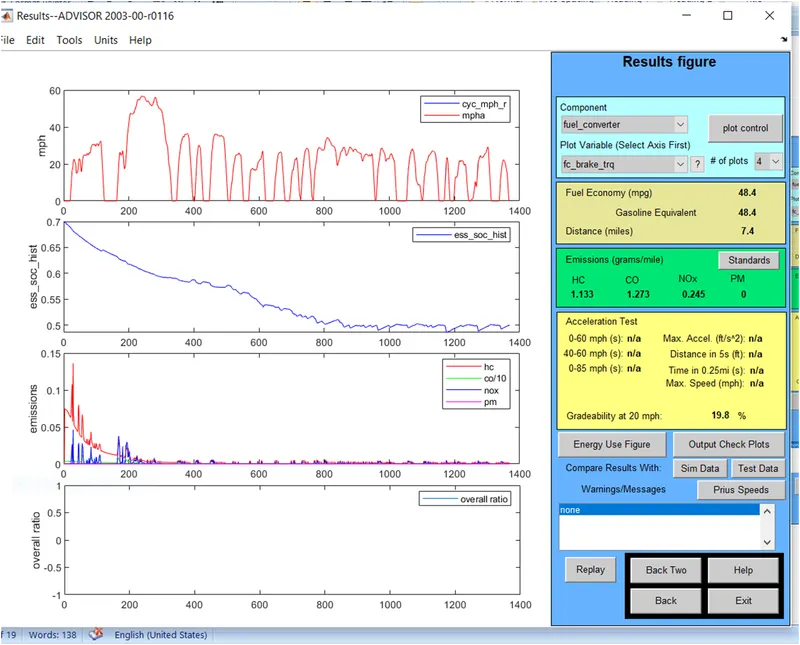
results gradeability = 19.8
---------------
For speed 30mph:
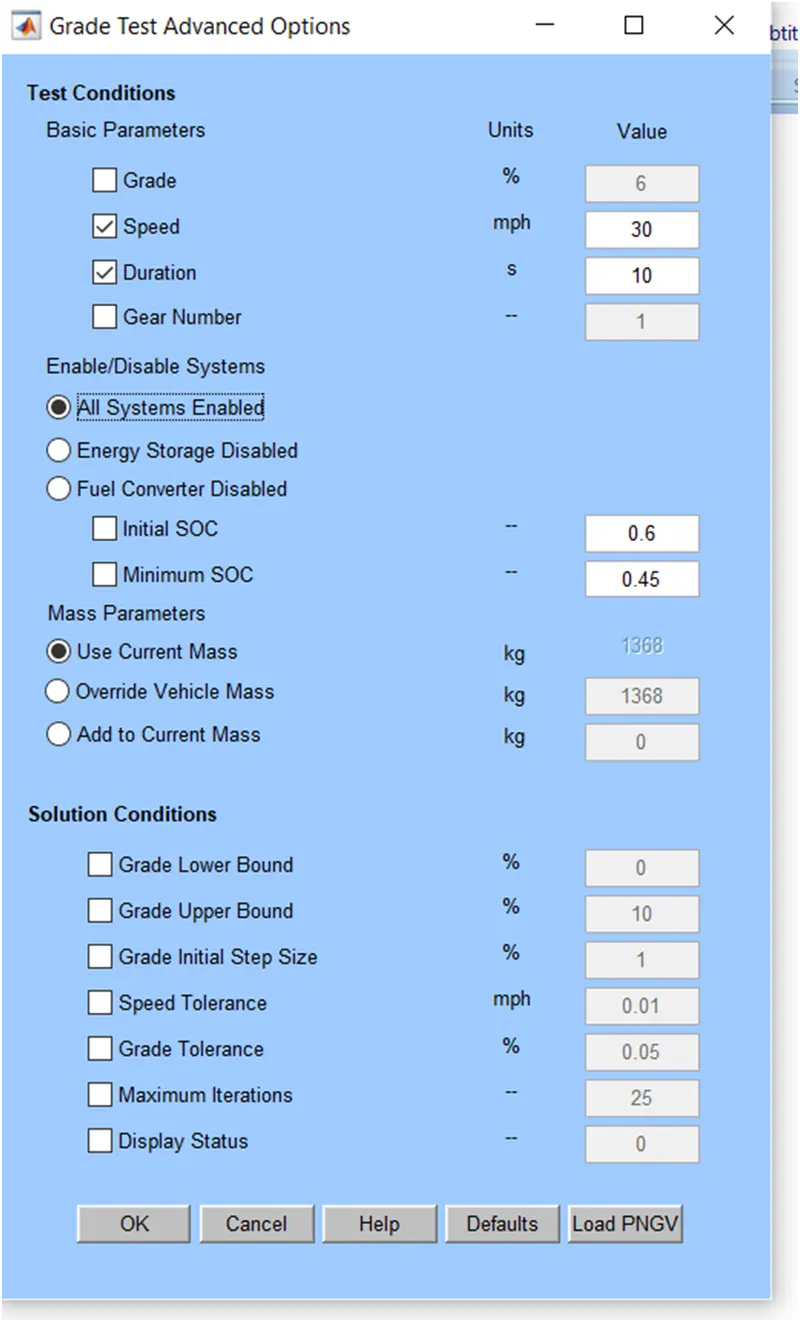
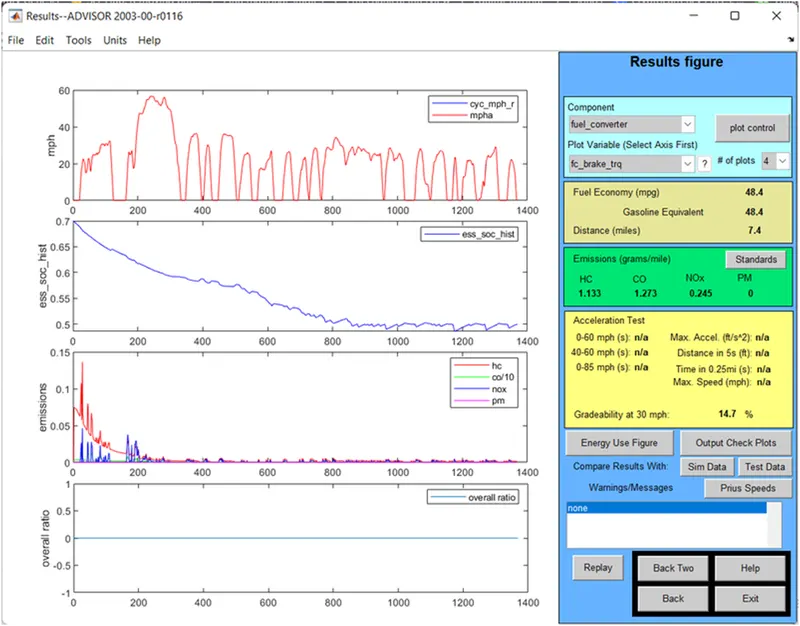 Result gradability:14.4%
Speed 40 mph:
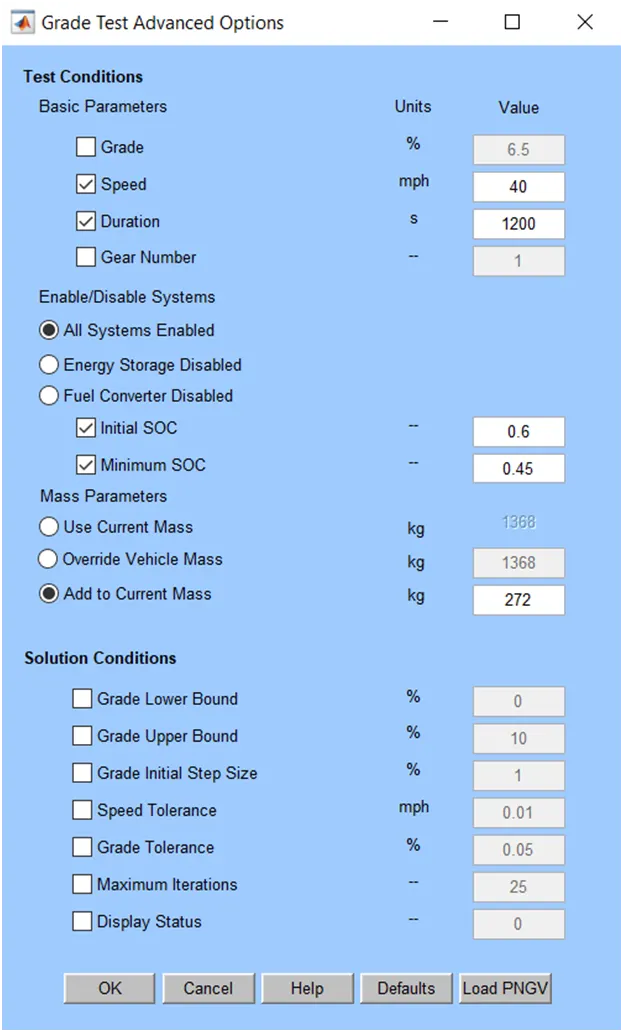
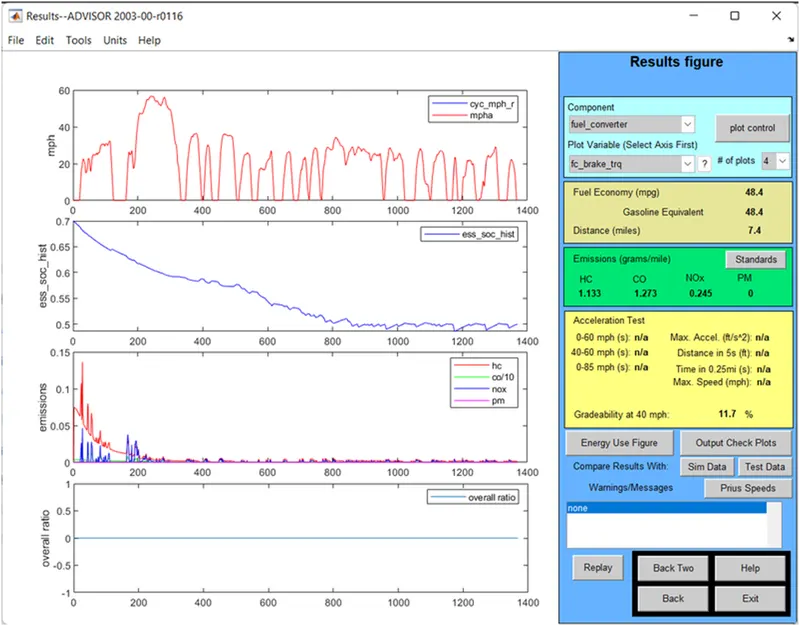
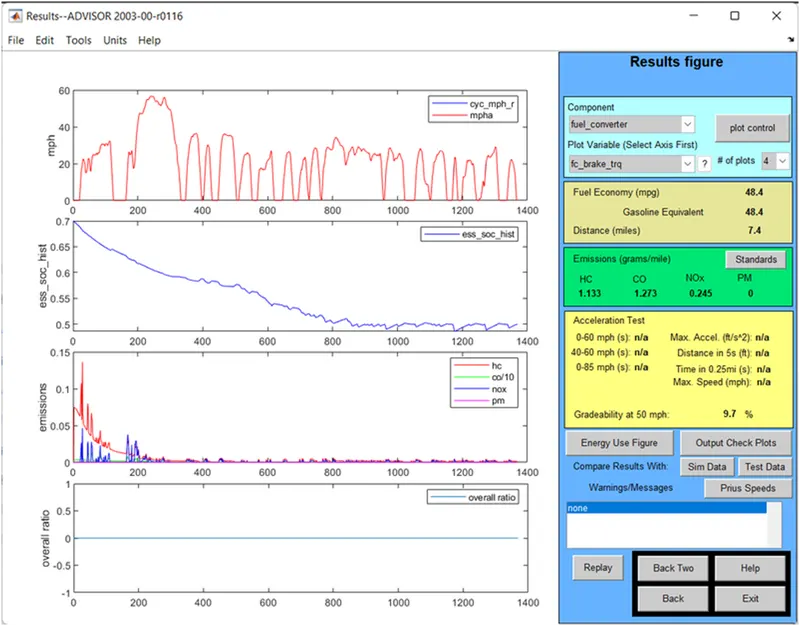
Speed50 mph
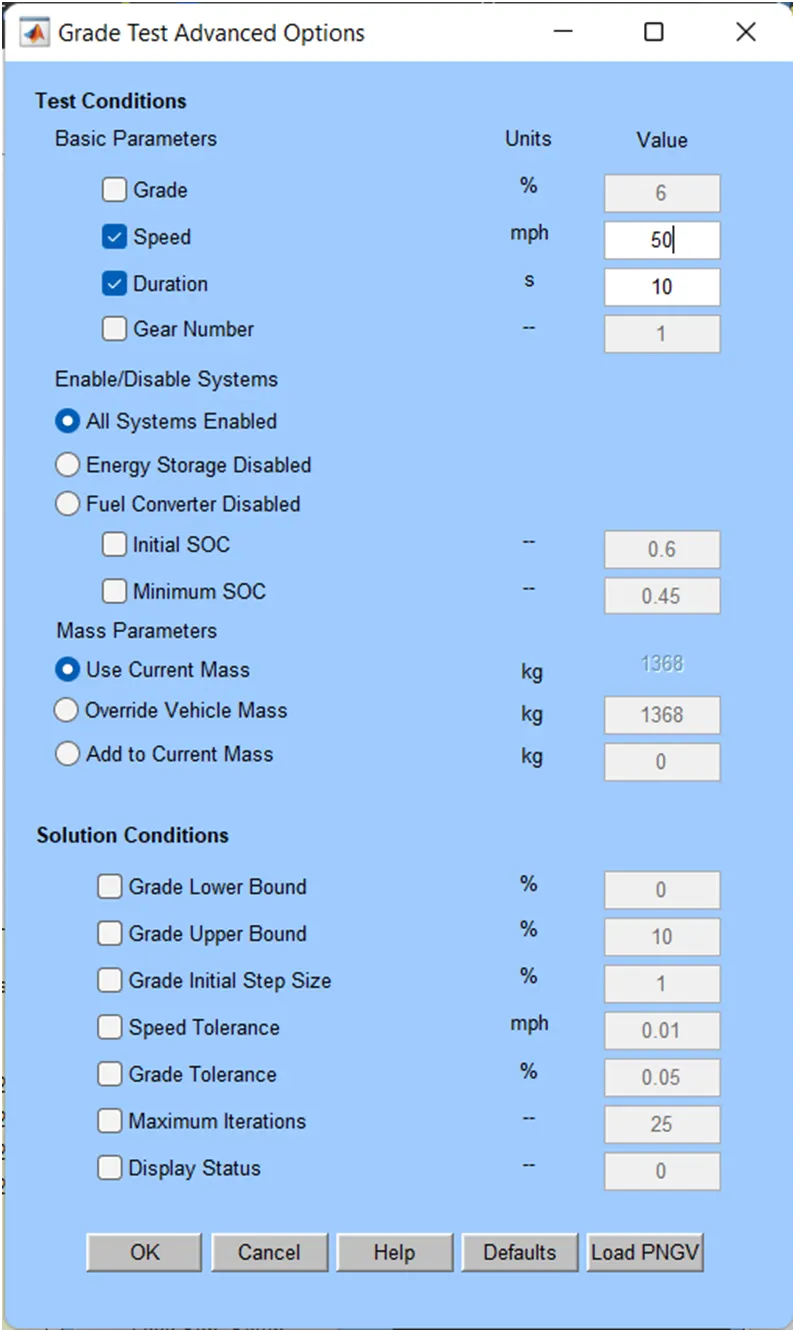
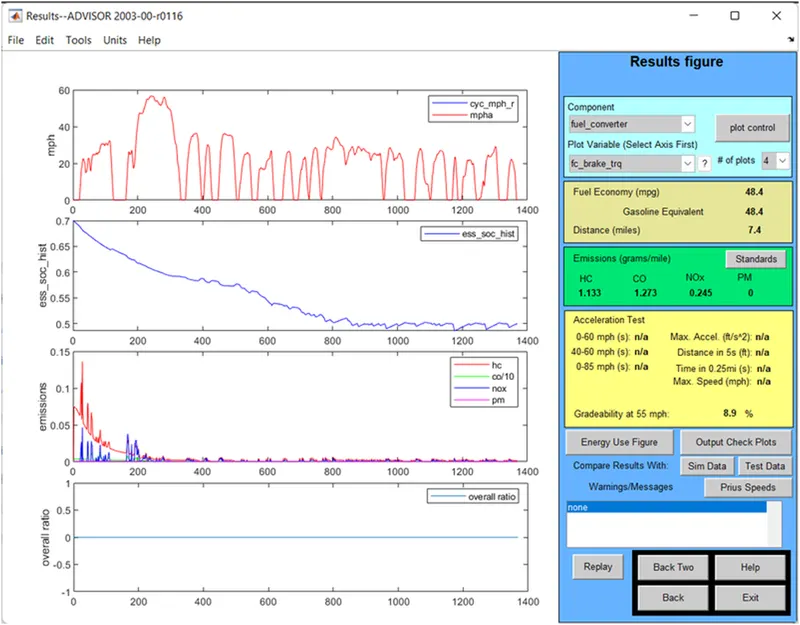
55 mph
Results:
Speed (mph) Gradability
20 19.8%
30 14.7%
40 11.7%
50 9.7%
55 8.9%
From the above table, we can observe that the gradability is inversely proportional to the to speed.
So we can conclude that gradability is highest at a lower speed than at high speeds.
CONCLUSION:
We learnt the uses of the Advisor tool.
We calculated the range of the default vehicle model for 500kg mass.
We also checked the distance travelled for the different module # of batteries.
We also performed a gradability test for the PRIUS_JPN model and concluded that the gradability is inversely proportional to the speed.
------------------ end ----------------------