Week-3 Challenge: ADVISOR Tool
ADIVISOR TOOL SIMULATION:-
To simulate the Gradeability and drive cycle using ADVISOR TOOL in MATLAB.
ADVISOR TOOL
ADVISOR is NREL's ADvanced Vechicle SimulatOR, is a set of model, data and script text files for use with MATLAB and Simulink. It is designed for rapid analysis of the performance and fuel economy of conventioal, electric, and hybrid vehciels. ADVISOR also provides a backbone for the detailed simulation and analysis of user defince drivetrain components, a starting point of verified vehicle deata and algorithms from which to take full advantage of the modelling flexidbiltiy of simulink and analytic power of MATLAB.
SIMULATION:-
1) For EV_defaults_in file, if cargo mass is 500kg with all other default conditions, can the vehicle travel for 45 km with FTP drive cycle?
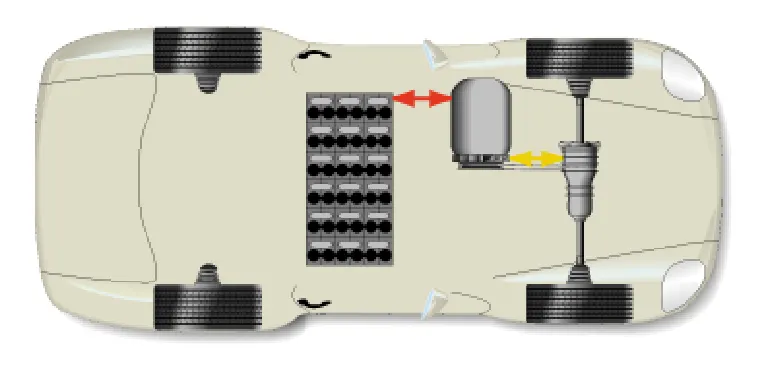
The EV default vehicle is a pure EV where it's completely driven by battery as power source.
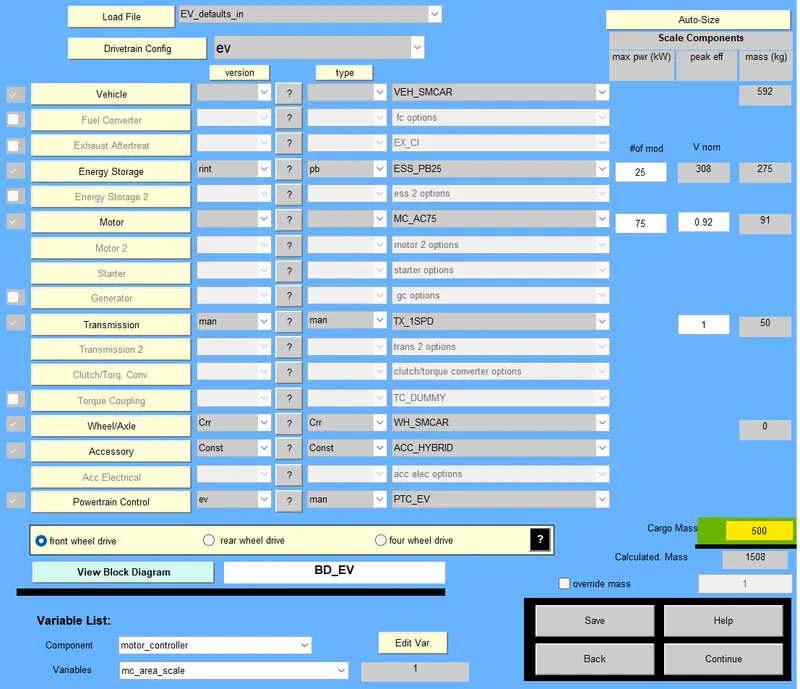
The cargo mass is changed to 500 kg from the default value of 136kh,
The drive cycle is FTP (Federal Test Procedure) and the maximum distance travelled is 17.7 km,
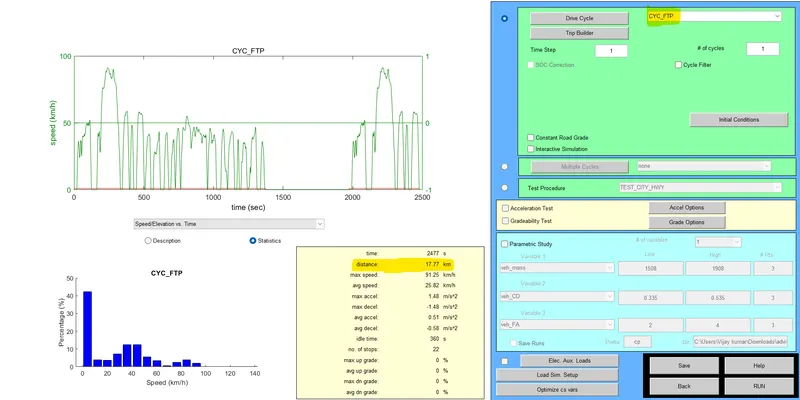
So, in order to achieve 45 km of distance thee FTP Drive Cycle to be repeated 2.55 times which will cover the distance of 45.124km,
CONCLUSION:-
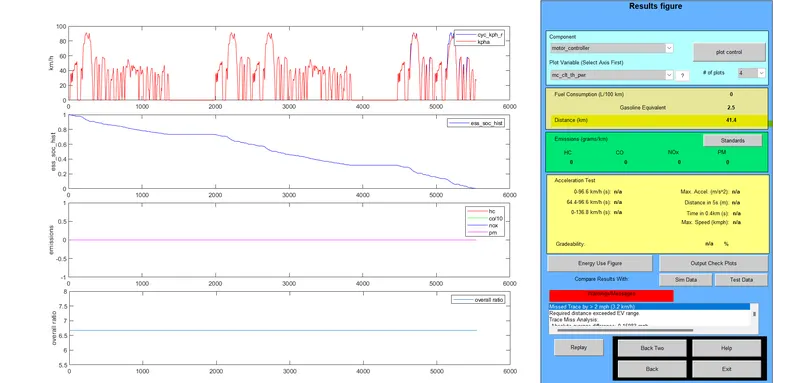
From the simulation we can understand that the vehicle didn't run for distance of 45.135km and there is anerror popping out that the required distance exceeded the EV range. so, i order to achieve the required idstance we need to increase the battery capacity.
2)Changing the battery capacity and repeating the above simulation:-
The battery module is being increased to give more power for futher distance of the vehcile from 25 modules to 35 modules,
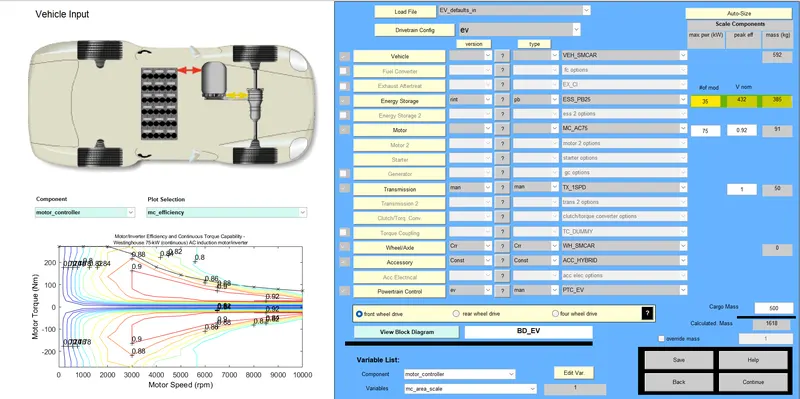
After increasing in the battery capacity the vehicle is able to run for the requried distance,
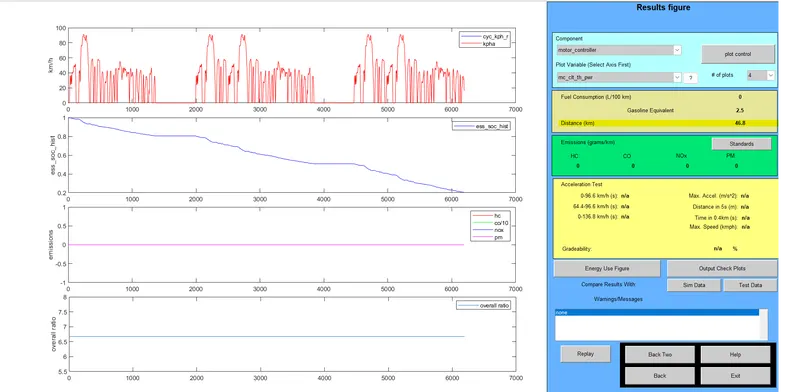
CONCLUSION:-
From this simulatin we can conclude tht the required distance (45KM) is bein g achieved by increasing the battery modules for extra power required to run the vehciel above 41.4km.
3) GRADEABILITY TEST FOR PRIUS_Jpn_defaults_in
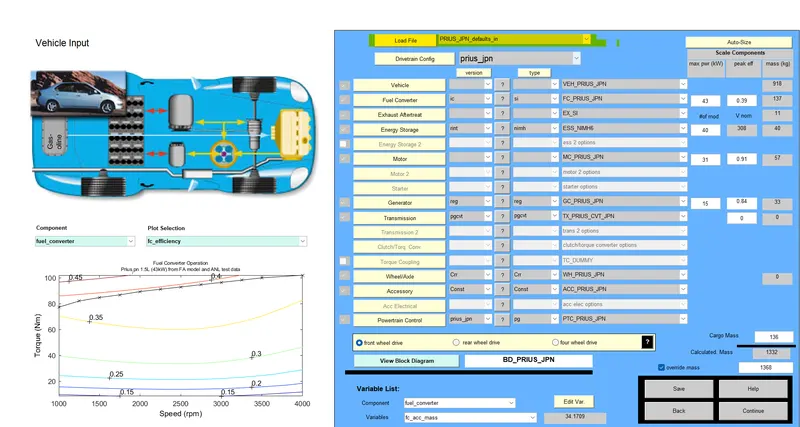
The Prius_Jpn_defaults_in file is selected in the ehicle input window. All the parameters of the vehicle is kept as default.
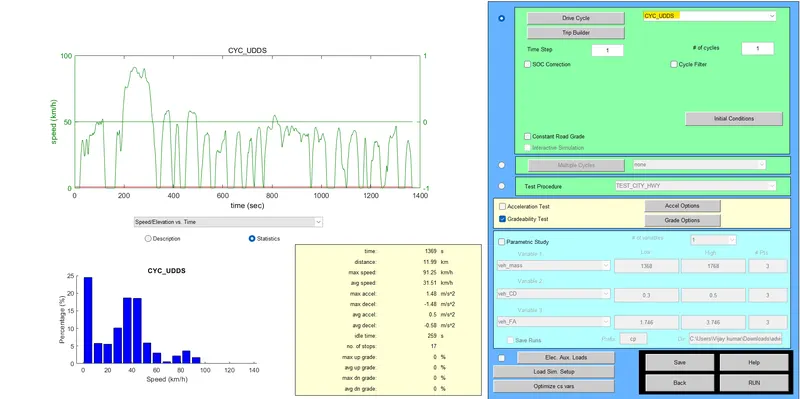
In the simulation parmeters window the drive cycle is set as UDDS with one cycle. The gradeabilty test check box is checked for the grade test to be simulated.
Simulating the vehicle with 6% grade
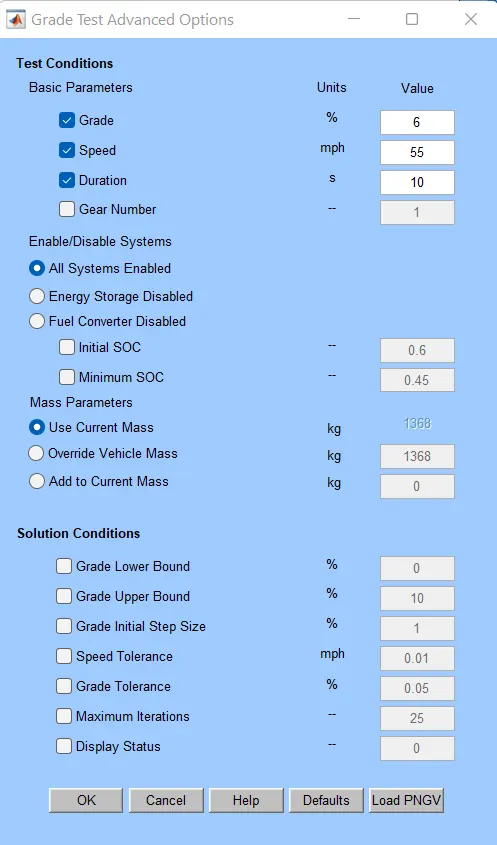
The grade option is selected to open the grade test advanced options window by wich the values of grade, speed, time and Many other parameters can be modified. For the first simulation the grade is set to 6% , speed is set to 55mph and the time is set to 10 seconds. all systems of the vehicle is enabled during the grade test simulation.
The result of the first simulation with grade as 6%.
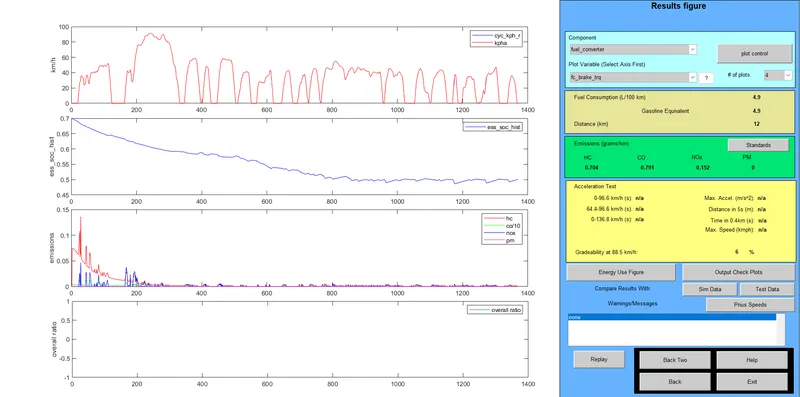
It is seen that the vehicle has passed the grade test as it can achieve 6% gradeability at 88.5kmph.
Simulation of vehicle with 7 % grade
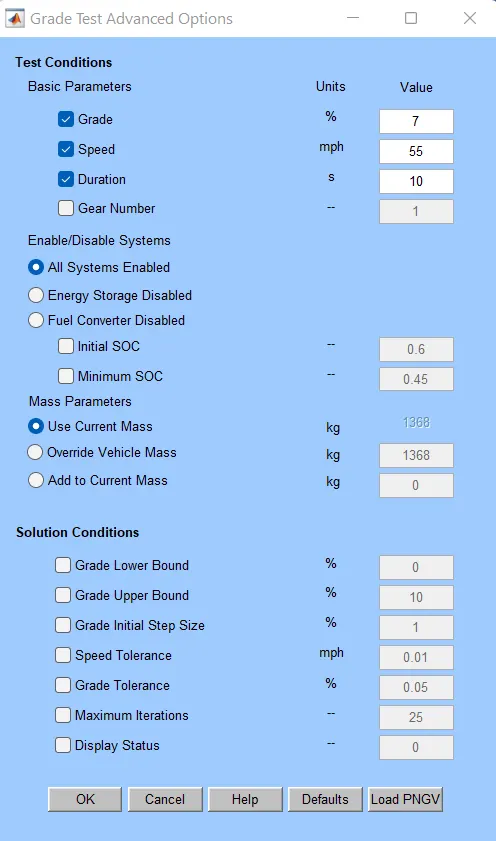
In the grade option windown the parameters are changed as 7% grade and the other parameters as the previous simulation.
The result of simulation with 7% grade
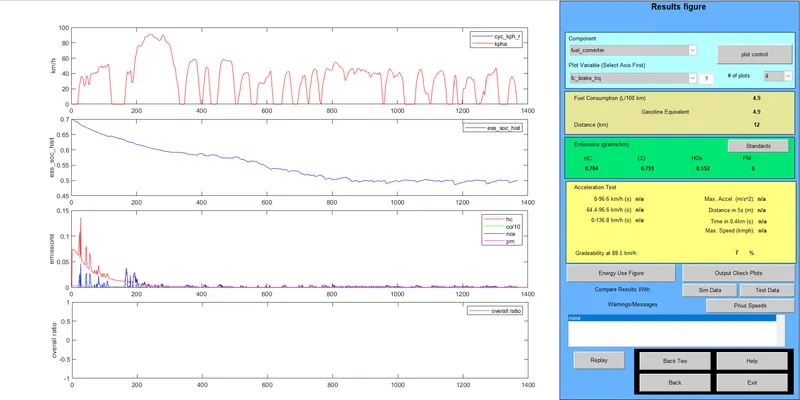
The vehicle has passed the simulation achieving 7% grade at 88.5kmph
Simulation of vehicle with 8% grade
In the grade option window the parameters are changed as 8% grade and the other parameters as the previous simulation.
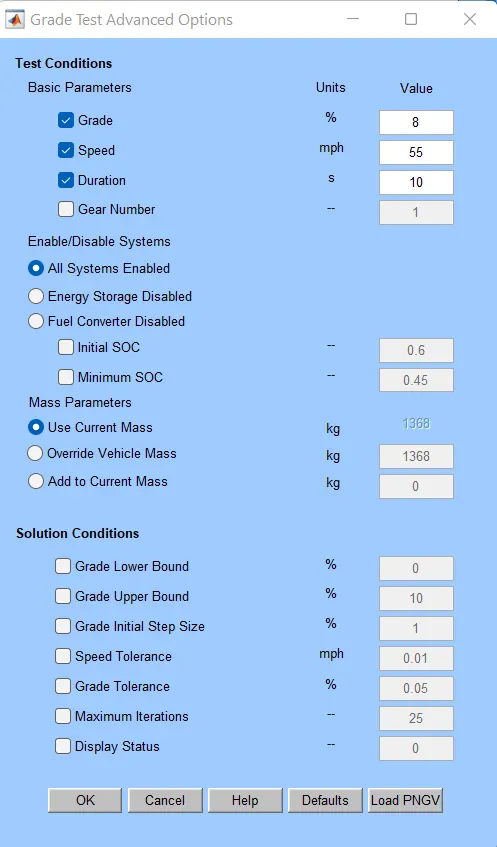
The result of simulation with 8% grade
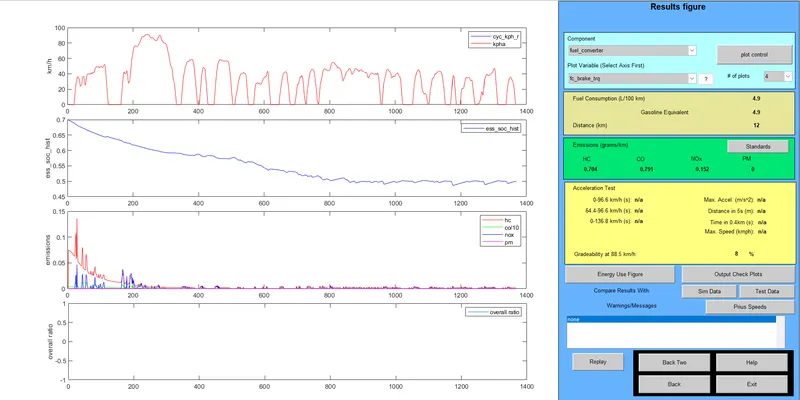
The vehicle has passed the simulation achieving 8% grade at 88.5kmph.
Simulation of vehicle with 9% grade
In the grade option windown the parameters are changed as 9% grade and the other parameters as the previous simulation.
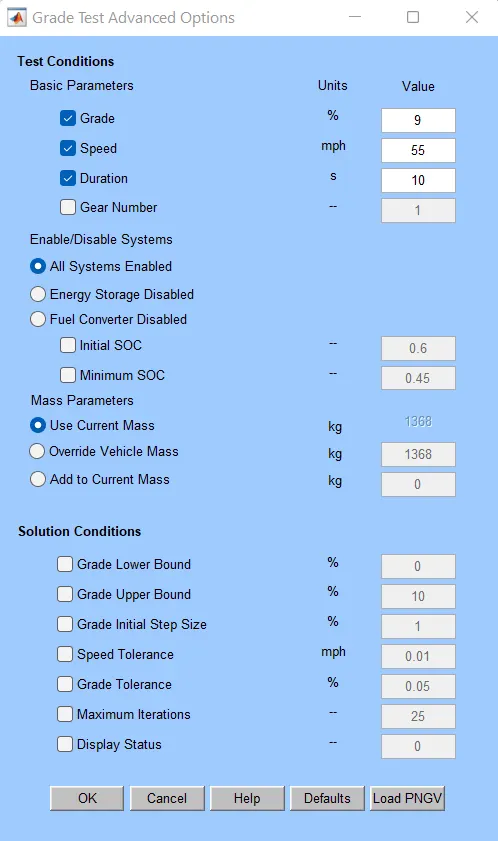
The result of simulation with 9% grade
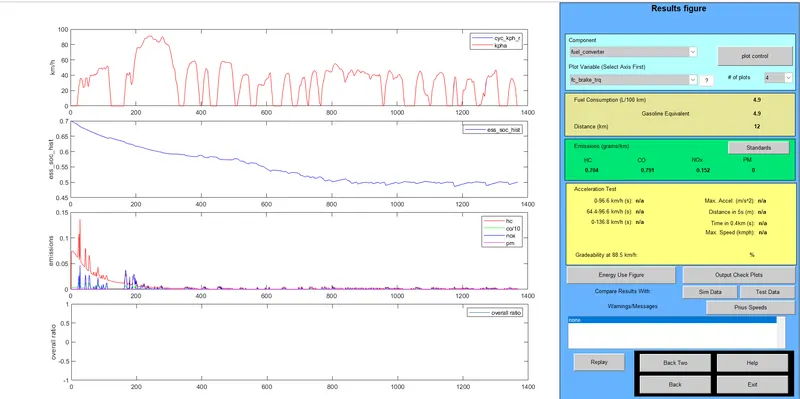
The result window shows that the vehicle has failed to achieve 9% grade at 88.5kmph.
The time is increased from 10s to 20s in the grade test advanced options window, to give the vehicle some extra accleration time to reach the speed at 9% grade.
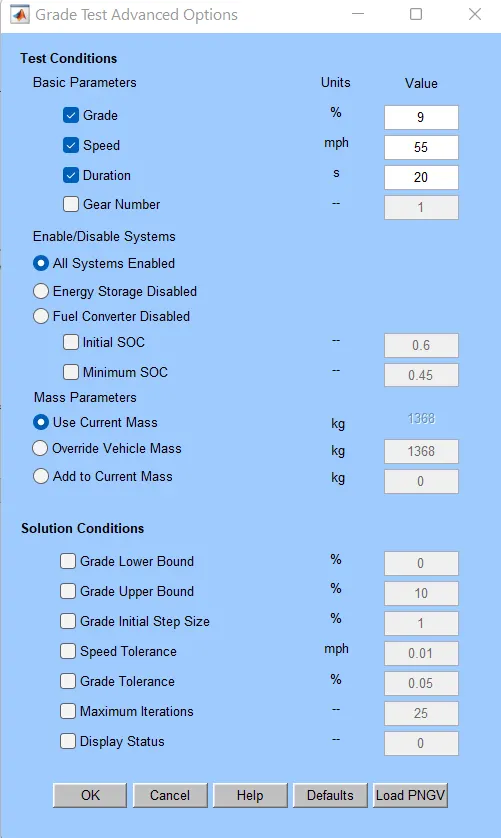
The result of the simulation with 9% grade and 20s time
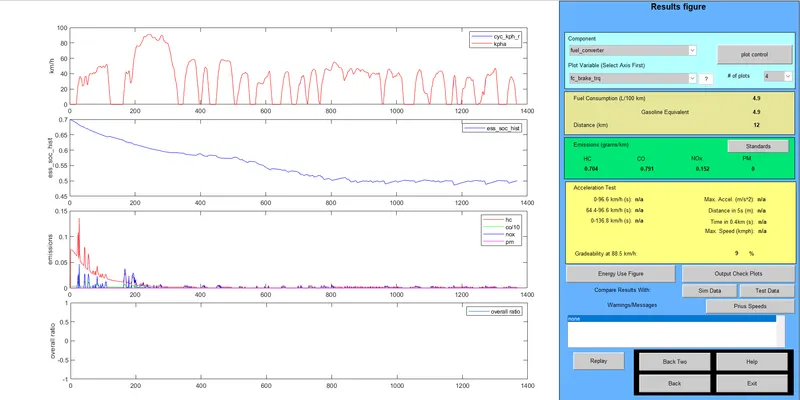
The vehicle has passed the simulation with 9% grade at 88.5kmph with 20s.
Conclusion
The comparison of the grade test is tabulated below using excel
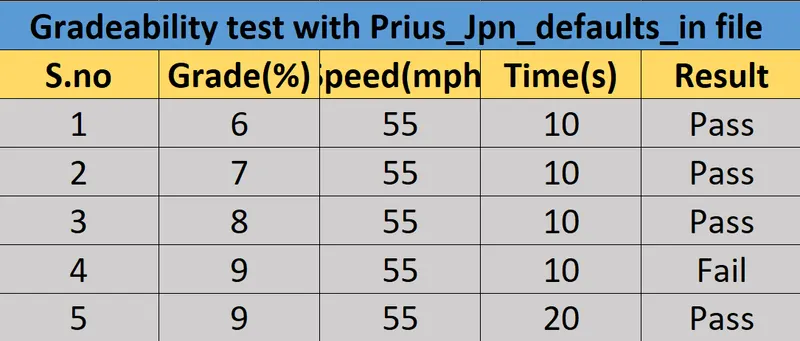
It is concluded that the gradeability of the vehicle with a standard speed can be increased upto the vehicles limit, with an increase in the accleration time. This requirment of accleration time is due to the hill climbing force opposing the vehicle. The hill climbing force increases with the increases of grade angle.