Week-3 Challenge: ADVISOR Tool
Aim: To check the capacity of an Electric Vehicle under load.
Objective: To simulate an Electic vehicle, EV_defaults_in file adding a cargo mass of 500 kg with all other default conditions and to check whether the vehicle can travel for 45 km with FTP drive cycle using ADVISOR tool.
Introduction:
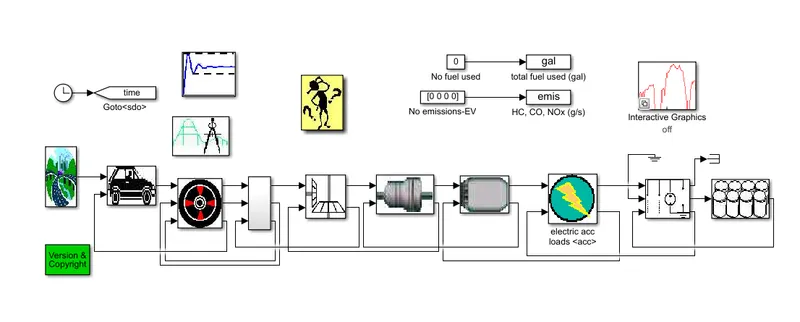
ADVISOR, ADvanced VehIcle SimulatOR, is a set of model, data, and script text files for use with Matlab and Simulink. It is designed for rapid analysis of the performance and fuel economy of conventional, electric, and hybrid vehicles. ADVISOR also provides a backbone for the detailed simulation and analysis of user defined drivetrain components, a starting point of verified vehicle data and algorithms from which to take full advantage of the modeling flexibility of Simulink and analytic power of MATLAB.
Model:
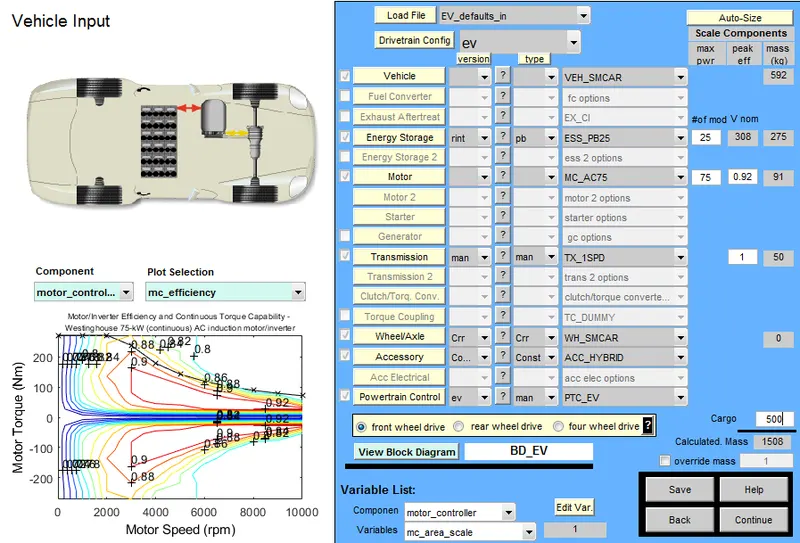
Initially, we select the vehicle input as EV_defaults_in, this model is a pure Electric Vehicle. Keeping all the parameters of model in default condition, we increase the cargo mass to 500 kg.
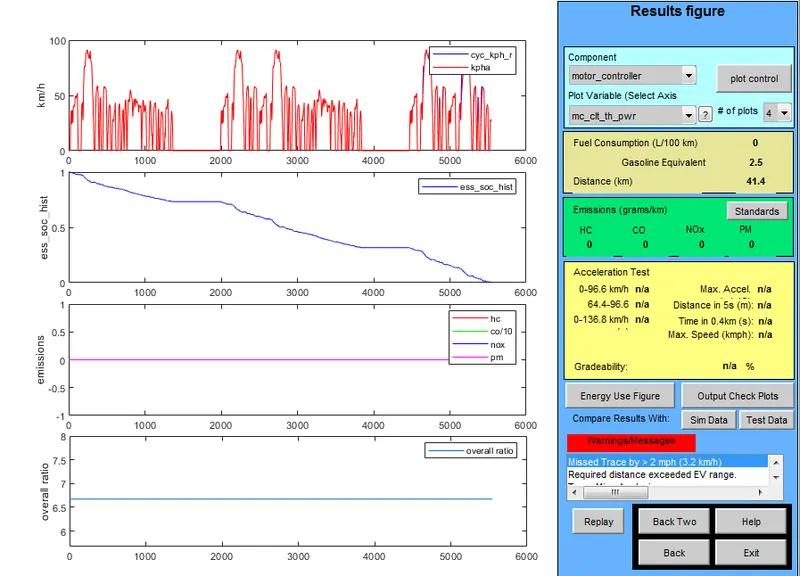
Now we select a drive cycle, in this case we select a standard FTP drive cycle. We keep the number of cycles as 1 to check whether the vehicle can attain a distance of 45km in one drive cycle. The model is now made to run. Since the distance covered by the vehicle in one drive cycle is only 17.8 km, it is required to increase the drive cycles.
The vehicle is now made to run at 4 FTP drive cycles and the required distance isn’t covered by the vehicle.
Result:
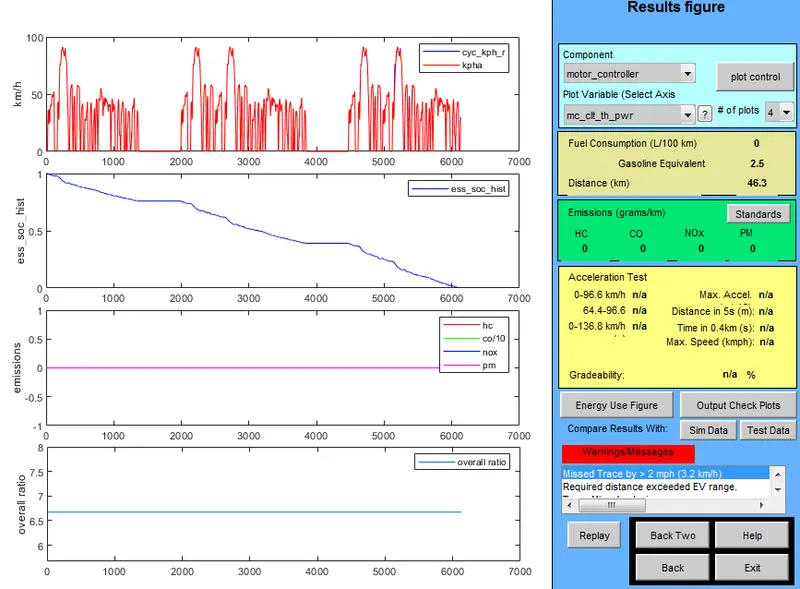
The vehicle model is run for 4 FTP drive cycles, but the vehicle is able to cover only 41.5km which is less than the required distance as the battery has been completely discharged.
Conclusion:
The vehicle cannot complete the given drive cycles nor it can cover a slightly large distance if the capacity of the battery is less.
Changing Battery capacity:
Aim: To increase the battery capacity of an Electric Vehicle under load.
Objective: To repeat the simulation of the Electric vehicle in the above case and to complete the drive cycle by increasing the battery capacity.
Explanation:
The vehicle model EV_defaults_in is selected as in the previous case and other parameters are in default condition.
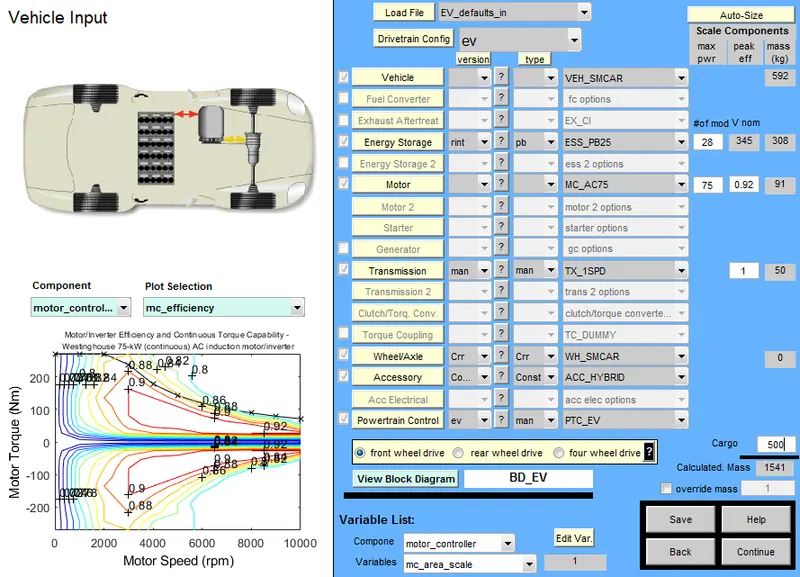
Initially, the battery module number is at 24. For 500kg cargo and 4 FTP drive cycles, the battery capacity is not sufficient. The battery modules are increased by one number and the model is run and the required distance is checked with the actual distance.
The required distance is covered by the vehicle if there are 28 battery modules.
Results:
The battery capacity is increased to 28 modules and a distance of 46.3 km is covered by the vehicle model.
Conclusion:
A higher battery capacity will allow a Vehicle to cover a larger distance with a given load.
Gradeability of Toyota Prius:
Aim: To perform gradeability test with Toyota PRIUS_Jpn model.
Objective: To open the PRIUS_Jpn_defaults_in model and test the gradeability of the model.
Model:
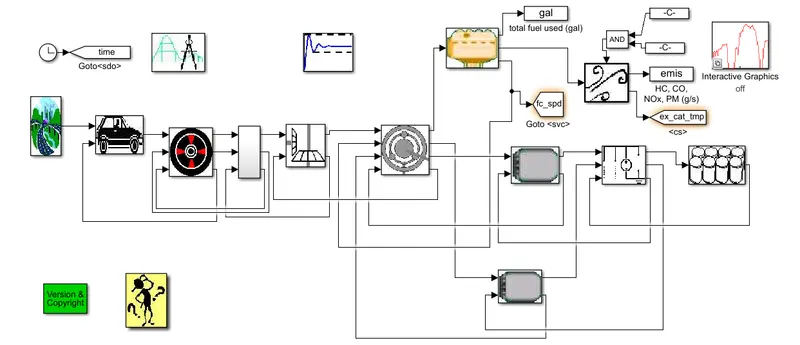
Under the vehicle input window we select the PRIUS_Jpn_defaults_in model and Gradeability Test is selected to perform the required test.
The grade options are edited by changing the vehicle speed and duration of the test. All the systems are enabled to conduct the test.
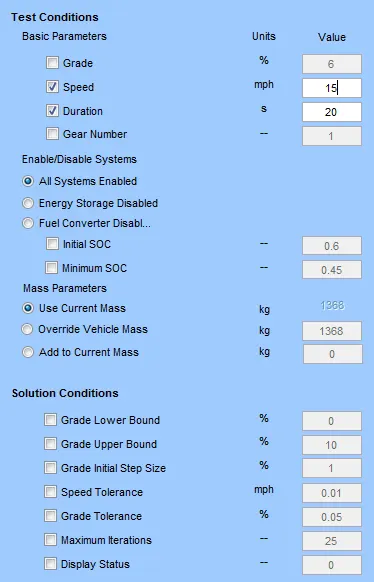
Keep the speed at 15mph and increase it by 10mph for every test.
Results:
1. Gradeabilty at 15mph run for 20 seconds is 27.7%
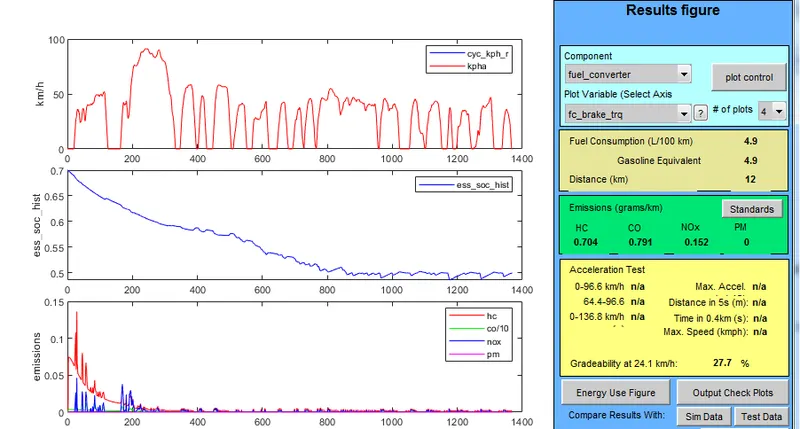
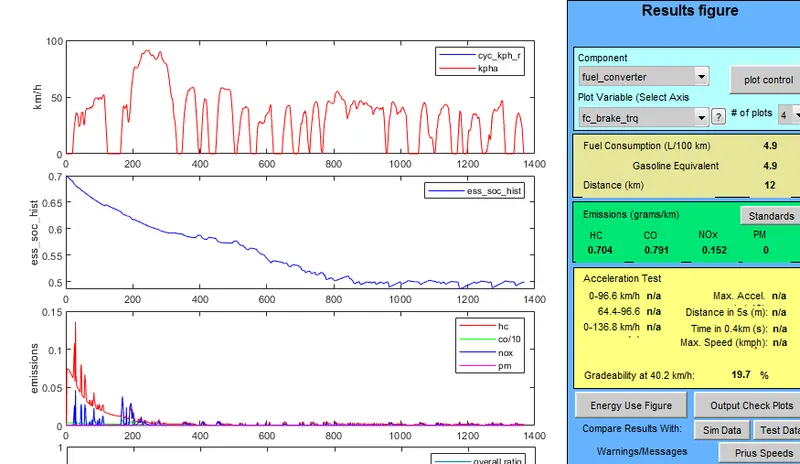
2. Gradeabilty at 25mph run for 20 seconds is 19.7%
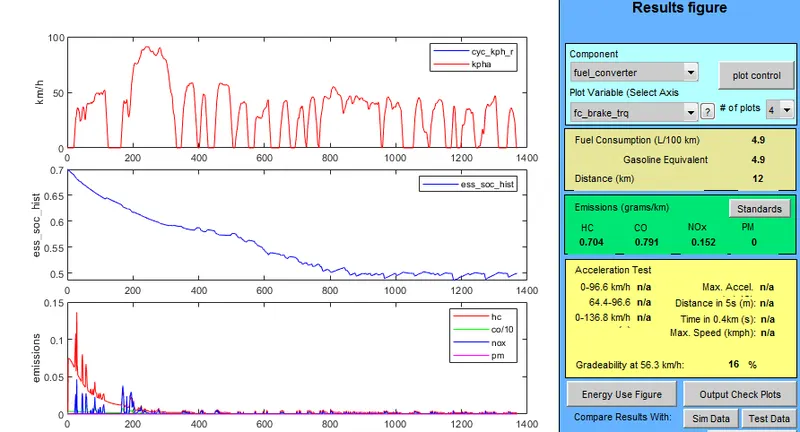
3. Gradeabilty at 35mph run for 20 seconds is 16%
Conclusion:
For a given duration, as the speed of the vehicle increases, its gradeablity decreases.
The vehicle speed should be minimum to climb the steep roads efficiently.