Week-3 Challenge: ADVISOR Tool
1,
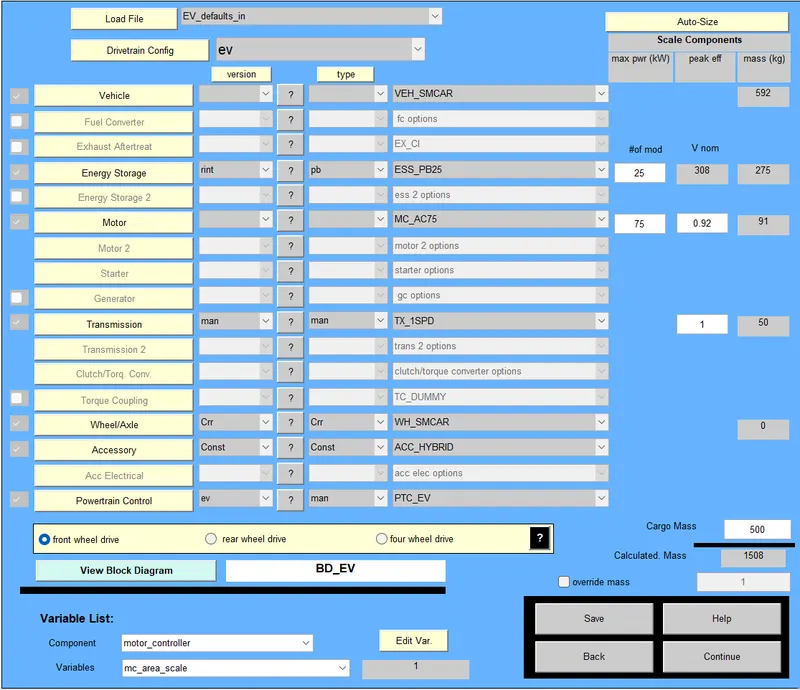
Selected EV_defaults_in from input vehicle window, changed cargo mass to 500 kg all other parameter are default values.
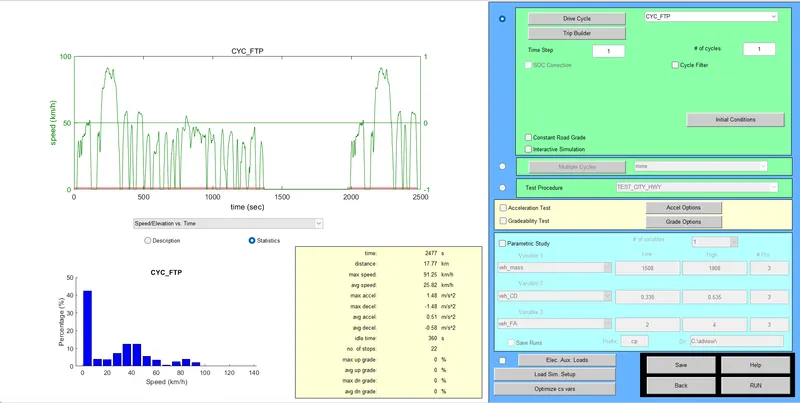
Drive cycle is changed to CYC_FTP in simulation parameter window. Simulated for 1 drive cycle.
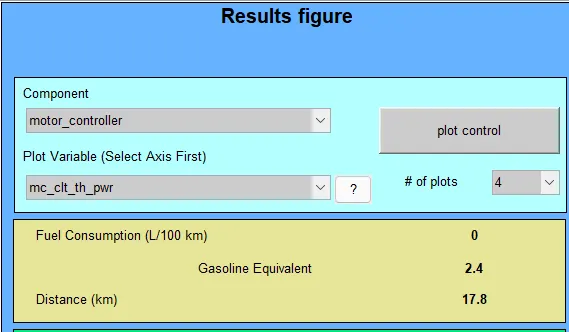
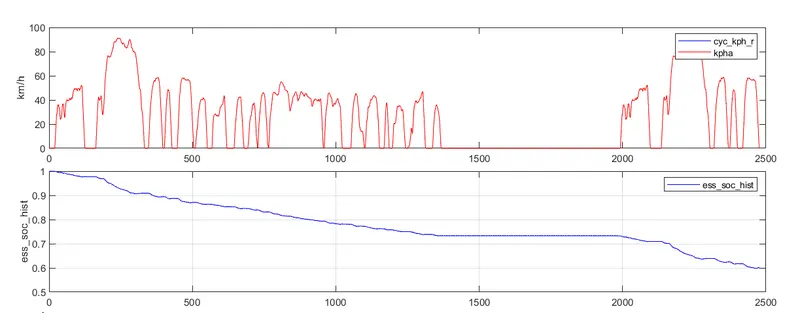
In one drive cycle we got 17.8 km distance travelled and the we can see that the SoC level of battery is reduced upto 40%. So I done for 2 cycles. From two cycles I got vehicle travelled 35.5 km and the SoC level reduced upto almost 80% and only 20% of the charge left in the vehicle.
Now I am done 3 cycles,
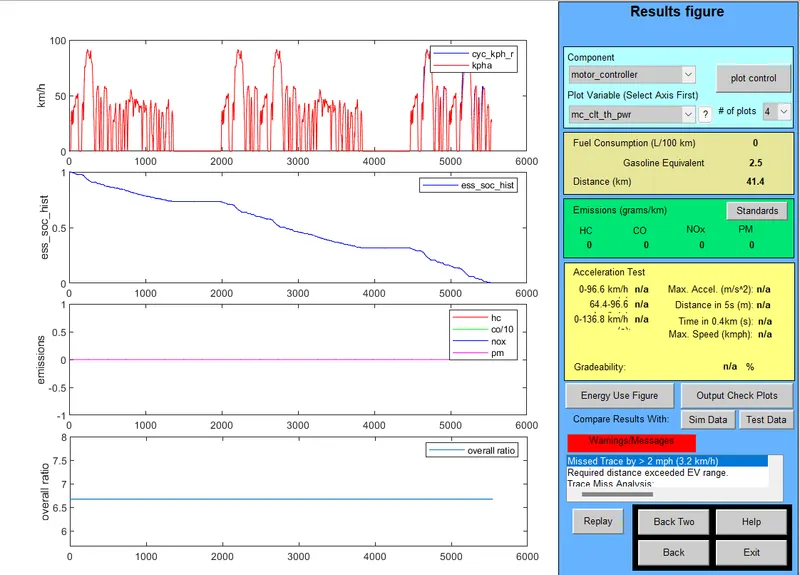
Here you can see that the SoC level is used 100% to reach 41.4 km of distance.
So we can conclude that the EV_default car cannot travel distance of 45 km due to insufficient SoC.
| Drive Cycles | Distance Covered (km) |
| 1 | 17.8 |
| 2 | 35.5 |
| 3 | 41.4 |
2,
In previous question the vehicle will not travel 45 km due to insufficient SoC so this time I am simulating the previous case with changing the number of battery modules.
The number of battery modules is 25 by default which has 321 v and 286 kg weight. Now changing the number of battery modules into 26 then 27 and finally into 28,
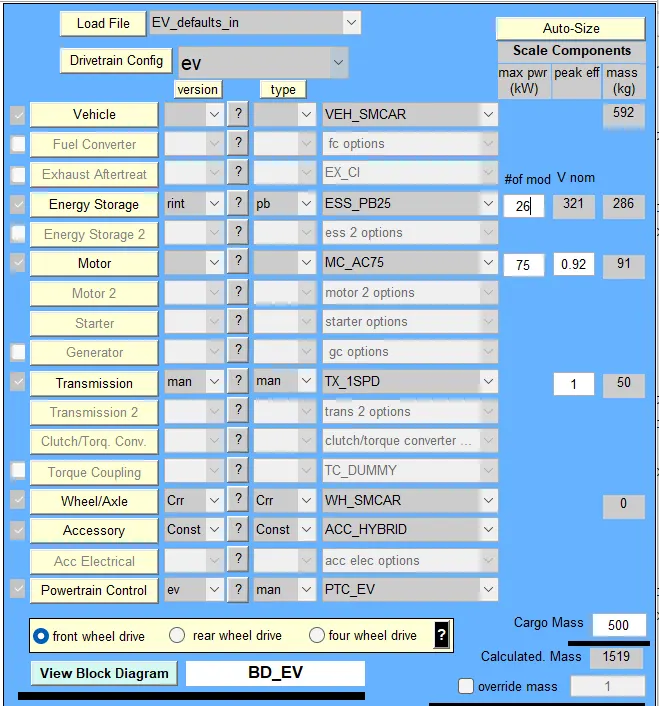
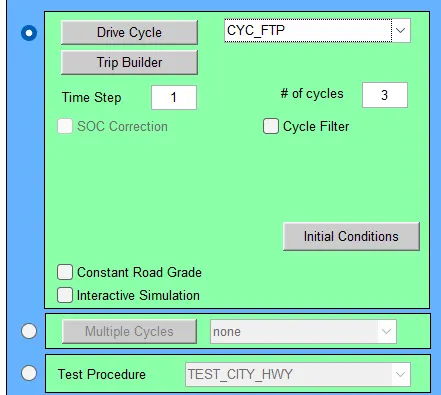
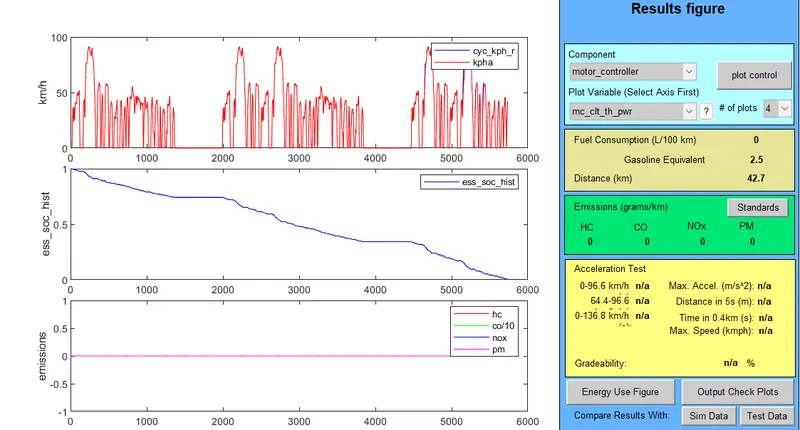
By changing the number of battery modules into 26 , for 3 driving cycles we can see that for 100% of SoC the vehicle is travelled 42.7 km.
Now changing the number of battery modules into 27,
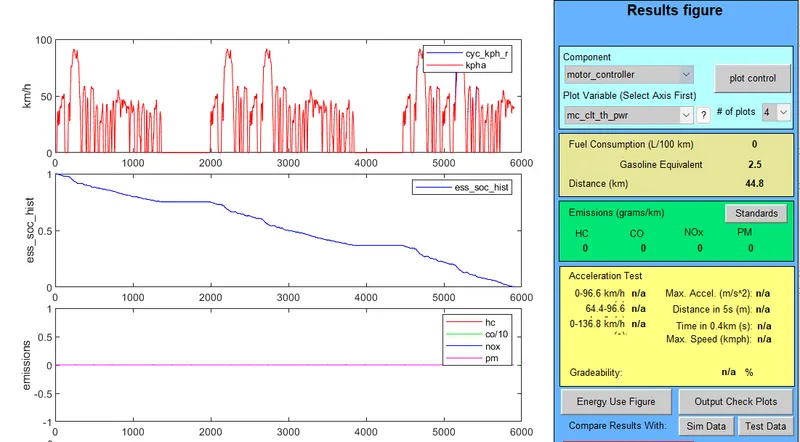
Here we can see that for 100% of the SoC the vehicle is travelled for a distance of 44.8 km.
Now changing the number of battery modules into 28 and simulating for 3 driving cycles,
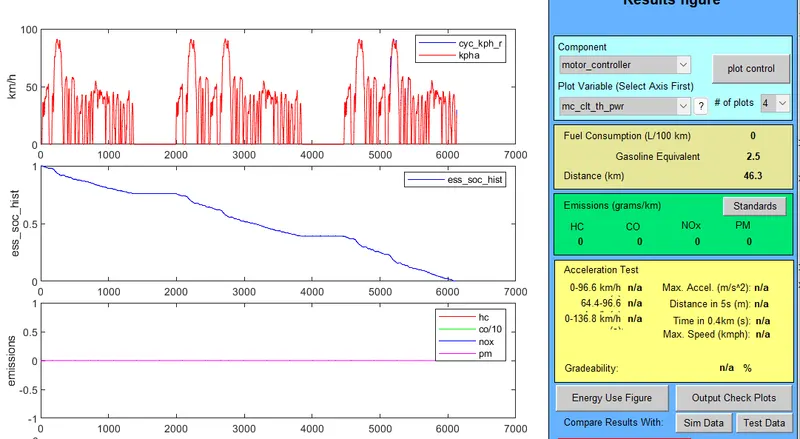
Here we can see that the vehicle is travelled for 46.3 km in 100% of Soc.
So we can conclude that the Vehicle need 28 modules of battery (345 v voltage , 308 kg weight) to travel 45 km in 3 driving cycles.
| Battery Modules | Voltage (v) | Weight (kg) | Distance (km) |
| 26 | 321 | 286 | 42.7 |
| 27 | 333 | 297 | 44.8 |
| 28 | 345 | 308 | 46.3 |
3,
Selected PRIUS_jpn_default vehicle then continue into next window. From simulation parameter window selected Gradeability option. A window is opened from there we can change the speed and duration for our vehicle by clicking on the run we will obtain the simulations and Gradeability according to the speed and duration we have given.
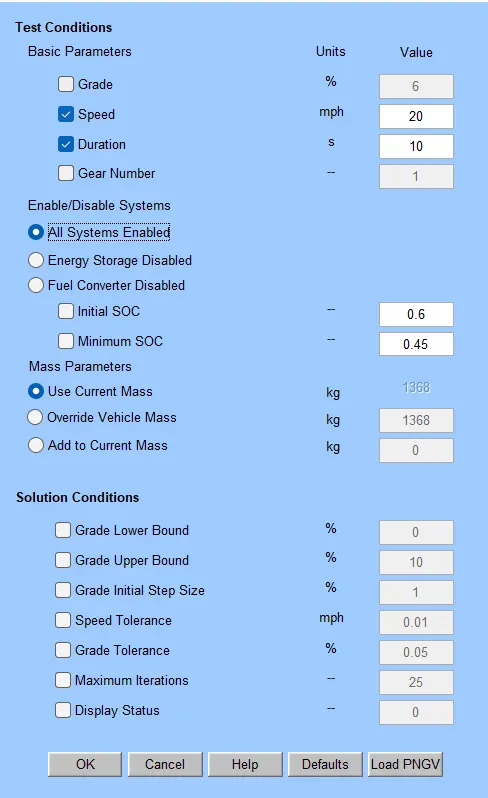
I have done simulation for 10 seconds for 5 different speeds,
For speed = 20 mph;
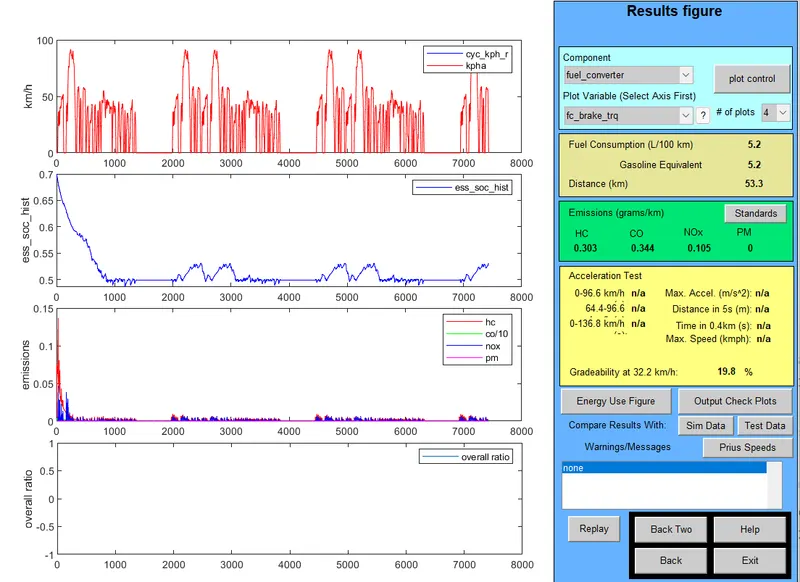
for 20 mph we can see that Gradeability = 19.8%
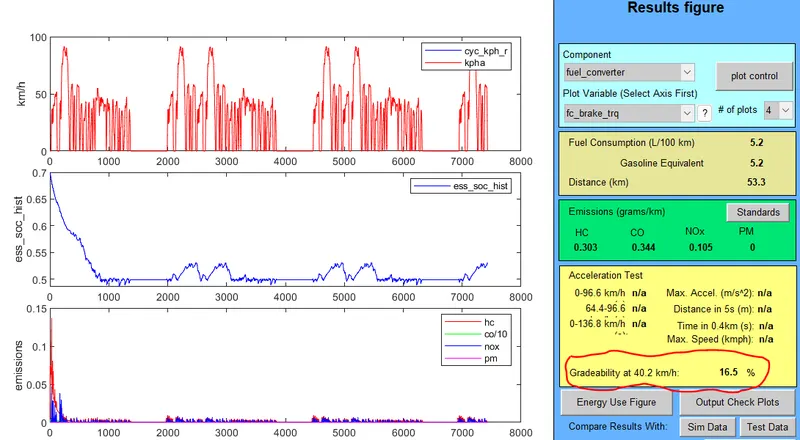
For Speed = 25 mph;
 4
4
Here we can see that Gradeability is 16.5%.
For speed = 30 mph;
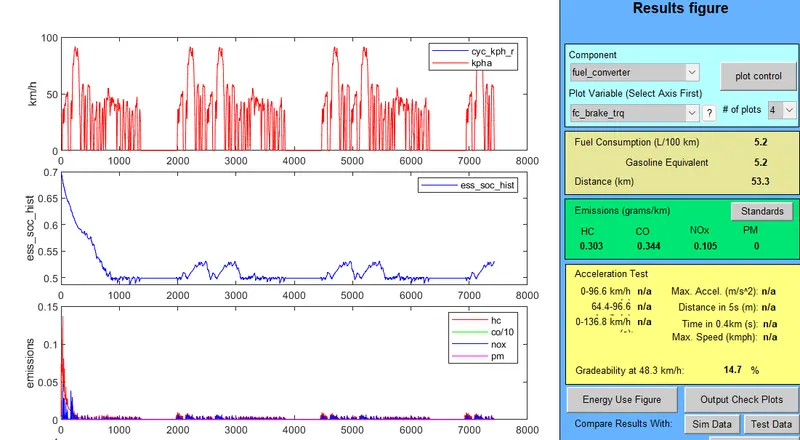
Here the gradeability is 14.7%.
For speed = 35 mph;
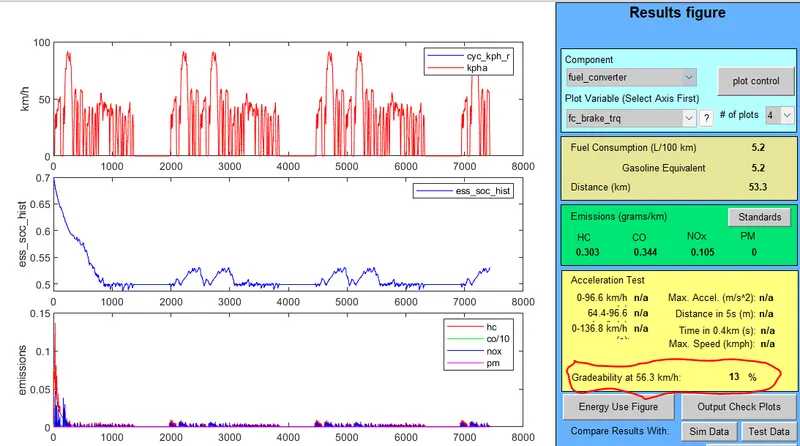
Here the Gradeability is 13%.
Finally for the speed = 40 mph;
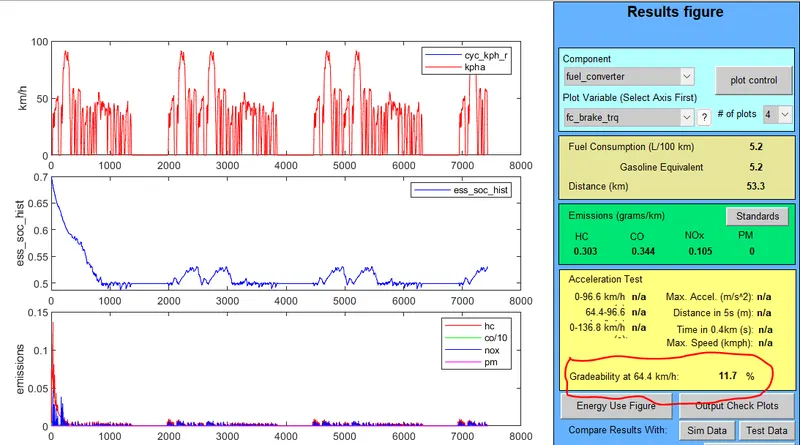
Here the Gradeability is 11.7%.
| Sl NO; | Vehicle speed (mph) | Vehicle speed (kmph) | Gradeability (%) |
| 1 | 20 | 32.2 | 19.8 |
| 2 | 25 | 40.2 | 16.5 |
| 3 | 30 | 48.3 | 14.7 |
| 4 | 35 | 56.3 | 13 |
| 5 | 40 | 64.4 | 11.7 |
So we can conclude from the above table that when the speed of the vehicle increases there is a decrease in the gradeability.