Week-3 Challenge: ADVISOR Tool
1)For EV_defaults_in file, if cargo mass is 500 kg with all other default conditions, can the vehicle travel for 45 km with FTP drive cycle? Conclude your observations.
Given factors, cargo mass= 500kg and other conditions are default
drive cycle= FTP
model = EV_default_in
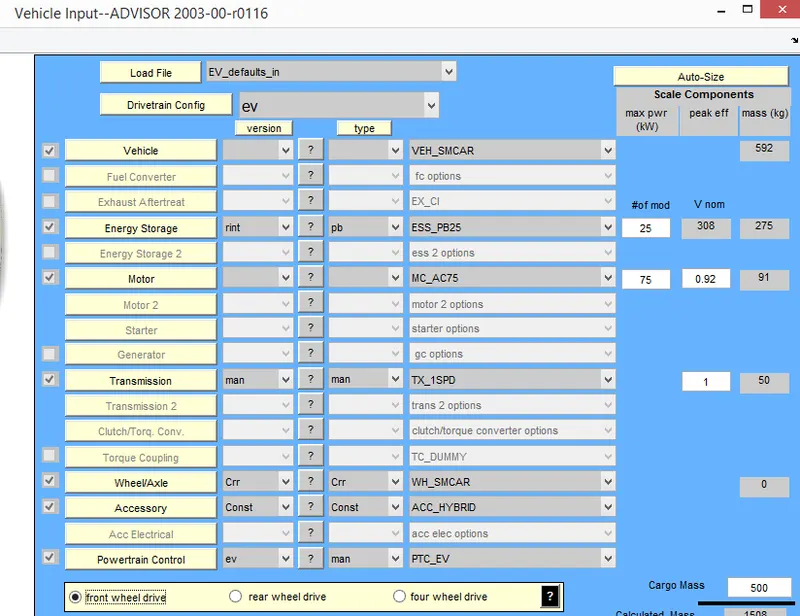
So in the above UI image, as shown, EV_defaults_in file is loaded and cargo mass is entered as 500 kg.
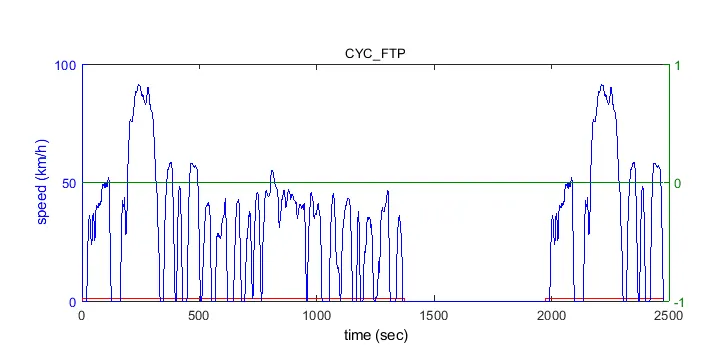
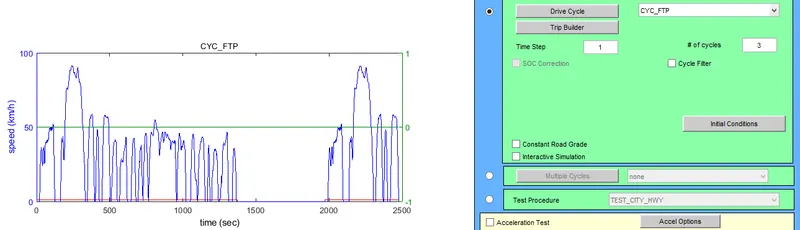
Above image shows the drive cycle of the FTP cycle which consists of speed vs time graph.
And 3 cycles of the FTP cycle are considered for the simulation. ONE FTP CYCLE CONSISTS OF 17.77 KM .
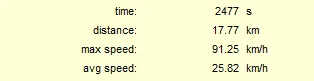
FOLLOWING ARE THE RESULTS FROM THE SIMULATION:
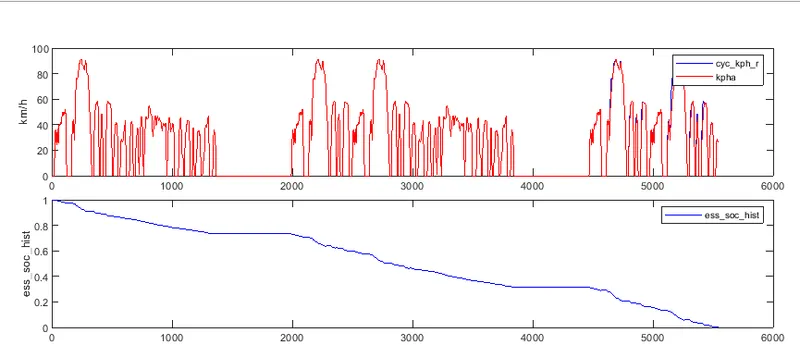
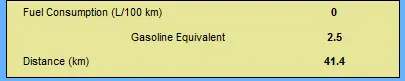
OBERVATIONS
From the above graphs, we can conclude that STATE OF CHARGE was 100% at the start of the FTP cycle and it goes down to 0% while 3rd FTP cycle was running. Also, we can conclude that, 3rd FTP cycle was not completed as the state of charge goes to 0% in between.
So, the above results shows that vehicle is only able to cover 41.4 km and its state of charge goes down to zero, where the total distance for 3 FTP cycles were 53.31 km, which needed to be covered. Hence, the EV vehicle was not able to cover 45 km trip.
2) In the above case, try changing the battery capacity and repeat the simulation.
In above case , the total number of energy storage modules were 25 resulting into 275 kg of mass of batteries. so, here i used , 30 energy storage modules which resulted into 330 kg mass of batteries.
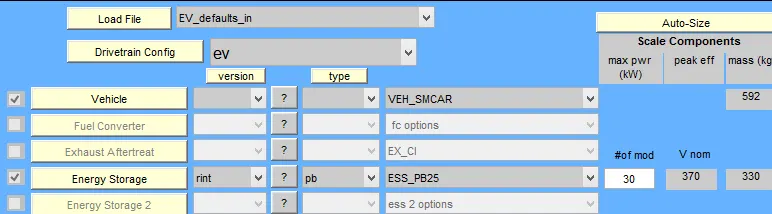
For this simulation, i considered 3 cycles of FTP Drive cycle and find out the following result:
RESULTS:
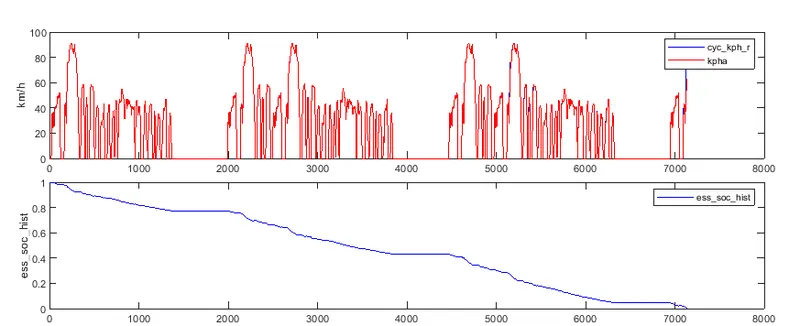
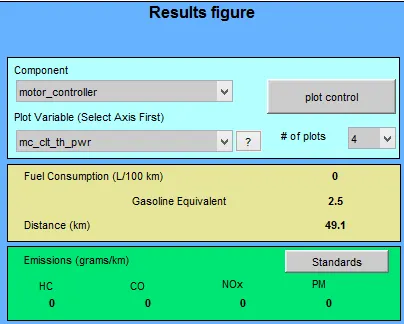
From above graph we can see that by increasing the energy module to 30, the total distance covered by the vehicle reaches near to the 50KM as with 25 energy modules the distance covered with the given parameters was 41.1 km. So the distance increases by nearly 9 km.
3) Perform gradeability test with PRIUS_Jpn_defaults_in file
Compare your results in table and conclude.
Following is the parameter table of ADVISOR TOOL for PRIUS_Jpn_defaults_in:
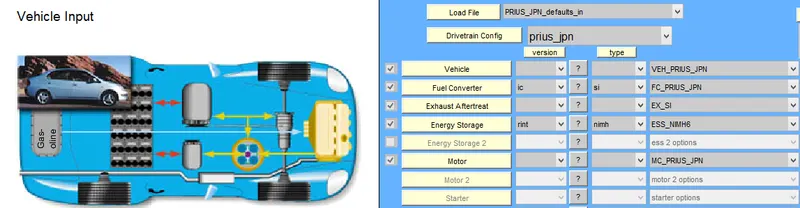
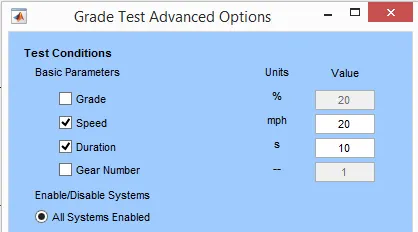
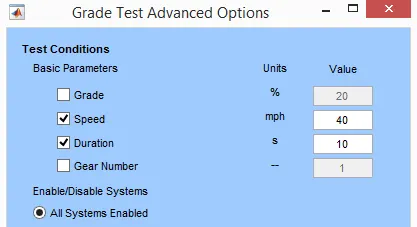
Since, we have to perform, gradeability test here. so, following are the parameters set in the ADVISOR TOOL:
1st case: speed= 20mph
RESULTS:
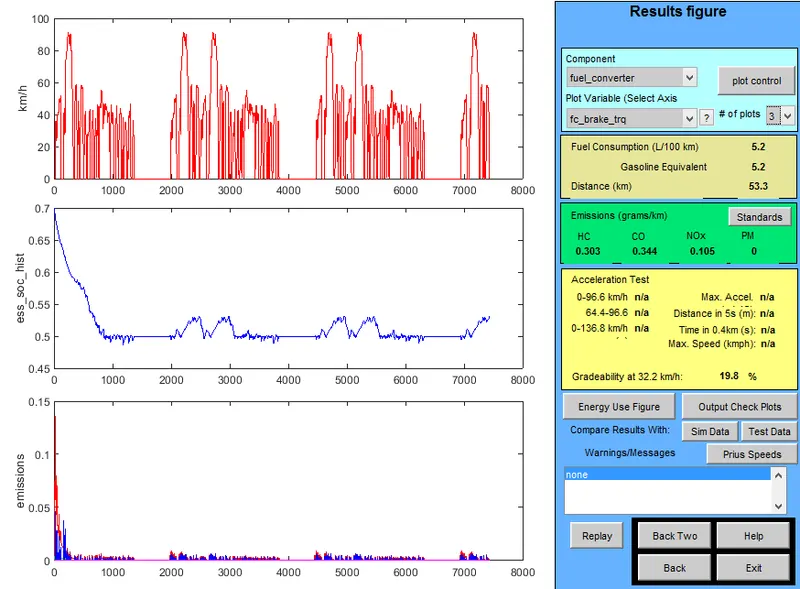
So at 20 mph or 32.2 km.h, gradeability= 19.8%
2) CALCULATING AT 25 mph:
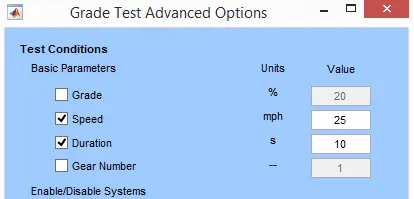
RESULTS:
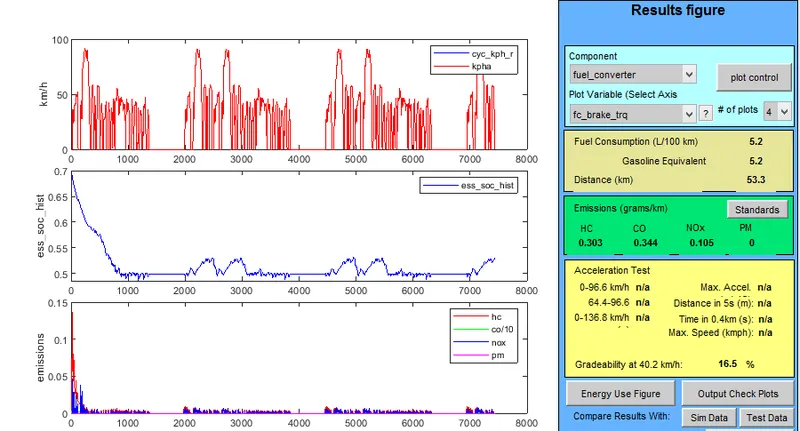
At 25 mph or 40.2 kph, gradeability is 16.5%.
3) Speed= 30 mph
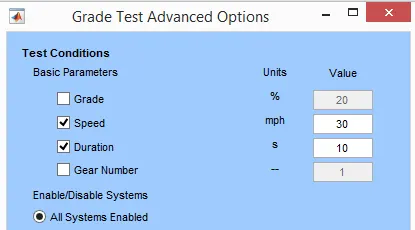
RESULTS:
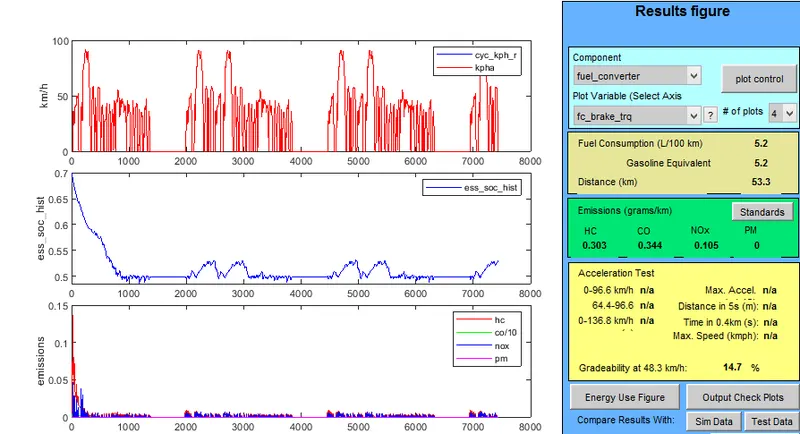
at speed 35 mph or 48.3 kph, gradeability is 14.7%
4) At speed = 40 mph
RESULTS:
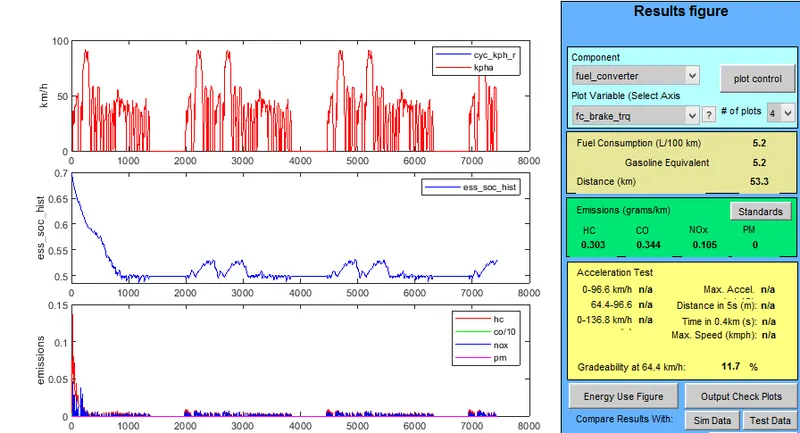
So at 40 mph or 64.4 kph, gradeability is 11.7%.
TABLE AND CONCLUSION:
| SPEED | GRADEABILITY |
| 20mph or 32.2 kph | 19.8% |
| 25mph or 40.2 kph | 16.5% |
| 30mph or 48.3 kph | 14.7% |
| 40mph or 64.4 kph | 11.7% |
From above table, it is easily concluded that, with increase in speed , the percentage of gradeability decreases.