Week-3 Challenge: ADVISOR Tool
AIM : Use the ADVISOR tool to
- check if the EV_defaults_in can run for a distance of 45 km with 500 kg cargo mass and all other default conditions.
- run the above simulation with a different battery capacity.
- perform gradeability test with PRIUS_Jpn_defaults_in file
PROCEDURE :
Study 1 -
- The ADVISOR tool is run in MATLAB with proper directory path with Metric unit system.
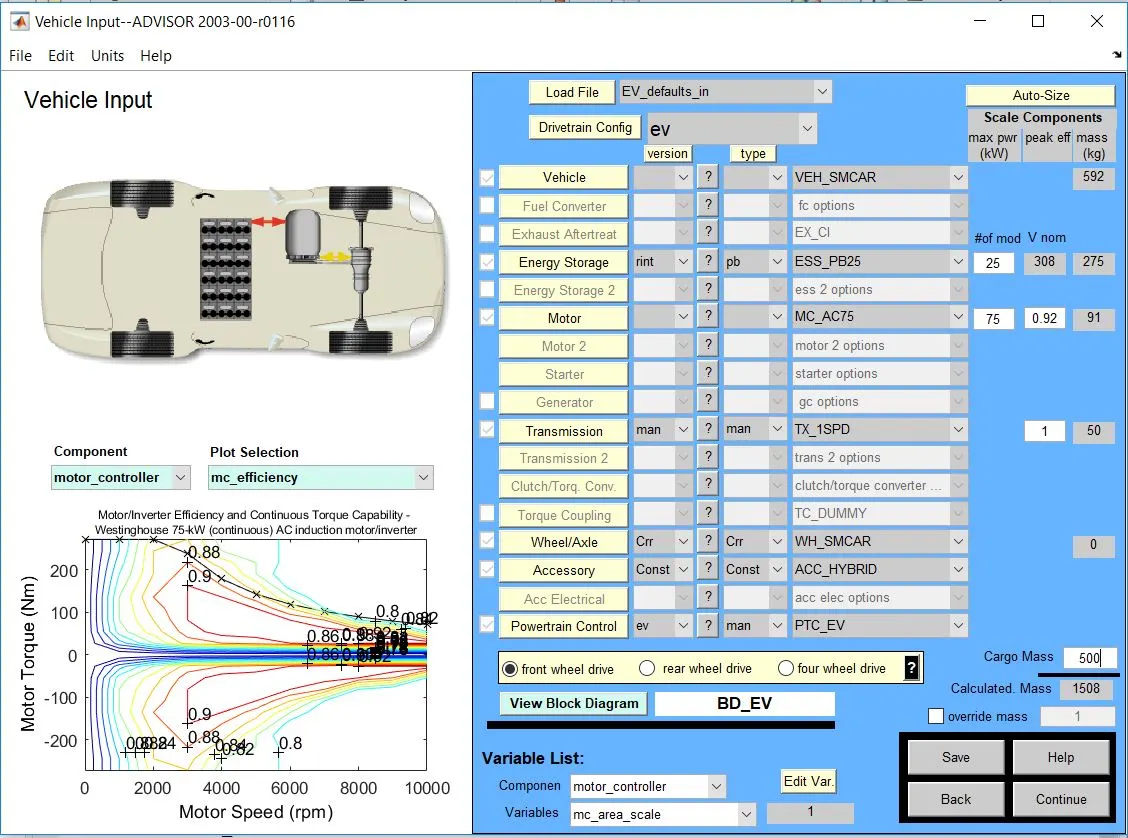
- The EV_defaults_in file is loaded.
- This is a simple BEV model with a front wheel drive.
- The electric motor takes the power from the Battery and provides mechanical motion to the wheel axle.
- Below is the Block diagram for the vehcile model -
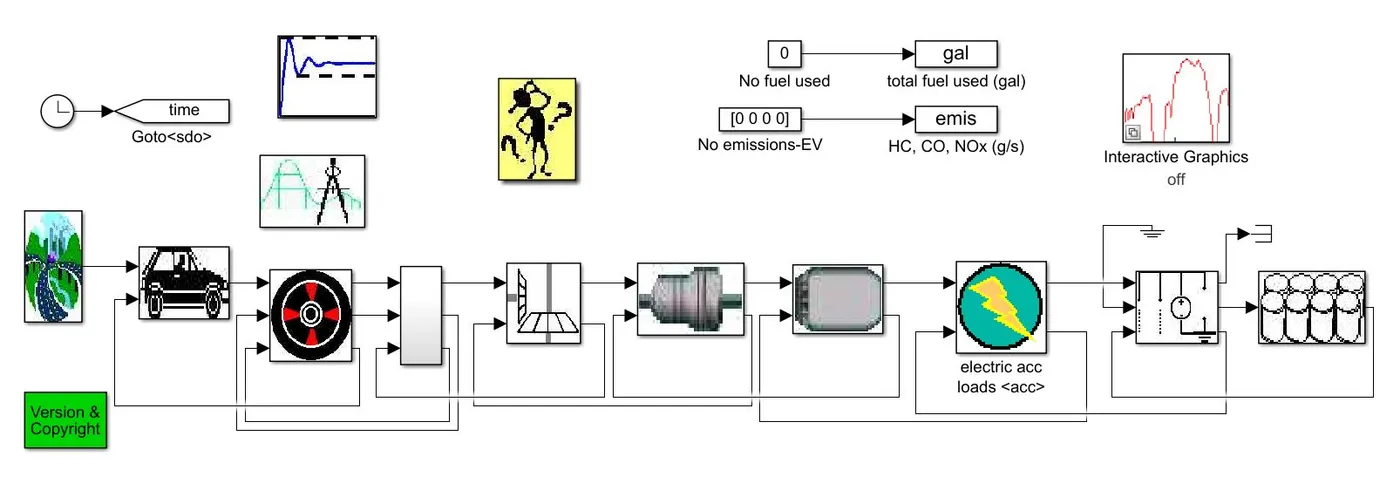
- Since, the ADVISOR tool involves simple backward Simulation, the block diagram starts with the Drive cycle data and analysis the battery performances.
- Now, a Cargo mass of 500 kg is added in the model. As asked, all the other vehicle parameters are kept with default values.

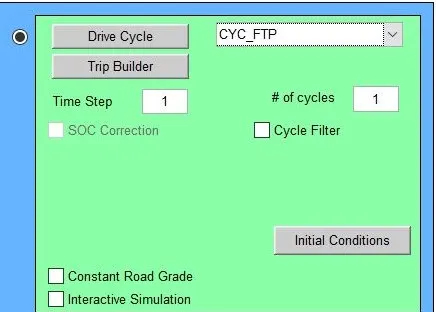
- In the next window, CYC_FTP is selected as the Driving cycle.
- The number of cycles for simulation is kept at 1. All the other paramaters are kept at dafault values.
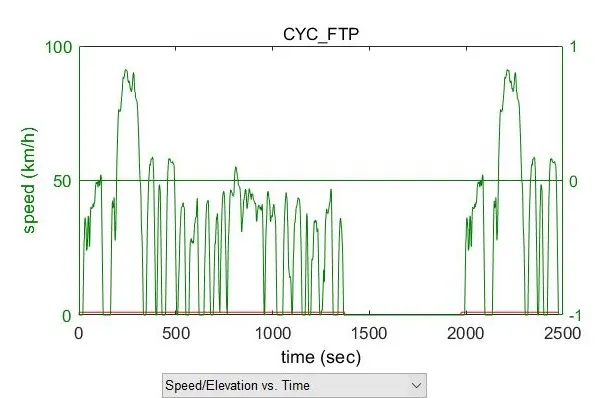
- The FTP is a dafault Drive cycle file present in the ADVISOR tool.
- The system is now ran for the simulation.
Result :
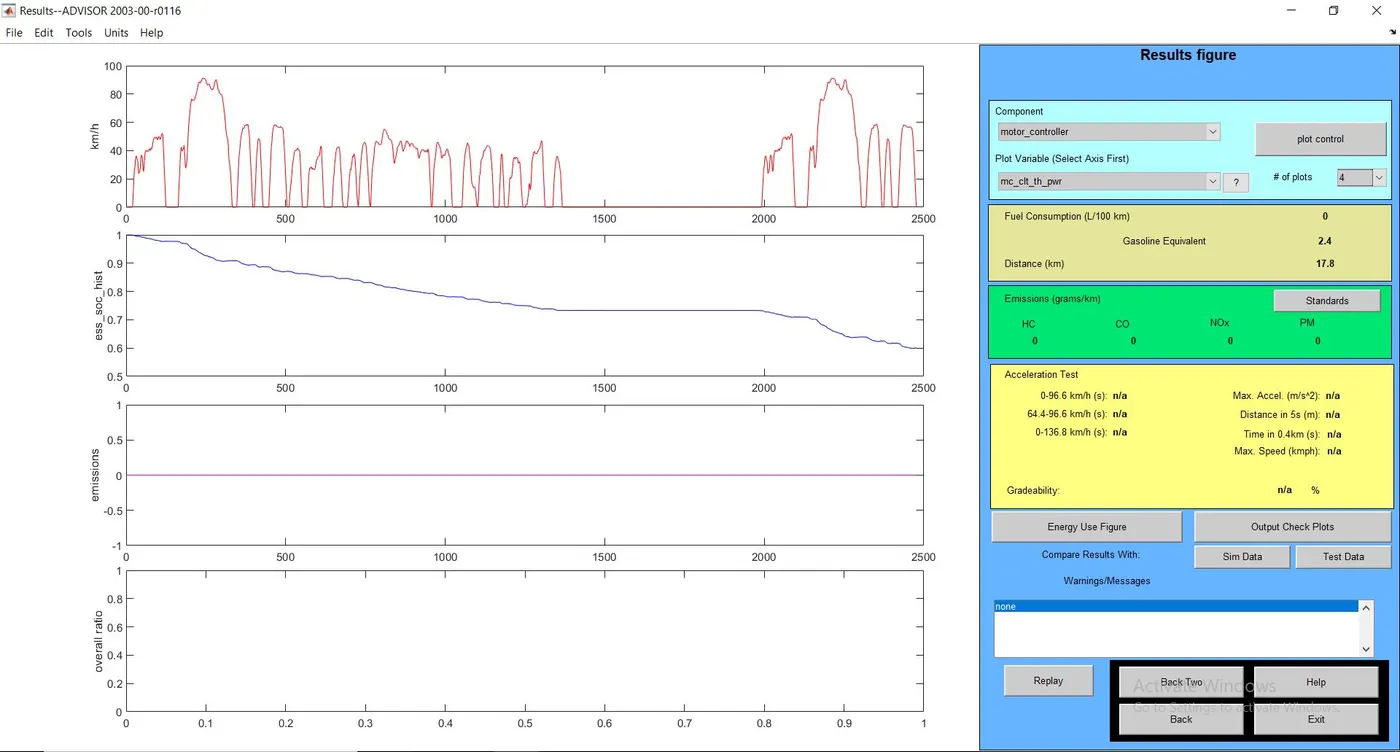
- The total distance covered with 1 cycle comes out to be 17.8 km.
- Since, at the end of the cycle, the SOC is not 0, it means the battery is not fully drained yet.
- Also, since the vehicle is a pure EV (BEV), there are no on-road emissions during the complete run as the plot shows.
- The simulation is now ran for a higher number of cycles. Accordingly, the number of cycles is changed to 3.
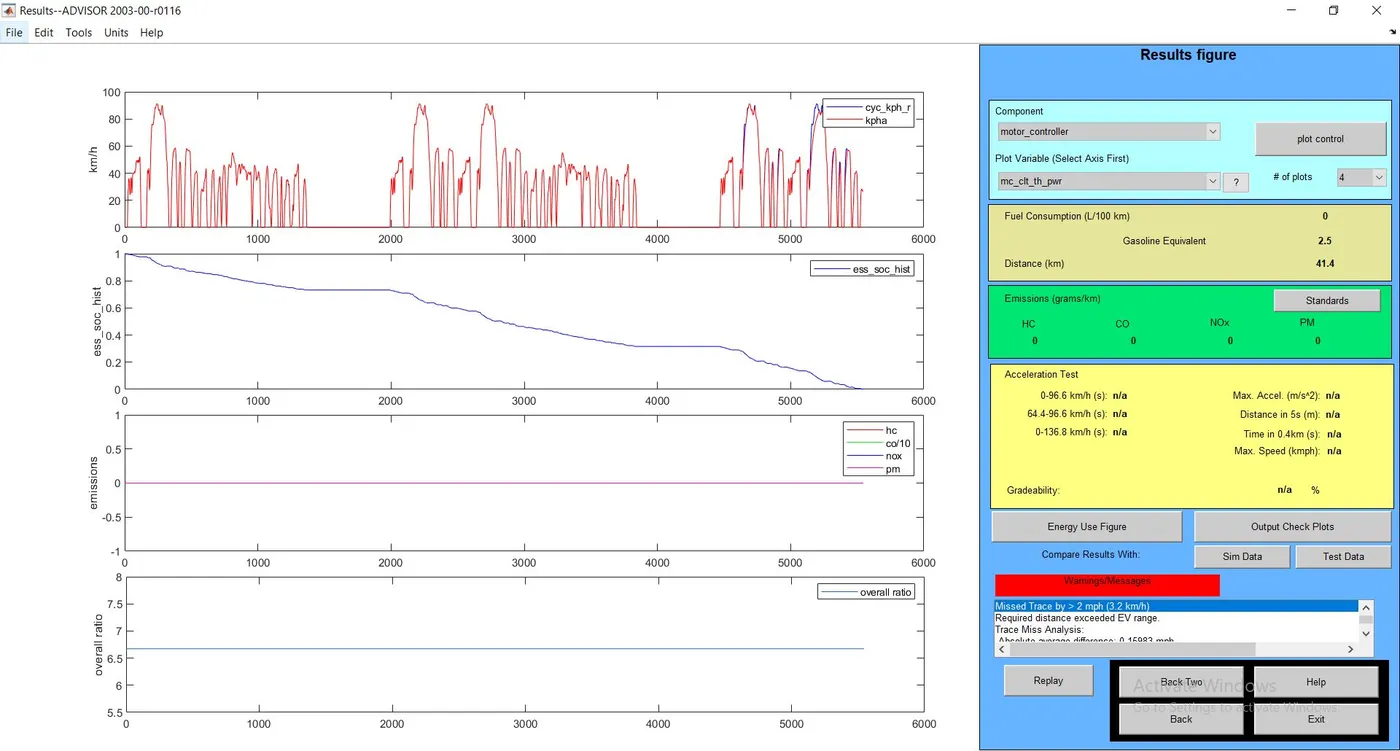
- It can be seen from the SOC plot that the battery gets fully drained during the third cycle.
- The total distance covered before SOC becomes 0 is 41.4 km.
- So, the EV_defaults_in cannot run for 45 km in a single charge run.
Study 2 -
- To change the battery capacity, the battery model is changed from the default ESS_PB25 to ESS_PB85.
- Here, the number of Battery modules is 46 and is much heavier (1145 kg) than the default one kg.
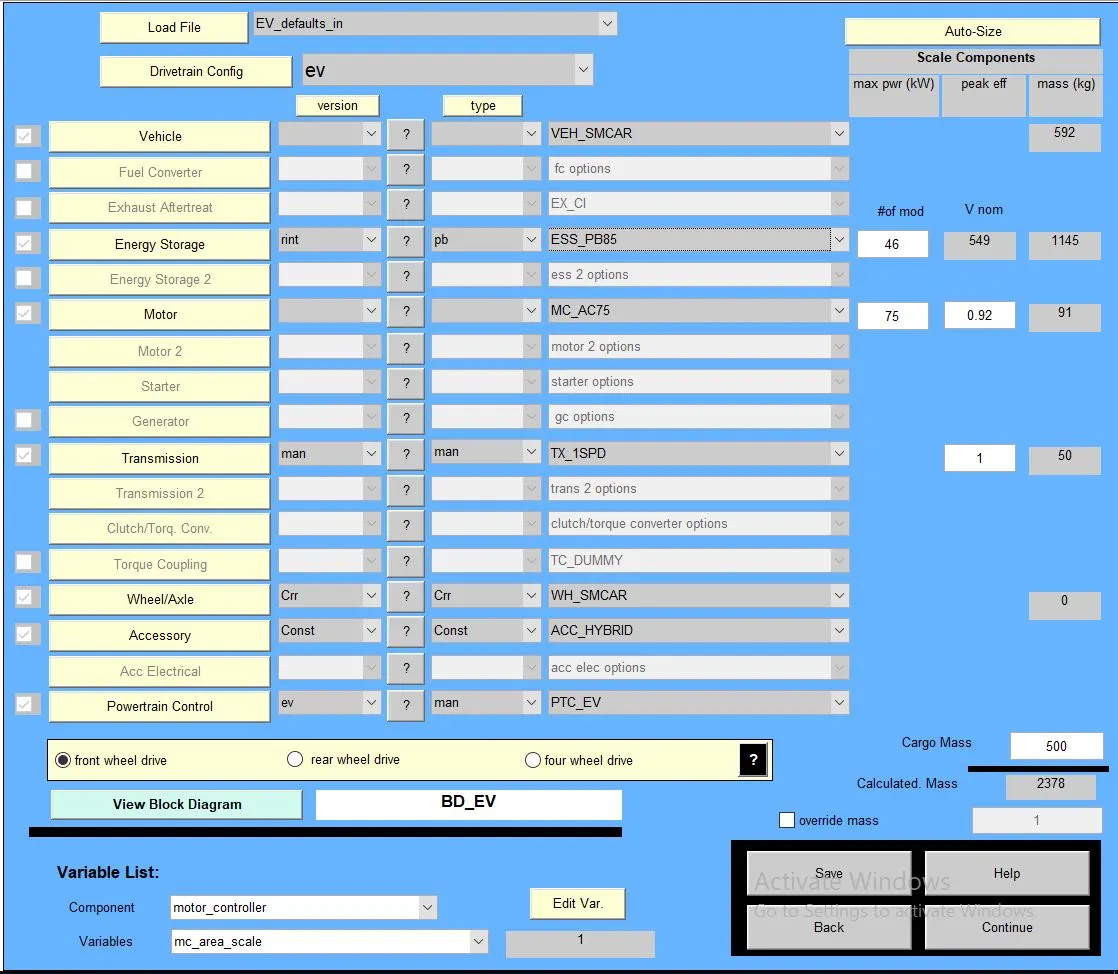
- All the other paramaters are kept as they were in the previous simulation and the system is now ran for simulation.
- The Drive cycle is kept the same (CYC_FTP) and the number of cycles is kept at 3.
Result :
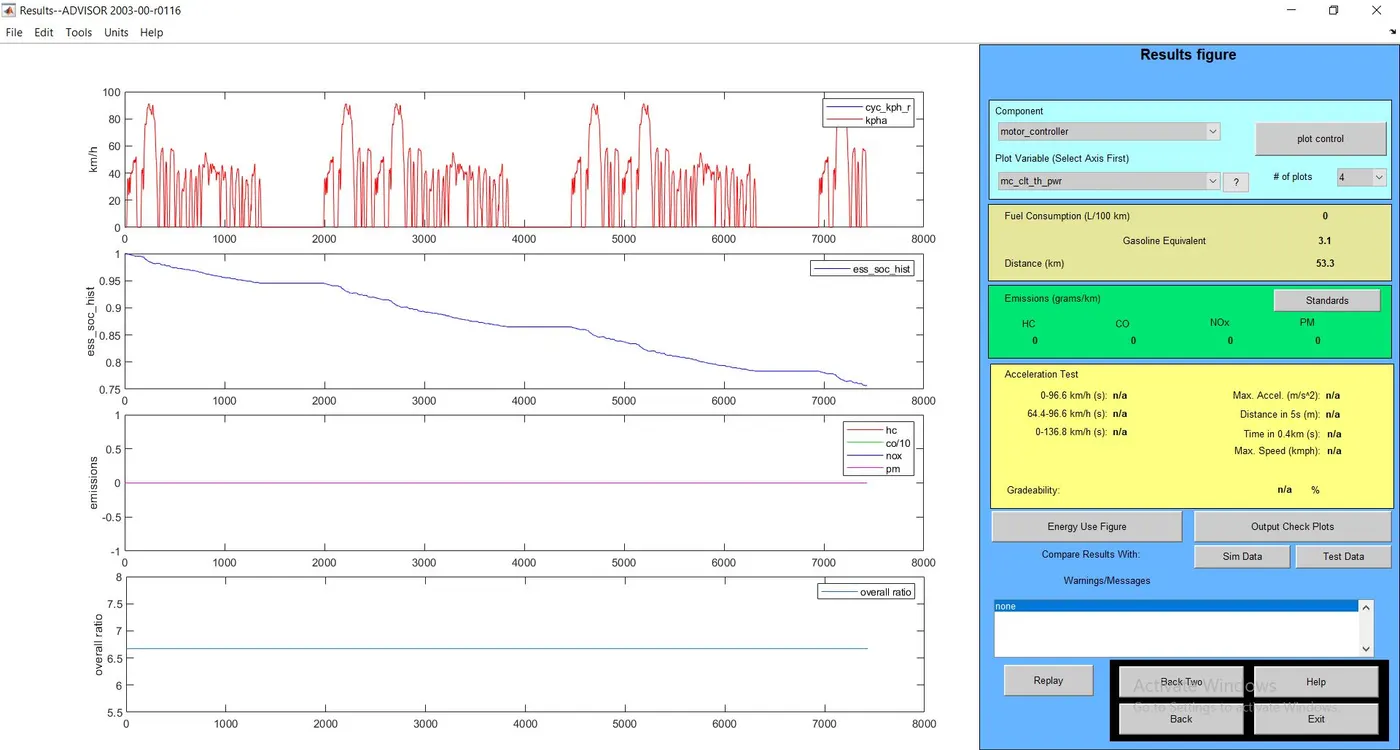
- The vehicle runs for a distance of 53.3 km.
- Also, from the plot it is clear that the SOC is not 0 yet. This means, the vehicle can run for much longer distance before the battery charge completely drains out.
Conclusion : It can be concluded that selecting proper Battery for the vehicle is very much important while keeping all the considerations in mind (weight, capacity, etc)
Study 3 -
- The PRIUS_Jpn_defaults_in is loaded in the ADVISOR tool.
- The Prius Jpn is a Hybrid Electric vehicle developed by Toyota company.
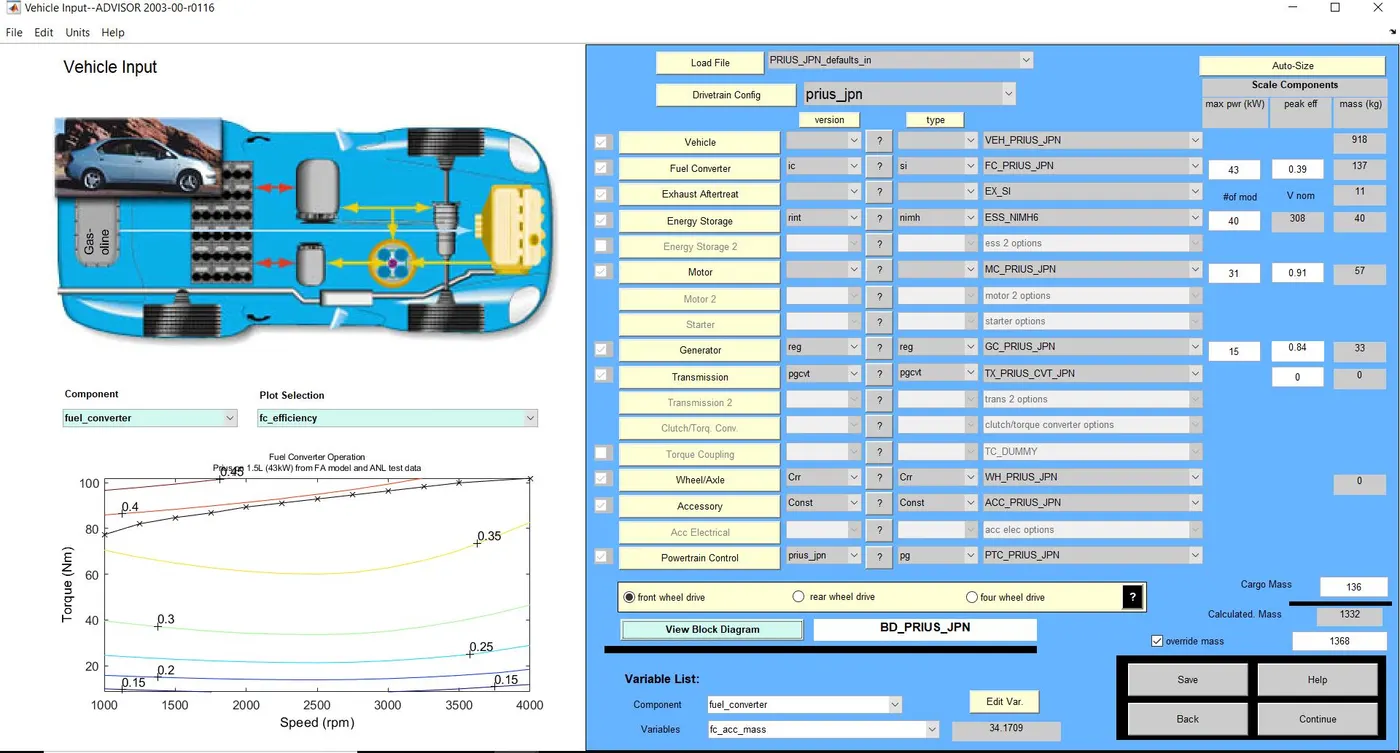
- Here, all the vehicle parameters are kept as default values.
- The 'Gradebility Test' option is ticked in the next window.

- The Grade options are opened. The speed is first kept at 55 mph i.e 88.5 kmph. The time duration for the test is keept at 10 sec.
- Here, the Energy storage i.e. battery is disabled.
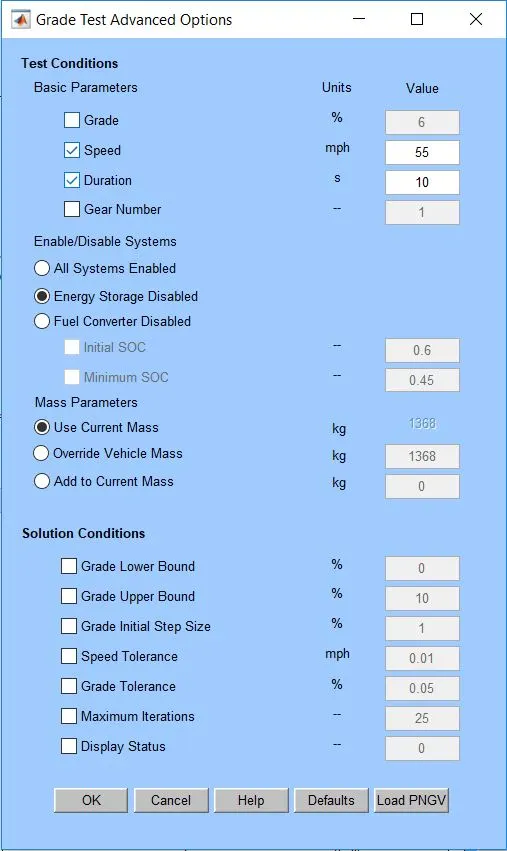
- The simulation is now executed by pressing the RUN button.
- The following output is observed in the result window.
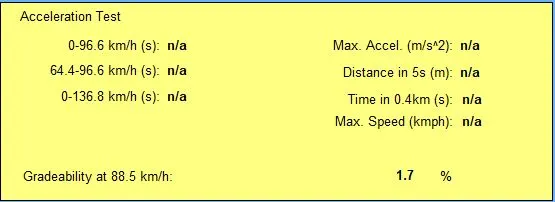
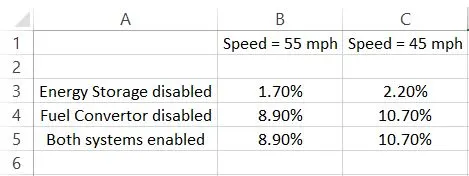
- The Gradeability for the concerned model at 55mph i.e. 88.5 kmph, while the energy storage is disabled, is 1.7 %.
- The Gradeability test is now performed while keeping the Fuel convertor disabled and only the battery is running. The speed is kept the same at 55 mph. Also, the initial SOC value is kept as default.
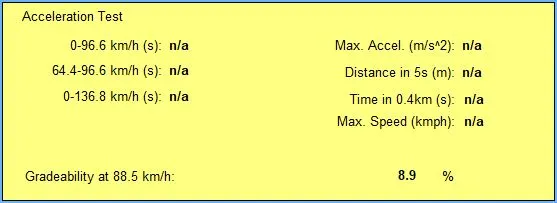
- The Gradeability for the vehicle model at 55mph i.e. 88.5 kmph, while keeping the Fuel convertor disabled, is 8.9 %.
- The Gradeability test is now performed while keeping both the systems (Fuel convertor and the Energy storage) enabled. Also the speed is kept the same i.e 55 mph.
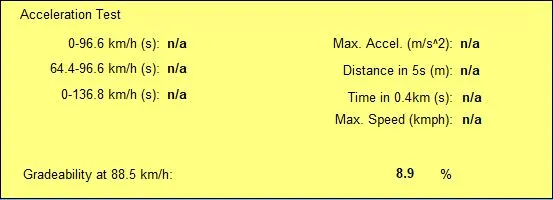
- The Gradeability for the vehicle model at 55mph i.e. 88.5 kmph, while both the systems are enabled, is the same i.e. 8.9 %.
All the above 3 tests are now performed wiht speed 45 mph i.e 72.4 kmph and the results are observed.
Result :
The following results are obtained from the tests performed.
Conclusion :
- The gradeability for the vehicle when it is running with Energy storage (i.e Battery) disabled is very low as compared to when it is running with Energy storage enabled.