Week-3 Challenge: ADVISOR Tool
AIM
. to get familiar with ADVISOR tool
OBJECTIVE
1. for EV_defaults_in file, if cargo mass is 500kg with all other default conditions, can the vehicle travel for 45km with the FTP drive cycle, conclude your observation
2. in the above case try changing the battery capacity and repeat the simulation
3. perform the gardeability test with PRIUS_Jpn_defaults_in file
compare ur results in table and conclude
1. run the advisor software and the GUI will appear where the vehicle model to be simulated can be specified along with its parameters
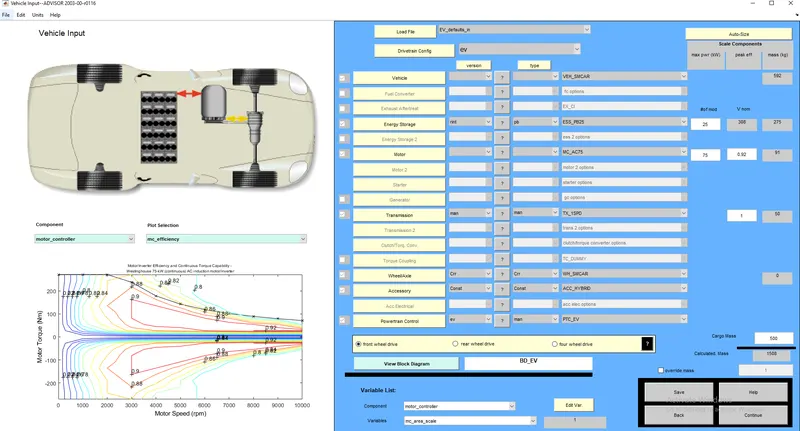
. the model EV_defaults_in is selected and mass of the cargo or the payload is set to 500kgs by keeping all other parameters as default
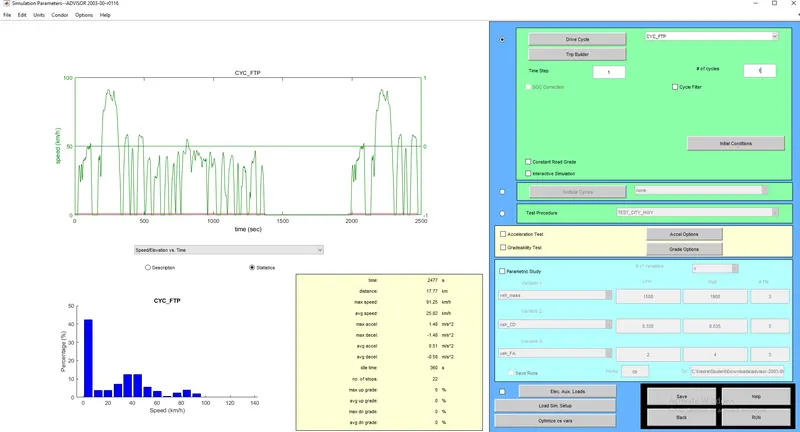
. on the next GUI the drive cycle parameters are specified, theres a set of preloaded drive cycles and other options where the a customized drive cycle can be created and simulated
. the FTP drive cycle is selected , with zero gradient is simulated once.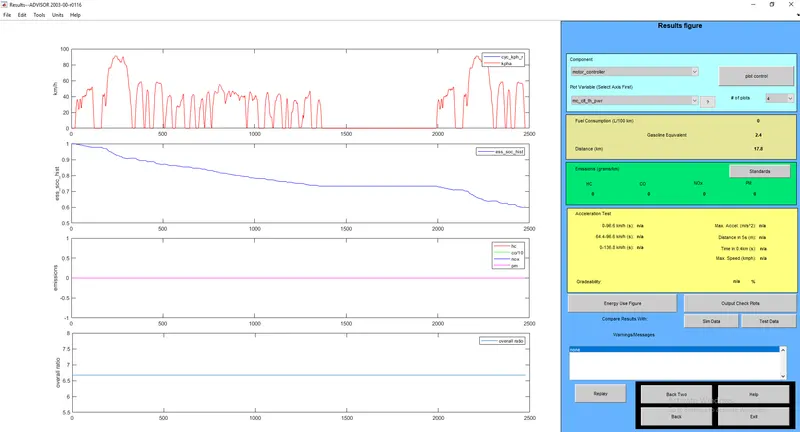
. the results are obtained, where the drive cycle data, speed input in kmph respective to time period is given and state of charge of the battery pack with respective to time is given
. as from the results its known that single drive cycle runs for 17.8 kms and to simulate the vehicle for 45kms the drive cycle needs to be repeated 3times to check wether the vehicle is capable to run 45kms
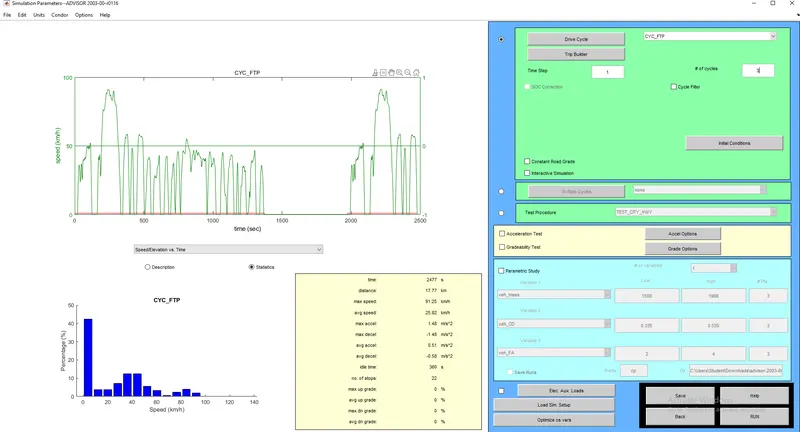
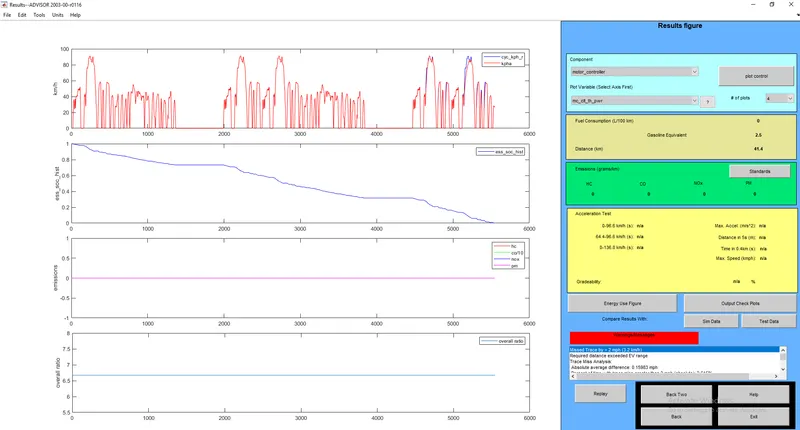
. the simulation results after 3 repeated FTP drive cycles
. its seen that the maximum distance the vehicle can run with cargo mass of 500kgs is 41.4kms.
. the battery state of charge depletes to zero upon covering the distance
. the EV_default model with 500kgs cargo load with FP drive cycle cannot travel for 45kms
2. changing the battery capacity and repeating the simulation for the same
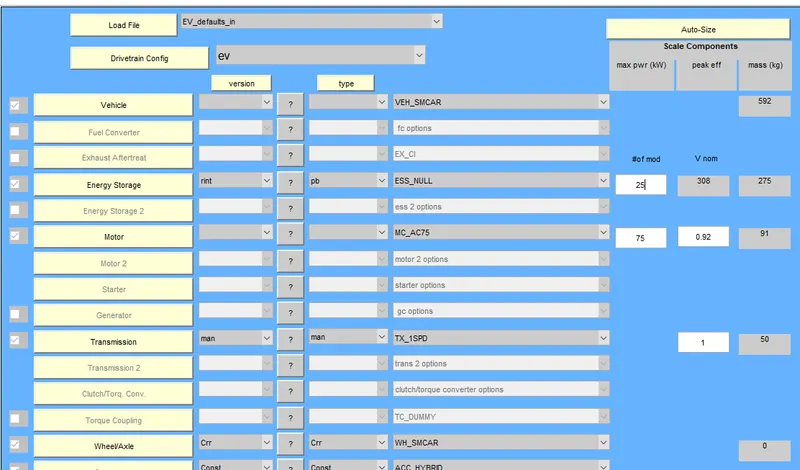
. the default battery capacity was 25 modules of lead acid battery, putting out 308volts combined and weighing 275kgs,
. the capacity was improved to 30 modules of lead acid battery, putting out 370volts combined and weighing 330kg
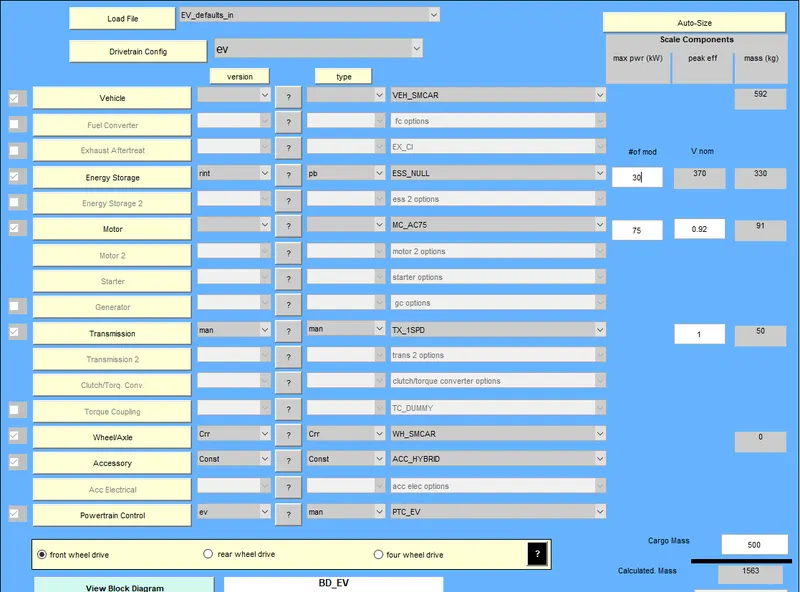
. after changing the battery capacity the simulation is run by keeping the same parameters specified for the 1st experiment
(EV defualt model, 3- FTP drive cycle)
. from the results after simulation its observed that the vehicle can run for 49.4 kms untill the state of charge becomes zero
. increasing the battery capacity results in improved range
3. perform the gardeability test with PRIUS_Jpn_defaults_in file
compare ur results in table and conclude
. from the start page PRIUS_JPN model is selected with its default parameters
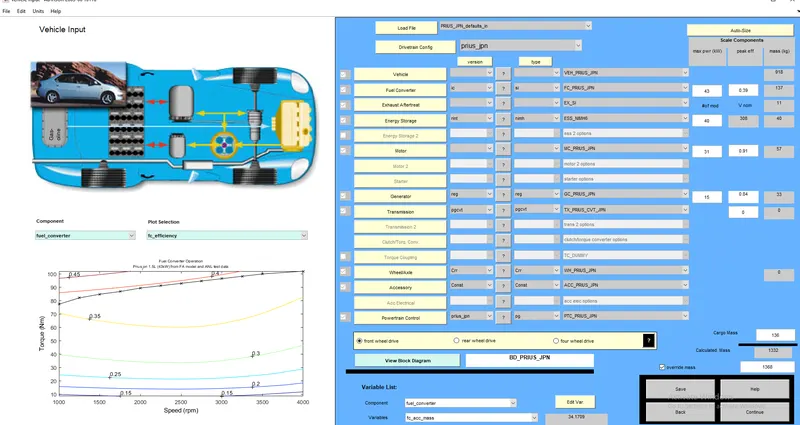
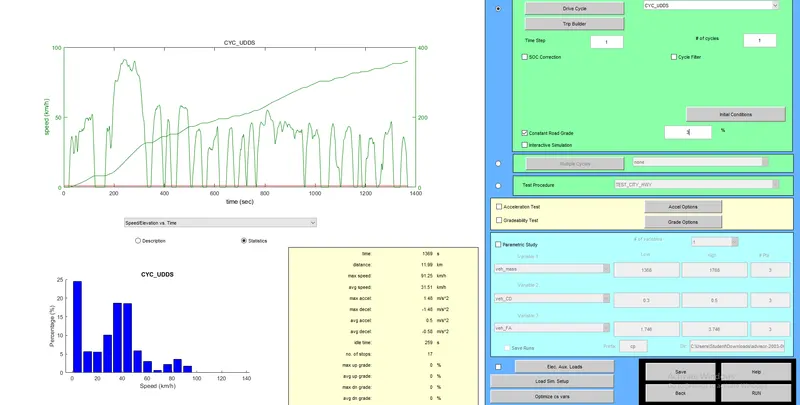
. the gradient is defined in the drive cycle defining interface, by clicking on the constant road grade box, it would enable the user to add on gradient on the drive cycle,
. 3% slope is defined to the UDDS drive cycle and the model is simulated
. comparison
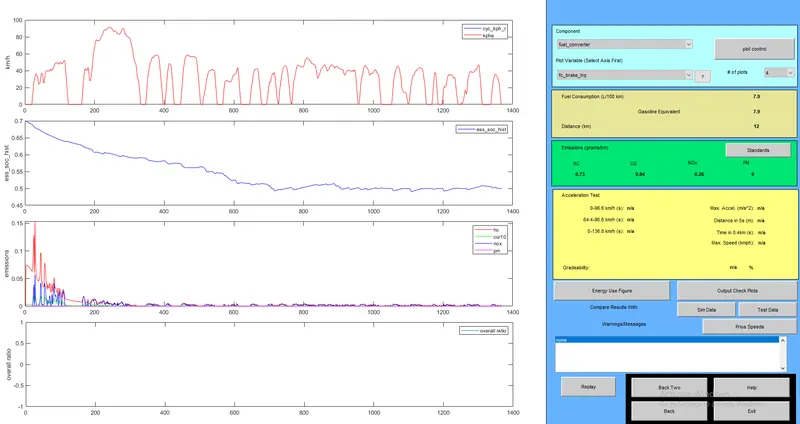
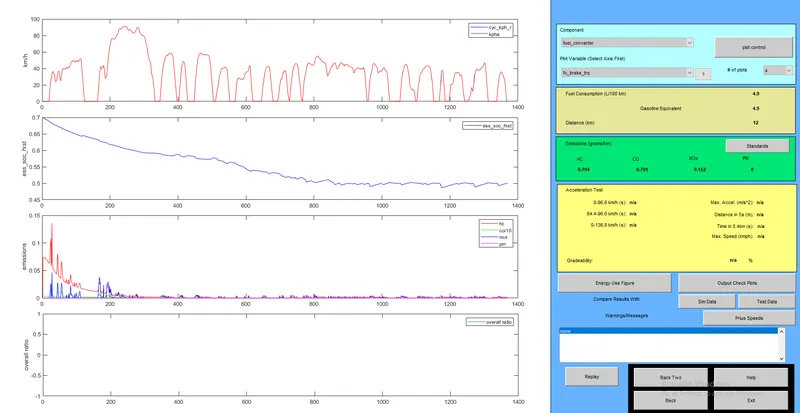
. the results obtained after the simulation is compared (left image- with 3%gradient) (without gradient or zero slope)
parameters with 3% gradient plane surface
. fuel consumption 7.9L consumed for 100km run 4.9L consumed for 100km run
. HC emissons 0.73gms per km 0.704gms per km
(hydrocarbon)
.CO emissions 0.94gms per km 0.791gms per km
(carbon monoxide)
.NOx 0.26gms per km 0.152gms per km
(nitrogen oxides)
. the state of charge of battery remains constant for the both cases
. there is a spike in the emission levels of the vehicle which indicates that to overcome the extra tractive force due to addition of the hill climbing force as the car has to climb an inclined surface is been compensated by the IC engine, which resulted in more fuel consumption of fuel