Week 3 Challenge
Q1)
1. State the primary load cases to be considered for design.
--> Following are the Primary load cases to be considered for design:
- Deadload
- Superimposed Dead load
- Live Load
- Wind Load
- Seismic Load
- Snow Load
2. What is One-Way Slab?
-->
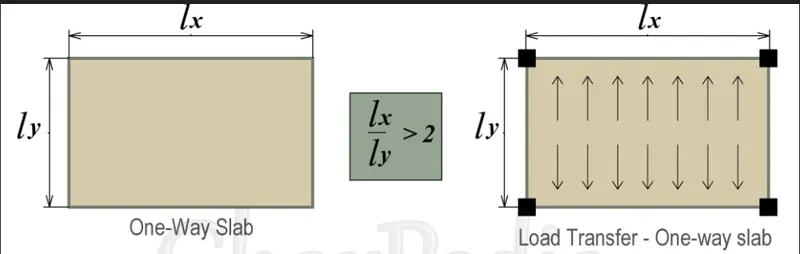
- The one-way slab is a slab, which is supported by parallel walls or beams, and whose length to breadth ratio is equal to or greater than two and it bends in only one direction (spanning direction) while it is transferring the loads to the two supporting walls or beams, because of its geometry.
- In short one-way slab is a slab whose length to breadth ratio is equal to or greater than two.
- The type of Slab which ratio of Ly/Lx > 2 is known as One-Way Slab.
- This type of slab consists Rectangular Loading.
3. What is the value of unit weight of structural steel and soil?
--> As per IS 875- Part 1
- The Structural Steel have Unit Weight of 78.5 Kn/m^3
- Soil have Unit Weight of 18 kn/m^3
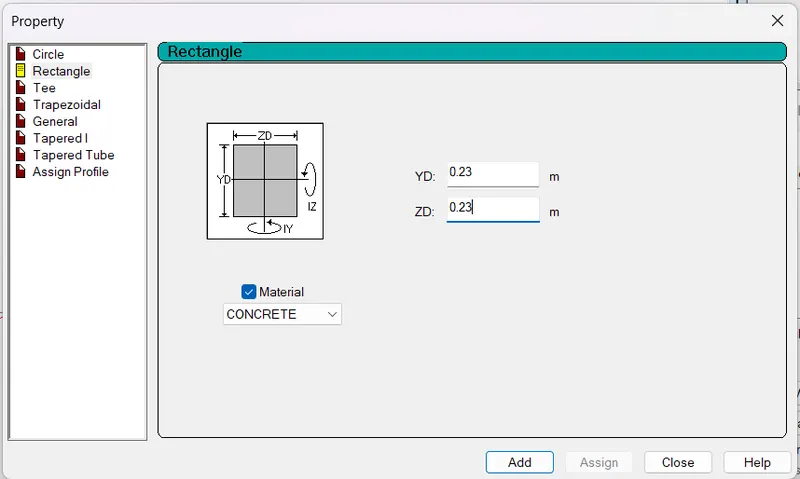
4. Name few sections that can be defined using Properties tab in STAAD Pro.
--> Following are the sections can be defined using Properties tab in STAAD Pro:
- Circle
- Rectangle
- Trapezoidal
- Tapered I
- Tapered Tube
- Tee
5. Define Primary Beams.
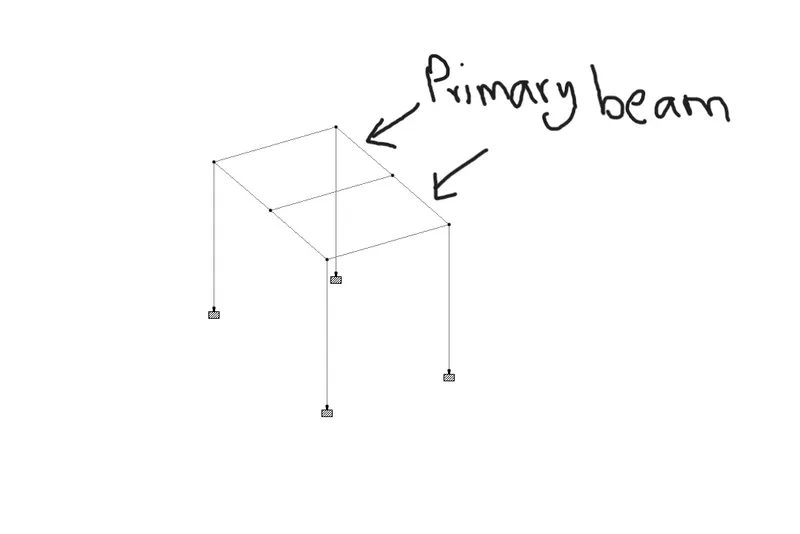
--> Primary Beam is a horizontal flexural (beam) structure member which directly connected to supporting compressive structure member that is column.
It transfer the loads to the Columns.
Q2)
1.State the factors and parameters that influence the design pressure intensity of a high-rise building.
--> `Pz = 0.6*Vz^2`
where,
Pz= Design wind pressure
Vz= Design wind Speed
`Vz = Vb*k1*k2*k3`
Vb= Basic wind speed according to the region
k1= Probability Factor
k2= Terrain,Height and Structure size factor
k3= Topography Factor
2. Mention the load transfer process of a Reinforced Concrete Building.
--> Gravity load (Dead + Live) on the floor and roof slabs is transferred to the columns , down to the foundations, and then to the supporting soil beneath.
Q3)
1. Differentiate One-Way and Two way slabs. Elaborate each slab type.
Ans : In one way slab, the ratio of longer span (l) to shorter span (b) is equal or greater than 2,
The slabs are supported by the beams on the two opposite sides.
The loads are carried along one direction.
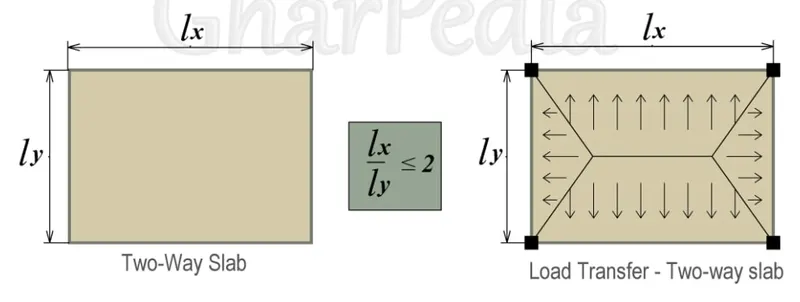
In Two Way Slab, the ratio of longer span (l) to shorter span (b) is less than 2,
In two way slab, as the loads are carried in both directions (longer and shorter direction)
Main reinforcement bars are provided in both directions.
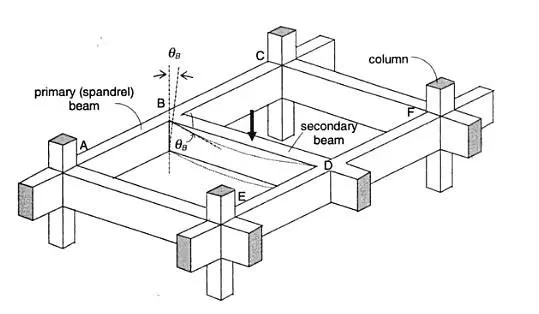
2. Explain the concept of secondary beams with proper sketch.
--> A horizontal beam connecting primary beams (simply supported or shear connected.)
It will transfer the load to the primary beam.
3. Mention the Primary load cases.
a. State the Indian Standards for each load case
b. Detail the parameters of each load case
c. Brief each load case
--> Dead Load ( IS 875 Part 1)
Dead Load ( Unit Weight) of following Materials are
Cement = 1440 Kg/m^3
Steel = = 7850 Kg/m^3
Sand = 1600 Kg/m^3
Concrete = 2400 Kg/m^3
RCC = 2500 Kg/m^3
Soil = 1800 Kg/m^3
Timber = 700 Kg/m^3
Factor for Dead Load is 1.
Live Load ( IS 875 Part 2)
Live loads on floors and roofs consists of all the loads which are temporarily placed on the structure,
All rooms and kitchens = 2 KN/m^2
Bathroom and Toilets = 2KN/m^2
Corridors / Stair case= 3 KN/m^3
Balcony = 3KN/m^3
Wind Load :The force exerted by the horizontal component of wind is to be considered in the design of building. Wind loads depends upon the velocity of wind, shape and size of the building. The method of calculating wind loads on structure is given in IS 875 (Part-3):1987.
Snow Load : The building which are located in the regions where snowfall is very common, are to be designed for snow loads. The code IS 875 (Part-4):1987 deals with snow loads on roofs of the building.
Earthquake Load : Earthquake loads depend upon the place where the building is located. As per IS 1893-2016 (Part-I) (General Provisions for Buildings), India is divided into four seismic zones. The code gives recommendations for earthquake resistant design of structures.
4. Detail the steps involved in assigning Properties and Support to a model using STAAD Pro sequentially.
-->
- Go to Properties Tab
- Click on Define Material
- Choose Section and Material
- Click on Add and Close.
- Now Click on Assign to view and assign the Property
- Go to Support Tab
- Click on Create
- Choose Support and click on Add and close
- Now Click on Use Cursor to Assign.
5. Brief the steps to be followed to create and assign secondary beams in STAAD Pro.
-->
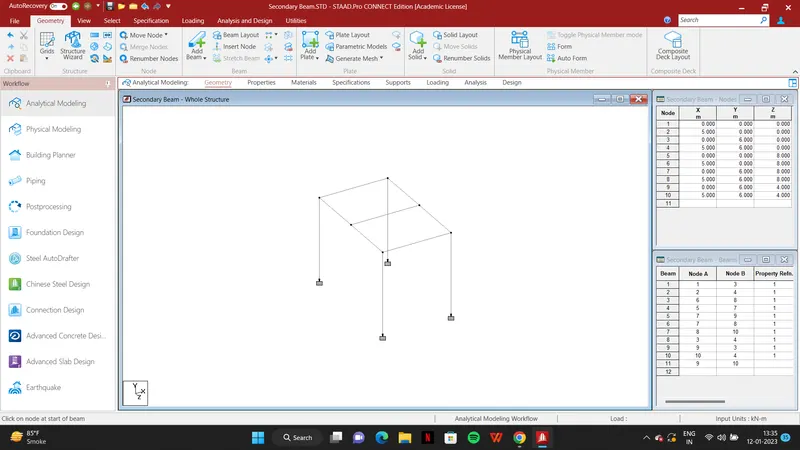
- Add node at the desired location of the beam.
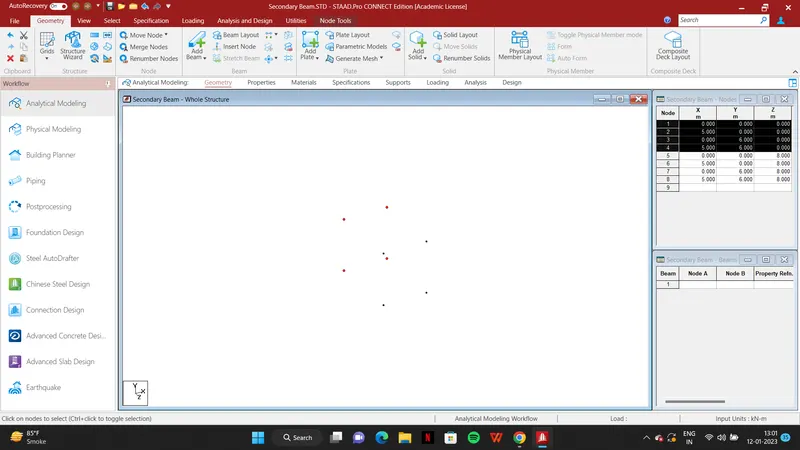
- Now Add beam between Nodes.

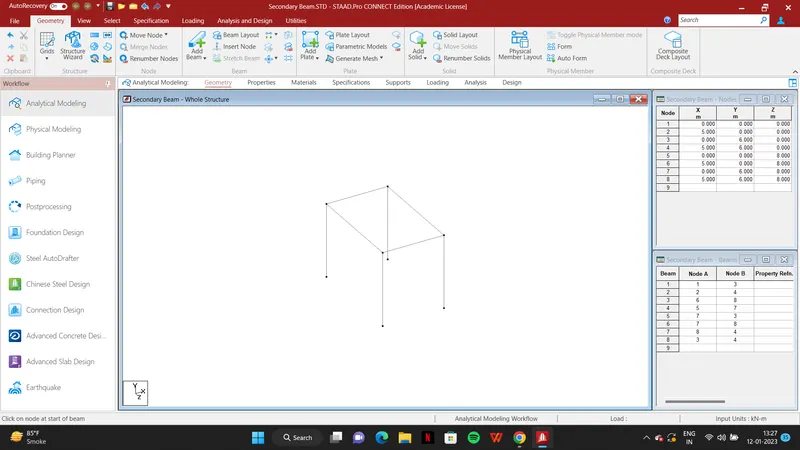
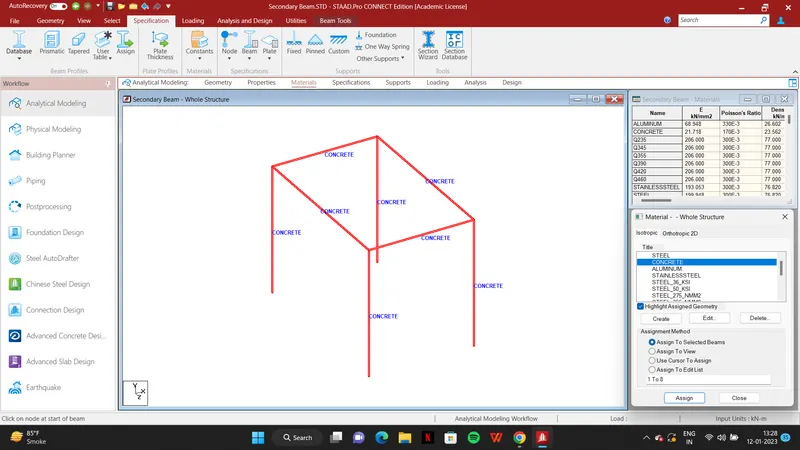
- Now go to Properties and Assign Rectangular Property
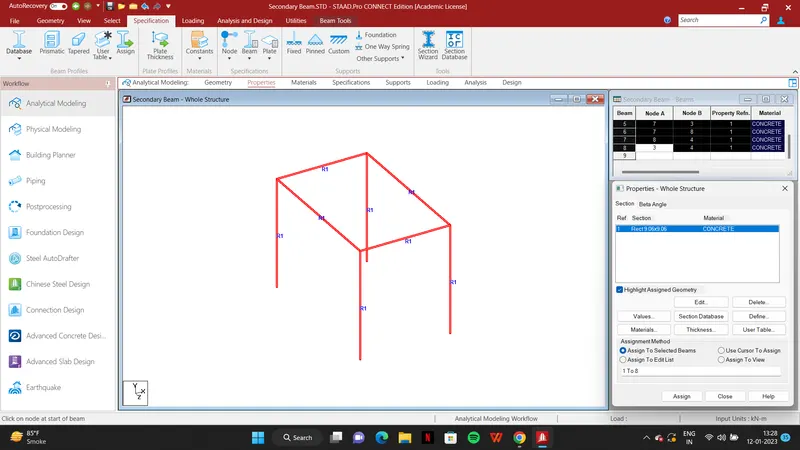
- Assign Concrete Material to the Beam
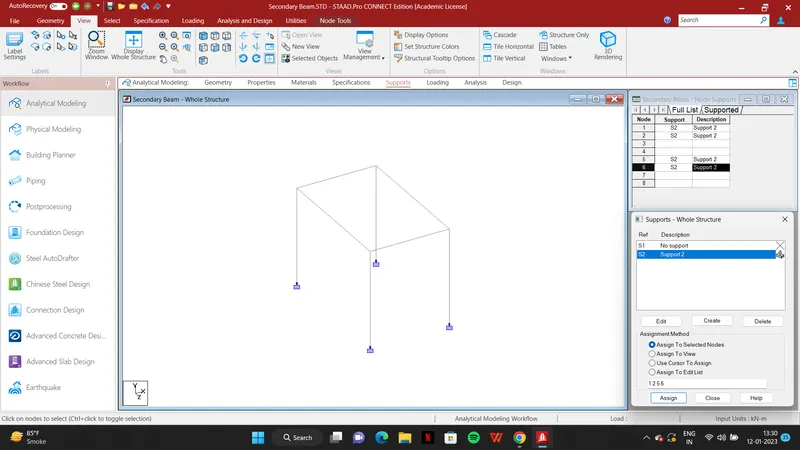
- Assign Fixed Supports to the Columns
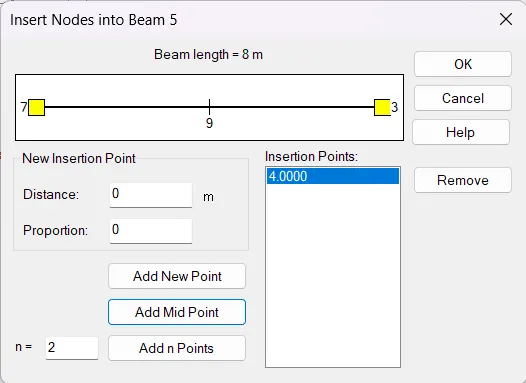
- Create Node on Midpoint and Add Beam to it
Practical
1. Calculate the wind pressure for the given building
a. Building Dimension : 20m x 30m x 20m height RCC
b. Building usage : Hospital block in city centre
c. Location : Darjeeling
--> For Wind Pressure (Pz) = 0.6 xVz^2
where Vz = Vb x k1 x k2 x k3
The Structure in category - 4 and Class B and Designed for 100 years.
From IS 875 Part 2
Vb = 47 m/s
K1 = 1.07 (Table 1,Cl.5.3.1)
K2 = 0.76 (Table 2, Cl.5.3.2.2) (Category-4 ; Class-B)
K3 = 1 (Cl.5.3.3.1)
Hence Vz = 47 x 1.07 x 0.76 x 1
= 38.22 m/s
And Pz = 0.6 x (38.22)^2
= 0.87 kN/m^2
| Height | K2 | Vz | Pz | Pz in KN |
| 3 | 0.76 | 38.22 | 876.47 | 0.87 |
| 6 | 0.76 | 38.22 | 876.47 | 0.87 |
| 9 | 0.76 | 38.22 | 876.47 | 0.87 |
| 12 | 0.76 | 38.22 | 876.47 | 0.87 |
| 15 | 0.76 | 38.22 | 876.47 | 0.87 |
| 18 | 0.76 | 38.22 | 876.47 | 0.87 |
| 20 | 0.76 | 38.22 | 876.47 | 0.87 |
2. Calculate the Dead load and Live load for the above building with reference to IS standards ( assume suitable sections )
--> Self Weight of Concrete = 25 kN/m^2
Self Weight of PCC = 22 kN/m^2
Self Weight of Brick Wall = 18 kN/m^2+
Dead Load = (Weight of one slab x 7) + Weight of Wall
=( 25 x 0.150 x 30 x 20) + (18 x 3 x 30 x 0.115) + (18 x 3 x 20 x 0.115)
= 16060 KN
Assume Live Load = 3 Kn/m^2
Live Load = 20 x 30 x 3 = 1800 KN
Total Live Load = 1800 x no of floors
= 1800 x 6
= 10800 KN