|
What is Design Methodology?
Design methodology is the steps followed during the fixture design stage.
The general flow are: P.O > Inputs from Customer > Percentage completion criteria > Design Output
|
|
What are the inputs required from the customer to start designing a Fixture?
Input from customer includes:
|
1.
|
Functional Requirement
|
Function to be achieved by the fixture, e.g. Welding fixture, Checking Fixture, Mass Production fixture, Hemming fixture etc.
|
|
2.
|
Preferred Standard Components
|
Standard parts used by the client including cylinders, riser, shims, weld gun etc. Common standards include ABB, NAAMS, DESTACO, ZYTRAN, TUNKERS. Using standardized parts help to reduce the cost and time of manufacturing.
|
|
3.
|
Car Products
|
Study of the 2D 3D PLP
|
|
4.
|
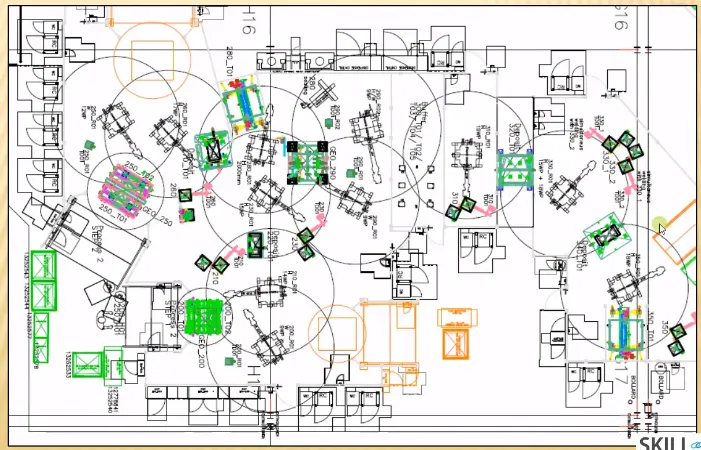
Layout
|
Floor layout of the customer’s factory to understand the physical (space) constraints and to consider the production flow.
Layout provides info on:
- Flow of parts
- Station pitch (distance between stations)
- Robot stations
- Accessories, i.e. Tool changer and Tip dresser
- Sub assembly links
- Platform height
- Loading/Unloading sequence and height
|
|
5.
|
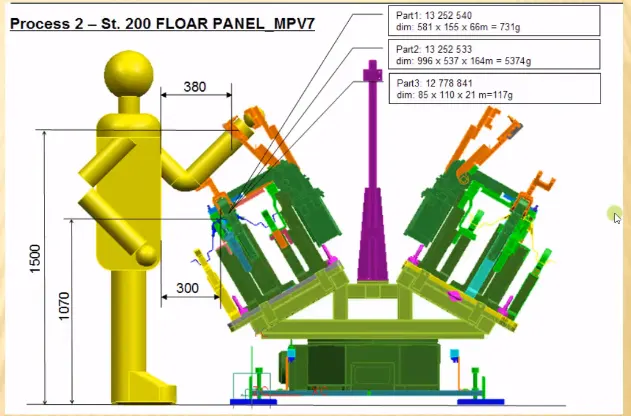
Ergo Data
|
Ergonomic data including the optimal working zone and height.
|
|
6.
|
Weld Study
|
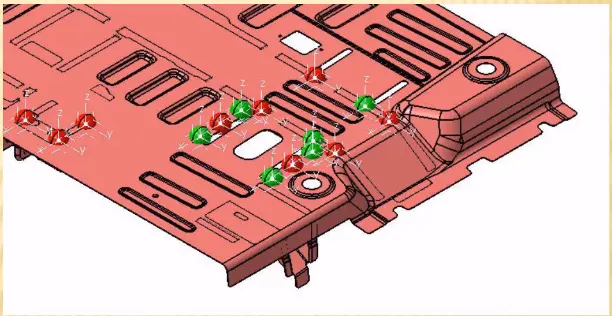
Contains details on weld guns, weld matrix & weld points (Specify geo / re-spot point).
Red – Geo spot
Green – Re-spot
|
|
7.
|
Standard Detailing Templates
|
Standard templates used for 2D detailing and GD&T.
|
|
|
What is the input we get from "Car Products"?
|
1.
|
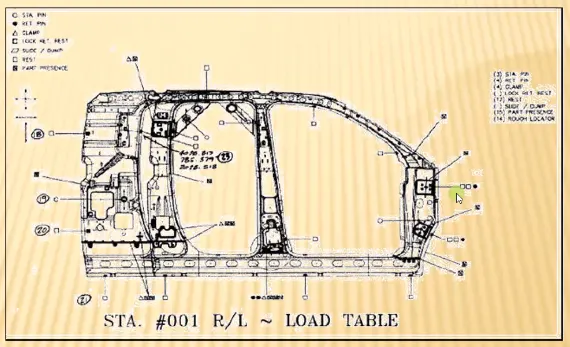
GD&T
|
Provides info on the geometric dimensioning & tolerance required for the fixture units in each station and also the info on sequence and stroke of opening of clamps, dumps & slides.
|
|
2.
|
Part List
|
The detailed list of parts to be assembled using the designed fixture.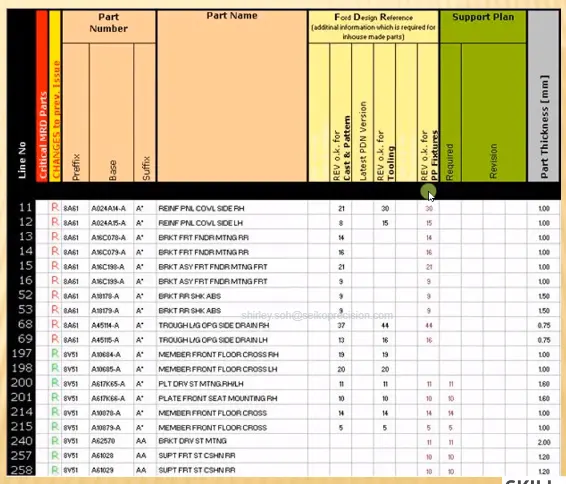
|
|
3.
|
CAD files of Car Part
|
CAD files of the relevant car panel (workpiece) to be welded/processed. This is provided by customer for us to study the part and conceptualize on the fixture design.
|
|
4.
|
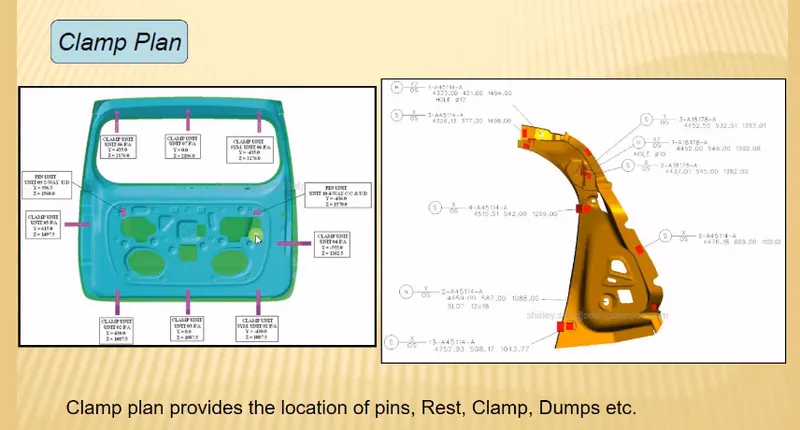
Clamp Plan
|
A proposed plan of the location of the clamping, pins, rests provided by customer.
|
|
5.
|
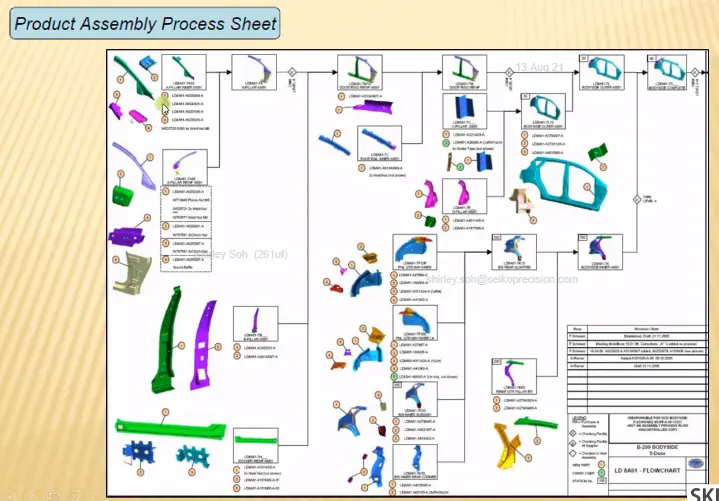
Product Assembly Process Sheet
|
An overall plan of the sequence of assembly from the child part (sub-assy) to the parent parts.
|
|
|
What is the Clamp plan?
The plan provided by customer to specify required location to place clamp / pin.
|
|
What is the purpose of a Layout?
Layout is the physical factory floor layout where the designed fixture will be placed. This is prepared for the consideration the space constraint, placement of the robots and the production flow when designing the fixture.
|
|
What is Ergo data?
Ergonomics is the human factor of how human works with the physical product. Ergo data provide information of the optimal working condition like the optimal working height/ reach zone so that work can be completed safely and comfortably.
|
|
What do you understand by Weld study?
Weld study is the study of the welding matrix and the position of weld points. We need to study and differentiate the geo point from the re-spot point to ensure efficient operation of the fixture in the production.
|
|
What are the criteria for percentage completion in the designing stage? Explain it in detail
The percentage completion is a consensus between us and the client to track the project’s progress. Different companies may have their own criteria; however, the typical criteria are as follow:
- 0-25% Input and Concept design
- 25 – 40% Concept approval & Simulation check
- 40 – 85% Design freezing & Detailing
- 85-100% Check & Final dispatch
|
|
Brief about "Output" in design?
The output of the design should:
- Use approved standard components wherever possible to save cost & time.
- Ensure that the fixture design is as simple and economical as possible
- Comply with all safety and ergo standards
- Provide controlled and damage free handling of product.
- Use adequate error proofing, e.g. Sensors, Rough locators.
- Keep weight of moving parts to minimum & maintain maximum strength.
- Keep frames and structure simple & sturdy
- Incorporate clearance and accessibility for routine maintenance
- Consider motion control on any moving equipment.
- Validate all clamps and weld guns (by designer)
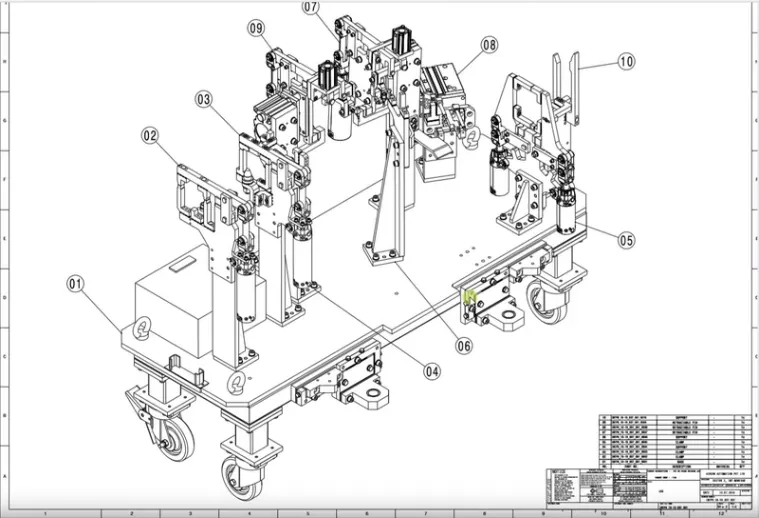
Some documentations in the design output include:
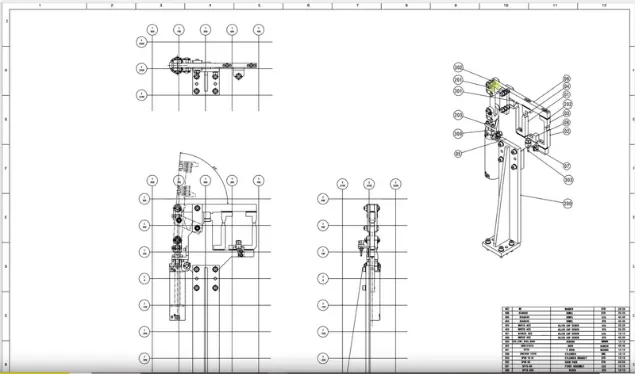
- Keysheet: The overall placement plan including all units in the fixture (as shown in the 1st picture below).
-Layout sheet: The 2D plan of each individual unit, it specify the components in the unit (as shown in 2nd picture).
|
|
What do you understand by structuring a design tree? How does it reduce errors during the design process?
The design tree is the specification tree in CATIA that contains all the parts, components and sub-assemblies that make up an assembly. Standard naming structure is important when structuring a design tree to reduce error by:
- Ensuring that the design can be understood by any other designers.
- Parts can be easily found/identified, thus reducing the chance of changing the wrong part.
The standard convention is to place designed part at the top, followed by standard parts at the bottom.
|
|
What are Units? Mention 5 types of units.
A unit is a set of parts that perform a specific function in the fixture like locating, clamping or guiding the workpiece. There are two types of units in general:
Simple Unit: Rest unit, Fixed & Retractable Pin unit, Rough Locator unit, Sensor unit, Base unit
Complex Unit: Slide unit, Dump unit.
|
|
Describe Fixed Pin units & their purpose?
- Pin unit is used to locate the car panel using pins.
- Two types: Fixed & Retractable pin unit
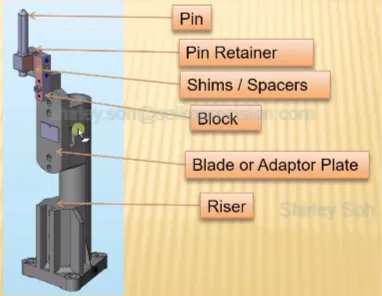
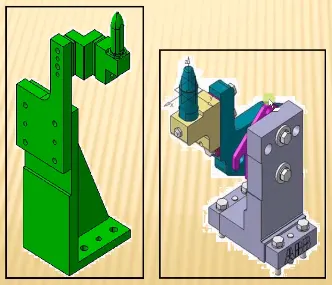
- Fixed pin unit: Pin package (parts including Pin, Pin retainer, Blade) is fixed on a riser.
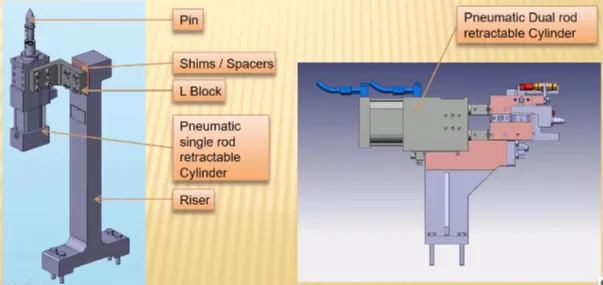
- Retractable pin unit: Entire pin package parts is mounted on a retractable cylinder.
- Pins can be make or standard part.
Below are the parts in Fixed & Retractable pin unit respectively, in general:
Fixed Pin Unit
Retractable Pin Unit
|
|
What are the different parts of a fixed unit?
A fixed pin unit consists of Pin, Pin retainer, Shims, Block, Blade and Riser (shown in picture above).
|
|
What is the purpose of making a Rest unit & describe its parts?
Rest unit is designed to rest or support the car panel. It consists of parts as below:
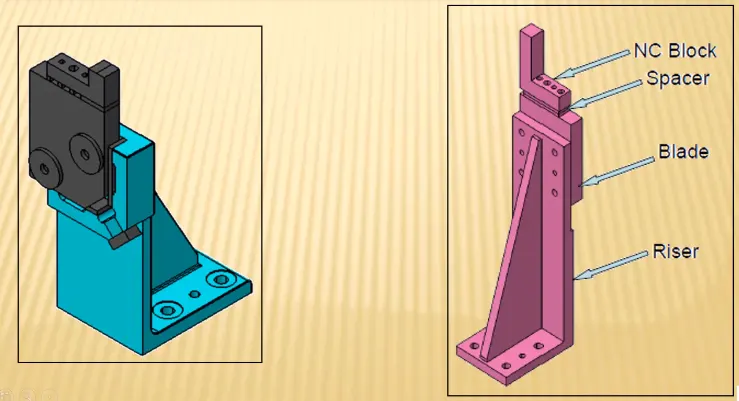
|
|
What are the basic fundamentals to design a Sensor unit?
- Sensor unit is designed to sense the workpiece during the production/welding. The sensors will send signal to PLC, if a workpiece is not available, the next process will not be executed.
- This is one of the error-proofing method to reduce error in production.
- Each loose panel (workpiece) should be sensed by at least 1 sensor, or more depending on its size.
- The preferred location of the sensor is on the diagonal opposite end of a workpiece.
- Every sensor should be mounted such that it is 3 directions adjustable.
- Major sensor MFG: IFM, Pepperl-fuchs, SICK, OMRON
- Types of sensor in general: Proximity sensors, Laser sensors, Photo electric sensors
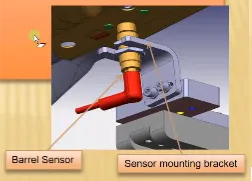
|
|
What is a Rough locator unit & what are the basic fundamentals to consider while designing it?
- Rough locator is placed at the edge of a workpiece to guide the placement of the workpiece onto the fixture.
- Can be standard or make part.
- It should not touch the workpiece to prevent damaging it, keep a minimum distance of 2-5mm between the rough locator and the workpiece.
- It should start guiding 10-15mm before the workpiece engages with the locating pins.
- Entry angle is designed for easy entry of the workpiece.
- The base of the rough locator is designed with two mounting slots for easy adjustment.
 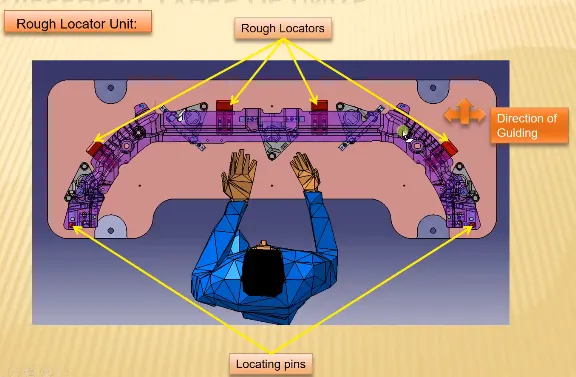
|
|
What is a Base unit and describe it's parts?
- Base unit is designed to mount all the other units including Pin unit, Clamp unit, Rest unit, Sensor unit and others.
- Other parts like the valve box for the pneumatics and trunking cable will also be mounted
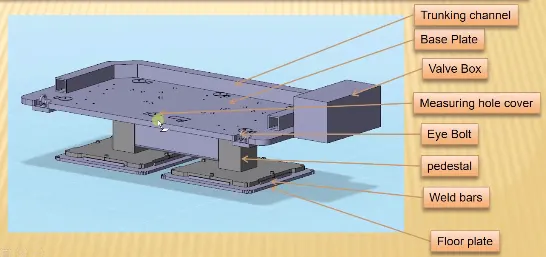
|
|
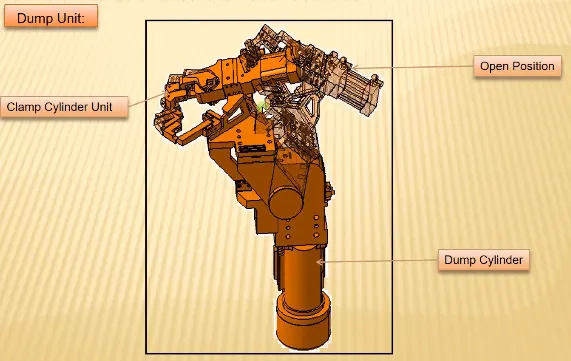
What is a Dump Unit and what are its functions?
- A dump unit is used when there is space constraint in the design of a fixture.
- It is an assembly of multiple pin / clamp units to overcome the space constraint.
|
|
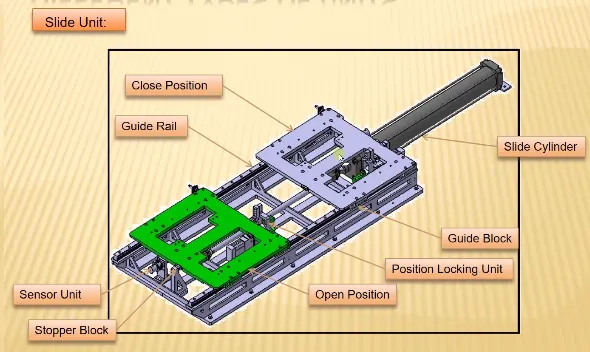
What is a Slide unit? Mention where Slide units are commonly used.
- Slide unit is also used when there is space constraint in the design of the fixture.
- Uses a slide cylinder to slide the fixture open & close.
|
|
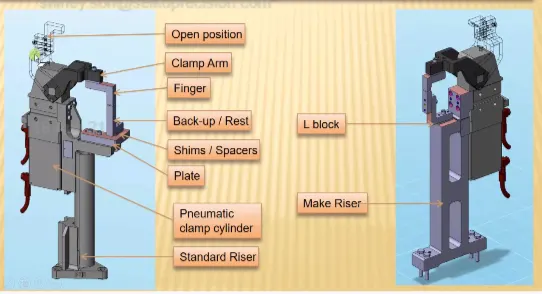
EXTRA: Clamp Unit
A clamp unit is designed to clamp or hold the workpiece, using clamp & rest mylar and a pneumatic clamp cylinder.
|