Week 3:- BiW Fixture Design Methodologies Challenges
1.What is Design Methodology?
Design Methodology: The way in which design methods are used in the context of the organization, the project, the product, all stakeholders, and all other aspects that influence the development cycle. Design Method: A model that employs a series of steps to prescribe the development process.
2.What are the inputs required from the customer to start designing a Fixture?
- Function Requirements.
- Preferred Standard Components.
- Car Products.
- Layout.
- Ergo Data.
- Weld Study.
- Standard Detailing Templates.
3.What is the input we get from "Car Products"?
The input we get from the car products are: 1. GD&T : GD&T provides information of locating pins, rest, clamps, dumps and slide information of each station. Also, it provides the sequence of opening of clamps, dumps and slide stroke information.
4.What is the Clamp plan?
Clamping prevents the part from shifting or being pulled from the jig or fixture during the machining operation. The type and amount of clamping force needed to hold a part is usually determined by the tool forces working on the part and how the part is positioned in the tool.
5.What is the purpose of a Layout?
it is used to hide the lines, curve ,sketch,panel lines,flame cut parts when required it is mainly used in 2D drafting.
6.What is Ergo data?
Ergo data provides information of loading height, working safety zone of the operator etc. f. Weld study : Weld study includes weld gun details, weld matrix and weld points i.e. geo weld points and respot weld points
7.What do you understand by Weld study?
Weld study involves the study of gun in an assembly and also the location of weld, type of weld and the number of welds that we need to perform on that particular component. Weld study includes: Weld gun details
8.What are the criteria for percentage completion in the designing stage? Explain it in detail
In the Body in White (BIW) stage of automotive manufacturing, welding fixtures play a crucial role in joining sheet metal components to form a vehicle’s main structure. During the fixture design process, the percentage completion criteria help track progress.
- Inputs & Concept Design: 0% to 25%
- Concept Approval & Simulation Check: 25% to 40%
- Design Freezing & Detailing: 40% to 85%1.
These stages ensure precise alignment and efficiency in BIW fixture design, contributing to the overall strength and safety of the vehicle
9.Brief about "Output" in design?
Design output specifications are the tangible results of your design process, such as drawings, models, prototypes, test data, and documentation. They describe the physical and functional characteristics of your product, and how it meets the design input requirements.
10.What do you understand by structuring a design tree? How does it reduce errors during the design process?
Structuring a design tree involves organizing elements into a hierarchical or tree-like structure. Let me explain a couple of contexts where this concept is relevant
11.What are Units? Mention 5 types of units.
Units are used for holging the panel
Types of units.
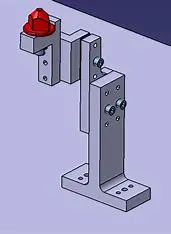
i)pin unit
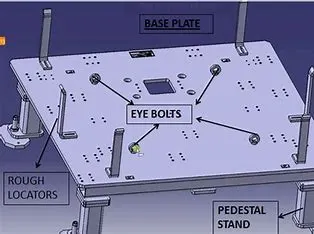
ii)Fixture base unit
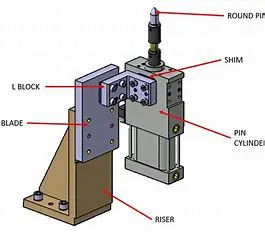
iii)Retractable pin unit
iv)clamp unit
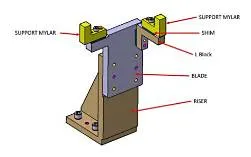
v)Support Unit
12.Describe Fixed Pin units & their purpose?
When the position of the pin within the unit remains fixed, it is termed a “Fixed Pin Unit.” The primary purpose of a pin unit is to secure the rotational position of a panel. In this context, a “Round Pin” is employed to regulate the panel’s movement in two directions, while a “Diamond Pin” is utilized for control in one direction.
Types of Pins:
- Round Pin: Regulates panel movement in two directions.
- Diamond Pin: Controls movement in one direction.
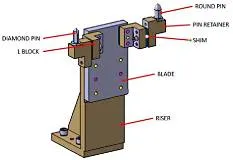
13.What are the different parts of a fixed unit?
- Block
- Riser
- Blade
- Round Pin
- Diamont Pin
- Shim
- Spacer
- NC
- Clamp
- L Block
14.What is the purpose of making a Rest unit & describe its parts?
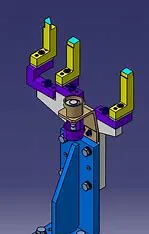
a rest unit is a component designed to support a car panel during assembly or manufacturing processes. It provides a stable and secure surface for resting the panel while working on it. Rest units come in various shapes and sizes to accommodate different panel types and sizes. Additionally, some rest units are adjustable, allowing users to customize the support to fit the panel precisely
15.What are the basic fundamentals to design a Sensor unit?
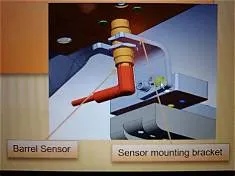
Purpose and Functionality:
Clearly define the purpose of the sensor unit. What specific measurements or data does it need to capture? Is it for safety, control, or monitoring?
Understand the desired functionality: Does it need to detect position, temperature, pressure, or other parameters?
Sensor Selection:
Choose the appropriate sensor type based on the application. Common sensor types include:
- Proximity Sensors: Detect nearby objects.
- Temperature Sensors: Measure temperature variations.
- Pressure Sensors: Monitor fluid pressure.
- Position Sensors: Determine the position of moving parts.
- Strain Gauges: Measure deformation or strain.
Consider factors like accuracy, range, response time, and environmental conditions
16.What is a Rough locator unit & what are the basic fundamentals to consider while designing it?
Purpose:
- Rough locators help locate workpieces accurately during automation processes.
- They define the desired position where the workpiece should be when worked on by a person, team, or robot.
- These locators ensure consistent part positioning, affecting the final product quality.
Design:
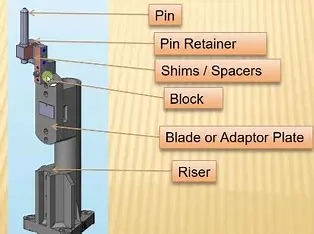
- Rough locators typically feature a 35mm bend at 60°.
- The height from the bend ranges from 65mm to 320mm.
- Width varies (e.g., 19mm, 32mm) based on the standard being used.
- They are set according to the angle of the respective panel, allowing parts to be loaded only in the defined direction and orientation.
17.What is a Base unit and describe it's parts?
A base unit in (BIW) refers to the unit designed to mount all other tool components, such as clamp units, pin units, and rest units. Additionally, parts necessary for the tool, like pneumatic valve boxes and trunking cable paths, are also mounted on the base unit12. The BIW represents the vehicle’s structural shell, including the frame, body panels, and other structural elements, which are welded, riveted, or joined together during this stage to form the basic structure of the vehicle
18.What is a Dump Unit and what are its functions?
- The dump unit is a subpart of the main fixture unit.
- Its primary function is to allow for controlled movement or dumping of the part being worked on.
- When needed, the dump unit releases the part, allowing it to move freely for further operations or assembly.
- This controlled release ensures efficient handling and accessibility during the manufacturing process
19.What is a Slide unit? Mention where Slide units are commonly used.
It’s used to position fixtures, weld guns, units, or robots accurately during car body assembly. The slide unit typically consists of the following components:
- Slide block: A rectangular block that moves along a guide rail.
- Guide rail: A hardened steel rail providing a precise surface for the slide block.
- Linear cylinder: A pneumatic or hydraulic cylinder that drives the slide block.
- End stops: Stops preventing excessive movement in either direction.
- Sensors: Detect the slide block’s position