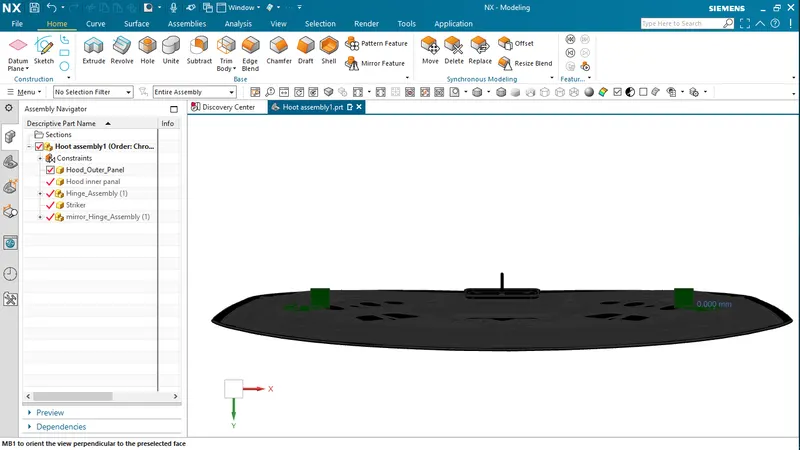
Hood design-Week 2
HOOD
- The Hood or Bonnet is one of the main important components of a car at the front portion, used to decorate the car and to add luxurious look
- The shape of the bonnet is to be made aerodynamic in order to minimize the drag.
- Bonnet is used as a shield/cover to access the parts such as radiator, engine and many other components, hence the design is made in such away so that it can be easily accessible.
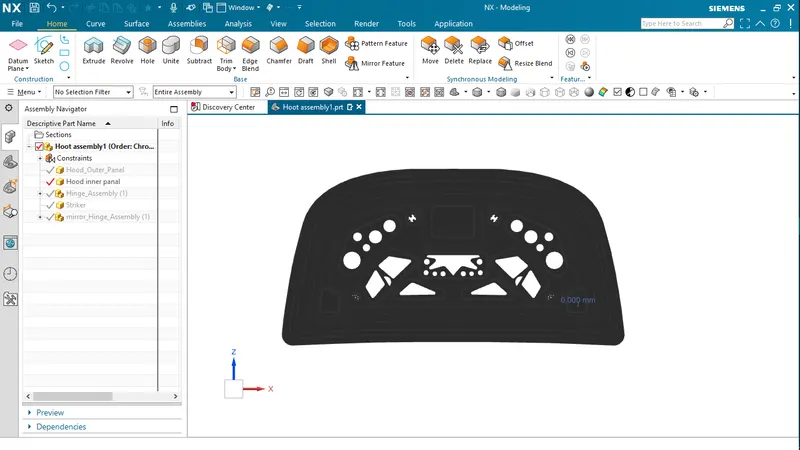
- The inner panel provides the strength to the hood and all the machining process, joining process or reinforcement like (welding, riveting, holes, emboss, etc.) all are done on the inner panel.
- all the other parts like hinge assembly, striker latch, are attached to the inner panel.
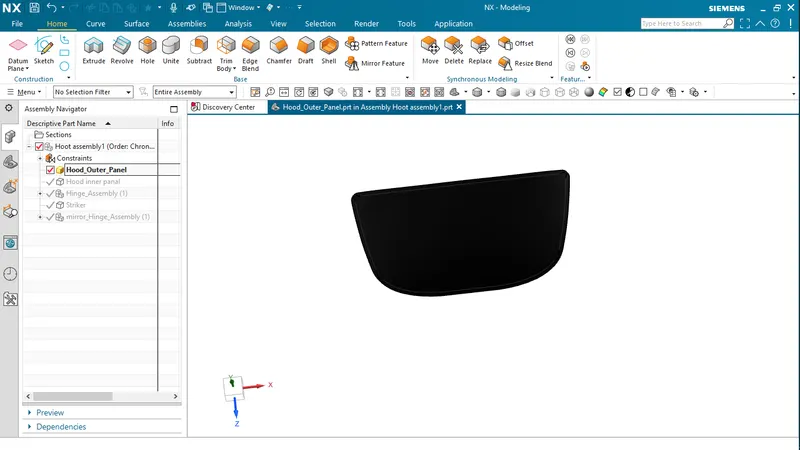
- The outer panel functions as the metal cover.
- The outer panel is Class A surface in which no machining or welding is done.
- The outer panel and inner are joined with the Hemming process.
Components of Hood
- Outer Panel
- Inner Panel
- Hinge
- Latch/striker
- Outer Panel
- A car hood panel is one of the most important components of the BIW (body in white).
- It is considered as the closure sheet-metal component.
- The outer panel has the aesthetic look to it but on its own is very weak and not capable of handling force during impact.
- The most widely used car aluminium alloys in the market are deformed aluminium alloys
- The production process of the outer panel of the hood mainly includes blanking, deep drawing, trimming, turnup, and side turnup.
2. Inner Panel
- The inner panel of the hood is not visible to the customer, but this is the engineering feature of the outer panel.
- The hood panel is required to have a high initial reaction force against the impact exerted on the hood in order to enhance the energy absorption capacity.
3.Hinge
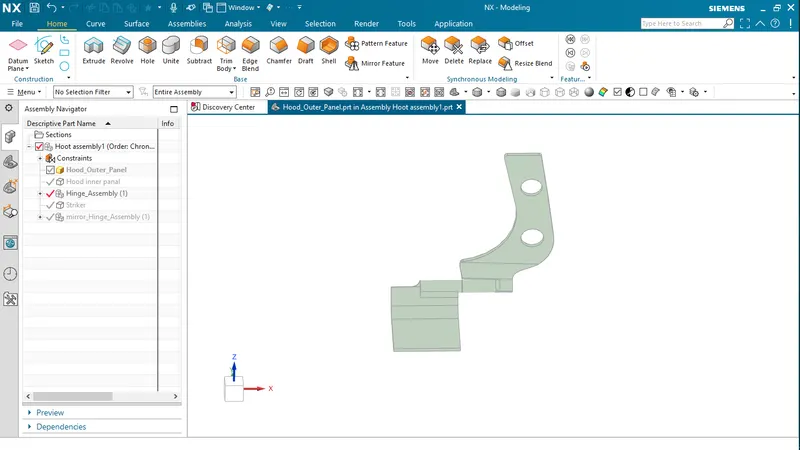
- A hinge is a machine element that connects two bodies allowing angular movement about a fixed axis of rotation
- A hinge can be considered as a journal bearing with only one degree of freedom where a shaft is rotating in a hole
- Hinges are mechanical bearings that are used to connect two swinging objects or points to one another and give them the freedom to move relative to each other.
4.Latch/striker
- Latchesare mechanical components that allow the temporary joining of parts that are moving relative to each other
- They are actuated to release the coupling and allow the two parts to separate.
- They are also used in devices such as seat belts, clamps, straps, and objects with retractable parts.
- When the hood is closed, the latch slides over what is called a catch, and a spring covers the latch to keep it snug.
- When we pull the knob inside the car to open the hood, the hood latch cable opens the latch, allowing it to bypass the catch and open.
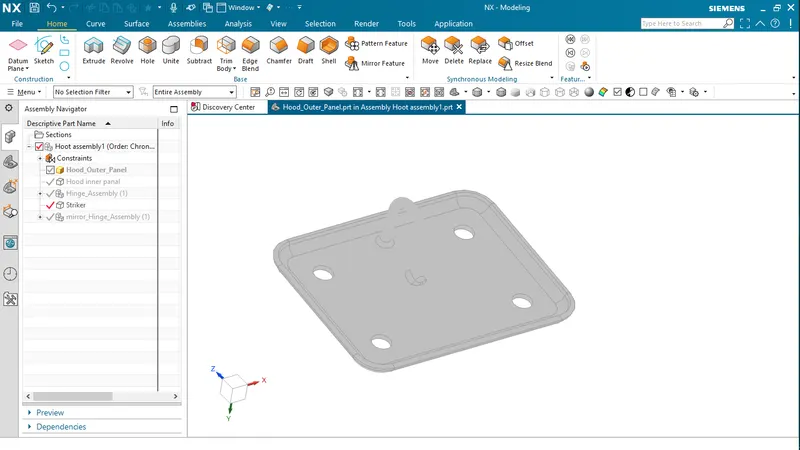
Hood stay
- The gas stay, or support rod help to keep the hood open.
- While designing hood the position of support rod should be considered in both open and close position.
- While in close position the support rod should rest in such a way it doesn’t touch any other component, and if touches with any part, then vibration will be produced, and it will also create noise.
- And, in the open position it should be such that it can easily withstand the load of the hood.
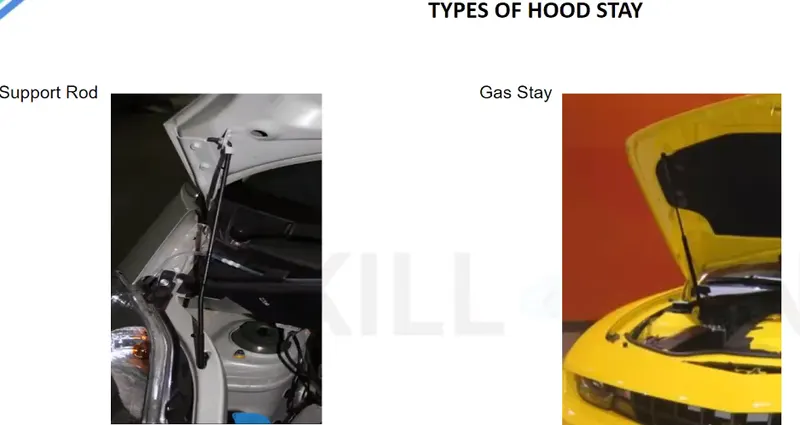
Emboss
- Sheet metal embossing is a stamping process for producing raised or sunken designs or relief in sheet metal.
- The metal sheet embossing operation is commonly accomplished with a combination of heat and pressure on the sheet metal, depending on what type of embossing is required.
- Metal sheet is drawn through the male and female roller dies, producing a pattern or design on the metal sheet.
Hemming
- Hemming is a metal working process in which a sheet metal is folded over onto itself.
- Normally hemming operations are used to connect parts together, to improve the appearance of a part and to reinforce part edges.
Hemming between the inner and outer panel, it is used joining the inner and outer panel and used instead of spot welding as surfaces cannot be joined with welding process.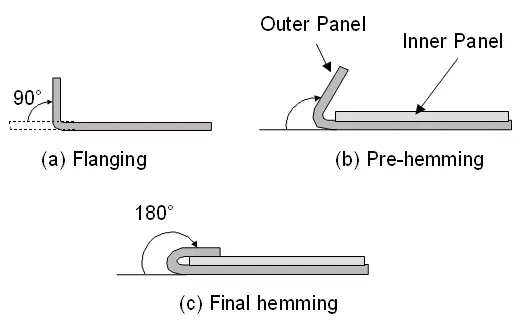
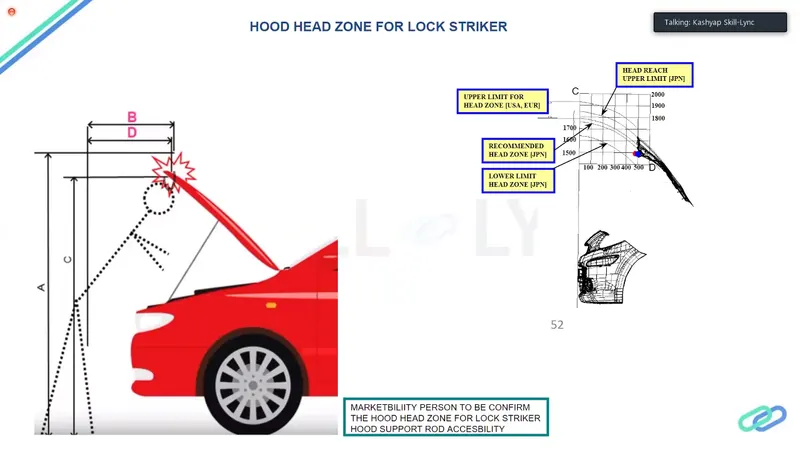
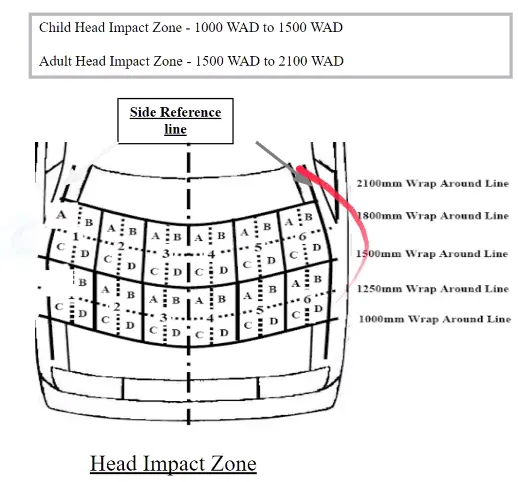
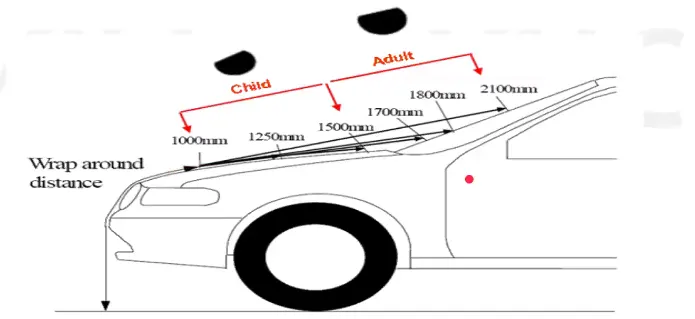
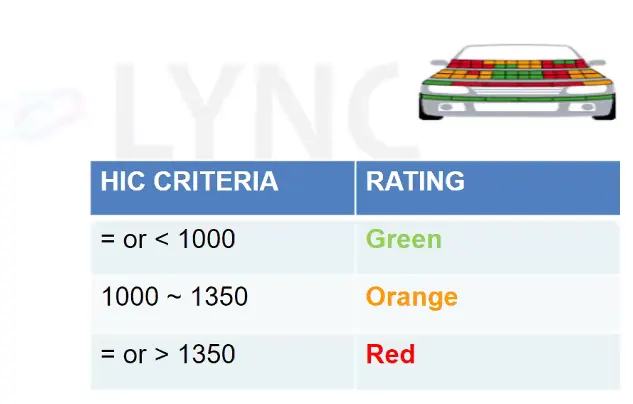
Head Impact Zone
- According to different regions, head zones are defined by considering the average heights of pedestrians.
- The below image shows American, European, and Japanese head zone standards.
- The opening angle of the hood is also decided as per predefined standards.
Opening of Hood
When the hood open there should be a space of 15 to 30 mm so that the fingers can place in that space to lift the hood.
isomatric view
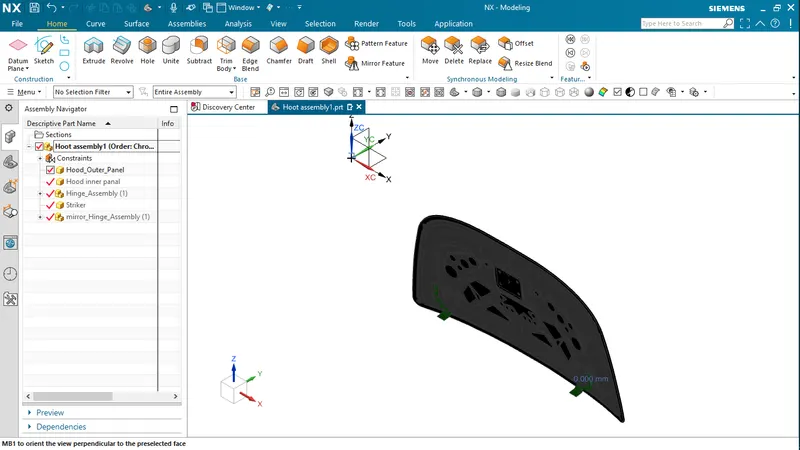
Frond view
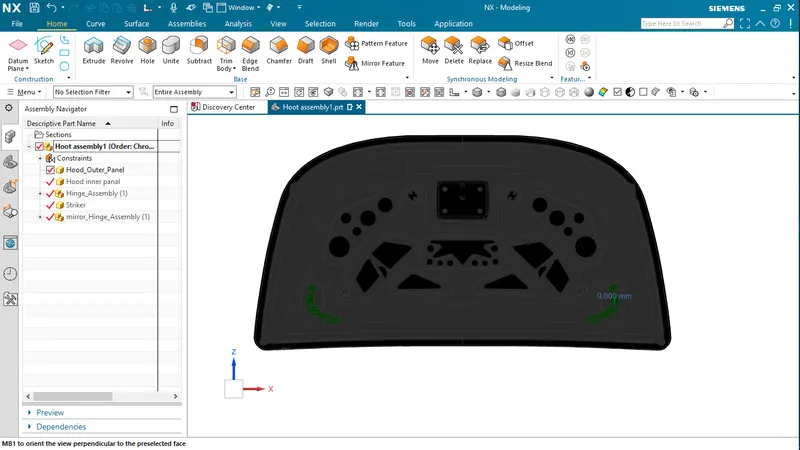
Side view
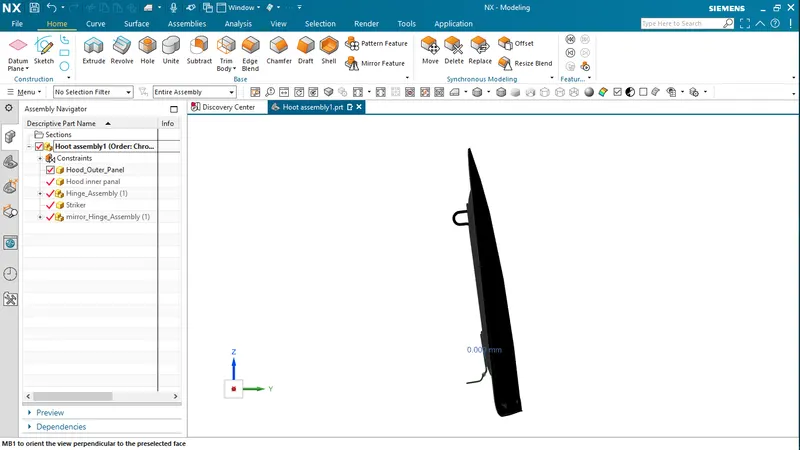
Bottom view