Week 3 - 2D meshing for sheet metal
AIM: To create mid surface for the given 3-D CAD model and correct geometrical errors and provide meshing for the same satisfying the required quality criteria using ANSA preprocessing tool.
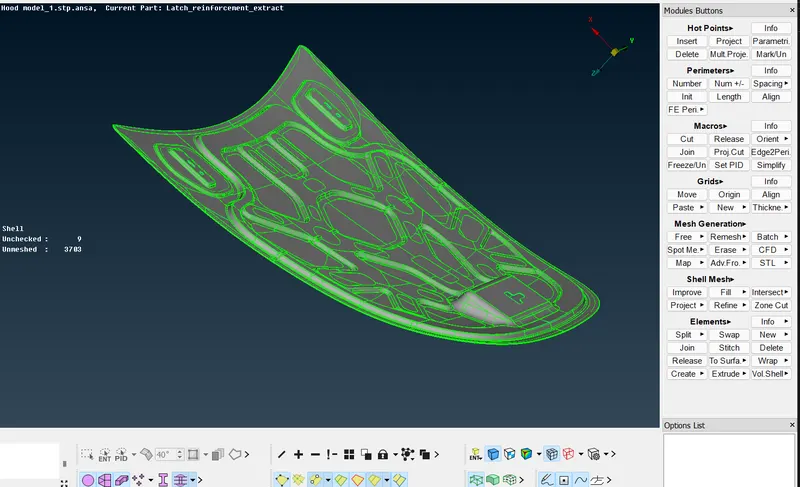
PROCEDURE: The first step for creating the required mesh is to do topology cleanup. This ensures no geometrical errors and distortions are present in the model. First in order to create the required hot points along the con, we need to enter the mesh module and set perimeter and macro length. After this step is done the model turns as shown.
Now, the next step is to do overall topo cleanup using TOPO tool. After topo we will observe the model as shown.
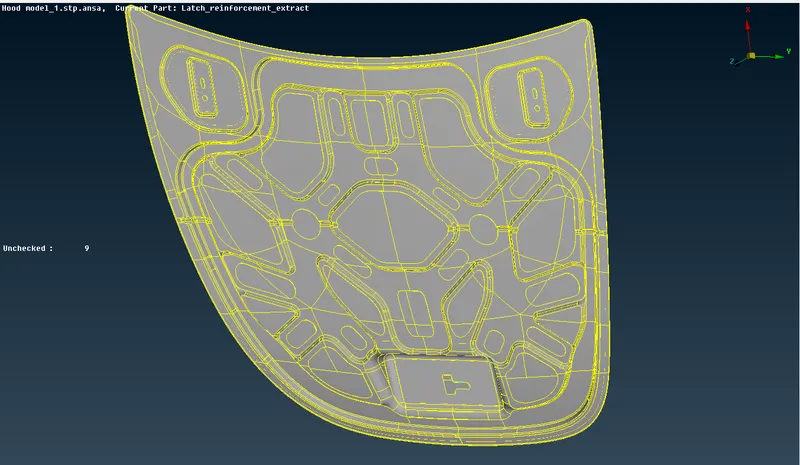
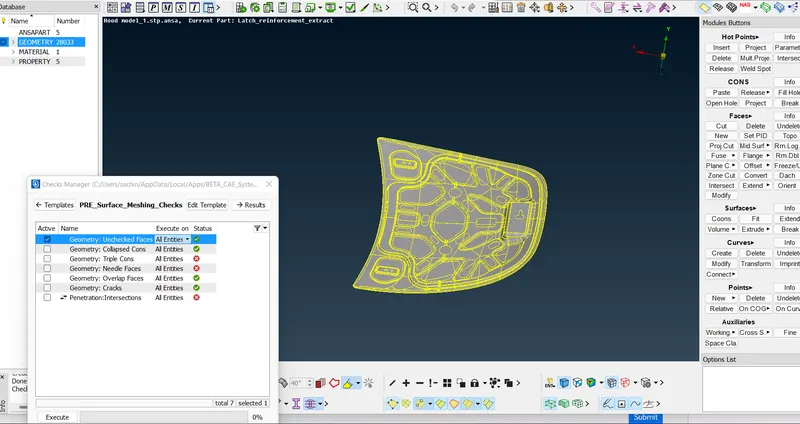
It is to be noted that there are presence of triple cons at many placed which might be due to some error in geometry. To check the same ,we use "checks manager" option which displays a list of possible errors which we should fix one by one.
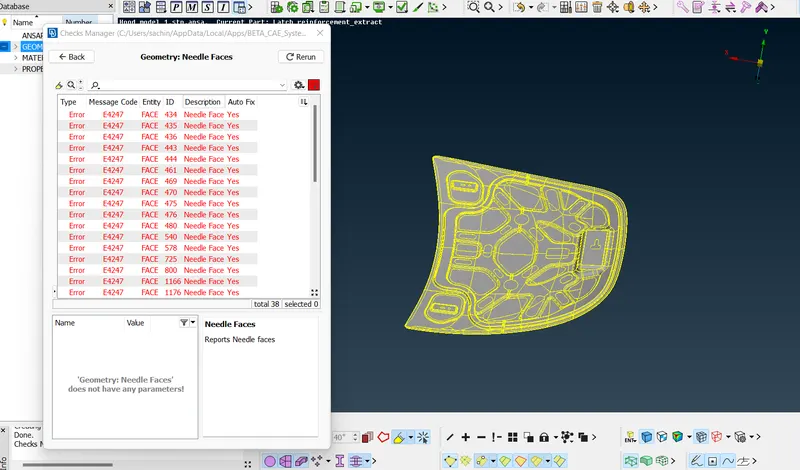
after fixing automatically fixable errors we can see the checks manager display as follows;
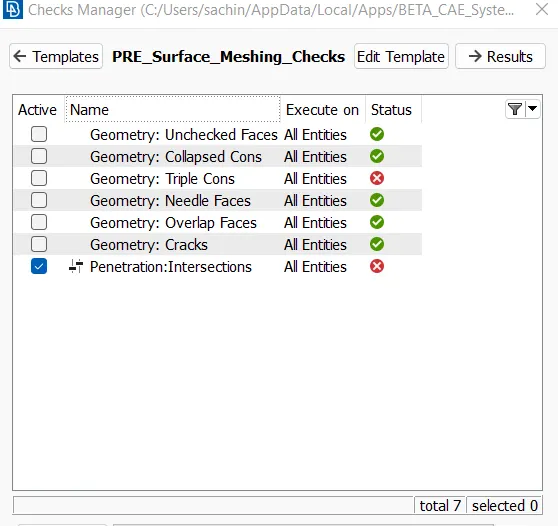
We can still observe that few errors cannot be fixed using "FIX" option in checks manager. These errors must be fixed manually. One such rectification is releasing triple con and using topo over it.
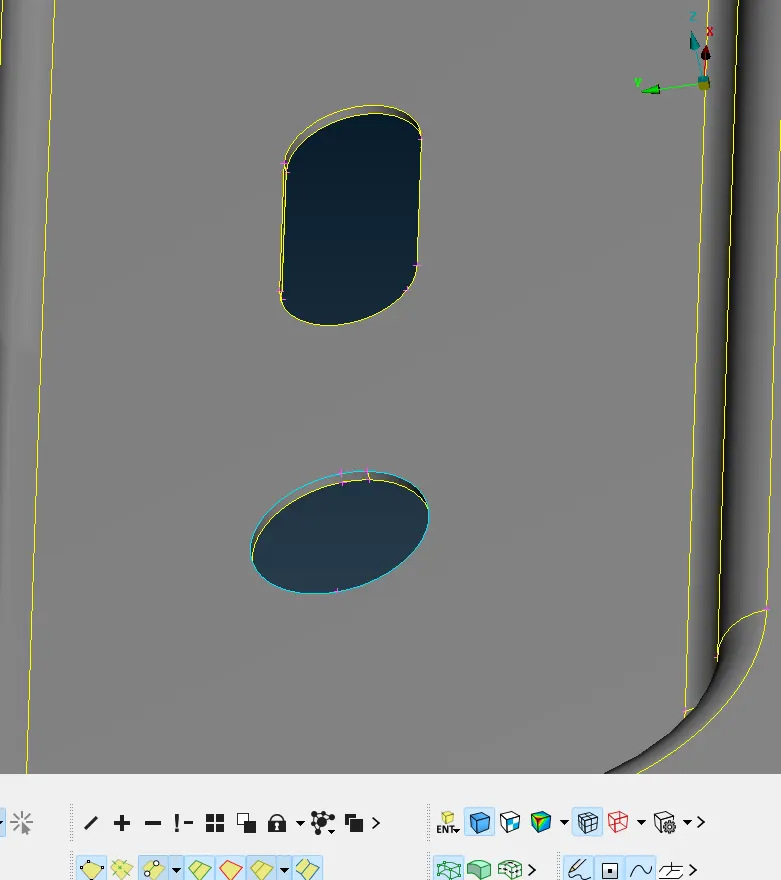
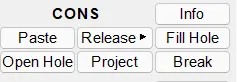

We can observe from the above that triple cons have beeen successfully released and topo has been used on them. The same procedure is followed for all PID s seperately and it is ensured no geometrical errors and misrepresentations are present in any of them.
The next step is midsurfacing all the seperate PIDs.
It can be done either by using automatic mesh generation or by faces>offset method.
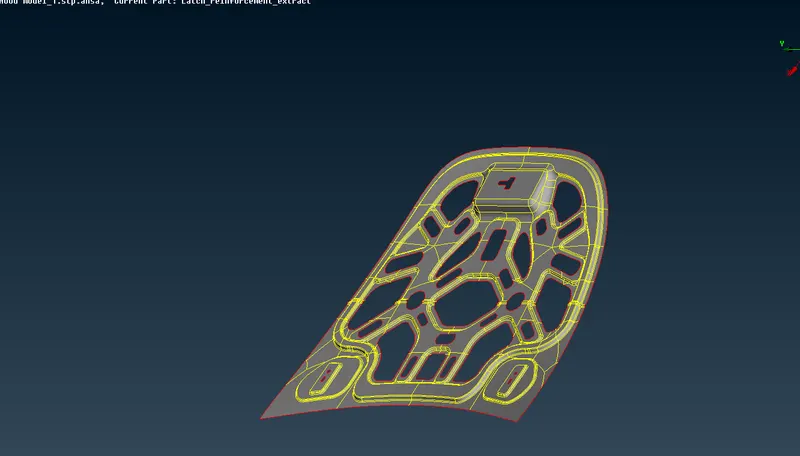
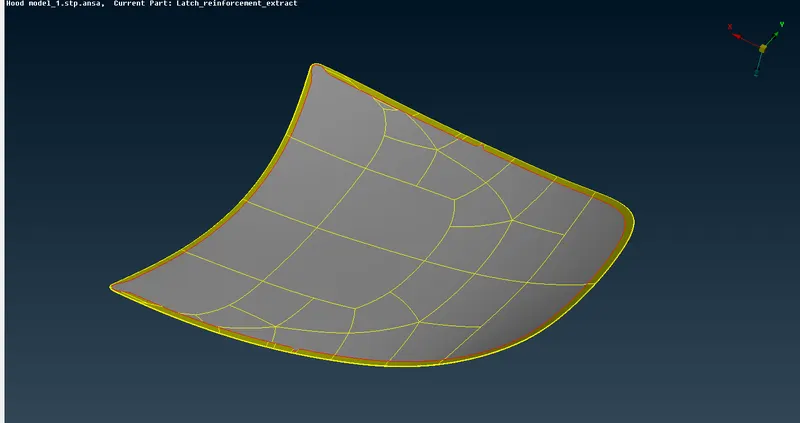
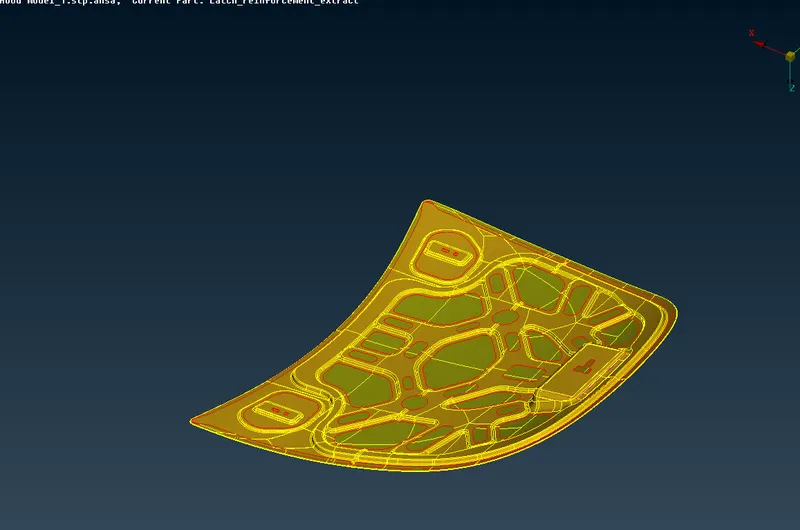
final midsurface assembly is as shown.
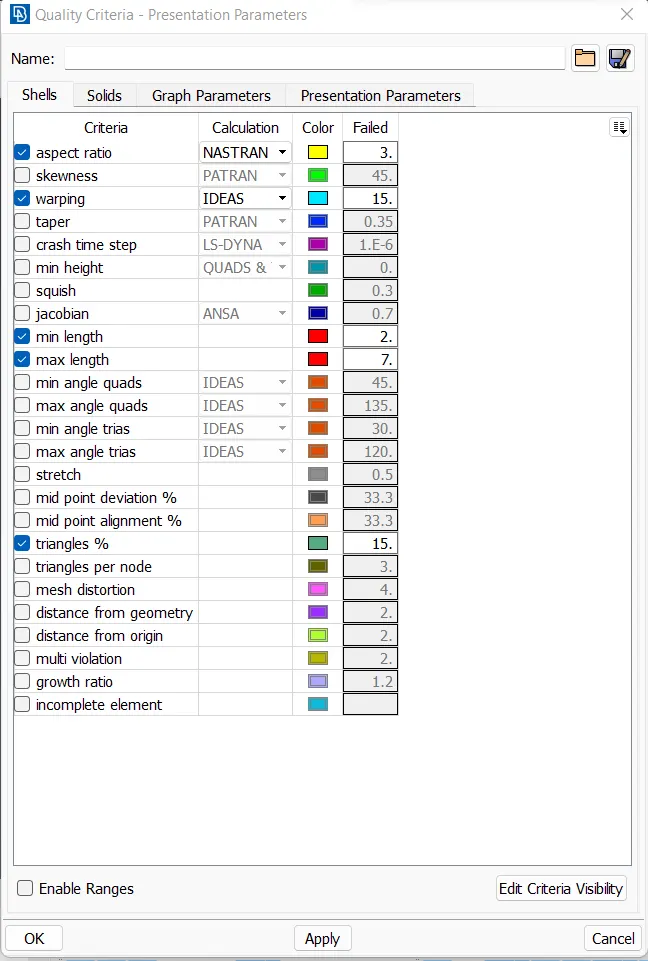
Now we can do meshing for seperate midsurface PID considering the quality. Before proceeding to the meshing, we must assret the quality criteria for the same. This done in the quality criteria tool in utilities.
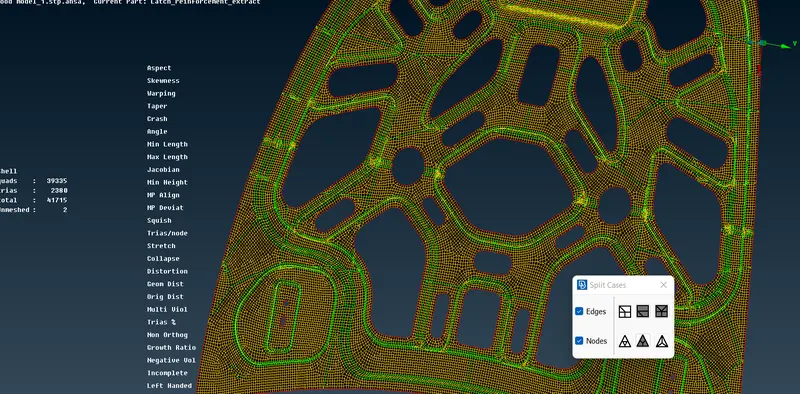
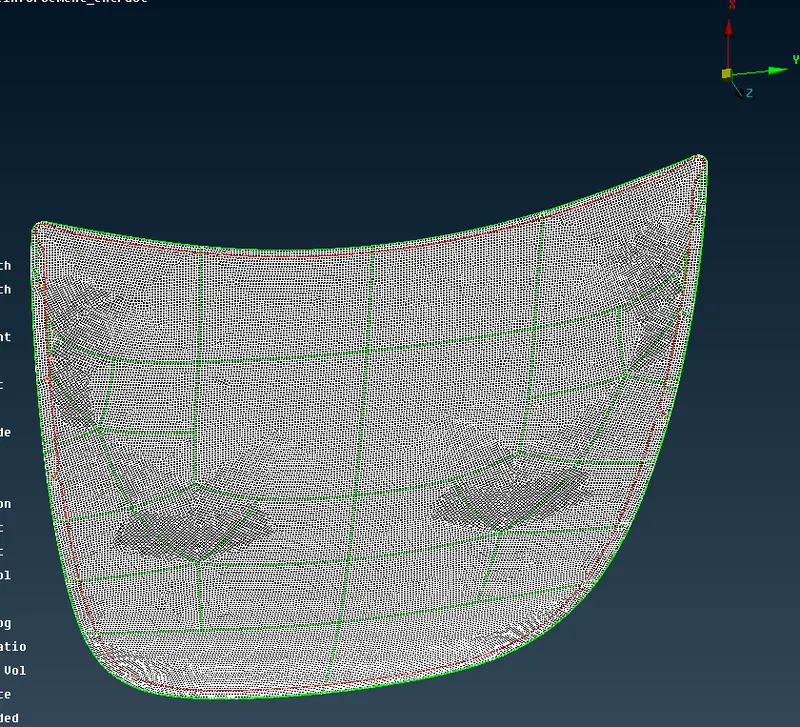
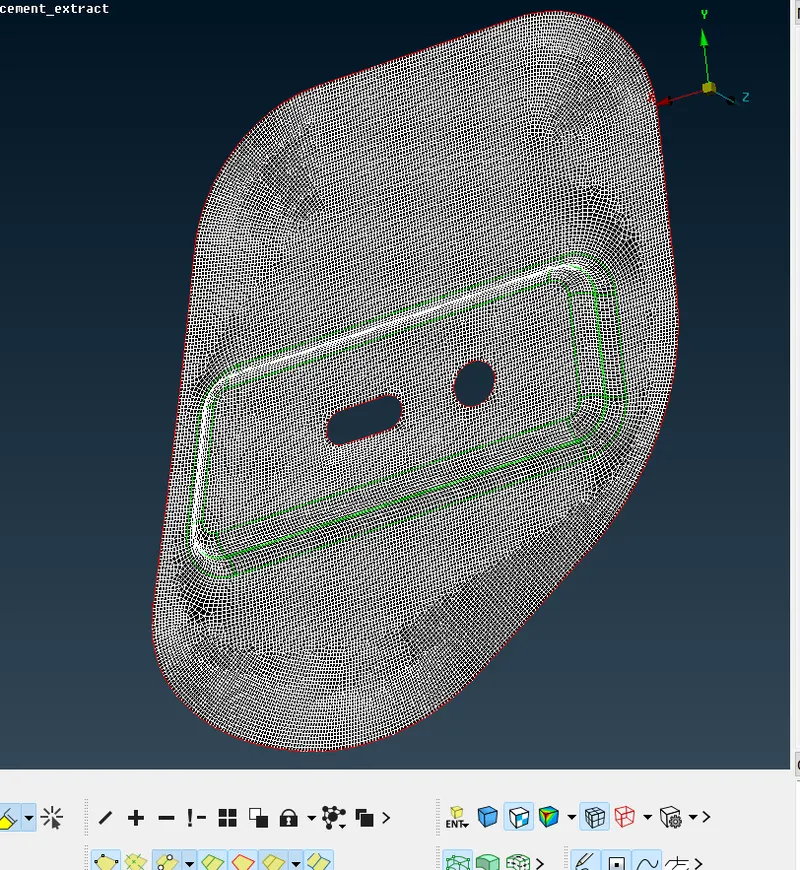
Necessary defeaturing is done for the front panel to suit our quality criteria. This ensures that the geometry is not distorted and only the FE model is altered.
Thus meshing is done seperately for various PIDs.
LEARNING OUTCOMES: 1.) Basic preporcessing skills and understanding the methodology of preprocessing.
2.) Geometrical errors rectification.
3.) topological errors rectification.
4.) Midsurfacing
5.) Meshing.
6.) Refining of mesh and understanding quality criteria.
CONCLUSION: Thus mesh has been successfully done for the given Hood model using ANSA preprocessing tool with adherance to the given quality criteria.