Week 2 - Flow over a Cylinder.
Aim:
To Simulate the flow over a cylinder and explain the phenomenon of Karman vortex street.
Objective:
- Simulate the flow with the steady and unsteady case and calculate the Strouhal Number for Re= 100
- Calculate the coefficient of drag and lift over a cylinder by setting the Reynolds number to 10,100,1000,10000 & 100000 (Run with a steady solver)
- Discuss the effect of the Reynolds number on the coefficient of drag. [Results should be validated with any standard literature and error should be within 5 %]
Theory:
Strouhal number:
In dimensional analysis, a Strouhal number is a dimensionless number describing oscillating flow mechanisms.
For large Strouhal numbers (order of 1), viscosity dominates fluid flow, resulting in a collective oscillating movement of the fluid "plug". For low Strouhal numbers (order of 10−4 and below), the high-speed, quasi-steady-state portion of the movement dominates the oscillation. Oscillation at intermediate Strouhal numbers is characterized by the buildup and rapid subsequent shedding of vortices.
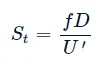
The Strouhal number is often given as
Where,
f= frequency of vortex shedding
D= characteristic diameter of the cylinder
U'= fluid flow velocity
Problem setup:
Design a plate in the discovery with the dimensions given below,
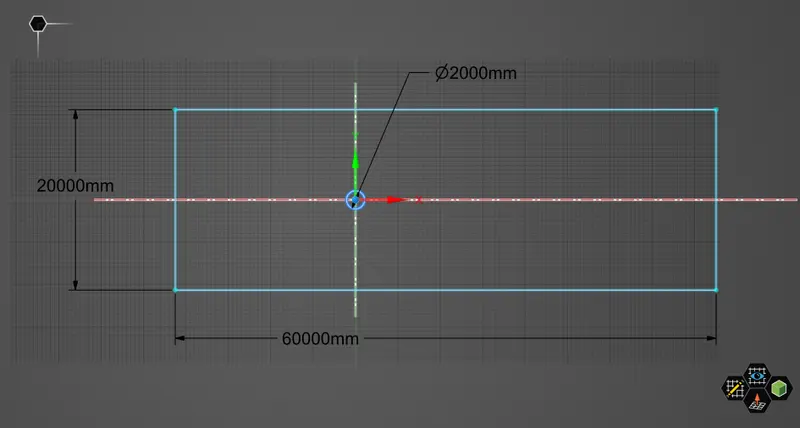
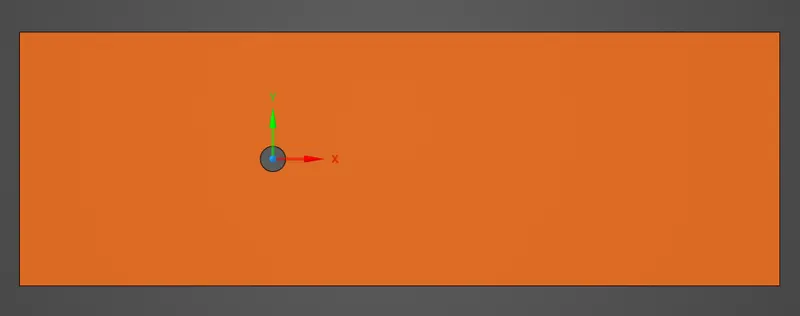
Make sure no surface is present inside the circle.
Meshing:
Select the edges and name them accordingly. The mesh is changed to triangular mesh.
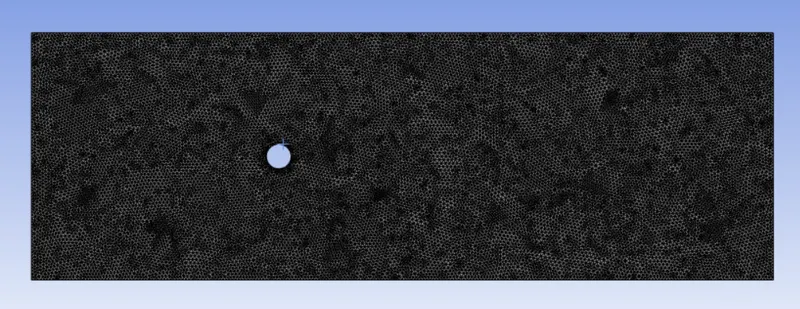
The mesh size is 0.25m. For circle distortion prevention, go to mesh>sizing>select circular edge> definition>type>no. of divisions>36.
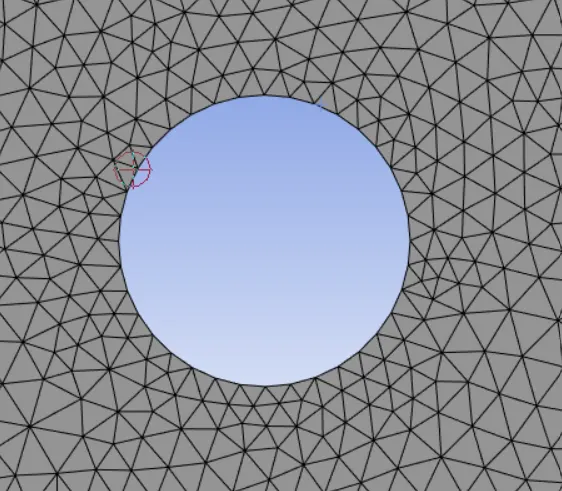
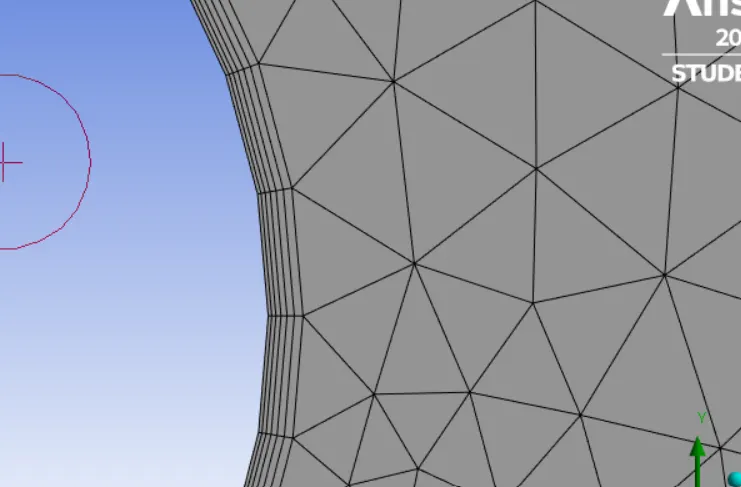
Also, add inflation of the first layer thickness option with a height of 5e-3m with 6 layers.
Fluent Setup:
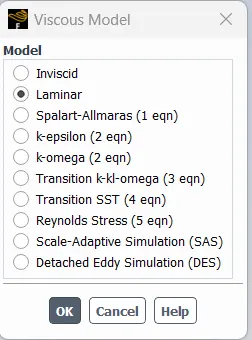
Change the viscous model to Laminar.
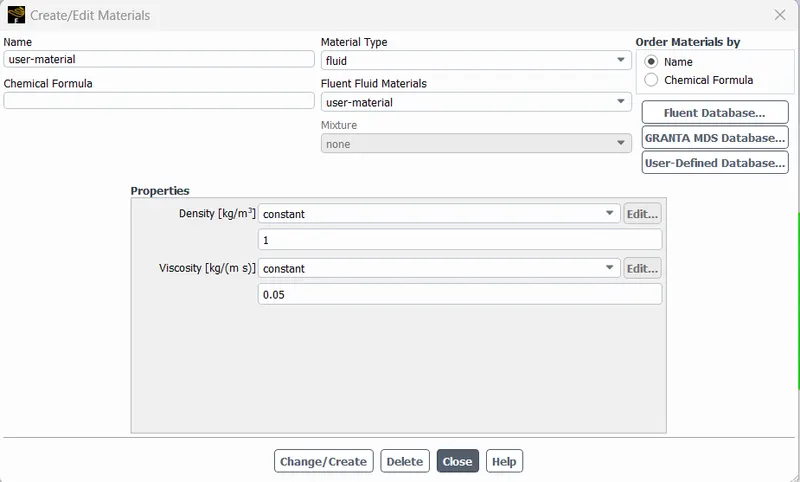
Create a fluid named 'user material' for simulation with the given values below,
Boundary conditions:
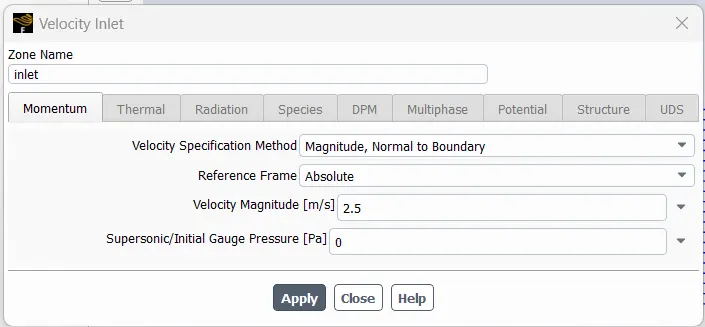
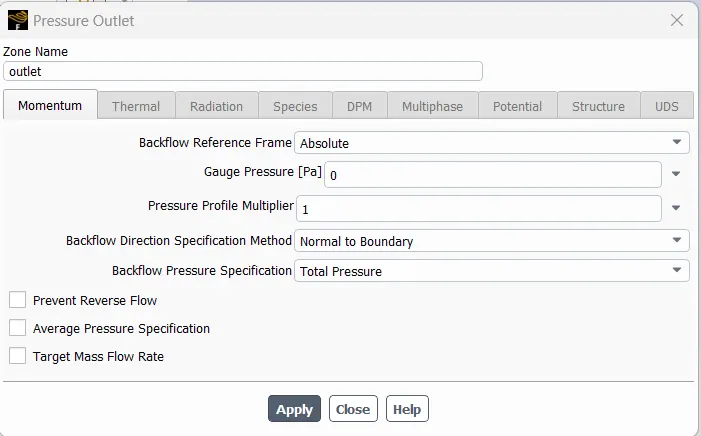
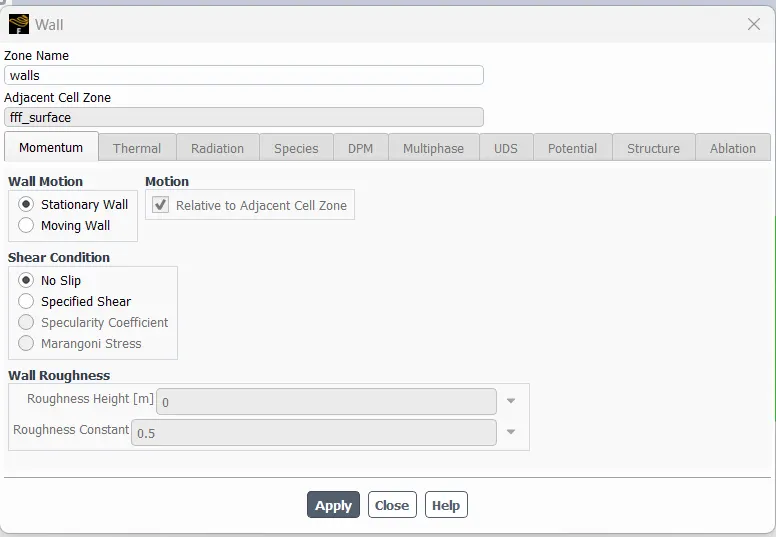
Monitor point:
A point is created at 4 times the diameter of the cylinder from the axis of the cylinder in the X axis to monitor the velocity.
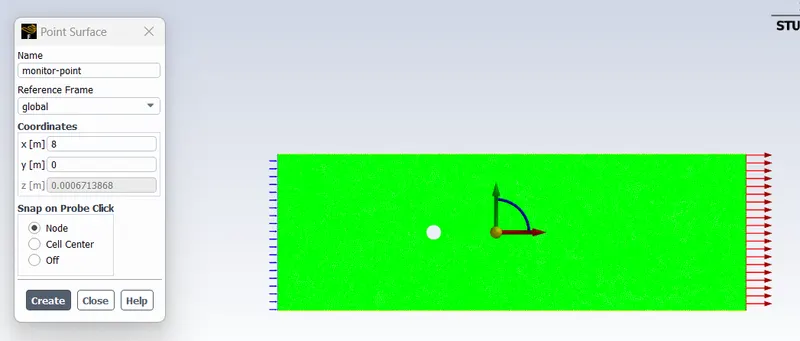
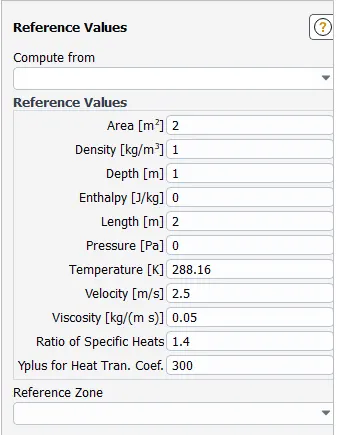
Reference values:
Part 1
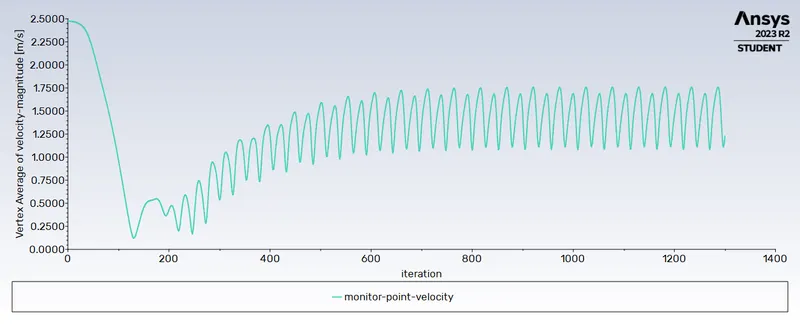
1. Steady state, Re = 100, v = 2.5 m/s; to find Strouhal number
Plots:
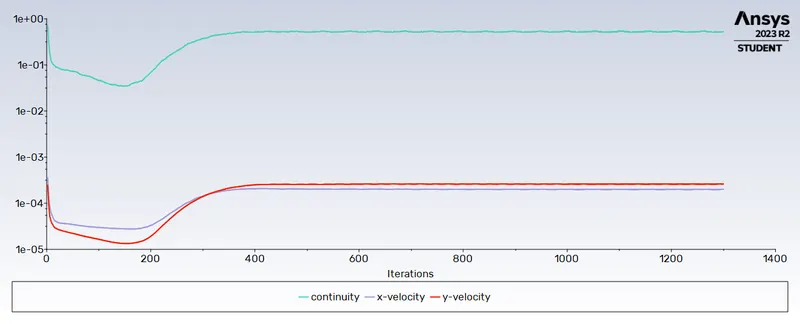
Residuals:
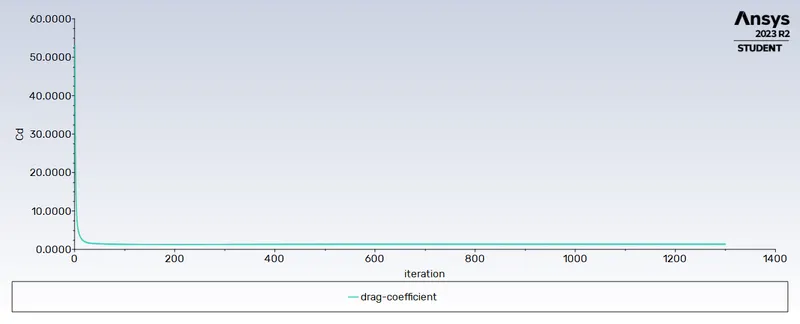
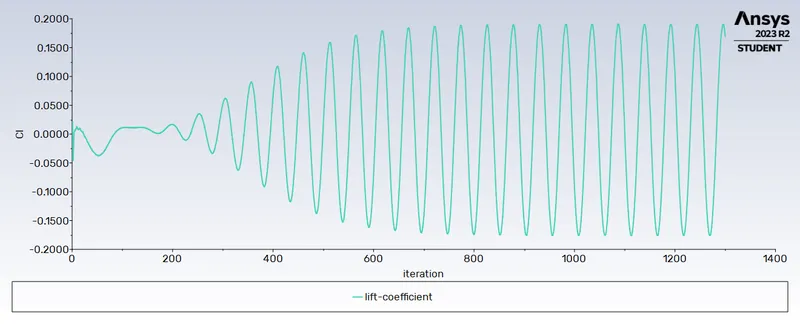
Coefficient of drag and lift:
Monitor point velocity:
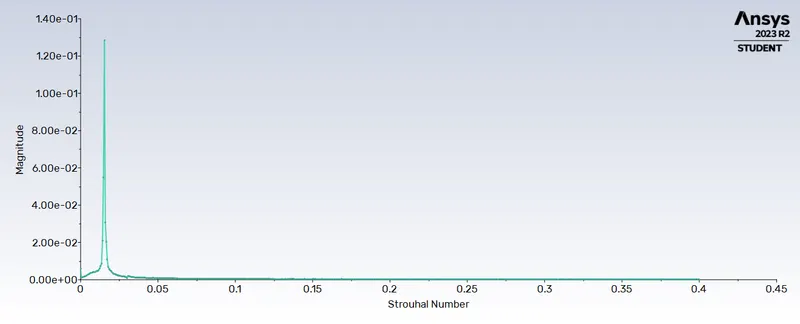
Strouhal number:
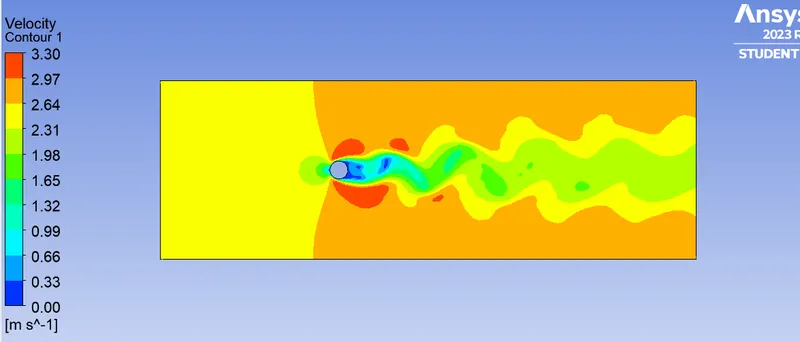
Contours:
Velocity:
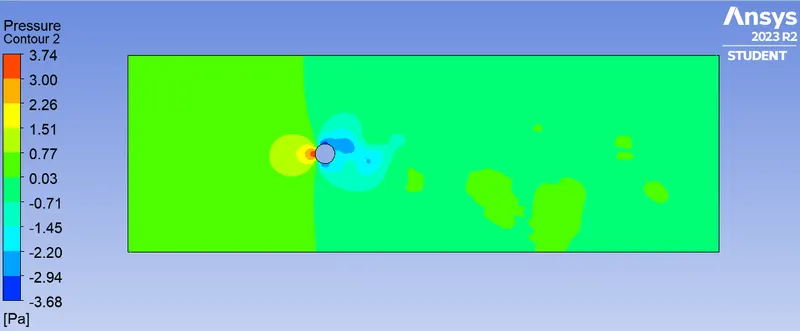
Pressure:
2. Unsteady state, Re = 100, v = 2.5 m/s; to find Strouhal number
Plots:
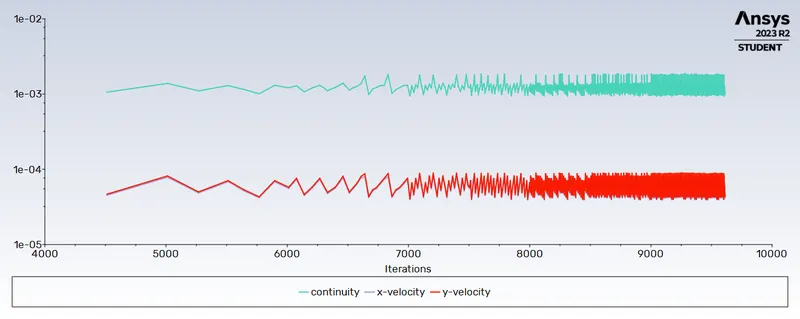
Residuals:
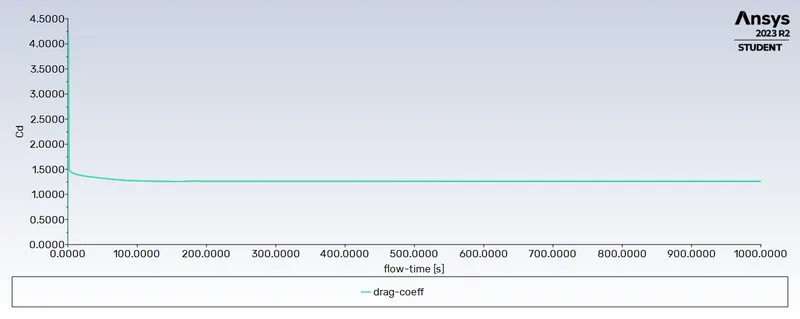
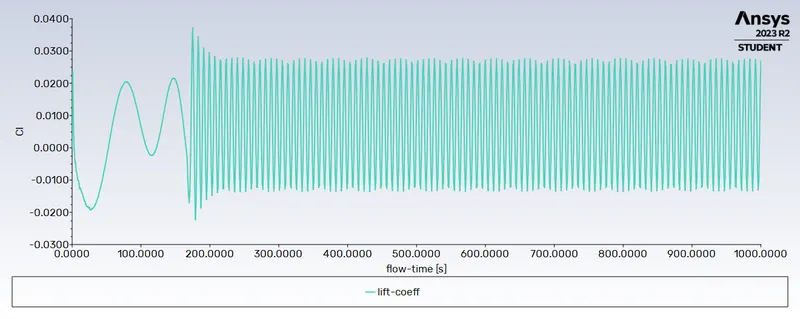
Coefficient of drag and lift:
Monitor point velocity:
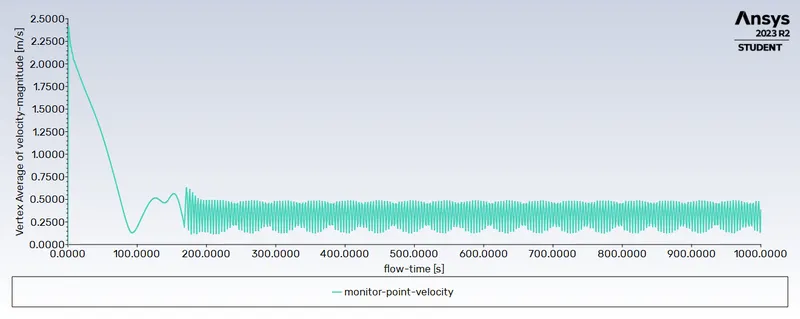
Strouhal number:
Contours:
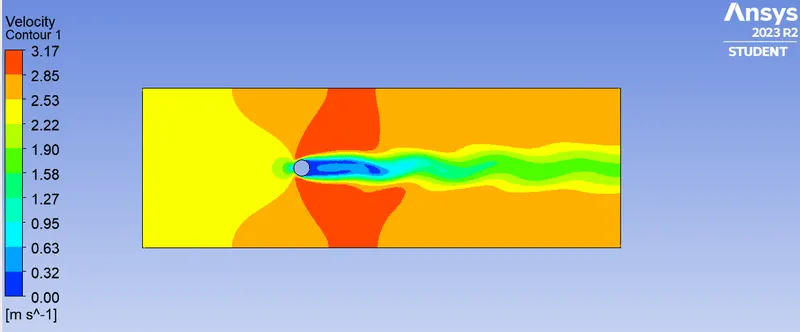
Velocity:
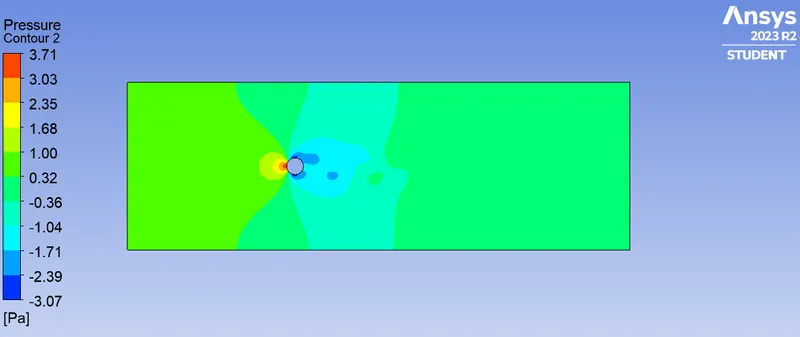
Pressure:
| solver | Cd | Cl | Strouhal number |
| steady-state | 1.37 | 0.168 | 0.019 |
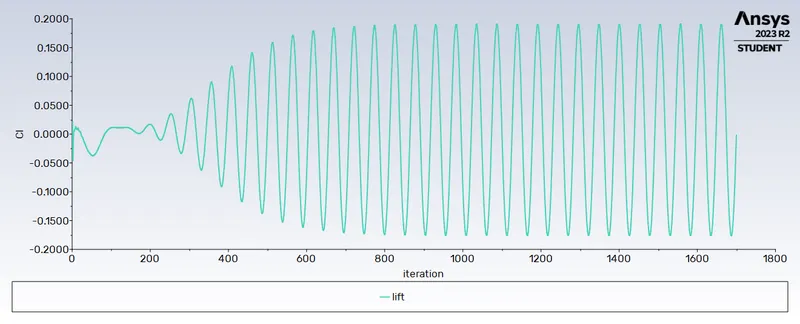
| unsteady-state | 1.29 | -0.0148 | 0.0975 |
Part 2
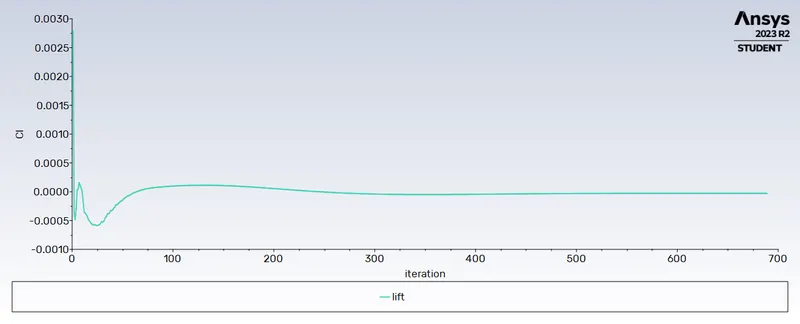
Steady-state solver, Calculate the coeff of drag and lift
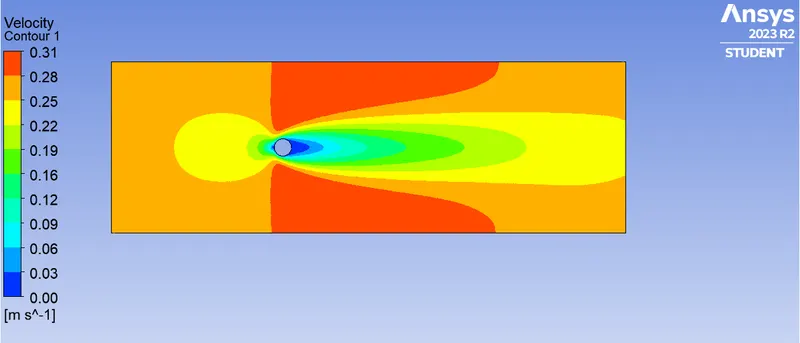
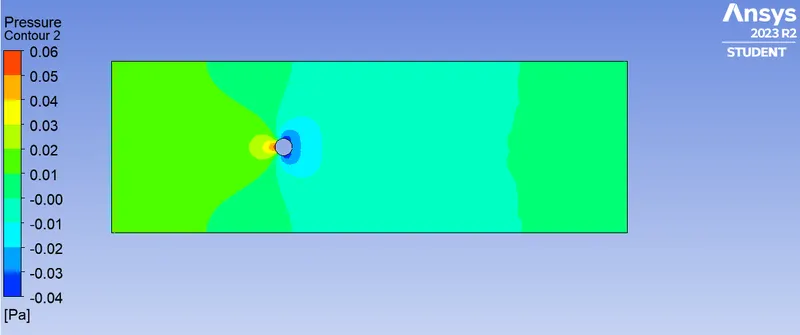
1. For Re=10, velocity = 0.25 m/s
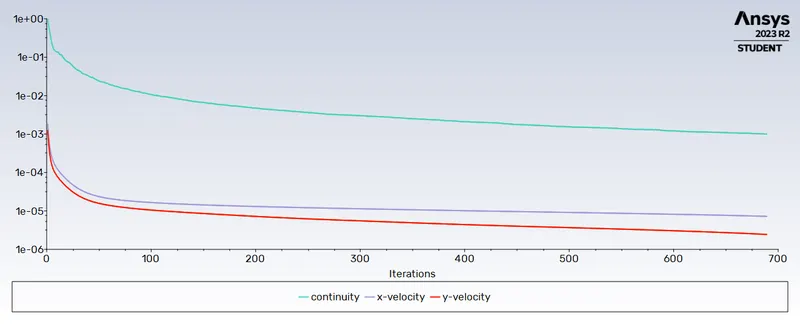
Residual plot:
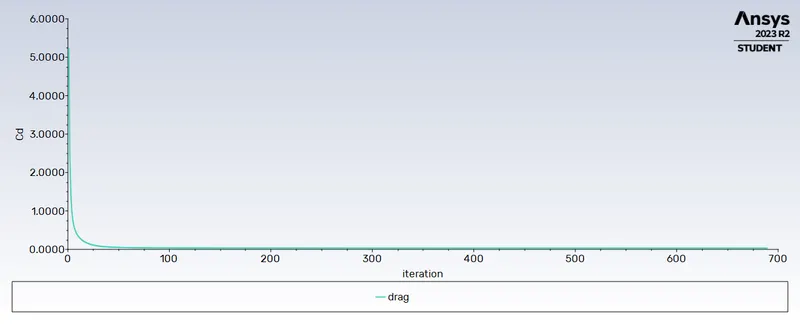
Drag and lift coeff:
Contours:
Velocity:
Pressure:
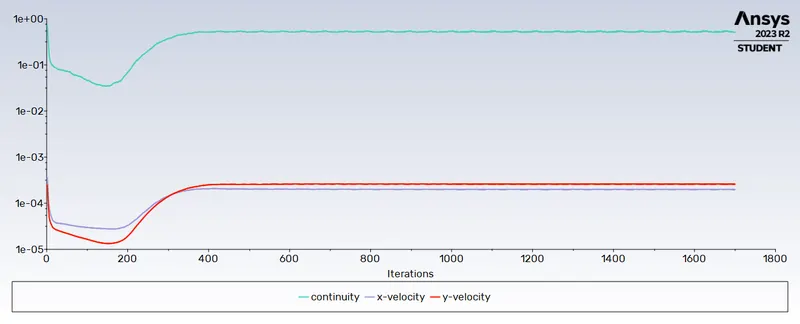
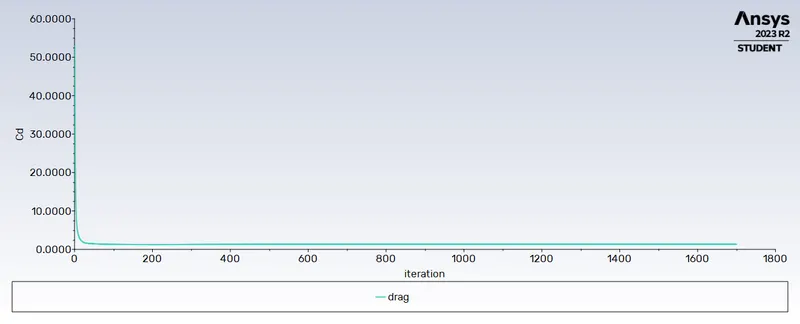
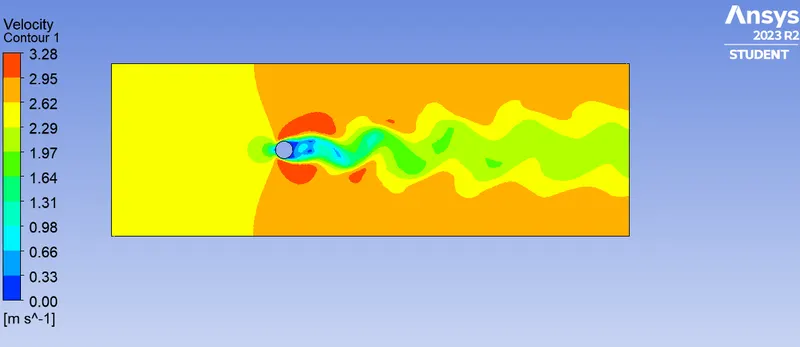
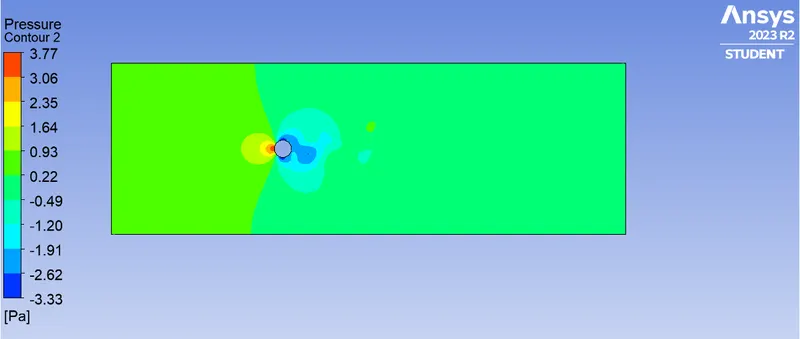
2. For Re=100, velocity = 2.5 m/s
Residual plot:
Drag and lift coeff:
Contours:
Velocity:
Pressure:
3. For Re=1000, velocity = 25 m/s
Residual plot:
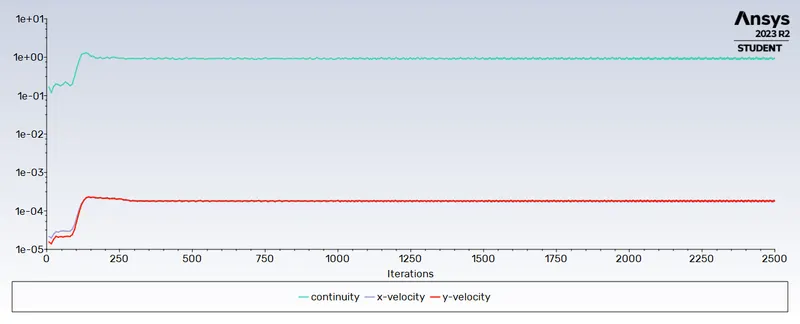
Drag and lift coeff:
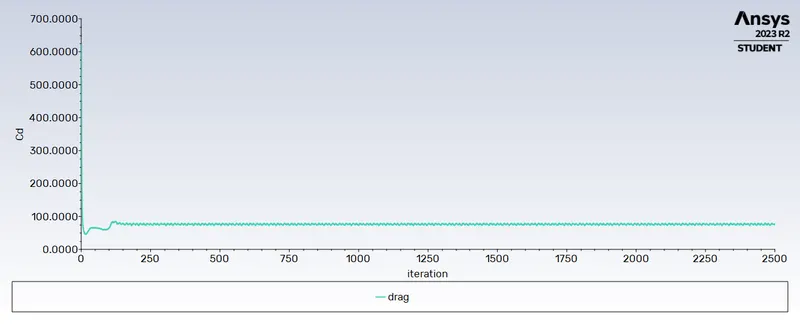
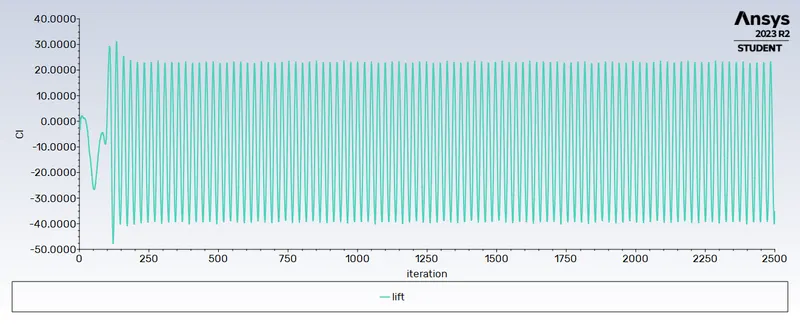
Contours:
Velocity:
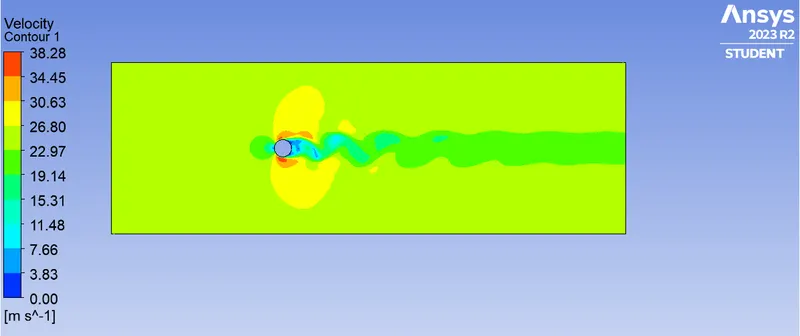
Pressure:
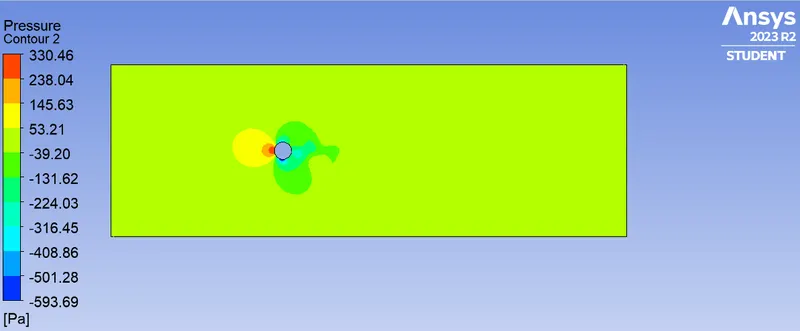
4. Re=10000, velocity = 250 m/s
Residual plot:
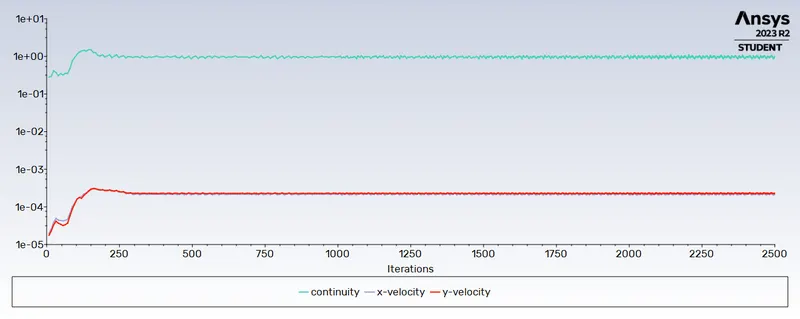
Drag and lift coeff:
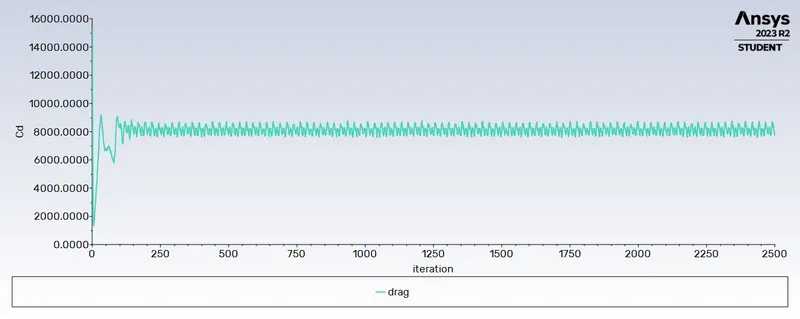
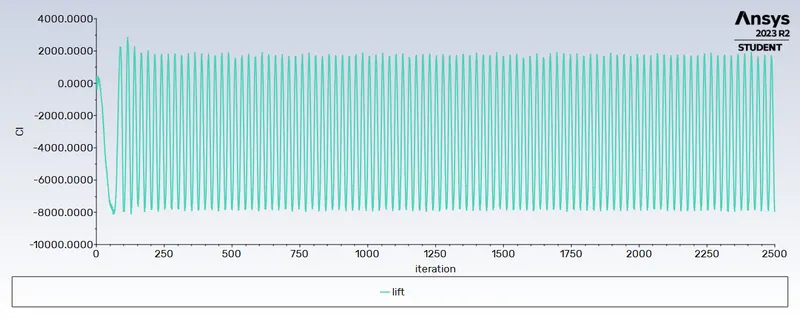
Contours:
Velocity:
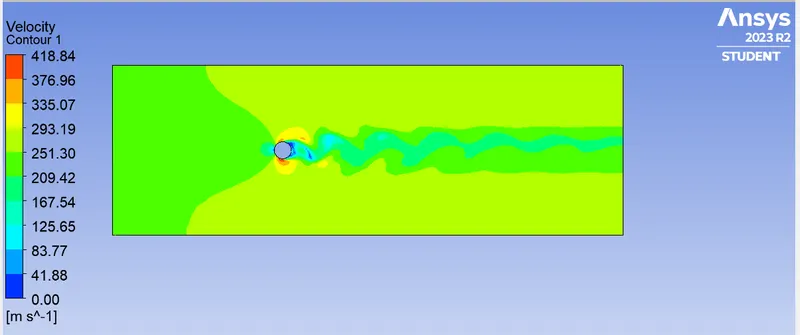
Pressure:
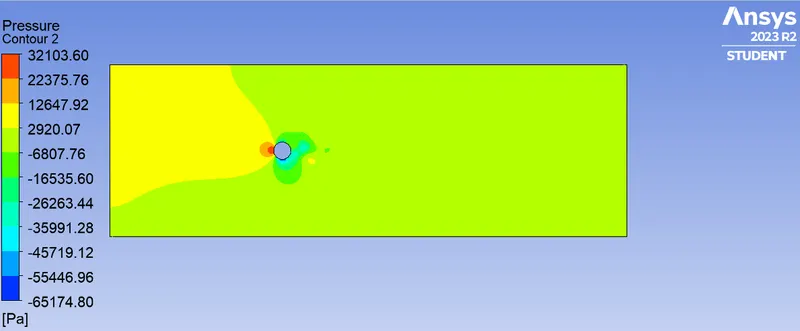
5. Re=100000, velocity = 2500 m/s
Residual plot:
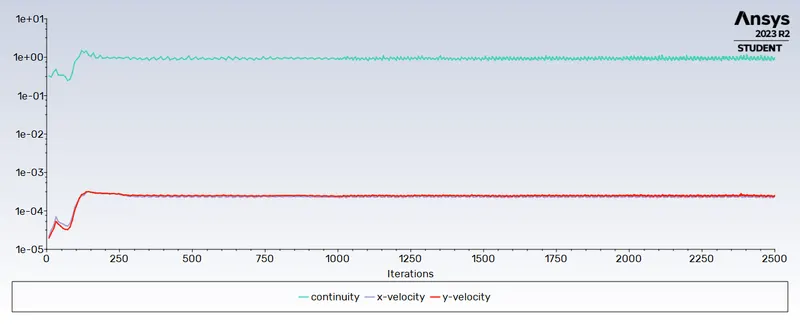
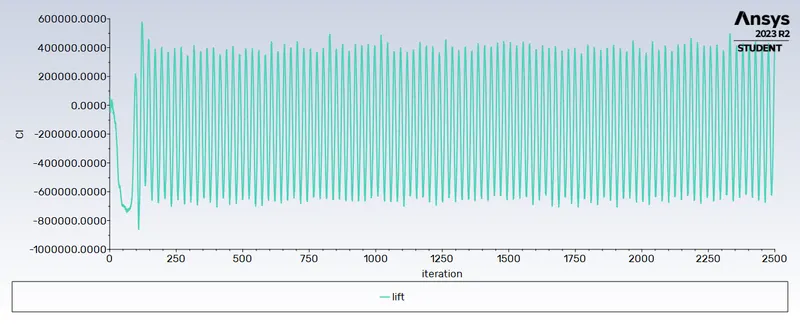
Drag and lift coeff:
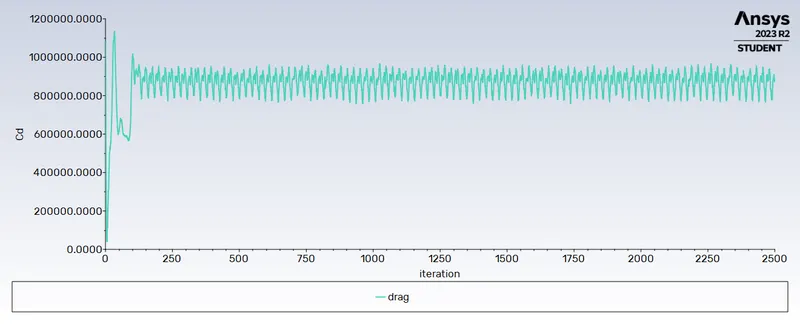
Contours:
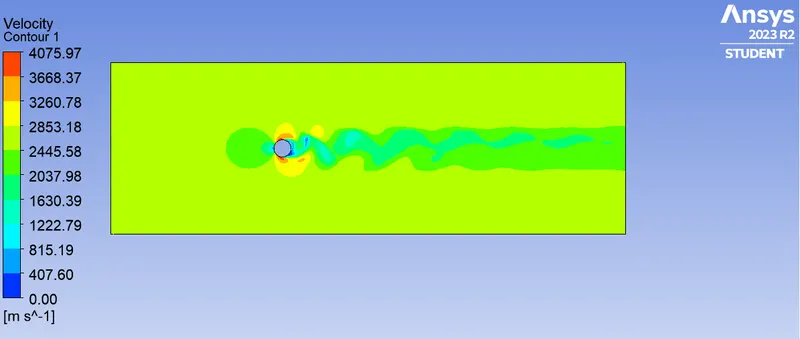
Velocity:
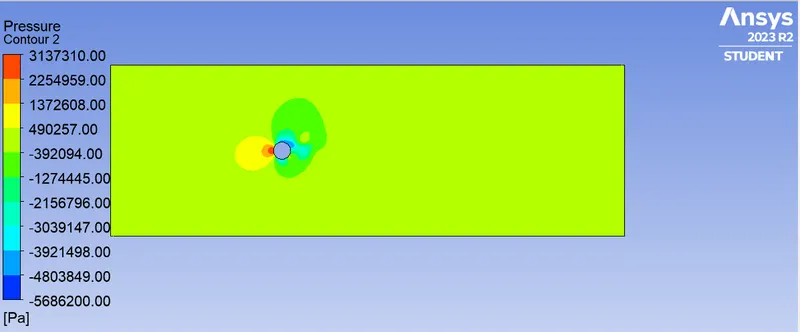
Pressure:
Conclusion:
- In the first part, the simulation was done for both steady and unsteady types for Re = 100 and the phenomenon of Karman vortex street was also observed.
- In the second part, five simulations were run for Re = 10, 100, 1000, 10000, and 100000 by varying the velocity to calculate drag and lift.