Week 2 - Flow over a Cylinder.
Aim:- To Determine Flow over a Cylinder using Ansys Fluent.
Objective:
- Simulate the flow over a cylinder and explain the phenomenon of Karman vortex street.
- Simulate the flow with the steady and unsteady case and calculate the Strouhal Number for Re= 100.
- Calculate the coefficient of drag and lift over a cylinder by setting the Reynolds number to 10,100,1000,10000 & 100000.
- Discuss the effect of Reynolds number on the coefficient of drag.
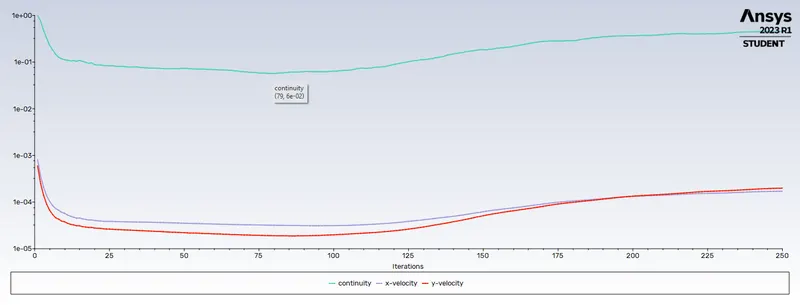
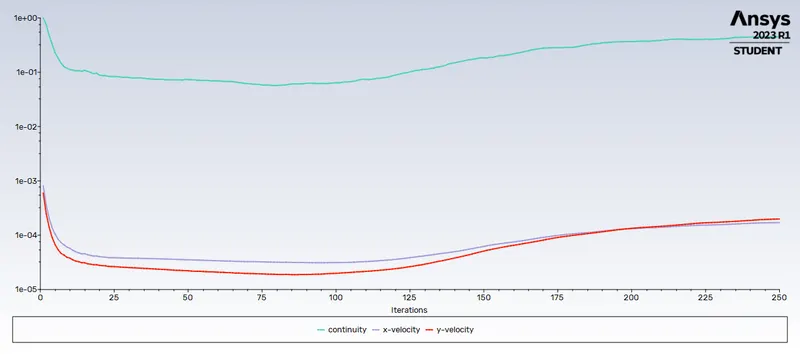
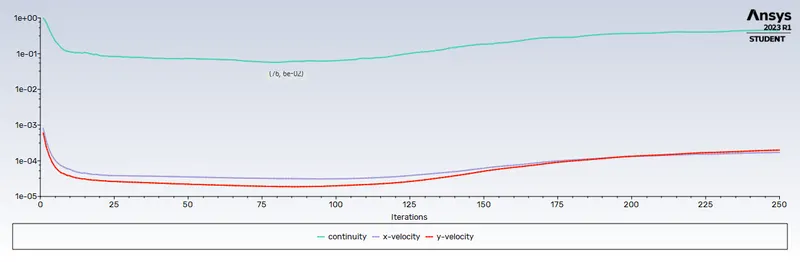
- In both approaches, show that the flow has converged. That is, what quantities or plots need to be looked at to determine that the flow has converged?
- Plots of the coefficient of drag and lift.
- Plots to show vortex shedding behind the cylinder.
Theory:
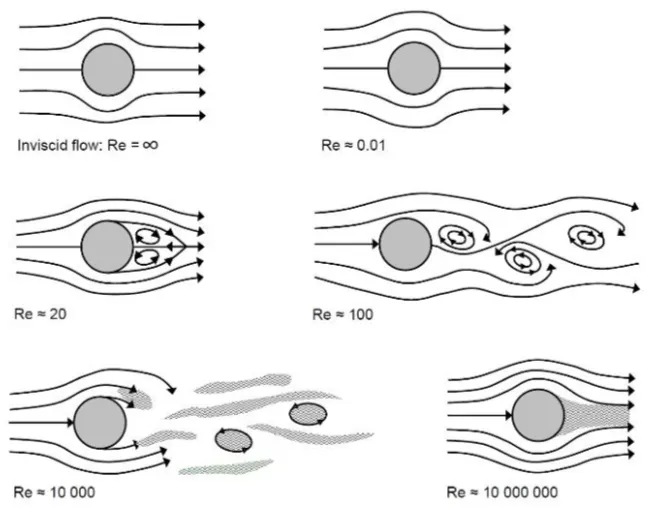
- The flow past a two-dimensional cylinder is one of the most studied of aerodynamics. It is relevant to many engineering applications. The flow pattern and the drag on a cylinder are functions of the Reynolds number ReD = U D/, based on the cylinder diameter D and the undisturbed free-stream velocity U .
- The flow separation over a cylinder
The flow separated from the shoulder of the cylinder, both on the upper and lower surface, is reattached at the downstream of the cylinder. Thus a bubble of separated flow is created due to symmetric eddies just behind the cylinder, and this is called the separation bubble. - There are three fluid flow regimes: laminar, turbulent, and a transition region. The conditions that lead to each type of flow behavior are system-specific.
- Laminar flow - Laminar flow would be the continuous movement of flowing fluid that follows or respects streamlines. ...
- Turbulent flow - Turbulent flow is characterized by erratic property modifications in the flow.
Solving & Modelling approach:
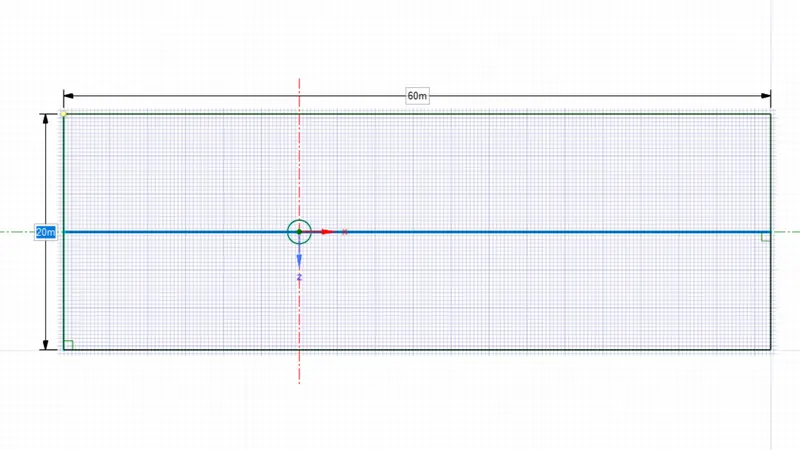
- Geometry
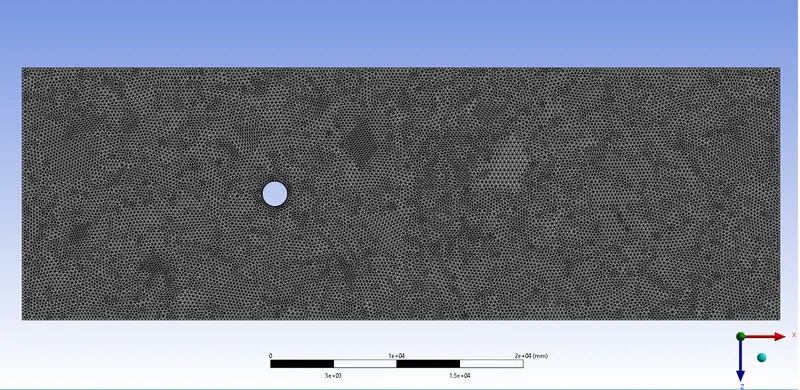
- Mesh
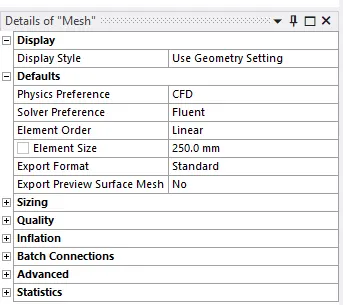
- Mesh parameters
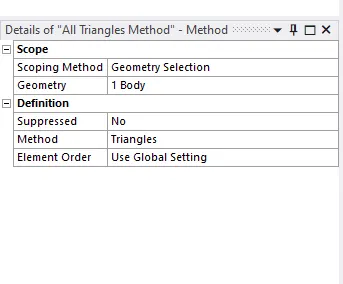
- All triangle method
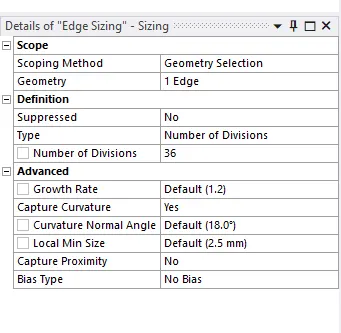
- Edge sizing
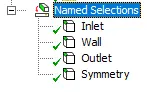
- Boundary name
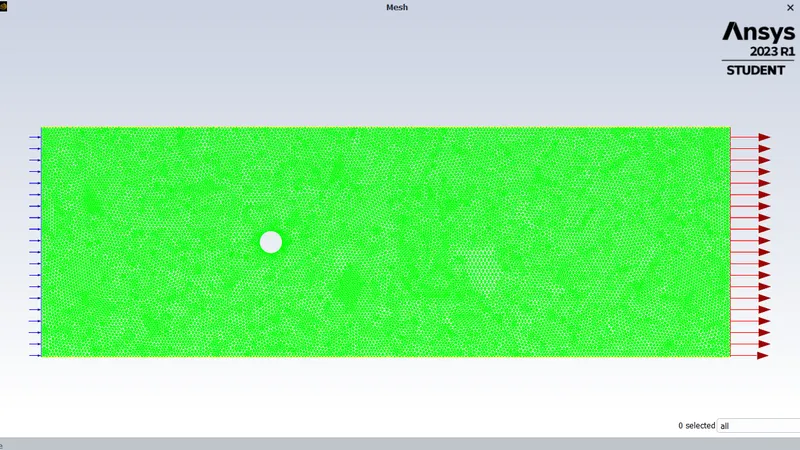
- Model in 2d
Part-1
- Steady state
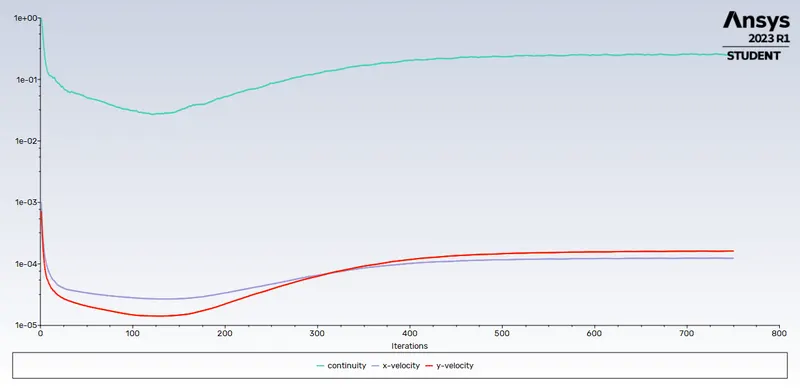
- Scaled residual
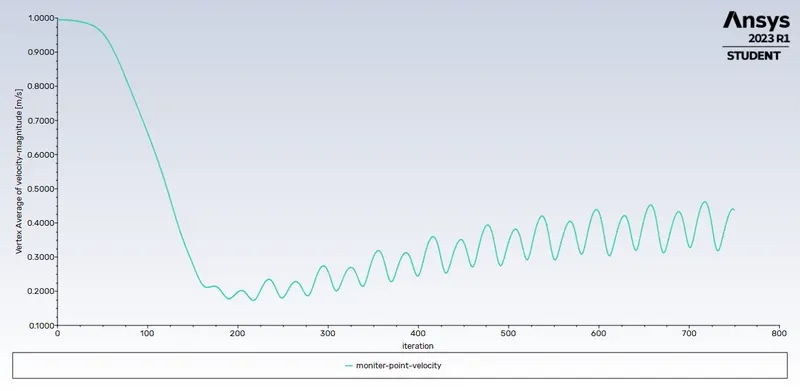
- Monitor point velocity
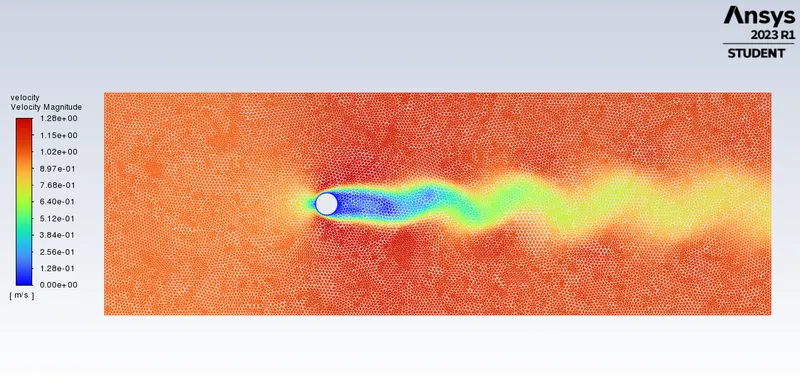
- Contours of velocity magnitude
- Monitor-point-velocity
Vertex Average [m/s] = monitor-point 0.43786103
- Unsteady state
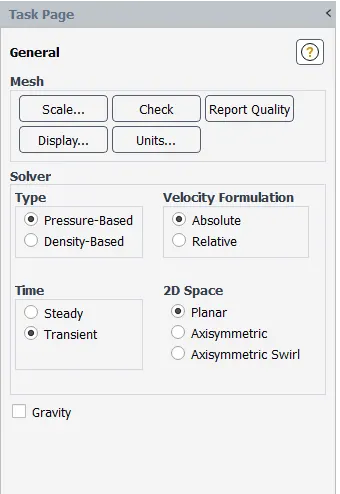
- Scaled residual
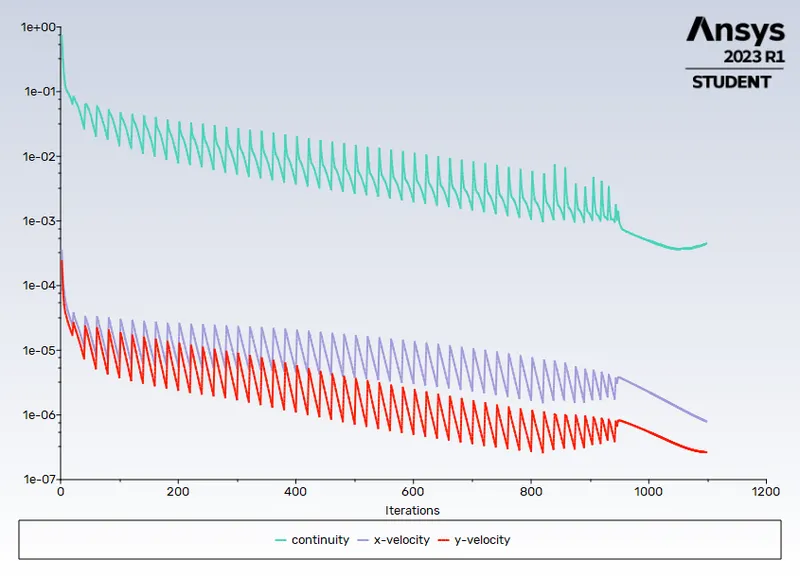
- Monitor Point Velocity
- Contours of velocity magnitude
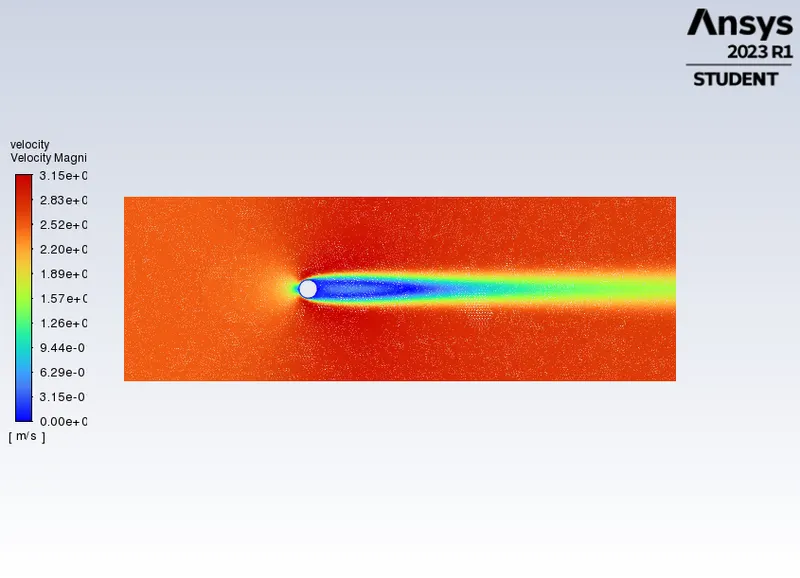
-
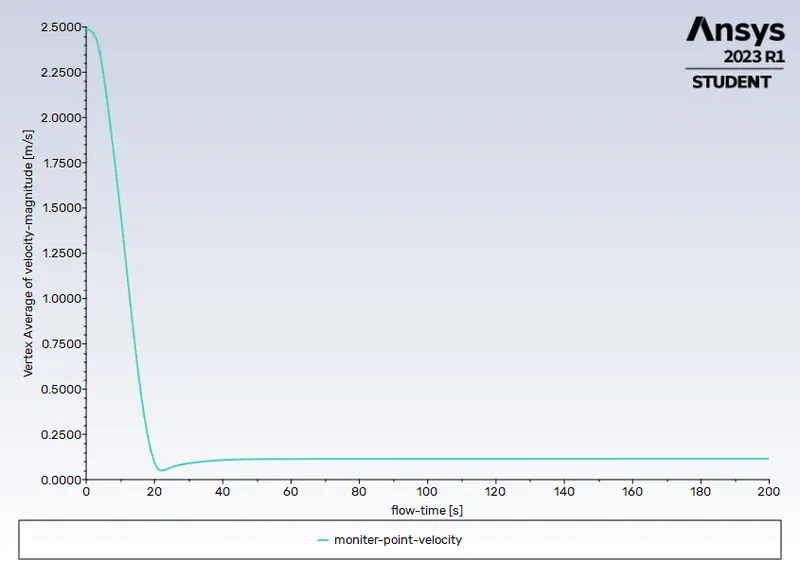
Monitor Point Velocity
Vertex Average [m/s] = monitor point 0.11550444
Part 2
- Flow over a cylinder for the steady flow of reynolds number 10.
`Re = 10`
Velocity for `Re` `10` is `2.5m/s`
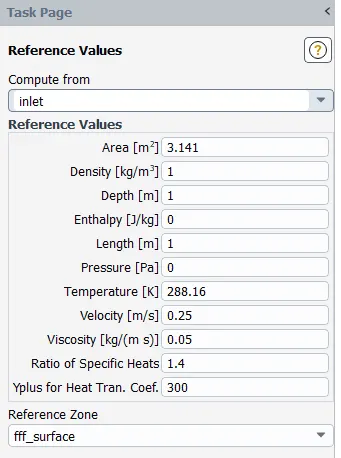
- Reference Value
- Scaled Residuals
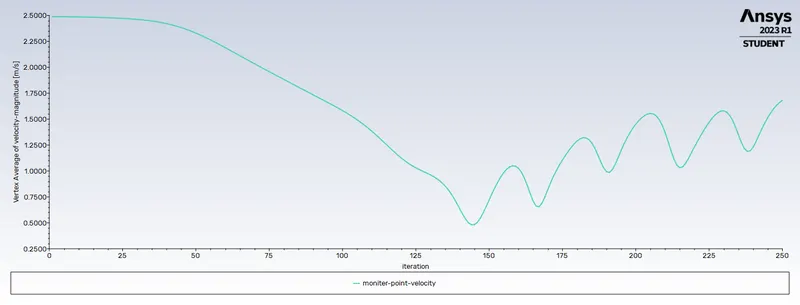
- Monitor Point Velocity
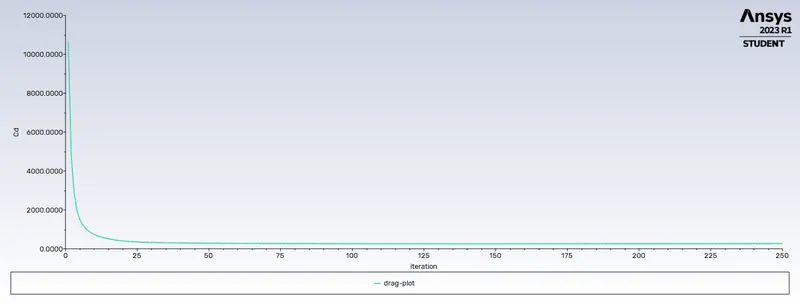
- Drag Plot
- Lift Plot
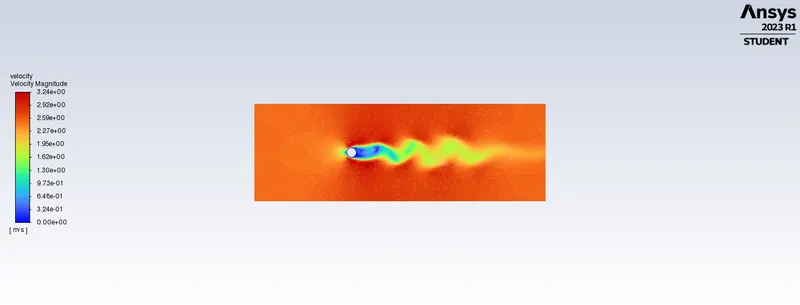
- Contours of Velocity Magnitude
-
Monitor Point Velocity
Vertex Average[m/s] for monitor point is 1.6816839. -
Drag Plot
Cd for wall `264.38549`. -
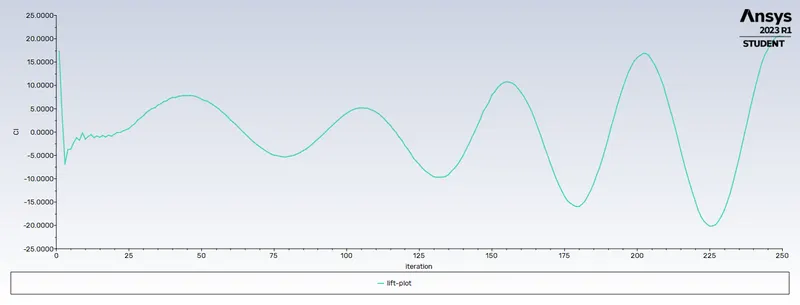
Lift Plot
Cl for wall `20.415375`.
- Reference Value
- Flow over a cylinder for the steady flow of reynolds number 100.
`Re = 100`
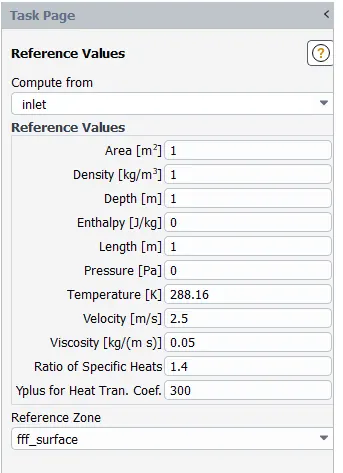
Velocity for `Re` `100` is `2.5m/s`
- Reference Value
- Scaled Residuals
- Monitor Point Velocity
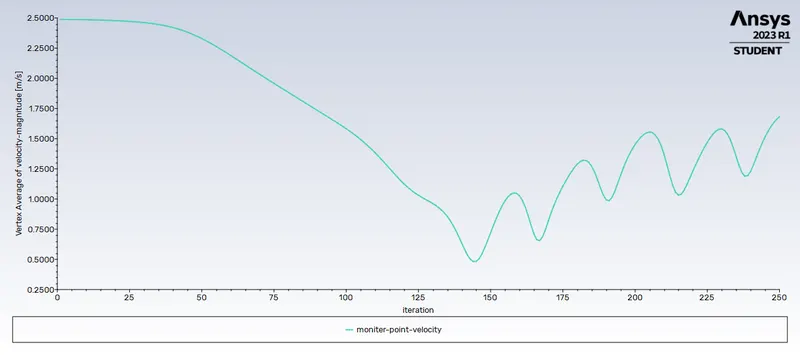
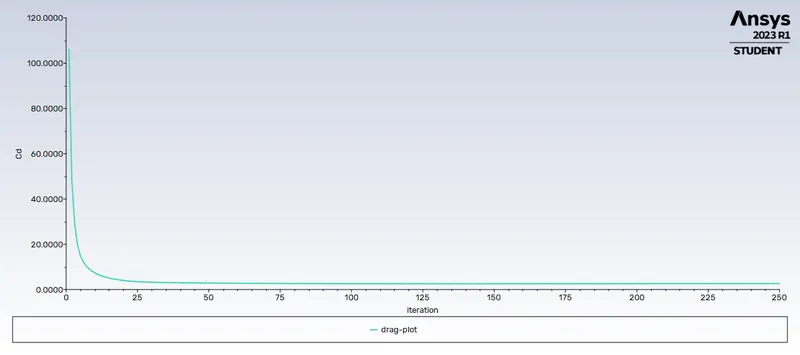
- Drag Plot
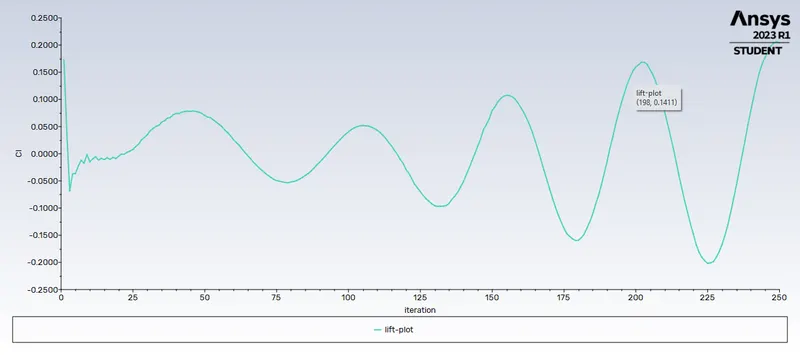
- Lift Plot
- Contours of Velocity Magnitude
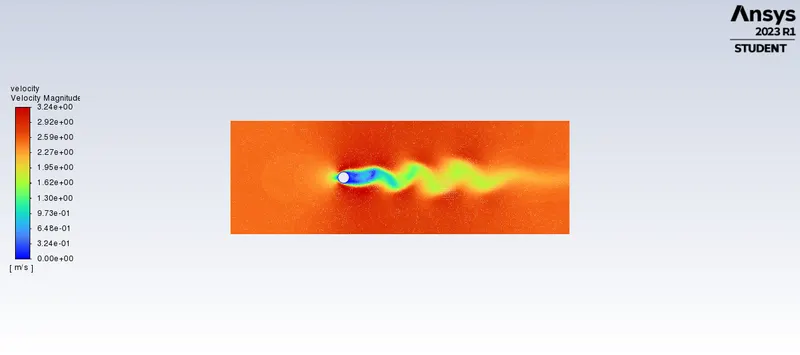
- Animation of Velocity
https://youtu.be/K9b8e-FXUaE -
Monitor Point Velocity
Vertex Average[m/s] for monitor point is 1.6816839.
-
Drag Plot
Cd for wall `2.6438549`.
-
Lift Plot
Cl for wall `0.20415375`.
- Reference Value
- Flow over a cylinder from the steady flow of reynolds number 1000.
`Re = 1000`
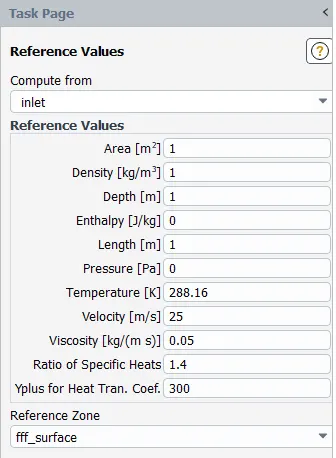
Velocity for `Re` `1000` is `25m/s`
- Reference value
- Scaled Residuals
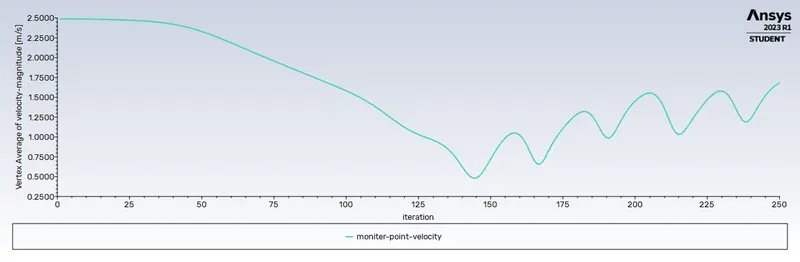
- Monitor Point Velocity
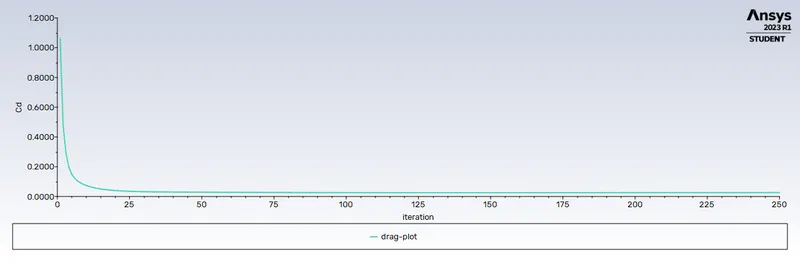
- Drag Plot
- Lift Plot
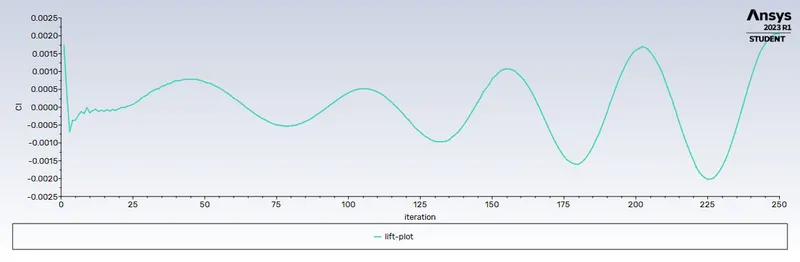
- Contours of Velocity Magnitude
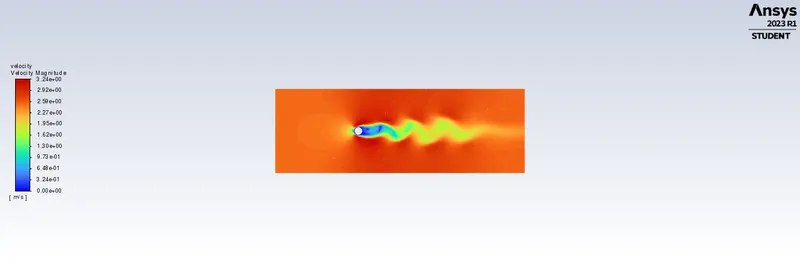
- Animation of Velocity
https://youtu.be/8QM8LOSVFkc -
Monitor Point Velocity
Vertex Average[m/s] for monitor-point is 1.6816839.
-
Drag Plot
Cd for wall `0.026438549`.
-
Lift Plot
Cl for wall `0.0020415375`.
- Reference value
- Flow over a cylinder from the steady flow of reynolds number 10000.
`Re = 10000`
Velocity for `Re` `10000` is `250m/s`
- Reference value
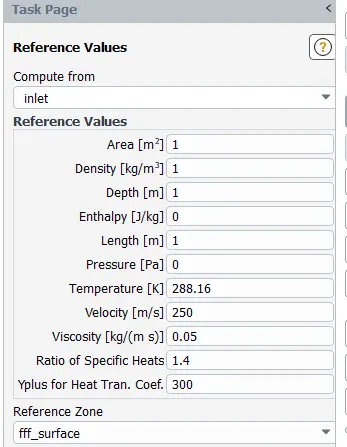
- Scaled Residuals
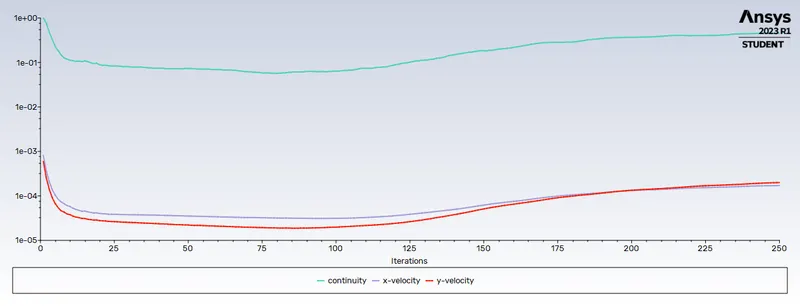
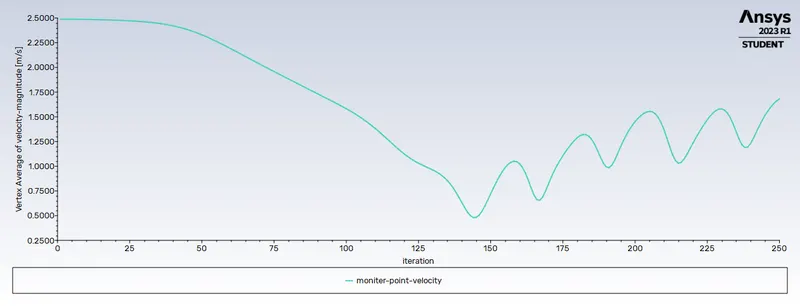
- Monitor Point Velocity
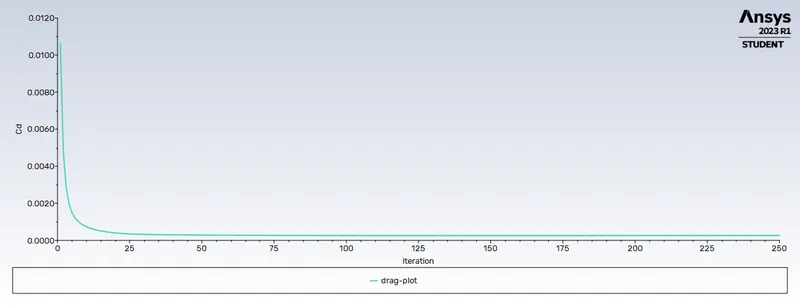
- Drag Plot
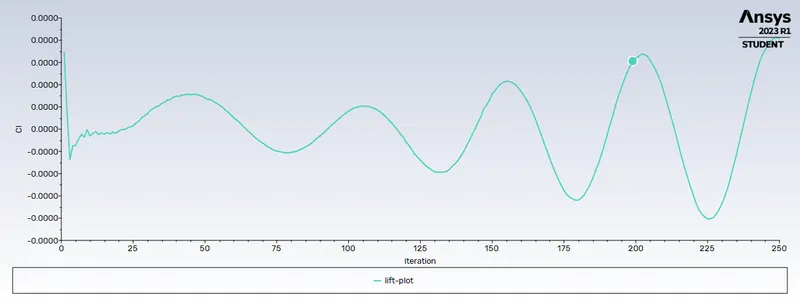
- Lift Plot
- Contours of Velocity Magnitude
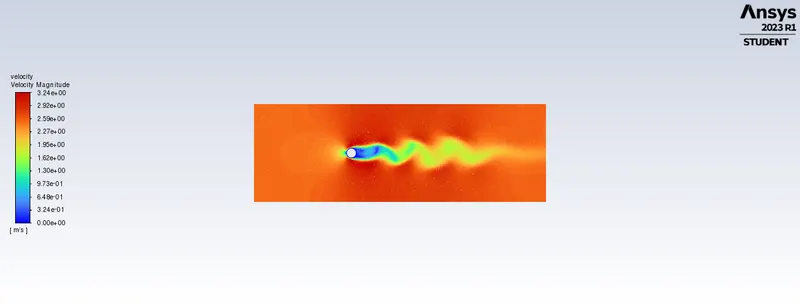
- Animation of Velocity
https://youtu.be/SrCfQ2ALHTo -
Monitor Point Velocity
Vertex Average[m/s] for monitor-point is `1.6816839`. -
Drag Plot
Cd for wall `0.00026438549`. -
Lift Plot
Cl for wall `2.0415375e-05`.
- Reference value
- Flow over a cylinder from the steady flow of reynolds number 100000.
`Re = 100000`
Velocity for `Re` `100000` is `2500m/s`
- Reference value
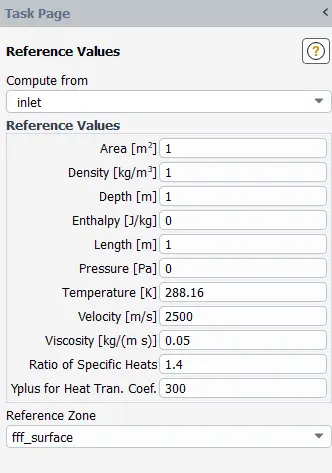
- Scaled Residuals
- Monitor Point Velocity
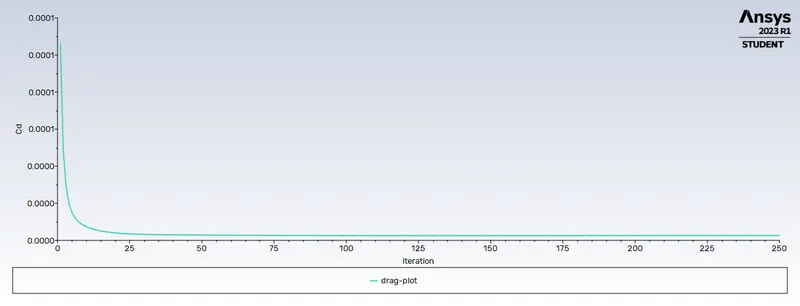
- Drag Plot
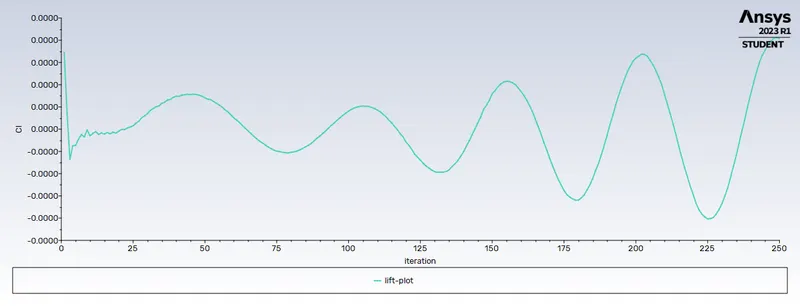
- Lift Plot
- Contours of Velocity Magnitude
- Animation of Velocity
https://youtu.be/8QM8LOSVFkc -
Monitor Point Velocity
Vertex Average[m/s] for monitor-point is 1.6816839. -
Drag Plot
Cd for wall `2.6438549e-06`. -
Lift Plot
Cl for wall `2.0415375e-07`.
- Reference value
Comparison Table of Reynold number with Coefficient of Drag & Lift
| Reynolds Number | Coefficient of Drag | Coefficient of Lift |
| 10 | `264.38549` | `20.415375` |
| 100 | `2.6438549` | `0.20415375` |
| 1000 | `0.026438549` | `2.0415375e-05` |
| 10000 | `0.00026438549` | `2.0415375e-05` |
| 10000 | `2.6438549e-06` | `2.0415375e-07` |
Conclusion
- When fluid flows over the cylinder, the wake region is formed next to the cylinder due to a decrease in pressure, and recirculation of flow occurs hence flow separation occurs.
- As flow over a cylinder is transient we are unable to observe flow separation at a low Reynolds number
- As the Reynolds number increases the coefficient of drag decreases.
References: