Week 2 - Flow over a Cylinder.
Aim:
To Simulate the flow over a cylinder and explin the phenomenon of Karman vortex street.
Objective:
Part-I
- Simulate the flow with steady and unsteady case and calculate the Srouhal Number for Re = 100.
Part-II
- Calculate the coefficient of drag and lift over a cylinder by setting the Reynolds number to Re = 10,100,1000,10000 & 100000 with Steady solver.
- Dicuss the effect of Reynolds number on the coefficient of drag.
Introduction:
Vortex Shadding:
- vortex shedding is an oscillating flow that takes place when a fluid such as air or water flows past a bluff body at certain velocities depending on the size and shape of the body.
- In this flow, vortices are created at the back of the body and detach periodically from either side of the body forming a VonKarman vortex street.
- The fluid flow past the object creates alternating low-pressure vortices on the downstream side of the object.The object will tend to move toward the low-pressure zone.
Strouhal Number (Sr or St):
Strouhal number is a dimensionless number describing oscillating flow mechanisms.
The Strouhal number is often given as
St = f*d/u
Where,
f is the frequency of vortex shading,
L is the characteristic length and
U is the flow velocity.
Reynolds number:
Reynolds number for a flow is a measure of the ratio of inertial to viscous forces in the flow of a fluid around a body.
`Re = (rho VL)/mu`
Re = Reynolds number
ρ = Density of fluid
V = Velocity of fluid
L = length in case of cylinder Diameter
μ = Dynamic Viscosity
Geometry :
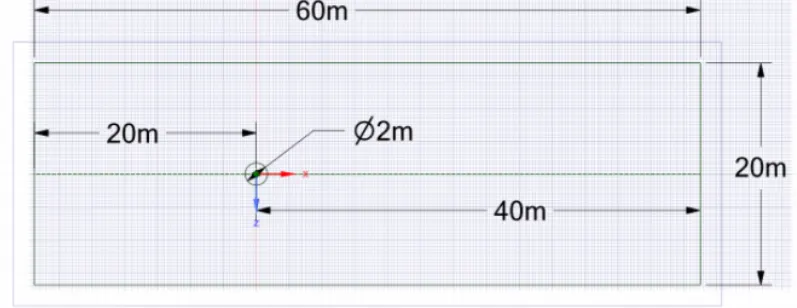
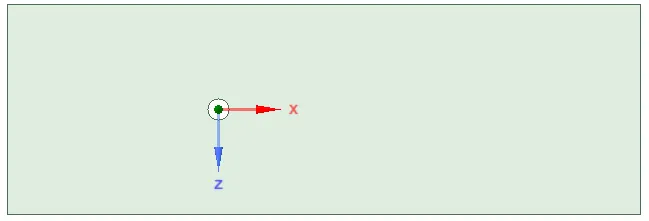
The above figure consists of Fluid domain 20 x 60 m dimensions and cylinder of diameter 2m which is immersed in the fluid domain. The inlet of domain is 20m left from center of cylinder and outlet is 40m right from center of cylinder and 10 m height and 10 m down of the domain from center of cylinder. There is no thicknes because 2D geometry
Meshing:
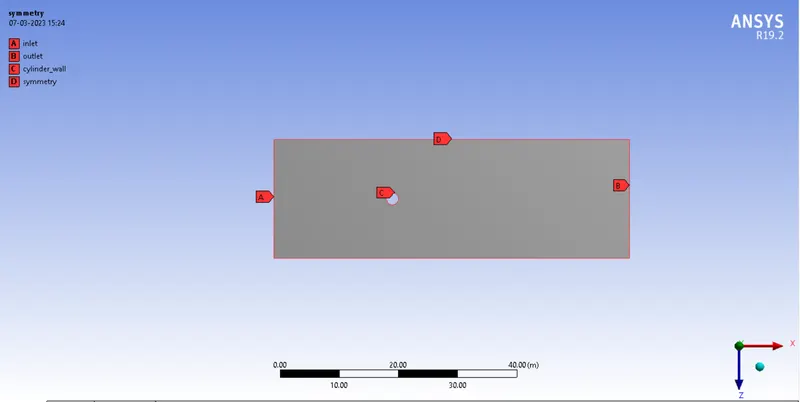
1. Select the edges of geometry and named them as inlet,outlet ,wall and symmetry.
2. Now select the body and go to mesh and click on generate mesh with mesh size 0.25 m. To ensure triangular mesh, go to
mesh > insert > select triangular mesh type.
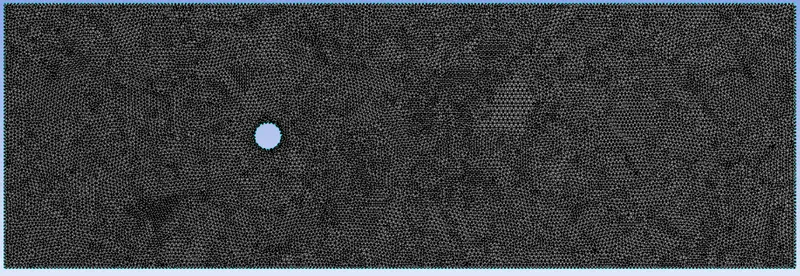
3. After generation of mesh, the shape of circle looks disorder, for perfect shape of circle go to mesh > sizing > select circular edge > deffinition >type > number of divisions >36.
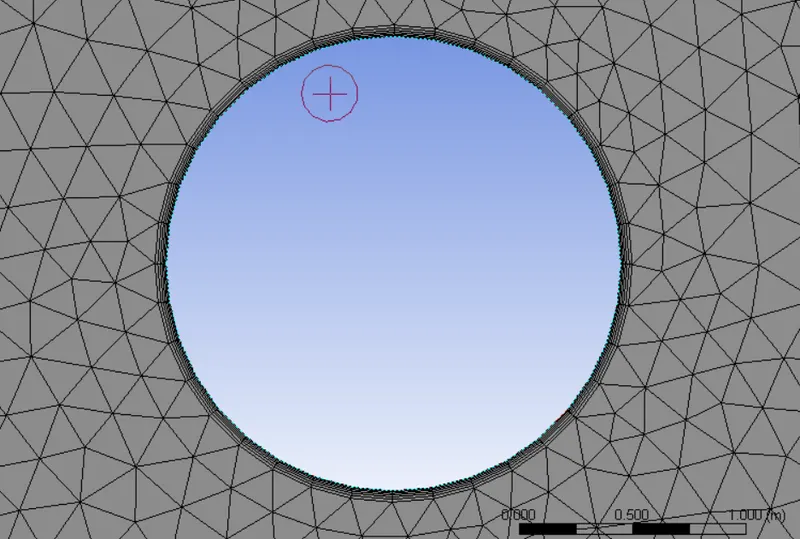
4. To capture better results near cylinder wall, go to mesh > inflation > select the body and edge > inflation option : 1st layer\
thickness >1 st layer height :5e-3 m >maximum layer :6
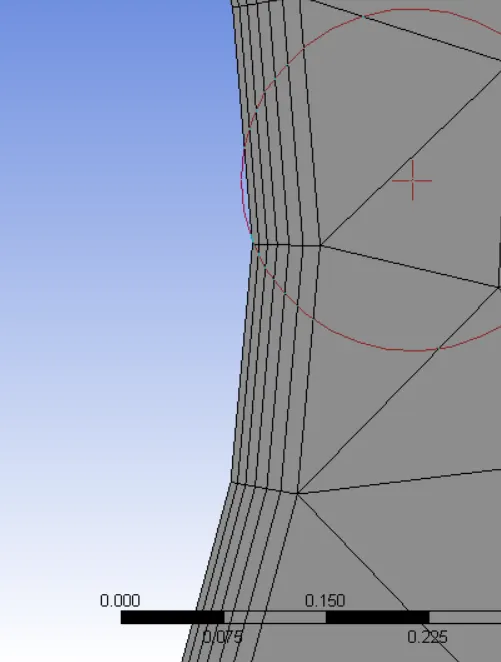
Simulation setup
For steady state :
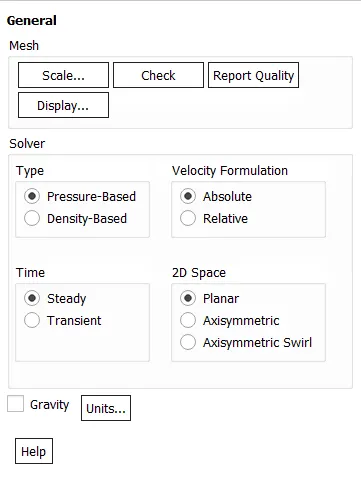
For unsteady, the Transient option has been selected instead of steady.
And Viscous Model for both steady and unsteady.
Material Selection
The fluid which is used for the simulation is air with constant density and constant dynamic viscosity.
To get required Reynolds number only inlet velocity has been changed respectively.
The properties of air are given below:
- Density of Fluid: - 1 kg/m^3.
- Dynamic Viscosity: - 0.02 kg/m-s
Created Monitor Point to measure velocity profile at that point.
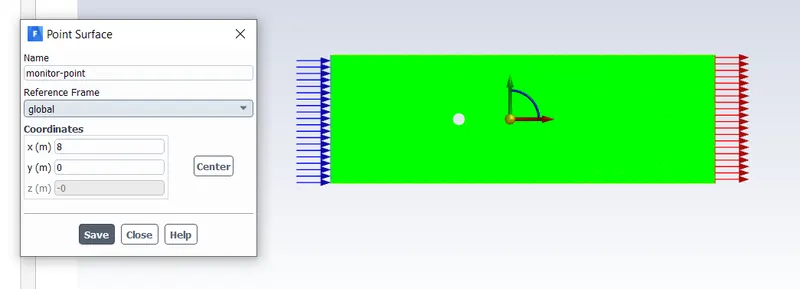
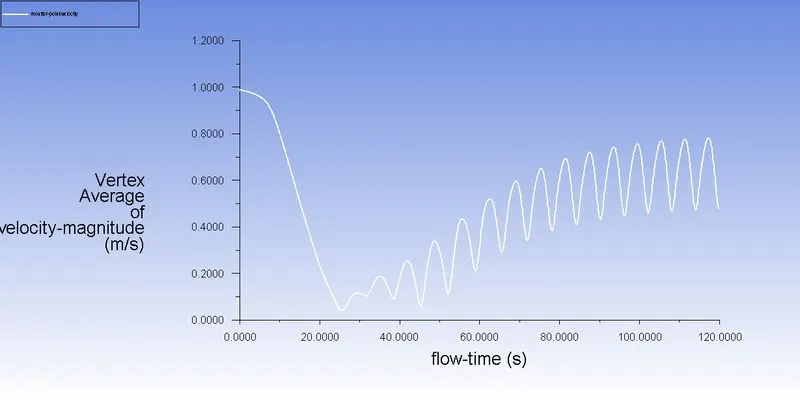
The first report will be vertex average of velocity which will be taking data from 8m from center of cylinder in X-axis.
This data will later use to generate strouhal number from this report. Later report which will be required to generate are force report in which coefficient of drag and lift are need to be generated.
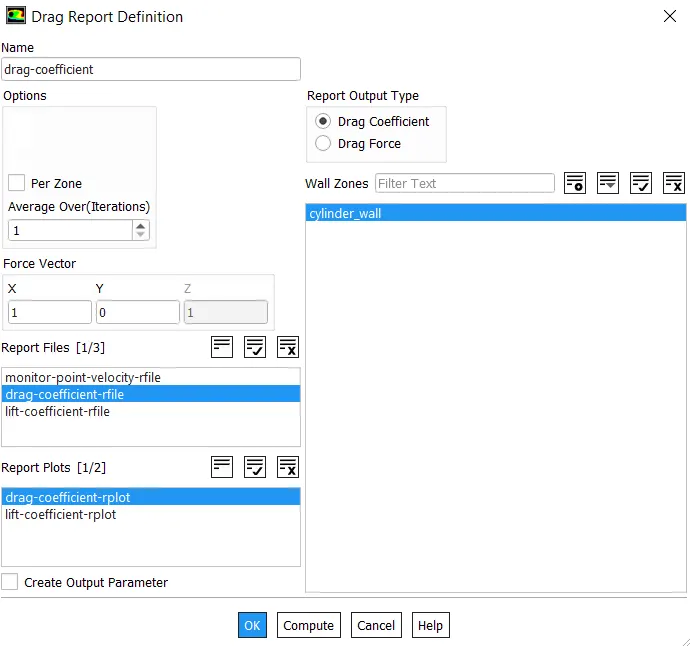
For coefficient of drag wall should be select as cylinder and there should be 1 in x-axis for drag and respectively 1 for y-axis to calculate lift coefficient.
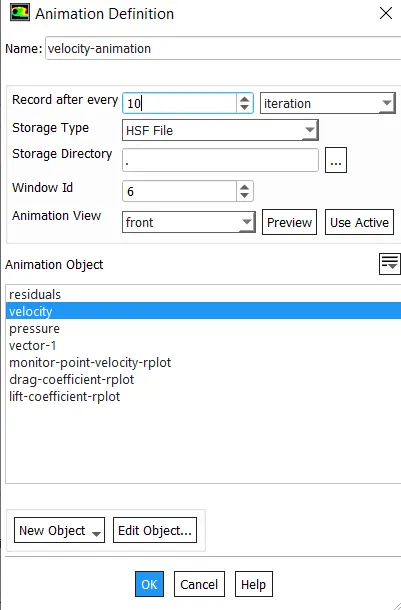
As a steady state solver does not have time as parameter, then to check the animation of flow as it gone past the cylinder, the contour animation plot need to be generated.
This can be done after making initialization of solution first, after that solution animation is used as tool to create contour as solution progresses.
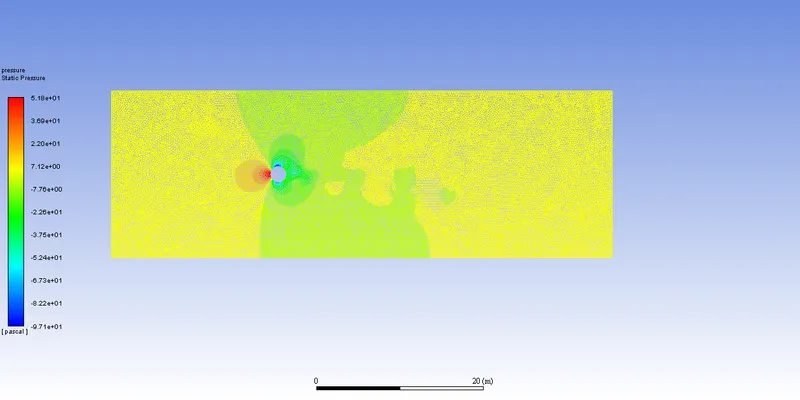
Velocity contour & pressure contour graph has been created from the Results> Graphics..
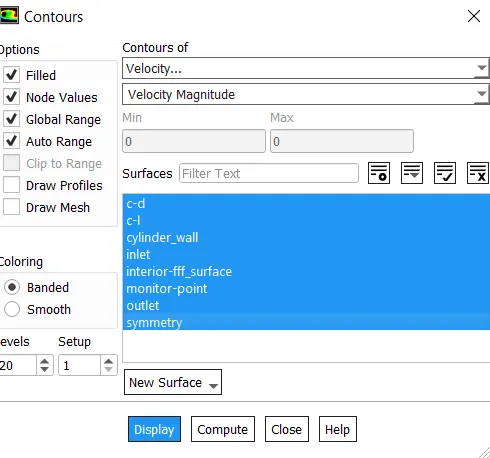
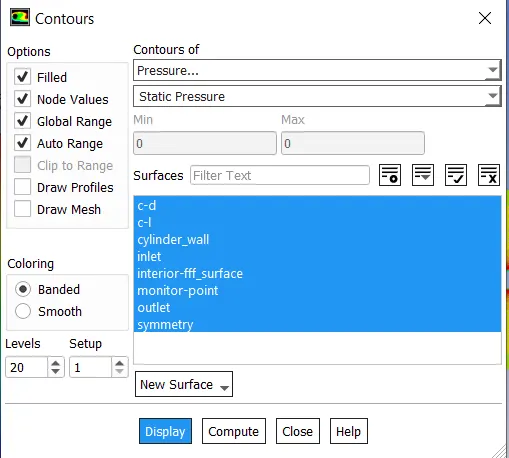
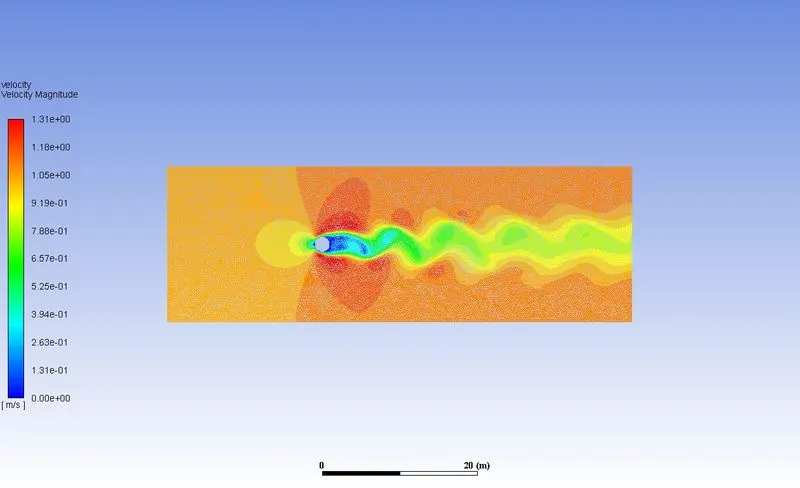
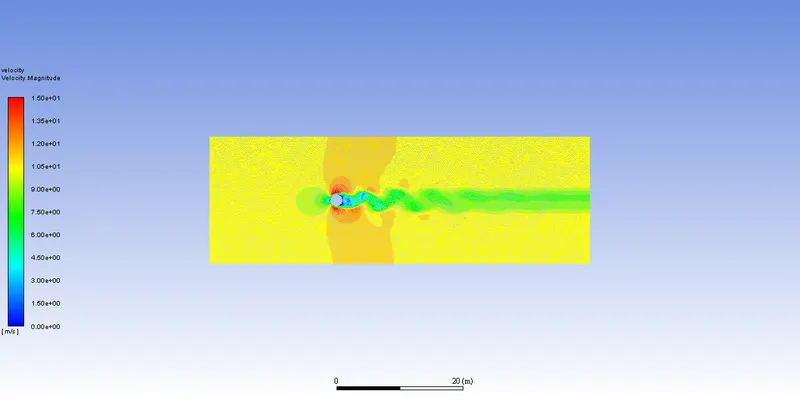
Animation of velocity contour graph has been created to visualize the wake field generated behind the cylinder & also vortex shedding phenomena.
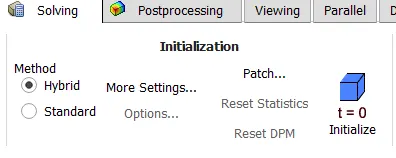
Initializing simulation
Part-I
- Simulate the flow with steady and unsteady case and calculate the Srouhal Number for Re = 100.
Study state slover for Re = 100
velocity = 1 m/s.
density = 1 kg/m3
viscosity = 0.02 kg/m-s
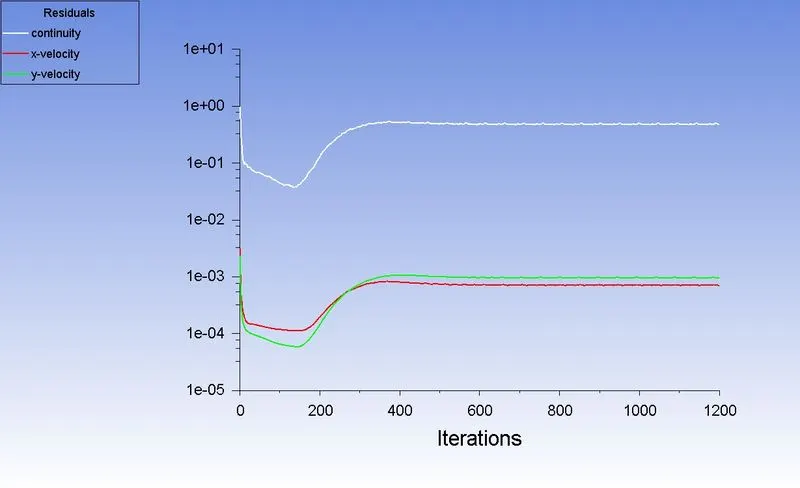
Residual Plot:
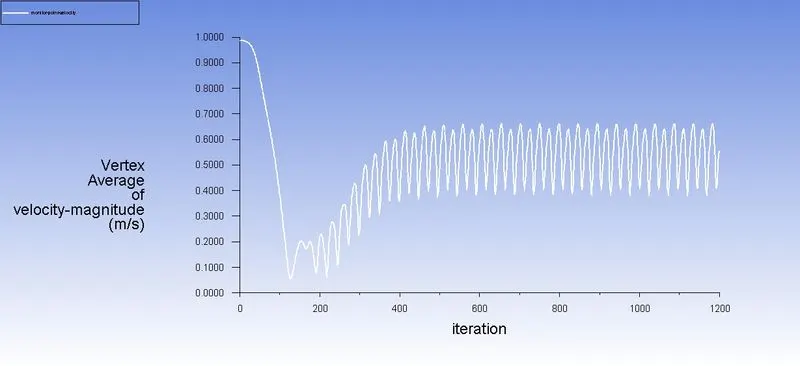
Monitor point velocity:
monitor point: A point is created at 8 m in x direction from the axis of cylinder to check velocity.
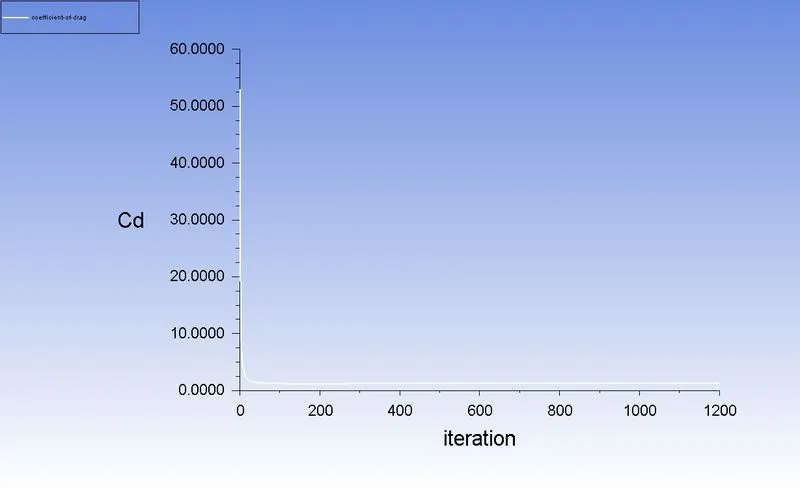
Coefficient of Drag:
coefficient of lift:
Velocity Contour:
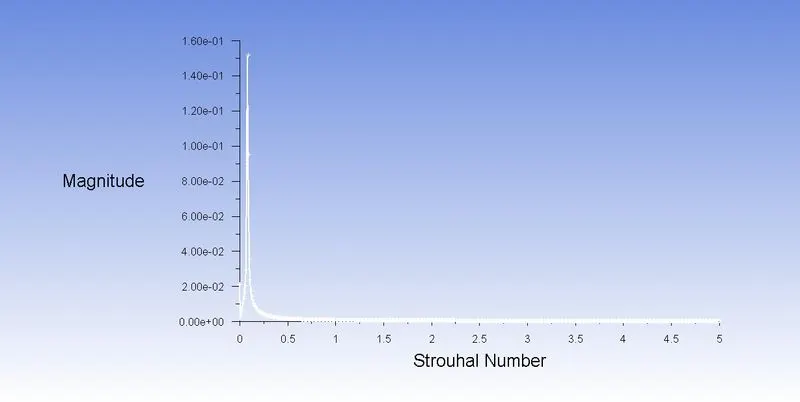
Procedure for creating strouhal number in Fluent.
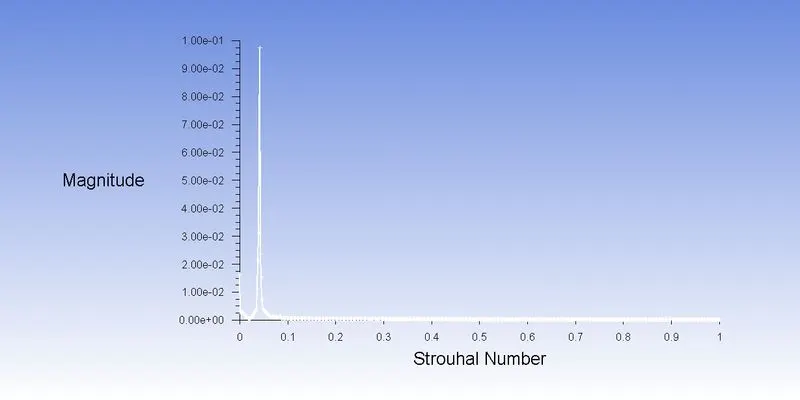
The strouhal number is calculated by going into plot option in FLUENT in which FFT option has to be choose. In FFT option Y axis function
should be Magnitude and X axis function should be strouhal number. After that we need to provide the file of coefficient of lift from simulation
and fed to the window to calculate the FFT of lift coefficient which further provide strouhal number.
Result – Unsteady State Solver
Residual Plot
Vertex Average
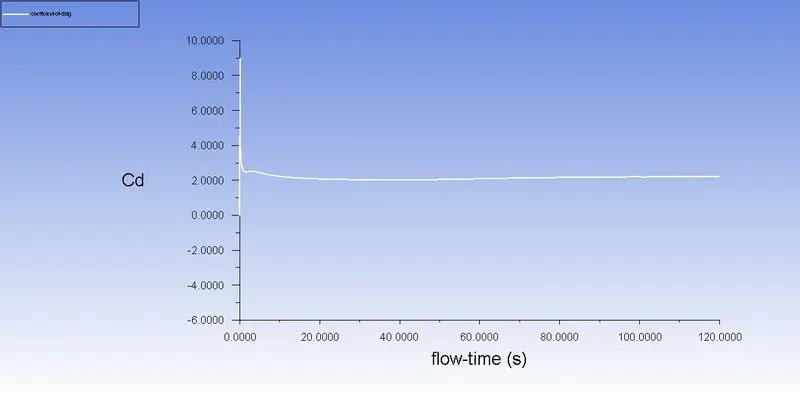
Coefficient of Drag:
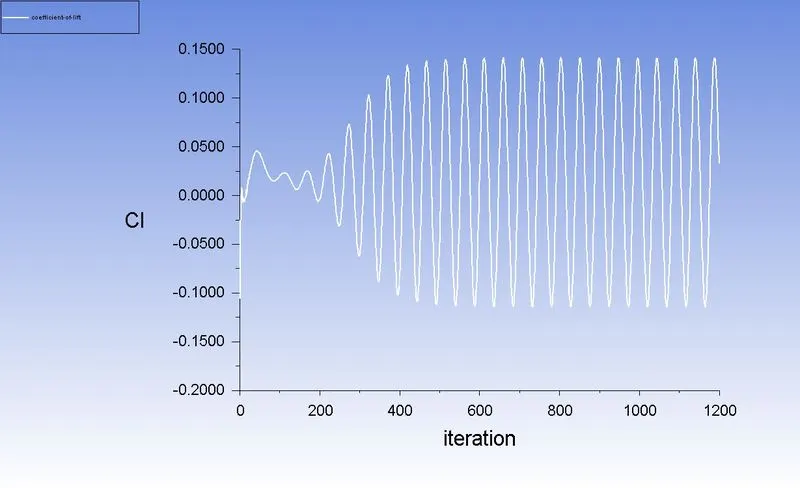
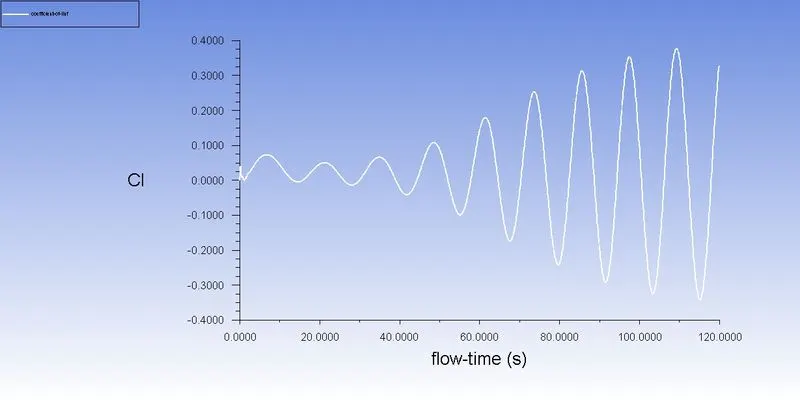
Coefficient of lift:
strouhal number
Conclusion
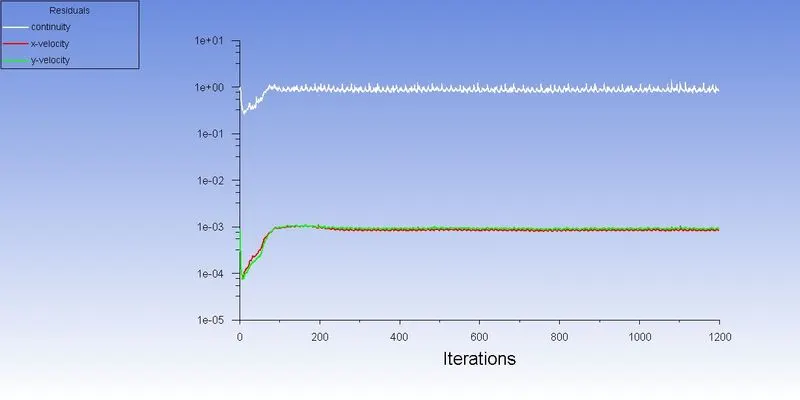
If we compare the velocity contour from both steady state simulation and unsteady state simulation, there was more realistic
vortex generation is shown in transient simulation as compare to steady state. Hence to capture the flow phenomenon
effectively it is better to go with transient solvers.
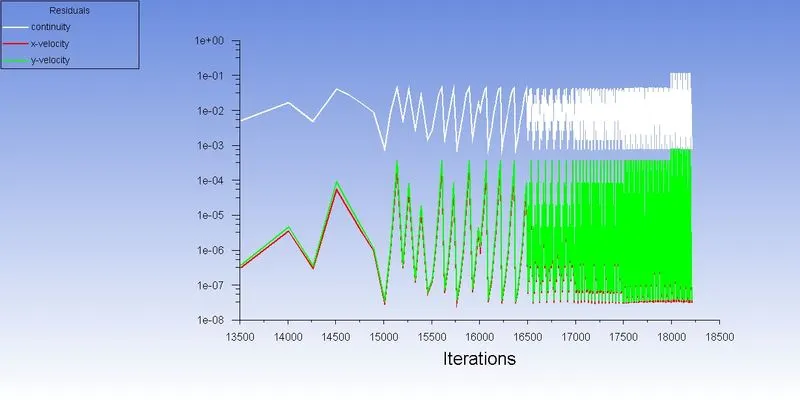
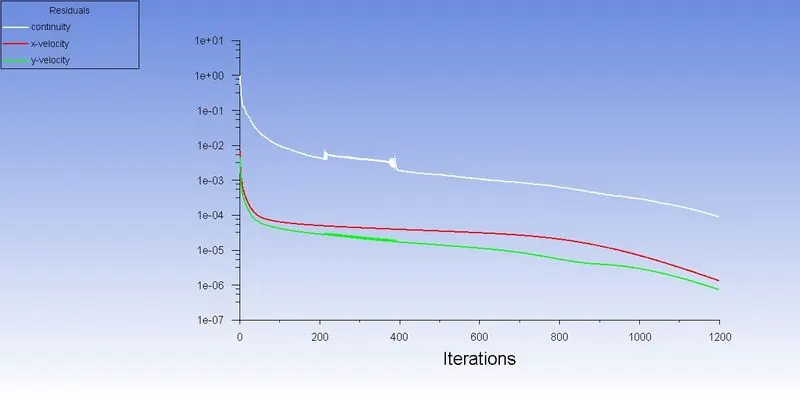
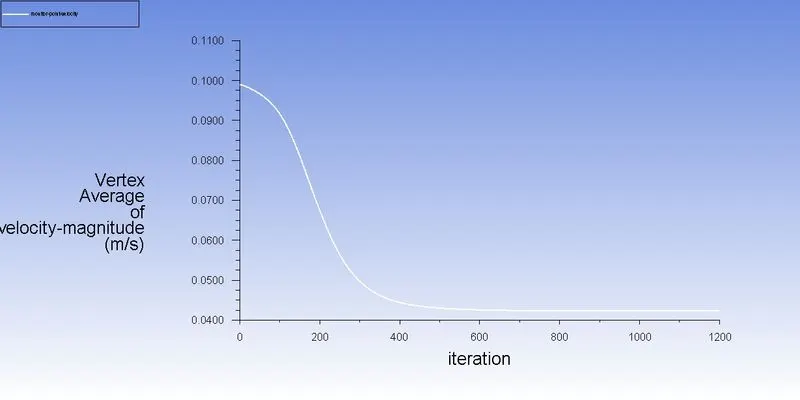
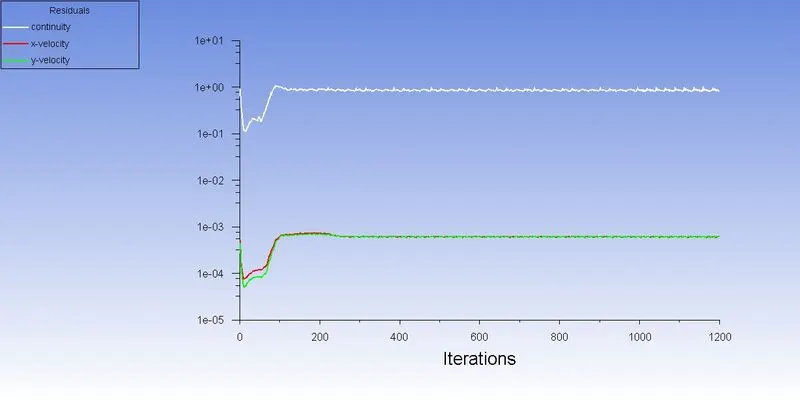
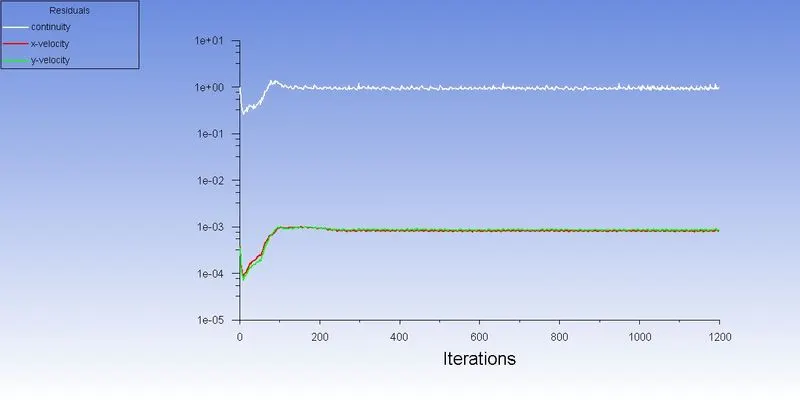
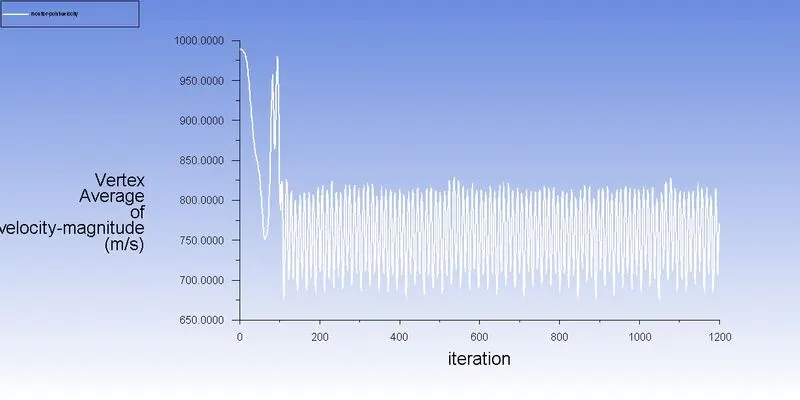
To make the comment about convergence, it can be seen that from steady state solver the solution gets converged after 600
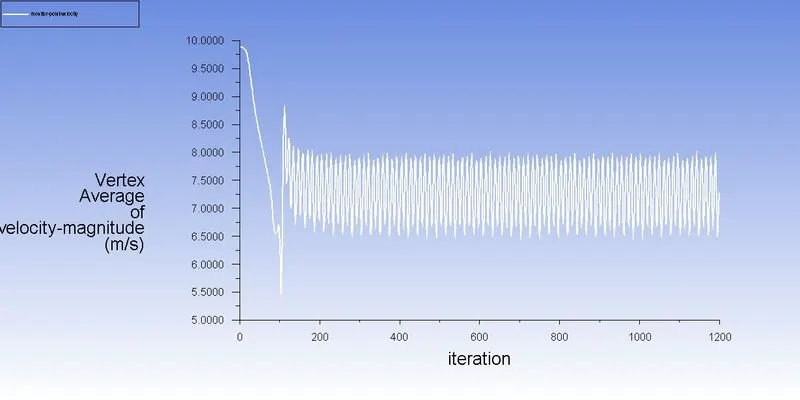
iterations and after that it shows similar fluctuations. But in case of transient simulation it very hard to predict the
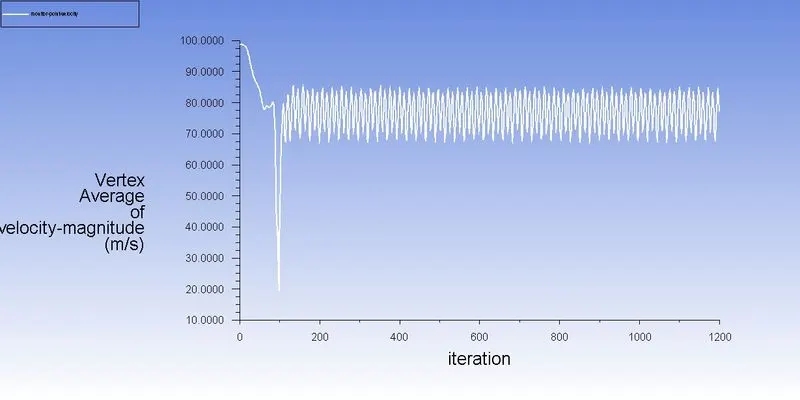
convergence from residual, hence we need to take a look at vertex average plot to get the convergence idea.
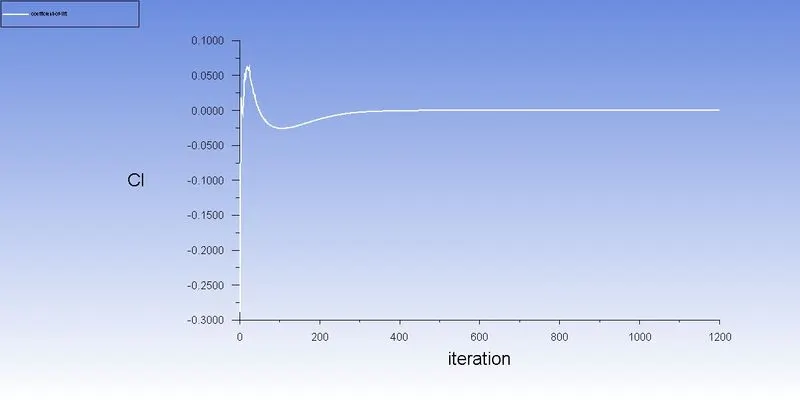
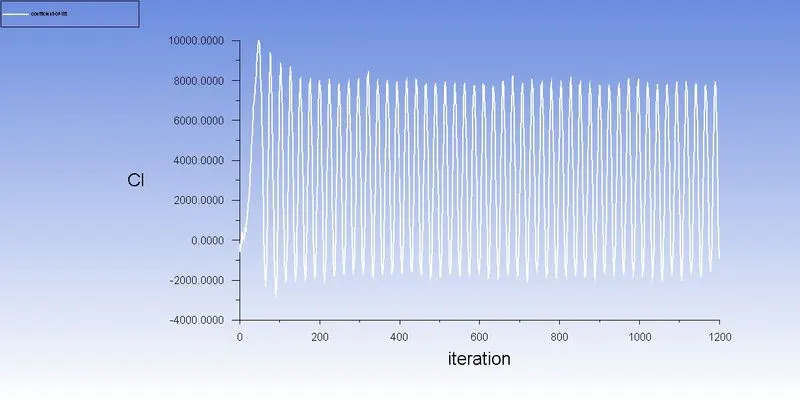
In lift coefficient plot, the vaue is kept rising & faling because of vortex shedding phenomena. The lift coefficient data has been
used in the Fourier Transform (FFT) plot to plot the strouhal number.
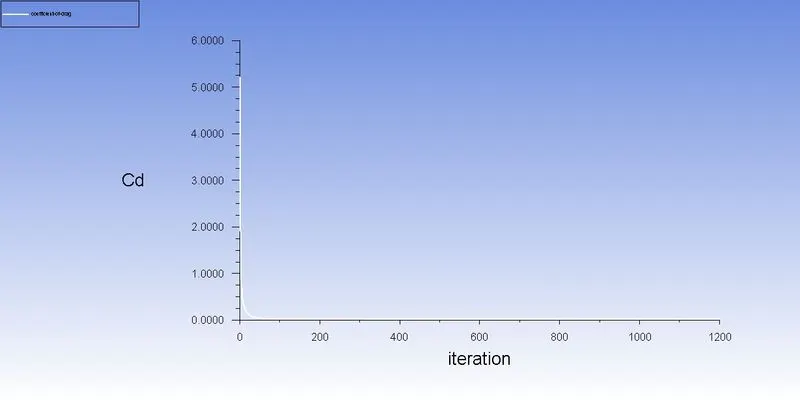
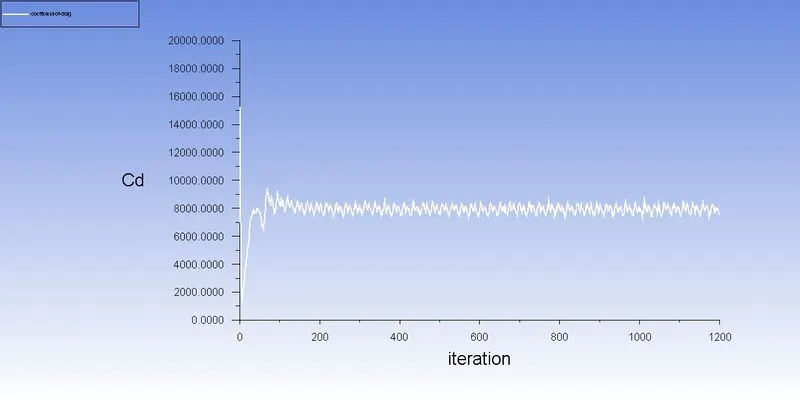
The drag coefficient value is constant after one point
Part 2:
Flow velocity has been used for each simulation as per following table according to the Reynolds Number, Density & viscosity.
The steady state solver has been used for all simulations. The simulation results for Re 100 has been displayed in Part 1.
The material density, characteristic length & dynamics viscosity has been shown in the below table with the Reynolds number
with their respective flow velocity calculated uisng the Reynilds number equation.
The equation of Reynolds number is
`Re = (rho.U.L)/ mu`
where,
Re = Reynolds number
`rho` = material density
U = flow velocity
L = characteristic length
`mu` = dynamic viscosity
| Density | 1 | kg/m^3 |
| Characteristic Length | 2 | m |
| Dynamic Viscosity | 0.02 | kg/m/s |
| Reynolds Number | Flow Velocity | Unit |
| 10 | 0.1 | m/s |
| 100 | 1 | m/s |
| 1000 | 10 | m/s |
| 10000 | 100 | m/s |
| 100000 | 1000 | m/s |
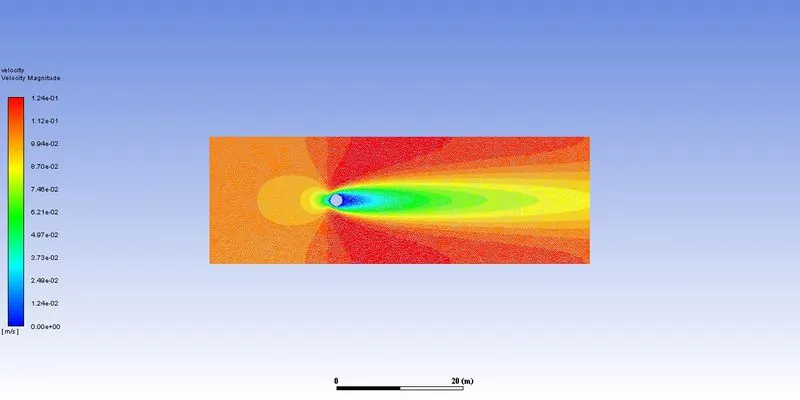
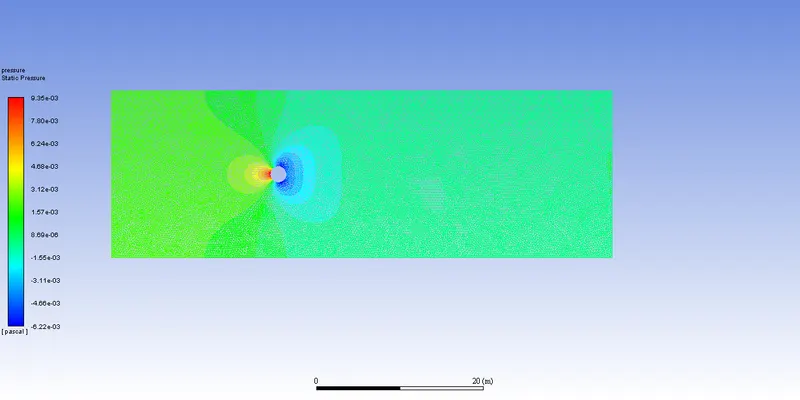
For Re =10:
 |
 |
 |
 |
 |
 |
For Re =100:
Results were shown in part 1.
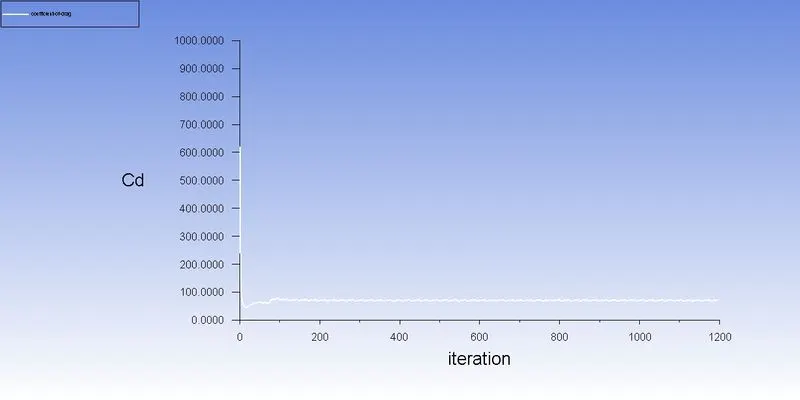
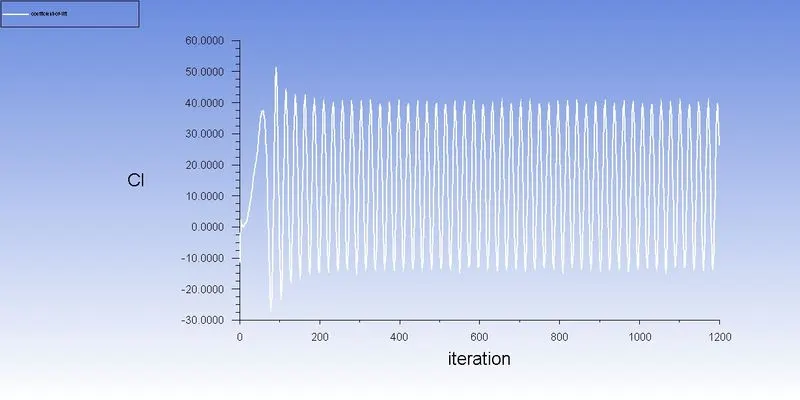
For Re =1000:
 |
 |
 |
 |
 |
 |
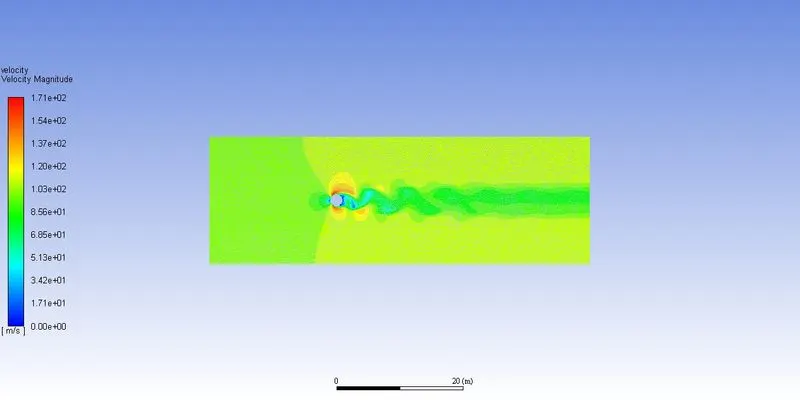
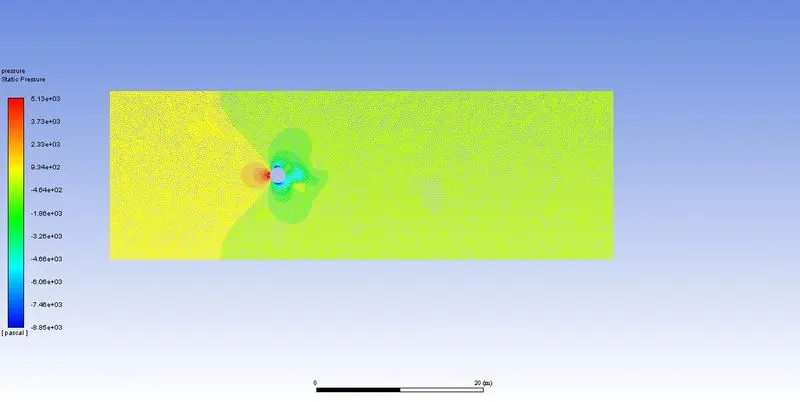
For Re =10000:
 |
 |
 |
 |
 |
 |
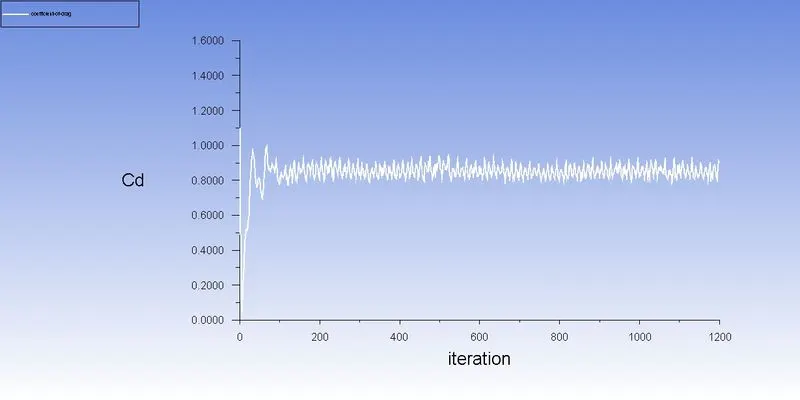
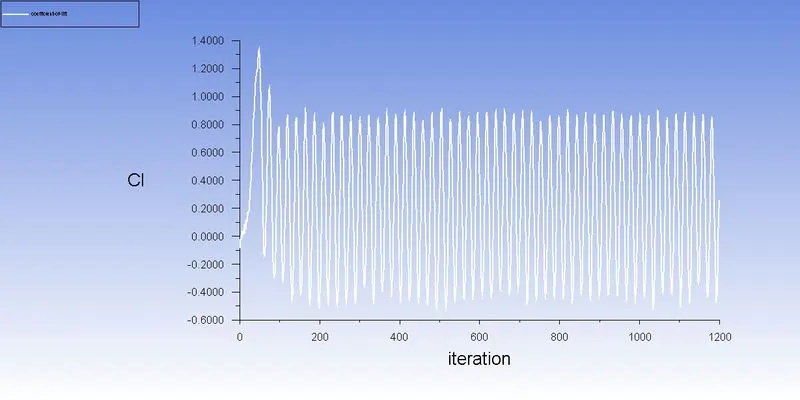
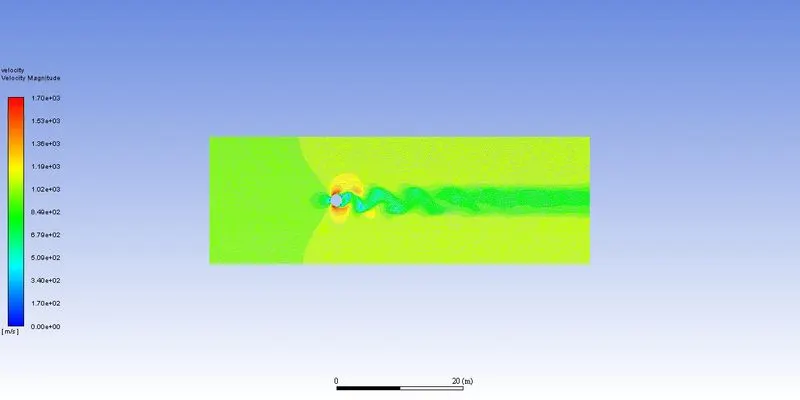
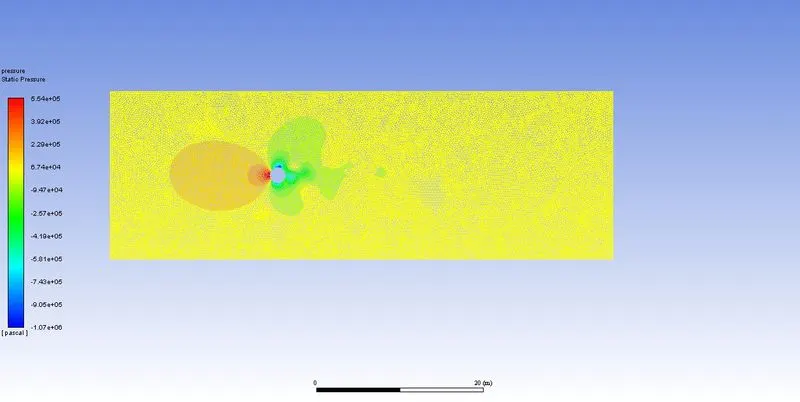
For Re =100000:
 |
 |
 |
 |
 |
 |
Conclusion :
- When fluid flows over cylinder, wake region is formed next to cylinder due to decrease in pressure and recirculation of flow occures and hence flow separation occures.
- It is seen that as Reynolds number is increasing the coefficient of Drag is decreasing and coefficient of lift is increasing.
- when Reynolds number get increased the surface friction between fluid and cylinder is also increasing which casue the boundary layer to break before flow seperated hence amount of drag get decreases and lift get increases.
- As the Reynolds number increase in value the wake region behind the cylinder is also increasing which results in bigger domain capturization for further simulations.
- For lower Reynolds number the vortices are bit symmetrical in nature but as Reynolds number get increase it start to deviate more.
- It can be seen that the steady state solver are more time friendly compared with transient one