Week 2 - Flow over a Cylinder.
Aim :
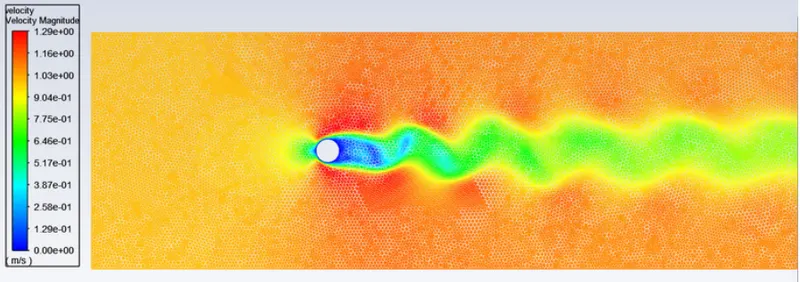
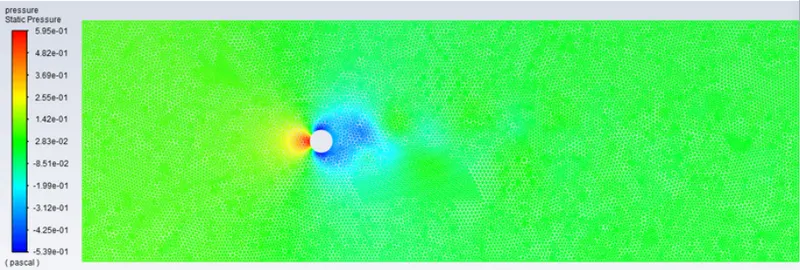
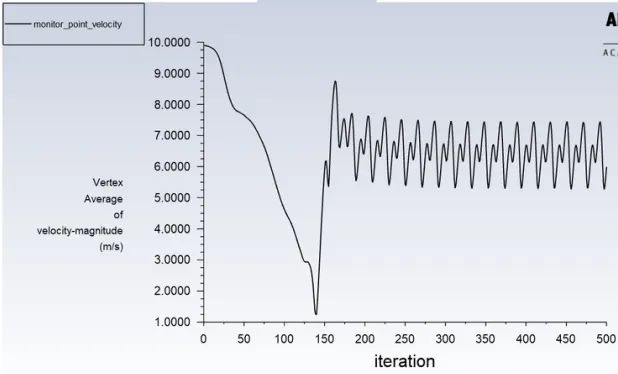
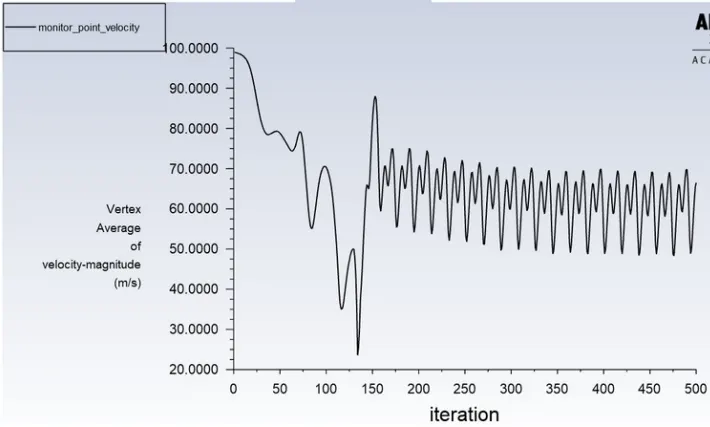
1. To simulate the flow with the steady and unsteady case and calculate the Strouhal Number for Re= 100
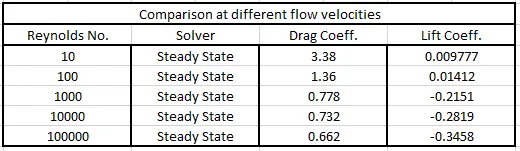
2.1. To calculate the coefficient of drag and lift over a cylinder by setting the Reynolds number to 10,100,1000,10000 & 100000 using a steady solver
2.2. To discuss the effect of Reynolds number on the coefficient of drag.
Introduction :
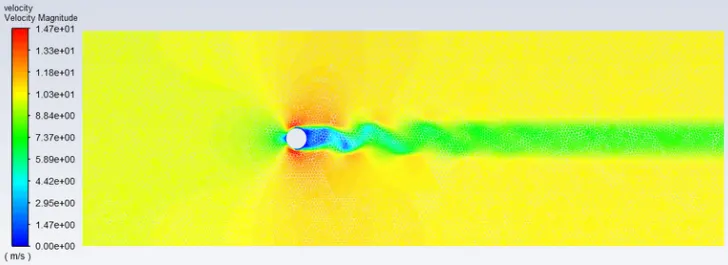
Vortex shedding is an oscillating flow that takes place when a fluid such as air or water flows past a bluff body at certain velocities, depending on the size and shape of the body. In this flow, vortices are created at the back of the body and detach periodically from either side of the body forming a Kármán vortex street.
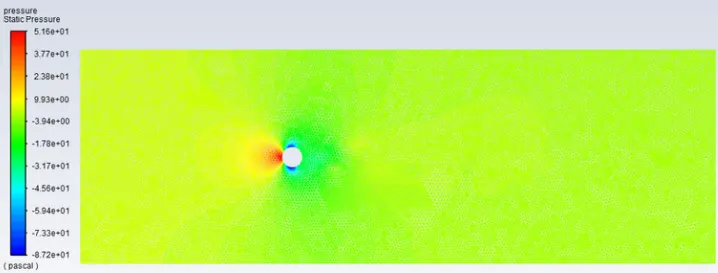
The fluid flow past the object creates alternating low-pressure vortices on the downstream side of the object. The object will tend to move toward the low-pressure zone.
Suppose the bluff structure is not mounted rigidly and the frequency of vortex shedding matches the resonance frequency of the structure. In that case, the structure can begin to resonate, vibrating with harmonic oscillations driven by the energy of the flow.
The Reynolds number is a key parameter in fluid dynamics.It describes the fluid geometry And flow.This allows us to compare different fluid systems. It is the measure of the ratio of Inertial to viscous forces in the flow of a fluid and is defined as
Re = ρ⋅D⋅U/μ= `(rho*D*U)/mu`
ρ= Density of the Fluid
U = Inflow Velocity
D = Diameter of Cylinder
μ= Dynamic viscosity of Fluid
Strouhal number is a dimensionless number describing oscillating flow mechanisms. The Strouhal number is often given as
St = f*d/u Where,
f is the frequency of vortex shading, L is the characteristic length and U is the flow velocity
Procedure
Initially the axisymmetric geometry of a cylinder and the flow area is developed with the help of SpaceClaim
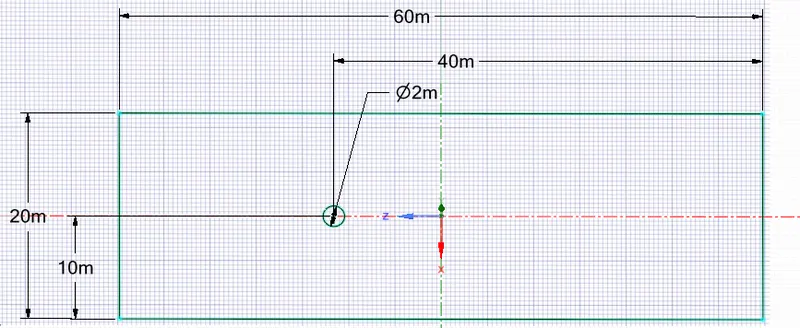
After generating the surface using SpaceClaim next step is to mesh the surface in to appropriate sized elements
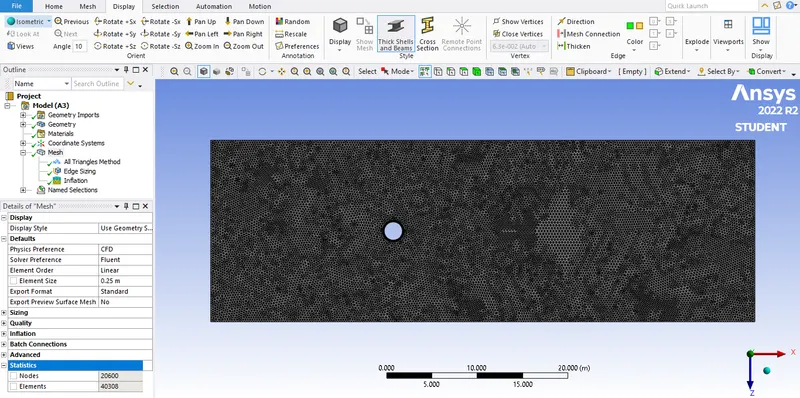
The following meshing setups are used for generating an effective mesh which can capture vortex shedding.
*Element Sizing
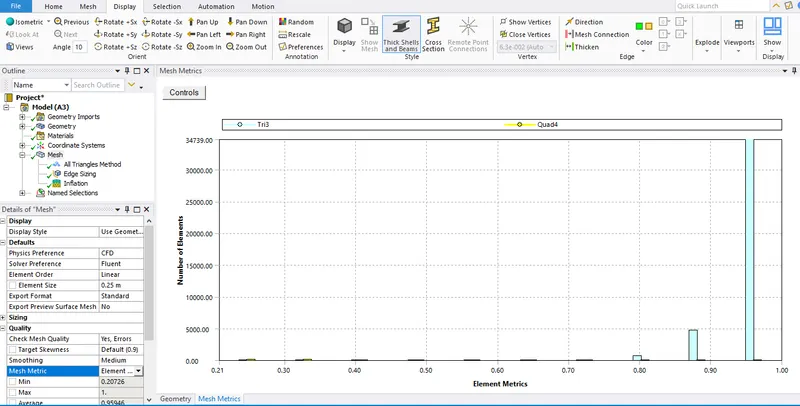
Adding inflation layers and edge sizing
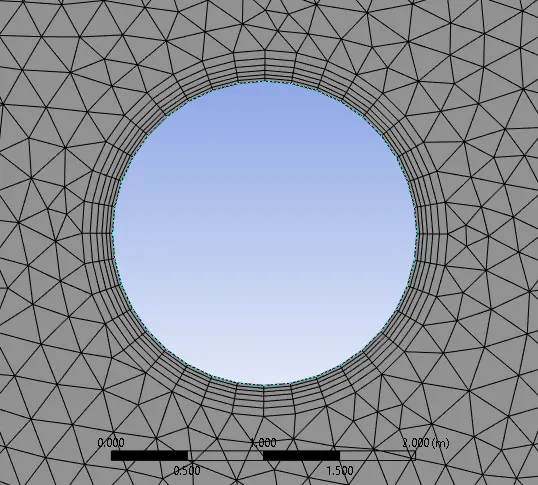
After meshing the geometry and given specific names it is then added to Ansys Fluent
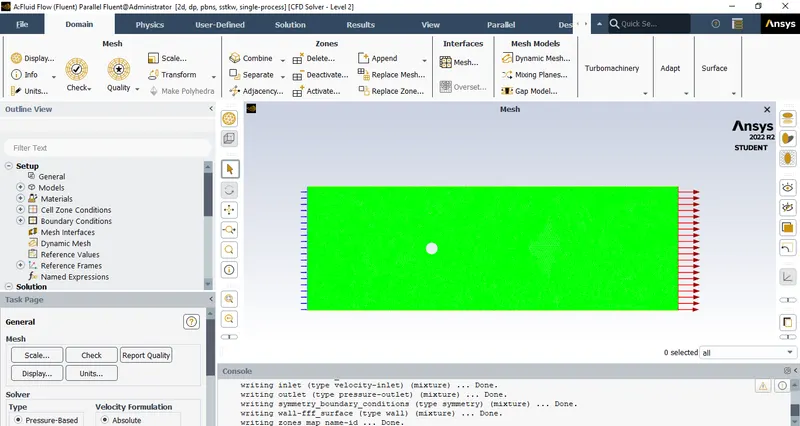
Solution
Case 1
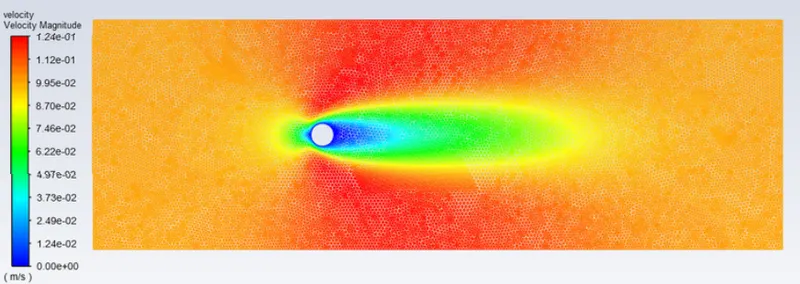
1.1. Steady state flow at Reynolds number, Re=100
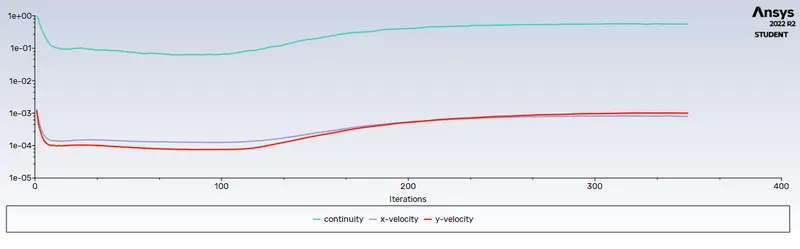
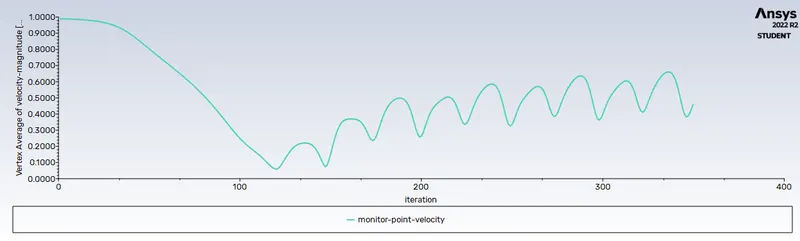
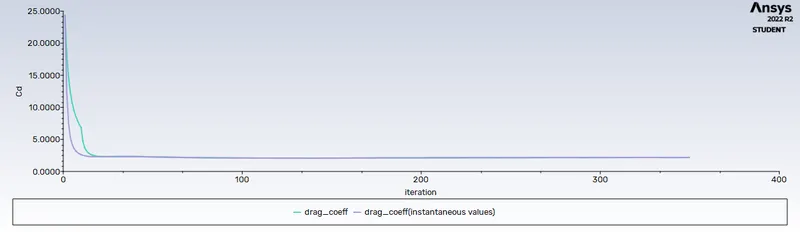
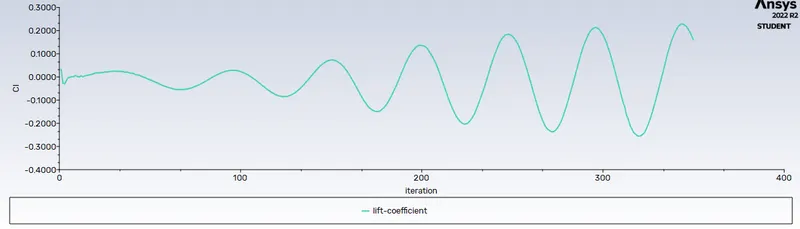
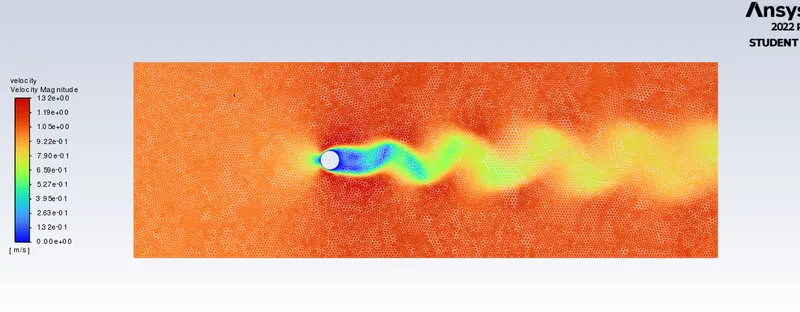
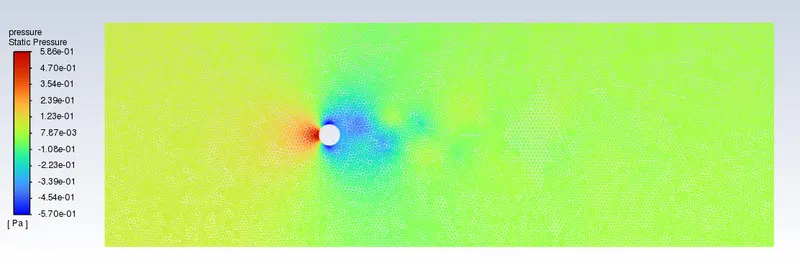
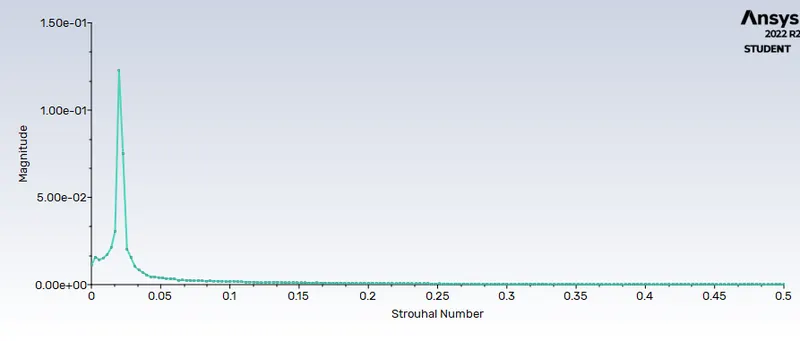
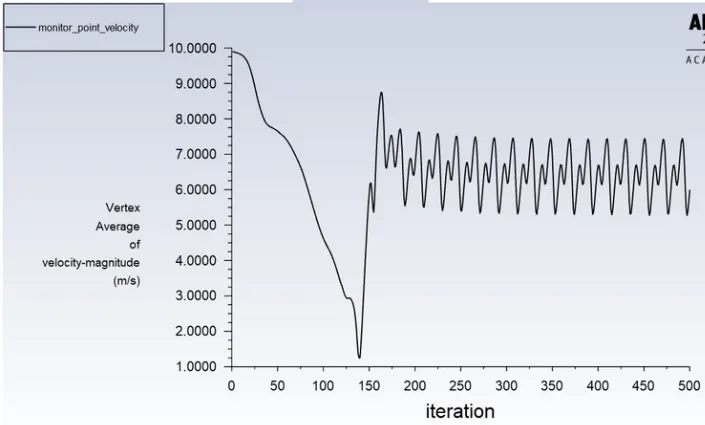
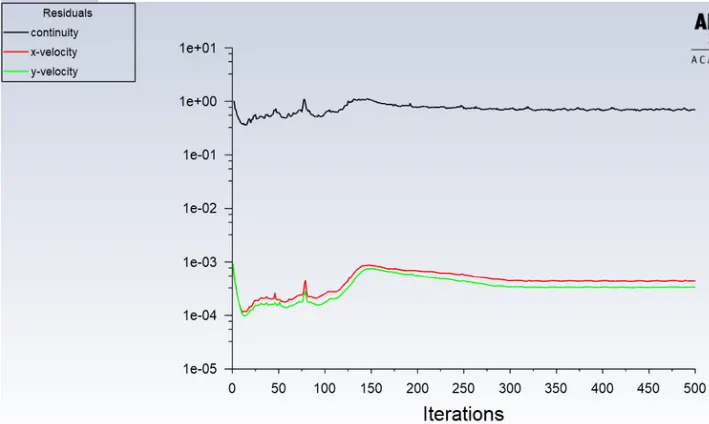
1.2 Simulation at Re =100 using unsteady solver
Case 2
2.1 Reynolds Number = 10
2.1 Reynolds Number = 100
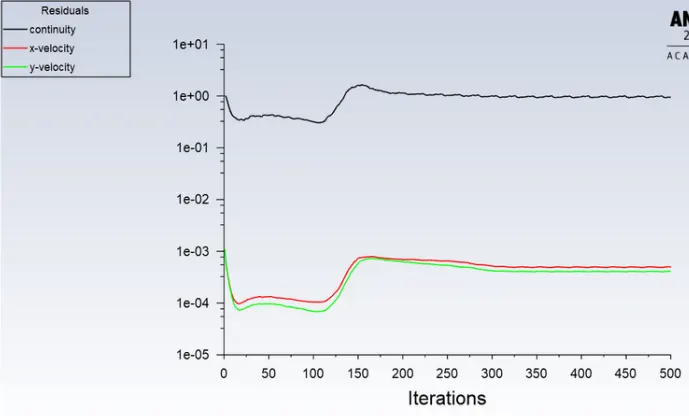
2.1 Reynolds Number = 1000
2.1 Reynolds Number = 10000
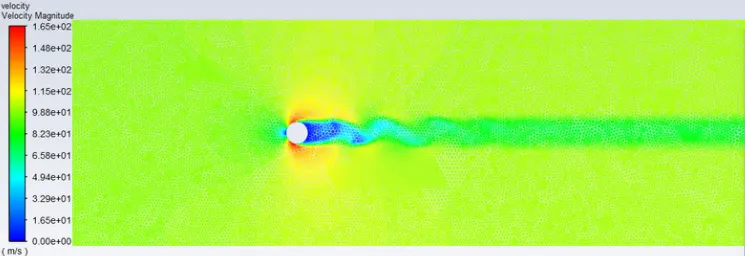
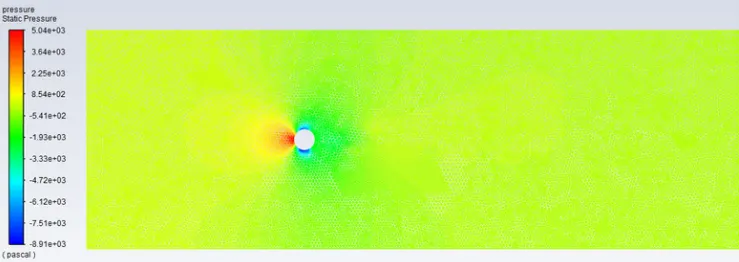
2.1 Reynolds Number = 100000
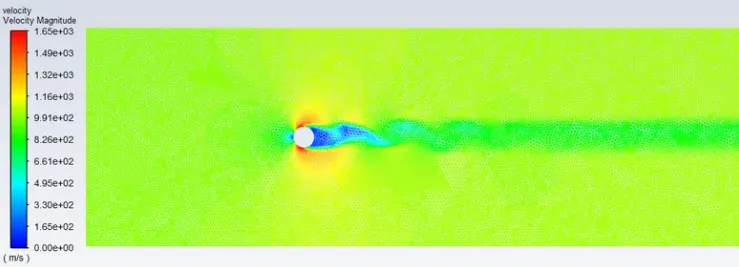 .
.
Conclusion :
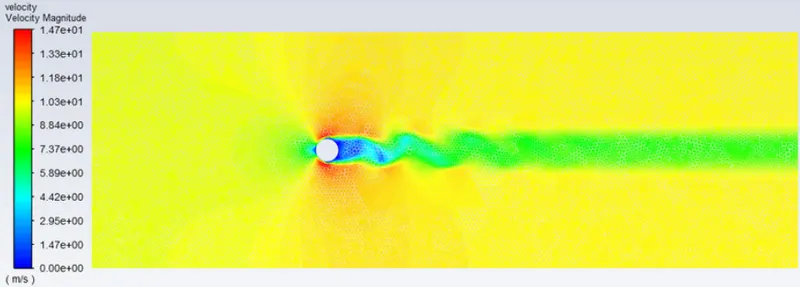
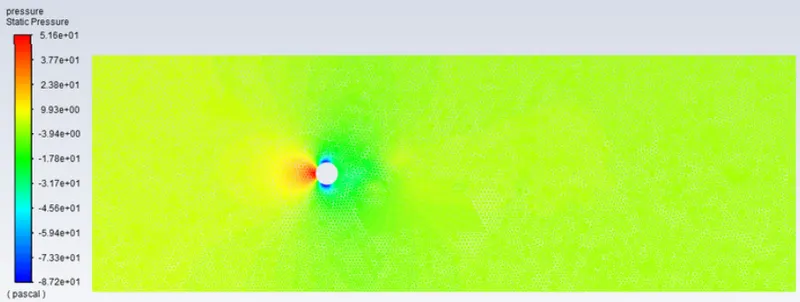
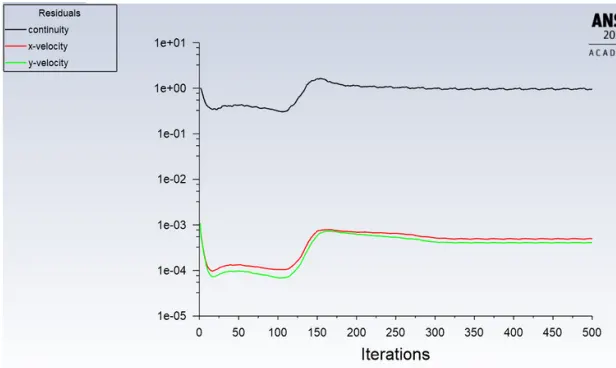
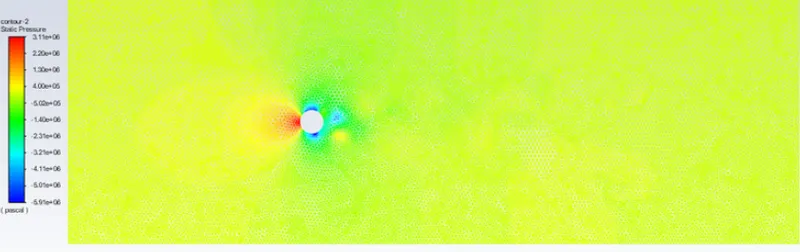
No vortex shedding street is observed for Re = 10. When Reynolds number is increased from 100 to 1000, the vortex shedding street can be clearly seen. And while street formation is not very noticeable for Re = 10000 and vortex shedding is extremely minimal, it is visible for Re = 100000.
https://www.sciencedirect.com/science/article/pii/S0307904X08000243
https://www.sciencedirect.com/science/article/pii/S0307904X08000243#tbl2