Week 2 - Flow over a Cylinder.
Simulate the flow over a cylinder and explain the phenomenon of Karman vortex street.
PART-I
- Simulate the flow with the steady and unsteady case and calculate the Strouhal Number for Re= 100.
PART-II
- Calculate the coefficient of drag and lift over a cylinder by setting the Reynolds number to 10,100,1000,10000 & 100000. (Run with steady solver)
- Discuss the effect of Reynolds number on the coefficient of drag.
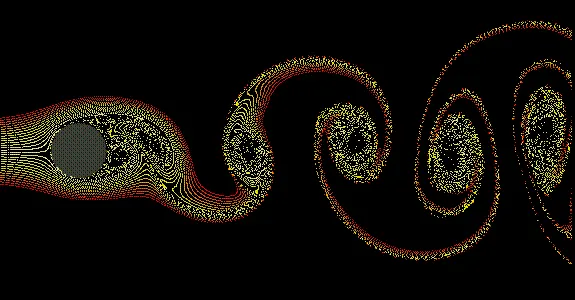
Von Karman vortex street:
In spite of extensive experimental and numerical studies almost over a century, flow around a circular cylinder still remains a challenging problem in fluid mechanics, where intensive investigations are continued even today to understand the complex unsteady dynamics of the cylinder wake flow. Cross-flow normal to the axis of a stationary circular cylinder and the associated problems of heat and mass transport are encountered in a wide variety of engineering applications.
Both experimental measurements and numerical computations have confirmed the onset of instability of the wake flow behind a cylinder beyond a critical Reynolds number, leading finally to a kind of periodic flow identified by definite frequencies, well-known as the VonKarman vortex street.
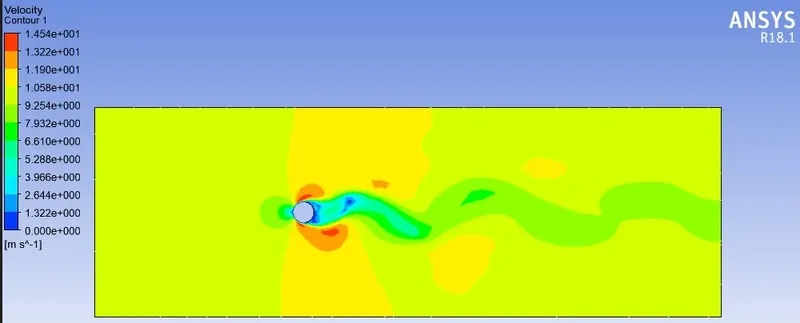
vortex shedding is an oscillating flow that takes place when a fluid such as air or water flows past a bluff (as opposed to streamlined) body at certain velocities, depending on the size and shape of the body. In this flow, vortices are created at the back of the body and detach periodically from either side of the body forming a Von Karman vortex street. The fluid flow past the object creates alternating low-pressure vortices on the downstream side of the object. The object will tend to move toward the low-pressure zone. Moreover, von Kármán vortex street is a repeating pattern of swirling vortices, caused by a process known as vortex shedding, which is responsible for the unsteady separation of flow of a fluid around blunt bodies.
Reynolds Number (Re):
Reynolds number for a flow is a measure of the ratio of inertial to viscous forces in the flow of a fluid around a body.
Re = rho*V*d/Dynamic Viscosity
The range of Re values will vary with the size and shape of the body from which the eddies are being shed, as well as with the kinematic viscosity of the fluid.
Strouhal Number:
Strouhal number is a dimensionless number describing oscillating flow mechanisms.
The Strouhal number is often given as
St = f*d/u
Where,
f is the frequency of vortex shading,
L is the characteristic length and
U is the flow velocity.
Geometry:
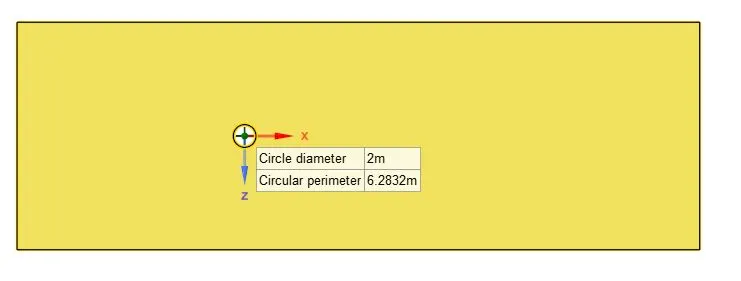
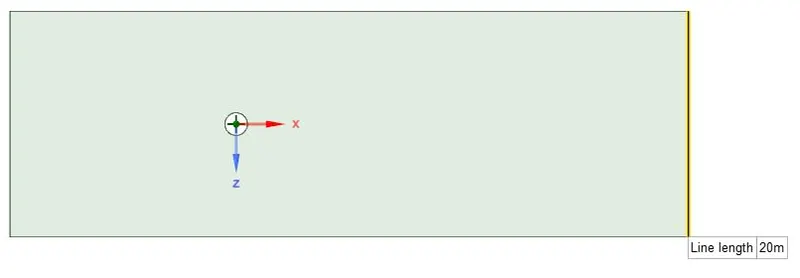
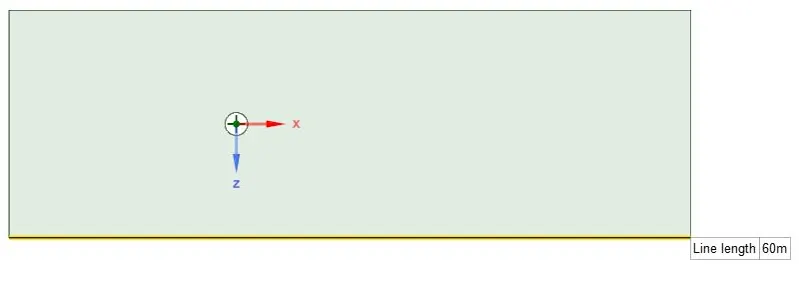
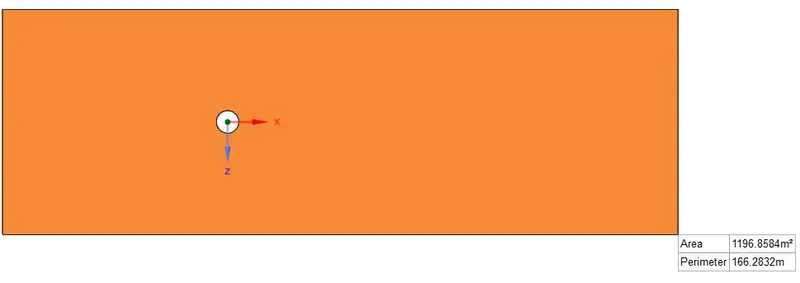
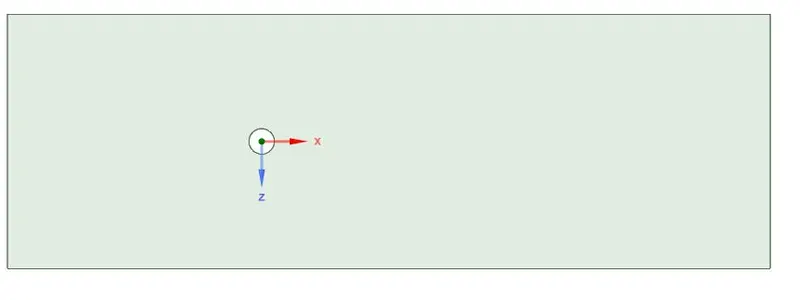
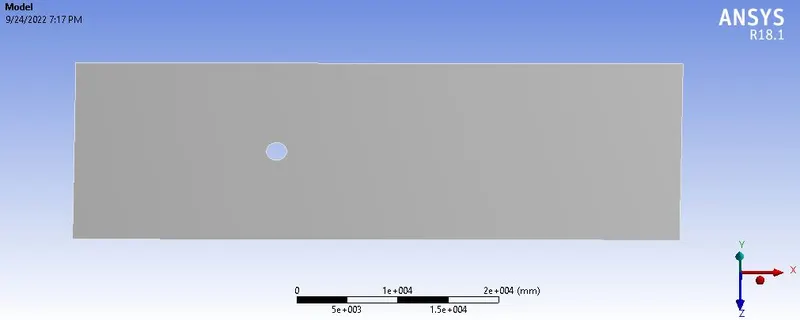
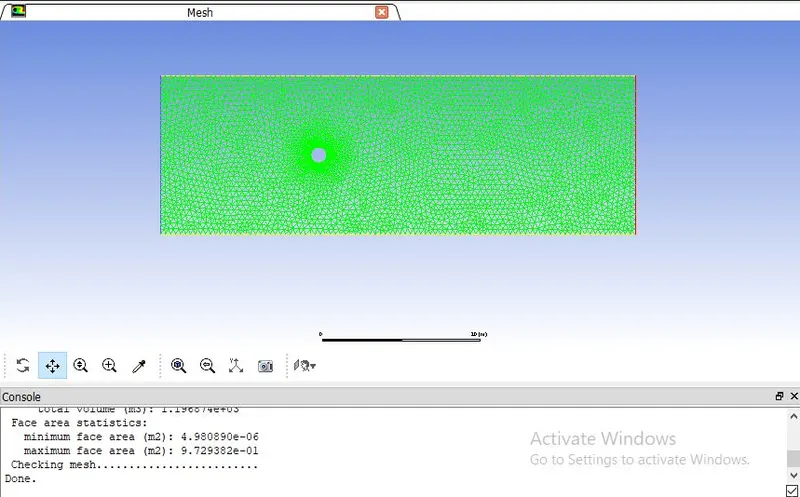
Mesh:-After the geometry is loaded we should mesh it with a suitable fine mesh elment size.
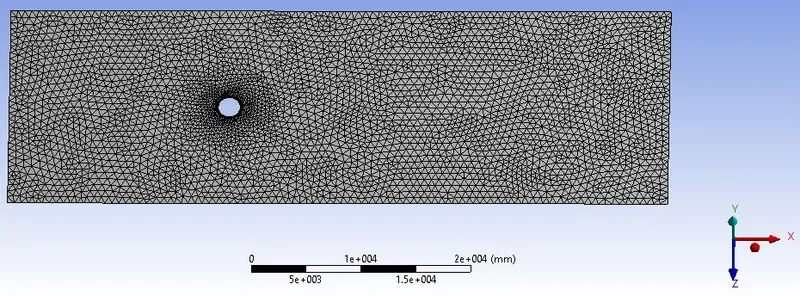
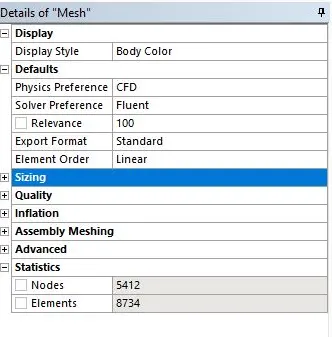
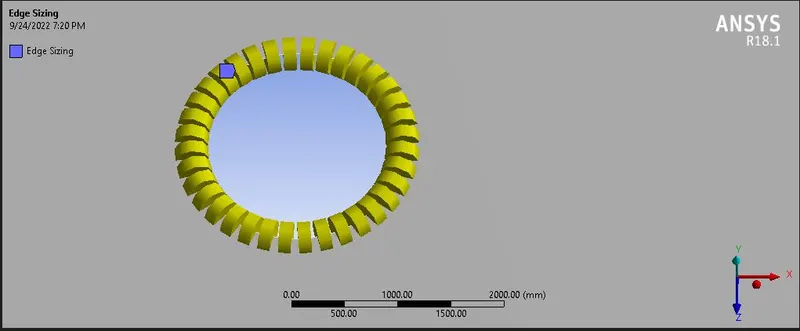
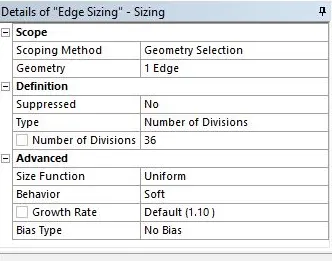
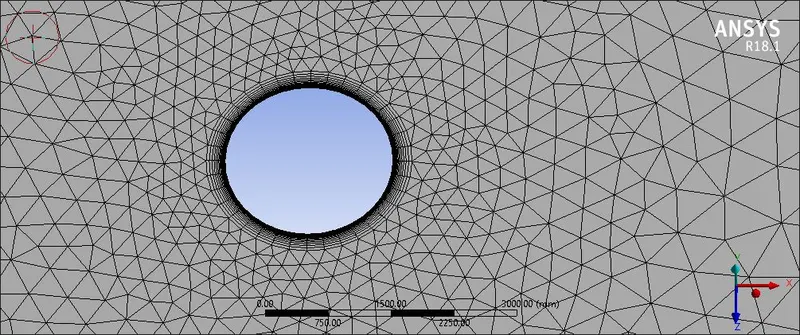
To capture better results near the cylinder walls, go to mesh and add suitable inflation layers as shown below(ie: to create a body fitted mesh).
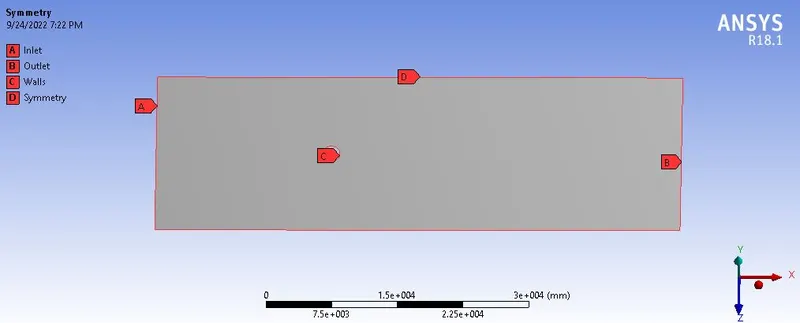
The below images should refers the named selections, such as inlet,oulet, walls and symmetry.
Set up:-
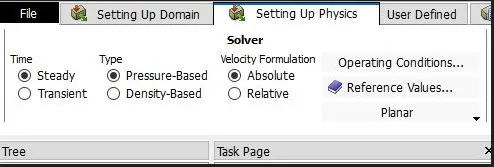
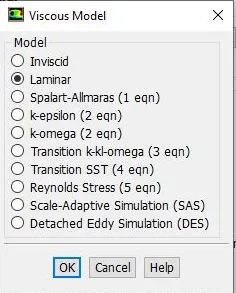
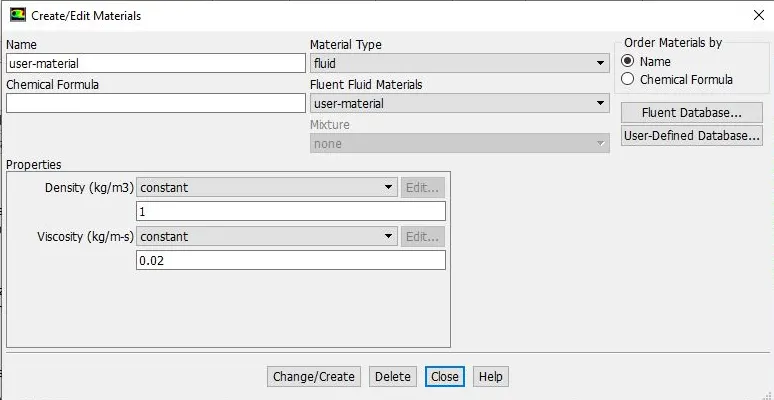
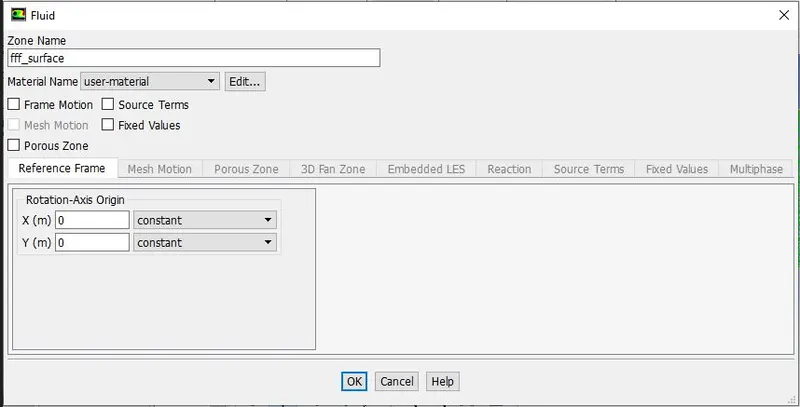
Boundary Condition:
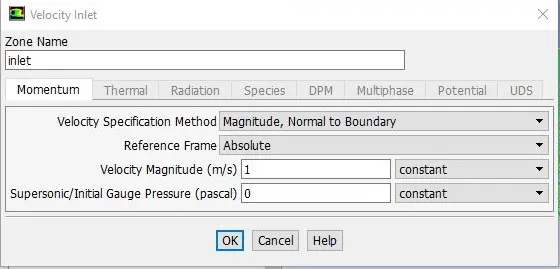
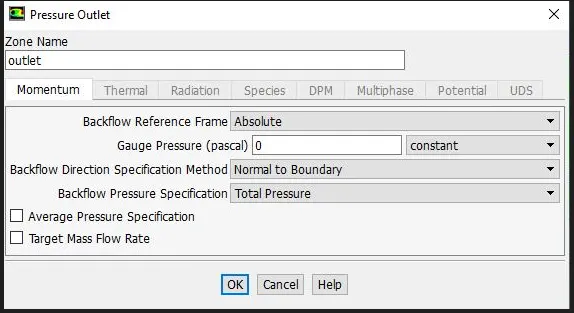
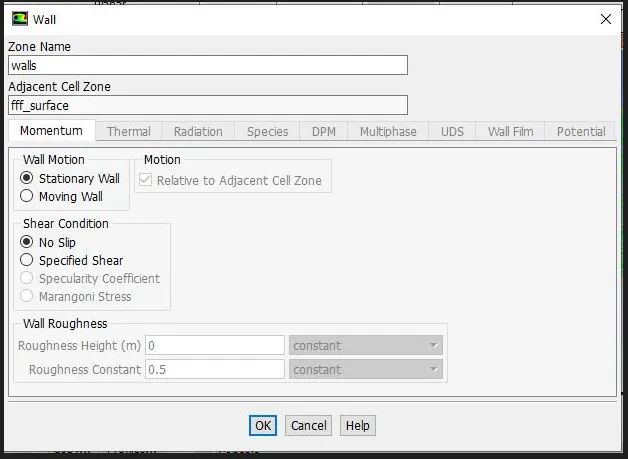
PART-I
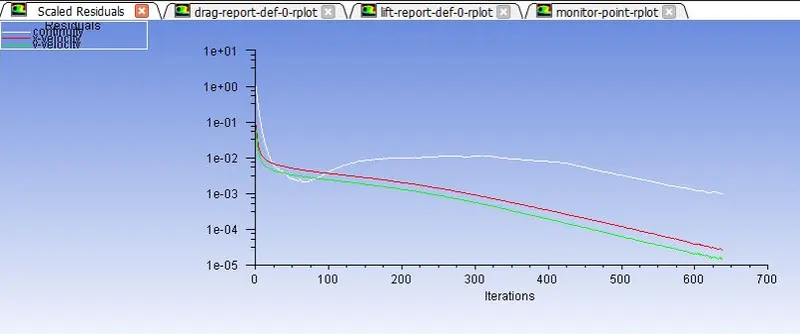
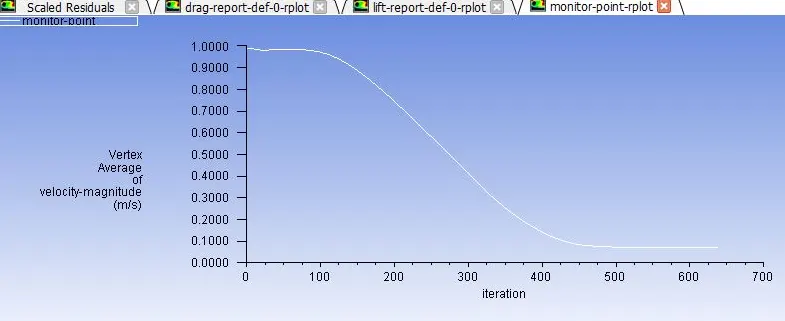
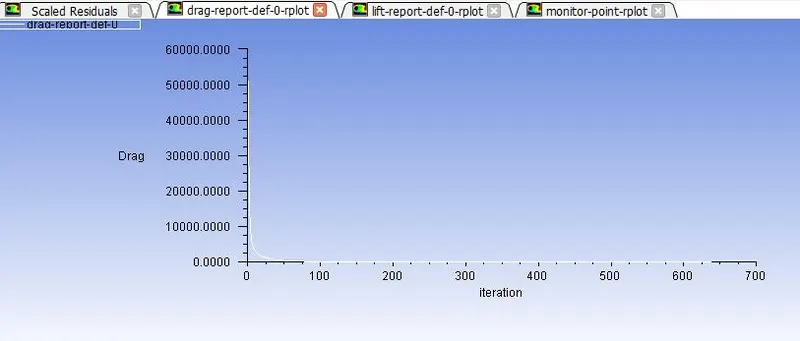
Steady state simulation of reynolds number 100.
Residual plot
Vertex average
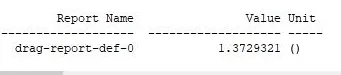
Coefficient of Drag
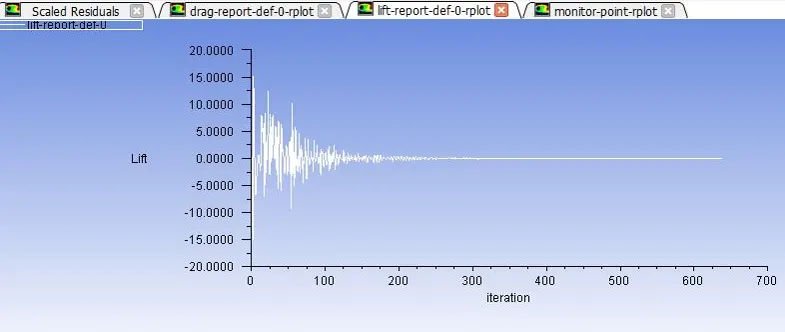
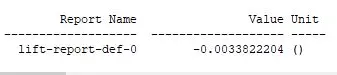
Coefficient of Lift
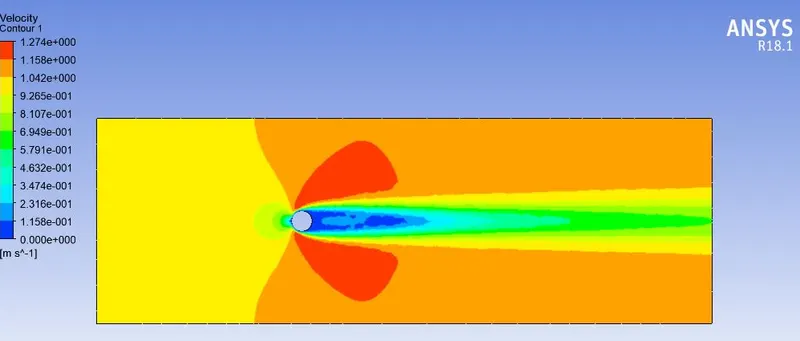
Velocity Contour
Pressure Contour
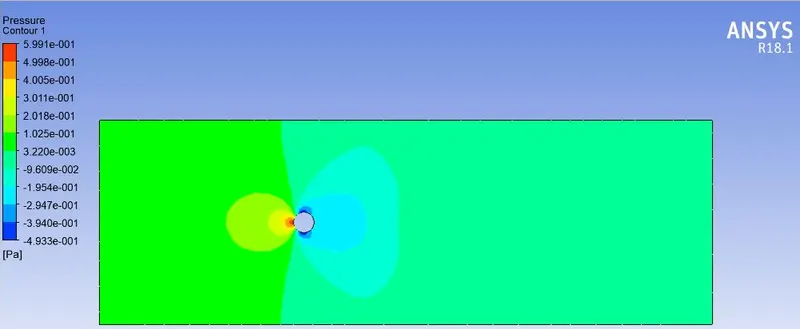
Transient state simulation of Reynolds number 100.
Residual plot
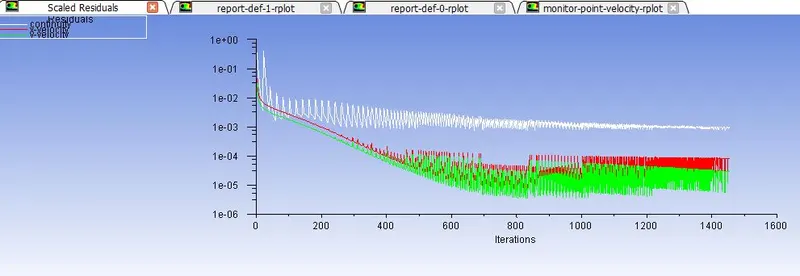
Vertex average
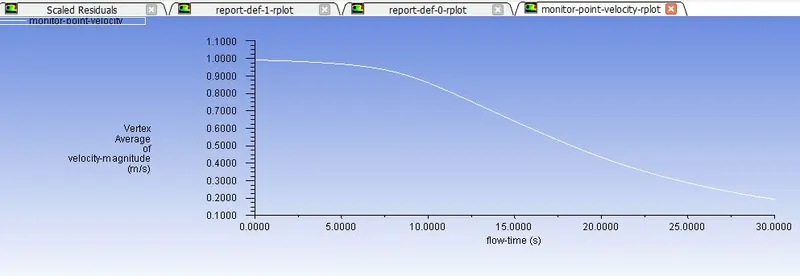
Coefficient of Drag
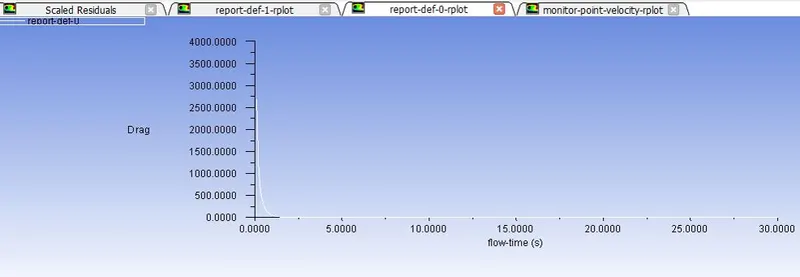

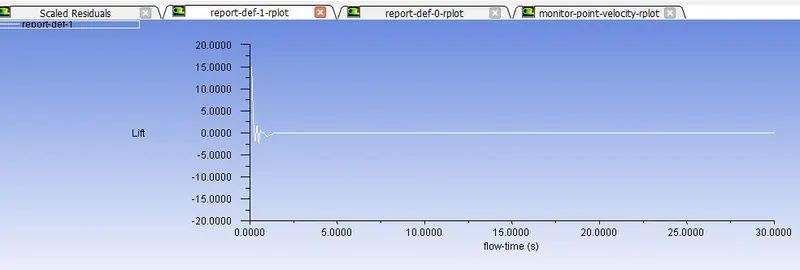
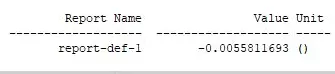
Coefficient of Lift
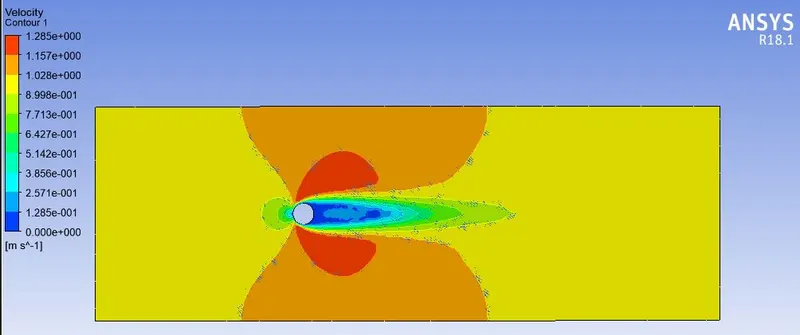
Velocity Contour
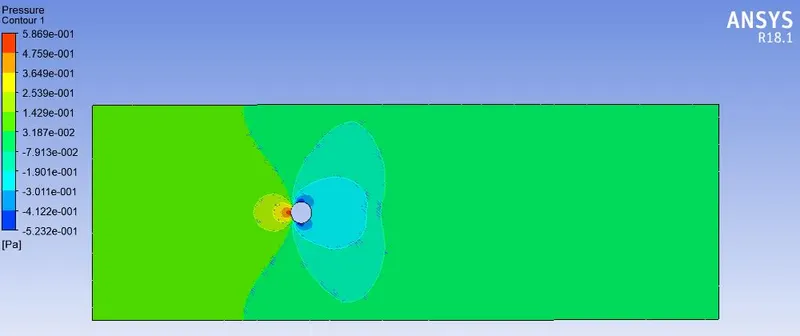
Pressure Contour
Strouhal No plot:-
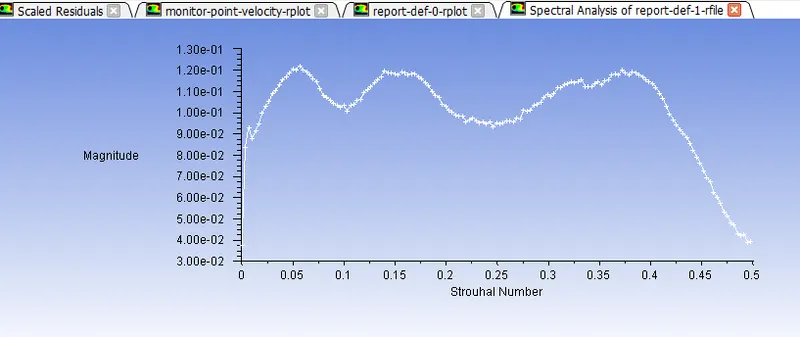
Strouhal no is around 0.199
PART-II
Calculate the coefficient of drag and lift over a cylinder by setting the Reynolds number to 10,100,1000,10000 & 100000. (Run with steady solver)
Steady state simulation of reynolds number 10.
Residual plot
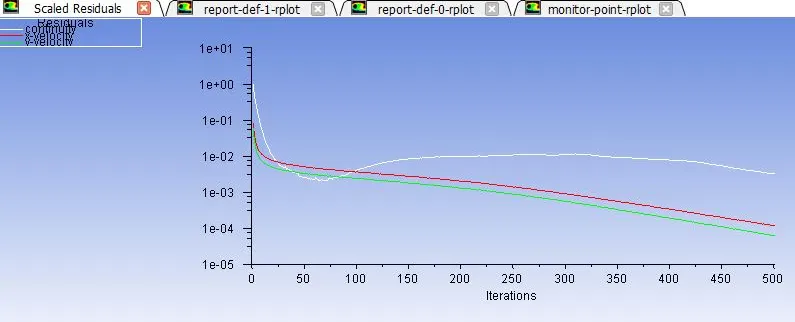
Vertex average
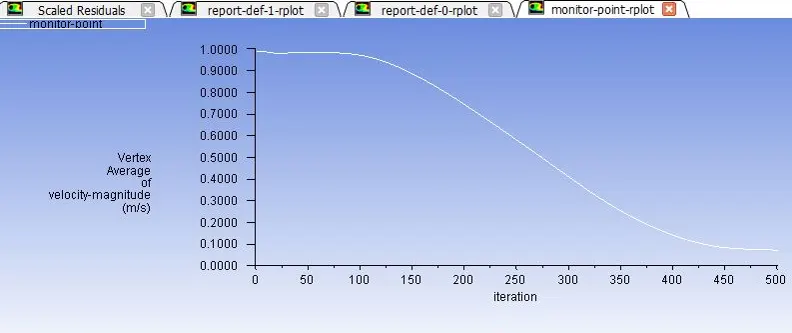
Coefficient of Drag
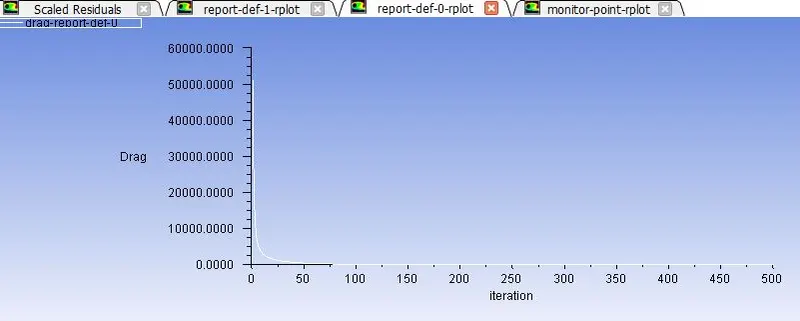
Coefficient of Lift
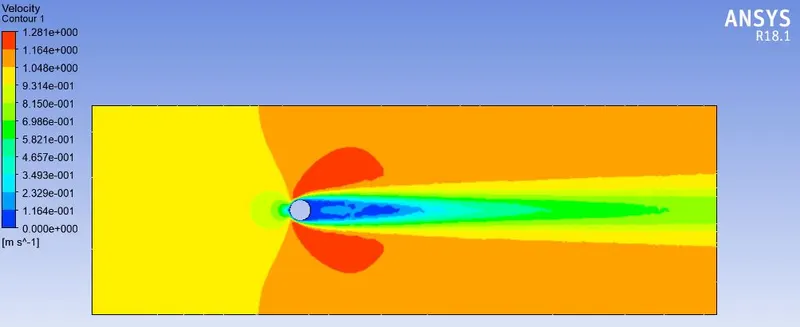
Velocity Contour
Pressure Contour
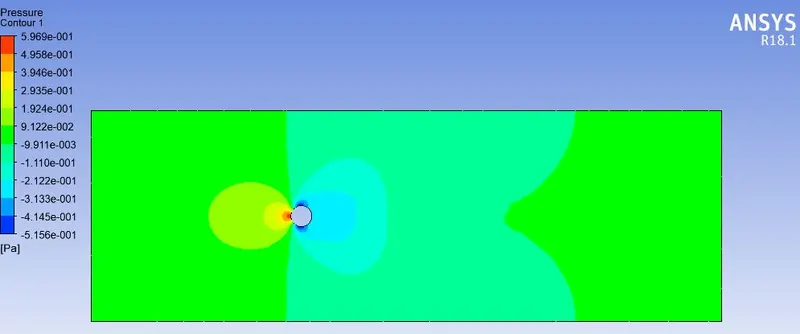
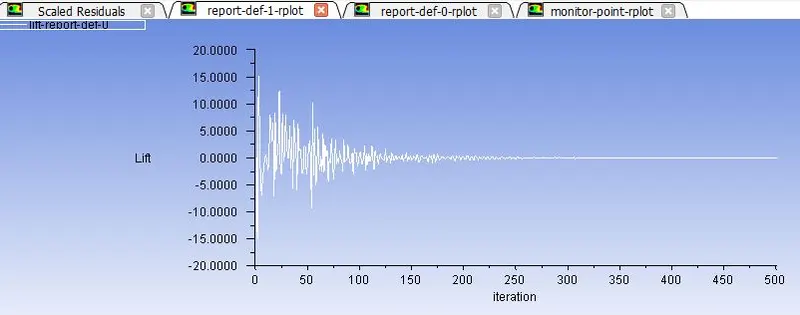
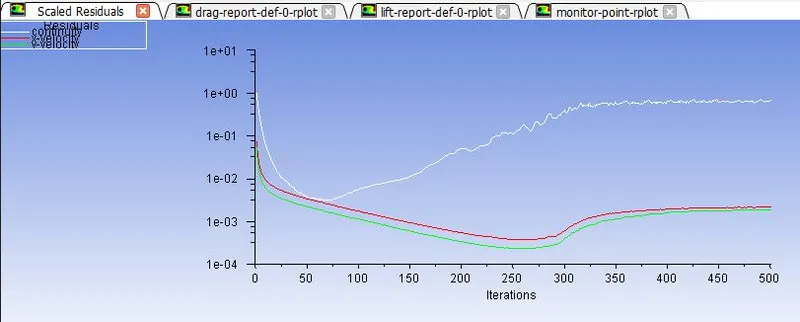
Steady state simulation of reynolds number 100.
Residual plot
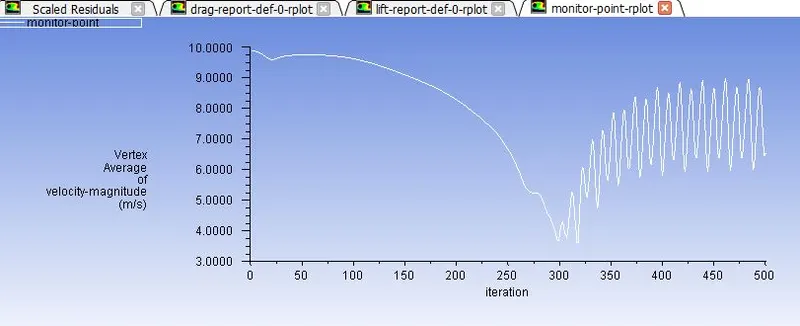
Vertex average
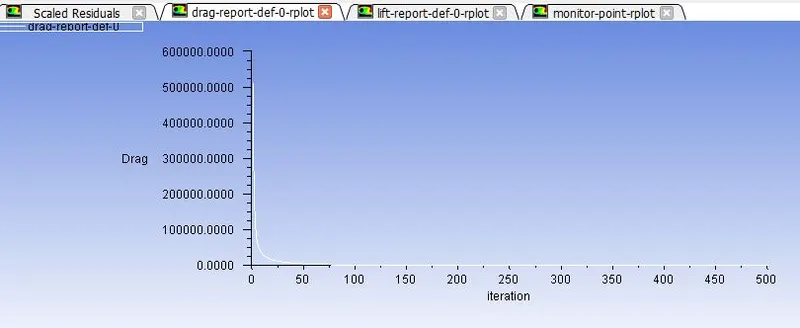
Coefficient of Drag
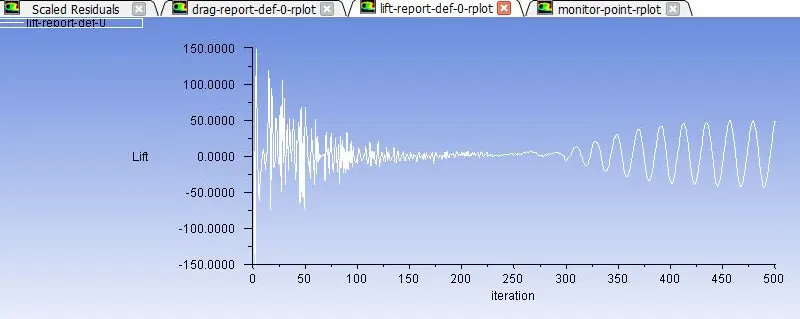
Coefficient of Lift
Velocity Contour
Pressure Contour
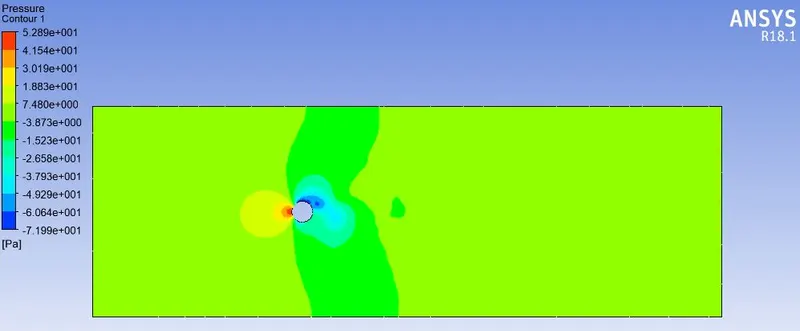
Steady state simulation of reynolds number 1000.
Residual plot
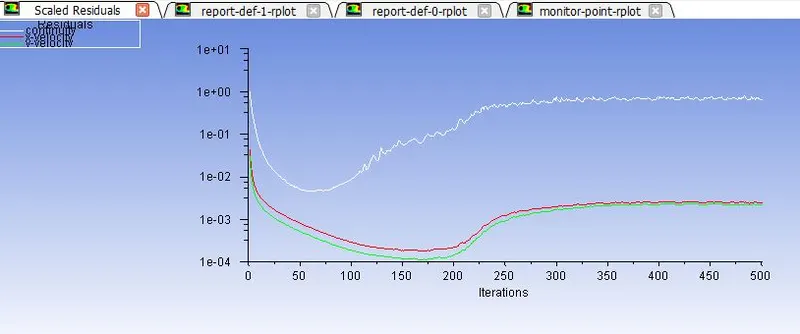
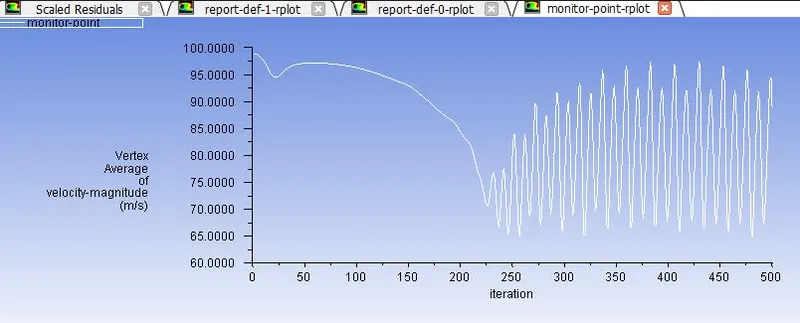
Vertex average
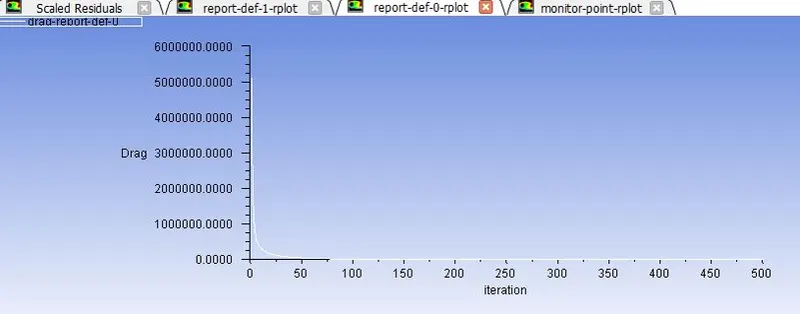
Coefficient of Drag
Coefficient of Lift
Velocity Contour
Pressure Contour
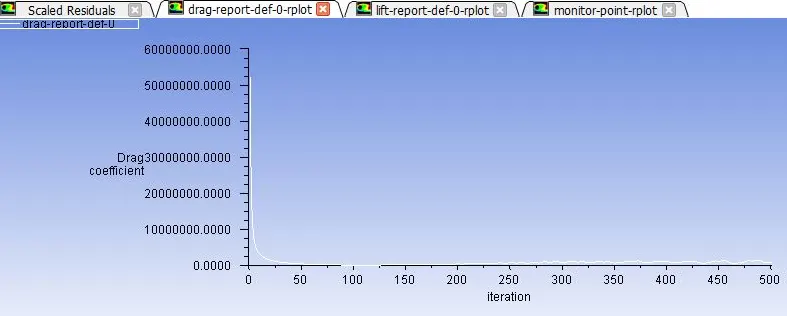
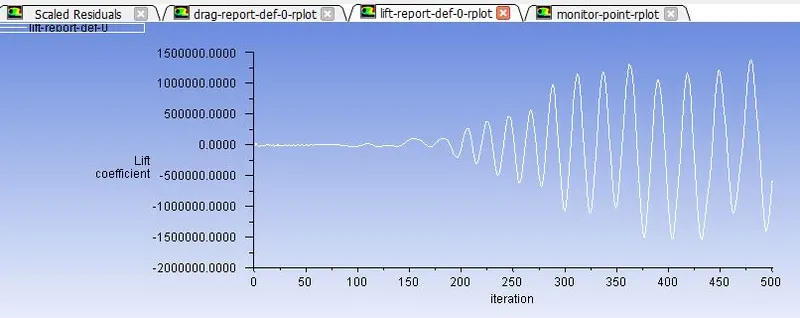
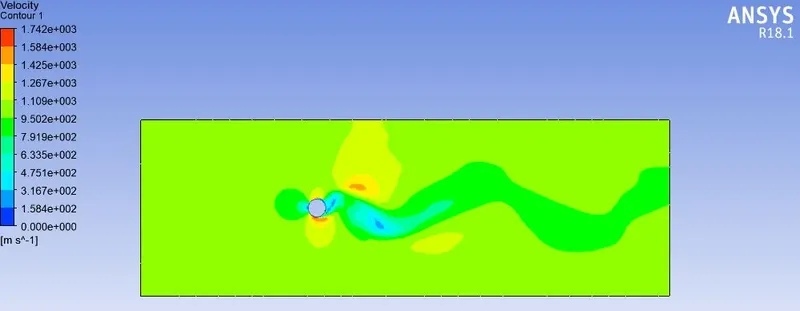
Steady state simulation of reynolds number 10000.
Residual plot
Vertex average
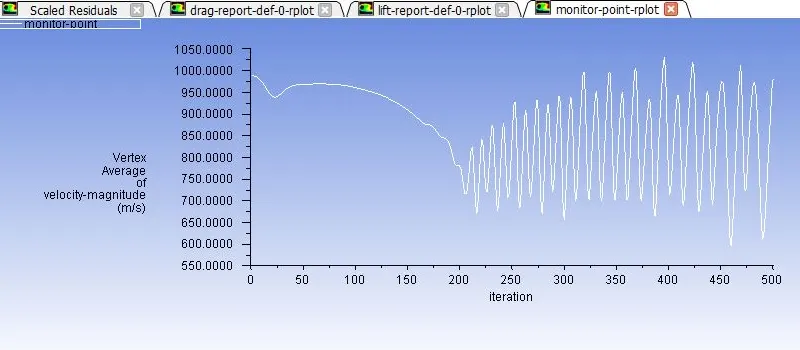
Coefficient of Drag
Coefficient of Lift
Velocity Contour
Pressure Contour
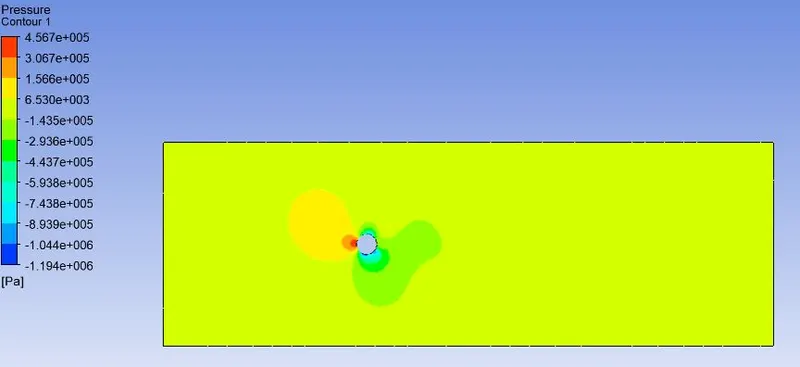
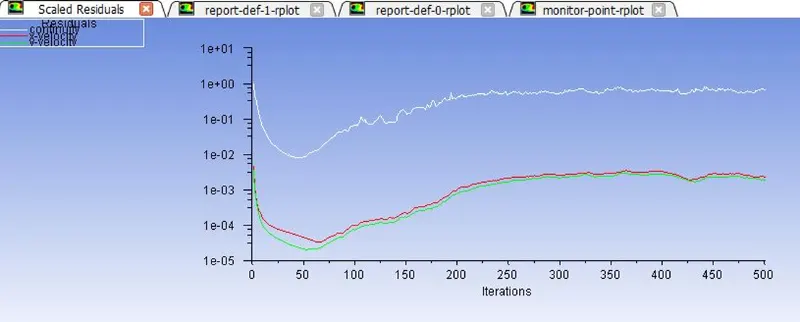
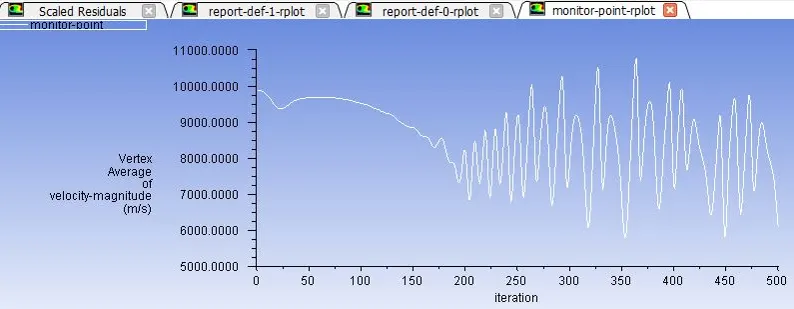
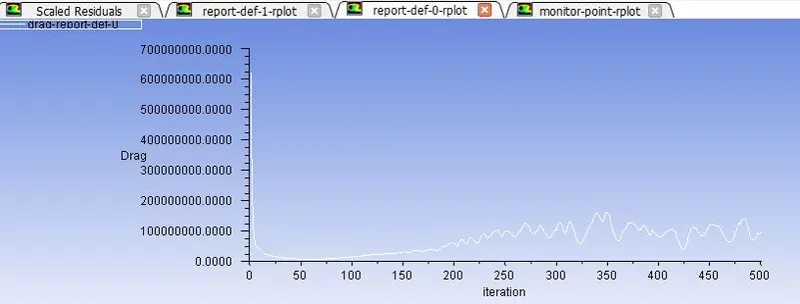
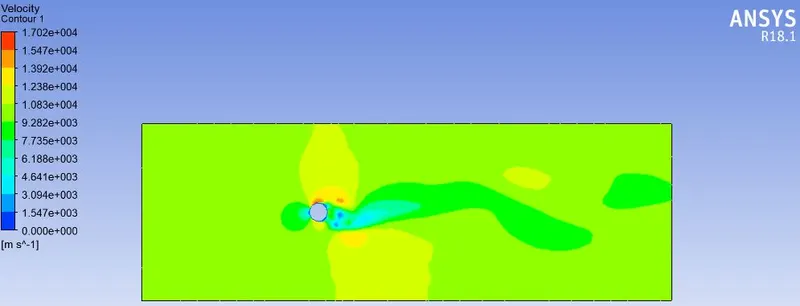
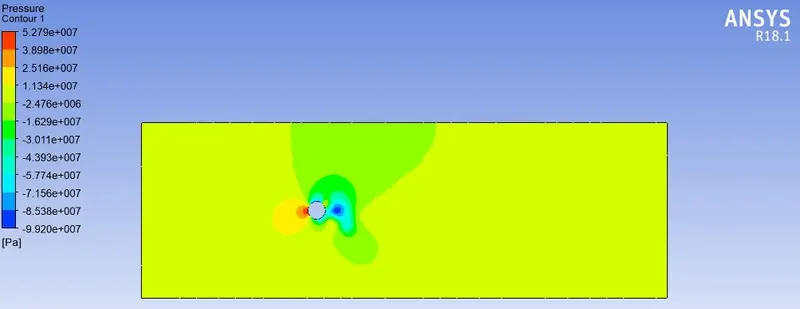
Steady state simulation of reynolds number 100000.
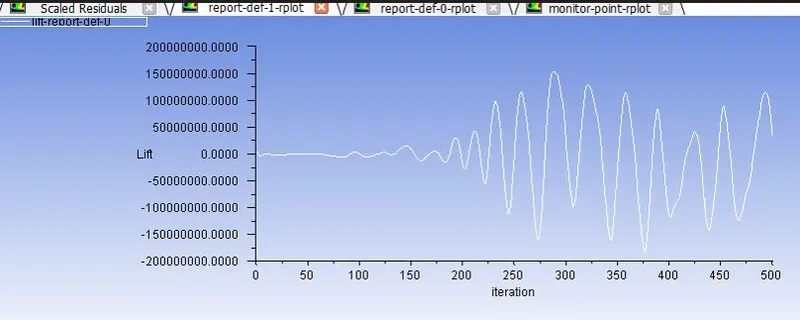
Residual plot
Vertex average
Coefficient of Drag
Coefficient of Lift
Velocity Contour
Pressure Contour
|
Reynolds No |
Coefficient of drag(Cd) |
Coefficient of lift(Cl) |
|
10 |
1.85 |
-0.00384 |
|
100 |
1.02 |
0.048 |
|
1000 |
0.101 |
-0.837 |
|
10000 |
0.901 |
-0.585 |
|
100000 |
0.947 |
0.358 |
Conclusion:
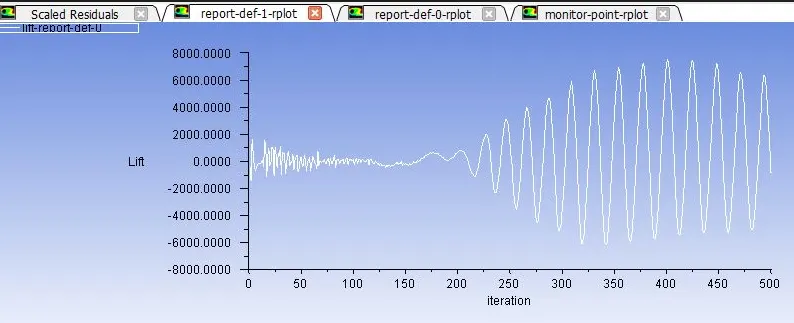
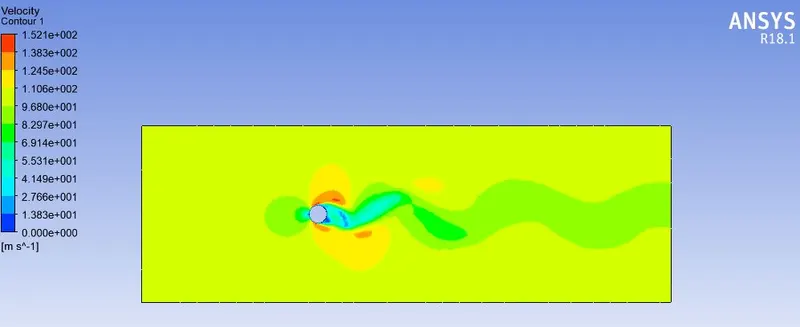
- As the fluid flows over the cylinder, a wake region is formed next to cylinder because of due to decrease in pressure and recirculation of flow occurs and hence flow separation occurs.
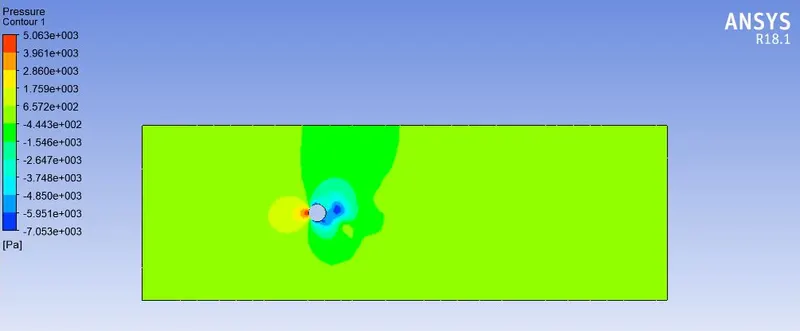
- While simulating the flow around the cylinder for different reynold no (varying the velocity), hence we can see that as the reynolds no increases coefficient of drag keeps on decreases.
- For Re=10, it is observed that there is no formation of vortex shedding and as the reynold no keeps on increases we can see the physics(ie; Vortex shedding)
- As we further refine the mesh we can get more accurate results, here because of due to large computational time only a fine mesh is used.