Week 2 - Flow over a Cylinder.
Aim: is to Simulate the flow over a cylinder and explain the phenomenon of Karman vortex street.
PART-I
- Simulate the flow with the steady and unsteady case and calculate the Strouhal Number for Re= 100.
PART-II
- Calculate the coefficient of drag and lift over a cylinder by setting the Reynolds number to 10,100,1000,10000 & 100000. (Run with steady solver)
- Discuss the effect of Reynolds number on the coefficient of drag. [ Results should be validated with any standard literature and error should be within 5 %]
1) Karman vortex street phenominon:
The vortex street (also, the von Karman vortex street in honor of Theodore von Karman) is the chain of vortices that are observed when a liquid or gas flows over extended cylindrical bodies (or other linearly elongated poorly streamlined profiles) with a longitudinal axis perpendicular to the direction of motion of the continuous medium
Separation of vortices occurs on both sides of the body in turn; after the breakdown, the vortices form two chains behind the body, the direction of rotation of the vortices in one chain is opposite to the direction of rotation in the other.
The phenomenon can only be observed with limited Reynolds (Re) numbers (for example, for cylinders the range extends from 47 to 100000). The dimensions of the track depend on the size of the streamlined body, and there is a linear relationship between the width of the track and the distance between adjacent vortices.
As with any turbulent flow around, the body experiences a drag, which increases with increasing width of the track …
2) Flow over a cylender
- Flow over a cylinder is important in many industrial application like cooling of iron or cylindrical pipe
- Circular pipes have more application in heat exchanger. High temperature flue gases flow over a circular cylinder in a cross flow.
- Depending on flow rate, fluid properties and size of cylinder, the flow can be laminar, transition and turbulent
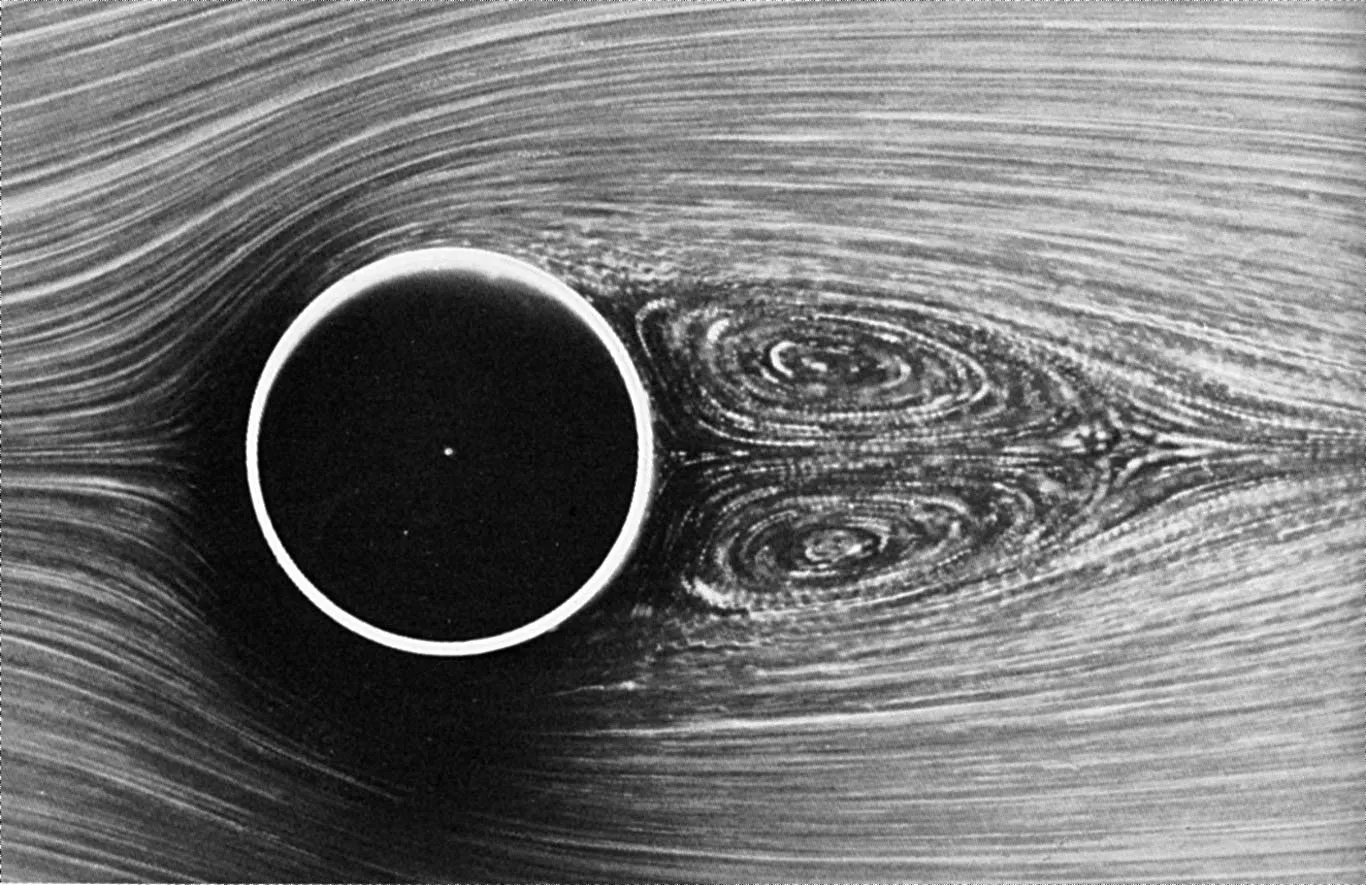
- Larger vortexes are found at lower Reynolds number.
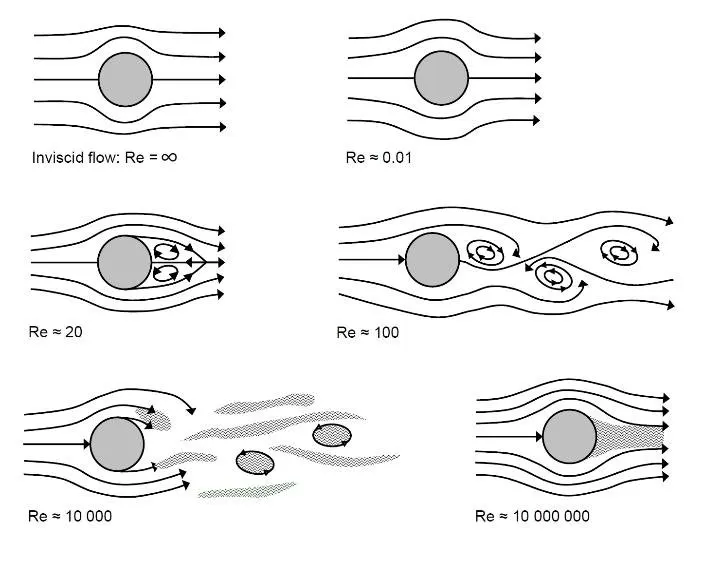
3)
PART-I
- Simulate the flow with the steady for re=100.
steps invalving in simulation are
- geometry
- meshing
- setup
- solution
- resulth
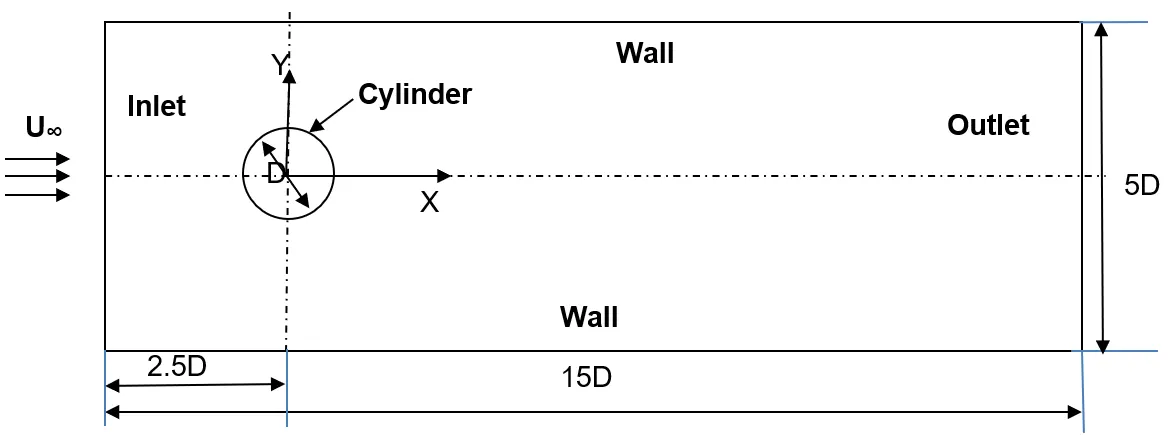
1) geometry; we have to creat the geometry as shown below in ansys space
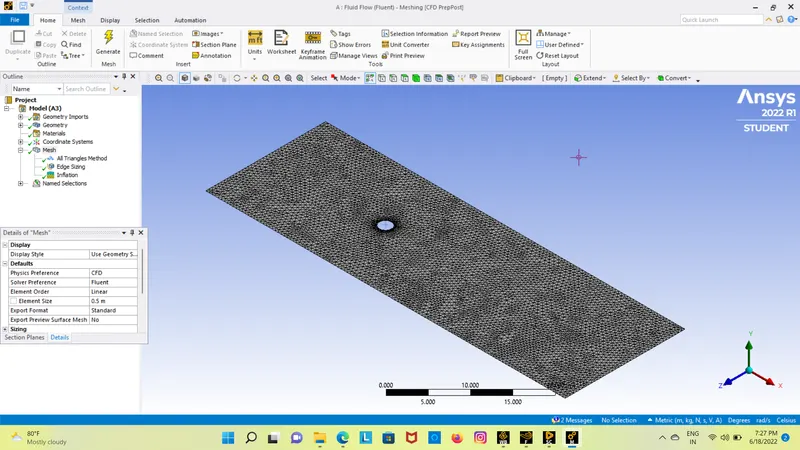
2) meshing:
3) setup:
- first we have to set up the domain
- physics: 1) generals: we have to set our solver to presure base and after that we have to set time to stedy based
2) after that we have to create our user material
3) boundry condition: inlet velocity is 2.5m/s
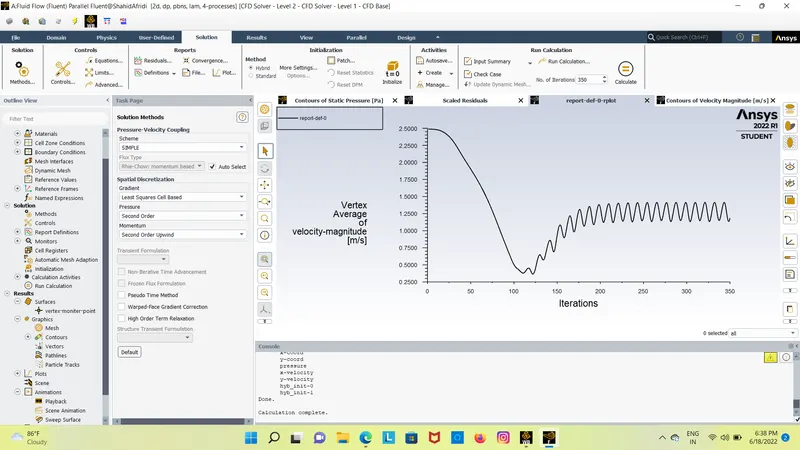
- solution: here we have to set up the definetion for verytex avarege and also for lift and drag coefficents
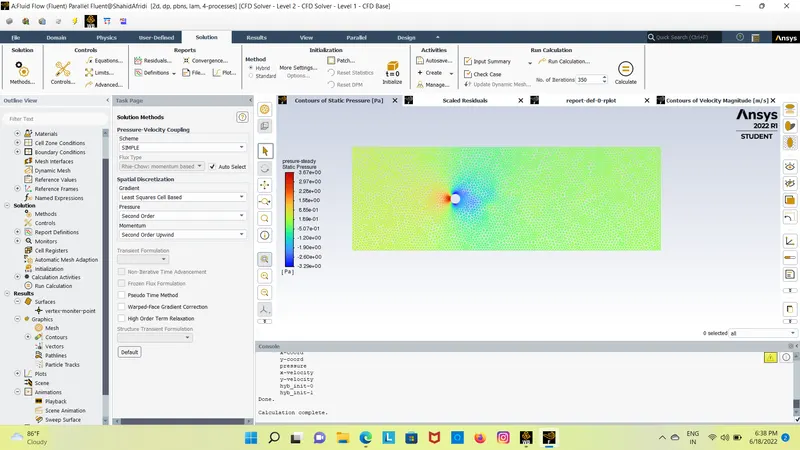
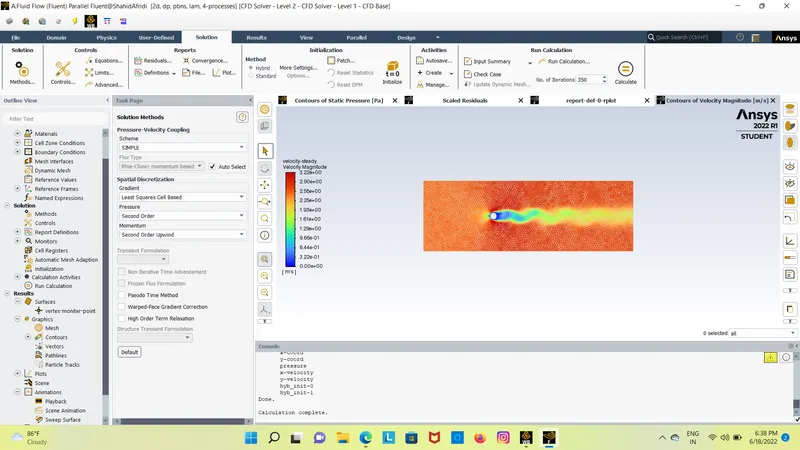
- result: here we have to set up the contours for velocity and presure
4)solution and result:
for presure:
for velocity:
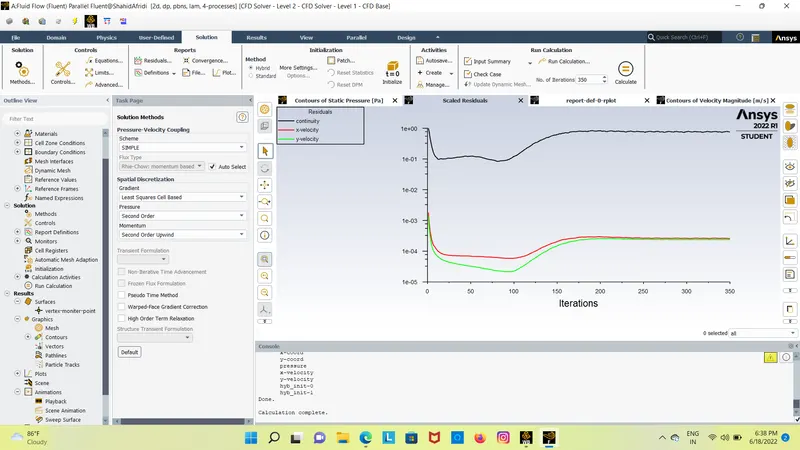
for residuals:
averege vertex report:
- Simulate the flow with the unsteady for re=100.
steps invalving in simulation are
- geometry
- meshing
- setup
- solution
- resulth
1) geometry; same as above
2) meshing: same as above
3) setup:
- first we have to set up the domain
- physics: 1) generals: we have to set our solver to presure base and after that we have to set time to unsteady based
2) after that we have to create our user material
3) boundry condition: inlet velocity is 2.5m/s
- solution: here we have to set up the definetion for verytex avarege and also for lift and drag coefficents
- result: here we have to set up the contours for velocity and presure
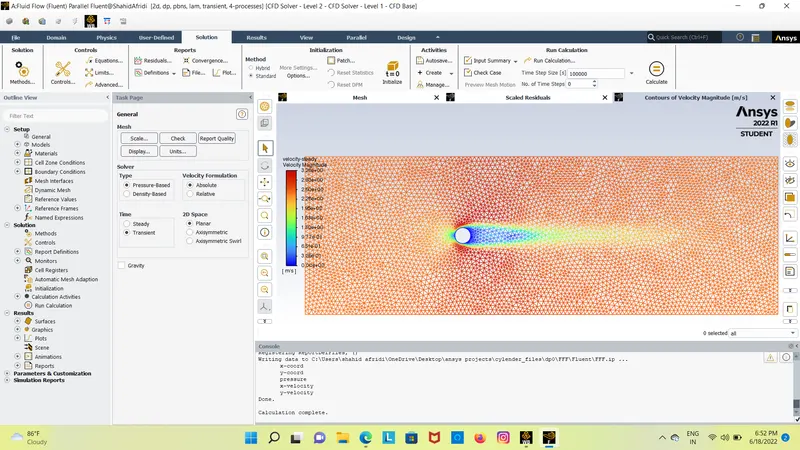
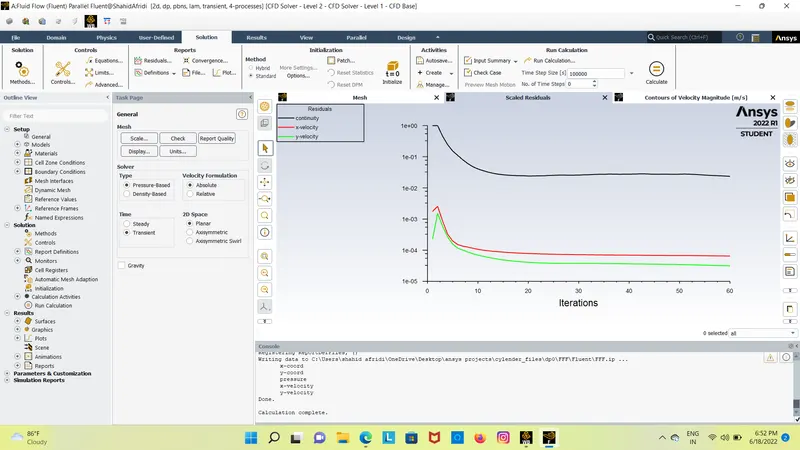
4)solution and result:
for presure:
for residulas :
PART-II
- Calculate the coefficient of drag and lift over a cylinder by setting the Reynolds number to 10,100,1000,10000 & 100000. (Run with steady solver)
calculating for
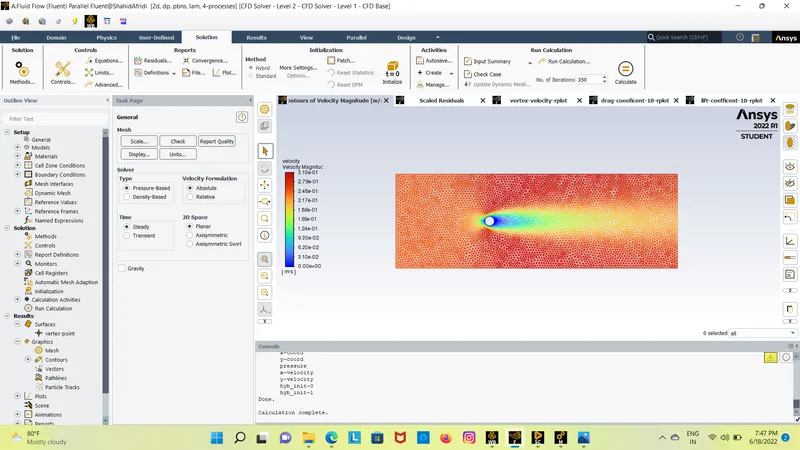
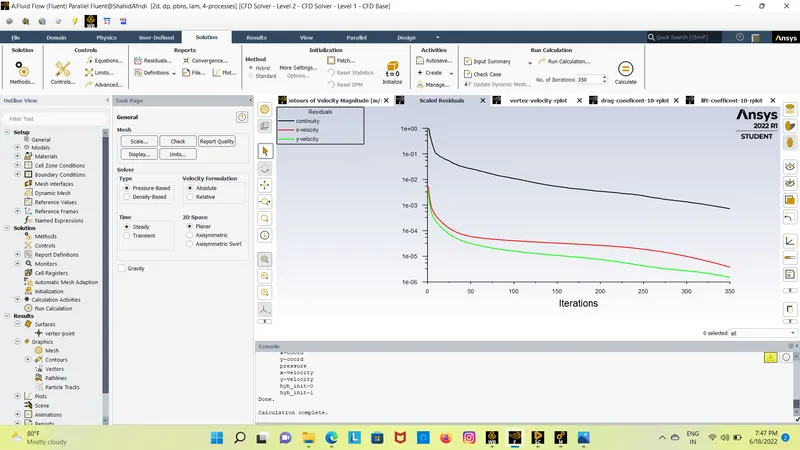
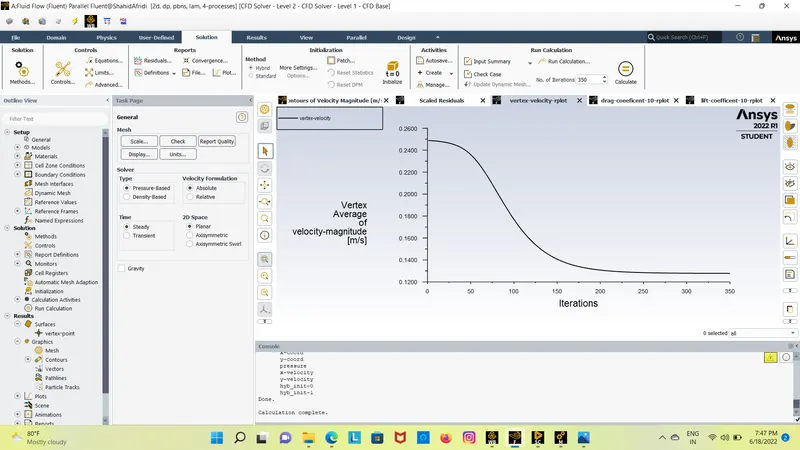
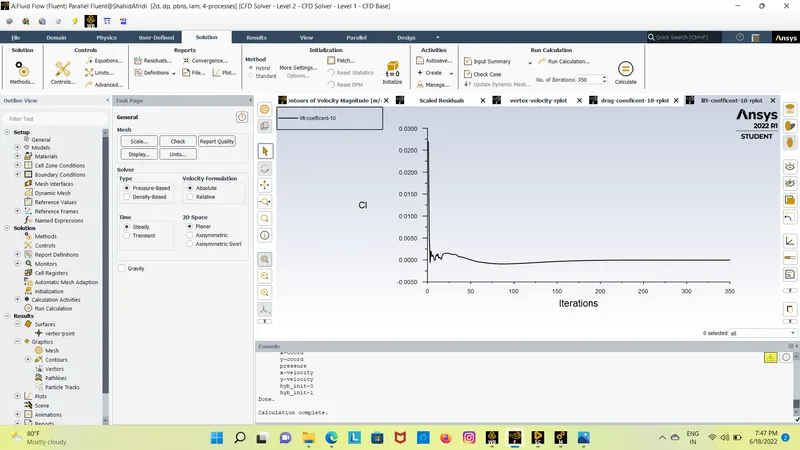
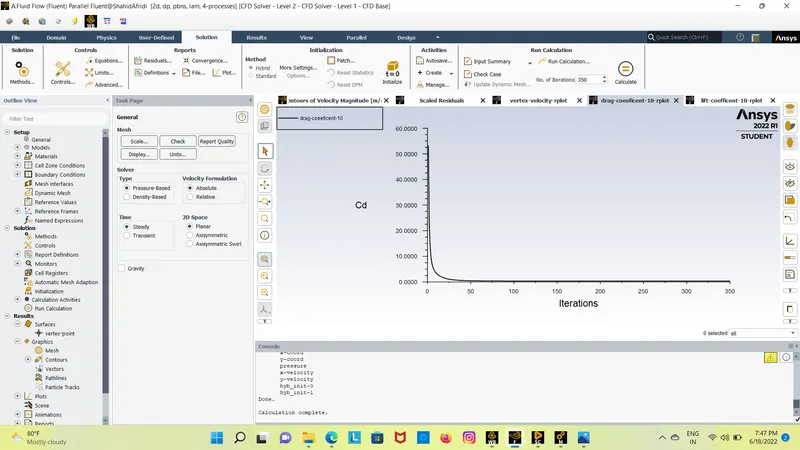
- re=10
- velocity=0.25
for velocity:
for residulas:
for vertex velocity:
lift coefficent:
drag coefficents:
calculating for
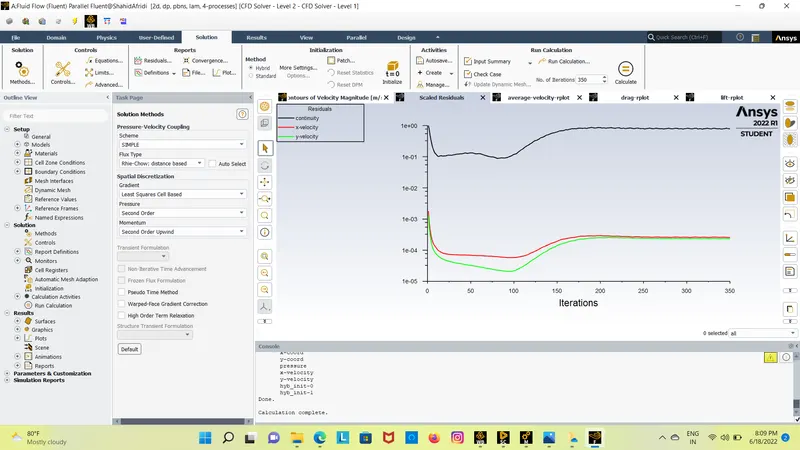
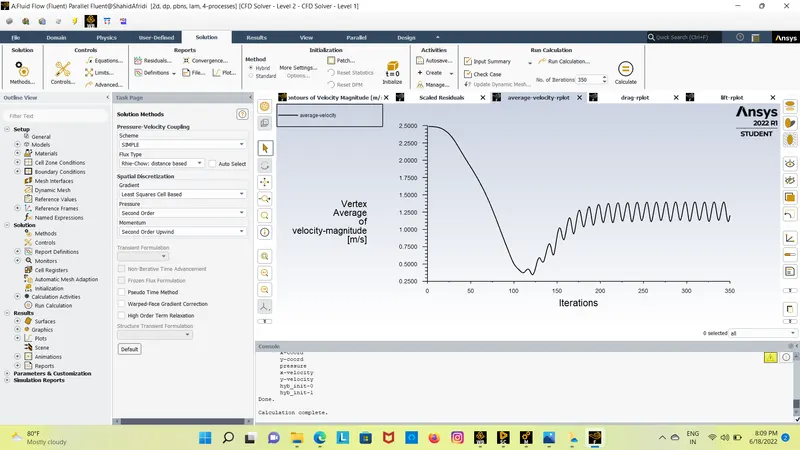
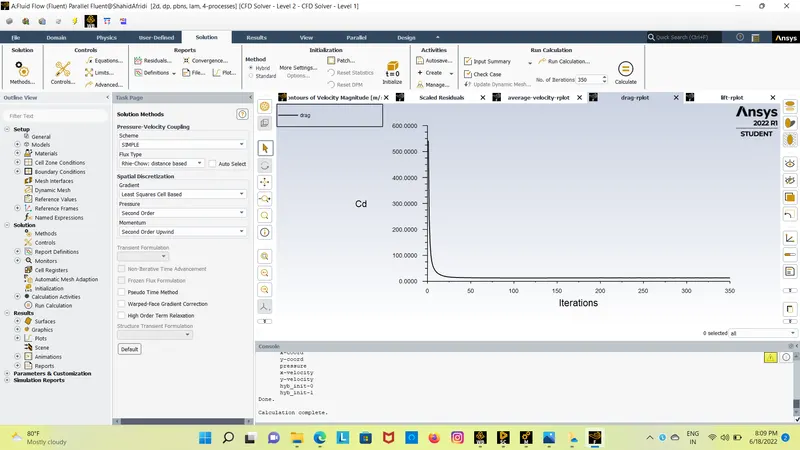
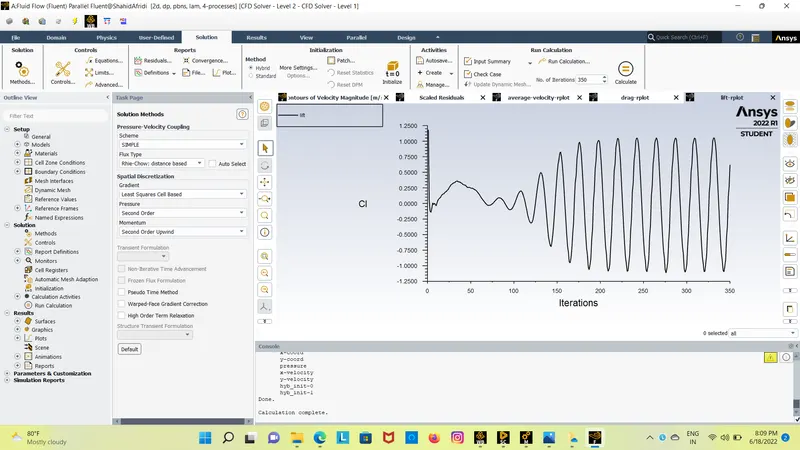
- re=100
- velocity=2.5
for velocity:
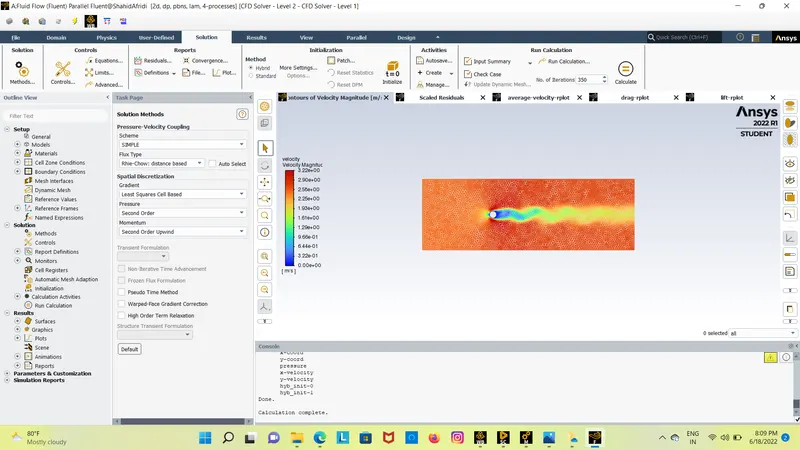
for residuals
for vrlocity at vertex
drag
lift
calculating for
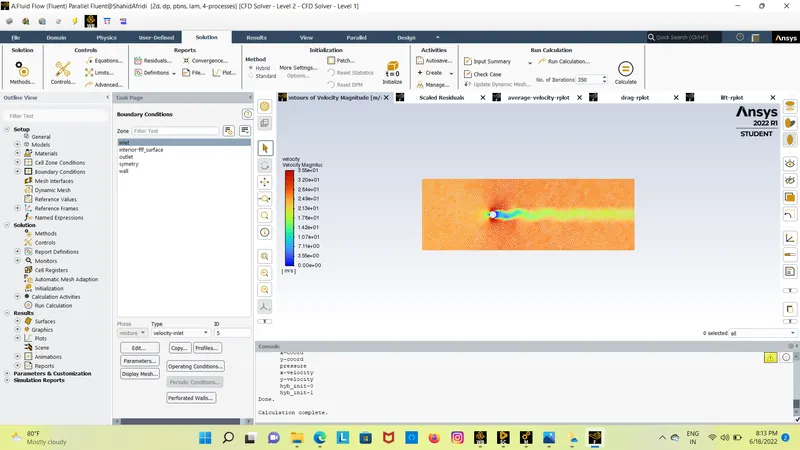
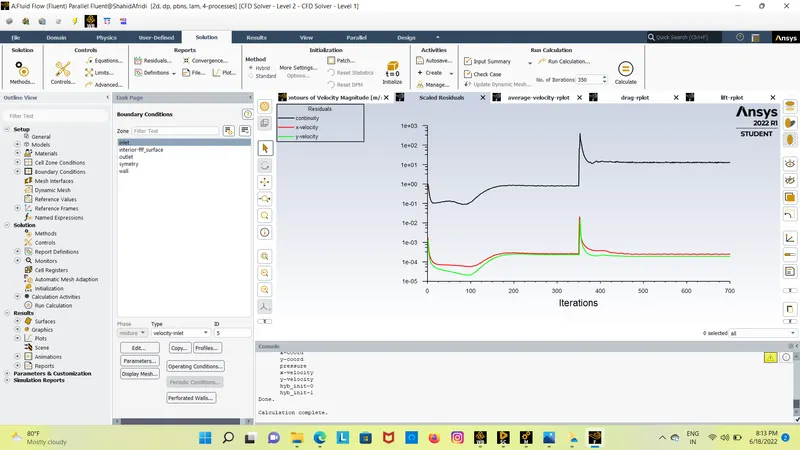
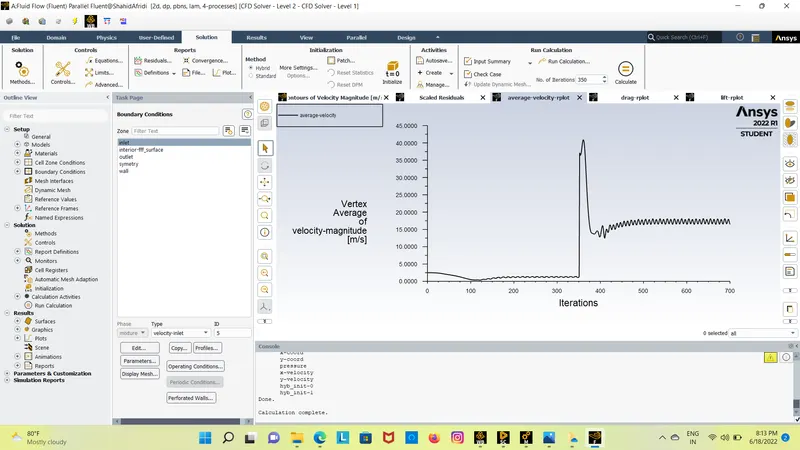
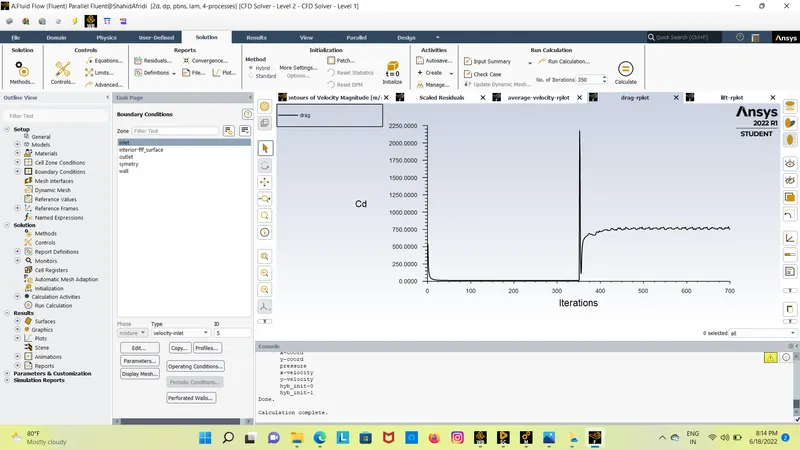
- re=1000
- velocity=25
velocity
residual
vertex velocity
drag
lift
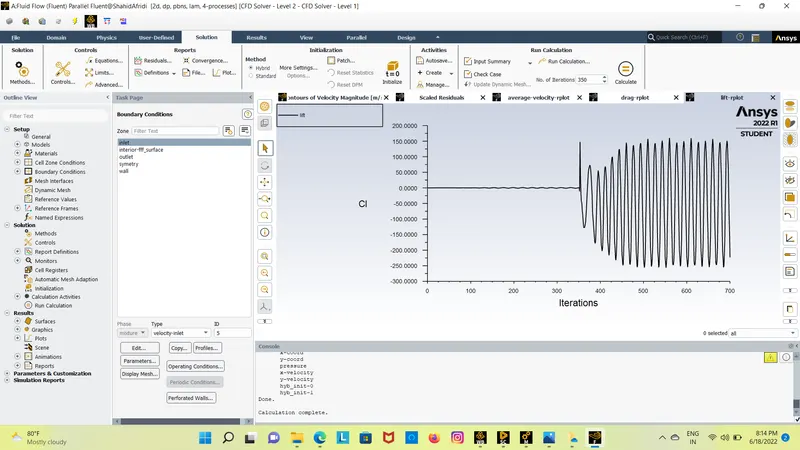
calculating for
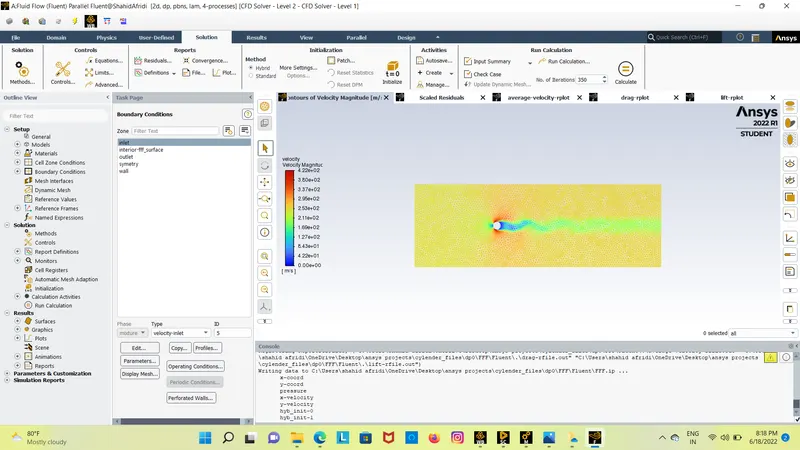
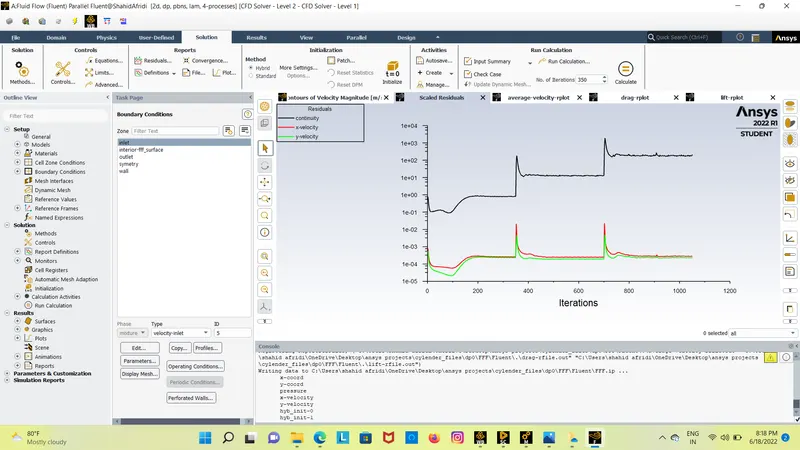
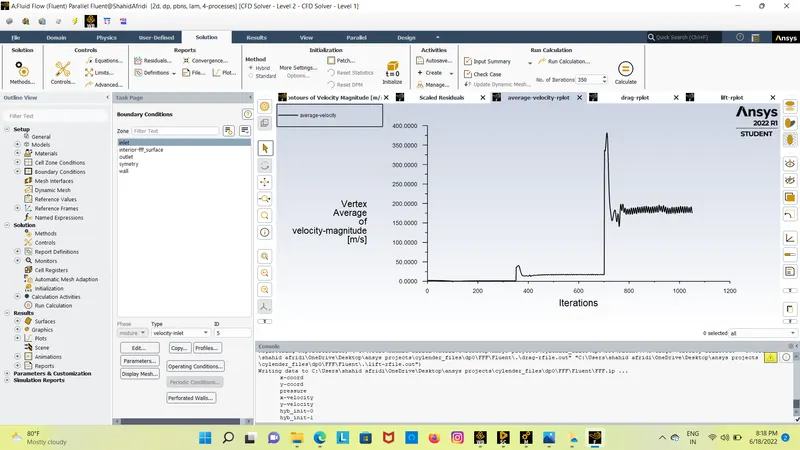
- re=10000
- velocity=250
velocity
residuals:
vertex velocity
drag
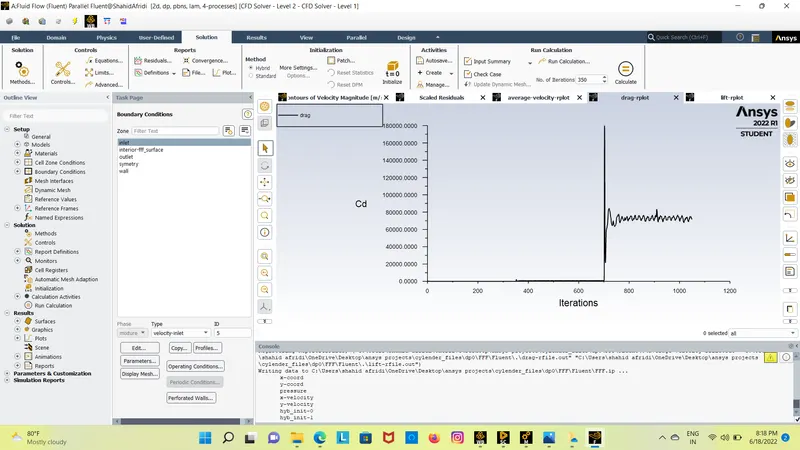
lift
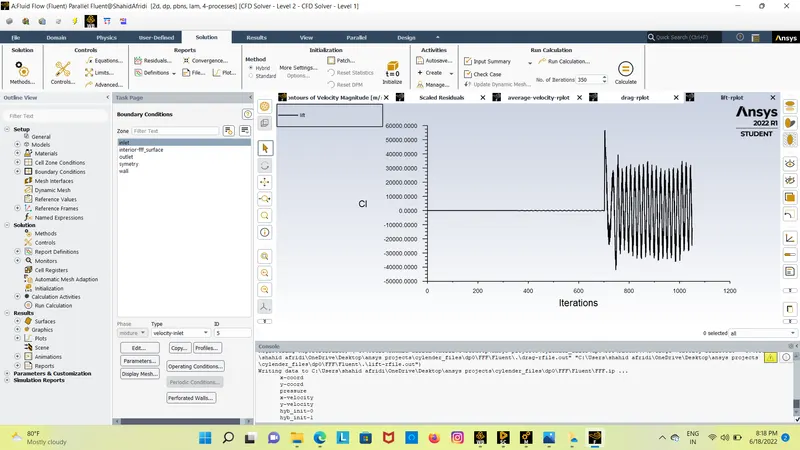
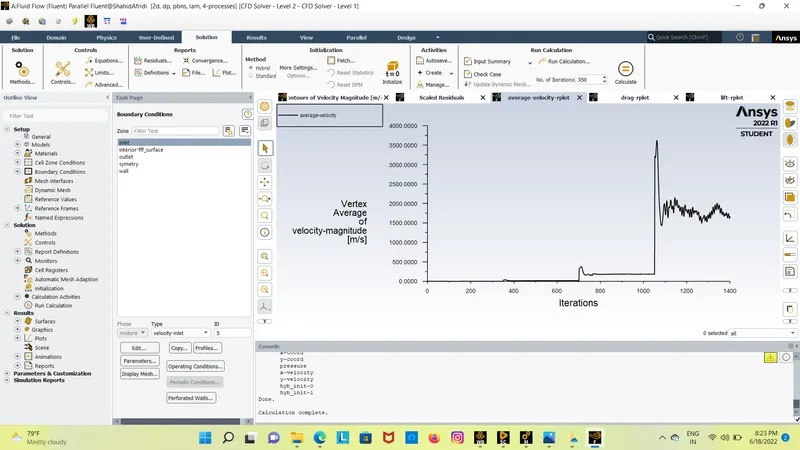
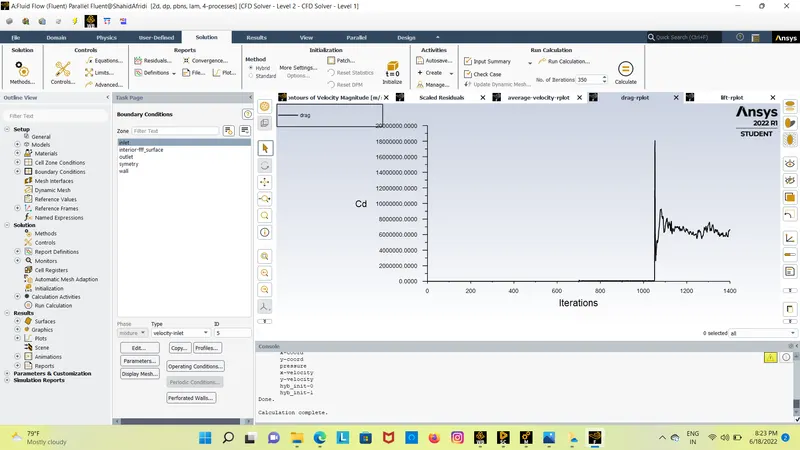
calculating for
- re=100000
- velocity=2500
velocity:
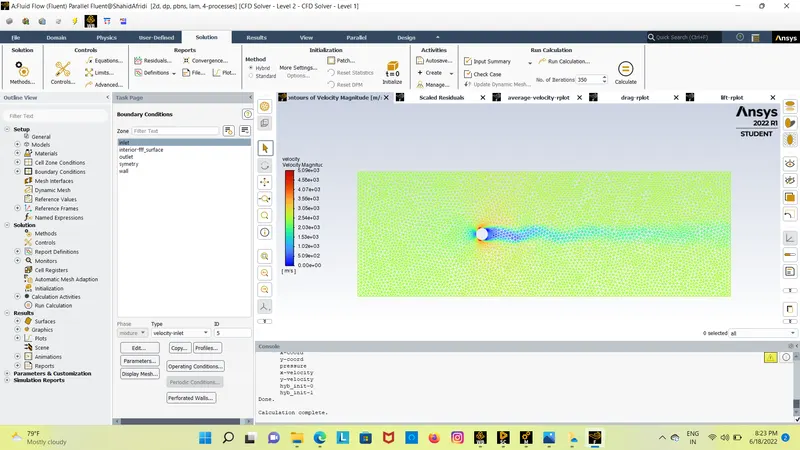
residuals
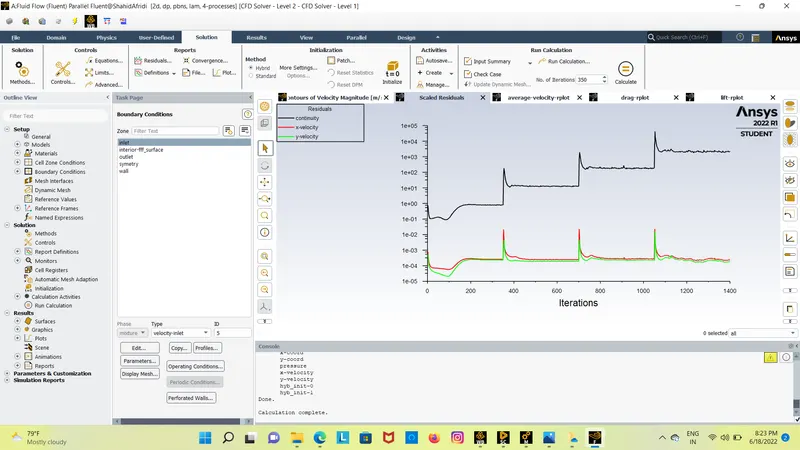
vertyex velocity
drag
lift
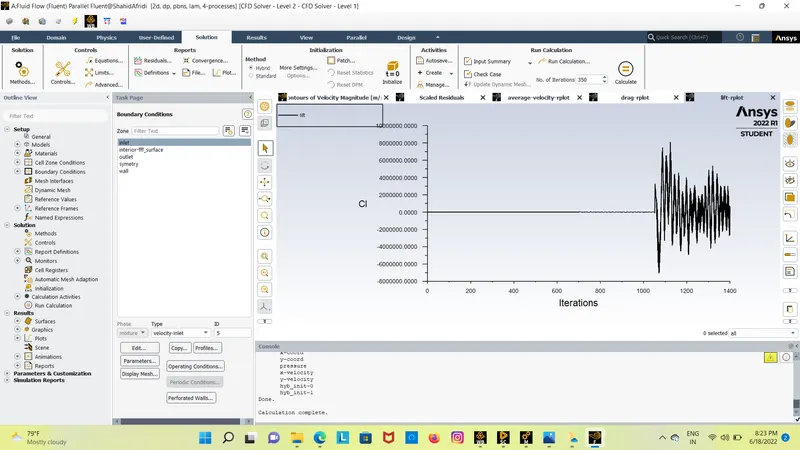
Discuss the effect of Reynolds number on the coefficient of drag.
as we increse the renaults number the coefficent of the drag is also increases