Week 2 - Flow over a Cylinder.
Aim - Simulate the flow over a cylinder and explain the phenomenon of Karman vortex street.
Introduction –
Vortex shedding – Vortex shedding is an oscillating flow that takes place when a fluid such as air or water flows past a body at certain velocities, depending on the size and shape of the body.
Strouhal Number-
The Strouhal numberis a dimensionless number describing oscillating flow mechanisms.
The Strouhal number is often given as
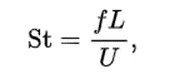
where f is the frequency of vortex shedding, L is the characteristic length and U is the flow velocity
Coefficient of Drag -
The drag coefficient is a dimensionless quantity that is used to quantify the drag or resistance of an object in a fluid environment, such as air or water.
The drag coefficient is defined as –
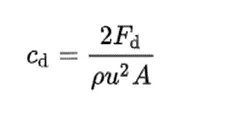
where:
Fd - is the drag force, which is by definition the force component in the direction of the flow velocity
Rho - is the mass density of the fluid
U - is the flow speed of the object relative to the fluid
A - is the reference area
Coefficient of Lift –
The lift coefficient (CL) is a dimensionless coefficient that relates the lift generated by a lifting body to the fluid density around the body, the fluid velocity and an associated reference area.
Procedure –
Geometry –
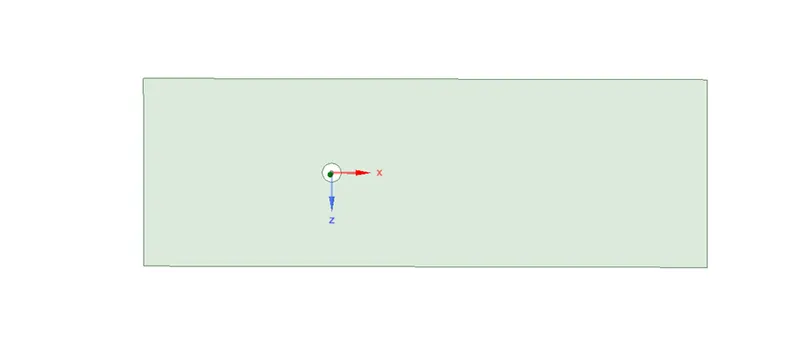
Create a geometry as mentioned in vedio in space claim.
Mesh –
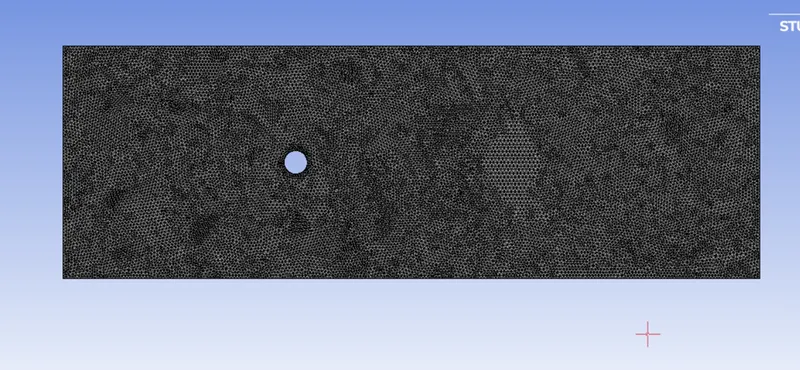
- The the edges and define the inlet , outlet and walls.
- Generate the mesh of size 0.25m
- Select the triangular mesh .
- To capture result near cylinder wall- Increase no of layer to 6 (In inflation option ).
Setup
Solver Type - Pressure based
velocity formation – Absolute
Time – Case1 - Steady
Case2 – Transient
Model – Laminar
Material – User defined
Density – 1 kg/m^3 Viscosity - 0.02 kg/m-s
Boundary Condition -
Inlet velocity – 1 m/s
Outlet – Type – Pressure outlet
Wall – No slip
Definition –Velocity Plot, Coefficient of drag and lift plot .
Initialization – Hybrid
Case 1 - Steady state
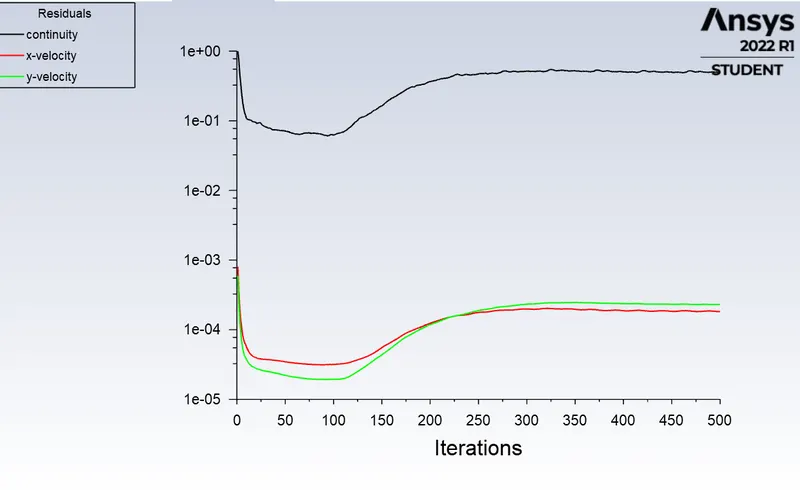
No of iteration – 500
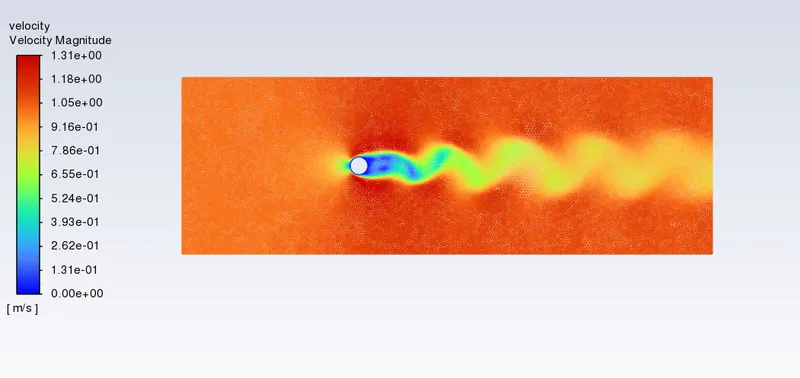
Velocity contour
Residual plot
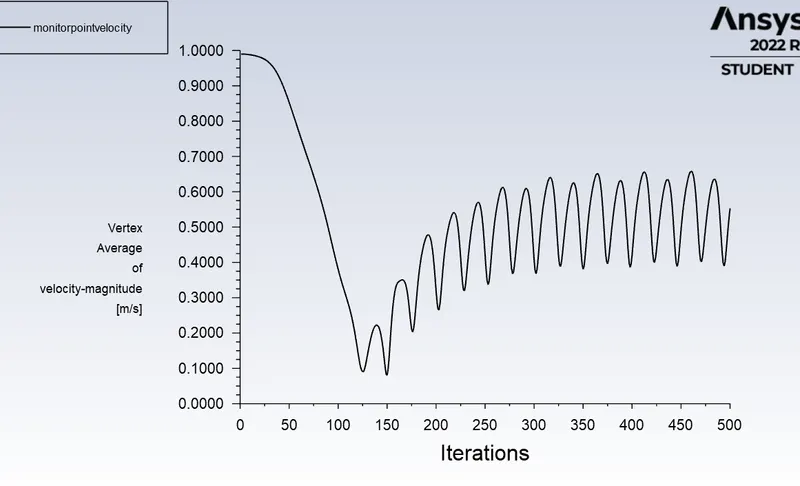
Velocity magnitude plot
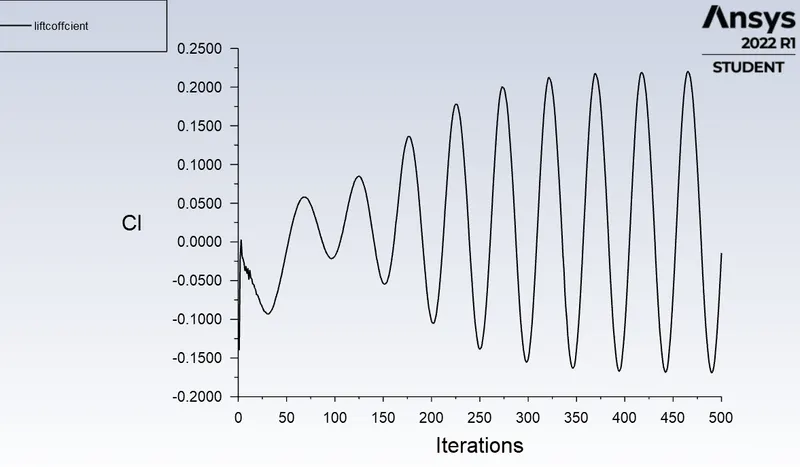
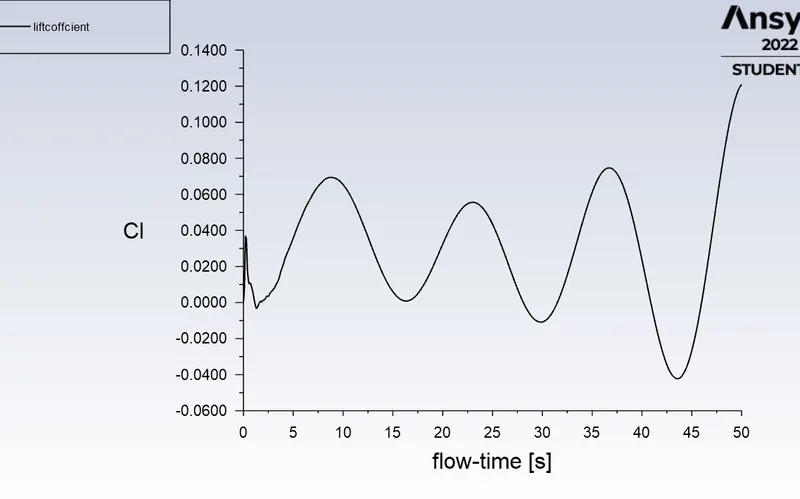
Coefficient of lift plot
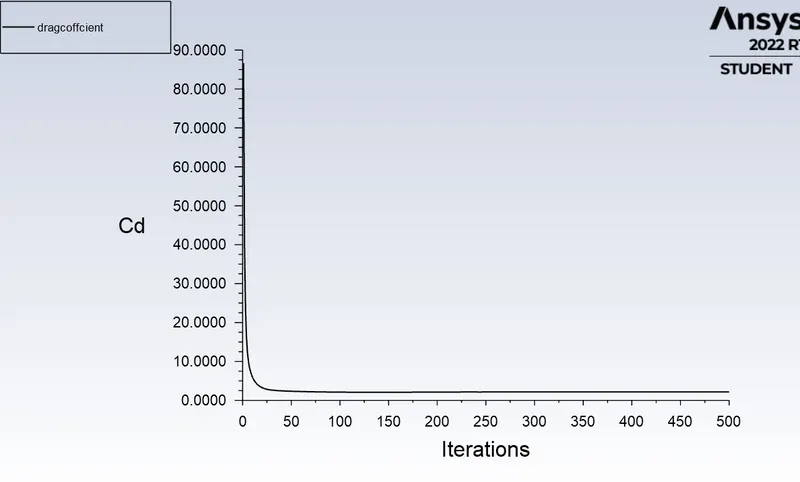
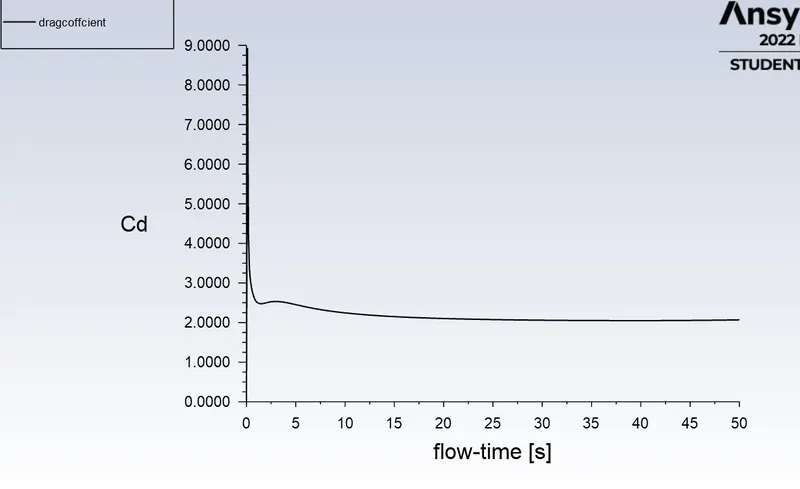
Coefficient of drag plot
Case 2 - Transient state
Time step size – 0.1
No of time step - 500
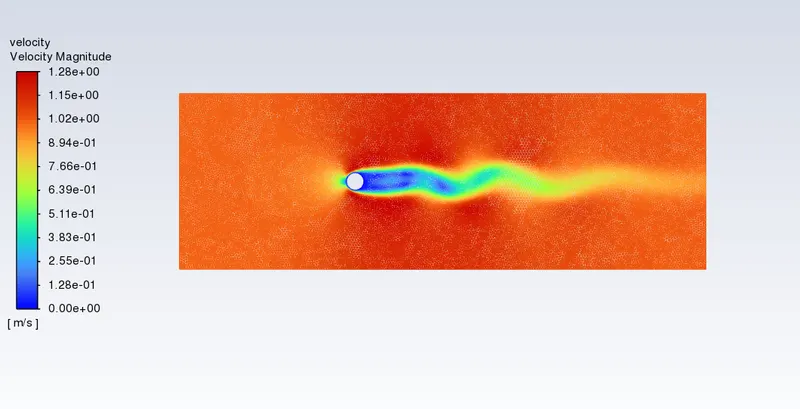
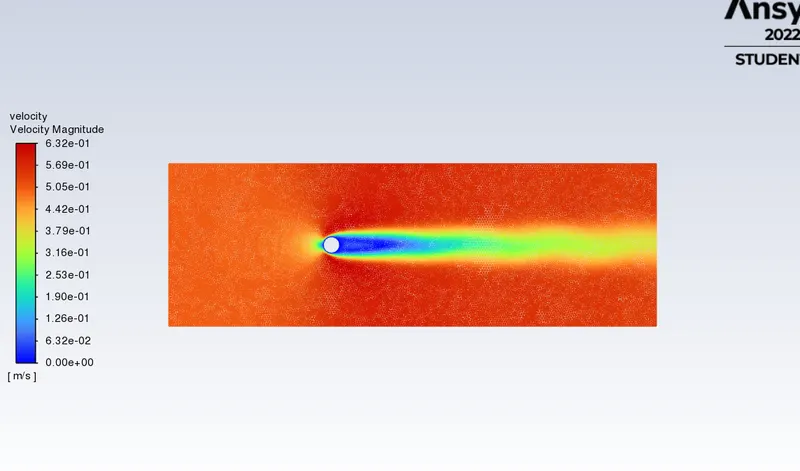
Velocity contour
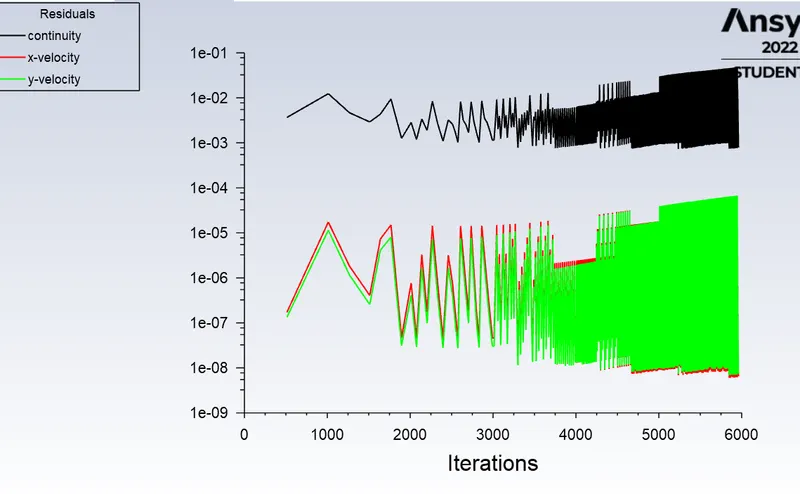
Residual plot
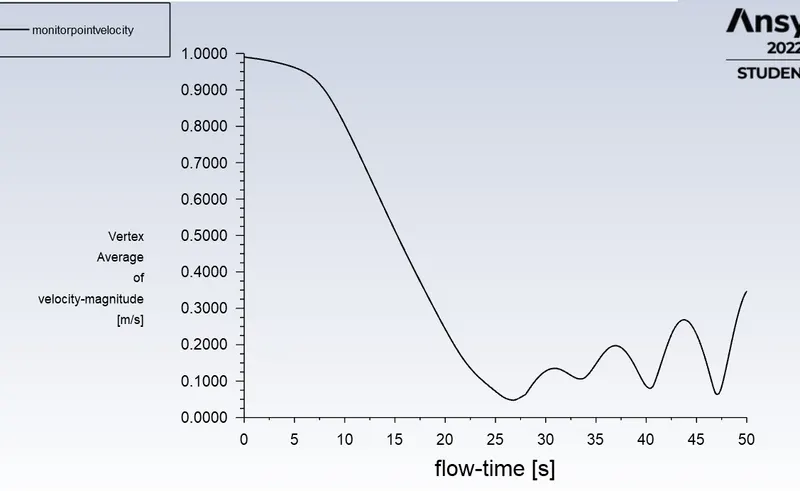
Velocity magnitude plot
Coefficient of lift plot
Coefficient of drag plot
Trasient Flow -
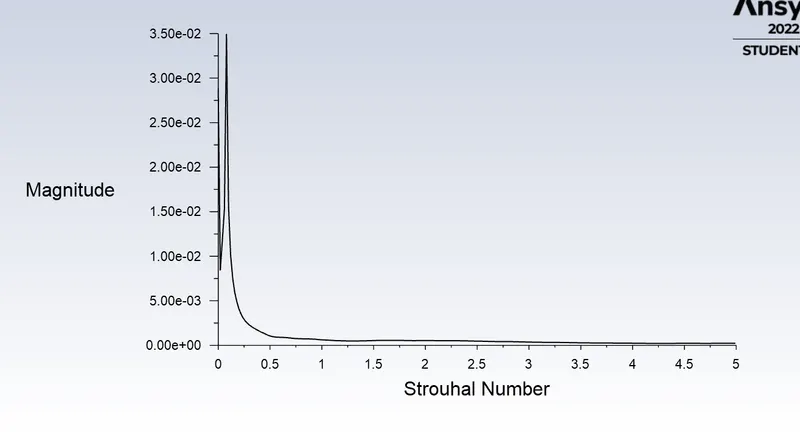
Stroual number for transient simulationn is - 0.035.
Observation -
It is noticed that for vortex shedding problem the transient solver gives the better results as it account the time for govering equation during convergence process.
The plot for drag coffcient, Coffcient of lift, vortex shedding contour graph are showned above for converged solution.
Case 2 - Calculate the coefficient of drag and lift over a cylinder by setting the Reynolds number to 10,100,1000,10000 & 100000.
1. Reynolds no - 10
Solver - steady state
Velocity - 0.5 m /s
Velocity contour
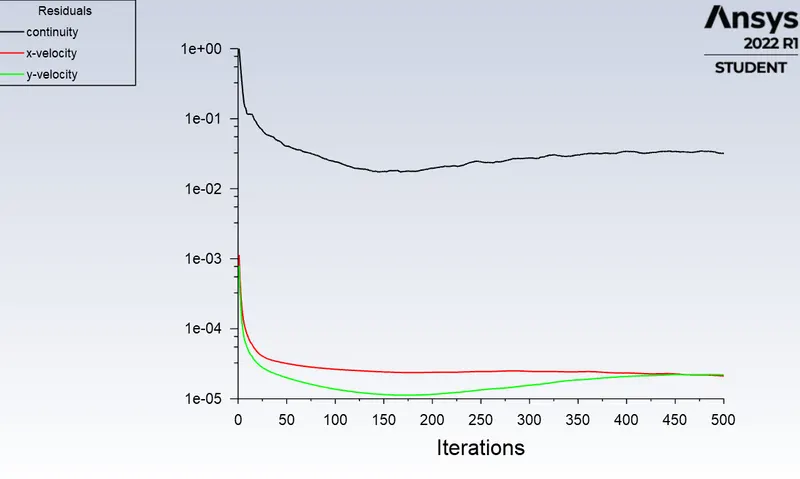
Residual plot
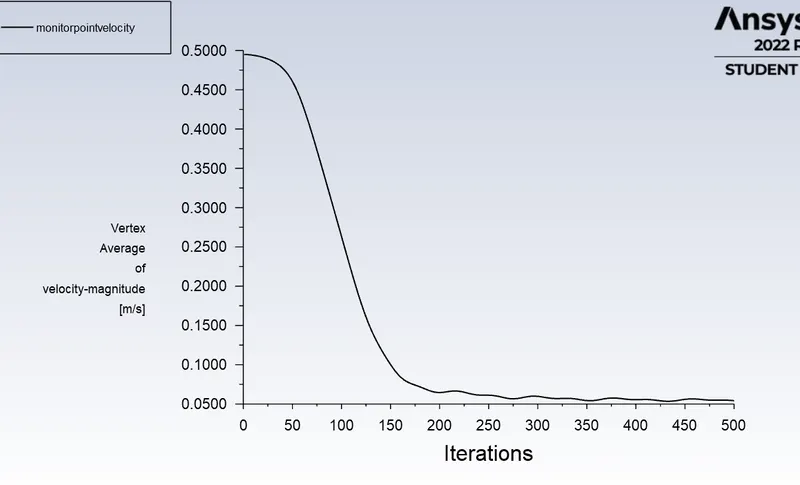
Velocity magnitude plot
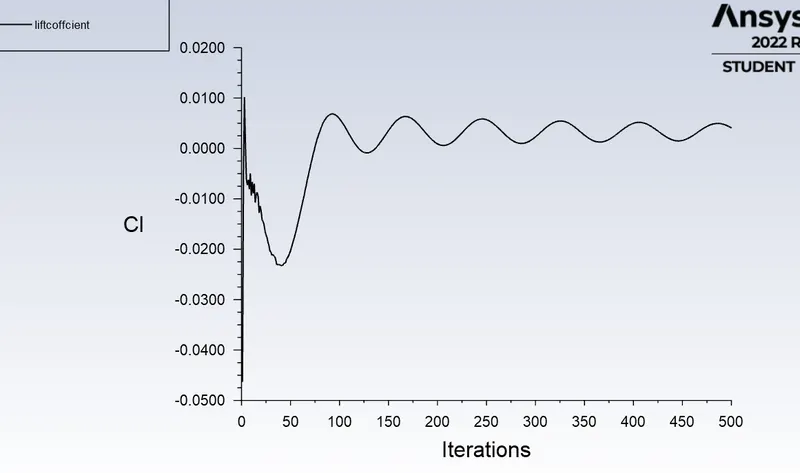
Coefficient of lift plot
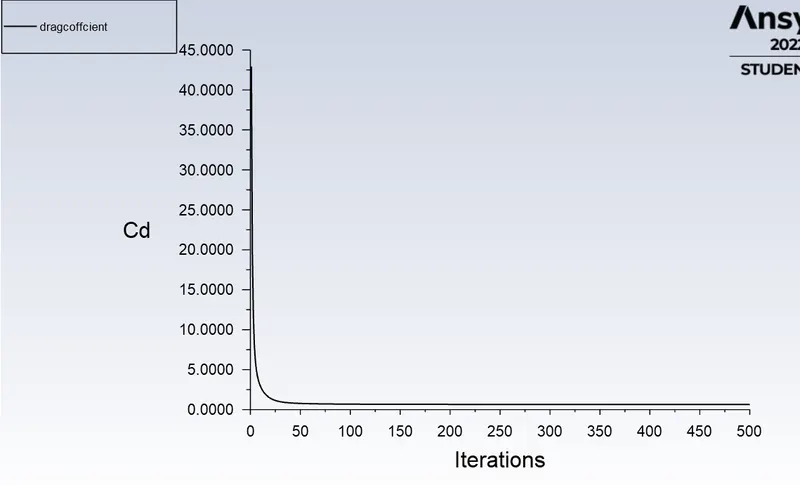
Coefficient of drag plot
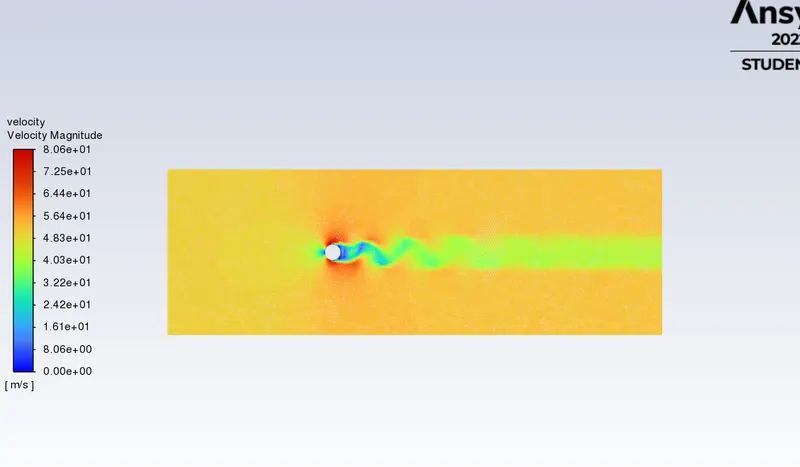
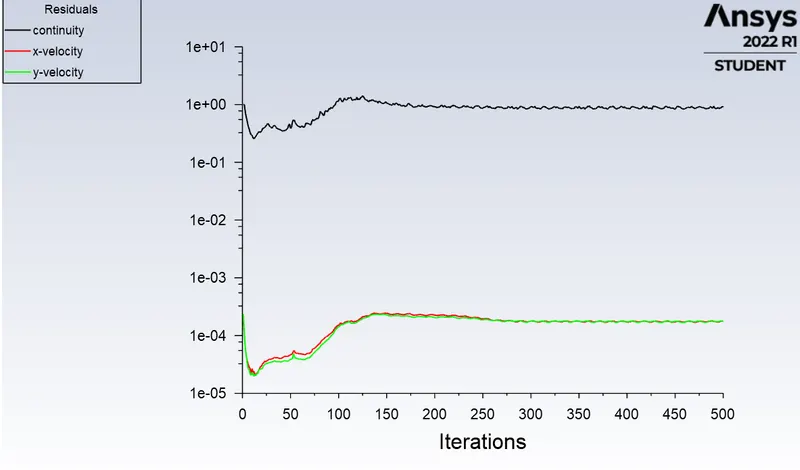
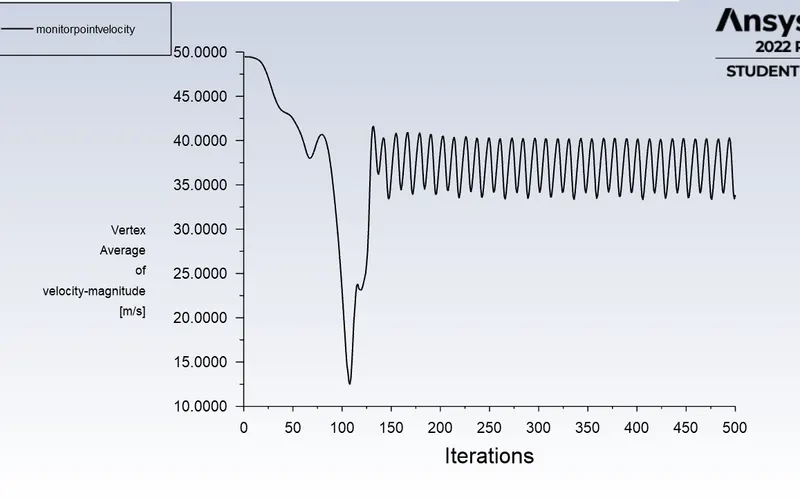
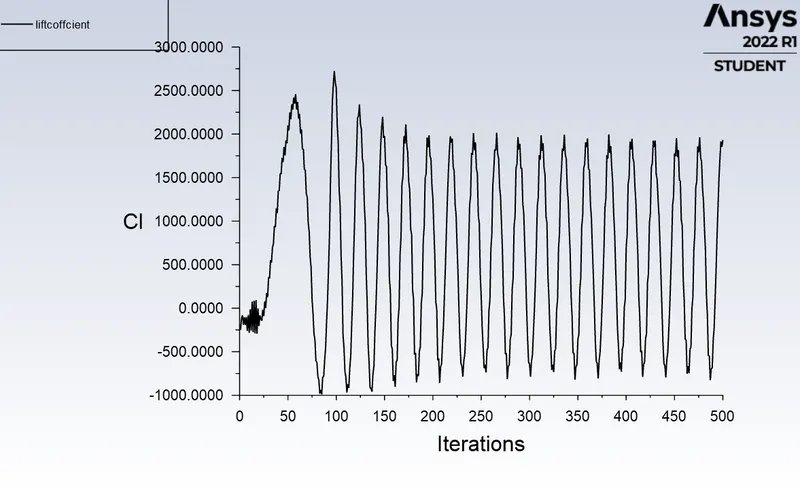
3. Reynolds no - 1000
Solver - steady state
Velocity - 50 m /s
Velocity contour
Residual plot
Velocity magnitude plot
Coefficient of lift plot
Coefficient of drag plot
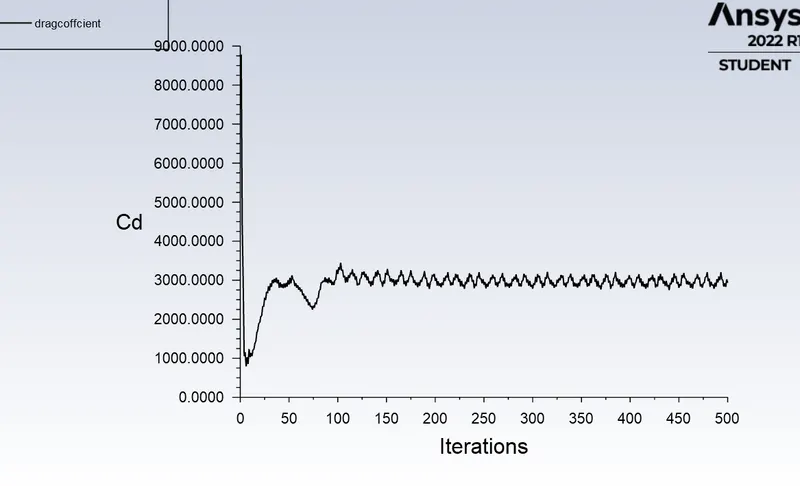
4.
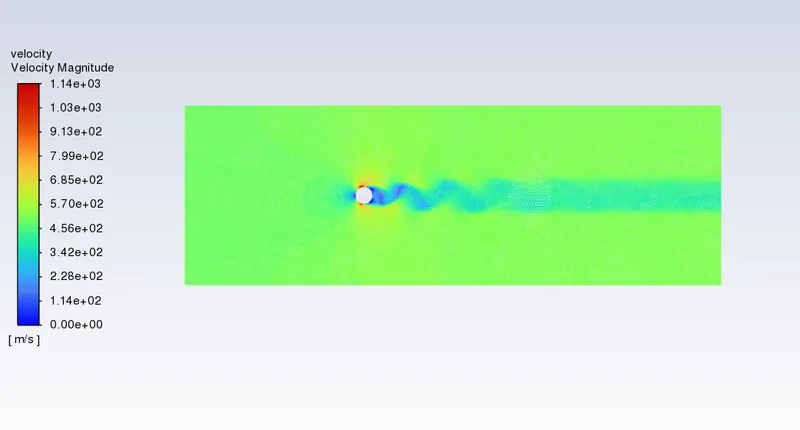
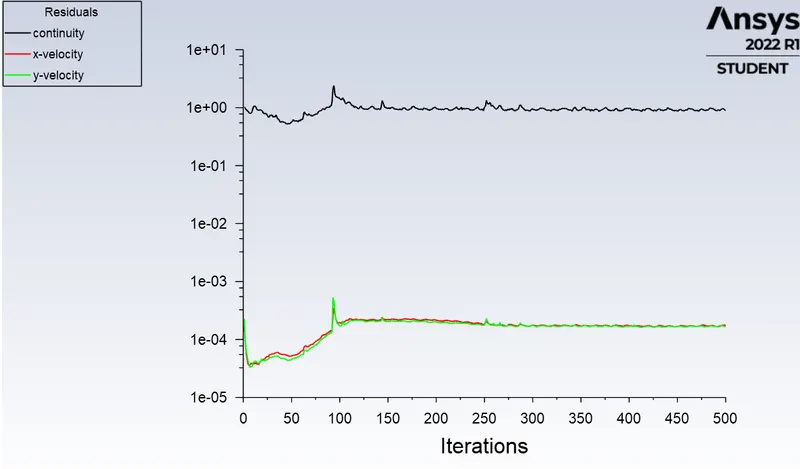
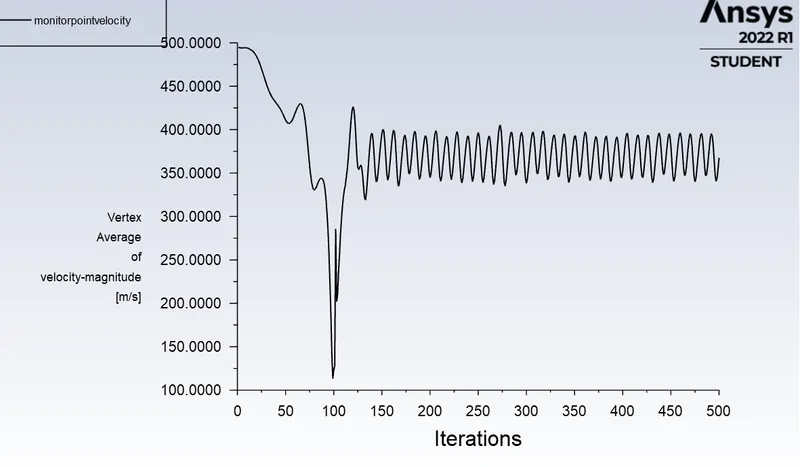
Reynolds no - 10000
Solver - steady state
Velocity - 500 m /s
Velocity contour
Residual plot
Velocity magnitude plot
Coefficient of lift plot
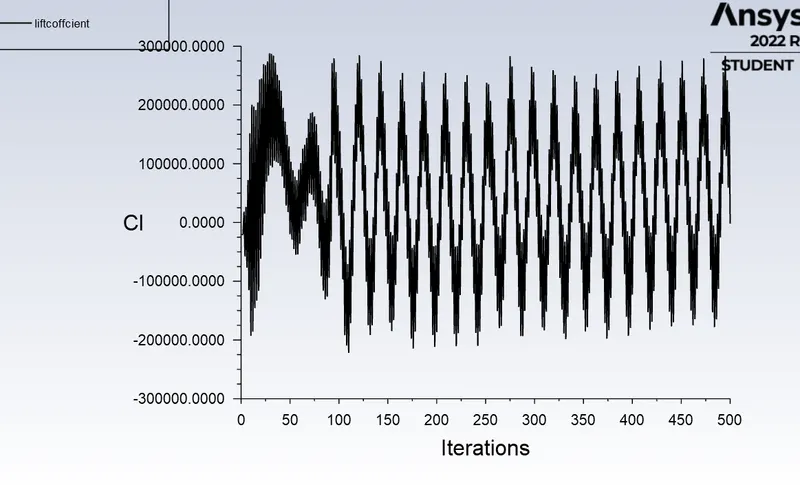
Coefficient of drag plot
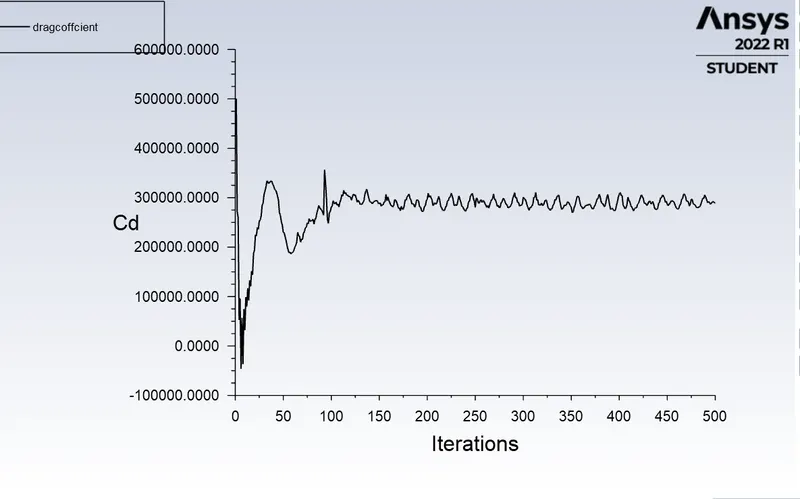
5.
Reynolds no - 100000
Solver - steady state
Velocity - 5000 m /s
Velocity contour
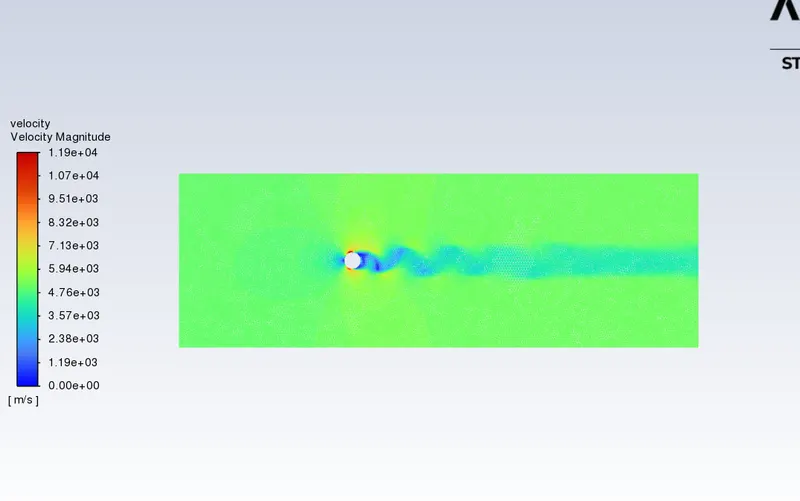
Residual plot
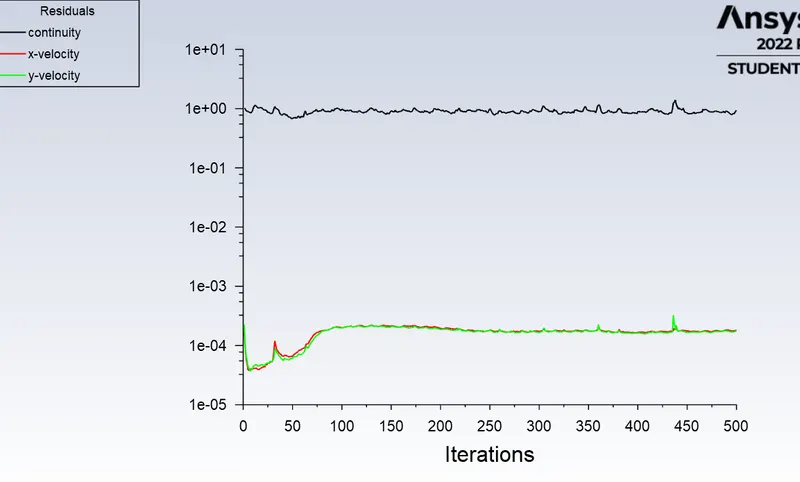
Velocity magnitude plot
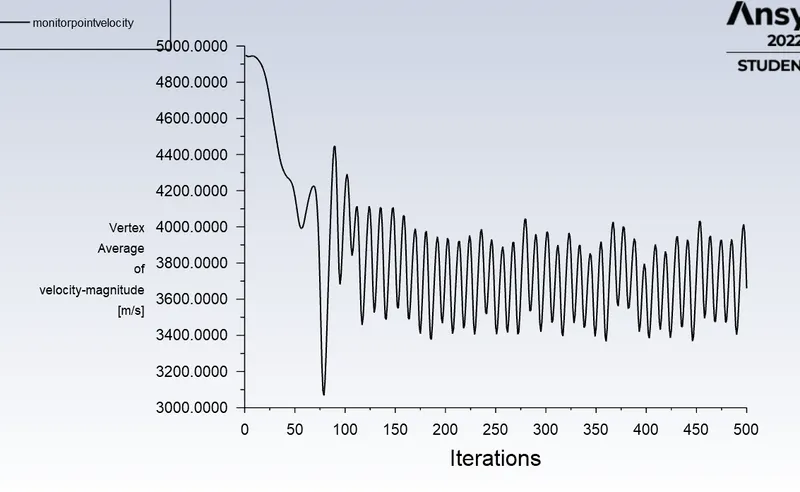
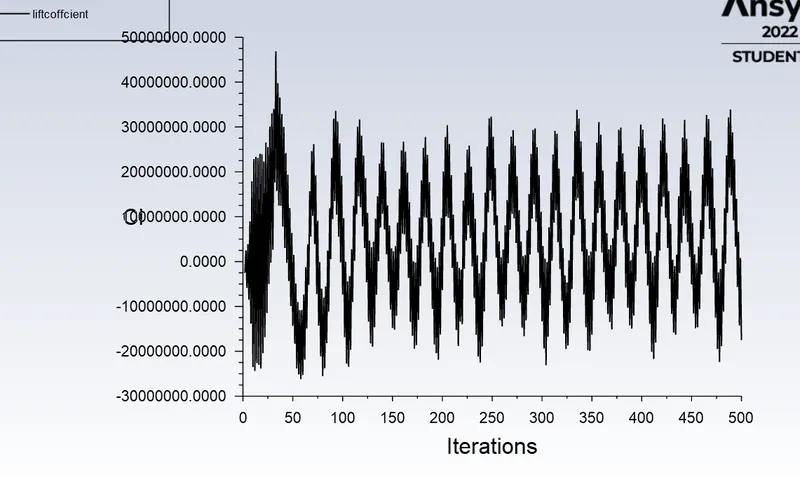
Coefficient of lift plot
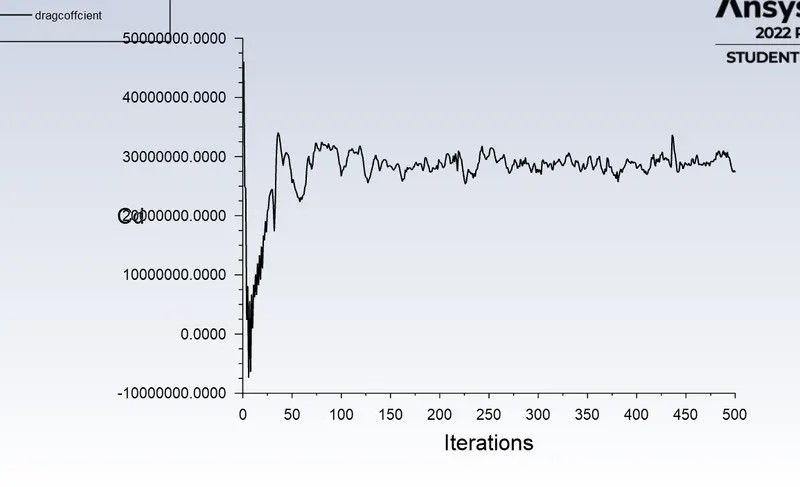
Coefficient of drag plot
Observation -
Reynolds no CD CL
10 3.31007142 0.000802147
100 1.33415145 -0.06857415
100 (Transient) 1.34674911 -0.06857415
1000 0.68561479 - 0.07125489
10000 0.76987484 0.24741586
100000 0.86347891 0.62147512
Conclusion –
From result it is observed that vortex shedding effect for smaller Reynolds is very small but as we increase the Reynolds number the vortex shedding clearly visible for the higher range of Reynold no like we seen for Re – 1000 and 10000.
The variation of the drag force and lift is also shown above. As we Inc. the Reynolds no the coffcient of drag is reduced and coffcient of lift for same increases.