Flow over a Cylinder.
Aim:
To stimulate the flow over a cylinder and explain the phenomenon of Karman vortex street for different conditions:
- Simulating the flow with the steady and unsteady case and calculating the Strouhal Number for Re= 100.
- To Calculate the coefficient of drag and lift over a cylinder by setting the Reynolds number to 10,100,1000,10000 & 100000. (steady solver)
- The effect of Reynolds number on the coefficient of drag.
Introduction:
Flow over a cylinder is a simple experiment still remains a challenging problem in fluid mechanics. We may have studied fluid dynamics in basic engineering education. However, it is not particularly easy to apply knowledge of fluid dynamics to actual designs. In practice, although structural mechanics may appear in every aspect of the design process, it is very rare for fluid dynamics to be present in the apparent in the original equations.
- Fluid is significantly deformable compared with solids, and the degree of deformability
depends upon the viscosity of the fluid. - The interaction of a fluid flow with a solid surface is an important subject. More
specifically, the attachment to a solid surface, the development of a boundary layer, and
the separation. - In addition to these phenomena, the transition of laminar flow to turbulent flow occurs.
Reynolds Number:
It is the ratio of inertial force to viscous force within a fluid which is subjected to relative internal movement due to different fluid velocities. It helps to predict different fluid flow conditions.
- laminar flow occurs at low Reynolds numbers, where viscous forces are dominant, and is characterized by smooth, constant fluid motion;
- turbulent flow occurs at high Reynolds numbers and is dominated by inertial forces, which tend to produce chaotic eddies, vortex, and other flow instabilities.

where:
- ρ is the density of the fluid (kg/m3)
- u is the flow speed (m/s)
- L is a characteristic linear dimension (m)
- μ is the dynamic viscosity of the fluid (Pa·s or N·s/m2 or kg/(m·s))
- ν is the Kinematic viscosity of the fluid (m2/s).
Strouhal Number:
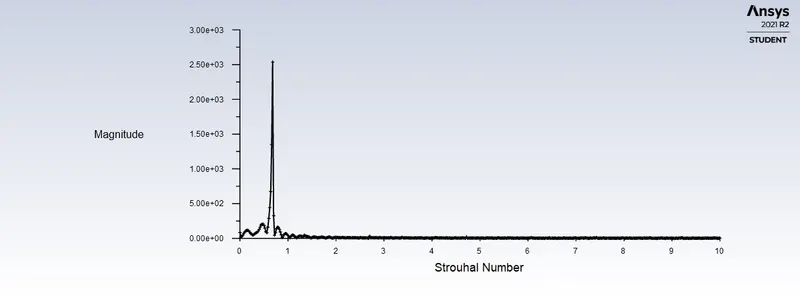
Strouhal Number is a dimensionless number describing the oscillating flow mechanisms.

Where;
- f is the frequency of vortex shedding.
- L is the characteristic length.
- U is the flow velocity.
For larger Strouhal Number (order of 1), viscosity dominates fluid flow, resulting in a collective oscillating movement of the fluid "plug".
For small Strouhal numbers (order of 10−4 and below), the high-speed, quasi-steady-state portion of the movement dominates the oscillation.
Vortex Shedding:
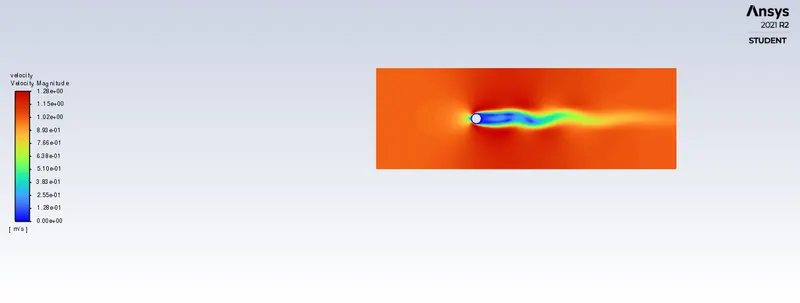
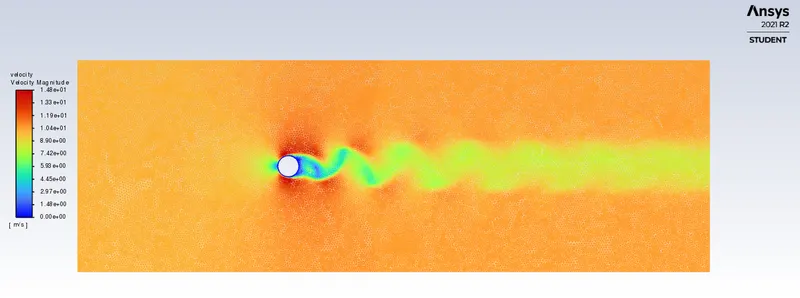
In fluid dynamics, Vortex shedding is an oscillating flow that takes place when a fluid such as air or water flows past a bluff body at certain velocities, depending on the size and shape of the body. In this flow, vortices are created at the back of the body and detach periodically from either side of the body forming a Von Karman Vortex Street.
Von Karman Vortex Street:
It is a repeating pattern of swirling vortices, caused by a process called vortex shedding which is responsible for the unsteady separation of flow of a flood around blunt bodies.
Vortex sheet will form only at flow velocity, specified by a range of Re, typically above a limiting Re value of about 90.
Drag:
Drag is a force acting opposite to the relative motion of any object moving with respect to a surrounding fluid. This can exist between two fluid layers (or surfaces) or a fluid and a solid surface. It depends on the velocity. Drag force is proportional to the velocity for low-speed flow and the squared velocity for high-speed flow, where the distinction between low and high speed is measured by the Re.
Drag coefficient:
The drag coefficient is a dimensionless quantity that is used to quantify the drag or resistance of an object in a fluid environment, such as air or water.
The drag coefficient  is defined as

where:
 is the drag force, which is by definition the force component in the direction of the flow velocity.
 is the mass density of the fluid.
 is the flow speed of the object relative to the fluid.
 is the reference area.
Lift:
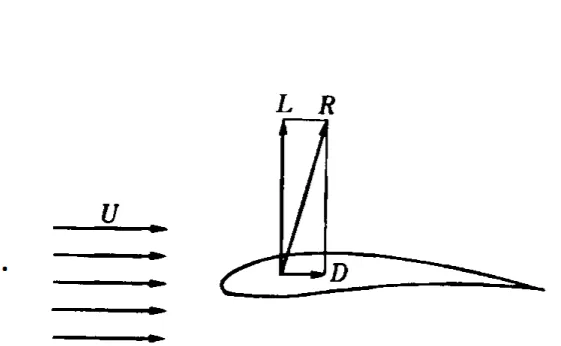
Lift is defined as a lifting force acting on a body perpendicular to the direction of flow.
Lift Coefficient:
The lift coefficient (CL) is a dimensionless coefficient that relates the lift generated by a lifting body to the fluid density around the body, the fluid velocity, and an associated reference area.
The lift coefficient CL is defined by

where
-
 is the lift force,
 - S is the relevant surface area.
- q is the fluid dynamic pressure.
- rho is the fluid density.
- u is the flow velocity.
Analysis Model:
- Creating Geometry:
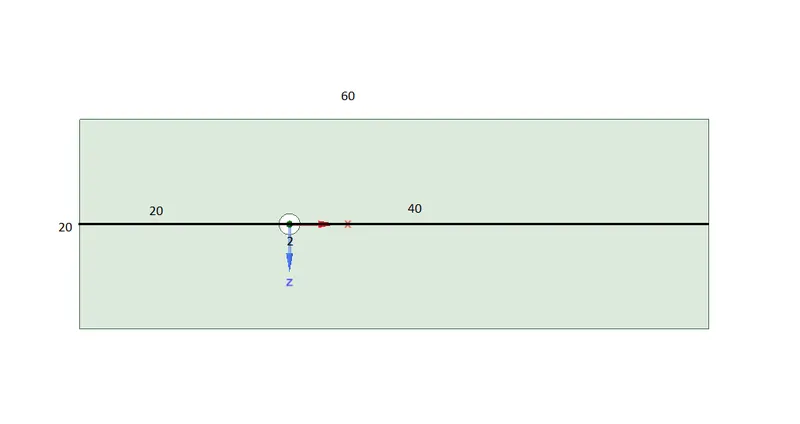
- The above geometry is created in Ansys Spaceclaim by using create options like Circle, Constructive line, Rectangle, and pull in the sketch.
2. Generating Mesh:
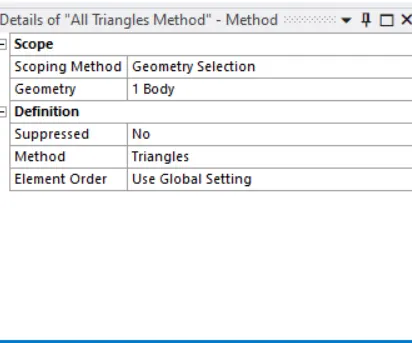
- In order to generate triangular mesh: Right-click on Mesh ⇒ Insert ⇒ Method ⇒ All triangular method.
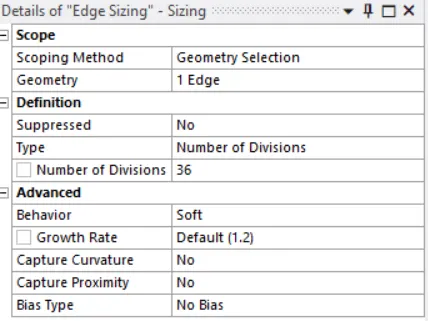
- To make the circle finer: Right-click on Mesh ⇒ Insert ⇒ Sizing ⇒ Select the Edge method ⇒ No. of Division.
- While analysis cylinder and geometry nearer to the cylinder is taken into account predominantly, so that creating inflation layer nearer to it gives the better result: Right-click on Mesh ⇒ Insert ⇒ inflation
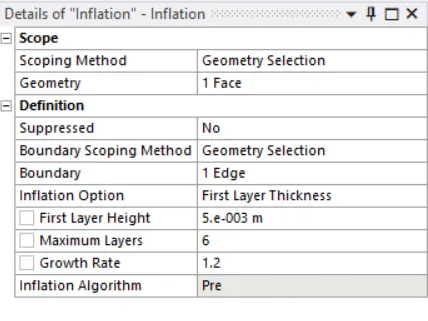
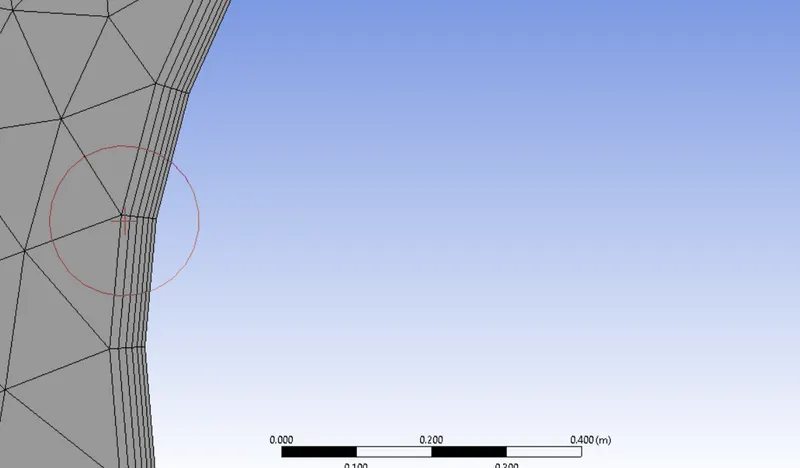
- Generate mesh with an element size of 0.2 m.
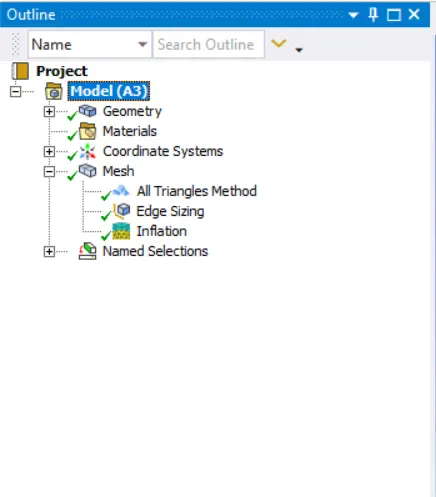
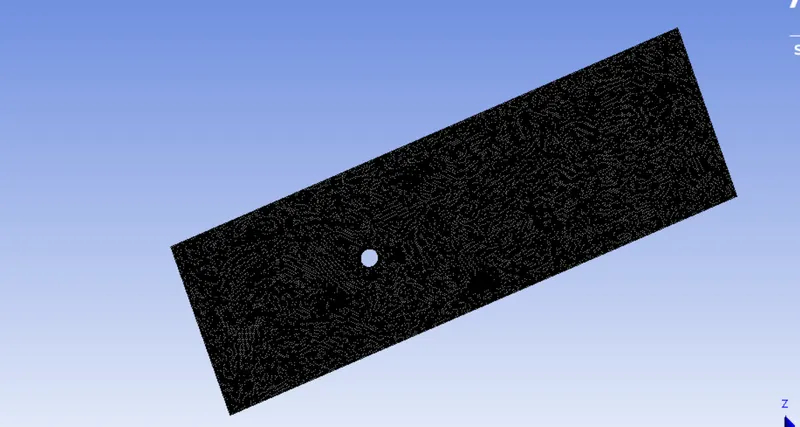
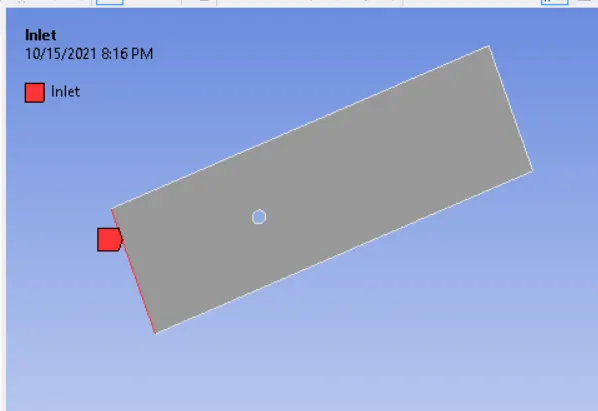
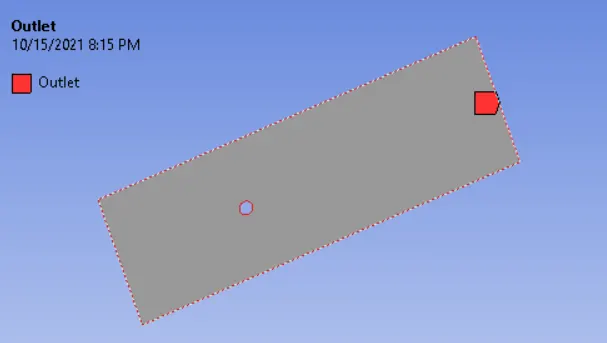
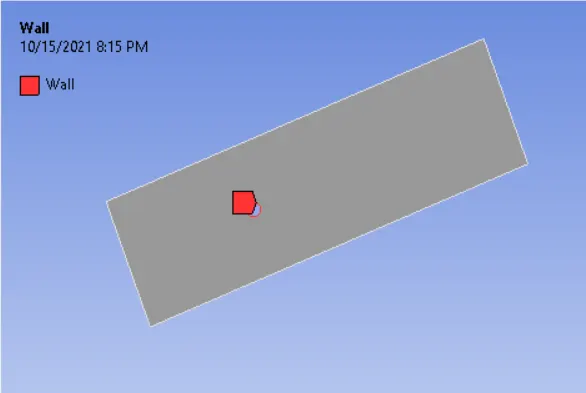
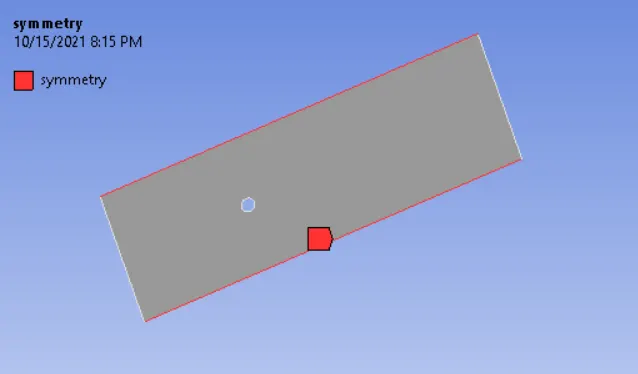
- Naming the geometry as inlet,outlet,Wall and symentry.
3. Setting up the solution:
- We are going to set up both steady and transient stimulation for this problem.
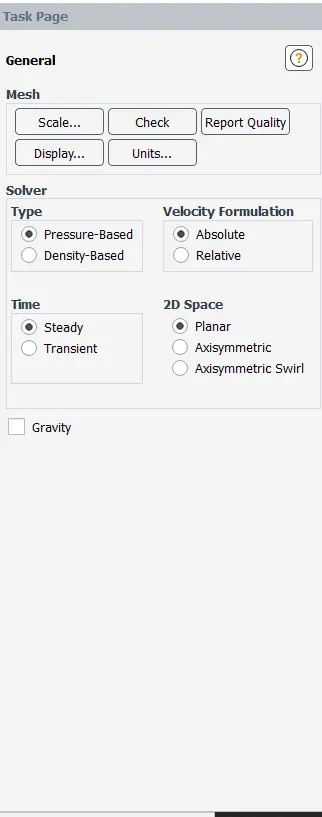
- Here we can able to switch from a steady to an unsteady state.
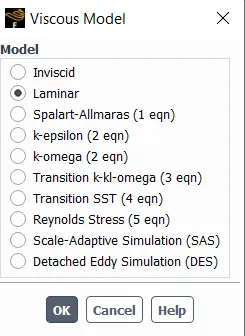
- Viscous model is laminar
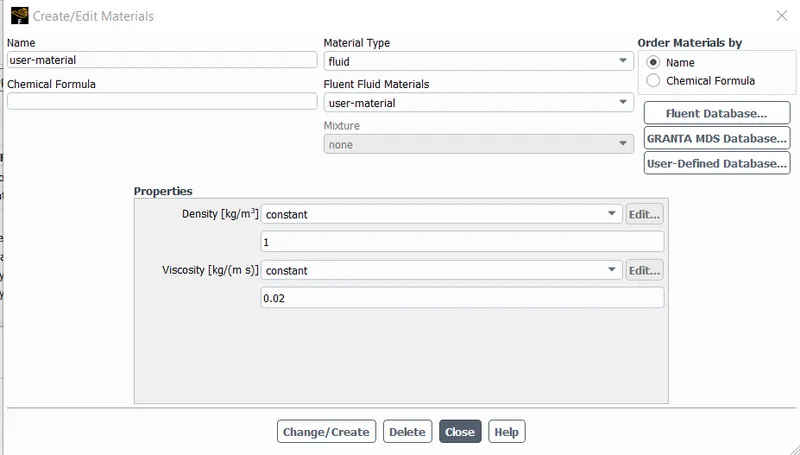
- Creating material is Air, which is user-defined.
- Boundary Conditions:
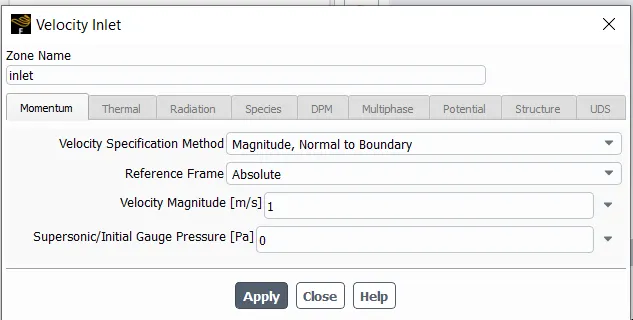
Case: 1
Calculating the coefficient of drag, lift, and Strouhal Number for Re =100:
Velocity = 1 m/s;
Density = 1 Kg/m^3;
Viscosity = 0.02 kg/ms;
- Steady-state:
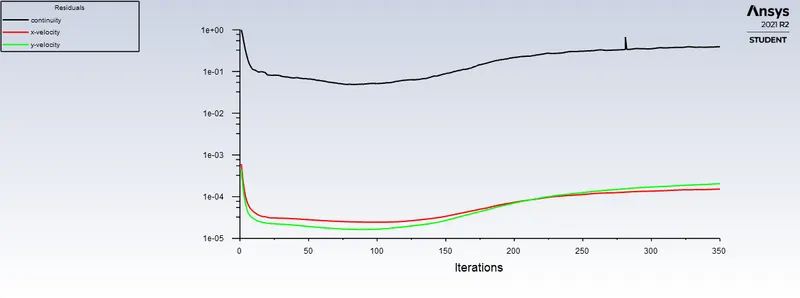
Residual Plot:
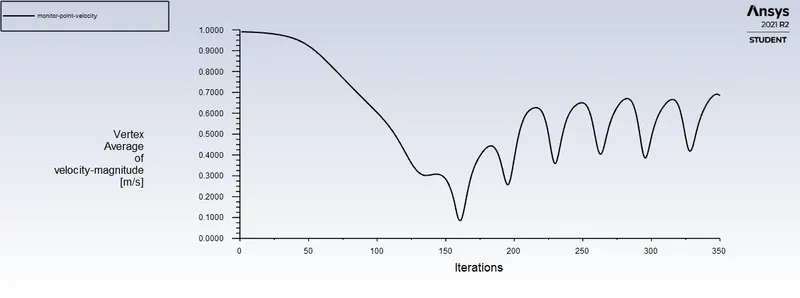
Monitor point velocity magnitude vs Iteration:
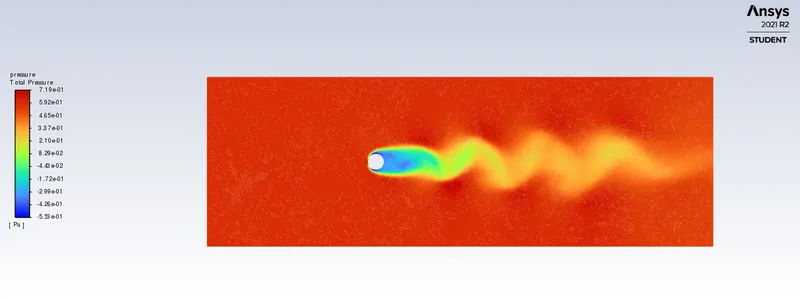
Pressure contour:
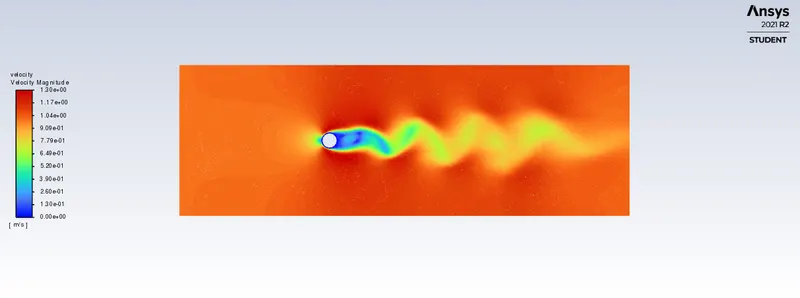
Velocity contour:
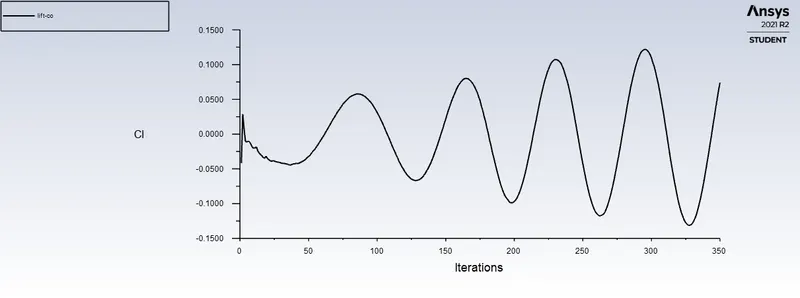
Lift Coefficient:
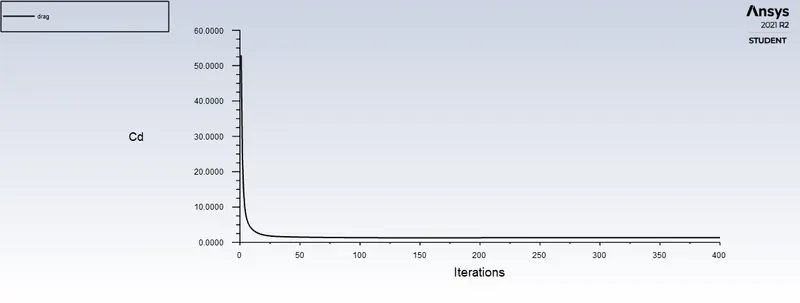
Drag coefficient:
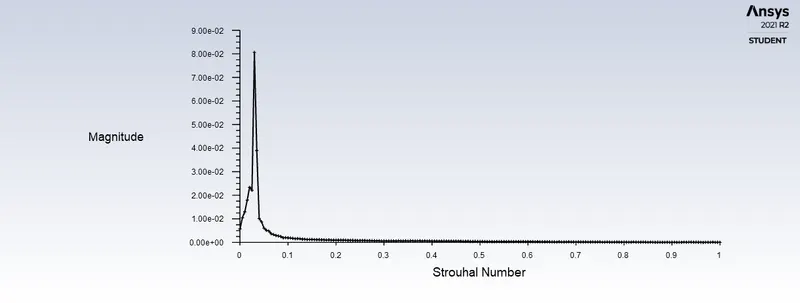
Strouhal Number:
- Unsteady state / Transient State:
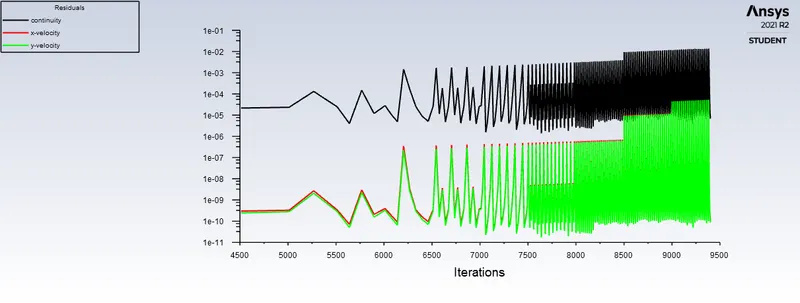
Residual Plot:
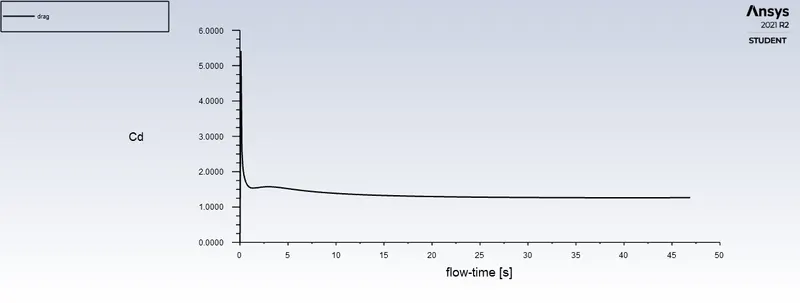
Drag plot:
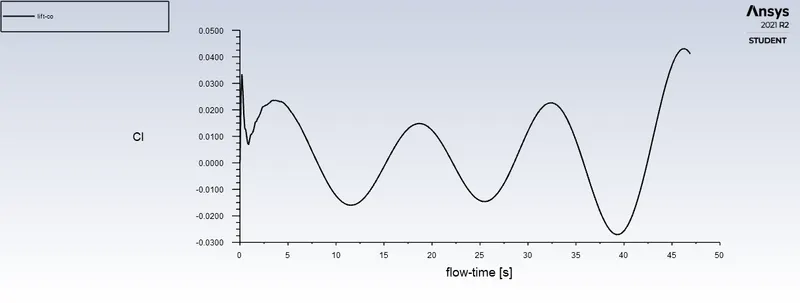
Lift Plot:
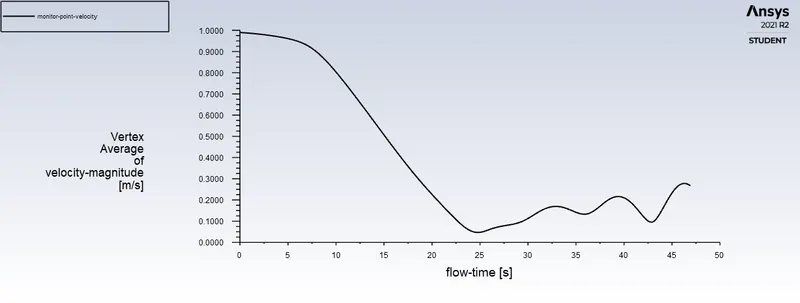
Monitor point velocity:
Velocity contour:
Pressure contour:
| S.No | Re | Case | Solution Method | Drag coefficient (Cd) | Lift Coefficient (Cl) | Strouhal Number |
| 1 | 100 | Steady State | Simple | 1.3401 | 0.074 | N/A |
| 2 | Transient | Coupled | 1.2667 | 0.0405 | 0.0431 |
For steady state condition, Strouhal Number cannot be calculated because there is no time dependent parameters.
Case: 2
Reynolds Number=10;
Velocity = 0.1 m/s;
Density = 1 Kg/m^3;
Viscosity = 0.02 kg/ms;
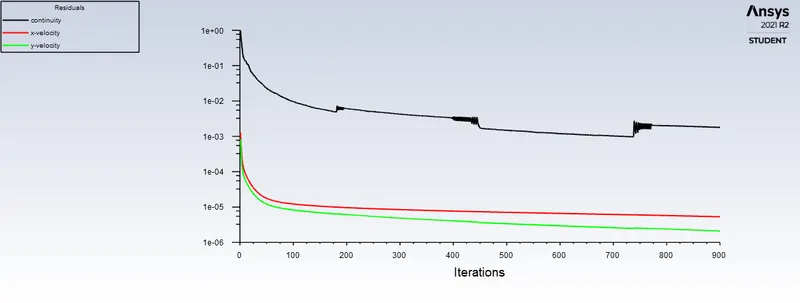
Residual Plot:
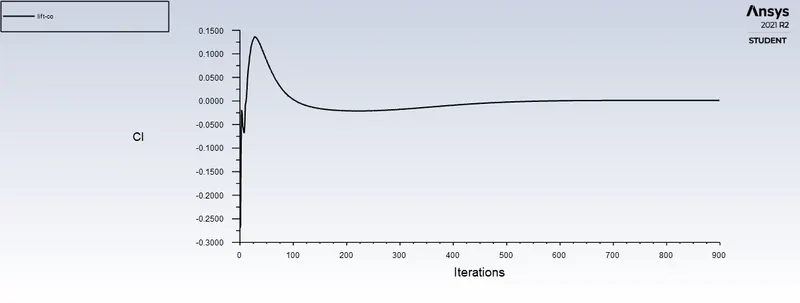
Lift Coefficient:
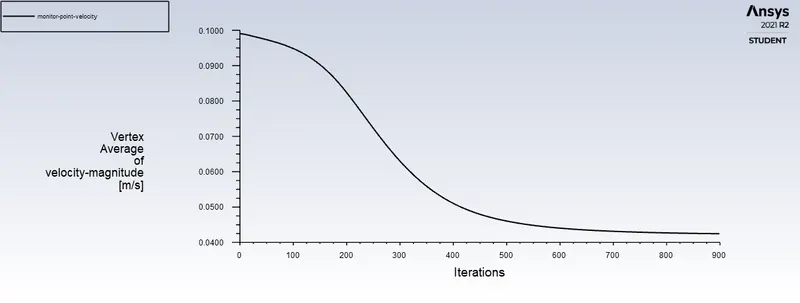
Monitor point velocity:
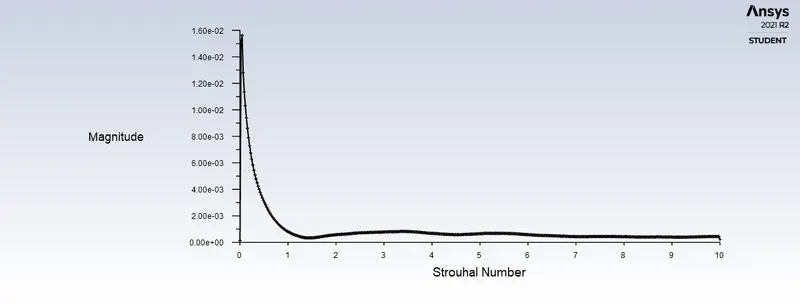
Strouhal Number:
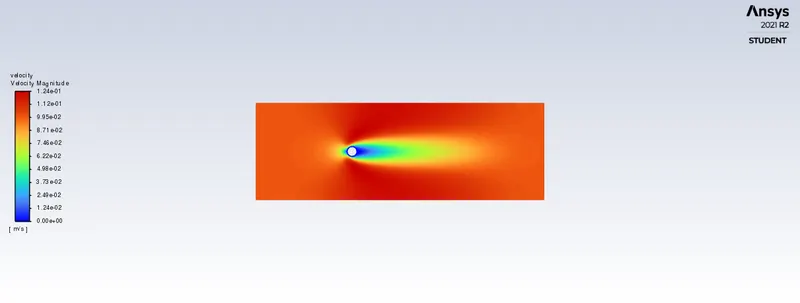
Velocity contour:
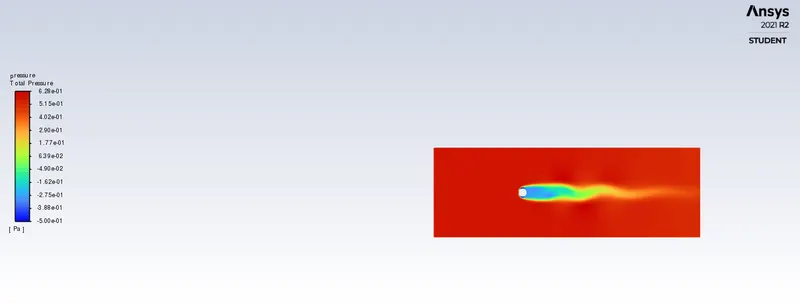
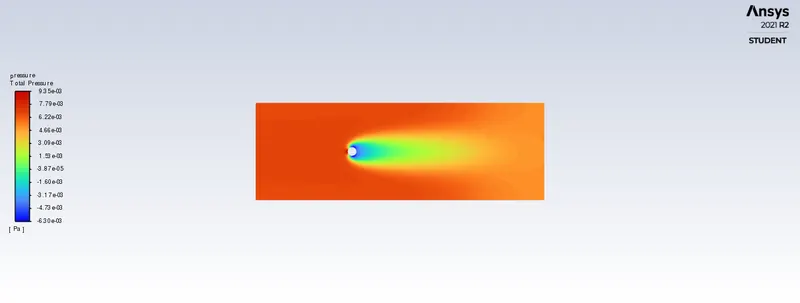
Pressure contour:
Reynolds Number = 1000;
Velocity = 10 m/s;
Density = 1 Kg/m^3;
Viscosity = 0.02 kg/ms;
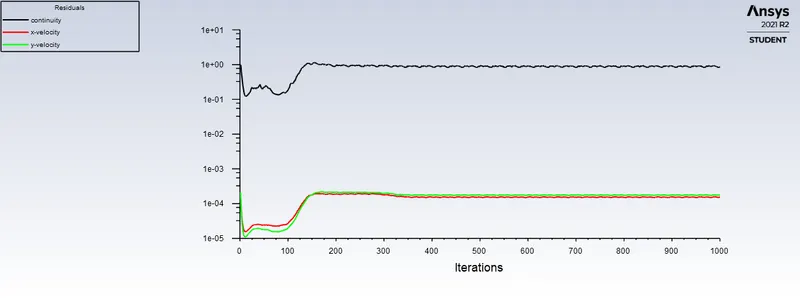
Residuals plot:
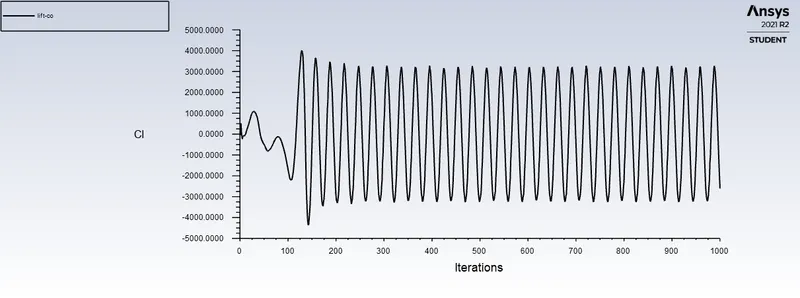
Lift coefficient:
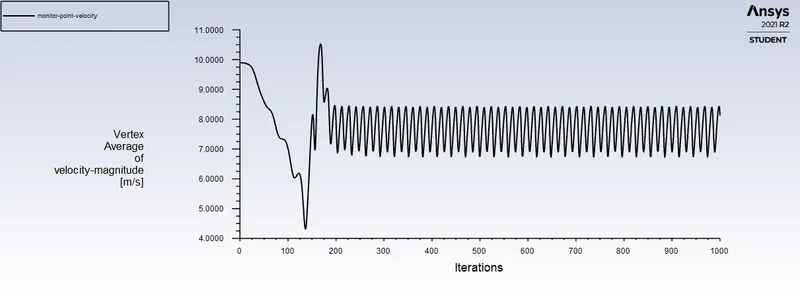
Monitor point velocities:
Strouhal Number:
Velocity contour:
Pressure contour:
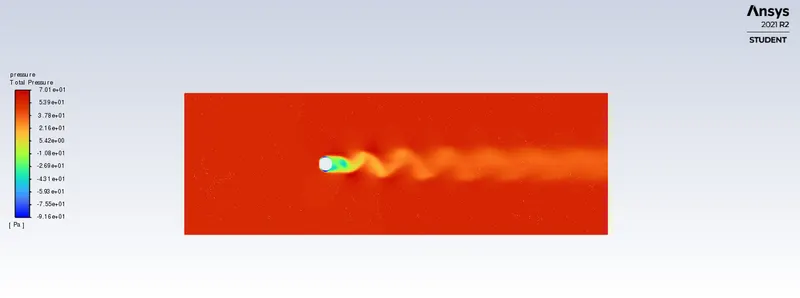
Reynolds Number = 10000;
Velocity = 100 m/s;
Density = 1 Kg/m^3;
Viscosity = 0.02 kg/ms;
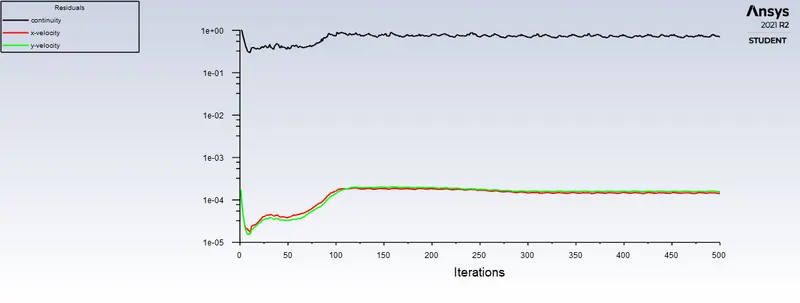
Residual plot:
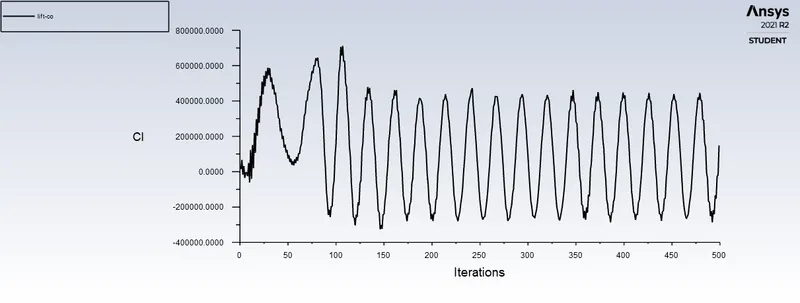
Lift coefficient plot:
Monitor point velocity:
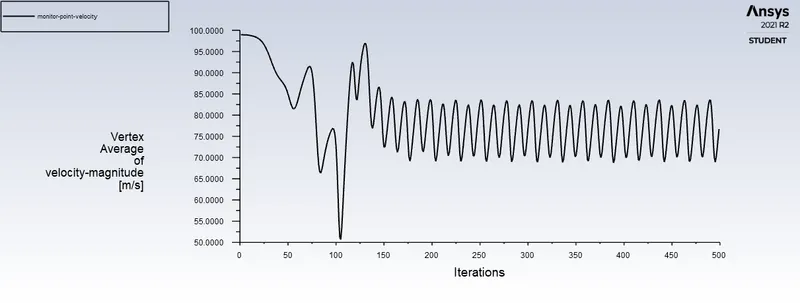
Strouhal Number:
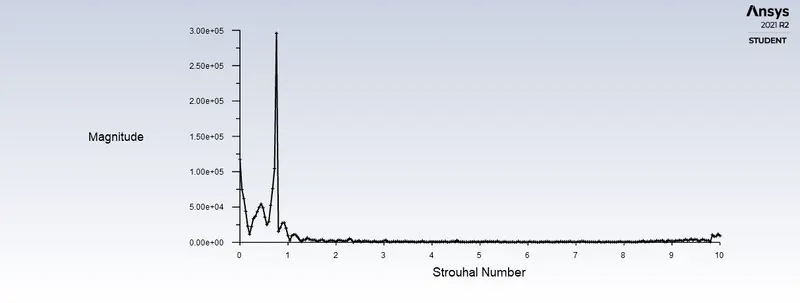
Reynold Number = 100000
Velocity = 100 m/s;
Density = 1 Kg/m^3;
Viscosity = 0.02 kg/ms;
Residual Plot:
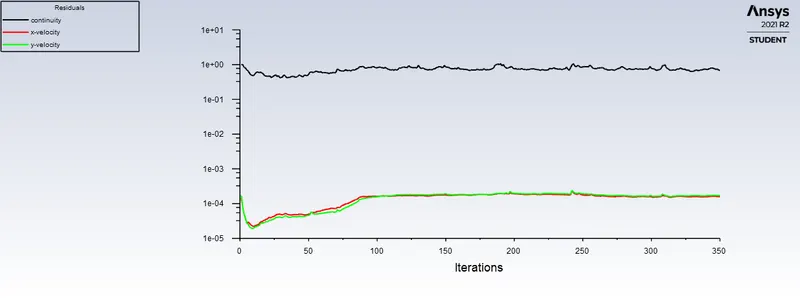
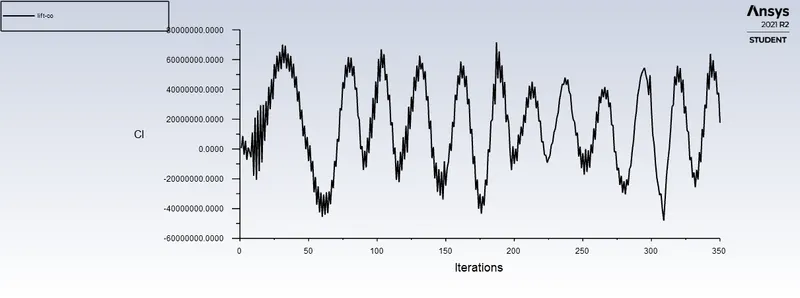
Lift Coefficient:
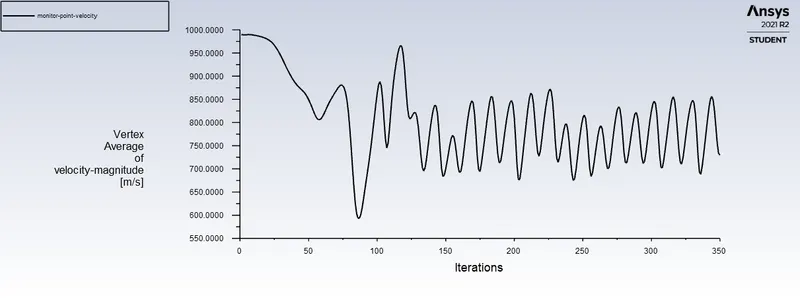
Monitor point velocity:
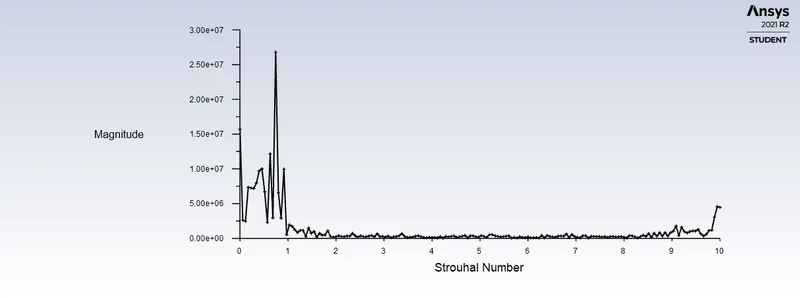
Strouhal Number:
Result:
| S.No | Re | Case | Solution Method | Drag coefficient (Cd) |
| 1 | 10 | Steady State | Simple | 3.3297 |
| 2 | 100 | 1.3401 | ||
| 3 | 1000 | 0.7485 | ||
| 4 | 10000 | 0.7027 | ||
| 5 | 100000 | 0.6251 |
From the above images we can observe that
- When the reynolds number increases the drag co-efficient decreases.
- For capturing vortex shedding, inflation layers, sizing of edges of the cylinder and the most important is the meshes should be finer.
- Strouhal Number cannot be calculated for steady state.
- For Reynolds number 10 there is no vortex shedding.
- Solution is said to be converged as it repeats the same pattern.