Week - 2 - Explicit and Implicit Analysis
AIM :-
understand the implicit and explicit scheme so that we can use in our FEA model properly.
EXPLAINATION :-
time integration methods can be broadly classified into two categories
1. IMPLICIT
2. EXPLICIT
engineers choose between these two types of method for different applications based on
- computational characteristics
- stability
- accuracy
there are many varieties of time integration methods based on the concept of implicit and explicit here we will expand the implicit and explicit methods by their most basic nature.
let's take 1d function y as a function of time
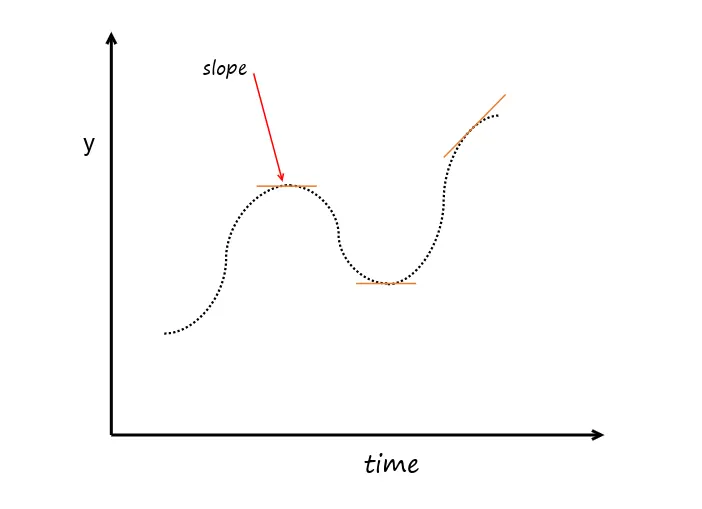
assume that we're at a status that all solutions before and include time point t(n) are known to us and now we're looking for solution to the next time step that is t(n+1)
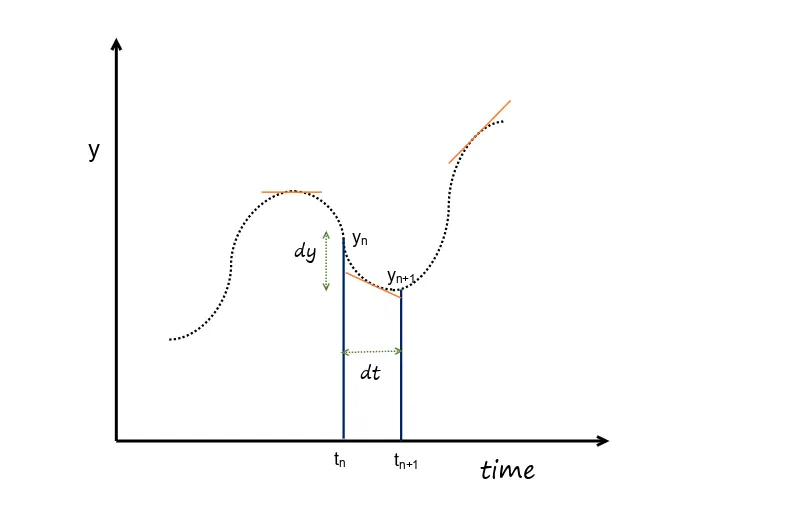
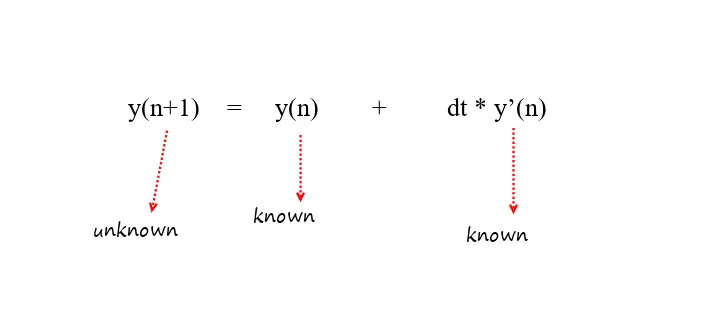
we will use the most simplified algorithm to progress from previous time step to the next we say that the difference between the non and unknown time step is the increment of time dt times the derivative of the function dot y
in this 1d case it's just the slope of the function this is reasonable right however the slope as the derivative of the unknown function and varies with time is not a constant value.
in fact the key to differentiate implicit and explicit method is what you use for the slope in time stepping
Implicit method
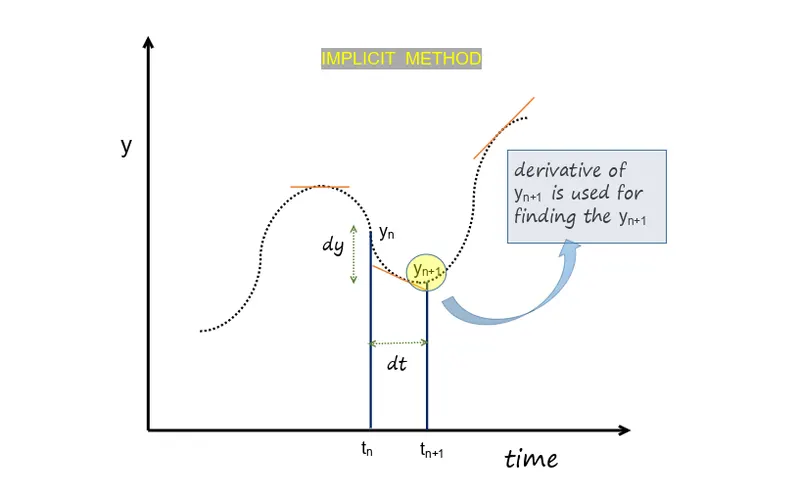
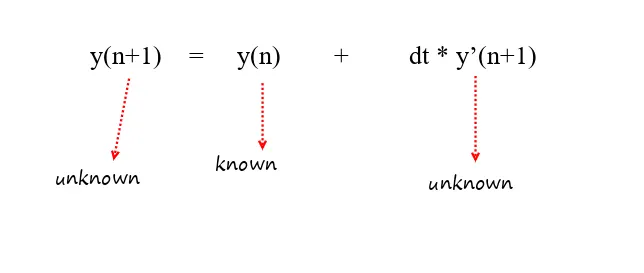
let's have a look for implicit integration method and use this slope at the unknown step t(n+1) to find next solution note that because the function y at the next time step is unknown the derivative of it is also unknown looking at the time stepping equation on the right side the previous solution is assumed to be known but the increment part is unknown so the results at t(n+1) is not directly found with this method that's basically why we call such method implicit because the result remains implicit after time stepping we will need to solve the equation to find the unknown in many cases this equation can be non-linear and we need to rely on numerical methods such as neutral iterations to solve it
• It uses the slope at the unknown time step
• y'(n+1) is unknown
y' = differentiation of y at point n
y'(n+1) = differentiation of y at n+1
Explicit method
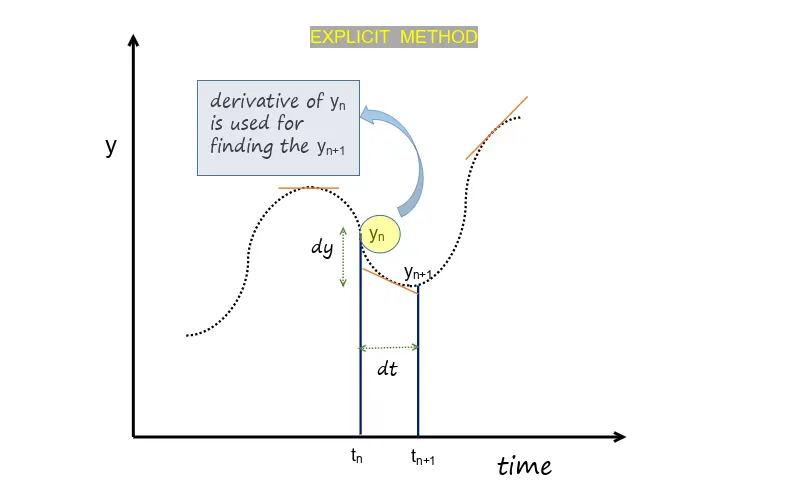
Here is explicit method use the slope at the non-time step t(n) to find next solution because the function y is known at t(n) the derivative of y at t(n) is also known so in this equation the right side parts are all directly given the function y at t(n+1) is immediately found or we can say it's explicit no further effort is needed
• It uses the slope at the known time step
• y'(n) is known
The Problem :-
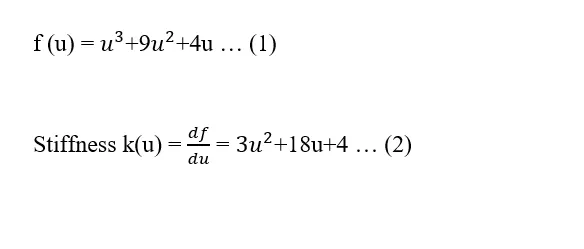
solve the given function using implicit and explicit method
Explicit method :
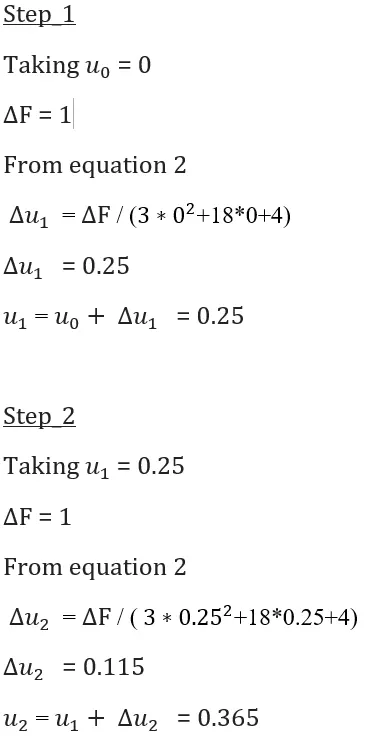
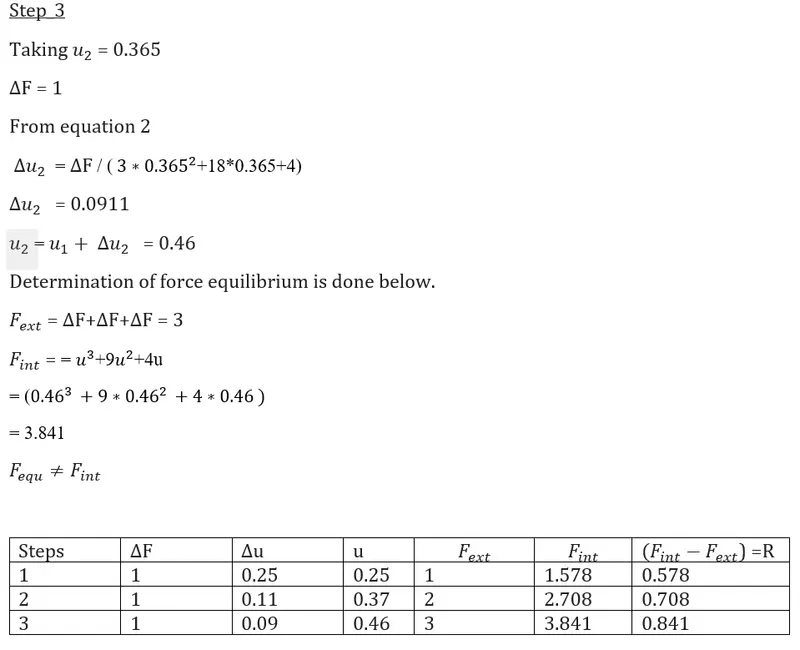
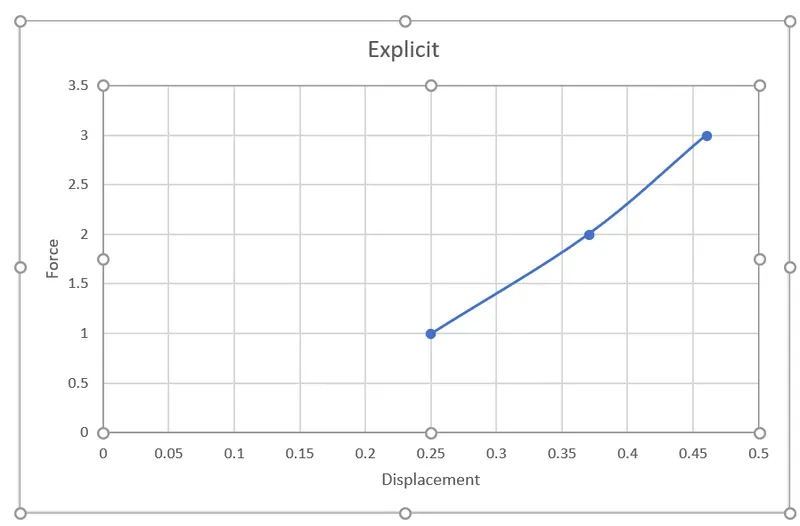
The nonlinear force versus displacement relationship is stiffness is known then it is possible to construct the graph of force versus displacement numerically. One method is to use an incremental explicit load control scheme. For this example, three equal load increments (or steps) of ∆F = 1 unit each are used to load the tension bar. The variables used are u_ for displacement, f_ for internal force in the bar, F_ for external force applied to the bar and k for stiffness. Incremental displacements or incremental externally applied forces are represented as ∆u or ∆F, respectively.
Implicit Analysis :
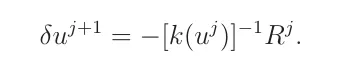
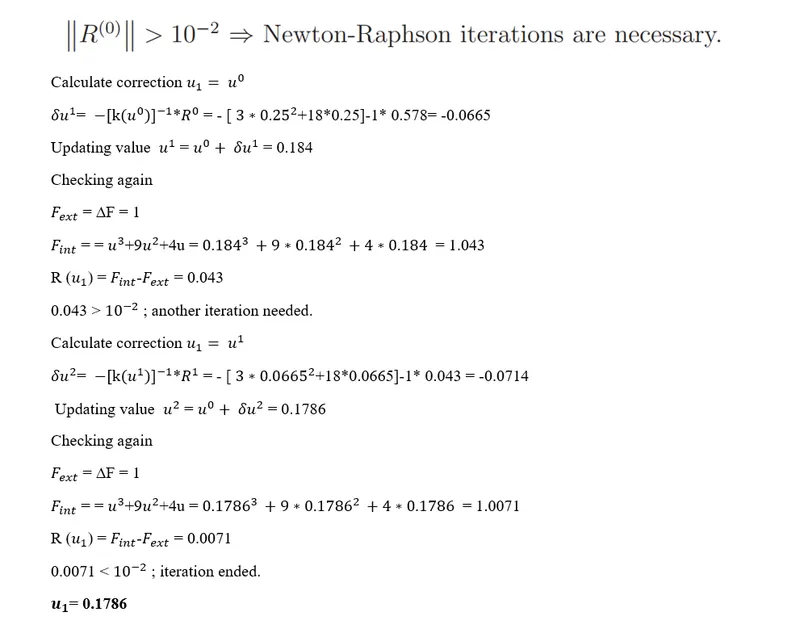
An implicit analysis is the same as the explicit analysis, except that at the end of each step Newton-Raphson iterations are used to enforce equilibrium before moving to the next step. Basically, an incremental force is applied to advance the solution forward at the beginning of a step. However, internal forces and external forces will not be in equilibrium unless the stiffness is linear for the given step. Hence, to achieve equilibrium, corrections must be made to the displacement. This is accomplished by using Newton-Raphson iterations to minimize the residual. Expanding the residual as a Taylor series about the current displacement gives

By neglecting higher order terms in the series, setting Rj+1 = 0 and solving for δuj+1 the
following correction is obtained
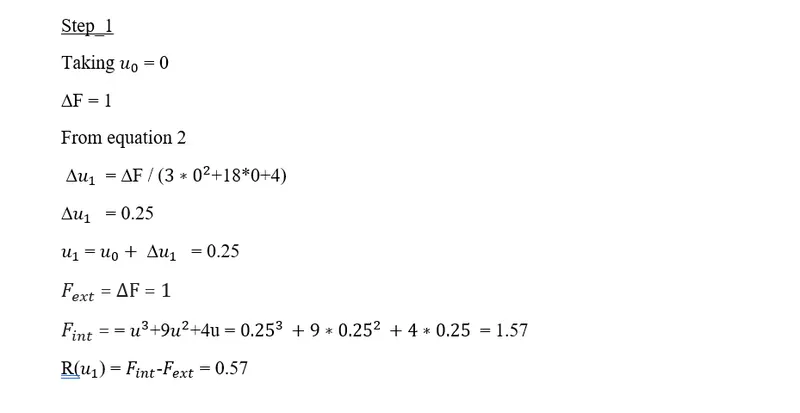
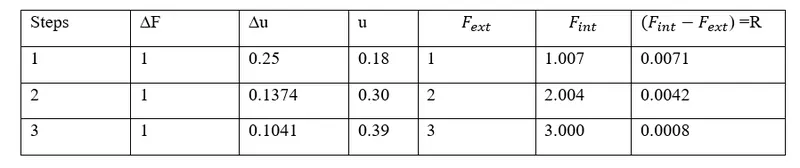
Step_2 & Step 3
Th e above procedure is followed to solve the step 2 and 3
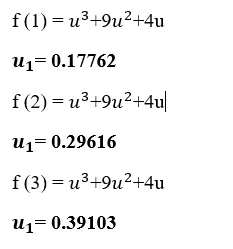
= 0.29658
= 0.3911
EXACT SOLUTION :
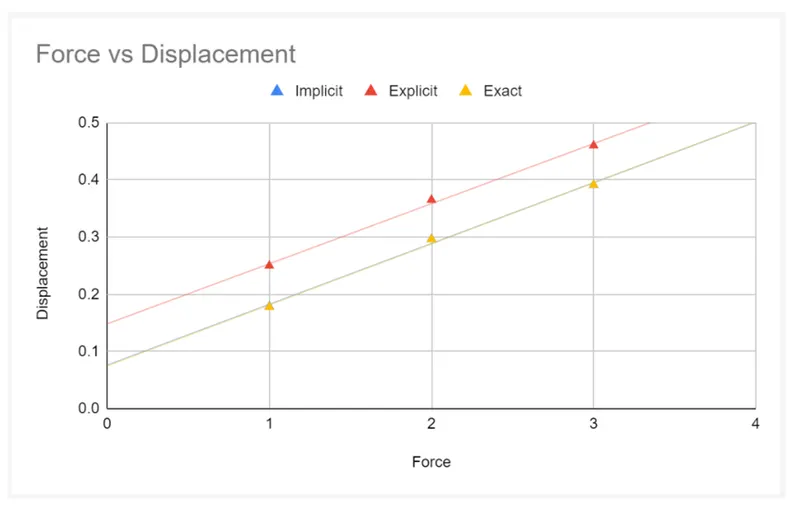
CONCLUSION :-
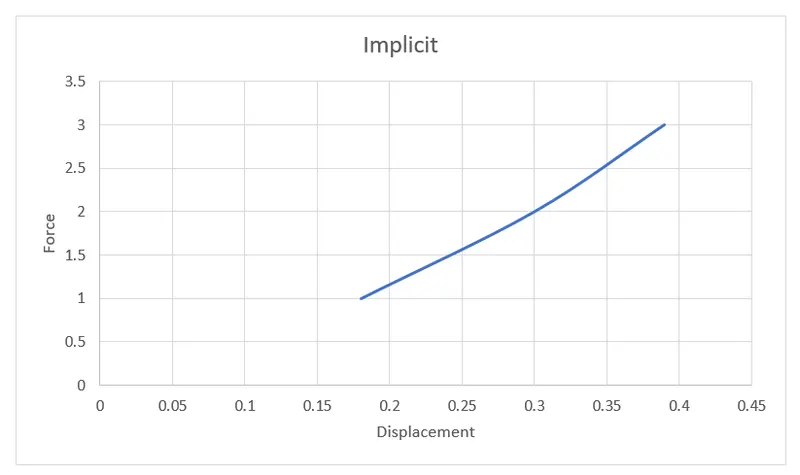
It is important to note how the initial increment due to the incremental load advances the solution forward. Then if an implicit analysis is employed, Newton-Raphson iterations are used to make corrections to the displacement to achieve equilibrium. Once satisfactory equilibrium is achieved,
a new load increment is applied to advance the solution and the process is repeated. Note that an exact expression for force versus displacement is not always known. The implicit solution was the closest with the exact compared to the explicit. The explicit method drifts from the actual solution.