Week 2 - Converging diverging nozzle
Week 2 - Converging diverging nozzle
Objective: To determine the variation in thermodynamic quantities thru the C-D Nozzle.
Procedure:
For the geometry, as per the provided details, a 2-D plane with required dimensions is created in SpaceClaim.
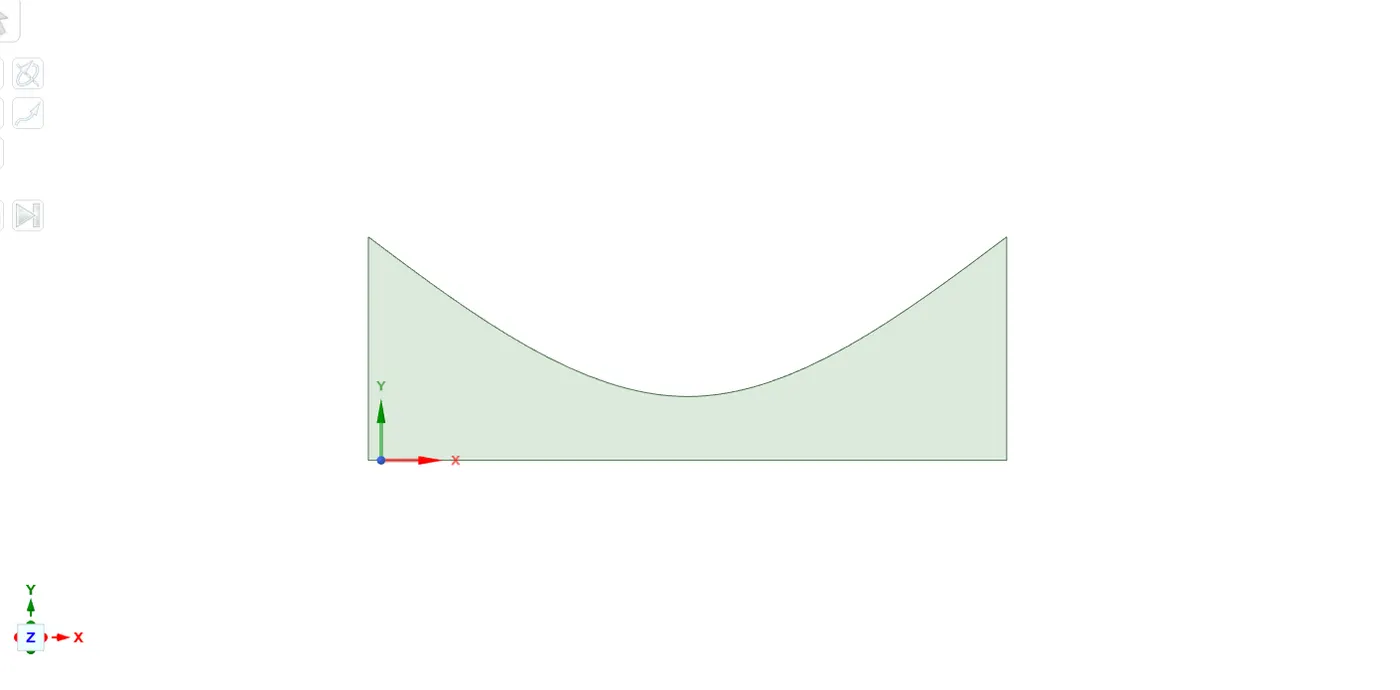
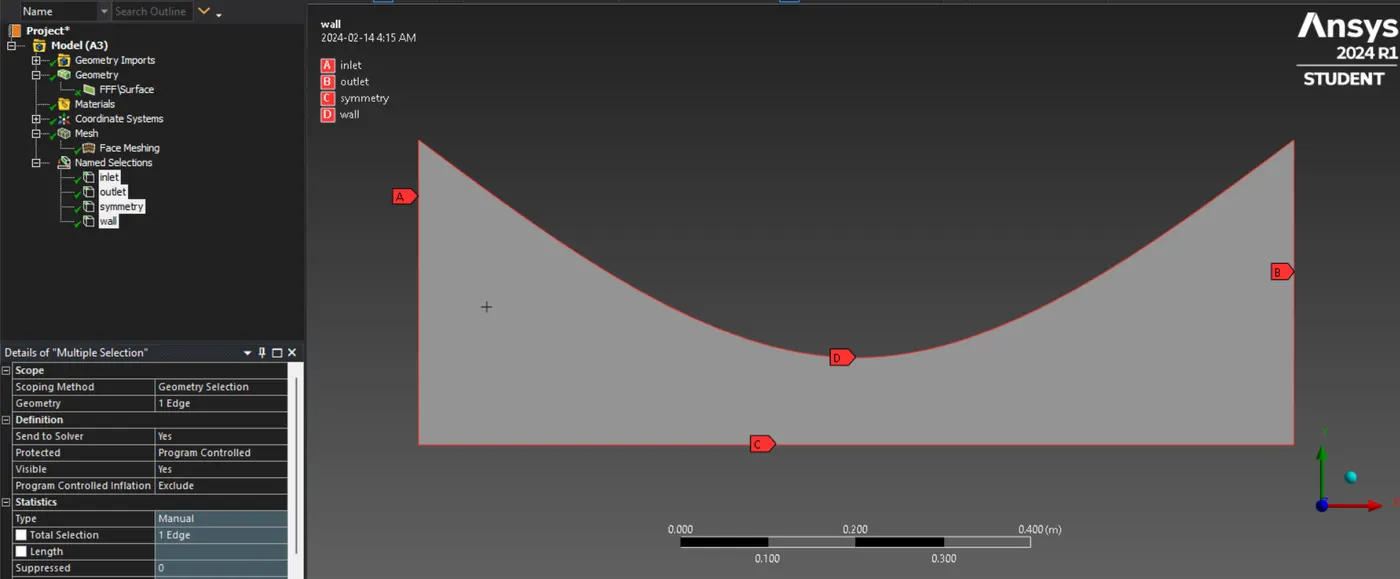
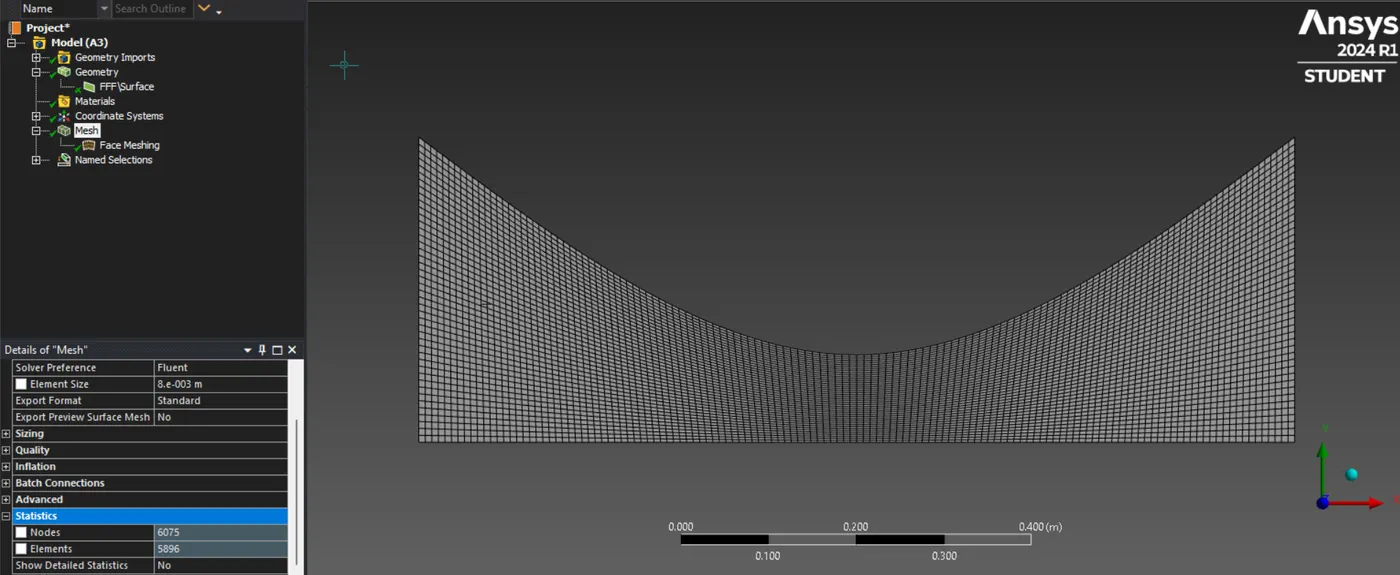
Thereafter, the geometry is discretized in the Ansys Mesh, with mesh element size of 0.006 m and a face meshing is applied to smooth the generated mesh. The Named Selections are given as per the physics setup.
Solver Settings:
Since the flow is compressible, the Density Based solver is preferred, as 2-D Axisymmetric case. The Energy equation is enabled to account the temperature effects. The viscous model is set to Inviscid and Boundary conditions are provided.
In the Time-Based type of steady state simulation, the fluid is chosen as Air.
For Inlet, the condition is set to Pressure Inlet type with Gauge pressure of 101315 Pa, the same value is used for Supersonic inlet pressure as it sets up the static pressure on the boundary when the flow gets supersonic. The initial temperature is put to 300 K.
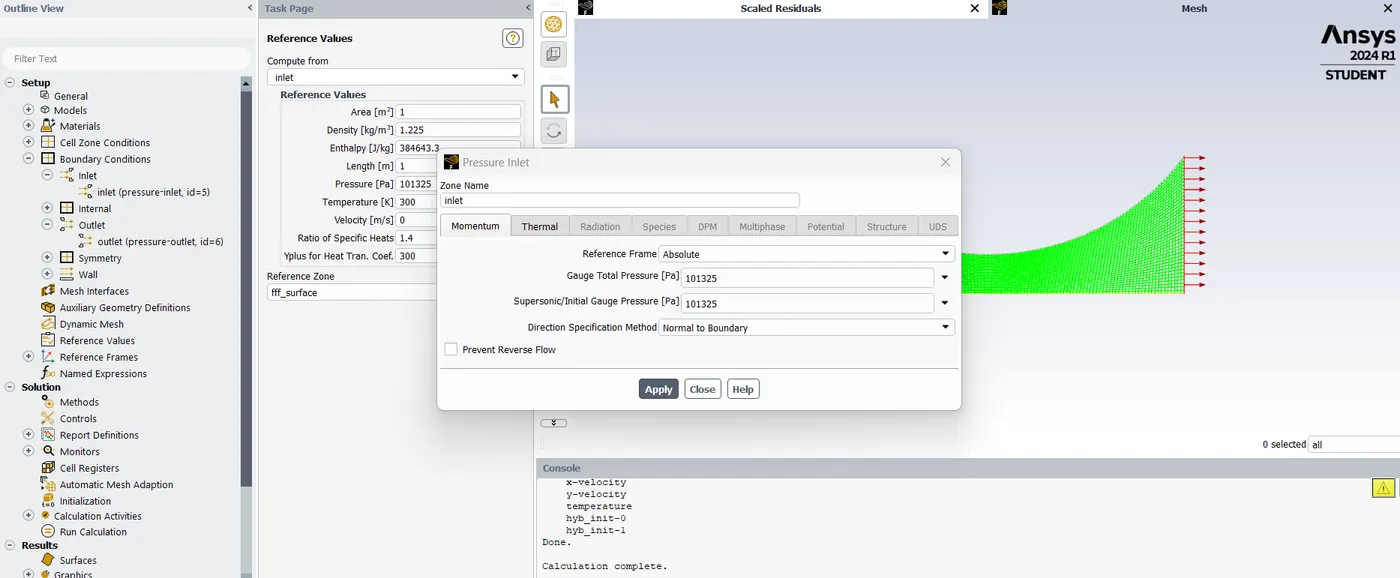
The Outlet pressure is 0.027 atm, which is around 2735 Pascals, and for the Wall, no slip condition is assigned which means that the velocity at the surface will be zero irrespective of the surface roughness.
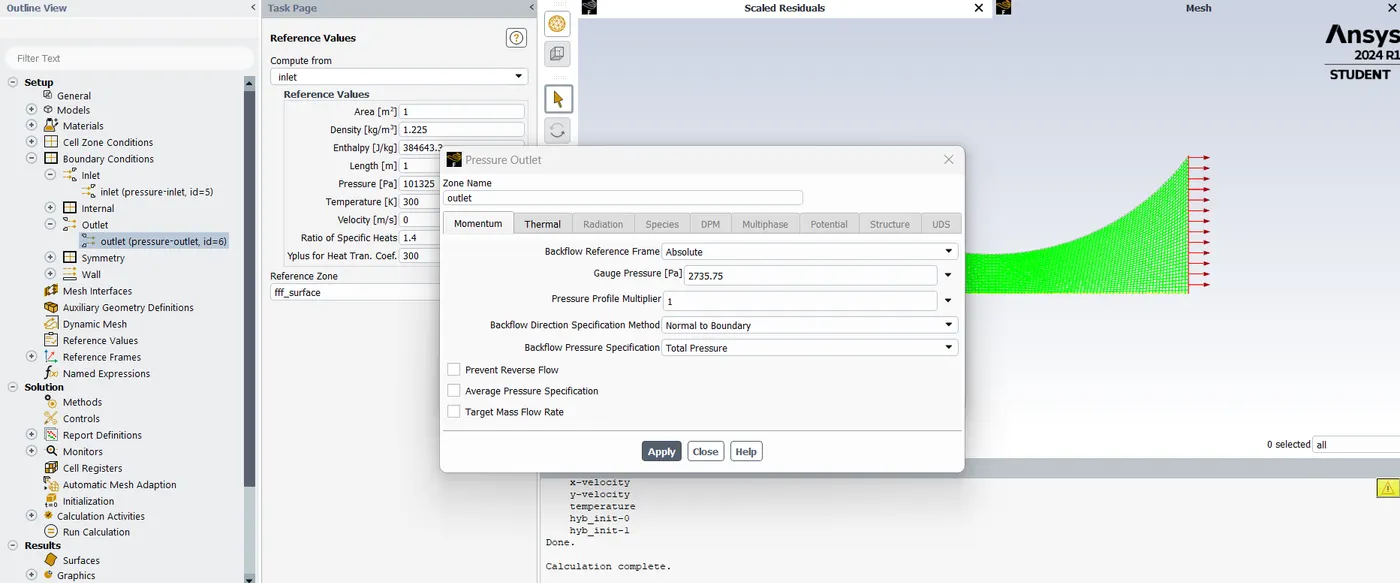
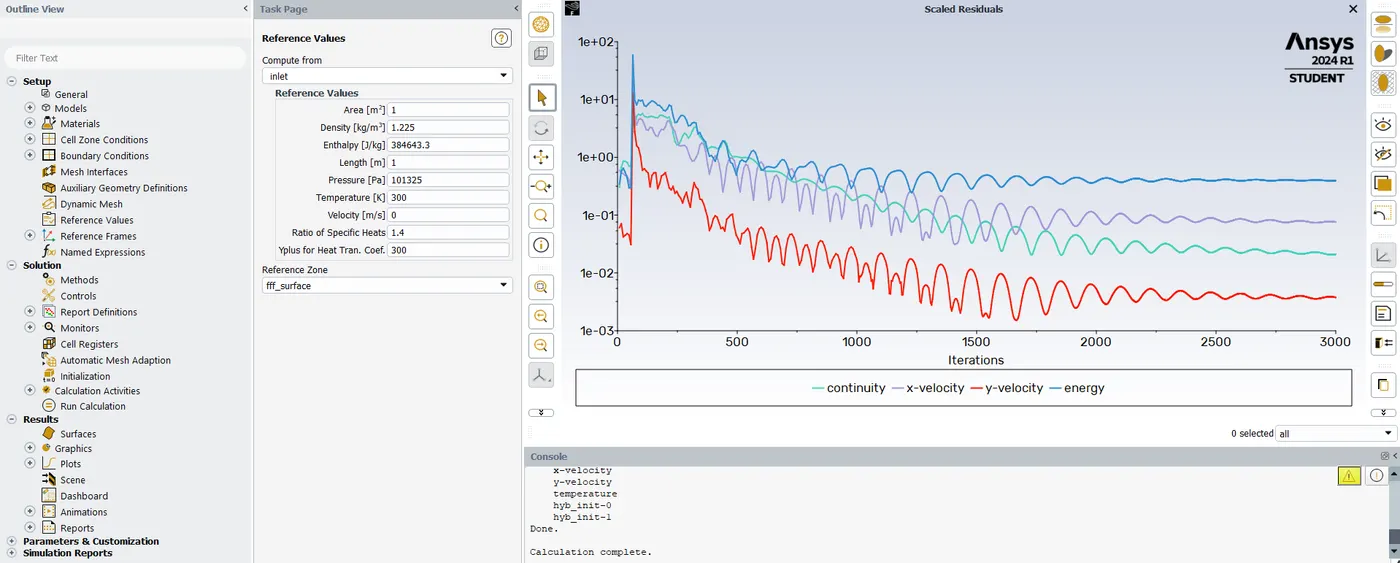
The operating pressure is set to 0 Pa, and the Reference values are to be computed from inlet parameters. The Hybrid initialization is an initial guess to initialize the solution based on computing the input values as the boundary conditions. With that the solution is ran for 3000 iterations.
Results
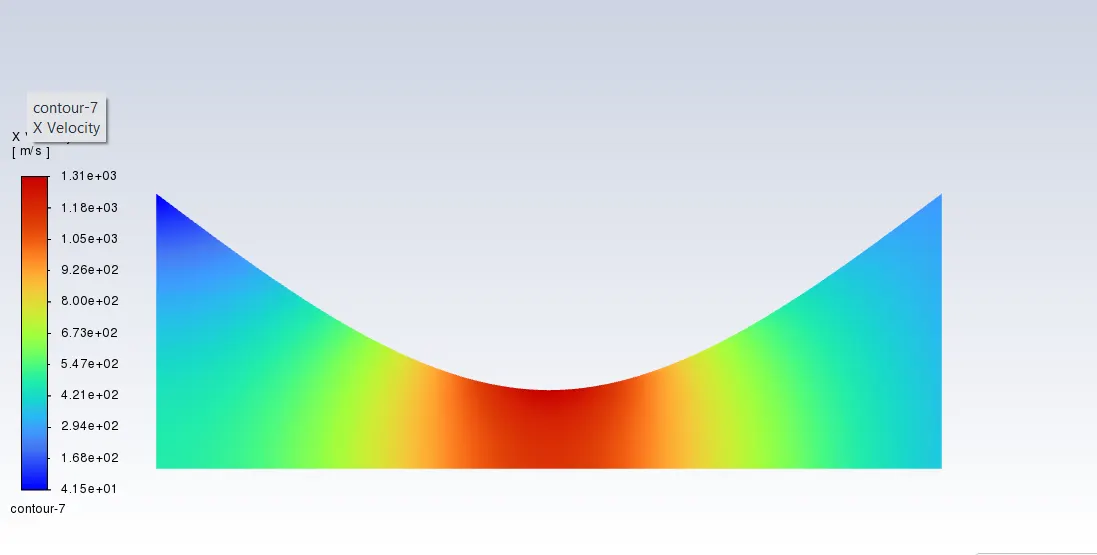
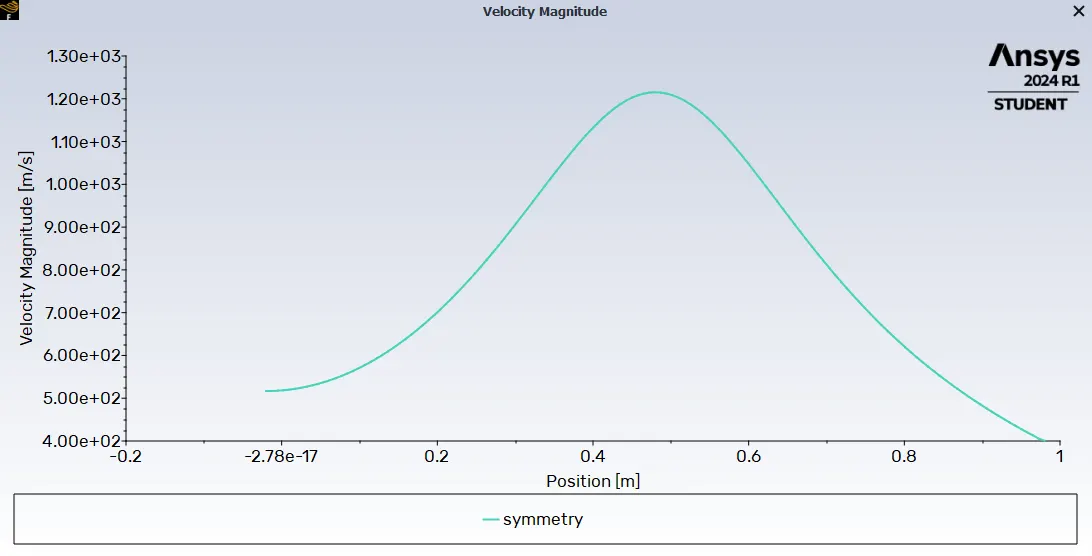
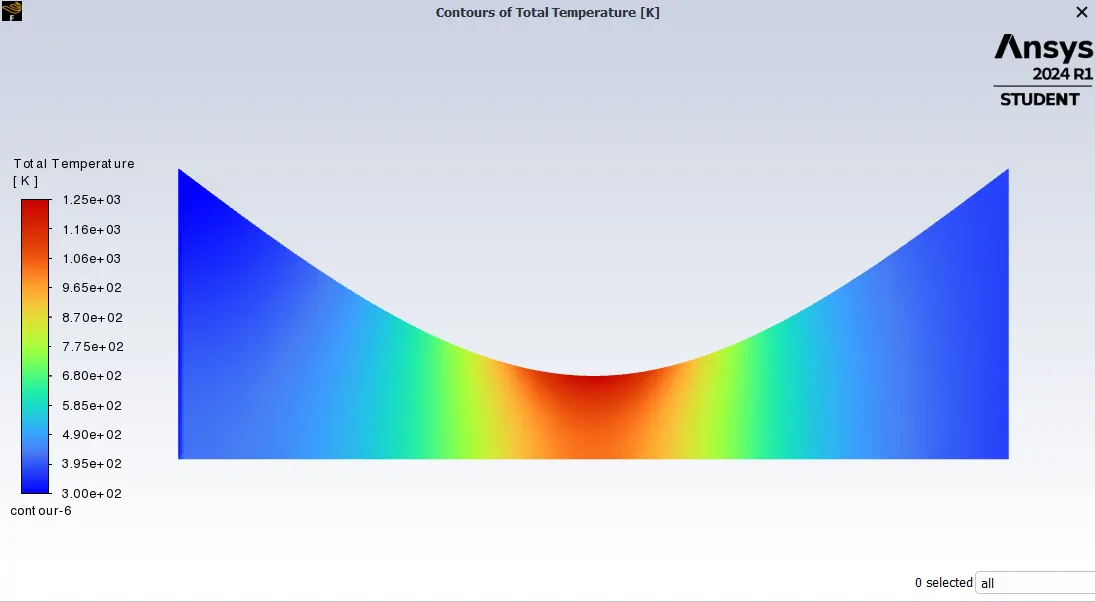
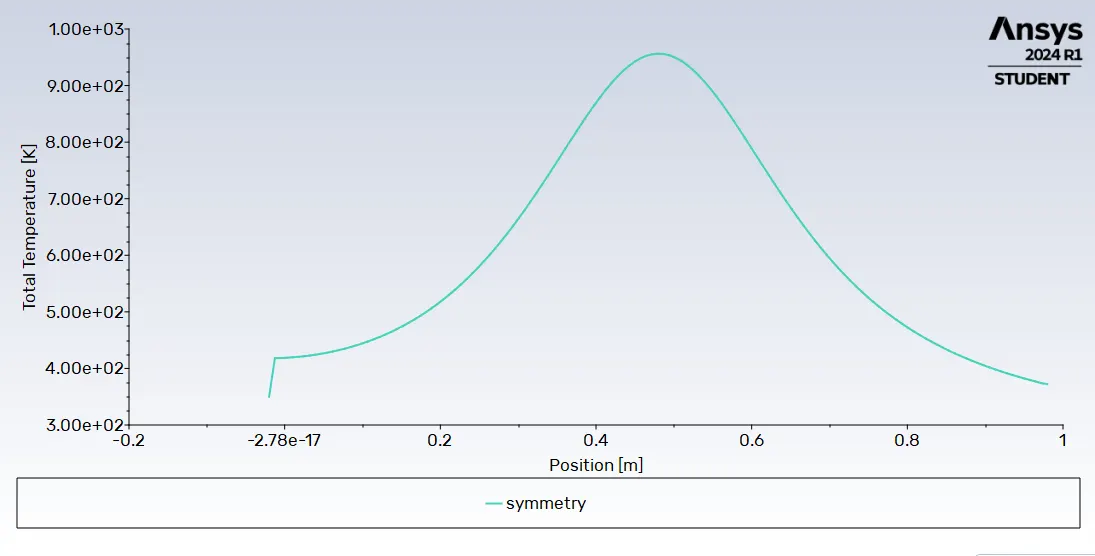
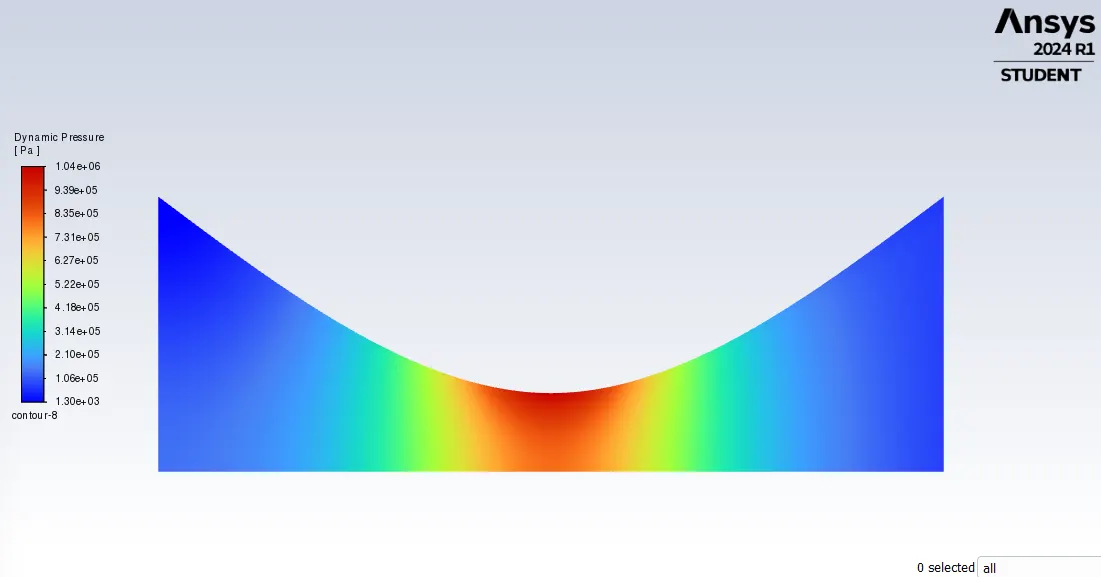
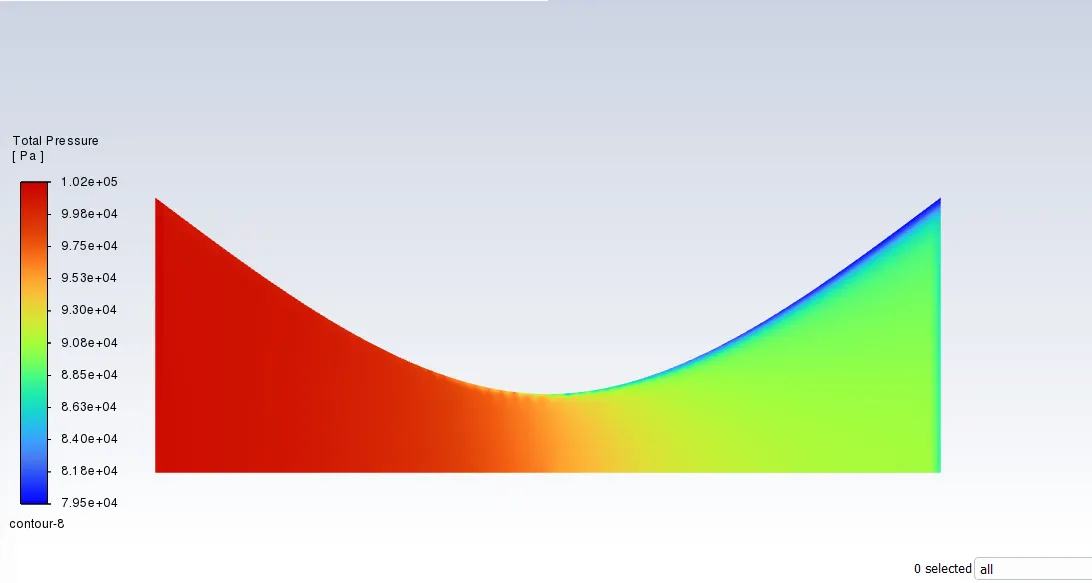
The following are the contours that shows variation in the flow properties throughout nozzle length.
1. Variation in Velocity
2. Variation in Temperature
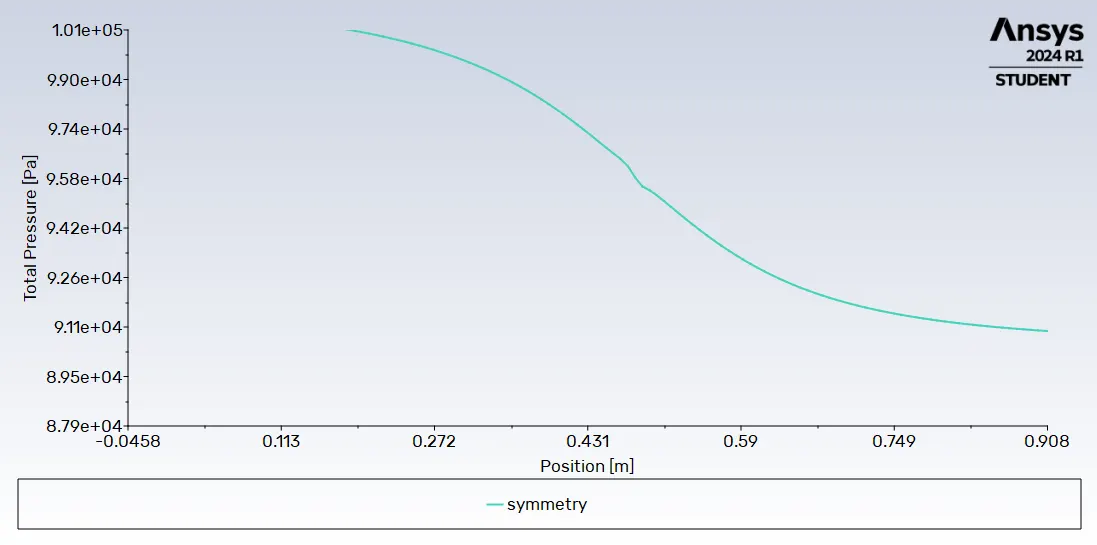
3. Variation in Dynamic Pressure and Total Pressure
Conclusion:
As seen from the charts and contours, the pressure decreases as the volume of the nozzle expands after the throat section, where the velocity increases. As for the temperature, as its variation is proportional to pressure, the temperature drops.
The variation in velocity shows that the Mach Number is maximum at the throat section passing thru diverging section, its velocity will increase in case of a supersonic flow.