Week 2 - Converging diverging nozzle
OBJECTIVE:
-
Simulate flow across a Converging-Diverging Nozzle, Plot:
- The pressure, velocity and temperature variations across the domain
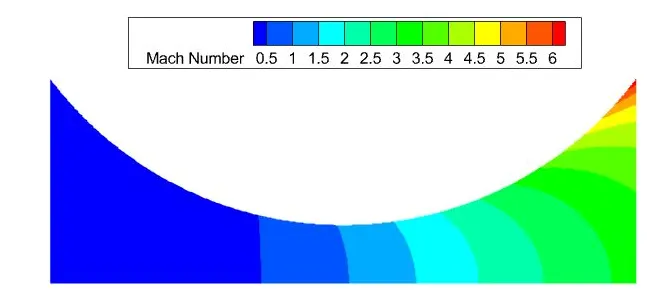
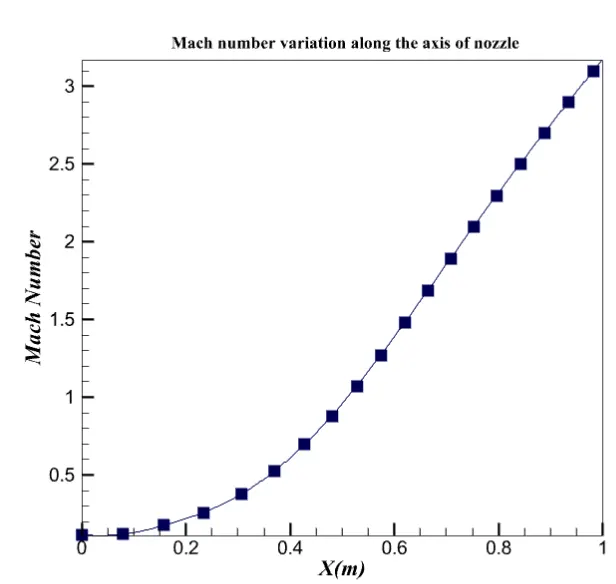
- The variation of Mach number across the domain and at what distance from the inlet does the flow become supersonic.
Converging diverging nozzle.
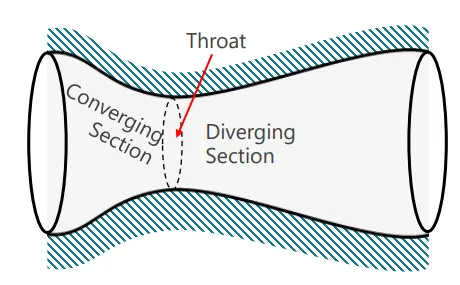
- A CD Nozzle is a variable area passage which is used to accelerate gases to higher supersonic speeds.
- It consists of a converging section with minimum area occurring at a specific location called the throat.
- Downstream of the throat, the cross-sectional area starts to increase, thus creating the diverging section of the CD nozzle.
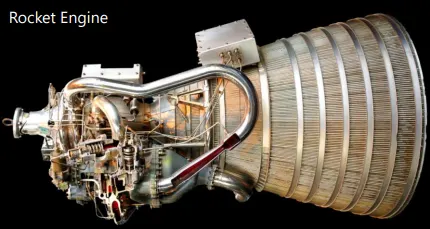
- It is most commonly used in propulsion systems such as rocket engines and after-burners of jet engines.
Area – Mach Number Relation
- Using the continuity and the isentropic relations, we can get the following equation relating the area to the Mach number,
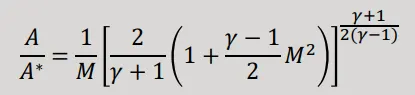
- This equation is called the area – Mach number relation.
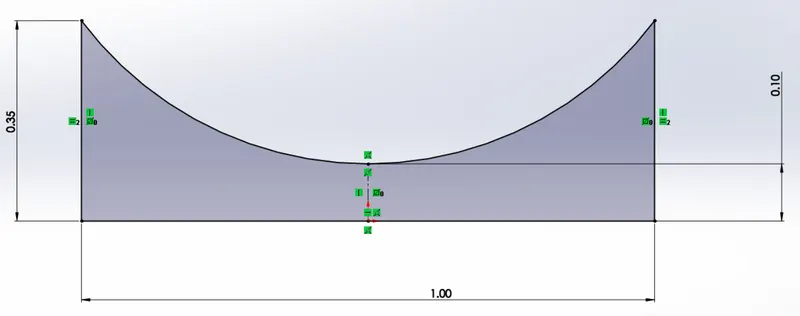
Geometry.
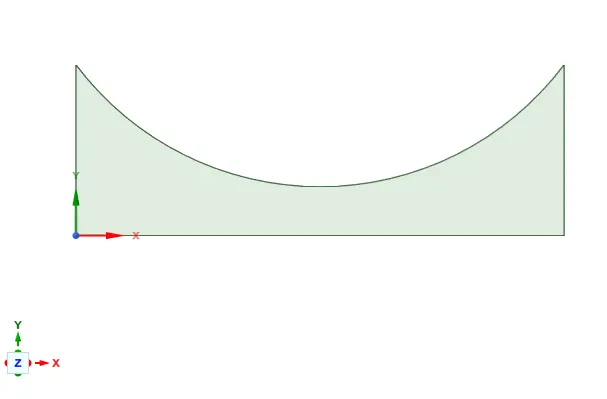
Geometrical dimensions.
Mesh.
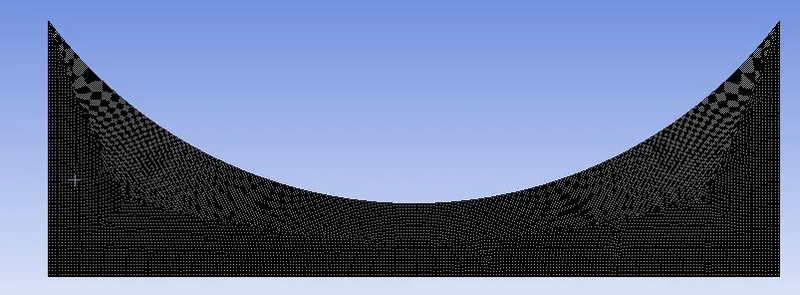
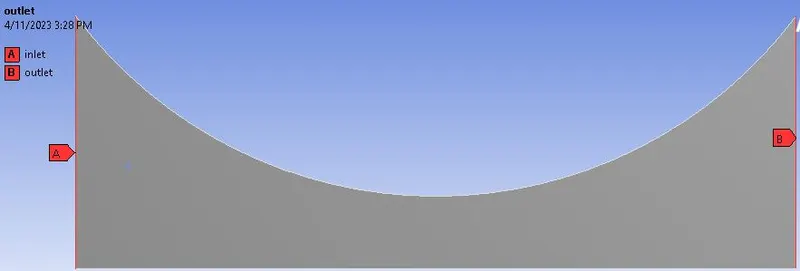
After the geometry is generated in ansys spaceclaim, then the model is loaded in mesh and done meshing with an element size of 2mm and after meshing suitable named selections are provided.

Named Selections.
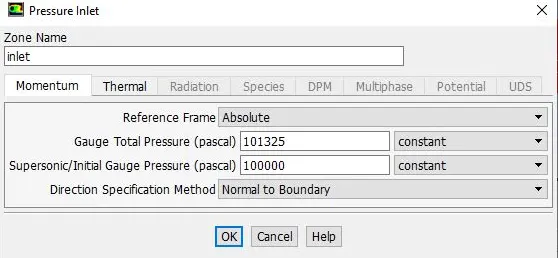
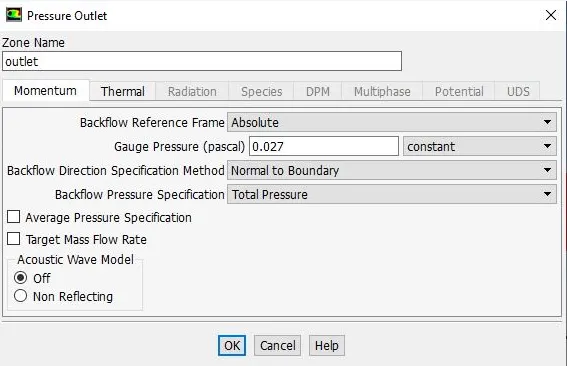
Setup.
- Density based Sover is used.
- Axis symmetric.
- Energy option is enabled.
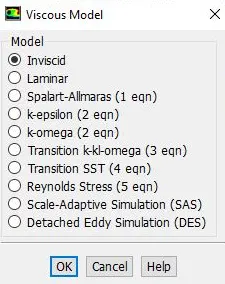
- Inviscid flow.
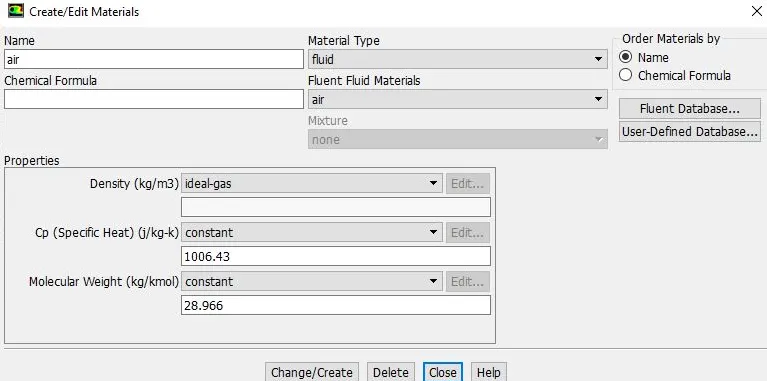
- Material set to Ideal Gas air
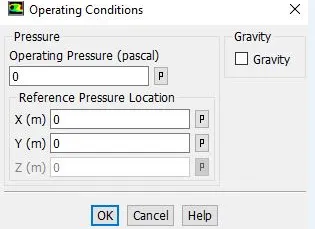
- In operating conditions the pressure is set to 0 to remove round off errors.
- A Hybrid initialisation is done
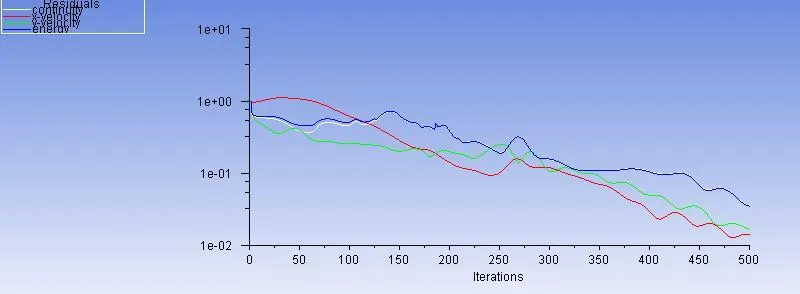
- Simulation is run for 500 iterations
Results.
- All the results from the simulation run on fluent are processed in techplot software.
Residuals.
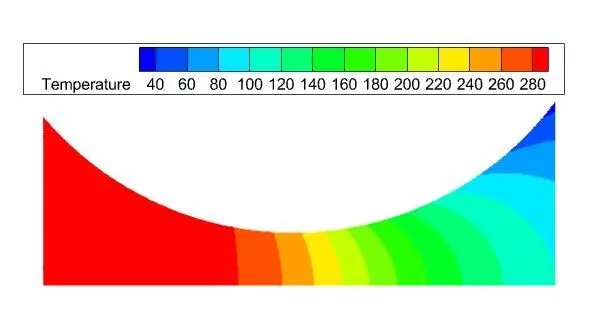
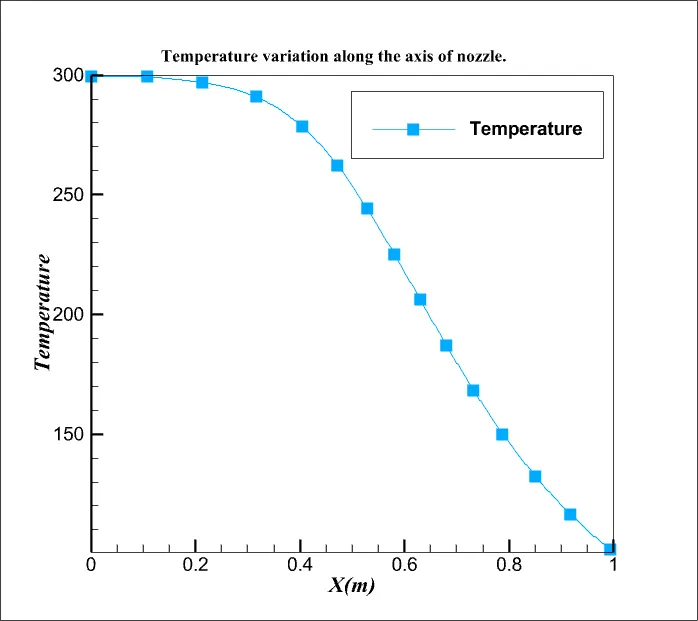
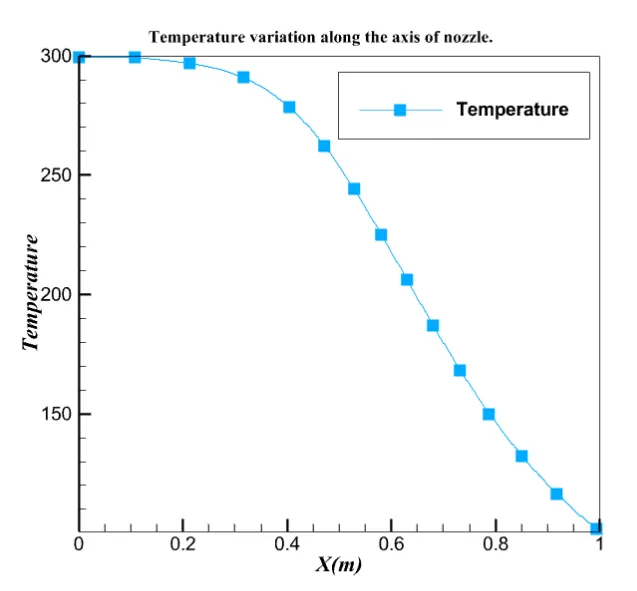
Temperature Contour and plot.
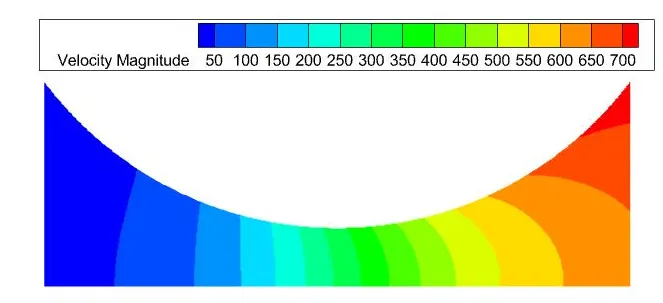
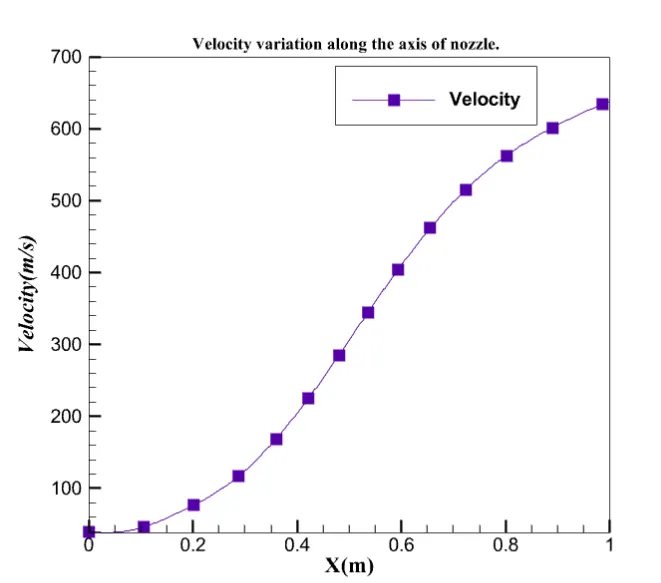
Velocity Contour and plot.
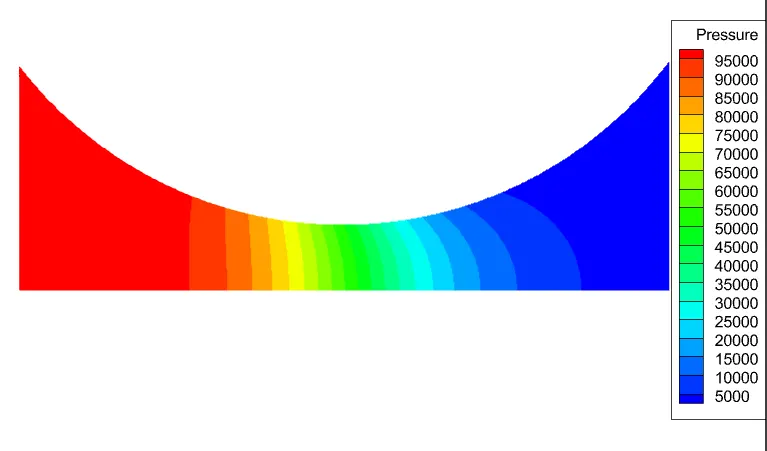
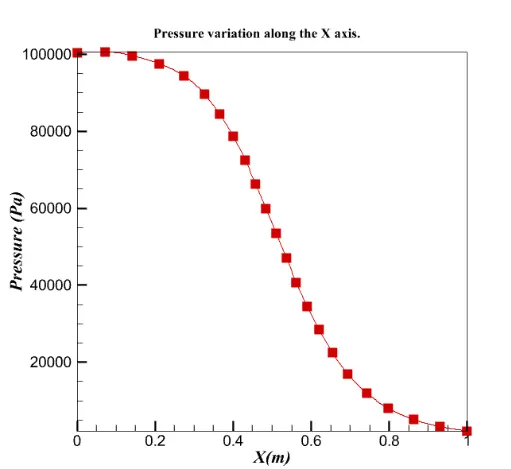
Pressure Contour and plot.
Mach Number Contour and plot.
Conclusion.
- It is observed that the flow becomes supersonic at a distance of 500 mm from inlet this can be verified by looking the mach number plot as it shows the mach nuimber as 1 at 0.5 metres from inlet.
- From the contours the velocity gets increased along the axis of nozzle.
- Temperature and pressure is higher at inlet and goes on decreases.