Week 2 - Converging diverging nozzle
Aim --> Consider the converging-diverging nozzle below with the dimensions.
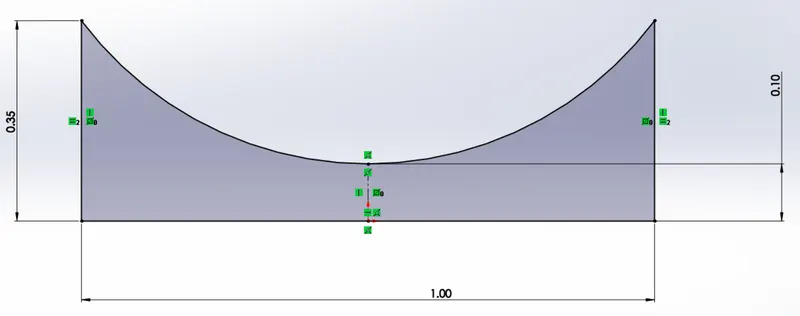
For the following boundary conditions.
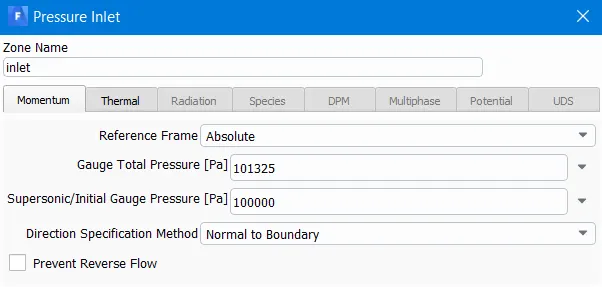
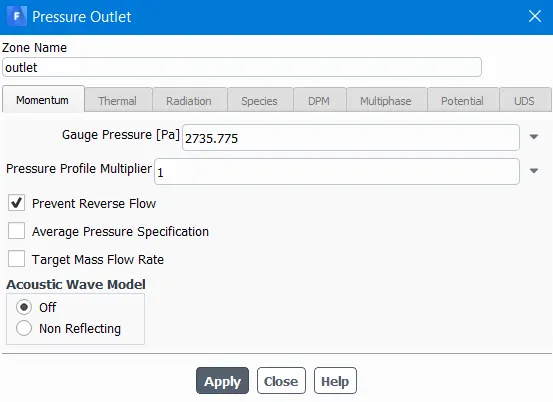
- At Inlet, Pressure = 1atm and Temperature = 300K. The outlet pressure= 0.027 atm.
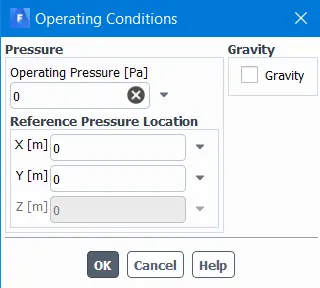
- In the operating conditions, consider the reference pressure to be zero.
Plot:
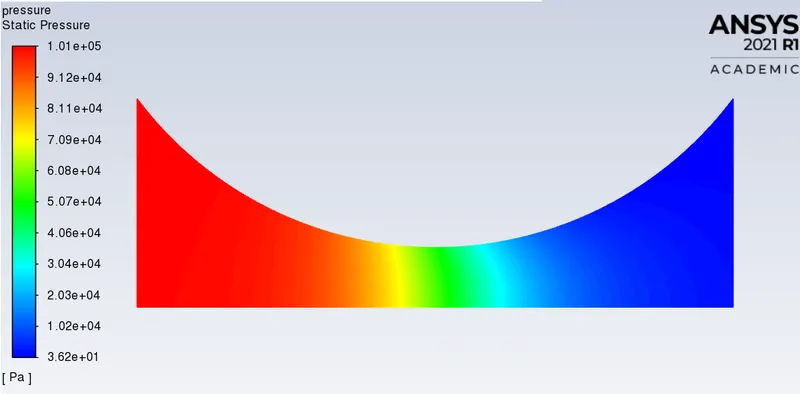
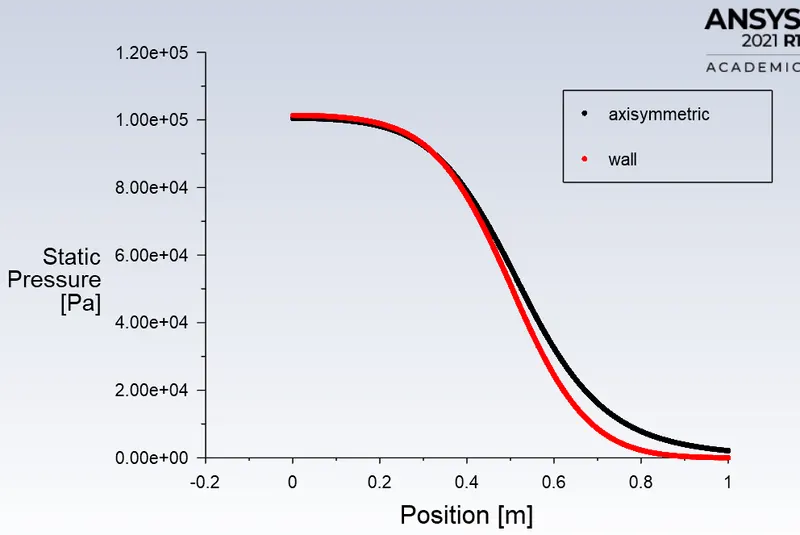
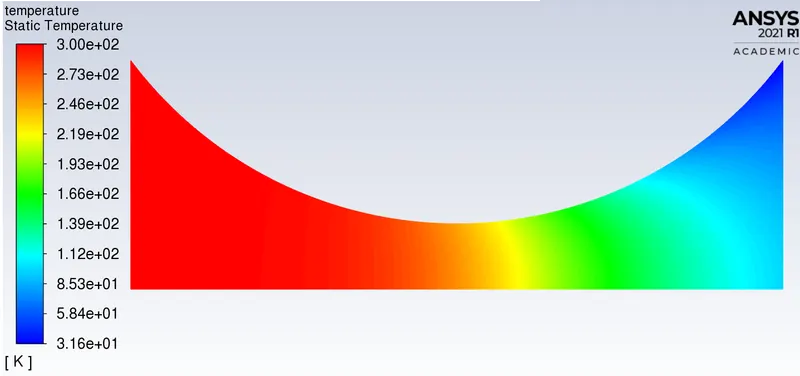
- The pressure, velocity and temperature variations across the domain
- The variation of Mach number across the domain and at what distance from the inlet does the flow become supersonic.
From the above derived variation ,explain the variation of change in area on mach number on the given geometry in a few words.
Geometry
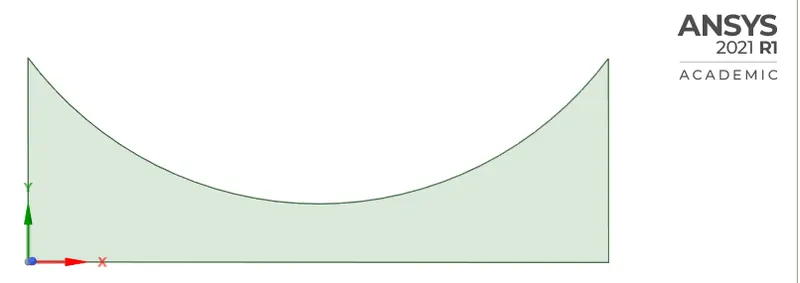
Meshing
- element size = 5mm (Global)
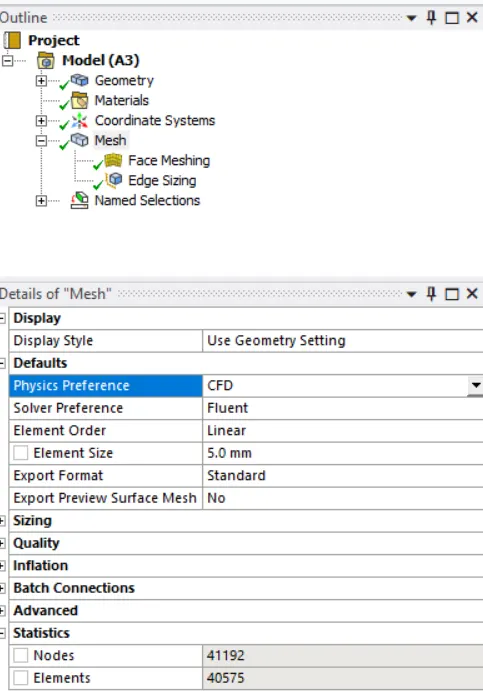
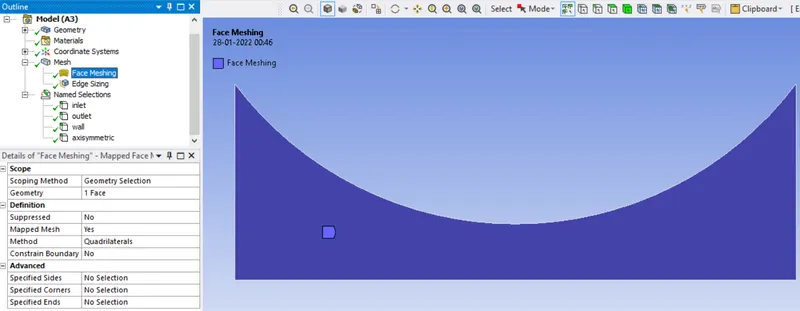
- face meshing
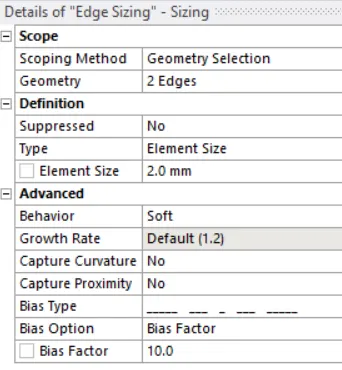
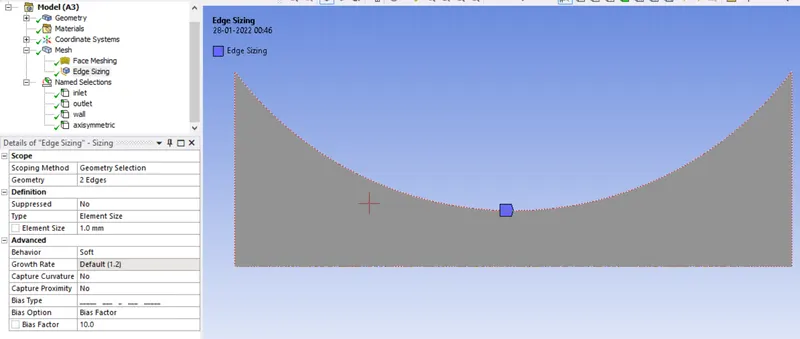
- Edge sizing
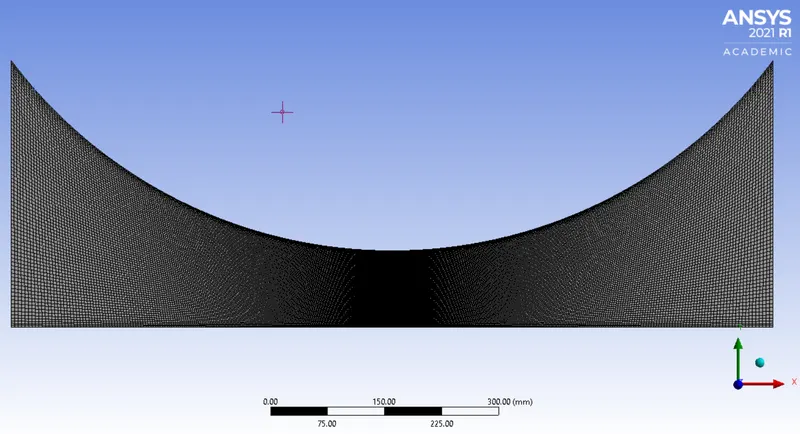
element skewness
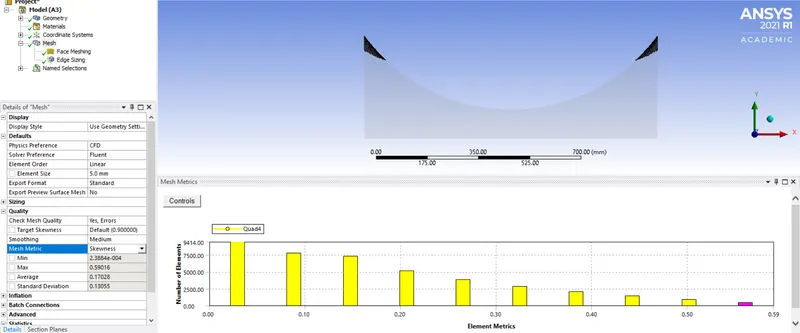
Orthogonal quality

Refined mesh
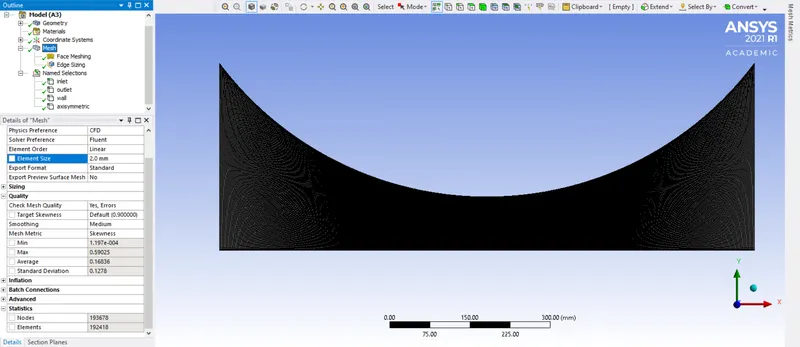
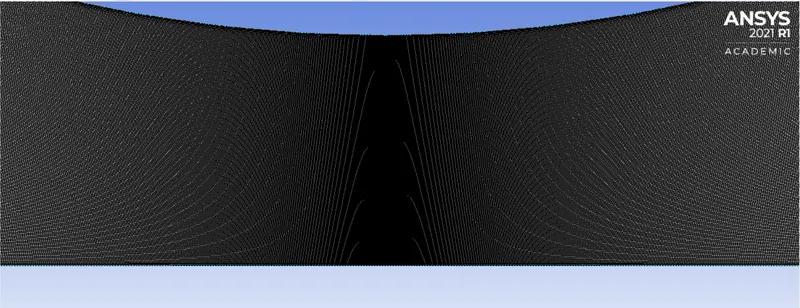
- Face meshing
- Edge Sizing
Fluent setup
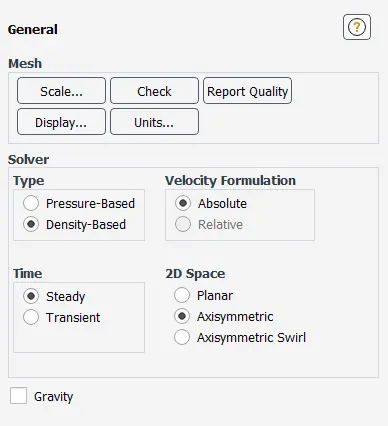
- General
- Operating pressure (refference pressure 0 Pa) mainly used to avoid round off errors in low mach no. flows.
- Energy Equation --> on
- Inviscid flow
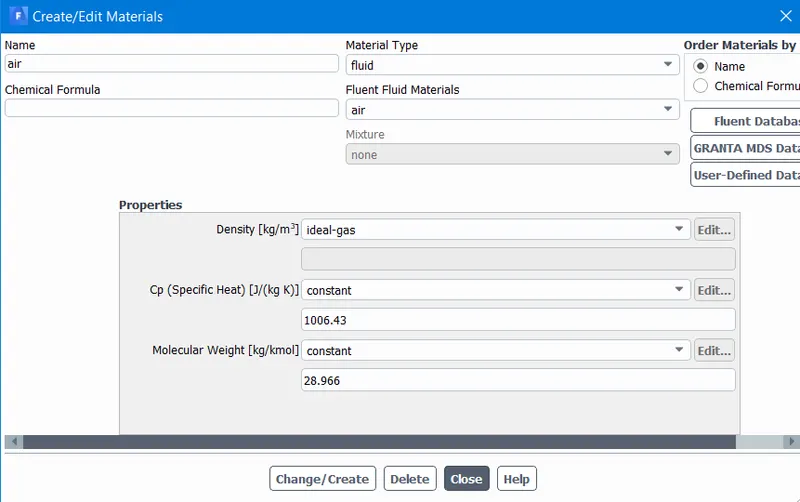
- material properties
- inlet
- outlet
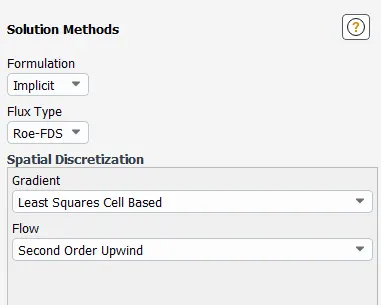
- solution methods
Results
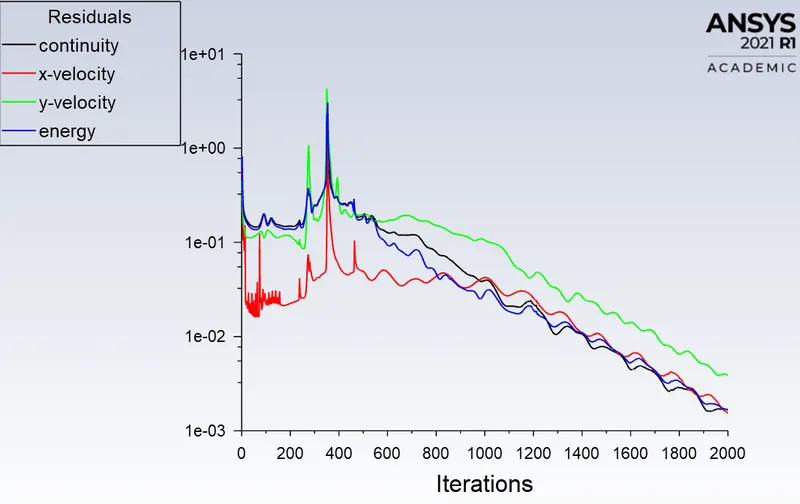
- Residual plots
- pressure contours
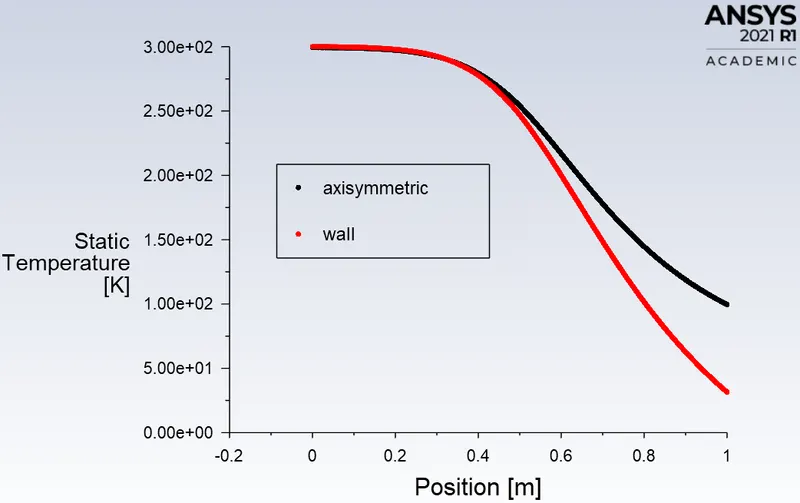
- Temperature contours
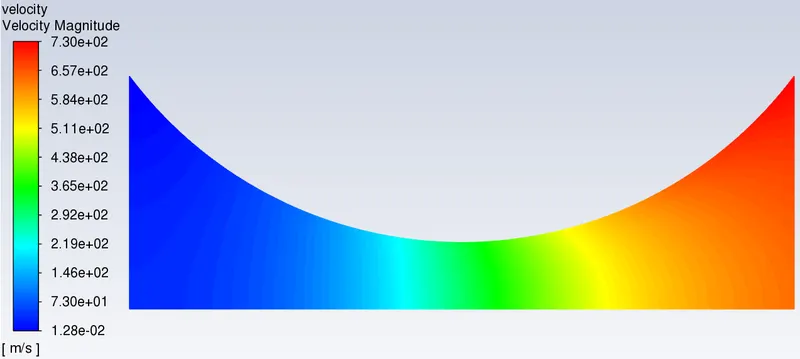
- Velocity contours
- Mach Number
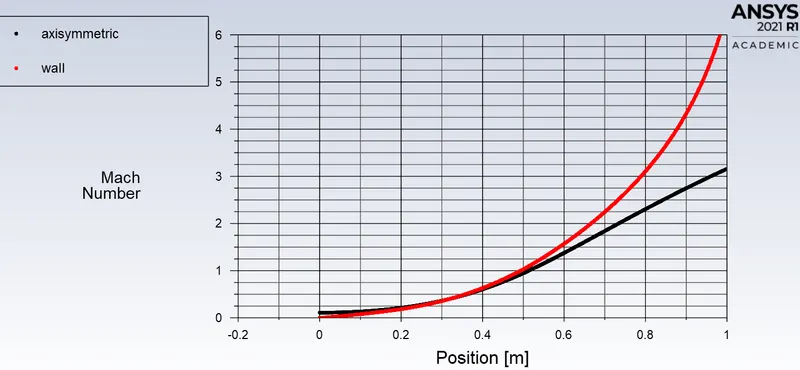
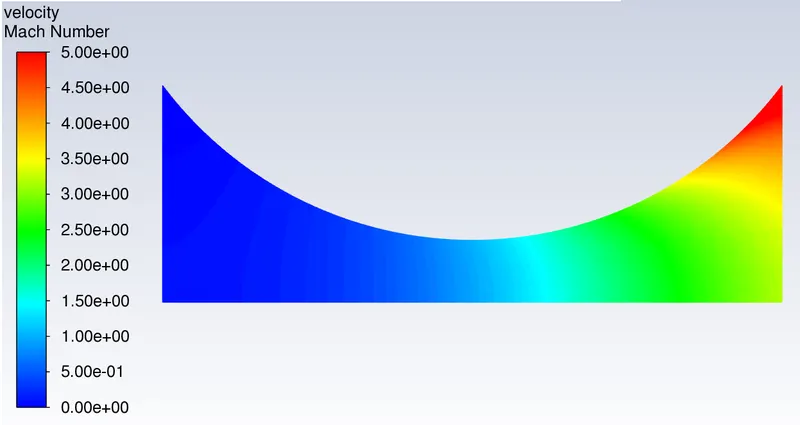
Variation of change in area on mach number
- The flow becomes supersonic at 0.6 m approx. Sonic velocity is achieved at the throat, which is also the chocking point. So, in the converging section the flow is subsonic and flow is supersonic in the diverging section.
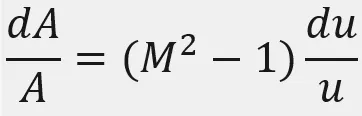
- In the converging section(subsonic region M<1) increase in area will decrease the velocity.
- In the diverging part (supersonic M>1), increase in the area will increase the velcoity. The relation is shown below
Conclusion
- Compressible flow in the CD nozzle is studied and simulation results are demonstrated.